Literary awards, their role and import, have come under frequent discussion here at Whispering Gums. So, when writer Dorothy Johnston, whose The house at number 10 and Eight pieces on prostitution I’ve reviewed and, more relevantly, who was one of the judges for this year’s Barbara Jefferis Award, suggested a guest post on the Award, I was more than happy to take her up on it.
I have never met Dorothy but I have “known” her for a long time as she was one of Canberra’s famous Seven Writers who published the anthology Canberra Tales in 1988. I became “reacquainted” with her more recently via blogging and her appearance in The invisible thread anthology edited by Irma Gold for Canberra’s centenary last year. It’s been a lovely rediscovery. Dorothy has published nine novels – literary fiction, and crime-mystery novels, mainly. Two of her novels – One for the master and Ruth – have been shortlisted for the Miles Franklin Award. Dorothy blogs at her website Dorothy Johnston.
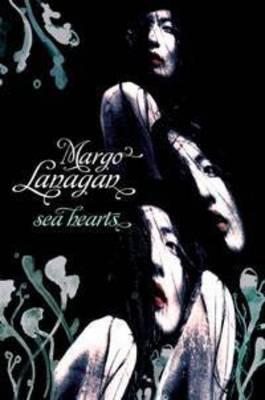
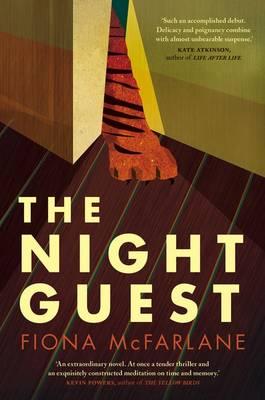
For those who haven’t heard, this year’s Barbara Jefferis Award was shared by Margo Lanagan’s Sea hearts and Fiona McFarlane’s The night guest. Here is Dorothy’s story about her experience as a judge.
***
The idea of splitting the Barbara Jefferis Award between The Night Guest and Sea Hearts did not come up before the three judges (myself, Margaret Barbalet and Georgia Blain) met at the Australian Society of Authors (ASA) in Sydney, at the end of September.
 I enjoyed working through the 72 entries, making notes, keeping in mind the selection criteria, (a work of literary merit that showed women and girls in a positive light), starring the books I knew I would want to go back to. I had no idea whether my favourites would find favour with Margaret and Georgia.
After about 6 weeks, we exchanged our long lists. One novel was common to all three of us – Fiona McFarlane’s The Night Guest, a brilliant study of a woman who believes there is a tiger in her house. Others on my long list didn’t show up on those of the other two judges, but both had included Margo Lanagan’s Sea Hearts. I went back and re-read it more carefully, and was, as the saying goes, blown away.
These two entries stayed at the top from then on, while we emailed back and forth. Part of the reason for having 72 entries is that the award covered 2 years – 2013 and 2014 – and included self-published titles. By far the greatest number of entries came from the big publishers – Penguin, Allen & Unwin, Random House – though, as it turned out, 4 of the 7 shortlisted book were published by small, or small to medium presses.
We didn’t have to make a firm decision on our shortlist before the meeting; but once in Sydney we only had a morning to finalise it, then choose a winner, and then we had to spend the afternoon writing our report.
I’d had to give up some of the books on my long list because they didn’t find favour with Margaret or Georgia, and the same went for them. One I regretted letting go was Elemental by Amanda Curtin, a terrific story of a young girl growing up in a Scottish fishing village, and what happens to her subsequently. On the other hand, All The Birds Singing, by Evie Wyld, which the others both included, and which, as readers will know, won the Miles Franklin, I thought was over-rated.
 If I had to make one general remark about the books that made it onto the shortlist, I would say that each one is utterly itself. What do I mean by this? I mean that, a few pages in, I recognised the voice as original, distinct, perfect for the narrative; they fitted hand and glove. So often I found that an author began promisingly, but then could not sustain the voice. Or, right from the beginning, the author pandered to one contemporary fashion or another. When you’re reading your way through 2 years of entries, you quickly learn that following the fashion is a bad idea.
There’s no whiff of conformity amongst the shortlist. Amy Espeseth’s Sufficient Grace focuses on two young women and their difficult lives in an isolated religious community. The Life and Loves of Lena Gaunt, by Tracy Farr, introduced me to an extraordinary musician and her instrument, the theremin.
Pilgrimage, by Jacinta Halloran, is about two sisters, one of them a doctor, and what happens when their mother is diagnosed with motor neurone disease.
Margo Lanagan’s Sea Hearts takes ancient selkie legends as its starting point and moves in a wholly original direction. Fiona McFarlane’s The Night Guest is another novel that borders the surreal in an original and quite wonderful way. The First Week, by Margaret Merrilees, is, by contrast, a realist tale that cuts to the bone.
The Mountain by Drusilla Modjeska, an ambitious and far-reaching story of Papua New Guinea in the years since independence.
We also highly commended Laura Buzo’s Holier Than Thou.
But back to that meeting at the ASA. We already knew each other’s preferences. We’d picked the same top two and could not choose between them. There didn’t seem a hair’s breadth, or knife point to tip the balance. We called in Lucy Stevens, who was overseeing the judging process. Lucy sat at one end of the table balancing the two books in her hands while we reached the decision to award the prize to both.
The presentation was held in the renovated foyer of St Barnabas Church, Broadway, a lovely light-filled space. It was a beautiful Sydney spring evening. There was music and champagne. I realized – not that I hadn’t known it before, but it came to me suddenly – that we were here to celebrate books and their authors. Angelo Loukakis, Executive Director of the ASA, welcomed us. David Day, who is Chair of ASA’s Board of Directors, spoke about Barbara Jefferis and the bequest. Tara Moss spoke about women and the arts. I looked around me. Everyone in the room cared about, and many worked hard to foster and promote, Australian literature. When I stepped up to the podium, to give my judges’ speech, I had a big smile on my face.
***
Thanks a bunch Dorothy for giving us your insider’s perspective on awards judging. I can see it wasn’t an easy job and love that you’ve shared your thoughts with us.
Dorothy (I’m sure) and I would love to hear your thoughts – on awards, on judging, on these particular books, or on anything else her post has inspired you to think about.

 Whispering Gums