Monday musings on Australian literature: Diversity and memoir

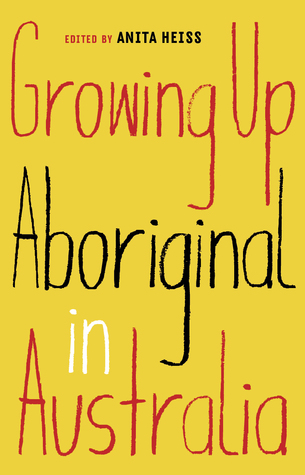
Anita Heiss, Growing up Aboriginal in Australia

Hands up if you’ve read memoirs by First Nations writers, Immigrant writers, Gay writers, Transgender writers, Writers with a disability, and so on? I sure have, and have reviewed several on this blog – including ones by Archie Roach, Marie Munkara, Ali Cobby Eckermann, Alice Pung, Maxine Beneba Clarke, and Jessica White. Black Inc has a whole series – the Growing Up anthologies – devoted to life stories from people of diverse backgrounds. These are excellent for explaining “otherness” to the rest of us.

However, while reading for my recent Monday Musings on the stories we need/want, I came across this comment in the article I used by Lin Li Ng:

BIPOC [Black, Indigenous or People Of Colour] writers are also so often confined to the realms of memoir where they must write about identity, experiences as the ‘other’. And while such texts are necessary and so often relatable for the BIPOC reader, it made me wonder: How much longer BIPOC writers can keep writing about otherness? How much longer must they explain otherness?

It made me stop and think … and decide it was worth highlighting in a separate post.

Lin Li Ng is not a lone voice in this. Last year, SBS ran a competition for writers aged 18 plus ‘to submit a memoir piece of 1000-2000 words on the topic of “Growing up in diverse Australia”‘. It was so successful, they are running it again this year, with the theme, “Between Two Worlds: stories from a diverse Australia”. Again, the request is for a “first-person memoir piece, between 1,000-2,000 words”.

Responding to the 2020 competition, Kelly Bartholomeusz wrote in Overland, “Stop asking ‘diverse writers’ to tell you about their lives”:

It is frustrating to see opportunities for ‘diverse writers’ linked to their willingness to write narrowly about their diversity. This approach disqualifies the many talented writers who have already processed or written about these experiences, and who have bigger visions or better imaginations than to endlessly revisit the same questions.

Bartholomeusz says there’s “nothing inherently wrong with memoir”, and she doesn’t want to “disrespect … writers of colour and First Nations writers who work predominantly in this space”, because this “work has value”. However, writing about one’s life “should not be a condition of entry to the industry, and if it is, it should not be disguised as ‘opportunity’”. Indeed, she says,

Diversity of background doesn’t automatically result in diversity of thought, and a system that requires these voices to answer the same questions ad nauseum is dangling a carrot just out of reach, effectively limiting that which it claims to encourage. 

She also fears that encouraging – if not requiring – writers of diverse background to focus on otherness

will condition aspiring writers to believe that their only value is in their marginalisation and otherness, to be consumed as palatable morsels by predominantly upper-middle-class white audiences who will talk about these stories in bars and over brunch, and who will form a subconscious belief that they understand these experiences because they have read about them.

This final point is one that bothers me when I write posts like these, and when I review works by “diverse” writers. Is it offensive or smug to think that privileged I can “help” by writing these? It niggles at me.

Bartholomeusz also talks about being asked, on a writing scheme application, to detail “ways in which the publishing industry was previously inaccessible” to her. She sees an inherent irony in the question, “as if these factors are easy to categorise and quantify. As if they can be cleanly extracted from the murky swirl of complexity that characterises most non-white Australians’ lives”.

Her arguments are cogent, but First Nations author, Ambelin Kwaymullina, has also talked about the publishing issue, back in 2015. She says:

I’ve had publishers express the sentiment to me that they’d love to publish more diverse voices if only they received more manuscripts. However, given that this approach hasn’t yet resulted in any great increase in diversity, I think it’s perhaps time to conclude that ‘business as usual’ won’t achieve the desired outcome. The existing inequity of opportunity being what it is (especially for Indigenous writers who are most disadvantaged) means that more is required.

She says there is a lack of “Indigenous editorial expertise” resulting in Indigenous writers not having people sensitive to their culture involved in the editing and publishing process. She praised the State Library of Queensland’s black&write! program because it offers “both Indigenous writing fellowships and Indigenous editorial internships”.

Five years later, Lin Li Ng makes a similar point when she says that “diverse” writers don’t have champions in the industry. In other words, people like them, who understand them, who can “advocate for and support” them “with sensitivity”, are not “the gatekeepers with great decision-making power”. There are exceptions, of course – some good publishers supporting more marginalised writers – but they are just that, exceptions.

To end, though, I’ll return to the content issue. Lin Li Ng says that

texts by diverse writers, as a result of systemic practices, are made to sit on the peripheries of the literary landscape – they are treated as niche, so very unattainable, un-relatable and of little commercial value.

Book cover

So, she is saying, when diverse writers are published they tend to be sidelined as “niche”. This can be partly because their subject matter is deemed to be of narrow or specific interest. It can also be because their style may not be that of the majority culture. Think Shokoofeh Azar’s The enlightenment of the greengage tree (my review), for one – though it did break through, a little. There are works coming from young First Nations and Asian writers, for example, that challenge the norms, but they are not reaching the big markets, and only rarely appear on award long and shortlists. Even the Stella Prize, which aims to support marginalised women writers, will have some books from the more “diverse” end of the spectrum on longlists, but amongst the winners? Not so much.

Things are changing. We are seeing more diverse voices on the screen and stage, not to mention colour-blind casting and storytelling. However, my sense is, particularly when I look at awards lists, which are not the be-all I know, that we have a long way to go yet. And, I admit, I could lift my game – a lot!

Thoughts, anyone?

Monday musings on Australian literature: The stories we want or, is it, need?

Back in 2019, I wrote a Monday Musings on the Stella judges’ call for more “narratives from outside Australia”. I teased out a little what that might mean, but, a couple of years down the track, I think it worth further exploring the questions it opens up.

Commenting on that post, Lisa (ANZLitLovers) wrote:

What I’d like more of (and I get it sometimes) is Australian literature with an *awareness* of the rest of the world and of the cultures that make up our society. You can see it in the fiction of Michelle de Kretser, Andrea Goldsmith, S K Karakaltsis, and Amanda Curtin, plus the writers you’ve mentioned in your post. It’s also there in the novels of Simon Cleary, A S Patric and Rodney Hall, among others.

You don’t see it in domestic novels with a monotone cast of characters.

We talk a lot in the blogosphere about some of the contemporary issues surrounding literature. In Australia, this particularly revolves around diversity and “own voices”. Enabling more people from our community to tell their stories makes for a richer community, but don’t take it from me … here is an interesting article by Julianne Schultz in The Guardian in 2017 (which is an edited version of Griffith Review 58 piece). Schultz quotes Irish commentator Fintan O’Toole on the importance of stories to nations:

Nations tells themselves stories … They are not fully true, they are often bitterly contested and they change over time. But they are powerful: they underlie the necessary fiction that is ‘us’. And at the moment, it is not quite clear what the Irish story is.”

She goes on to say that O’Toole’s description could apply equally well to Australia where

the old stories have also become threadbare, and increasingly fail to capture the contemporary reality or the complexity of the past.

She backs this up with facts which demonstrate that contemporary Australia is more diverse and complex, less isolated, more accessible, than before, and yet we struggle, she says, to define exactly who we are and what the values of this new Australia are. We pride ourselves on our “multiculturalism”, supported by old values like “egalitarianism”, but, in fact, we are not particularly unique in these regards. She says:

So when political leaders praise multiculturalism but make citizenship more difficult to attain, or when they talk about preventing desperate refugees from dying at sea but leave them to languish in offshore refugee camps, or when they promise to recognise Indigenous rights but call a measured discussion about first settlement “Stalinist”, the message is clear and hypocritical.

For cultures to flourish, rather than simply survive, she argues, “they need to be tended and nurtured”. Telling stories is one way of doing this, “stories about people and place, about belonging and being out of place, of changing and staying the same, of interrogating history and locating those who were once left out”. Do read the article; her thoughts are cogent, and she makes an important political point about the role our leaders should play. Meanwhile, let’s move on to what those stories could be …

Stories we need

Lisa has a point about “an *awareness* of the rest of the world and of the cultures that make up our society”, and we could add to this the big concerns of our time, including human rights (across the spectrum of gender, race/ethnicity, sexual orientation, age), climate change, and increasing social and economic inequity. These aren’t mutually exclusive, and in fact they make most sense, tell a richer story, when they jostle against each other in the works we read.

Things are changing. We are seeing more fiction and poetry by First Nations Australians, Australians from culturally and linguistically diverse backgrounds, women and non-binary Australians, and so on. However, we are not there yet. During the 2020 pandemic, writer Lin Li Ng decided that she wanted “to only read books written by Black, Indigenous or People of Colour (BIPOC) writers or non-BIPOC female writers”, but when she looked at her TBR bookshelves, she was dismayed to find that only around 10% were by BIPOC writers and 25% by non-BIPOC female writers.

And yet, in her Master of Writing and Publishing studies, Lin Li had written “a thesis on the experiences of Asian-Australian women – writers and publishing professionals – in the Australian trade publishing industry” so she knew the issues. What surprised her, then, was her own choices, that although she “had recognised the systemic barriers and failings of the industry”, she hadn’t realised how much she had absorbed the message that English and Western literature and art are ‘quality’, and had been convinced that works by BIPOC authors weren’t as good as those by non-BIPOC authors. But, she wants to see herself, her experiences and her values in the literature and art she engages with, and concludes that as a POC female reader, she is “part of an audience that deserves diverse stories that appeal to it”.

Yes! So, I’ve highlighted “herself, her experiences and her values” because this is the crux, isn’t it. The question is what does she, and what do we, mean by these?

When I say “myself” and my “experiences”, do I just mean, in my case, a middle-class, older white woman? Or, do I mean an Australian moving around in a diverse, multicultural society? I probably mean both. I want to read about people just like me, who are grappling with the specific challenges people like me are confronting, but I also want to read about how we, as Australians, are living in our modern society. What are its challenges and how can we make it work better?

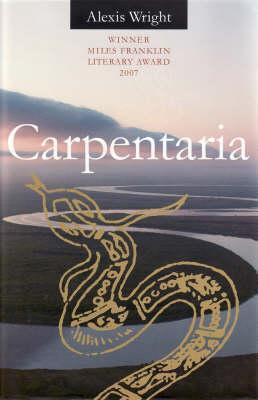
Alexis Wright, Carpentaria

When I say “values”, it gets more complex, and, I think, more interesting, but how to talk about them without getting bogged down. I’m going to be simplistic and suggest there are two types of values – the personal, which is the moral, ethical code by which we live, and the social, which encompasses the values that we believe in as a society or culture. By this latter meaning, liberal western democracies have a certain set of values to do with individualism, progress and freedom, accompanied by an uneasy nod to the common good. By contrast, First Nations people have very different values grounded in community and sharing, and, for want of a better word, an interdependent connection to country. I’m not going to elaborate all the cultures in Australia, but Muslim cultures have their own values, and so on.

This is all a bit simplistic, I realise, but it’s hopefully enough to make my main point, which is that some of these values work well together while others are in direct conflict, and yet, here we are all living together. Platitudes about our being egalitarian and a “successful multicultural society” don’t really cut it – any more, anyhow. This, I think, is where many of us are looking to Australian literature, if not for answers, at least for questions and reflections.

There is literature doing this, writing that tackles head on the challenge of clashing values, like Alexis Wright’s Carpentaria (my post), AS Patrić’s Black rock white city (my review) and Claire G Coleman’s Terra nullius (my review). These books are very different in style and form, but each forces us to look at who we are and to think about who we want to be.

There is so much more to say about this, so many angles to explore literature and storytelling from, so many broader and narrower questions to consider, but I’ll stop here for now, and just ask,

What do you think?

Monday musings on Australian literature: Novelistic re-imaginings

Years ago I read a Guardian article titled “Top 10 novels inspired by Shakespeare”. Written by Sally O’Reilly, it started with “Shakespeare famously customised existing plots when writing his plays, and added to them an acute perception of human experience which gave them universal significance.” I thought, then, that it might be fun to share a few Australian novels that customise or are inspired by existing plots from well-known works. There are many, of course, because it is a popular thing to do, so I just plan to get the ball rolling from some of the books I’ve reviewed here, and then throw it to the rest of you to share those you’ve read, Australian and otherwise.

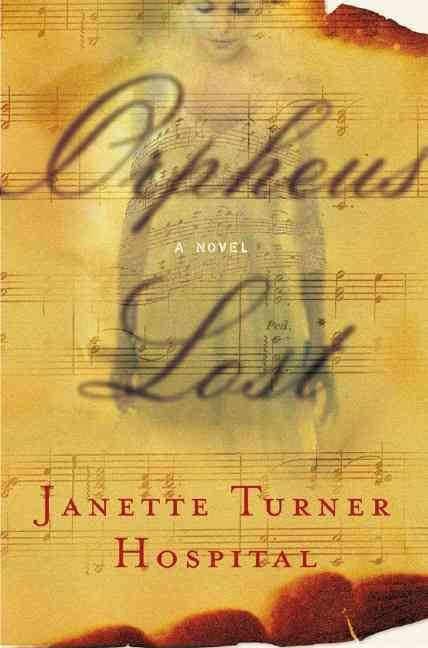
Janette Turner Hospital, Orpheus lost

When I started thinking about this topic, I immediately thought of relevant books I’ve read over the last couple of decades, like Jane Smiley’s One thousand acres (Shakespeare’s King Lear), Lloyd Jones’ Mr Pip (Dickens’ Great expectations), and, of course, Jean Rhys’ The wide Sargasso Sea (Charlotte Bronte’s Jane Eyre). None of these are Australian, however, but they might clue you into the challenge I had in titling this post, because “re-imaginings” come in many forms. Examples include retelling a story from a different perspective, setting the story in a different place and time, and providing prequels or sequels to a story. Some stick closely to the original story and characters while others are more in the “loosely inspired” or “loosely based on” category. The variations are endless.

Why do writers do this? There’s probably a different answer for every writer, but some reasons do seem to recur. One is the desire to tell a story from a different perspective, such as, for example, a feminist one to redress the problematic views of an earlier time. Another is to bring a story that the writer thinks has something important to say to a modern audience. We don’t always know exactly why writers decide to do this, but, like most readers, I like to have a guess.

And yet, I have to admit that I tend to be anxious about them. Do I know the original, and if not, should I read it first? What if I don’t want to read it first? Should I still read the re-imagining. If I do know the original, will I remember it well enough to understand the author’s intentions? More often than not, it works out fine, whether I’ve read the original or not – but I never learn my lesson, and next time, I go through it all again.

Mirandi Riwoe, The fish girl

Anyhow, here is a random few that I’ve reviewed on my blog. I’m listing them alphabetically by author. I did consider trying to categorise them – but decided that would take me down a rabbit-hole!

  • Janet Turner Hospital’s Orpheus lost (2007) (my review): reimagines the Orpheus story, with a feminist perspective, making the woman the would-be rescuer.
  • David Malouf’s Ransom (2009) (my review): re-visions the section of the Iliad in which Priam visits Achilles to ask for his son’s body back. Malouf said he wanted to suggest a new kind of human, non-heroic consciousness, by having Priam “do something extraordinary”.
  • Mirandi Riwoe’s The fish girl (2018) (my review): a “post-colonial response” to Somerset Maugham’s short story “The four Dutchmen”. She gives the girl a backstory, and explores it from the perspective of the colonised, particularly colonised young women. She shows that young women were pawns in both the hands of colonial powers and of their own men.
  • Roslyn Russell’s Maria returns: Barbados to Mansfield Park (2014) (my review): an imagined sequel to Jane Austen’s Mansfield Park, in which Russell redeems the banished adulteress Maria Bertram and “runs with” the hints regarding slavery in Austen’s novel.
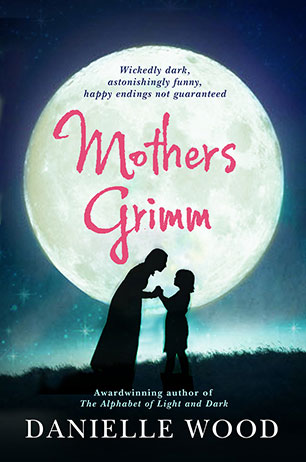
  • Danielle Wood’s Mothers Grimm (2014) (my review): re-visions some Grimm Brothers’ fairytales – “Rapunzel“, “Hansel and Gretel“, “Sleeping Beauty“, and “The Goose Girl“ – to reflect on and question contemporary motherhood.

Geraldine Brooks’ March (2006), which I read before blogging, is another well-known Australian example. She takes the absent father from Little women, Mr March, and creates story about him, focusing on his role in the Civil War.

Danielle Wood, Mothers Grimm, book cover

Not surprisingly, classics (in both senses of the words), myths and fairy-tales feature strongly in these re-imaginings because they provide a springboard that doesn’t have to be explained to the reader. The exception, in my list, is Riwoe’s The fish girl which takes a Somerset Maugham short story. Maugham is well-known, of course, but not necessarily the short story used here. We could, however, call it the exception that proves the rule, in that in the end these works do need to stand on their own, with the original work adding depth for those who know it, rather than being a prerequisite.

What do you think? And, have you read novelistic re-imaginings? Do you like them, and why or why not? We’d love to hear from you.

Living under COVID-19 (5): Holds on happiness

It’s nearly a year since I wrote a COVID-19 post. I nearly wrote one a few months ago when things were going COVID-normal smoothly, by which I mean our lives were minimally restricted, with daily life being as free as we could hope given the world-wide situation. We (I mean we Ken Behrens) were visiting friends and family around Australia. We were dining out, going to the movies and theatre, playing sport, visiting museums and galleries, and so on. Gradually, even generous distancing rules had been removed. Certainly, we were not wearing masks. (We were, though, still sanitising and checking-in.) I wondered what I could say, given life in most other parts of the world was still comparatively more restricted. Life was generally pleasant.

But then, Delta made its way here and we were not prepared because we – for, mostly, political reasons – were too far behind in the “race” to vaccinate, and it left us exposed. Now, our two largest states, and my little Capital Territory, are locked down. It is the right thing, I believe, to prioritise health and life, equitably, while we get our vaccination levels up – but it’s not easy. It is in this environment that I remembered the inimitable Jane Austen’s suggestion that

It is well to have as many holds on happiness as possible. (Henry Tilney to Catherine Moreland, Northanger Abbey)

I thought to share some of my holds on happiness …

Only connect (EM Forster)

For most of us, the best “hold” is connecting with family and friends. Those who, like me, live with supportive others are lucky to at least have built-in company, but even we need some variety. It’s been said ad infinitum, but how lucky are we, compared to those who suffered through the Spanish Flu or the plague pandemics, in being able to remain in quality contact with others through WhatsApp, Telegram, FaceTime, Zoom, and so on.

For me, WhatsApp chats replacing a regular lunch with friends, FaceTime sessions with our son, his partner and our grandson, Zoom catch-ups and meetings, and emails, blogging, and common old phone calls with our daughter and others, are keeping me sane and connected. They can also provide some joy. Have you ever tried playing hide-and-seek via FaceTime with a three-year-old? It can be done!

Other connections come from regular visits to our local PO to get the mail. We love our local post office workers. And to cafes for takeaway coffee and food. We love our favourite cafe owners too!

‘Twill do me good to walk (Shakespeare)

If connecting with people is important, equally so is exercise. It distracts the mind, keep us fit and tires the body (which is a useful thing in a constrained life!) Fortunately, we are allowed to exercise outside, and for most of us that’s walking. In some jurisdictions some sports are also allowed, but Mr Gums and I don’t do organised sports.

So, for us, exercise comprises walking in the nature park across the road, gardening, joining our zoomed Tai Chi classes – and, for me, doing yoga via my Yoga With Adrienne app. (You can also find her on YouTube if you are interested. She is delightful, and a good if imperfect substitute for my own wonderful teacher/neighbour.)

The thing about these activities is that, besides being good for our minds and bodies, they provide structure to our days. Structure, we learnt pretty quickly, is important to getting through endless days that look the same. Each morning, we say, “what are we doing today?” and make a plan of action (or inaction, as it sometimes is.)

Indulge your imagination (Jane Austen)

Exercise might distract the mind, but the mind and spirit also need feeding, and again, technology is helping us out. Of course, there are books, and they are my mainstay, as they are for many others. But, most of us need more – whether this be movie outings with others, live music gigs and concerts, theatre, festivals of all persuasions – and it is these that have been so affected by COVID-19. However, it is also in these that technology has been best able to help (albeit not ideal).

It is also plague season again in London and the playhouses are shut. (Maggie O’Farrell, Hamnet)

I don’t need to tell you about streamed movies. It seems that every time I turn around there’s a new service. I have no idea where to start with all that so, although we are a technologically-focused pair, we haven’t chosen one yet. There’s enough available on free-to-air so far to entertain and inform us, because if there’s one thing we’ve been doing, it’s been keeping informed.

I have written in previous Living with COVID-19 posts about online writers’ events. I haven’t attended many recently, but I did join the ACT Writers Centre F*ck Covid afternoon (and have written about that.) The participants included established and emerging writers, and they were so generously open and articulate about their work and practice.

We have also attended webinars (including one with Jenny Hocking about the Palace Letters, which is well worth listening to) and online and streamed concerts from Musica Viva and the ABC. This short video link featuring recorder player Genevieve Lacey and harpist Marshall Maguire will give you a taste of one concert we “attended”.

We have passed up so many other opportunities. If there’s one thing about this lockdown, it’s that the arts world has done its best to stay alive and to reach out to us in whatever way they can. I can’t wait to give back by attending their shows and applauding their efforts – in person! I just hope they can all survive until then.

Meanwhile, wherever you are, how are you surviving? How is life looking in your place?

Monday musings on Australian literature: the Australian 9/11 novel

With the 20th anniversary of 9/11 having been commemorated on the weekend, I thought I might explore how 9/11 affected – if at all – Australian fiction. Before I start, though, I have two provisos: one is that my focus will be fiction, not literature, or culture more widely; and two is that, like many of my Monday Musings posts, this will not be a comprehensively researched post, but one intended to throw out some ideas that we all might like to think and share our ideas about.

So, here goes, starting with …

What, if anything, is the 9/11 novel?

I didn’t find a definitive answer, but I’d say the “genre” encompasses novels which speak directly of 9/11 and those which are (or which seem to be, even) inspired by it.

Arin Keeble, from Nottingham Trent University, discussed these novels in The Conversation back in 2016, in an article titled “Why the 9/11 novel has been such a contested and troubled genre”. Keeble discusses the intense debate that these novels engendered, including the concern by some that the focus on 9/11 has “undercut the complex prehistories and aftermaths of 9/11, giving it inflated importance in the world narrative”. He notes that the novels that came out around 2006/7, by Don DeLillo, Claire Messud, Jay McInerney and Ken Kalfus, all explored the event through marriage and relationship narratives. He quotes from a critique by Pankaj Mishra, who wondered whether we are “meant to think of marital discord as a metaphor for post-9/11 America?” Keeble writes that Mishra and others criticised these novels ‘for their “failure” to engage with otherness and the geopolitics of 9/11’. Other critics and commentators weighed in, disagreeing. Read the article – it’s short – if you are interested.

The point that Keeble makes is that, regardless of how “polarised” the debate became, the impact was to ascribe “great importance to the 9/11 novel” and, as a result, to reinforce “the idea of 9/11 as a defining moment”. Writers like Zadie Smith, however, saw this emphasis on 9/11 as an example of “American exceptionalism”.

Other novels did come out with a more political and/or international bent, like Mohsin Hamid’s powerful The reluctant fundamentalist, but marriage and relationships are still at their centre, and they “continue to explore the way privileged Americans absorb and respond to trauma”. Keeble concludes on a book that he believes most aligns with Zadie Smith’s views, Thomas Pynchon’s Bleeding edge which “goes the furthest in challenging the singular importance attached to 9/11 in its intertwined historical narrative, weaving in the significance of the collapse of the dotcom bubble in 2000 and a history of the internet’s transition from an anarchic to a completely corporate space”.

I have read several non-Australian books “inspired” by 9/11, from Don DeLillo’s Falling man (2007) and Jonathan Safran Foer’s Extremely loud and incredibly close (2005) to Ian McEwan’s Saturday (2005) and the aforementioned The reluctant fundamentalist (2007). Each is quite different, but Hamid’s is particularly memorable because of its point of view and the tone he sustains throughout.

Unfortunately, none of this furthers my 9/11-in-Australian-fiction topic. My excuse is that it was in The Conversation and it provides a good introduction.

And, in Australia?

However, some Australian novelists have contributed to the genre. This 2010 article published in JASAL by Jen Webb sounds interesting, from its abstract:

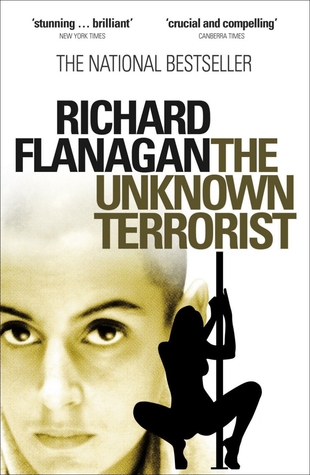
Australian fiction is, arguably, as diverse as the fiction of any other culture or era. But in a globalised world, though the stories we tell may remain inflected by the local context, they will necessarily be informed by transnational relations and geopolitical events. Like writers in the USA, UK, Afghanistan and elsewhere, some Australian novelists have taken arms against a sea of troubles, and produced work that directly and consciously engages that new genre, the post September 11 novel. Only a small number of Australian novels have been published in this genre – perhaps inevitably, given our distance from the scene – and they can be read as relying on the familiar features of the thriller, the detective, or the citygrrl genres that readers find attractive. However, I will suggest that they do more than this. In a reading of Andrew McGahan’s Underground, and Richard Flanagan’s The unknown terrorist, I will discuss the ways in which a very local ‘accent’ is coloured by broader forces, and what contributions we can offer, here at the foot of the world, to the ongoing conflicts and human rights abuses in the hemisphere above us. 

Regrettably, I don’t know what ways and contributions he discusses, so we’ll just have to guess. Meanwhile, I have read Flanagan’s novel, and will throw two other novels into the mix, though they’re not set in Australia, Janette Turner Hospital’s Due preparations for the plague (2003) and Orpheus lost (my review) (2007).

Richard Carr, in ‘”A world of … risk, passion, intensity, and tragedy”: The post-9/11 Australian novel’ (Antipodes, 23 (1), June 2009), mentions the novels by Hospital, Flanagan (2006) and McGahan (2006), but adds two I didn’t know, A.L. McCann’s Subtopia (2005) and Linda Jaivin’s The infernal optimist (2006). He says that all these novels:

entered a world attuned to the destructive potential of the terrorist and wary of the terrorist desire to wreak havoc.

In fact, the terrorist as a symbol of a New Australia defined against an older, safer country is a recurring thematic pattern.

Carr discusses the novels, individually, and, while they are all different, they express some commonalities regarding our “contemporary obsession with terrorism”. To simplify muchly, these include fear of other (often encouraged by government) and lying about other, which result in actions like the scapegoating or oppression of innocent people and increasing reduction in liberty.

Carr also draws some broader conclusions – remember he was writing in 2009 – that I found interesting, and still relevant. He proposes that this obsession

sublimates long-standing sources of guilt and fear: the taking of the land from its rightful owners, the cruelty of the founding penal system, the inhumanity of the treatment accorded Aborigines into the present-day. Whatever the reason … Australian has followed America’s lead in assigning national security its highest priority and identifying the terrorist as the primary threat to that goal.

Do you have any thoughts about this and/or the 9/11 novel?

Poetry Month 2021: Your favourite poems

Earlier this month, I wrote a Monday Musings on Poetry Month, at the end of which I asked readers to name their favourite poem.

Poetry Month finished yesterday, 31 August, so I thought I’d close out the month by listing the nominated poems, alphabetically by poet. I should add that some commenters cheekily named more than one (so I did too). Links on the poem title takes you to an online version

If this list has suddenly inspired you to add your own, please do so in the comments, and I will add it to this list.

Meanwhile, here are some thoughts about poetry posted on Instagram by the month’s organisers, RedRoom Poetry

“Poetry … brings me great comfort and discomfort, and I’m thankful for both” (David Stavanger, Lead Producer))

“Writing is also an act of reading–not only books but all forms of textuality: the ground, the vegetation, the ‘world around us’. (John Kinsella, #30in30 writing prompt)

“Poetry for me is the project of trying to put into language ideas and states of being that feel unnameable or uncontainable” (Izzy Roberts-Orr, Digital Producer)

“Poetry has no limits or positions. It is a freedom. It can be one word or many.” (Tenzin Choegyl, #poetryambassador)

And this, a challenge for Bill:

“I’m not interested in hearing people read other people’s poems. I’d rather listen to a truck driver read out a poem about his truck, than the world’s finest actor read out the world’s finest sonnet. It’s about the poet for me.” (Brendan Cowell, #30in30)

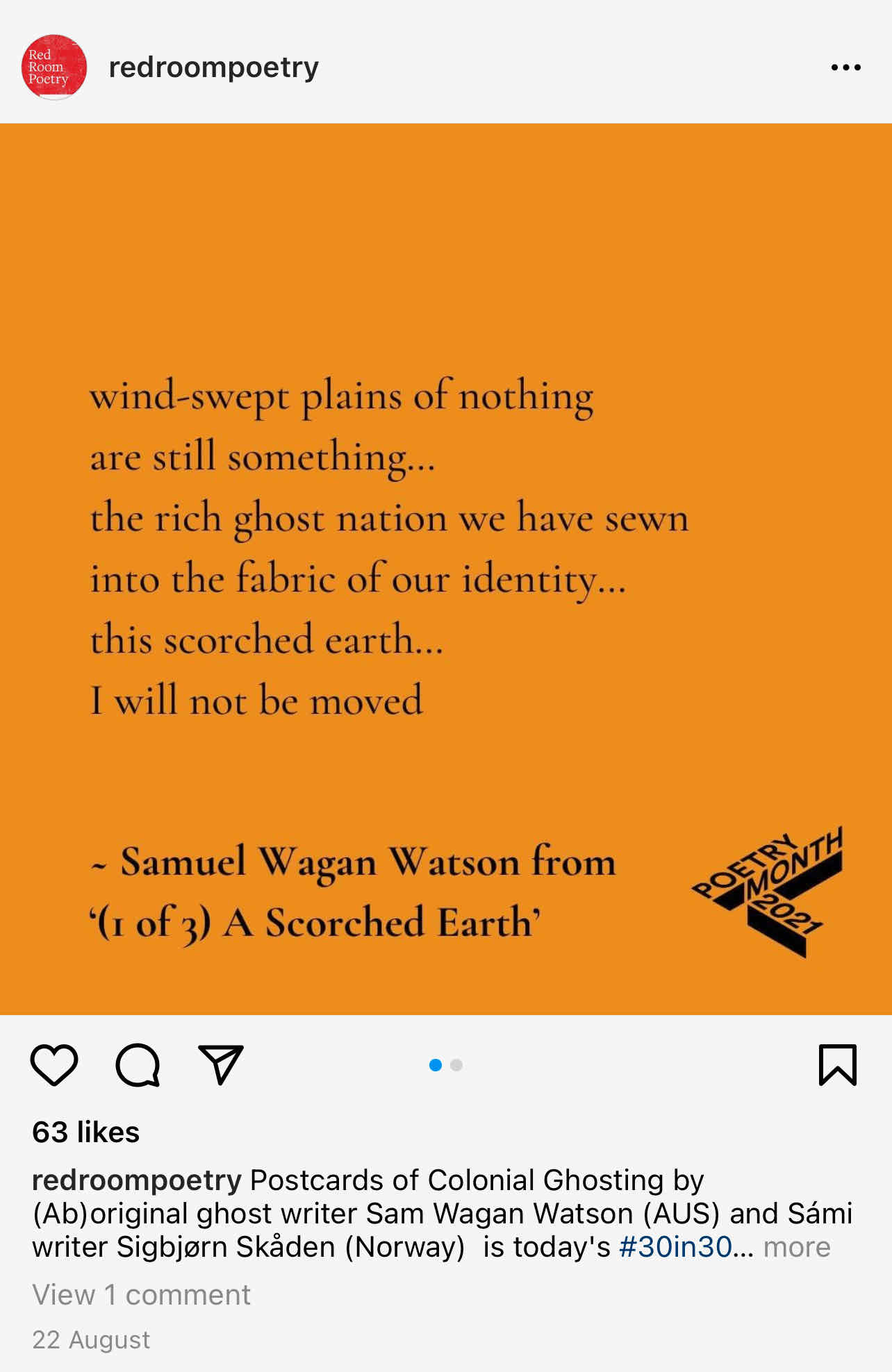
And finally, to close out Poetry Month, an image from RedRoom Poetry’s Instagram account of one of the many poems posted during the month (as part of the paired-poets #fairtrade project). (I think it is ok, copyright-wise, for me to share this)

And remember, it’s not too late to share your favourite/s.

Monday musings on Australian literature: a “grim continent”?

These are grim times, so you might have assumed that our current predicament is today’s topic, but no, we are going back to 1929. My, if there was a grim time, 1929 heralded such a one. However, it’s not the Depression I’m going to either. In fact, the article I found in Trove, which inspired this post, was written in July 1929, and published in Adelaide’s The Advertiser on 31 August, that is, before the big crash.

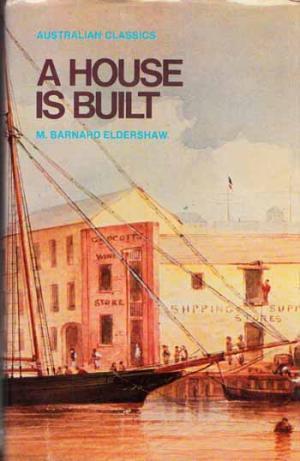
What, then, was the grim continent – and why? You’ll have realised, given this is my Monday Musings on Australian literature, that it’s Australia – and you’d be right. The article was written by “a Special Correspondent London” and it discusses three recently published novels: James Tucker’s The adventures of Ralph Rashleigh, M. Barnard Eldershaw’s A house is built, and Katharine Susannah Prichard’s Coonardoo

As an aside, would you believe that the authors of these books were not named in the article. Moreover, the first book’s author, whom I didn’t know so had to go looking, wasn’t named in an article announcing its serialisation. I’ve said it before and I’ll probably say it again: the author is the important thing! Books don’t appear out of thin air. They come out of darned hard work, and the author should be noted and remembered.

Anyhow, back to the “grim continent”. The article focuses mostly on the outback, so I’ll deal first with M. Barnard Eldershaw’s urban novel, which, as many of you know, shared the inaugural The Bulletin prize, in 1928, with Prichard’s Coonardoo.

Book cover

The article commences by telling us that “because of its unusual character and the starkness of its pictures of Australian life in the convict days”, The adventures of Ralph Rashleigh was receiving the most attention by the reviewers. However, Mr. Arnold Bennett, “who reviews books in the intervals of writing them, prefers to lavish his praise on A house is built“. He wrote in the Evening Standard that Barnard Eldershaw’s book is

“beyond question, a very notable novel … an extraordinary book … a major phenomenon of modern fiction. Not one scene not three scenes, but many scenes in it are magnificent.”

Bennett apparently spent a whole column praising the book. Our Special Correspondent says:

“It is Mr. Bennett’s pleasant habit to describe with gusto the things he likes; nevertheless, the joint authors of A house is built should be gratified by such commendation from such a quarter”.

I reckon! (I do like the “describe with gusto”, and the little hint that this is perhaps not proper critic style!)

The article’s main focus, however, is a column in the Evening News by another novelist-critic, J. B. Priestley, “a sound critic of the younger school”. Priestley wrote about all three books in his column, which he headed “The grim continent”. Our correspondent wrote that he concluded his piece:

with the interesting confession that all the stories he has read about Australia and the Australian bush have succeeded in depressing him. He quoted with approval the complaint of a character in Coonardoo, that “it’s all so ugly and empty,” and added that there must be something desolating about the raw emptiness of the bush, a something not friendly to literature. 

Our correspondent, however, suggests that this sense of the bush is “an emanation of literature rather than of the bush itself”. S/he suggests that many of those who know the bush do not find it ugly, cruel and cheerless:

Mr. Priestley writes from a purely literary knowledge of Australia, and if he feels so depressed about the country, his range of reading must have been restricted to the authors who, in Marcus Clarke-Henry Lawson tradition, have emphasised the more sombre aspects of pioneering and bush life.

Book cover

S/he goes on to suggest that Priestley and his ilk could try other authors who offer “authentic” accounts of the outback, like “Mrs. Aeneas Gunn’s We of the Never Never in which the humor and beauty, as well as the tragedy of the bush are admirably brought out.” S/he also disputes the evocation of the bush in Coonardoo:

The bush, comprehending in that vague term the vast pastoral spaces of inland Australia, is far from being the perennial abode of misery and despair: a region inhabited by sullen despairing people who are for ever yearning (in the words of the woman in “Coonardoo”) to “get away from it all.” 

S/he romanticises, somewhat, the “folk” who “fight the stern and sometimes losing battle with Nature”, arguing you can’t help but “admire their courage, cheerfulness, and steadfastness of character”. We don’t know who this “special correspondent” is, or what experience they have had. However, s/he does make the point that the “bush,” is not all of Australia, that there are “millions of people living in the Australian towns and cities” who know little or nothing of the bush.  

Finally, s/he turns to “the convict tradition” which is the subject of James Tucker’s The adventures of Ralph Rashleigh, and which

survives in Australia for literary purposes only; a fading echo of old, unhappy far-off things. The bad old days provide excellent material for novels of the romantically historical type, or for grim pieces of literature like “The Adventures of Ralph Rashleigh.” 

S/he concludes by applauding the fact that “good Australian literary work” is being appreciated in London, but says

It is not so agreeable to find one or two sombre aspects of Australian life stressed as if they were representative of the whole. 

S/he suggests that should J.B. Priestley ever visit Australia, he would find “a land, not of grimness and gloom, but of color and sunshine”. Moreover, s/he asserts

contact with its people and conditions will provide an effective antidote to the depression with which some of its literature seems to fill him.

I’m not sure whether to laugh or cry at that.

Anyhow, I enjoyed the article for revealing that Australian literature was being read and paid significant attention in 1920s England, and for its perspective on our ongoing discussion about the “the bush” and Australian literature. There’s a defensiveness, and a romanticisation, that you often find in expats, as I presume “special correspondent” is, but s/he makes some important points too, one being a disconnect between what people were writing and/or reading, and the reality of contemporary Australian life.

For Aussie readers in particular: whether you agree or not that there was such a disconnect, do you think we have matured to the point now where there is more alignment between who we are and what we are writing?

Monday musings on Australian literature: Miles Franklin Award, the fourth decade (1988-1997)

Miles Franklin
Miles Franklin, c. 1940s (Presume Public Domain, via Wikipedia)

This is my fourth post in a little sub-series looking at the Miles Franklin Award by decade.

As with the first three, written back in 2016, I don’t plan to list all the decade’s winners, as you can find them on the Award’s official site. Instead, I’ll share some interesting snippets, inspired by my Trove meanders. This mostly involved The Canberra Times and The Australian Jewish News, because this period is still within copyright, meaning the NLA can only digitise newspapers which have given them permission to do so.

Men in the ascendant (again)

In my third decade post (linked below), I noted the increase in awards made to women. Just five awards were won by women in the first two decades combined, but in the third decade, four of the nine awards went to women. This reflected, I suggested, the flowering of writing by Australian women in the late 1970s and 1980s. However, it wasn’t to last. In the fourth decade, eight of the nine awards made went to men – and the woman who did win generated one of the Award’s biggest controversies (see below). Without spoiling my fifth decade post, this “bias” towards men continued for another ten years or more, which inspired, among other things, the establishment of the Stella Award in 2012 … but, I’m jumping ahead. Let’s stay in the nineties for the moment.

The skewing towards men, not surprisingly, carried through to the shortlists, with 31 men shortlisted over the decade to 18 women. However, when it comes to multiple listings, four writers, two men and two women, were shortlisted three times: Rodney Hall and David Malouf, Thea Astley and Janette Turner Hospital (who has never won it).

The men who won included previous winners Peter Carey, Tim Winton, and Rodney Hall. The others were Tom Flood, David Malouf, Alex Miller, Christopher Koch and David Foster. I admit that I didn’t know Tom Flood, but Dorothy Hewett was his mother. His winning book, Oceana Fine, was his only novel.

There wasn’t much discussion about the skewing back then, but I did love Celal Bayari, who wrote in the the University of New South Wales’ Tharunka paper about Elizabeth Jolley missing out in 1989:

Jolley good book (ha ha)

JOLLEY’S latest has just been omitted from the shortlist for the Miles Franklin Award. That is a real shame because The Sugarmother is a great book.

Controversy (1)

The controversy concerned Helen Demidenko’s novel, The hand that signed the paper, which won in 1995. Bill (The Australian Legend) summarised the controversy beautifully in his post on the book, so why reinvent the wheel? Bill wrote:

For the benefit of non-Australians, the controversy surrounded the awarding of the 1995 Miles Franklin Award to Helen Demidenko for The Hand that Signed the Paper, the story of a Ukrainian family collaborating with the Nazis during the Holocaust. The granting of the Award to an anti-semitic work was justified on the grounds that Demidenko was telling the story of her people, until Demidenko, who would attend speaking engagements dressed in the costume of a Ukrainian peasant girl, was finally unmasked as Helen Darville, a University of Queensland student of entirely English background.

This was a multi-pronged controversy – and Bill explores some of the prongs in his excellent post. There were criticisms of the work itself: it was uneven and poorly written, it was racist/anti-semitic, it distorted history. There were criticisms of the author’s deception regarding her background, with some saying that the only reason they accepted this unpleasant book’s win was because the author was speaking for “her” people. (This feeds into current discussions about who can write what.) There was discussion about literary criticism – about whether it’s all about the text, or whether other considerations, like the author’s background, are relevant to assessing a work. There were discussions about the line between fact and fiction, particularly since Demidenko/Darville herself called her work “faction”. There were criticisms of plagiarism, which were subsequently overturned. There were suggestions that the author, around 24 at the time, was a disturbed young woman to be pitied. And, there were criticisms of the judges – of their decision in the first place, their refusal to admit they were wrong, and their not engaging in discussion. The novel was apparently shortlisted for the Victorian Premier’s Literary Award, and then quietly un-shortlisted before the announcement. The controversy raged for months.

The book, by the way, had previously won the 1993 The Australian/Vogel LiteraryAward for unpublished manuscript, and in 1995 it also won the ALS Gold Medal.

The Canberra Times‘ literary editor at the time, Robert Hefner, suggested that the book “could well prove to be one of the most divisive books in Australian history”. Not surprisingly, it sold well. By August 1995, according to her publisher, it had sold 25,000 copies, and they were preparing to republish it under the author’s real name.

Controversy (2)

Lest you think, however, that this was the only Miles Franklin Award controversy of the decade, think again. The ongoing issue of the “Australian content” requirement raised its head during the decade too. In 1994, when Rodney Hall won for The grisly wife, The Canberra Times reports that, “The Georges’ Wife [Elizabeth Jolley], and Frank Moorhouse’s Grand Days, were disqualified because the judges decided they did not have enough Australian content”.

No award (again)

In both the second and third decades, there was a year in which no award was made. It happened again this decade but for a purely administrative reason, to do with changing the award’s timing from year of publication to year of announcement!

The value of awards

Given I’ve posted on the value of awards recently, I’ll conclude by sharing a couple of points that came out of this little piece of research.

David Malouf said, on winning in 1991 with The great world,

“An award like this is a bit like the Archibald to painting. Both are extremely well known and important … People who don’t necessarily buy a book when it first comes out are interested to see what books turn up on the short list and which book wins. That kind of interest is always very important.”

He also admits that winning awards offers reassurance:

“Writers are very diffident, basically. They’re always doubtful of themselves and it’s always good when you are offered approval for what you have done”

Similarly, Alex Miller, who won in 1993 for The ancestor game said:

“I decided it was terrific to be short-listed and that was that, and I just got on with my work, and then when I was told last Wednesday I really couldn’t believe it … It’s enormous validation and acknowledgment, for sure.

It’s a bit of a watershed, isn’t it, winning something like Miles Franklin.”

And Rodney Hall, winning in 1994 with The grisly wife, said “this has picked me up”.

I mentioned above sales for Demidenko/Darville’s book, but that had the “benefit” of controversy. Tim Winton’s 1992-winning Cloudstreet experienced a boost in sales. The Canberra Times reported less than two months after Winton’s win:

… Tim Winton returned recently from a 30-day promotional tour of the United States, where Graywolf’s beautiful hardback edition of his Miles Franklin Award-winning novel Cloudstreet has already sold more than 12,000 copies. In Australia, where it was published by McPhee Gribble and Penguin, sales have topped 60,000.

Let’s leave the fourth decade there!

Past posts in the series

Monday musings on Australian literature: Reading and publishing, pandemic-wise

In his 1946 essay, “The prevention of literature”, George Orwell named “the unwillingness of the public to spend money on books” as one of the threats to literature. I commented in my post that I didn’t know how that stood now in England, but that I thought Australians were currently buying books. The week’s Monday Musings seemed a good opportunity to check this out.

It didn’t take long to confirm. Jason Steger, literary editor for The Sydney Morning Herald and The Age, reported on 4 June, in his weekly emailed newsletter, that:

total book sales in Australia, according to Nielsen BookScan, jumped by 9 per cent to 66 million in 2020 … It’s proof that even as we sink more and more time into streaming services and social media, we’re still finding entertainment and enlightenment in books, and increasingly so during times of crisis and change.

This confirms what the Australian and New Zealand book industry’s Books+Publishing reported last (southern) spring (30 September):

For the first eight months of 2020, adult fiction sales were up 12% in value compared to the same period in 2019, and children’s, YA and educational sales were up 7%, according to data from Nielsen BookScan. Only adult trade nonfiction was lagging slightly, with sales down 1%.

This includes some catch-up, because, apparently, sales were down 3% in 2019 after 5 years of “marginal growth”.

Unfortunately, the figures do not include “ebooks and audiobooks, as their sales aren’t tracked in Australia in any reliable way”. We don’t know, therefore, whether, with lockdowns, more people turned to eBooks, making the increase even better than they look.

On the other hand …

While this looks positive, it’s not evenly so. Books+Publishing notes that bookshops in major city centres and some shopping centres struggled – particularly in Melbourne with its long lockdown – while sales in suburban strip shopping centres and regional towns were up on last year. The major winners were the online retailers and discount department stores. I don’t know whether these “online retailers” include the bricks-and-mortar shops which introduced online options.

Book cover

Books+Publishing also looked at the impact on publishing. They reported that major publishers “appear to have weathered the fallout from Covid-19 better than many of the smaller publishers, particularly those with titles doing well in discount department stores, chains and online retailers”. Many smaller publishers reported significant declines in sales. An exception was Melbourne’s Affirm Press which chose not to delay publishing any of its titles. It had excellent results with Pip Williams’ debut novel The dictionary of lost words which went into reprint in its first week.

Steger takes up the impact on writers, particularly debut authors who had “book launches, festival appearances and publicity tours cancelled”. He links to Melanie Kembrey’s article on how “six authors got their books published – in the hardest of times”. The article, actually, focuses more generally on these debut authors than on the impact of COVID-19, but a couple of authors do talk about it. Sam Coley, author of State Highway One, had a sense of humour about it saying:

Since you’re not going to make any money out of it, that’s the real fun part of it, drinking wine on our publisher’s expense account … It was disappointing. It was difficult to launch a book online and then still be inside your own house.

He also had a publicity tour of New Zealand cancelled (thus missing more excellent wine-drinking opportunities, I’d say!)

Vivian Pham, author of the well-regarded The coconut children, was “relieved” that the coronavirus meant cancellation of public events. It was a silver lining, for her, as it gave her time to process what was happening. She didn’t feel “ready”, having had no “public speaking” experience. She said she’d “mainly been doing online events and book clubs which feel really personal.” She liked that the pandemic “slowed things down” because it had been “overwhelming.”

Many of you will have seen/attended online events, like those mentioned by Pham. One lovely one that I attended was Writers in Residence, which focused on emerging writers. Blogger Lisa (ANZLitLovers) offered to host Virtual Launches and had three authors take this up.

What sold?

You may have noticed in the figures above that most areas increased, except for adult nonfiction which showed a small decrease. Steger reported in January on 2020’s bestselling books. He starts by noting a trend already under way, “the continuing absence of one of the staples of many annual bestseller lists, international and American fiction, particularly crime”. How interesting.

A decade ago, the top 10 books sold in Australia included only one Australian book (a cookbook), says Steger. However, in 2020, only two US books were on the list (one being Delia Owens’ Where the crawdads sing). Mark Newman, managing director of the 57-shop Dymocks chain, said there’s been a growing trend towards Australian stories. This started in 2016 with Jane Harper’s The dry. Novels which appeared in 2020’s top 10 included Trent Dalton’s All the shimmering skies and Jane Harper’s The survivors. Newman said that 2020 had been “particularly strong for Australian authors with new books.

Bruce Pasco, Dark emu

Other Australian books which appeared in the top 20 included Julia Baird’s Phosphorescence and Bruce Pascoe’s Dark emu which was first published in 2014.

Books+Publishing categorised what people were reading, and came up with “escapist fiction, self-help and children’s books (middle grade)”. According to Allen & Unwin, crime by both Australian and international authors, was selling well, particularly from “well-loved local and international authors … as people are looking for something they know they will enjoy”. This was not me. Although for reasons many of you know I read less, my reading preferences didn’t change.

Anyhow, Books+Publishing writes,

In the absence of browsing opportunities, established brands, titles and authors were the clear winners. ‘Debut literary fiction has been more challenging,’ says Sherwin-Stark [Hachette Australia]. ‘In normal times, our debut authors would be out and about meeting booksellers and readers on publication, and this has just not been possible.’

The impact of the lack of “browsing” is something I hadn’t considered. You can browse books online, but, do you? Do you?

Sherwin-Stark also says something that I’m sure many of us observed: 

“the pandemic has encouraged the industry to get more creative in their promotion. ‘Publishers and bookshops have been incredibly innovative to find ways to connect readers with authors—virtual events are excellent and attracting very large viewing audiences and these events will become a part of our promotional mix permanently.’

So there it is … a little round-up on the pandemic’s impact on the bookselling and publishing.

I’d love to hear about your experience of pandemic reading?

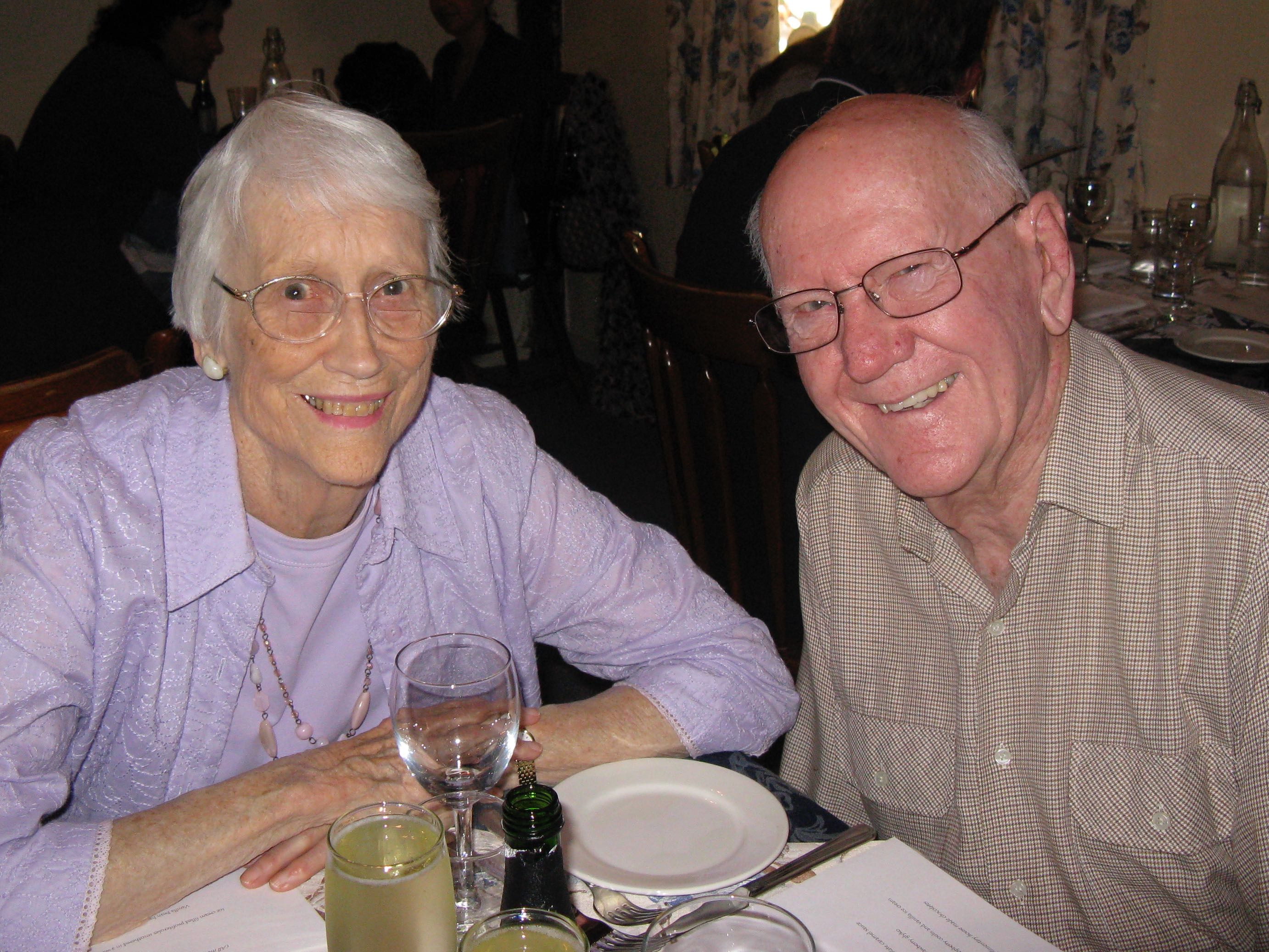
Vale my dear old Dad (1920-2021)

If it was my Mum who introduced me to Jane Austen and the classics of English literature, together with a love of language (and thus Scrabble and cryptic crosswords), it was my Dad who introduced me to Australiana, starting in my youth with the verse (as the poet himself called it) of Banjo Paterson. The grandson of a Presbyterian minister, my father never swore, but he’d read with great gusto the lines ‘”Murder! Bloody murder!” cried the man from Ironbark’. And we kids loved it. As Dad’s eyes deteriorated in his last years, he gave up reading books, but the book he kept by his chair-side, and the book he was last seen dipping into, was a book of Paterson’s verse.

Born in 1920, and living through the heyday of Australia’s development in the twentieth century, Dad loved stories about Australian pioneers of all sorts, from the exploits of Charles Kingsford-Smith to those of cattle kings like the Duracks. Mary Durack’s Kings in grass castles was one of his favourites, at least from the time when I was old enough to be aware of his reading. In later years, he became more aware of the politics of Australia’s colonial settlement and appreciated our need to revise our understanding of frontier life, but I don’t think that ever completely removed his love of these ventures. Dad, of course, also lived through the Depression and Second World War, with the latter inspiring another major reading interest, the history of the War. (He didn’t read a lot of fiction, being of that generation of men who felt fiction wasn’t quite as worthwhile as non-fiction).

My other main memory of Dad and books comes from the days when, as a very little girl, I would go to my parents bedroom in the morning – much to my mum’s chagrin as she loved a sleep-in – with my “twenty-eight books”. It wasn’t 28 of course, but for some reason, that was the number I would say. One of those books featured Jiminy Cricket, and Dad would feign great fear as I shoved this terrifying creature under his nose! This became a lasting in-joke between us for the rest of his life.

Now, though, Dad has gone – peacefully, at the excellent age of 100 years and 8 months – and I am left with these memories, along with the enduring knowledge of a man who loved me very much, who never failed to support me and compliment me, and who set an example of integrity, honesty, acceptance, stoicism, and love of and responsibility for family. He, like all of us, had his moments, but his, like Mum’s, was a life well-lived, one that will continue through our memories and through the lives of all those who loved him.

Vale, Dad. Go well, and thanks.