Bill curates is an occasional series where I delve into Sue’s vast archive, stretching back to May 2009, and choose a post for us to revisit.
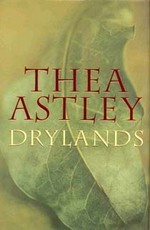
We discovered in August that Thea Astley is Sue’s #3 favourite writer. We’ve always known that Jane Austen (here) is #1. So I thought we should check out # 2. And, if you’re wondering, I’ve looked and there is no #4. Sue of course – she’s a librarian – is astonishingly well organised, so to go to her Jolley reviews, click on Authors above. There you will find authors listed alphabetically, and beneath each author the books Sue has reviewed.My original post titled: “Favourite writers 2: Elizabeth Jolley”
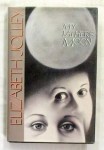
Not, unfortunately, being a time-traveller, I haven’t managed to see or hear Jane Austen in person. I am, however, far more fortunate in this regard when it comes to the subject of my next favourite writers post – Elizabeth Jolley. I did get to see and hear her at a literary lunch at the height of her career. My reaction was the same as many others – her “little old lady” appearance and voice belied her sharp wit and earthy worldliness.

It’s not surprising that she is one of my favourite writers: I call her my antipodean Jane Austen. She is witty and ironic, she is wicked (though blacker than Austen), and she tends to write about a small number of people in a confined, often domestic, situation. But here the similarity ends. While the “character” of Austen’s characters play a role in what happens to them – there’s a reason why Elizabeth not someone like Lydia “gets” Mr Darcy – Austen’s main interest is in the social and economic constraints on her characters. Jolley on the other hand focuses more on the interior. She explores loneliness and alienation. She looks at the disturbing or unsettling sides of relationships, the ‘feelings’ people have but often don’t admit to such as those for a person of the same sex or for a person for whom they should not have feelings for (due, for example, to age differences, power differences, or infidelity). She shows how difficult it is to maintain a long-term intimate or deep relationship that is equal on all levels (physical, intellectual, social, material, etc).
In the Australian and New Zealand Journal of Psychiatry (Vol. 25, No. 1, 1991), Jolley writes:
In my own writing I have been interested in the exploration of survival (perhaps emotional survival), resilience and responsibility. (I only know this now after several books are written).
How very Jolleyesque that aside is – humble but a bit sly at the same time. She continues a little later to say:
…for the most part my characters are perplexed, anxious, often frightened with perhaps one redeeming aspect in their personalities – that of optimism which might for a time, until it gets out of hand, keep them from the specialist’s doorstep.

The first Jolley I read was the short story, “Night runner”, in an anthology titled Room to move. It introduced me to her concept of alienation and rather black notion of survival, her particular brand of irony, her portrayal of characters who more often than not suffer from some level of self-delusion, and her dark humour. I went on to read Miss Peabody’s inheritance, The newspaper of Claremont Street, The well, The sugar mother, and An innocent gentleman, among others, and have never really been disappointed. I enjoy her use of repetition and self-referencing, the motifs and the characters, even, that reappear in different works. She gets me in the pit of my stomach with her vulnerable but often unkind or downright cruel characters, but makes me laugh at the same time with her depictions of their attempts at survival. You just have to see Ruth Cracknell playing The woman in a lampshade to know what I mean!
I have not yet read all of Jolley’s works. Just as for a long time I kept back one Jane Austen novel because once I’d read it I’d have read them all, I am now doing the same with Jolley. Her books are so delicious they need to be savoured. I’m sure this is not the last post I’ll be writing about her.
Postscript: Since this post I have read more Jolley, but I still have some up my sleeve!
____________________
Bill is right. There is no #4, though I have frequently thought about who would be my number 4. I’ve also wondered about how many favourite writers it would be reasonable to have? I love so many writers, still living and those who are no longer with us … but I think that if I do name a 4th I will stick to ones who have died. And, I think I know who that would be.
You now know my top three writers, as I considered them 10 years ago? Would you care to name your top 3?
 I read

 Let’s get the first thing clear. I like holocaust literature – not because I enjoy the subject matter but because in it I find the most elemental, universal truths about humanity. Depending on the book, this literature contains various combinations of bravery and cowardice, cruelty and kindness, love and hate, self-sacrifice, self-preservation and betrayal, resilience and resignation, and well, all those qualities that make up humanity and its converse, inhumanity. I have by no means read all that is out there but here are some that have moved me: Anne Frank’s The diary of a young girl (of course) and Anne Holm’s I am David, from my youth, and then books like Martin Amis’ Time’s arrow, Bernhard Schlink’s The reader, Marcus Zusak’s The book thief, and Ursula Hegi’s Stones from the river. There are gaps, though, in my reading, such as Thomas Keneally’s Schindler’s ark (I did see the film), the works of Primo Levi, and Elie Wiesel’s Night. I have, however, just added
 ‘No one,’ she says, ‘can write anything till they’ve had experience. Later on perhaps. You will write later on.’ (
 J.M. Coetzee
 One of my rules of reading is that when I have finished a book I go back and read the first chapter (or so) and any epigraphs the author may have included. These can often provide a real clue to meaning. This rule certainly applies to my latest read,
  Anyhow, here is a brief recap of my thoughts on
  Related, I suppose, to the coming-of-age issue is the theme of learning to accept being ordinary. After Sando and Loonie leave the first time, Pikelet goes out and surfs Old Smoky: the first time he does it he’s so successful he feels he’s not ordinary, but then in his overconfidence he does it again and nearly does himself in…this is the beginning of his changing point of view. As he says a little later when he reviews his relationship with Eva, “No, Eva was not ordinary. And neither was the form of consolation she preferred. Given my time over I would not do it all again”. In other words, while he had originally equated not being ordinary with doing big risky things, with courting fear, by the end of the novel he realises that life is “a tough gig” and is about more than courting fear and taking big risks. This doesn’t mean that he can’t do and enjoy a job that provides an andrenalin rush (paramedic/ambulance driver) but it does mean that he no longer seeks to be anything other than himself and that he now goes for an adrenaline rush in “safer” more acceptable ways.
 Whispering Gums