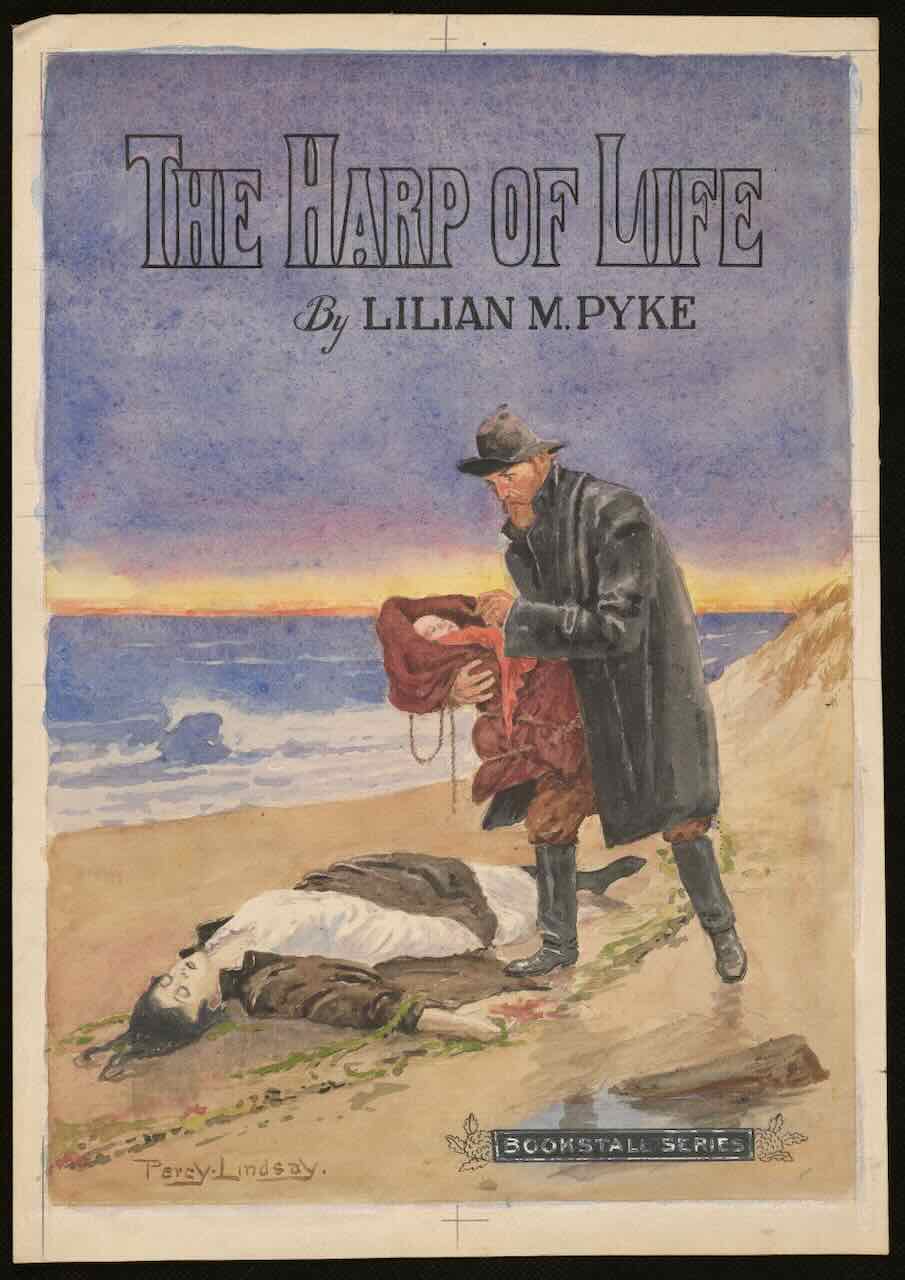
Monday musings on Australian literature: on 1924: 1, Bookstall, again

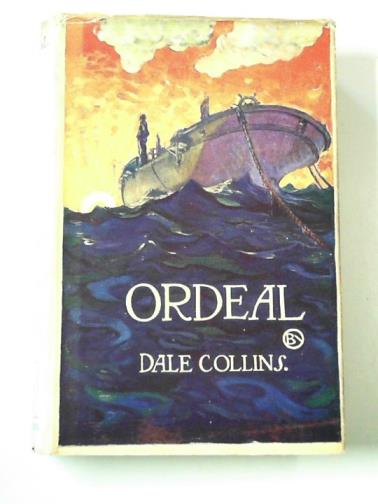
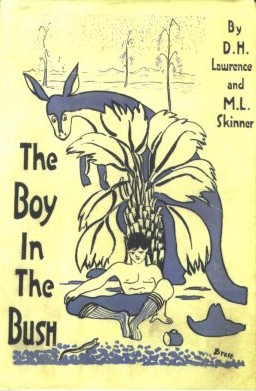
During 2022 and 2023, I wrote a series of posts on Australian literature as it was read, and thought about, a century earlier, in 1922 and 1923. Last year, I researched 1924, with a view to doing the same, and in fact heralded the upcoming 1924 series, but didn’t end up writing any posts. This was partly because many of the concerns were the similar to those of 1923, and partly because other ideas overtook me. But there were some interesting things said, so, nearly a quarter of the way through 2025, I’ve decided to write at least a couple of posts relating to 2024, starting with the Bookstall Company’s Bookstall series of Australian fiction.

This series of cheap paperbacks of Australian novels, as I have posted before, were introduced to the Australian market in 1904. I featured them in posts on 1922 and 1923, and am here updating us with 1924’s output. The series continued to serve its purpose, it seems, of supporting Australian writers as well as of providing reading matter at an affordable price. The Queenslander, introducing two new books in the series, started its brief article on June 7 with:

Australian novelists owe a great deal to the New South Wales Bookstall Company, which, during the last few years, has published more than 200 novels by Australian writers. 

Sydney’s The Labor Daily made a similar comment on December 16.

As far as I can tell from the research I did, publication did slow down with significantly fewer books published in 1924 than in 1923. Here is what I found.

  • Roy Bridges, By mountain tracks
  • Ernest Osborne, The copra trader
  • S.W. Powell, The trader of Kameko: South Seas
  • Lilian M. Pyke, The harp of life
  • W. Sabelberg, The key of mystery
  • H.E. Wickham, The great western road

So, just 6 books, compared with 20 in 1923, and only one by a woman. (There may have been a few more, but it’s these six that kept popping up in my searches.) Most are adventures of some sort and most feature a “love interest”.

Bushranger stories were still popular at this time, even though the worst of the bushranger era had ended by the 1880s. Both Roy Bridges’ By mountain tracks and Wickham’s The great western road belong to this genre. That said, Bridges’ book is described in The Queenslander (7 June) as “a story associated with the Kelly gang, but the theme generally is that of a romantic love episode”.

Two of the books, those by Pyke and Sabelberg, seem to be contemporary stories, Pyke’s being a tangled story about a waif rescued from the arms of its dead mother on a Queensland beach, and Sabelberg’s a mystery/thriller.

Adventures in the South Seas were apparently making a come-back around this time, with Jack McLaren (who appeared in my 1923 post), Ernest Osborne and S.W. Powell all setting books there. Hobart’s World (12 February) wrote of Powell’s novel as being “full of incident and adventure, and aglow with the rich color of the South Seas. A good shilling’s worth.” This latter point was frequently mentioned in reviews of Bookstall books. Indeed the World, in the same article, said of Wickham’s novel that

“Most of the characters in the book are well-drawn, and convincing, and there are humorous episodes to relieve the tragedies, and compensate for the author’s rather marked tendency to waste words in trite moralisings, and in a too-conscious elaboration of dialogue. Just the same, it is a marvellous shilling’s worth.”

Most reviewers of these books understood their intention as escapist reads or, what we would call today, commercial fiction, and wrote about them within that context. They either praised the works – with one, in fact, describing Osborne’s novel as “brilliantly written” – or, where they were critical, they tempered it with this understanding, as in the Powell example above. However, a report in the Murray Pioneer and Australian River Record (5 December) was not so generous. Sabelberg’s The key of mystery, it said, “is a crude murder story, crudely written”; Powell’s The trader of Kameko, “is a story, with no literary merit, of a white man, two brown girls and a hurricane”; and Wickham’s The great western road “is a story of the early gold rushes in N.S.W. of the same crude character as the other two”. Of course, reviewers do pitch their writing to their audience. Perhaps readers of the Murray Pioneer and Australian River Record had more refined tastes, and more money to spend, and our writer recognised that?

Some newspaper articles noted that some of these writers had already developed their writing skills in other forms. Sabelberg and Wickham, for example, are described as established, successful short story writers, and Lilian Pyke as a writer of “capital” stories for boys and girls – all of which proves, I guess, the point about Bookstall’s role in supporting Australian writers. How better to cut your teeth as a novelist than with a company like this?

And I will leave 1924 on this point. Life has been very busy this last week … so I have not been able to pay as much attention to reading and my blog as I’d like, but I do hope to post a review this week.

Stella Prize 2025 Longlist announced

Last year the Stella Prize longlist announcement took place on a Monday, gazumping that week’s Monday Musings. This year it’s a Tuesday, and it was again streamed online from the Adelaide Festival Writers Week …

As I say every year, I don’t do well at having read the Stella Prize longlist at the time of its announcement. In recent years the most I’ve read has been two (in 2019). Last year I’d read none at the time, but have read one since. This year, I have read one of the longlist (see below). I have read 8 of the 12 winners to date, which means I am falling behind! It’s not that I necessarily disagree with the winners, but just that my reading has been leading me in other directions.

In Stella’s spirit of keeping their judging panels fresh, none of this year’s judges were on last year’s panel, though some have judged before. This year’s panel comprises Gudanji/Wakaja woman, educator and author Debra Dank; teacher, interviewer/podcaster, and critic Astrid Edwards; writer and photographer Leah-Jing McIntosh; Sudanese–Australian media presenter and writer, Yassmin Abdel-Magied; and journalist and author with a special focus on social policy, Rick Morton. Astrid Edwards was the chair of the panel, and made the announcement.

The longlist

Here is the list, in alphabetical order by author, which is also how they were presented:

  • Jumaana Abdu, Translations (novel)
  • Manisha Anjali, Naag Mountain (poetry)
  • Melanie Cheng, Burrow (novel, my review)
  • Mantilla Chingaipe, Black convicts: How slavery shaped Australia (nonfiction)
  • Michelle de Kretser, Theory and practice (novel, on my TBR, kimbofo’s review)
  • Dylin Hardcastle, A language of limbs (novel)
  • Emily Maguire, Rapture (novel, my CWF Sessions 2 and 3)
  • Amy McQuire, Black witness: The power of Indigenous media: A family story from Gaza (nonfiction)
  • Samah Sabawi , Cactus pear for my beloved (nonfiction)
  • Mykaela Saunders, Always will be (short stories)
  • Inga Simpson, The thinning (novel) (Brona’s review)
  • Cher Tan, Peripatetic: Notes on (un)belonging (nonfiction)

So, seven fiction (including one short story collection), four nonfiction and one poetry collection, this year. You can read about the longlist, including comments by the judges at the Stella website.

Prior to the announcement, I pre-loaded this post with 15 potential longlistees, as a little test to myself on how many I might identify of the 12. I picked only three, partly because I hadn’t heard of some of the books the judges listed and partly because I didn’t know a lot about many of the others.

As always, I am not going to question the selection. The Stella is a diverse prize that aims to encompass a wide range of forms and styles, including some I don’t necessarily chase, and I haven’t read widely enough from 2024’s output, anyhow. But I have read one here, and gave a couple of the others to family members at Christmas. One was Rapture and it was loved. I’m keen to read the novels and the short story collection, in particular.

Last year there was an interesting panel discussion between the judges, but I don’t know whether there was one of not this year, because the YouTube link dropped out just as Astrid Edwards was finishing the list. Darn it.

Each of the longlisted authors receives $1000 in prize money, donated by the Copyright Agency’s Cultural Fund. The winer will receive $60,000. There were over 180 submissions this year.

“Literary prizes are subjective beasts, but I assure you, the works on this year’s longlist are remarkable.” Astrid Edwards

The shortlist will be announced on 8 April, and the winner on 23 May. You can seen more details on the Stella 2024 page.

Any comments?

Monday musings on Australian literature: Forgotten writers 10, Ruby Mary Doyle

Unlike my last forgotten writer, Dulcie Deamer, today’s writer, though a prolific contributor to newspapers in her day, has slipped into the shadows. Neither Wikipedia nor the Australian dictionary of biography (ADB) contain articles for her, but the AustLit database does. As with many of my Forgotten Writers articles, I researched and posted a versions of this on the Australian Women Writers’ site.

Ruby Mary Doyle

Ruby Mary Doyle (1887-1943) wrote short stories and serialised novels, newspaper articles including travel and nature pieces, and plays, mostly publishing as Ruby Doyle or Ruby M. Doyle. Much of her writing was published in Fairfax’s weekly magazine, The Sydney Mail. By the 1930s she had, says AustLit, gained a reputation as a writer of some standing. She was also active in the Lyceum Club and the Pioneer Club in Sydney. And yet, there are no articles for her in Wikipedia or the Australian Dictionary of Biography.

Doyle was born on the 20 February 1887 in Gunnedah, New South Wales, to Joseph McCormick Doyle, a bank manager for the Commercial Bank, and Annie (née Hooke). She was the first of six children. In 1935, in an article titled “The making of the writer”, Doyle wrote of how she came to writing:

As a child, when I walked through the bush, well behind the family party, every tree seemed an enchanted castle. Birds, butterflies, flowers talked, and I understood them. Imagination — that blessed gift from the gods — had come to me from every side of my family, and finally led me, whether I would or not, into the realm of writing.

According to Kingston, of the Dungog Historical Society, her first published serial was The Dragon, which appeared in The Sydney Mail from 4 June 1913, and was later published in book form as The mystery of the hills. Promoting the book form, which was published in 1919, The World’s News wrote that:

Those who love a story which is thoroughly and typically Australian and of the country will enjoy this tale of love and adventure … The “mystery” we shall not, of course, say anything about, except that it has to do with men who defy the law and have a chief, who is a man of importance. There are several love stories, and they have the usual course, and there is quite a fund of information as to how we Australians live in the country, and how we manage to enjoy ourselves there. 

This little piece says much about how Australia saw itself. “How we manage to enjoy ourselves there [ie “in the country”]” suggests that Australia was well on the way to urbanisation, but fascinated by its bush self.

Further stories and serialisations appeared, including The winning of Miriam Heron in The Sydney Mail in 1918, which was published in book form by Edwards Dunlop in 1924. Announcing this new serial in 1918, The Sydney Mail wrote:

She [Doyle] has already contributed to the ‘Mail,’ and has disclosed literary and dramatic ability of a high order. It is gratifying to note that she shows no disposition to ‘write herself out.’ On the contrary, ‘The Winning of Miriam Heron’ reveals that she has mastered the art of construction, and thus gives her readers a better chance than previously to fully appreciate her literary powers.

From 1924 to 1926, Ruby travelled overseas a few times – to the United Kingdom, the continent, Canada and America – during which time she regularly submitted travel articles to the Dungog Chronicle, which, according to that paper, “were reprinted in many country papers throughout the State.”

Doyle wrote for local papers through the 1920s and 1930s. AustLit lists over 30 works of hers published over this time. She also tried her hand at playwriting. Kingston writes that her play The Family Tree came second in a competition at the Independent Theatre, Sydney, in 1933, and that the following year, The Man from Murrumbidgee, was produced at the Kursaal Theatre, also in Sydney. I believe these are the same play, given The Man from Murrumbidgee is about a status-seeking wife who tries to find “a worthy ancestor” on the family tree.

Doyle’s writing reflects the versatility of the working writer. Her short stories dealt largely with domestic subjects, while her serialised novels included historical stories about the colonial days, and romantic adventure stories. Her non-fiction focused particularly on nature, travel and local history, rather than on social or political commentary. Many of her local history pieces drew on her own family’s long history in the region, and include some delightful touches of humour. For example, she describes a pioneer family (hers it seems), coming out to Australia in 1828 with various things, including merino sheep and

rolls and rolls of beautiful silks, Mr. Hooke having an idea that he would be able to deal successfully in such merchandise. It proved only a supposition, and for the rest of her life Mrs Hooke had a marvellous collection of silks from which her dresses were made. 

There is also some recognition of the original people of the land. Writing in The Sydney Mail 1931 on the town of Gresford, she says that:

Most of the homes in the vicinity bear English and Welsh names — Norwood, Clevedon, Goulston, Camyr ‘Allyn, Caergule, Penshurst, Tre vallyn, etc. The river, named Paterson by the white man, was called Yimmang by the aborigines; one of our poets has written a very beautiful poem, “Ode to the Yimmang,” in which he extols its beauty.

Ruby Doyle was regularly written up in the local Dungog Chronicle, clearly being of interest to the community. She went to England, again, in 1935, planning to be away for two or three years. On 1 March, the Dungog Chronicle,reported on a farewell for this “gifted novelist”, and named Flora Eldershaw – one half of the M. Barnard Eldershaw collaboration – as a co-guest at the event. This suggests Doyle was known to the literati of her time. Doyle died in England in 1943, having never returned home again. A small obituary appeared in various local newspapers, including The Gloucester Advocate (see under Sources). The obituary noted her three published works, but also commented on her writing overall, commenting in particular that

a keen observer of nature, she had the gift of translating her thoughts on paper in an easy readable way.

The piece I posted for the Australian Women Writers Challenge is titled “The flame” (linked below). It is an intriguing story about a disgruntled wife, and invites – particularly from modern eyes – a variety of readings. I’d love to hear your thoughts.

Sources

  • Miss Ruby Doyle, The Gloucester Advocate, 12 January 1943 [Accessed: 14 January 2025]
  • Ruby Doyle, “The flame“, Sydney Mail, 24 July 1935 [Accessed: 3 February 2025]
  • Ruby M. DoyleAustLit [Accessed: 3 Feb 2025]
  • Maureen Kingston, “Was Ruby Doyle our first local travel writer?”, Dungog Chronicle, 25 August 2021 [Accessed via the NLA eResources service: 3 February 1924]

Andra Putnis, Stories my grandmothers didn’t tell me (#BookReview)

Cover

Local writer Andra Putnis’ book, Stories my grandmothers didn’t tell me: Two women’s journeys from war-torn Europe to a new life in Australia, was my reading group’s February read. Not only was it highly recommended by two members who had read it, but we were told the author would be happy to attend our meeting if we chose it. That was an offer too good to pass up, so we scheduled it.

We’ve had a few authors attend our meetings over the years, and it has always been worthwhile. Yes, it risks constraining discussion if people have any reservations about the book, but that has never really been a problem, either because there haven’t been serious reservations or because the value of having the author present has far outweighed any perceived impact on free discussion. In Putnis’ case, the story is so powerful and so well-told that it was unlikely there’d be any reservations that wouldn’t turn into questions about why or how she wrote her story.

“hidden pasts, still very much present”

Stories my grandmothers didn’t tell me is a family biography centring on the author’s two Latvian-born grandmothers, her maternal Grandma Milda (1913-1997) and paternal Nanna Aline (1924-2021). Teenage Aline was separated from her parents around 1942 to go serve in Germany’s war-time labour force. Meanwhile, in late 1944, with the war ending and the Soviet army looking set to return, 7-months pregnant Milda left Latvia with her parents and 18-month old son, enduring a tough, desperate journey. Both women ended up in UNRRA-managed Displaced Persons camps in Germany, where they experienced years of hardship before arriving in Australia in late 1949/1950. Milda, and later Aline, settled in Newcastle in the early 1950s, and met there through its tight-knit Latvian migrant community.

That’s the rough outline, but of course their stories – what they endured – are far more complicated, and Putnis wanted to understand. She told us that as a young child she had a sense of Latvia as almost an unreal fairytale place with beautiful forests, music and dancing, but she had also sensed, through family murmurs, a darker side, one that encompassed sadness and pain not only about Latvia but also about the family’s own story. She likened it to being on a boat, where you can see the surface but have no idea of what lies in the deeps below. She feared, as a granddaughter, that it wasn’t her place to go there, and worried about upsetting people. However, she did go there because she wanted to know and because Nanna Aline was willing. But, she said, she was always cognisant of just how far a granddaughter – even an older one – could, or should, go.

“moving between darkness and light”

I have read several hybrid war-related biography/memoirs written by family members, and this one is as good as any of them. This is not only because of the power of the story, and the honesty with which it is told – but also because of the structure Putnis uses. It is told chronologically, which is logical, but through the voices of Milda and Aline interspersed with those of others including, of course, Putnis’s own. I wanted to know about this and Putnis was happy to explain.

The structure was driven by Aline who told her story chronologically. She had thought deeply about and “understood the arc of her life”, said Putnis. So, with this in hand, Putnis started to piece Milda’s story – which was gathered less systematically – along the same lines. The challenge came in making the “weave” work, in getting the balance right, between them and their stories, and the wider historical, community and family framework.

Putnis worked on her book for nearly 20 years – with the occasional gap when life took over. Aline lived a long life so Putnis was able to spend a lot of time with her. Aline had also had the toughest life, particularly in terms of her personal choices and circumstances. Our hearts went out to her. Milda, on the other hand, died when Putnis was 19 years old, before she started working on her book. However, Milda had lived for nearly a decade with Putnis’s family, so Putnis had spent a lot of time talking with her, getting to know her. Putnis enhances both stories with information gleaned from conversations with other close family members, from secondary reading, and from primary research through letters, in archives, and so on.

The result is a coherent story of these two women told from more than one perspective, which has the effect of varying the intensity as we read – of mixing the light and the dark – and of enhancing authenticity, because the perspectives reinforce each other. It’s sophisticated and highly readable.

“the world is in tears” (Aline’s father)

It is a powerful and often heart-rending story, and it is to Putnis’s credit that she is able to convey both the individual personalities of her very different grandmothers and the universality of their experiences. Their experience of living under multiple invasions is both personal but, as we know too devastatingly well, political and general. Same for their experience of living in camps for years – of having your life on hold while you just survive. And for their experience of being migrants – “reffos” – in 1950s Australia. The negatives abound, with any positives achieved being hard fought. It’s a lesson in how ordinary lives are changed irrevocably by political actions way out of their control.

So, the book raises many questions – about the past and about what is happening now. Putnis also specifically raises the issue of protecting children, and I wanted to know about this too, because, given our knowledge of intergenerational trauma, how do you protect children from horror without laying them more open to ongoing trauma within? There is no easy answer, we concluded, but awareness and consideration about where to draw the line can only help.

Finally, Stories my grandmothers didn’t tell me, is fundamentally a book about the importance – and limits – of stories. Early on Putnis talks to Aline about her project, and Aline is clear about her intentions:

Alright then, I don’t remember everything. But I have my own point of view. Some old Latvian women go on about how wonderful things were before the war … You heard these stories? Well, it was not always like that. Not all the boys were good and I was not as kind to my māte [mother] as I should have been. If you want that story, you are talking to the wrong grandma.

Aline was brave, and this is a brave book about survival that doesn’t shy away from the tough and sad stories. But, more importantly, it conveys something about stories, which is that individual stories are very important, but they are not the whole story. In other words, the more stories we have the better picture we have – of history, and of the complexity of humanity that makes us who and what we are.

Putnis concludes with Aline’s funeral, and shares the words she spoke, which also encapsulate this book:

Nanna taught me nothing less than what it means to be human, to earn the grace and wisdom that come from surviving darkness and celebrating light.

I’d like to tell more stories about the book, including about Milda and the strong woman she was, but this post is long enough, so I’ll just encourage you to read the book for yourselves.

Andra Putnis
Stories my grandmothers didn’t tell me: Two women’s journeys from war-torn Europe to a new life in Australia
Crows Nest: Allen & Unwin, 2024
292pp.
ISBN: 9781761471322

Monday musings on Australian literature: The Richell Prize for Emerging Writers

Back in 2014, I wrote a Monday Musings post on Unpublished Manuscript Awards. Since then, more of these awards have appeared, including the Finlay Lloyd 20/40 Publishing Prize (my posts), which made its first award in 2023. Before that, however – and not long after my 2014 post – came The Richell Prize for Emerging Writers.

Those of you who follow Australian publishing closely will recognise the name Richell. English-born Matt Richell was the CEO of Hachette Australia – and was well-recognised and loved for his support of Australian writing and writers. He died tragically in July 2014 due to a surfing accident.

The Richell Prize was launched in his memory in 2015. It is “open to unpublished writers of adult fiction and adult narrative non-fiction”. unusually, writers don’t need to have a full manuscript at the time of submission, but must intend to complete one. Richell’s widow, Hannah, explains it this way, “Unlike some prizes, we don’t ask for a completed manuscript. We simply ask for the first three chapters, a clear vision and your commitment to finishing your project”.The winner receives $10,000, and a year’s mentoring with one of Hachette Australia’s publishers. This usually ends in the work being published by Hachette, but not always.

Winners to date

  • 2015: Sally Abbott, Closing down (Hachette, 2017) (Lisa’s review)
  • 2016: Susie Greenhill, The clinking (Hachette, 2025)
  • 2017: Sam Coley, State Highway One (Hachette, 2020)
  • 2018: Ruth McIver, I shot the Devil (Hachette, 2020)
  • 2019: Else Fitzgerald, Nearly curtains (short story collection, published as Everything feels like the end of the world, Allen & Unwin, 2022, and subsequently shortlisted for the 2022 Aurealis Awards and the 2023 University of Southern Queensland Steele Rudd Award) (Brona’s review)
  • 2020: Aisling Smith, After the rain (Hachette, 2023)
  • 2021: Simone Jordan, Tell her she’s dreamin’ (Hachette, 2023)
  • 2022: Susannah Begbie, When trees fall without warning (published as The deed, Hachette, 2024)
  • 2023: Alex Sawyer, Rat Daniels (nothing published yet)
  • 2024: Myles McGuire, Stroke (nothing published yet)

As you can see, the majority have been published by Hachette, but not all, and the lead time varies quite a lot. In fact, prize partner, the Emerging Writers Festival, explains it a bit more on its webpage for the 2024 prize. It says that “Hachette Australia will work with the winning writer to develop their manuscript with first option to consider the finished work, and the shortlisted entries, for publication [my emph]”.

It then says that

To date [early 2024, I think], Hachette has published or contracted ten authors who have been discovered through this annual Prize, including Sally Abbott (2015 winner), Brodie Lancaster (2015 shortlist), Sam Coley (2017 winner), Julie Keys (2017 shortlist), Ruth McIver (2018 winner), Mandy Beaumont (2018 shortlist), Zaheda Ghani (2018 shortlist), Allee Richards (2019 shortlist), Aisling Smith (2020 winner) and Simone Amelia Jordan (2021 winner).

Hannah Kent, Burial Rites bookcover

In my original Monday Musings, I quoted Hannah Kent, who won the inaugural Writing Australia Unpublished Manuscript Award in 2011 for her hugely successful historical novel, Burial rites (my review), as saying, “these sorts of awards are so important. They help you get that foot in the door”.

And, it’s not only the winners who benefit. Long- and shortlistees also often benefit, as clearly happens with the Richell Prize. We can see this happening with long- and shortlisted published works, because we read the lists, see the books in the bookshops, and often buy them. But, we rarely know what happens to those who are listed for manuscript awards. Even if we see the long- and shortlists, the work may not be published for years, and if it is, may be published under a different title. Also, the promotion may not mention the listing. Sometimes, however, we do know, as we do with Lisa Kenway’s All you took from me (my post), because it is mentioned in the book’s promotion. And why not? Any award listing is a feather in the cap, and could give a book an edge with readers.

Unfortunately, like any awards, these unpublished manuscript awards don’t survive forever. I cannot, for example, find much about the inaugural Writing Australia Unpublished Manuscript Award that Hannah Kent won in 2011. And The Australian/Vogel Literary Award, which has long been recognised as one of Australia’s most prestigious unpublished manuscript awards, made its last award last year. It has been replaced, apparently, by The Australian Fiction Prize. It is still supported by The Australian newspaper, but now in partnership with the publisher, HarperCollins, rather than the Vogel’s Allen & Unwin. It remains an unpublished manuscript award, but there is now no age limit, and it excludes science fiction, young adult, poetry, plays, works for children. The prize still offers cash and publication.

Do you follow manuscript awards? If so, which ones most closely suit your interests?

Lisa Kenway, All you took from me (#GuestThoughts)

With my Review TBR pile teetering on the brink, I decided to call in a favour from Mr Gums, and handed him Lisa Kenway’s debut novel, All you took from me, thinking it might be up his alley.

Now, a word about Mr Gums. He is an engineer by training, and not the world’s biggest reader. When he does read – in the past at least – his go-to has been Jane Austen (whose books he has read multiple times, including more than once in German) and other classics. However, with more time at his disposal since retirement, he has started reading a little more broadly. He likes to be “entertained”, not overly challenged in his reading. (Apparently, reading Mansfield Park in German is not challenging!) Life is challenging enough, he says. So, crime fiction seemed to be a good fit, and he’s been trying out several authors with varying success. Chris Hammer is a big hit. Garry Disher goes down pretty well too. Peter Temple not so much. He has also read non-Australian crime writers – English, and others, including, recently, a Japanese author (thanks to JacquiWine). As you can tell from his Austen love, he is more than happy to read women writers, and has crime by Dervla McTiernan and Shelley Burr, and recently, Dinuka McKenzie’s first novel. So, why not Lisa Kenway?

So, Lisa Kenway. According to the media release that came with my review copy, she is an Australian writer and anaesthetist. This debut novel, All you took from me, was “inspired by her longstanding fascination with memory and consciousness”. An earlier manuscript version was longlisted for Hachette’s Richell Prize for Emerging Writers in 2020 (out of over 800 submissions). That must have given her confidence to keep working on it, because here it is, published by Transit Lounge in 2024.

Anyhow, the novel is set in two places – the Blue Mountains (which I love) and Sydney. The protagonist, Clare Carpenter, is an anaesthetist – write what you know! – whose husband has died in a single-vehicle car accident which also caused her to lose her memory. Soon after, she senses she is being followed by a stranger. Why? Finding the answer becomes her mission, but it is hampered by her loss of memory. Can she reverse that? Of course nothing is simple, and the risks and threats mount. This novel is not Mr Gums’ (nor my) preferred type of crime, which is the police procedural. It is, instead, as the blurbs say, a psychological thriller.

Mr Gums was intrigued by this debut, but he had reservations. He particularly liked the set up – the protagonist as anaesthetist. It was different, and an interesting idea. He enjoyed reading the technical details about anaesthesia, and liked the attention paid to details in those parts of the story. (Like me, he enjoys it when novels teach him about a world he doesn’t know much about.) However, this is also where his main reservation came, because, scientifically trained himself, he found Clare’s behaviour hard to believe. The risks she took, her foray into unscientific ideas, lost him. Mr Gums, though, has not been in the position Clare found herself in. Perhaps, in the same desperate circumstances, he might try anything too?

All you took from me is told first person, and the voice rings true. Clare is articulate and intelligent, and honest, as she starts to uncover less pleasant things about herself. The novel opens in the hospital a month after the accident, with Clare starting to return to her – new – consciousness. From here, the plot picks up, becoming increasing dramatic and sensational, as you’d expect for its genre, with Clare’s shaky memory, and her attempts to recover it, underpinning much of the intrigue. There are the usual red herrings and misleading threads, which kept Mr Gums challenged as he tried to work out what was true and what wasn’t.

Overall, Kenway’s novel is not Mr Gums’ preferred crime genre. He prefers more dogged analysis in his crime to the stress and tension of a thriller. However, he did conclude that All you took from me was “strangely entertaining”, which suggests to me that Kenway’s debut should not be the last novel she writes. I’d love to know if anyone else has read it?

Lisa Kenway
All you took from me
Melbourne: Transit Lounge, 2024
328pp.
ISBN: 9781923023123

[Review copy courtesy Transit Lounge (via Scott Eathorne of Quikmark Media)]

Author Talk: The season with Helen Garner

It is a measure of the love and respect readers have for Helen Garner that this event, held in the National Library of Australia’s 300-seat theatre, had a 200-strong waiting list. And, it was well worth booking early for.

The evening was emceed by Luke Hickey, the National Library’s Assistant Director-General Engagement. He started with a welcome, acknowledgement of country and an introduction of the participants, who were:

  • Helen Garner (my posts): multi-award winning author of novels, stories, screenplays and works of non-fiction.
  • Beejay Silcox: writer, literary critic and about-to-retire Artistic Director of Canberra Writers Festival.

The conversation

This was a joyful but engaged conversation that flowed easily, while gently getting to the nub of some great ideas.

Beejay started by reminding us that “Canberra” means “meeting place” and that for millennia people have met here to “talk about things that matter”. She then tried to define what Helen Garner means to us. She is a writer who destablises and discomforts us, who energises us, who provokes us but not for provocation’s sake. She’s a writer who doubts, is uncertain, and who, because of this, brings us along with her.

On writing The season

Beejay called The season a graceful book, a love letter from a grandmother to boys and men. Some see it as very different from her previous work, but Beejay was not so sure. What did Garner think?

Garner said this was the most fun writing she had done. It was an “extraordinary experience” and came at a time when she felt burnt out. Preparing her three diaries had involved many “squirmy 2ams”. She also saw it as her last chance to get close to a grandchild.

Contrary to her normal practice, which is not to ask permission, Garner had asked her grandson and his coach whether it would be ok for her to attend training sessions with a view to writing about the experience.

Beejay commented on Garner’s reference in the book to being an invisible older woman. Was it a superpower or curse. Oh, superpower, said Garner! She didn’t want to interview the players, just observe.

Garner didn’t know anything about teams, so she’d sit back, an invisible figure in her straw hat and overalls, and watch. The boys were, generally, oblivious of her presence, and had no sense of this being rude. She was fascinated by their behaviour versus that of girls, with which she is more familiar. They would dump their stuff any which way – bags, bikes, phones – and keep on walking to wherever they were going. Girls, by comparison, place their bikes, say, neatly against a tree. Women scan the territory, whereas these boys had tunnel vision, a “tremendous ability to concentrate” or focus.

She observed that during training the coach would exhort the boys to widen their field of vision. It was “thrilling to watch”. Garner conveyed such joy about watching the young men. I remember feeling the same about watching my son’s cricket team. Those boys were so enthusiastic, so sure, after getting out for a duck, that they’d hit that six next time. Their confidence was infectious.

On football, and writing about it

Garner admitted to being a Western Bulldogs fan, and talked about her love of footy. She “can’t stand it when it’s not footy season”, which drew some perhaps surprised but warm-hearted laughter from the audience.

Beejay spoke of Garner’s “narrative love of the game”, of her anchoring her writing about it in terms of writers like Blake, and Homeric epics, of her referencing “elemental” ideas like mercy, triumph, vengeance.

Garner talked about her introduction to the sport – her origin story as Beejay framed it – via the 1997 documentary Year of the dogs. It was a time of great change in the sport, and she was moved by the decisions made by some players to not chase the money.

While she knows the rules and understands the play, she will “never” understand the game, but doesn’t care. She didn’t want to take a position on football. Some expected her, for example, to take a feminist position, and explore the brutal aspects, but she wanted to glorify.

Beejay asked how hard it was to not write what people expected. Garner didn’t know how to write a polemical book about football. In fact, she struggled to turn her experience into a book. She started writing it in the past, but that gave it an historical feel. As soon as she changed to present tense, she knew she had her story.

Beejay asked her to read the opening two paragraphs:

I pull up at the kerb. I love this park they train in. I must have walked the figure-of-eight round its ovals hundreds of times, at dawn, in winter and summer, to throw the ball for Dozer, our red heeler-but he’s buried now, in the backyard, under the crepe myrtle near the chook pen.

The boy jumps out with his footy and trots away, bouncing. it. Boy? Look at him. He’s been playing with our suburban club since he was a tubby little eight-year-old; I have never paid more than token attention to his sporting life. But this year he’s in the Under-16s. The shoulders on him! He must be almost six feet tall. He’s the youngest of my three grand-children. The last, and there will be no more.

Beejay described this as a masterclass in writing. Everything is in these two paragraphs – relationships, rhythm of life, her sense of place, death.

Garner said, simply (modestly, some of us would say):

“What I’m good at is saying what happens”.

On Garner, the writer and grandmother

Garner loves being a grandmother, and got more laughs when she admitted that after three marriages she was no good at being married, but had found a place to be in the world. She sees the role of a grandmother as being “a servant”, that is, as serving the family, helping the family grow, being the backstop.

Beejay returned to her introduction of Garner as self-effacing, as a writer who doubts. In this book, she describes herself as “a bore”. Is this questioning of herself a whim, and what is the gap between the book she imagines and the one she creates.

Garner never has an idea of what her book is to be. She writes sentence by sentence. She talked about being “a small piece of shit”. While one husband told her he didn’t feel that way, she thinks most of us feel small, at least sometimes. They are valuable times; they balance “the insane moments of triumph”.

On values, lessons, manners

Garner loves football because the discipline of sport puts boundaries around the urge to fight. (She referenced the Iliad with its sense of enormous power). Garner and Beejay discussed a photo Garner loves of two footballers at a moment of defeat, with its Homeric sense of valour and duty, of intimacy, loss and pain. Garner sees these footballers as young, and perfect. She loves “noble postures of defeat” rather than Achilles-style roaring, bellowing triumph.

Garner thinks football can teach boys manners. There can be moral teaching, to not think of themselves and to trust each other .

Beejay also noted that The season is a love letter to volatile youth but is also about age. What did Garner mean by feeling envy. Was it of youth? Of boys doing things she couldn’t? Or related to the presentism of youth, and being unweighted by the past? A bit of all of this. Garner envies youth, its fearlessness. The discussion then turned to what happens to boys who are tender when young but are forced to harden when they get older. Garner hates “the clamp” that is put on emotion in boys.

For all the talk about youth envy, Garner also accepts her age. At 82, she is bothered that people try to deny her age, as in “you’re not old”!

Q & A

On boys and masculinity: a couple of questions/comments concerned this. One audience member thanked her for her “lovely writing” about boys compared to all the “toxic masculinity” talk that confronts them today. Garner hates that those two words – “toxic” and “masculinity” – are glued together, and that boys have to face it. Another questioner wondered how parents can help boys become the boys we’d like them to be. Garner shared an experience she had of Tim Winton calming his distraught 4-year-old by simply sitting with the child and repeatedly naming his feelings, “you’re so angry, you’re so sad”, rather than telling him to get over it, etc.

On Garner being a great observer of human emotions and whether she has questions in mind when she is observing. Nope! Garner just barges in! She’s no good at planning. People love it if you are interested in their work. She realises she is “completely un-bore-able”. (I can relate to this.) She quoted a French writer who said “ignorance and curiosity” form the basis of their writing.

On whether writing The season cured her feeling of burnout: Garner has signed a contract to deliver another book in December but “has nothing say”!

Conclusion

I loved this conversation, not only because Beejay asked perceptive, interesting questions and because Garner is – well, Garner – but also because Garner confirmed my own feelings about sport. It is life – it’s narrative, character, drama, emotion. It can play out so many of the big things we feel and experience.

Beejay clearly liked this too because she concluded the conversation on the idea that football is bigger than just the game. Was there one lesson we could take away from it. Garner’s response?

”Don’t turn your back on the play”!

And with that the session closed to enthusiastic and appreciative applause.

Author Talk: The season with Helen Garner
With Beejay Silcox
National Library of Australia, presented in partnership with the Canberra Writers Festival
Thursday 20 February 2025

Monday Musings on Australian literature: Diverse publishing

With the idea and practice of diversity under attack in more than one place around this world of ours, it’s encouraging to see publishers continuing to support the need for more diversity in their output.

I’ve written several Monday Musings about diversity in publishing, including these, listed from the most recent to the earliest:

  • Bundyi (2024): on a new First Nations imprint, being curated by Dr Anita Heiss, and under the auspices of Simon & Schuster
  • Canberra Writers Festival 2023: 2, Celebrating the classics (2023): on a panel discussion about UQP’s First Nations Classics initiative
  • First Nations Classics (2022): introducing UQP’s First Nations Classics initiative.
  • Magabala Books (2022): spotlight on this First Nations publisher, which was established in 1984.
  • Diversity and memoir (2021): on the issue that people from diverse backgrounds are expected to write memoirs about their experience rather than free to write on their choice of subject.
  • Multicultural NSW Award (2019): on this award that celebrates the publishing of books dealing with or furthering our understanding of migrant experience, cultural diversity or multiculturalism in Australia
  • Who is publishing the interesting books (2014): looks at what “interesting”means from a number of angles including diverse writers

Of course I’ve written posts on diversity from other angles – such as on festivals, or listing books by diverse writers – and I have reviewed many books by diverse writers.

I was inspired to write this post by another publishing initiative in this space, Allen & Unwin’s Joan Press. It was created, in fact, in 2020, but I only cam across it recently. Curated by Nakkiah Lui, a Gamilaroi and Torres Strait Islander woman, and a writer, actor and director, it describes itself as “Radical, inclusive, rebellious”. Its simple home page says:

Joan publishes books across all genres and forms. Each Joan title creates space for voices that get pushed to the fringes; voices that challenge and interrogate the world around them. Named after Lui’s grandmother, Joan Press recognises that storytelling is both the legacy and the future of any community, and aims to be a home for stories and storytellers who are redefining the mainstream in a way that is radical, inclusive and bold.

As far as I can tell, Joan has so far published three books:

  • Emma Darragh, Thanks for having me (2024), Joan Press’s first fiction title, described as comprising “interwoven stories about three generations of women in one family as they navigate girlhood, motherhood and selfhood, perfect for fans of Jennifer Egan, Meg Mason and Paige Clark”. 
  • Sarah Firth, Eventually everything connects (2023), a work of graphic non-fiction, described as  a delicious mix of daily life, science, philosophy, pop culture, daydreams and irreverent humour”
  • Madison Godfrey, Dress rehearsals (2023), described as “A memoir made of poetry, Dress Rehearsals documents a decade of performing womanhood in a non-binary body”.

Unlike some of the publisher sites I’ve visited recently, Joan does seem to be currently still accepting submissions.

And a little extra …

Related to the issue of diversity in publishing is that of diversity in the publishing workforce. In March and April of 2022, a survey was conducted of diversity and inclusion in the Australian publishing industry. You can read about it here 9where there are links to further details including the full report, but the summary drawn was that

The publishing industry in Australia is highly educated, driven by women and has strong LGBTQ+ representation, yet struggles to reflect Australia’s cultural and social diversity, according to the first survey examining diversity in Australian publishing.

The summary said that the survey yielded “important insights that will help to push for change in the sector”. Some of you may remember this survey, because it got quite a bit of coverage at the time. But what has happened since? That has been hard to find, as my search on the subject produced a page or more of hits on the 2022 survey, but a page or so in, I found a Books + Publishing article from February 2024, titled “APA [Australian Publishers Assoication] releases diversity and inclusion plan” and stating that APA had released ‘a diversity and inclusion plan “to guide and support industry progress over the next two years”‘. The article lists eight recommendations for publishers to work on, and provides a link to the plan.

I also find an announcement from August 2024 that Hachette Australia and Media Diversity Australia (MDA) “are excited to announce a significant partnership, with Hachette becoming the inaugural book publisher member of MDA. This collaboration also marks the launch of the Hachette x MDA Publishing Traineeship, aimed at championing diversity and inclusivity within the publishing industry”. Besides this traineeship, membership of MDA apparently gives Hachette “access to a suite of valuable services, including the MDA TalentHub to reach a more diverse talent pool; participation in advocacy initiatives and industry roundtables; and customised Diversity, Equity, and Inclusion training and guidance”.

Too early to see how all this is playing out, but it’s surely positive.

Any thoughts? Do you seek writing my diverse authors, and if so, how easy is it to find?

Melanie Cheng, The burrow (#BookReview)

You may have heard the announcement by Sean Manning, of Simon & Schuster’s flagship imprint in the US, that he will “no longer require authors to obtain blurbs for their books”. Australian media academic Julian Novitz discussed the decision in The Conversation in a piece titled “Brilliant, moving, thought-provoking! Simon & Schuster is dispensing with book blurbs – will it make any difference?” I considered writing a post on this, asking for your thoughts on these blurbs. Do they influence you in any way? But I didn’t. Instead, I am using it to introduce Australian author, Melanie Cheng’s latest novel, The burrow.

As you can see from the cover of my edition, it is beautifully spare, but it does have two blurbs. At the top is Christos Tsiolkas’ “stupendously good” and at the bottom, Helen Garner’s “how rare this delicacy – this calm, sweet, desolated wisdom”. Tsiolkas and Garner are respected, robust writers who don’t flinch from uncomfortable truths, so their commendation carries some weight with me. However, there are readers who don’t like these authors. Will that turn them away from the novel? I’d be interested to know. Meanwhile, I’ll get onto the book, which, at 184 well-spaced pages, is surely a novella.

The back cover tells me that it’s about a family confronting “long-buried secrets”, and that it “tells an unforgettable story about grief and hope”. Oh, and that the family buys a pet rabbit. There’s not a lot to go on here besides the usual cliches about secrets, grief and hope, but I was interested because I have had Melanie Cheng in my sights for some time, and it has just been shortlisted for this year’s Victorian Premier’s Literary Award.

It does seem, however, that grief is following me around this year, as the heart of this novel concerns the drowning death of a six-month-old baby girl some four years before the novel starts. The family – parents Amy and Jin Lee, and their remaining daughter, 10-year-old Lucie – is surviving intact, but only just. The novel is set in Melbourne during the pandemic, just as lockdown restrictions are being relaxed, so the family is needing to confront the outside world a little more. Reminding me somewhat of Charlotte Wood’s Stone Yard devotional (my review), our threesome is disturbed by two new additions, the pet rabbit bought for Lucie, and Amy’s mother Pauline who has broken her wrist and cannot live alone for a while. These two, along with the relaxing of lockdown, offer potential catalysts for change. Will it be for the good or will the family implode?

Cheng tells her story through the alternating third-person perspectives of the characters. The writing is beautifully spare, but also engaging and moving. Having experienced a devastating death in my own family – my sister, not my child – I am interested in how people traverse such grief, particularly when there is potential for blame and guilt. Every situation is different, but there are, I think, some universals – love, generosity, and communication (or lack thereof). The Lee family has some of each of these, but not enough, and hence the just-surviving-but-not-really-living state they find themselves in. It’s realistic, believable.

I am always impressed by writers who can unfold a story slowly, but in few words, and Cheng is one of these writers. What exactly happened is divulged gradually in such a way as to make us think about how it affected – and is still affecting – the person whose perspective we are reading. It lets us feel the different ways grief can stall us. It also gives us time to get to know the characters, and to understand and relate to them. For these reasons, the story is tricky to talk about because if I explain what happened, I undermine all Cheng’s good work, so I’ll leave the story here and get back to the two additions.

As actors in the story, the rabbit and Pauline are opposite ends of the spectrum. The rabbit is a quiet, largely passive presence which interacts minimally with the family but provides a focal point for their thoughts. He brings a “sparkle” back to Lucie’s eyes that had been missing for some time. However, as a prey animal he also reminds them of the fragility of life. A rabbit is an interesting choice, one that kept me thinking about in terms of his significance. The novel is titled “The burrow”, but it’s not a simple literal reference to the rabbit. A burrow is also referenced in the epigraph from Franz Kafka’s short story “The burrow”:

The most beautiful thing about my burrow is the stillness. Of course, that is deceptive. At any moment it may be shattered and then all will be over.

How are we to read this? The family has already been shattered, and at the opening of the novel it does feel as though all is over, that they are mainly going through the motions of living. But of course it’s not all over. Sure, they are not doing very well. They are isolated from others (and not just because of the lockdown which had given them “a reprieve”, excuses to not engage). But they are still together, and they haven’t completely given up. They buy the rabbit for Lucie when she shows interest in something; they invite Pauline back into their lives when it appears she needs them.

And this brings me to Pauline. She sweeps in, injecting much needed energy, whether they want it or not. She can’t help herself, and for death-focused Lucie it’s energising, “a good thing”. However, it’s also clear that Pauline is involved in Ruby’s death in some way, that it’s not only the pandemic that has separated her from the family for four years. Now, though, she might make the difference.

But, there’s no guarantee. The family suffers several setbacks, literal and metaphorical, on their journey – sickness, an intruder, conflict, and more. Their journey reflects that in Richard Adams’ classic, Watershed Down, which Pauline reads to Lucie and which she characterises as “the epic story of an odd group of rabbits and their quest to establish a thriving warren”.

There is so much to like about this book, and it starts with the characters. With almost as few brushstrokes as artist Phil Day used for the cover rabbit, Cheng has created characters who represent some big ideas and thoughts, who embody the humanity of unspeakable grief, but who are yet so very individual. It’s a great read, with an ending that captures hope and fragility at the same time.

Melanie Cheng
The burrow
Melbourne: Text Publishing, 2024
185pp.
ISBN: 9781922790941

Review copy courtesy Text Publishing

Monday musings on Australian literature: Supporting genres, 9: Romance novels

Back in 2020 I commenced a Monday Musings subseries I called “supporting genres”. Some of the posts have, admittedly, been more form- than genre-based. Today’s however is a genre, and one I have been putting off because it’s not one I am at all familiar with. However, with Valentine’s Day looming this week, I felt it was now or never. The problem is that not only am I not familiar with this genre, but it is a huge field, so this will be basic, and more suited to the generalist like me, not specialist readers of Romance.

jane Austen, Love and Freindship

This is not the only problem. Defining Romance – given the multiple uses of the word through time – is a challenge, so in the interest of keeping this tight, I’m going to keep tightly to the “genre” which Wikipedia describes as follows:

romance novel or romantic novel is a genre fiction novel that primarily focuses on the relationship and romantic love between two people, typically with an emotionally satisfying and optimistic ending. Authors who have contributed to the development of this genre include Maria Edgeworth, Samuel Richardson, Jane Austen, and Charlotte Brontë.

As with many genres, Romance fiction encompasses many subgenres – including crossovers with other genres. Sub-genres include fantasy, contemporary, historical romance, paranormal fiction, and science fiction. According to the Wikipedia link above, “women have traditionally been the primary readers of romance novels, but according to the Romance Writers of America, 16% of men read romance novels”. I certainly know some here in Oz.

Modern romance fiction has moved on from what it was in the mid-twentieth century – in variety and diversity of its characters, and in storylines. It is also not averse to grappling with significant issues in relationships, like rape. RWA (see below) is focusing on increasing inclusivity and diversity in its mission, and says its “working definition of diverse encompasses all ages, cultures, ethnicities, social backgrounds, neurodiverse and physical abilities and attributes, all genders, and all sexual identities”.

Perhaps – but don’t quote me as I’m no expert – the grand dame of romance fiction in Australia was Valerie Parv (1951-2021). You can check her out at Wikipedia, but Secrets from the Green Room podcast also did an excellent interview with her. For more writers, the Romance Writers Australia blog is a good source, with their Author Spotlight and New Release posts. The blog seems to go back to 2015, but doesn’t have the usual navigation tools (at least as far as I can see).

Organisations

There seems to be two main organisations supporting romance fiction in Australia.

Romance Writers Australia (RWA)

Describing itself as the “Home and Heart of Romance Writing in Australia”, RWA was established in Sydney around 1991, with its membership now including writers from Australia, New Zealand, Singapore, the United States and the United Kingdom. It has “become internationally recognised and respected by both category and mainstream publishers of romance”. Its aim is:

to promote excellence in romantic fiction, to help aspiring writers become published and published authors to maintain and establish their careers, to foster a safe, equitable, inclusive and diverse community, and to provide continuing support for romance writers – whatever their genre – within the romance publishing industry.

Their big event of the year is the Romance Writers of Australia Annual Conference. The 2025 conference, themed “Writer Wonderland”, will be held in Hobart from 22 to 24 August. As you can see from the program, this is clearly a conference geared more to writers than readers.

RWA also, apparently, organise “write-ins, library panels, workshops, retreats, and social gatherings in capital and regional cities”, plus other “special events and book launches”, but there were none listed on the website at the time of writing this post.

Australian Romance Readers Association Inc (ARRA)

Formed in 2007/2008, ARRA is an association “created by romance readers, for romance readers”. Starting with sixteen members, it now has well over three hundred. They outline their goals and activities on their About page.

They too run events. They held five Australian Romance Readers Conventions, with the last one being 2017. In 2019, they reinvented their convention to what they call A Romantic Rendezvous, which comprised multi-author, multi-city events, held in March 2019 in Brisbane, Sydney, Melbourne and Perth. They repeated this in 2020, and then the pandemic hit. Not to be thwarted, they held a Locked Down version. They returned to annual live events in 2023, with the 2025 event now locked in (as against locked down!) You can read all about these on their site. They also have what looks like an active blog.

Awards

Romance writing seems less well-served with major awards than, say, Crime Fiction and Science Fiction, which is interesting. However, some awards are offered by and/or coordinated by the above organisations:

  • Romantic Book of the Year (Ruby) Awards: According to Books+Publishing, which lists the 2024 winners, these are RWA’s awards, but I can’t find them on their site, except through a site search which retrieves random historical hits.
  • RWA Contests: RWA seems to offer a variety of contests which they say offer not only a “wonderful way” for writers to “showcase” their talent but also a “chance to receive valuable feedback from experienced judges and industry experts”. The contests cater for different experience levels as well as a broad range of romance genres. Current contests can be found on this page.
  • ARR (Australian Romance Readers) Awards: ARRA offers awards for the best romance books in several categories, and are voted for by ARRA members. The 2024 awards will be announced at a dinner in Melbourne on 28 March 2025. You can see a list of Previous Winners on their site. How do you like this for an award category, “Best Banter in a Romance”? What fun.

Publishers

As with awards, I found fewer specialist romance publishers in Australia, than for science fiction, but the best known romance publisher of all, Mills and Boon, does have an Australian arm. Last year ABC News wrote that while the company launched in 1908, “it wasn’t until 1974 that it set hearts aflutter among Australian readers in its first venture outside of Britain and North America”. This makes it now 50 years old in Australia. According to the ABC, “there’s a growing appetite for romance novels”, which they support by sharing Books+Publishing’s report in late 2023 that sales of romance fiction were up 37 per cent in Austra last year in Australia.

  • Hot Tree Publishing: Established in 2015 HTPubs seems to specialise in diverse romance. Their Submissions page states that they “are currently seeking M/F+, M/M+, and F/F+ series novels in the following CONTEMPORARY and PARANORMAL subgenres”. This is “not a restrictive list and exceptional stand-alones may be considered” but they are not “open to historical romances” (accessed: 10 February 2025).
  • Mills and Boon Australia: Established in Australia in 1974. Currently, according to their website, there are over 75 Australian and New Zealand authors amongst their 1,300+ authors.

Of course, most of the general publishing houses also publish romance. It is a well-served field.

Romance and me

While I understand the attraction of romance fiction, I don’t seek the genre. However, I do read many books containing romance. After all, love and relationships underpin most of our lives. What did the Beatles say – yes, “all you need is love … love … love is all you need”.

My first romance novels were, of course, Jane Austen’s (see all my Austen posts). When I first read them in my teens, my biggest interest was, as I recollect, the romance component. But since then, it’s not the romance that sets my heart aflutter, but Austen’s wit and her timeless insights into humanity, into how we think and why we behave the way we do.

Anita Heiss Paris Dreaming

However, since blogging, I have read some romance fiction – mostly what the industry calls chick-lit – Anita Heiss’s choc-lit novel, Paris dreaming (my post), Tony Jordan’s Addition (my review) and Fall girl (my review), and Graeme Simsion’s The Rosie project (my review). These books attracted me because they reflected that trend I mentioned above, including more diverse characters – First Nations, neurodiverse, and so on.

Do you like romance fiction and, if so, care to share why?

Previous supporting genre posts: 1. Historical fiction; 2. Short stories; 3. Biography; 4. Literary nonfiction; 5. Crime; 6. Novellas; 7. Poetry; 8. Science Fiction