Monday musings on Australian literature: Forgotten writers 14, Gertrude Mack

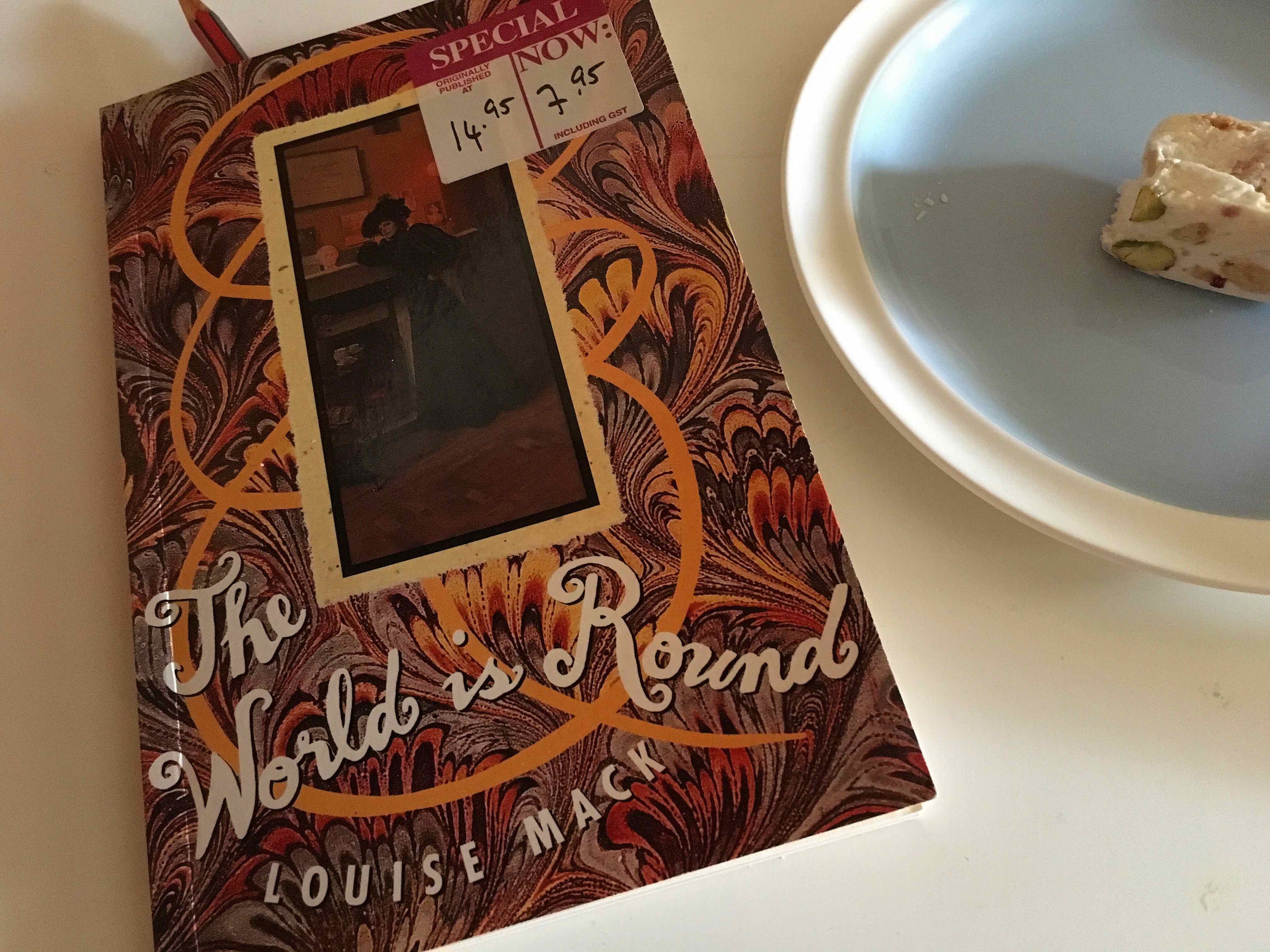
Gertrude Mack is the third of the Mack literary sisters, and by far the least known, though at the time she was well-recognised, with her activities and thoughts frequently reported in the newspapers. Her “disappearance” from view is most likely because, unlike her sisters, all her writing was for newspapers and magazines. She did not have one published book to her name. It makes a big difference to a writer’s longevity in the literary world.

As with many of my Forgotten Writers posts, I researched Gertrude Mack for the Australian Women Writers’ blog. This post is a minor revision of the one I posted there. So, who was she …

Gertrude Mack

Gertrude Mack (?-1937) was an Australian journalist and short story writer. The youngest of thirteen children – who included five daughters – Mack was born in Morpeth, New South Wales, to Irish-born parents, Jemima (nee James) Mack and the Rev’d Hans Mack. As a child, she lived in various parts of Sydney including Windsor, Balmain and Redfern, and was educated at Sydney Girls’ High School. Two of her older sisters also had literary careers, Louise Mack (see my posts) and Amy Mack (whom I featured last week). These sisters have been documented in Dale Spender’s Writing a new world: Two centuries of Australian women writers (1988) and by their niece Nancy Phelan in the Australian Dictionary of Biography, but neither Spender nor Phelan mention Gertrude. According AustLit, a diary of Mack’s is included in Phelan’s papers at the State Library of New South Wales. Curious.

This dearth of formal biographical information meant relying heavily, for this post, on Trove, where articles written by Mack abound. They tell of a curious and adventurous woman who was able to report firsthand on those challenging 1920s and 30s in Europe and the Americas. For example, in 1924, four years after the Mexican Revolution, she decided to go to Mexico City, something her American friends thought “a wild whim”. She writes for The Sydney Morning Herald (22 November 1924), that “according to American newspapers, it did seem a risk, but I knew their way of making any Mexican news appear hectic”. In the end, it does prove difficult, and she fails on her first attempt. She admits that she was not prepared for the poverty she sees in Juarez, just over the border from El Paso, and “was not yet accustomed to the unshaven Mexican”, but she later wrote admiring pieces on the country.

Mack spent eight years in London from around 1929 to 1937, and returned at least once for a few weeks in 1933. It was a difficult time in Europe, and The Sun (18 June 1933) reports that she had found “the same sense of strain in all the European countries, and this has been intensified more recently by the war menace, which seems to be very real.” I have not been able to find an image of her, but during this visit, sister Louise described her in “Louise Mack’s Diary” in the Australian Women’s Weekly (17 June 1933):

Tall, very slight and svelte, in a smart black frock of her own making, her hair marcelled, her big, grey eyes looking big-ger than ever under the glasses she had taken to lately. Elegant? Yes, certainly.

An interesting little fact which came up in a couple of the newspaper reports of this 1933 visit was that on her voyage she, and two other “matrons” had been in charge of 48 children, who had been selected for the Fairbridge Farm School to be taught various branches of farming. Sydney’s The Sun (June 18) explained that “the children, whose ages ranged from eight to twelve years, included both boys and girls, and were chosen by the selection committee of the Child Immigration Society, which body exercises the greatest care in choosing only suitable potential citizens for Australia, says Miss Mack”. If you haven’t heard about Fairbridge, check out Wikipedia. Miss Mack might have had faith in it, but the whole scheme was marred by dishonesty, and worse, child abuse.

Gertrude returned again to Australia in 1937. There was much interest in her return, with newspapers reporting on her thoughts from the moment she first touched the continent in Western Australia. The West Australian (3 March 1937) wrote that she had passed through Fremantle in the “Orama”, and quoted her as saying Australian writers were doing well in London. “Henry Handel Richardson was acclaimed by many critics as the finest writer of the day”; and Helen Simpson (my first Forgotten Writer) “had taken up broadcasting work in addition to her writing”. She said Nina Murdoch had had success with Tyrolean June and Christina Stead with Seven poor men of Sydney. The paper observed, tellingly, that “undoubtedly Australian writers were getting more recognition in London than in their own country”.

It also quoted Mack as saying she believed England was interested in stories about Australia, but that their interest depended “entirely on the topic of the story.” Unfortunately Australian writers “usually presented the drab side of the life of the country and laid too much stress on the droughts and the drawbacks” and “the frequent descriptions of struggles against drought and the hardships of Australian life gave readers a wrong impression of the country”. Consequently, readers “did not realise that the country had a normal life, with a bright social side, and the mass in England seldom knew that there was very fertile land in Australia”. According to Mack, “German people knew more about Australia and were more interested than the people of any other country”.

Adelaide’s News (6 March 1937) took up the issue of how Australia is viewed, but with a slightly different tack, writing:

“It would be difficult,” said Miss Mack, “to make the average uneducated English man or woman believe that there is, in Australia, such a thing as culture. English people would be surprised if they could have a glimpse of real country life on a big station.
The only way to overcome this wrong idea.” she said, “is by our literature, which has not yet developed fully.”

Although she was talking about staying in Australia for just 6 months, it appears that Gertrude Mack was seriously ill when she returned in 1937. She visited her brother C. A. Mack, of Mosman, but died in a private hospital in Darlinghurst on Wednesday 31 March and was buried at the Northern Suburbs Crematorium on the Friday.

A few days later “an appreciation” written by “W.B.”  appeared in The Sydney Morning Herald (6 April). W.B. It’s a moving tribute:

To those of us who had the happiness and the privilege of an intimate association with Gertrude Mack over a long period, abroad and in Australia, her death has meant a very poignant personal loss and sorrow. Her happy outlook on life, her faculty for perceiving the humorous side of things, and her sensitive reactions to atmosphere, made her a delightful companion, and she made friends among every class of people, whether they were foreigners or people of her own race. She had an unusual flair for getting at the heart of the interesting aspects of life and affairs, and this, added to her other gifts, enabled her to write such charming and interesting sketches, stories, and interviews. Her short stories and sketches were invariably the outcome of personal contacts. She could paint engaging pictures of people and places, and make them real to her readers. She also possessed outstanding musical ability, and might have won distinction as a pianist had she elected to take up music as a profession, for she had a fine critical perception and a rare appreciation of the true values in music.

She also translated stories from Russian, collaborating with Serge Ivanov to publish in English a volume of N. A. Baikov’s tales for children. Gertrude Mack was a fascinating woman, and would be a worthy subject for a biography – either on her own, or as part of a larger biography on the Mack sisters.

Sources

Monday musings on Australian literature: Forgotten writers 13, Amy Mack

In the first decades of the 20th century, a family of sisters made some splash on Australia’s literary scene. I have already written about the eldest of them – Louise Mack – but there were also Amy (this post’s subject) and Gertrude, all of whom appeared in newspapers of the time as writers of interest. They were three of the thirteen children of their Irish-born parents, Rev. Hans Hamilton and his wife Jemima Mack. As with many of my Forgotten Writers articles, I researched Amy Mack for the Australian Women Writers’ blog, where we have several posts devoted to her.

Amy Mack

Amy Eleanor Mack (1876-1939) was a writer, journalist, and editor. She was six years younger than the more famous Louise, and, says Phelan in the Australian dictionary of biography, was “less temperamental … and lived more sedately”, which is not to say she lived a boring life.

Mack began work as a journalist soon after leaving school, and from 1907 to 1914 was editor of the ‘Women’s Page’ of the Sydney Morning Herald. She married zoologist Launcelot Harrison, in 1908, and in 1914, they went to England where he did postgraduate work at Cambridge, before serving in Mesopotamia as advisory entomologist to the British Expeditionary Force. While he was away, Mack worked in London as publicity officer for the ministries of munitions and food.

The couple returned to Sydney after the war, with Launce becoming professor of zoology at the University of Sydney, and Amy continuing her literary career among other roles and activities. They did not have children. According to Phelan, after her husband died she continued to publish occasional articles, but her impulse to write faded as her health declined. She died of arteriosclerosis in 1939.

Works

Amy Eleanor Mack’s subject was nature, and she wrote about it in newspapers and books, for adults and children. Australian ecologist, Manu Saunders, writes on her blog that:

Australia has a wonderful heritage of nature writers, many working before nature writing was ‘a thing’. The national collection of Australian children’s books about native wildlife is inspiring. Even more inspiring, many of Australia’s best nature stories were written in the early-mid 19th century, and mostly by women.

And one of those women, she continues, was Amy Eleanor Mack. (I have written before on one of our early colonial nature writers, the pioneering Louisa Atkinson.)

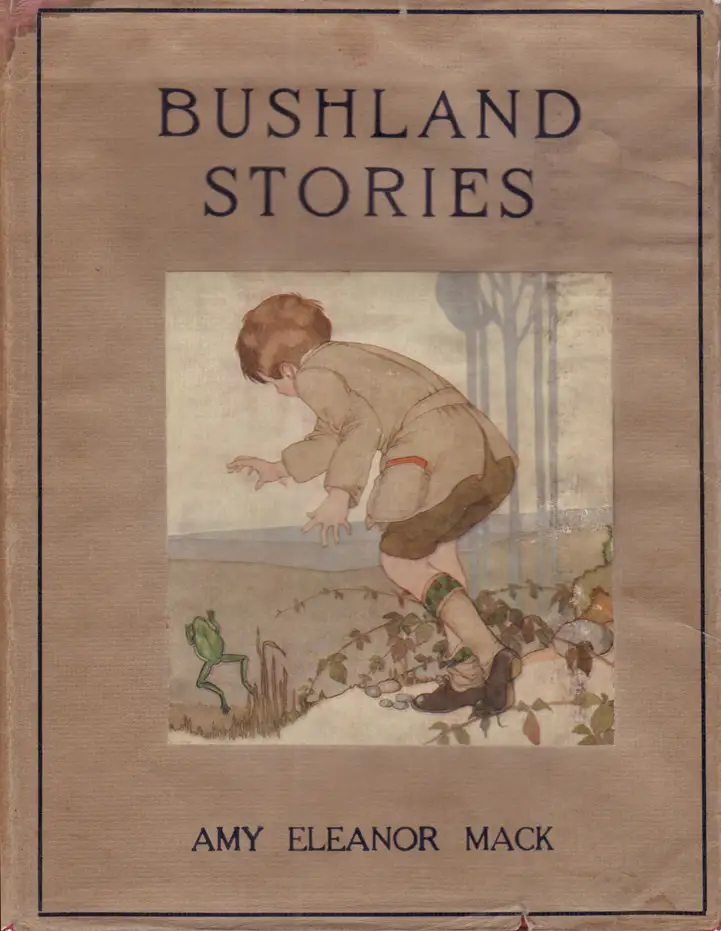
Book cover for Bushland stories

Mack’s first publications were two collections of essays, A bush calendar (1909) and Bush days (1911), which were compiled from articles she’d written for the Sydney Morning Herald. She also wrote two popular children’s books, Bushland stories (1910) and Scribbling Sue, and other stories (1915). Wikipedia lists 14 books, many of which were first published in newspapers, but all of which have nature-related titles, like The Fantail’s house (1928) and The gum leaf that flew: And other stories of the Australian bushland (1928).

Her books were well-reviewed in the newspapers of the time. Her first, A bush calendar, was described by Sydney’s The Farmer and Settler (26 November 1909), as charming, “a sympathetic review of bird life and plant life in the Australian bush during the four seasons of the year”. But what is interesting is what they say next:

It is the kind of book that ought to be on every girl’s bookshelf, and every thoughtful and intelligent boy’s also, being not only an exceedingly pleasant thing to look at and to read, but one calculated to induce in many a desire to get to know more of nature in some of her sweetest phases.

I’m intrigued by the gender differentiation – “every” girl, but only “every thoughtful and intelligent boy”. These sorts of insights into other times make researching Trove such a joy. Anyhow, the review also suggests that it would be “a delightful remembrancer for Australians abroad”. A year later, on 26 November 1910, Sydney’s The World’s News, reviewed Mack’s children’s book, Bushland stories, calling it an improvement on A bush calendar. It comprises a “collection of fables, allegories, fairy tales, or whatever one chooses to call them” which, the News says, has “created a folklore for young Australians”. In it, Mack personifies nature, with birds, beasts and fish all acting and speaking “like rational beings”. Each story has a moral but there is none of the “preachiness, which many youthful readers shy at”.

Reviews of later books continue in a smilier vein. In 1922, on 6 December, Lismore’s Northern Star writes about Wilderness, which, it says,”tells in a most interesting way of the fascinations of a piece of land which once had been a garden, planted with fruit trees and roses, but which has been neglected until the bush reclaimed it for its own”. This is the book that Saunders writes about in her blog in 2017. The book had been originally published in three parts in the Sydney Morning Herald. Saunders explains that it

tells the story of an unnamed patch of wild vegetation in Sydney (Mack never names the city, but given the original publisher and the wildlife she describes, it seems pretty obvious). Mack describes the plot so vividly and intimately that you imagine yourself there. You can visualise Nature reclaiming this plot of land, left untended after the keen gardener who owned it passed away.

Saunders then describes its content, including examples of the nature Mack describes, as well as her attitude to it and her observations. Saunders was surprised but “weirdly” comforted to find conservation messages that are still relevant today embedded within the book.

Legacy

Australian feminist Dale Spender, in her book Writing a new world, says a little about Amy Mack, though she spends more time on Louise. However, she makes a point about the Mack sisters and their peers, Lilian and Ethel Turner:

Lilian and Ethel Turner, Louise and Amy Mack were part of a small group of spirited literary pioneers who at very early ages adopted public profiles in relation to their work. When they moved into the rough and tumble world of journalism – when they entered competitions, won prizes, and published best-selling novels before they were barely out of their teens – they broke with some of the long-established literary conventions of female modesty and anonymity. They sought reputations and in doing so they show how far women had become full members of the literary profession: they also helped to pave the way for the equally youthful and exuberant Miles Franklin whose highly acclaimed novel, My Brilliant Career (1901), was published when the author was only twenty-one.

Ever political, Spender argues that had it “been brothers (and ‘mates’)” who created the sort “colourful and creative community” these sisters did, and achieved their level of literary success, we would have heard of them. Books would have been written about ‘their “literary mateship” and they would have been awarded a place in the readily accessible literary archives’. But,

because these writers were women, and because they have been consigned to the less prestigious categories of journalism and children’s fiction (both a classification and a status with which I do not agree) they, and their efforts, and their relationships – to rephrase Ethel Turner – go unsung.

Amy Mack is less well-known now than her sister Louise, and certainly less well-known than Ethel Turner, but in her time she was much loved. However, even then, she didn’t always get her due, as a reader wrote to The Sydney Morning Herald on 16 April 1935:

With reference to the articles on Australian women writers in the Supplement, one is surprised at the omission of Amy Eleanor Mack, who surely wrote two of the finest books for children ever published in Australia. In “Bushland Stories” and “Scribbling Sue” the true spirit of our bushland has been preserved with a charm and sincerity all its own, and I think I am right in stating that, with the exception of Miss Ethel Turner’s “Seven Little Australians,” no books published in Australia for children had greater sales.

Four years later, announcing her death on 7 November 1939, The Sydney Morning Herald said that her work “had a mark of reality about them that found for her an increasing circle of readers”, but it was “A.T.” of North Sydney, who wrote to this same paper on 8 November, who captured her essence:

Her culture, wit, and broadmindedness, and her marvellous sense of humour made her a figure in the northern suburb in which she resided.

Sources

Nancy Phelan, ‘Mack, Amy Eleanor (1876–1939)‘, Australian Dictionary of Biography, National Centre of Biography, Australian National University, published first in hardcopy 1986.
Manu Saunders, “The wilderness: Amy Eleanor Mack“, ecologyisnotadirtyword.com, 4 March 1917
Dale Spender, Writing a new world: Two centuries of Australian women writers, originally published by Pandora Press, 1988 (sourced in Kindle ed.)

Monday musings on Australian literature: Michael Crouch Award

The Michael Crouch Award is part of the National Biography Award (NBA) suite of prizes. I have written about the NBA before, but have never specifically focused on the Michael Crouch Award.

But first, a quick recap … the National Biography Award has been going since 1996, and celebrates excellence in life writing, that is, in biography, autobiography and memoir. It is, apparently, Australia’s richest prize for Australian biographical writing and memoir, with the prize-money being:

  • $25,000 for the National Biography Award winner
  • $2,000 for each of the six shortlisted authors
  • $5,000 for the Michael Crouch Award

Michael Crouch Award

Michael Crouch was one of the original sponsors of the NBA, but died in 2018. In 2019, the award came under new sponsors, who not only increased the prize money for the shortlisted authors, but also created a new prize to honour Michael Crouch. Named, obviously, the Michael Crouch Award, it is for a first (debut) published biography, autobiography or memoir by an Australian writer. It has been awarded since 2019, but most of the NBA reporting focus has continued to be the “main” award.

So, to give these writers some extra air, I’m listing here all its winners to date:

Book cover
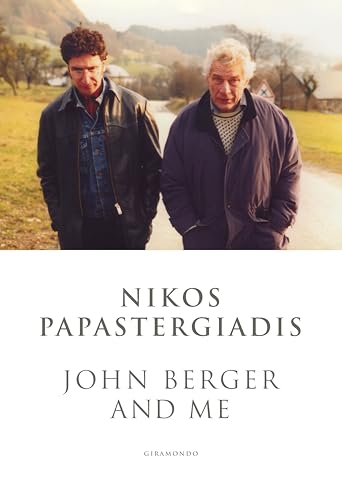
  • 2025: Nikos Papastergiadis, John Berger and me (Giramondo Publishing, biography/memoir)
  • 2024: Jillian Graham, Inner song: A biography of Margaret Sutherland (Melbourne University Press, biography, Lisa’s review)
  • 2023: Tom Patterson, Missing (Allen & Unwin, biography)
  • 2022: Amani Haydar, The mother wound (Pan Macmillan, memoir, Kate’s review)
  • 2021: Andrew Kwong, One bright moon (HarperCollins, memoir)
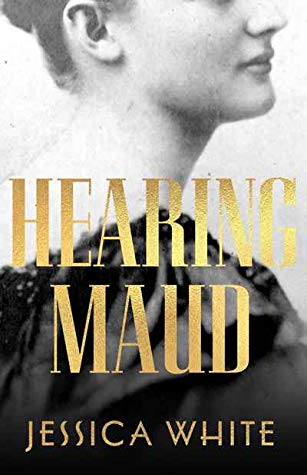
  • 2020: Jessica White, Hearing Maud (UWA Publishing, biography/memoir, my review)
  • 2019: Sofija Stefanovic, Miss Ex-Yugoslavia (Atria Books, memoir)

It’s interesting, but not surprising, that the memoirs have it.

Having read several hybrid biography/memoirs, including Jessica White’s, I am particularly interested in this year’s winner. I enjoy the process – if done well of course – whereby a writer explores another person through some prism of their own life, though this prism varies widely. In some cases, the writer and subject are related (like mother and daughter), or they are friends (like Papastergiadis and Berger), or they have something in common (like deafness in the case of Jessica White and her long-dead subject, Maud Praed). If you want pure biography, these don’t do the job, as they tend not to be comprehensive. But, what I like about these hybrids, is how the writer explores some aspect of their subject’s life story alongside, or through the prism of, their own perspectives or experiences. Done well, and particularly if both writer and subject are interesting, this form can be satisfying – and illuminating.

This was the case with Jessica White’s Hearing Maud, as I discussed in my post, and I can understand its being the case with Papastergiadis’s book. The judges called it “an original hybrid form”. The website continues:

The judges chose John Berger and Me for the Michael Crouch Award for a Debut Work for its originality and clever, non-linear but accessible structure. The quality of the author’s perceptive, lyrical, subtly humorous prose also stood out among a highly competitive field of debut books. A unique and highly readable blend of biography and memoir.

And there, I think, is a major reason why I enjoy reading these hybrids, the fact that there is no set form or formula. Each one can reinvent the wheel, with authors free to choose the approach that best suits the story they want to tell, the ideas they want to explore. It’s exciting to read books like this where authors have to work out from scratch how to start, proceed, and finish!

As for this latest winner, I am particularly interested, because John Berger’s Ways of seeing made a lasting impression on me when I read it – and saw the BBC series – in the late 1970s. I can imagine why such a man would interest a sociologist like Papastergiadis, but I think their friendship and points of contact ended up being far deeper and broader than just sociology. I’m so tempted.

Have you read any of these winners – and/or are you interested in hybrid biography/memoirs?

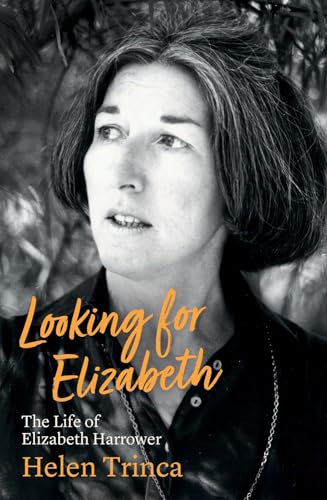
Helen Trinca, Looking for Elizabeth: The life of Elizabeth Harrower (#BookReview)

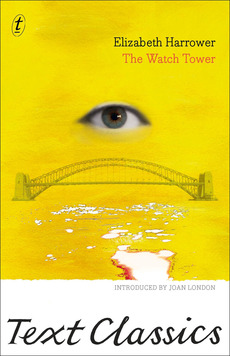
Elizabeth Harrower The watch tower

Like many, I was astonished when I read Elizabeth Harrower’s The watchtower (my review), upon its publication by Text Classics in 2012. Astonished not so much for its writing, though that is excellent, but for its subject, which is what we’d now call coercive control. The astonishment comes from the fact that The watchtower was first published in 1966, at a time when domestic abuse was hidden. Harrower recognised it, however, and called it out. The book made a splash at the time, but then disappeared from public view, though not completely from academia. Then, in 2012, Michael Heyward and his Text Publishing Company decided to publish it, and so began what biographer Helen Trinca calls, her “second act”.

Looking for Elizabeth is the second literary biography I’ve read by Trinca, the first being Madeleine: A life of Madeleine St John (my review). Trinca must like challenging subjects, because Harrower, like St John, was challenging to write about, albeit in Harrower’s case, Trinca had the benefit of knowing her.

So, what made Elizabeth Harrower such a challenge? Trinca had many conversations with her from 2012 on, including formal interviews for newspaper articles, and Harrower had placed her papers (including letters, reminiscences, and novel drafts) with the National Library, to which Trinca apparently had full access. But interviews and papers don’t tell the full story, particularly if the subject has spent her life “curating” or shaping it, destroying many of her papers along the way, including, as she told Text editor David Winter in 2013, “more than 400 foolscap pages of literary thoughts – part journal, part stories, part eye-witness accounts, secrets and so on”.

Trinca’s biography draws on a variety of sources, which she documents in her Author’s Note. Besides her personal connections with Harrower, which included meetings, phone calls and emails, and Harrower’s papers, she used the papers of others (including Shirley Hazzard, Kylie Tennant, and Judah Waten), all sorts of other records, and interviews with family and friends. Gaps in information are frequently noted within the text – and are sometimes speculated about using that thing that many literary biographers do, the works themselves. How much can – and do – they tell us about the person who held the pen?

Many writers say they begin their project with a question. In Trinca’s case, the framing question seems to have been, Why did Elizabeth Harrower stop writing at the height of her powers? Because, this is indeed what she did. Having written and published four well-received novels – Down in the city (1957), The long prospect (1958, my review), The Catherine wheel (1960), and The watchtower (1966) – she withdrew her fifth completed novel, In certain circles (my review), from publication in 1971, and never published a novel again, despite many encouragements from her friends including Patrick White and Christina Stead. She wrote a few short stories, but gave up writing altogether by the end of the 1970s.

From this literary trajectory, Trinca weaves a moving and interesting story about a fascinating woman. Like Madeleine, this is a traditional, chronologically told biography. It is well-documented, using clear but unobtrusive numbers pointing to extensive notes at the end, and there is a decent index.

“I’ve lived dangerously” (Elizabeth Harrower)

I am not going to tell the story of Harrower’s life, because the biography does that. Essentially, she was born in industrial Newcastle in 1928, and lived with her grandmother after her parents divorced, before joining her mother in Sydney. She never got over, it seems, being “a divorced child”. It dislocated her. Her mother remarried, and Trinca suggests that her stepfather was behind men like The watch tower’s Felix Shaw. She lived in London from 1951 to 1959, before returning to Australia, rarely leaving Australia after that. She did not marry, but had an intense, emotional relationship with the older, married Kylie Tennant, which raises questions that Trinca isn’t able answer, though she points to other “crushes” on older women. Do we need to know?

Through Harrower’s life she mixed with some of Australia’s significant people, including writer Patrick White, politician Gough Whitlam, and artist Sid Nolan. She had a long correspondence with Shirley Hazzard (about which I wrote after attending the launch of a book of those letters.) She died in 2020, suffering from Alzheimer’s. (Her life dates closely mirror my own mother’s.)

Now, rather than detailing this life more, I’ll share some of the threads that run through Trinca’s story, as they provide insight into who Harrower was, and what makes her writing, and her persona, so interesting. They also give the biography a narrative drive.

These threads include that aforementioned one regarding why she stopped writing. Another concerns what drove her to write. Trinca writes about an interview Harrower had with broadcaster Michael Cathcart in November 2015:

She reprised a comment she had often used in the past: ‘I always had an alarming and dangerous interest in human nature. And so recently, I think I was answering some questions, and I said that I felt I had urgent messages to deliver. I wanted to tell people things’.

These things are the emotional truths we find in her books. In an interview with Jim Davidson for Meanjin in 1980, she discouraged people from finding her life in her books, saying that the “emotional truth” is there but “none of the facts”:

None of the books are actual accounts by any means. They are less extreme than reality because reality is so unbelievable. Besides which, people can only take so much. You don’t want to frighten them do you, or do you?

This is the “wounded wisdom” that critics like America’s James Wood identified. It’s not surprising, given the life that led to this “wisdom”, that Harrower was wary, guarded, in her dealings with people, which is another thread that runs through the book. Harrower was polite and genuinely interested in people – “she listened with intent” – but always turned questions back on them rather than give herself away. In 1985, she admitted that, in interviews, “my whole intention seemed to be to give nothing away, to disguise myself”.

Which brings me to the final thread I want to mention, the idea of having “lived dangerously”. Several times through the biography, Trinca refers to Harrower’s saying that she had lived dangerously, but what did she mean? It seems she meant something psychological, metaphysical even. In 2012, she said to Trinca:

In my own mind I have lived dangerously, dangerously in the sense of finding out more and more about human nature. … At this age, you are aware of some very contrary and dangerous things you have done with your life as if you were going to be immortal. This is the irritating thing, now it is dawning on me that I am not immortal.

She said something similar in 1985, “I consider that in my life I’ve lived dangerously, and I haven’t lived a self-protective sort of life”.

“To have lived dangerously”, writes Trinca near the end of her book, “was a badge of honour for Elizabeth”. I read this as Harrower believing that, for all her wariness, she had let herself be open to life and its difficult emotional challenges.

What it actually means probably doesn’t greatly matter, despite Trinca’s “looking”. Nor do the gaps. What matters is the body of work she left, however she lived her life. It’s beautiful, unforgettable, precious, and Trinca tells that story so well.

I now look forward to Susan Wyndham’s biography which is due out soon. How will she fill in the gaps? Will she delve more into Harrower’s political leanings, and what conclusions will she draw about Harrower, who she was and why she wrote what she did?

Helen Trinca
Looking for Elizabeth: The life of Elizabeth Harrower
Collingwood: La Trobe University Press, 2025
309pp.
ISBN: 9781760645755

Monday musings on Australian literature: Finlay Lloyd’s 20/40 Publishing Prize, progress report

Nearly three years ago, I reported on a new literary prize, the 20/40 Publishing Prize which was being offered by the non-profit publisher, Finlay Lloyd. It has now been awarded in both 2023 and 2024, and preparations for announcing the 2025 winners are well under way.

Briefly, the aim of the award is to “encourage and support writing of the highest quality” by offering publication rather than cash. It has a specific criterion, however, as conveyed by its title: the works, which can be fiction or nonfiction, must be between 20,000 and 40,000 words. The submissions are read blind, and the judging panel includes the previous year’s winners. This means the judges for the 2025 award are Sonya Voumard, Penelope Cottier and Nick Hartland, alongside publisher, Julian Davies, and longtime Finlay Lloyd supporter (and writer), John Clanchy. 

The winners to date have been:

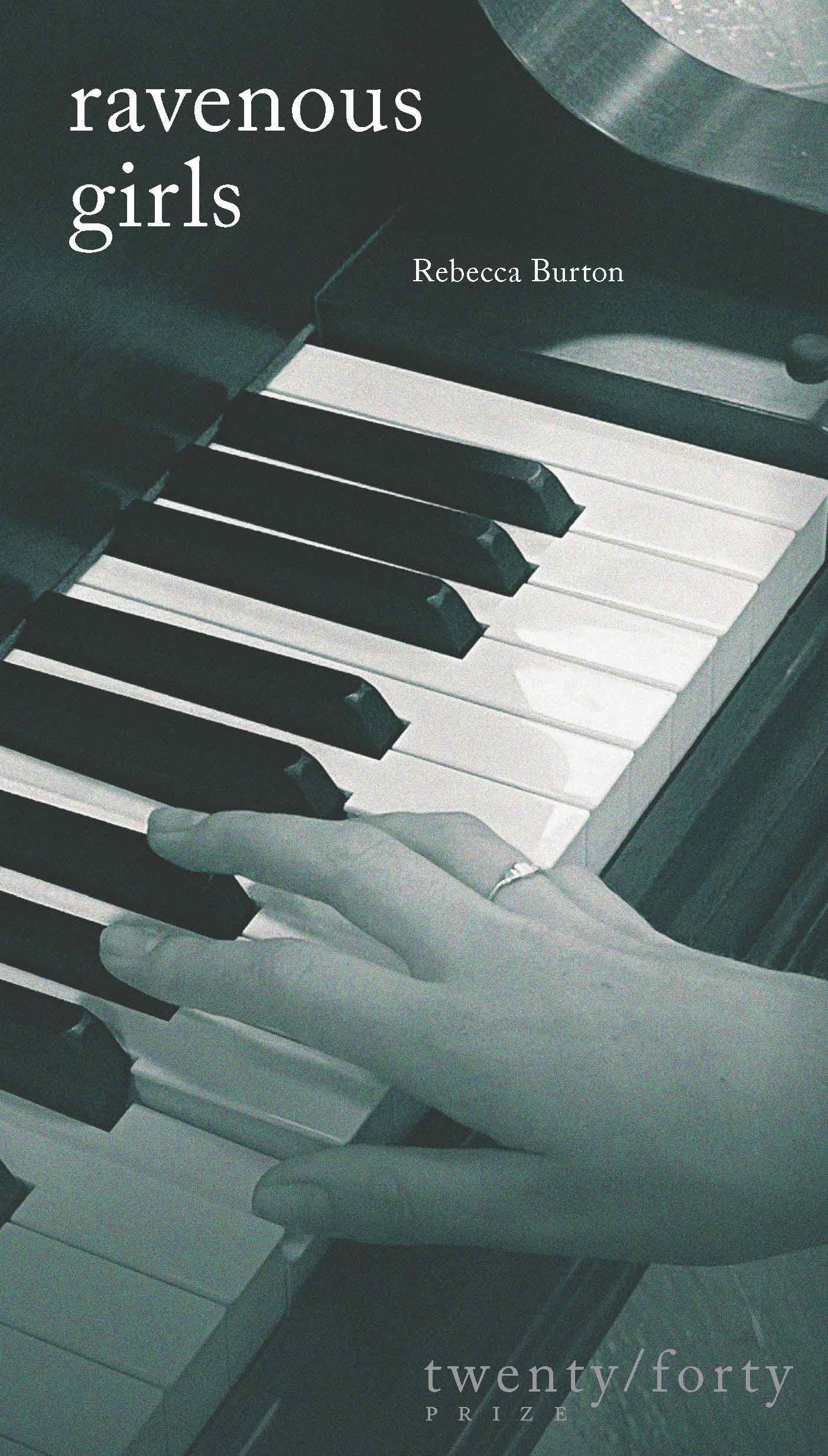
  • 2023: Rebecca Burton, Ravenous girls (fiction, my review)
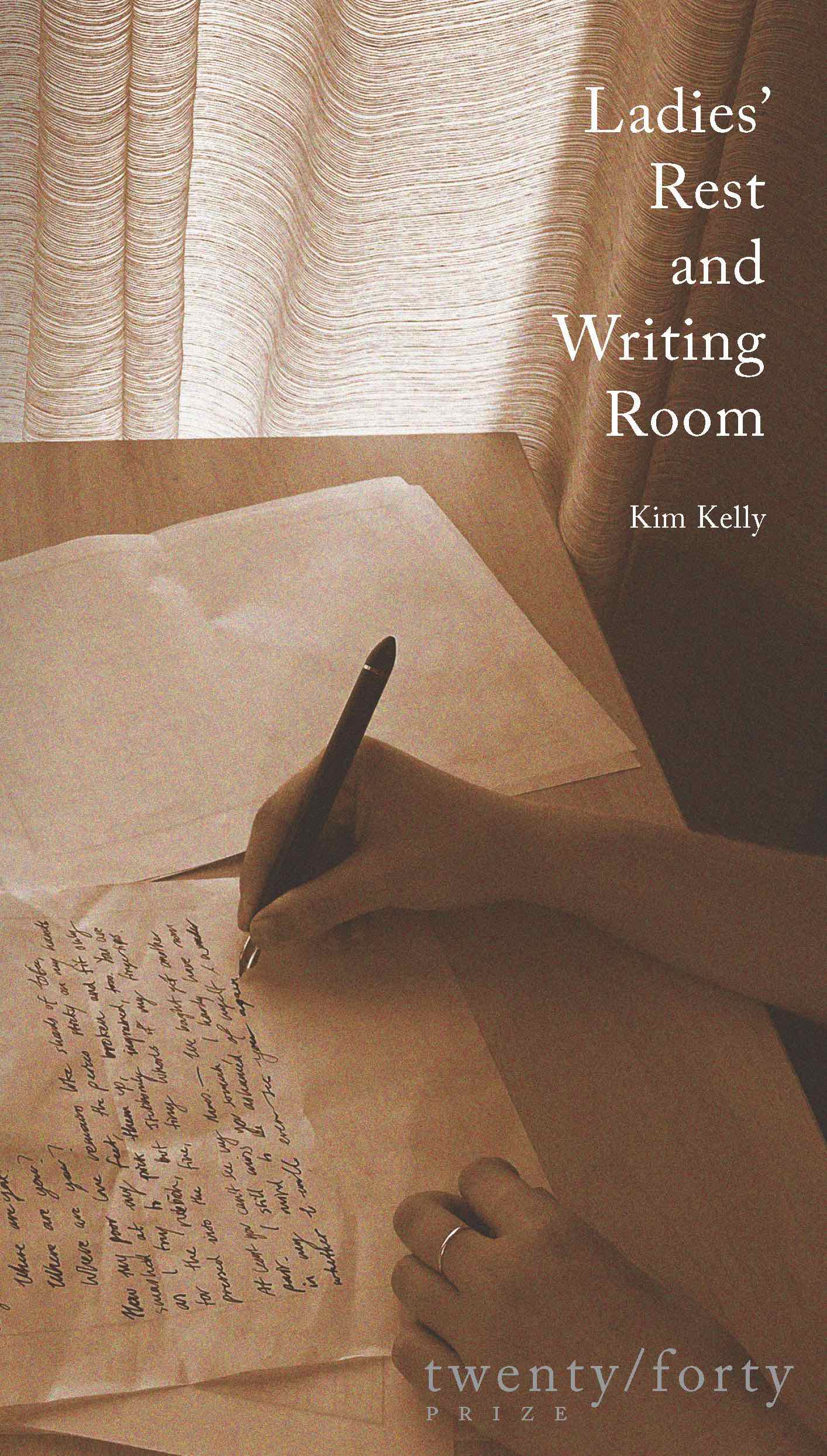
  • 2023: Kim Kelly, Ladies’ Rest and Writing Room (fiction, my review)
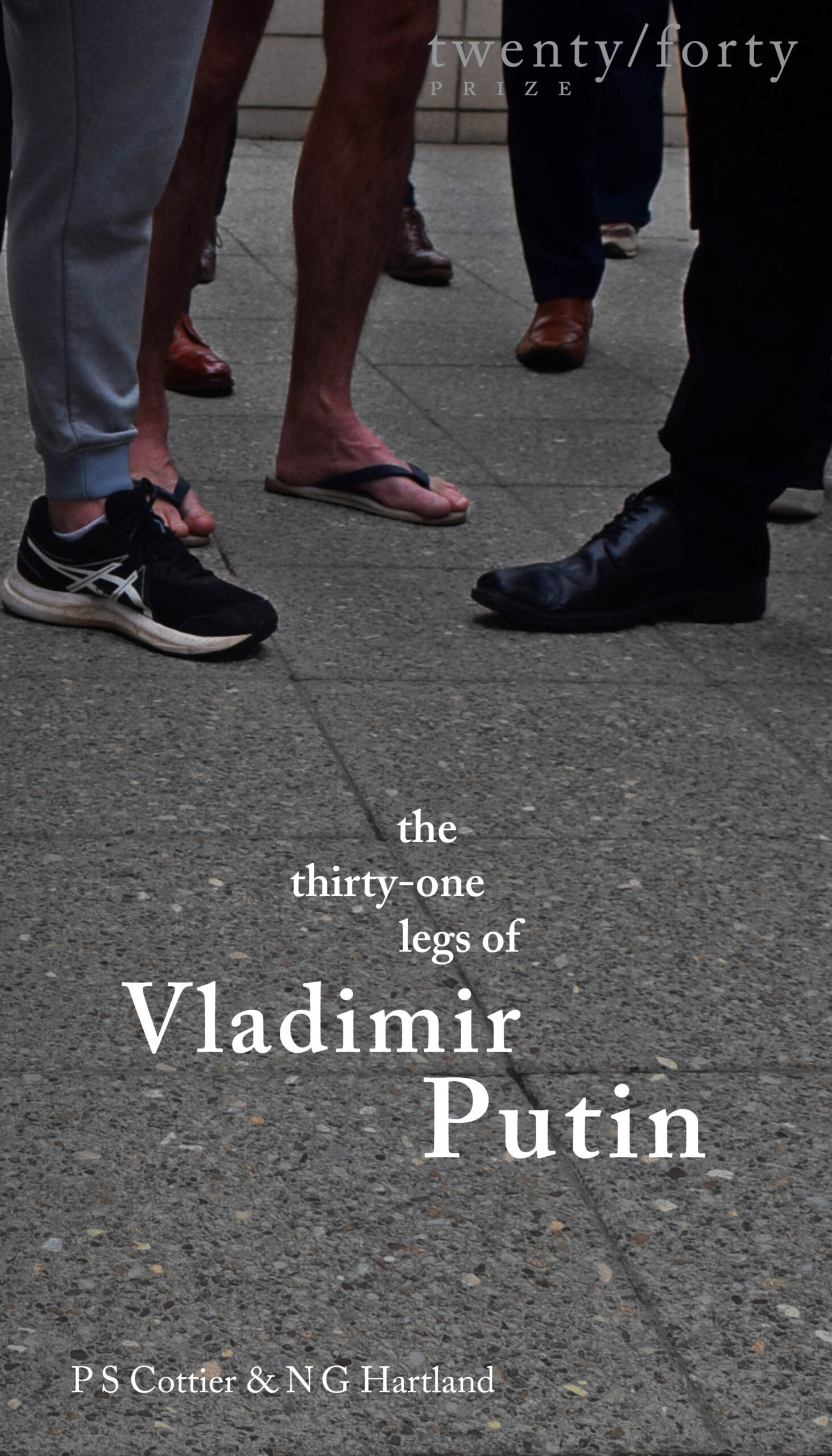
  • 2024: PS Cottier and NG Hartland, The thirty-one legs of Vladimir Putin (fiction, my review)
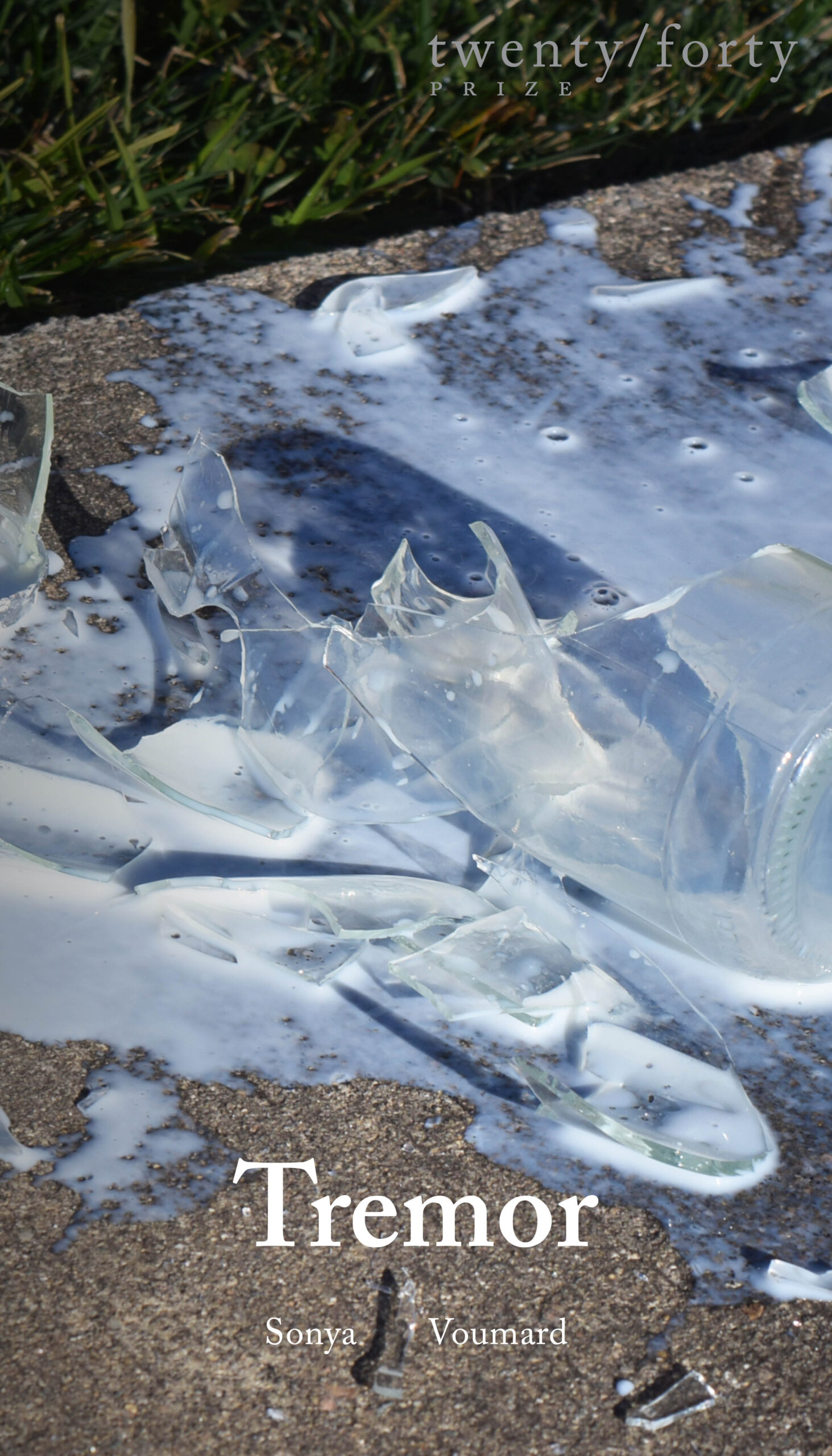
  • 2024: Sonya Voumard, Tremor (nonfiction, my review)

Most awards, particularly those coming from a small organisation, take time to build – and some disappear into the ether. So I worried that this award might not last – not only because Finlay Lloyd is small but also because this shorter form is not popular with everyone. I am therefore thrilled to hear that the third annual winners are on track for announcement, and that Finlay Lloyd is now calling for entries for the 2026 prize.

This is where today’s post comes in. I don’t make a practice of announcing calls for competition entries, but this attracted me for a couple of reasons. First, I often wonder what difference awards make to authors and their sales. Well, while I don’t know what the initial print runs were, Finlay Lloyd says that The thirty-one legs of Vladimir Putin has been reprinted twice since its first run, and Tremor is about to go into reprint. This must be encouraging, surely, for writers?

The other relates to the fact that Finlay Lloyd wants to offer a fiction and a nonfiction award each year. This didn’t happen in 2023 because they did not receive enough quality entries, but it happened in 2024. Sonya Voumard’s Tremor is an excellent example of novella-length (is there a better description for this) nonfiction.

In my report on the Winners Conversation last year, I shared Voumard’s discussion about length. She said that there’s “the assumption that to be marketable you need to write 55,000 plus words”. She had the bones of her story, but had then started filling them out, when, in reality, it was just “flab”. The competition, and then Julian Davies’ editing guidance, taught her that she had a good “muscular story”. So she set about “decluttering”. The end result is interesting, because this book doesn’t have that spare feeling common to short works, which is not at all a criticism of spare writing. However, Tremor feels tight. It has little extraneous detail, but it’s not pared back to a single core. I found it informative but also a personal and moving read, and I bought a few copies as gifts last year. I would love to read more shorter-length works of nonfiction.

All this is precursor to sharing that last week, I received a Media Release from Finlay Lloyd, in which publisher Julian Davies says:

As 20/40 builds momentum, our enthusiasm for encouraging this compact scope for both fiction and nonfiction has continued to grow. The length of 20,000 to 40,000 words allows for the rich development of an imaginative story or factual concept while being tight enough to encourage focus and succinctness. It’s a form we love and believe is apt for our moment in the history of thought and invention.

Each year we support the winning authors through a close and probing editorial process that works towards finding the best possible version of their book. We also take delight in a design process where books are created that feel like artefacts, that ask to be picked up and engaged with.

Submissions for 2026 will open in December. The prize is open to emerging and established writers, but they must be Australian citizens, permanent residents, or valid visa holders. It is a prose prize, but is open to all genres – as the winners to date demonstrate – including hybrid forms.

The original NaNoWriMo might have ended, but that doesn’t mean November (or any month of your choice) isn’t a good month for giving writing a go, particularly if there’s a publisher out there waiting for your work. For more information, check the prize’s webpage.

Prime Minister’s Literary Awards Shortlist 2025, announced

I haven’t announced the Prime Minister’s Literary Award shortlists for a few years, but for various reasons, including the fact that there is a Poetry section which works nicely with this month being National Poetry Month (see my Monday Musings), I’ve decided to share this year’s shortlists.

Creative Australia’s page for the announcement says they received “a remarkable 645 entries across six literary categories: fiction, non-fiction, young adult literature, children’s literature, poetry, and Australian history”.  The winner in each category will receive $80,000, with each shortlisted author receiving $5,000.

Fiction

  • Michelle de Kretser, Theory & practice (Text, my review)
  • Fiona McFarlane, Highway 13 (A&U, on my wishlist, kimbofo’s review)
  • Emily Maguire, Rapture (A&U, on my wishlist, kimbofo’s review)
  • Mykaela Saunders, Always will be: Stories of Goori sovereignty from the futures of the Tweed (UQP, on my TBR)
  • Tim Winton, Juice (Hamish Hamilton, on my TBR, kimbofo’s review)

Most of these books have been appearing on shortlists throughout this year, with de Kretser and McFarlane having won some of those already announced. De Kretser won the Stella, and McFarlane has won the ALS Gold Medal as well as the NSW and Victorian Premiers’ fiction awards. That’s serious recognition.

Interestingly, this year’s Miles Franklin winner, Siang Lu’s Ghost cities, is not on the list. However, I like that two short story collections have been included.

Fiction award judges: George Haddad, Chloe Hooper, Julieanne Lamond, and Stephen Romei. For the full judging panel across all categories, check the webpage linked above.

 Poetry 

  • Peter Boyle, Companions, ancestors, inscriptions (Vagabond)
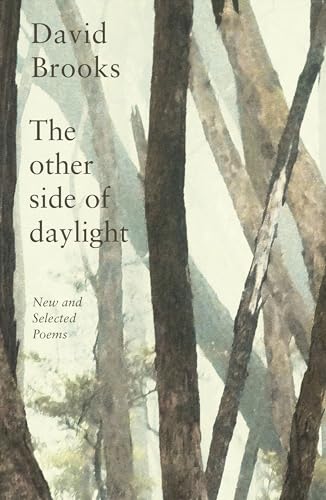
  • David Brooks, The other side of daylight: New and selected poems (UQP, a 2025 National Poetry Month Ambassador)
  • Hasib Hourani, rock flight (Giramondo)
  • Barrina South, Makarra (Recent Work Press)
  • Petra White, That galloping horse (Shearsman Books)

Nonfiction

  • James Bradley, Deep water (Hamish Hamilton, Brona’s review)
  • Adele Dumont, The pulling (Scribe)
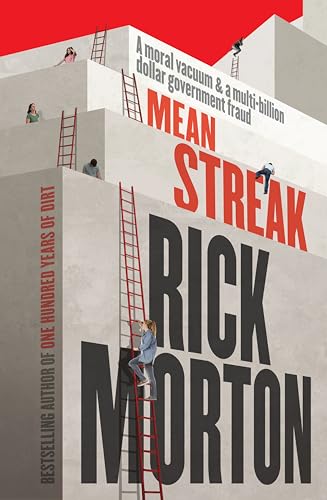
  • Rick Morton, Mean streak (Fourth Estate)
  • Khin Myint, Fragile creatures: A Memoir (Black Inc.)
  • Samah Sabawi, Cactus pear for my beloved (Penguin)

Australian history

  • Geraldine Fela, Critical care: Nurses on the Frontline of Australia’s AIDS crisis (UNSW Press)
  • Peter Kirkpatrick, The wild reciter: Poetry and popular culture in Australia 1890 to the present (Melbourne University Publishing)
  • Amanda Laugesen, Australia in 100 words (NewSouth)
  • Darren Rix & Craig Cormick, Warra Warra Wai (Scribner, on my TBR)
  • Clare Wright, Näku Dhäruk The Bark Petitions (Text)

Children’s literature 

  • Kelly Canby, A leaf called Greaf (Fremantle)
  • Peter Carnavas, Leo and Ralph (UQP)
  • Kylie Gatjawarrawuy Mununggurr, Raymaŋgirrbuy dhäwu, When I was a little girl (Magabala)
  • Dave Petzold, We live in a bus (T&H)
  • Briony Stewart, Everything you ever wanted to know about the Tooth Fairy (and some things you didn’t) (Lothian)

 Young adult 

  • Sophie Beer, Thunderhead (A&U Children’s)
  • Kate Emery, My family and other suspects (A&U Children’s)
  • Jinyoung Kim & Sabina Patawaran, The anti-racism kit: A guide for high school students (HGCP)
  • Emma Lord, Anomaly (Affirm)
  • Krystal Sutherland, The Invocations (Penguin)

The winners will be announced at the National Library of Australia on 29 September, 2025.

Any thoughts?

Monday musings on Australian literature: National Poetry Month 2025

National Poetry Month – in Australia – is now five years old, and once again it is spearheaded by Red Room Poetry, which should not need any introduction by now to regular readers here. This year it runs a bit over a month, from 30 July to 3 September.

As before, they have appointed Poetry Month Ambassadors, with 2025’s being author and journalist Stan Grant, comedian Suren Jayemanne, screenwriter Luke Davies, rapper Dobby, musician Leah Senior, model Nyaluak Leth, and author and broadcaster Julia Baird. (You can read more about the Ambassadors on this dedicated page.) Arts Hub reports that this year they are introducing a Youth Ambassadors program “to showcase and foster the next generation of Australian poetic talent”. I understand that there will be four Poetry Month Youth Ambassadors, and that they will be announced online, tomorrow, 12 August, in time for International Youth Day.

Red Room is running similar events and activities to those they’ve run before – the 30in30 daily poems/reflections/writing prompts, and the National Poetry Month Gala, which will be on 28 August at the State Library of NSW (and also live-streamed via Red Room Poetry’s YouTube). This year’s 30in30 features, reported thatshowblog, “an impressive roster of contemporary Australian voices including Evelyn Araluen, David Brooks, Winnie Dunn, Nardi Simpson, and Tyson Yunkaporta, alongside emerging talents like Grace Yee and Madison Godfrey”.

New events and initiatives this year include (though some are now past!):

  • Art After Hours: Ekphastic Fantastic at AGNSW (Wednesday 6 August)
  • Middle of the Air: Lyric Writing Workshop (Wednesday 6 August)
  • Hatred of Poetry Great Debate (Thursday 14 August) at the Wheeler Centre in Melbourne: arguing that the hatred of poetry is justified will be Evelyn Araluen, Sez, and Suren Jayemanne, with their opponents being Eloise Grills, PiO, and Vidya Rajan.
  • Poetry After Dark: Panel & Performance at Dymocks, Sydney (Friday 22 August)
  • Middle of the Air Competition for poetry set to song, offered in partnership with the ABC: entries close on 1 September. The two winning songs/poems will be broadcast on The Music Show in November (More info here)
  • Poetry and Film Showcase (Wednesday 3 September) at the Sydney Opera House

Internet searches reveal more events – such as this page from What’s On City of Sydney. It feels like this month is becoming established in Australia’s literary calendar.

Poetry posts since the 2024 National Poetry Month

How slack have I been? I have only written two posts on poetry since last August:

I do have several poetry books on my TBR, including those mentioned in the World Poetry Day post, and Gregory Day’s gorgeously produced Southsightedness.

Red Room’s 10 essential Australian poetry collections

On 31 July, to herald National Poetry Month, The Guardian published “10 essential Australian collections that will change how you read”. It was compiled by Red Room Poetry’s artistic directors, David Stavanger and Nicole Smede, who said in their introduction:

This list isn’t about ranking or canon-building, but about spotlighting collections that crack language open, unsettle expectations, and echo long after the last line. From poetic noir, epic love lines and jazz-inflected dreamscapes to sovereign storytelling and lyrical confrontations with history, these books remind us of poetry’s unmatched ability to hold truth, tension, and transformation.

The collections are, in the (mysterious to me) order given:

Ali Cobby Eckermann, Inside my mother
  • Ali Cobby Eckermann, Inside my mother (2015, my review)
  • Dorothy Porter, The monkey’s mask (2000, on my TBR still, but I have read Porter’s The bee hut)
  • Sarah Holland-Batt, The jaguar (2022, on my TBR, Kate’s and kimbofo’s review)
  • Samuel Wagan Watson, Smoke encrypted whispers (2004)
  • Bill Neidjie, Story about feeling (1989)
  • Luke Davies, Totem (2004)
  • Judith Wright, The moving image (1946)
  • Alison Whittaker, Blakwork (2018, Bill’s and Brona’s posts)
  • Nam Le, 36 Ways of writing a Vietnamese poem (2024)
  • Shastra Deo and Kate Lilley, Best of Australian poems 2024 (2024)

It’s a good list, not the only list, because nothing is, but a good list. It’s diverse in authorship, and it includes a verse novel, a Stella winner, Judith Wright from the 1940s, and a Best of … anthology.

At the end of the article, The Guardian asks a question, so I’m asking it too:

Do you have a favourite Australian poetry book that wasn’t mentioned here? (Or any other poetry collection, particularly if you are not Australian!) Please share it in the comments.

Notes:

  • Links on writers’ names are to my posts for the writer (though the posts aren’t always about poetry).
  • Image: I assume Red Room Poetry is happy for their Poetry Month banner to be used in articles and posts about the month.

Monday musings on Australian literature: Quiet achievers 1, Terri-ann White of Upswell Publishing

Over the years I have started several Monday Musings sub-series, some of which I’ve nearly completed (such as those on writers centres and on supporting genres) while others are still continuing (like Forgotten writers). Today, I’m introducing a new one. It was inspired by an email I received the other day from Terri-ann White of Upswell Publishing. It occurred to me that not only was here a quiet achiever, but that people like her were worth posting about.

Okay, so those in the industry will say that White is no quiet achiever. After all, she’s been around publishing for a long time, and successfully so. However, for the general reading public, people in the industry are not necessarily well-known, hence this new little sub-series. I hope to focus on the people more than their companies, but they and their jobs are intertwined. Still, I hope to at least give a sense of who they are. I start with Terri-ann White, but there will be more …

Terri-ann White

In 2022, I wrote about two new indie publishers, of which Upswell Publishing was one. As I wrote then, it came across as a passion project, but the passion project of someone with significant cred. It was triggered by – hmm – adversity. White had been running UWAP (University of Western Australia Press) since 2006 when, in 2019, the University announced that it would close its publishing arm. As most of us know, that didn’t happen, but White left in 2020 anyhow, unhappy with how she had been treated.

Not long after, on 25 December 2020 in fact, the Sydney Morning Herald’s Jason Steger reported that White had a plan. She wanted to publish books that for some reason couldn’t find an easy route to publication, “books that are too quiet, or the authors are older than 25, that are not about misery, that are not about trends”. She wanted to publish books, wrote Jason, “that speak to each other across a set of intellectual interests, and how they work language and revere it”. And so, Upswell Publishing was born.

Books are in White’s blood. As Upswell’s About page tells it, all her working life, from 1980 on, “has been arranged around books and ideas: as a bookseller, writer, publisher and organiser of public events involving literature and writing”. This new venture, however, broke new ground. For a start, it has been set up as a not-for-profit company, with three impressive women, Carmen LawrenceLinda Savage and White, as its directors. It also has DGR status, which means that (Australian) donations to them are tax-deductible. Their tagline is “Support the future of Australian literary writing and publishing”. They hope that “the generosity of rusted-on, passionate readers” will help them extend their “work of commissioning writers and building audiences”.

Upswell is also selling a bit differently. While individual books can be bought from them directly or from booksellers, they also have a subscription program. I subscribed the first two years, but not since. They have been experimenting with their subscription packages, but my main issue is that I’m a bit too overwhelmed with books to keep subscribing (for a while, at least). I did however preorder two of their 2025 books. One has arrived, with Jessica White’s Silence is my habitat: Ecobiographical essays, to come.

Despite this, however, I have been watching and drooling, partially attracted, I admit, to their recognisable and gorgeous design, but also the content. White is, I believe, achieving what she set out to do, which was to publish distinctive works across narrative nonfiction, fiction and poetry, to publish books that “elude easy categorising and work somewhat against the grain of current trends … books that may have trouble finding a home in the contemporary Australian publishing sector”.

It hasn’t all been smooth sailing. In 2022 she was, as publisher, unwittingly caught up in the plagiarism controversy over John Hughes’ novel The dogs (my review) which was initially longlisted for the Miles Franklin Award.

If you really want to understand who she is, and what she believes, check out this opinion piece she wrote for Seesaw in September 2021. She wrote of

a withering of success for Australian literature of the ground-breaking variety. I think you’ll know what I’m getting at here: books that take more concentration, perhaps, with less of a direct connection to the idea of entertainment. By which I don’t mean the equivalence of cod liver oil – good for you but it’s unfathomable that you are sinking it down your gullet. I could be more explicit and name some names often cited as difficult writers: Shirley Hazzard, Randolph Stow, Beverley Farmer, Elizabeth Jolley, Kim Scott, Gerard Murnane. Or I could name literary forms that are not novels (including poetry and short stories, for instance).

Or, see her report, ‘There is nothing else quite like it’, in Books+Publishing about the Sharjah Publishers Conference, which she describes as “a corrective from the world of English-language commercial publishing, and a rich chance to meet the Arab world’s publishing enterprises, along with a raft of Eastern European book people and representatives from the wide-ranging Indian book industry.” Tells you something about her publishing philosophy.

Then there’s her interview in the Australian Book Review (ABR, November 2022, paywalled). Regarding the value of reviews, she says that they are “Very significant for the author and, to a lesser extent, the publisher. Potentially useful for finding readers”. And, regarding whether she thought individuality was a casualty of a highly competitive market, she responded:

No. I’m in this for the long haul. Even books that flop in their time end up in libraries and second-hand bookshops, ripe for discovery. The prospect of a living wage for writers, on the other hand, is even less likely these days.

I love this long view of what writing an publishing is about.

Finally, I’ll return to the email that inspired this post. It announced that Upswell’s book, Abbas El-Zein’s memoir, Bullet paper rock: A memoir of words and wars, had won the 2025 National Biography Award (having already won in the 2024 Queensland Literary Awards and been shortlisted in the 2024 NSW Premier’s Literary Awards). The NBA judges called it “a work of rare linguistic and emotional insight, and a tribute to the resilience of the human condition”. Awards aren’t the be-all and end-all of publishing, but it is still be a thrill for authors and their publishers when they win.

Any thoughts on this quiet achiever – and her contribution to the Australian literary scene?

Winnie Dunn, Dirt poor Islanders (#BookReview)

Book cover

When my reading group chose our books for the second half of the year, the shortlist for the Miles Franklin Award had not yet been announced. However, wonderfully, the three books we chose from the longlist, all ended up on the shortlist. One of those was Winnie Dunn’s debut novel, Dirt poor Islanders. It is the first novel published by a Tongan Australian, and adds a welcome strand to the body of Australia’s second and third generation migrant literature.

Dirt poor Islanders spans around a year when its protagonist Meadow is approaching 12 years old. It can, therefore, also be read as a coming-of-age novel. It is a raw, earthy, honest and sometimes confronting read that exposes the challenges faced by Australian-born migrant generations, who are caught between two worlds.

This is not a new story. However, what is impressive here is that Dunn, in her first novel, has found her own strong and clear voice. It’s there in the way she gets right into the head of her protagonist Meadow, who is, admittedly, modelled on herself. It’s there in the way she interweaves English and Tongan language, capturing the vitality in her migrant community. It’s also there in her use of repetition, some of it onomatopoeic, to give her writing rhythm and create a tone that’s sometimes melancholic, sometimes humorous. Dunn also doesn’t spoon-feed her readers. She expects us to go with the flow and make the necessary connections. It’s not hard reading, but it does require attention.

“this way of seeing myself as half … and never enough” (Meadow)

So, who is Meadow? She’s a young girl who lost her birth mother at the age of 4. At the novel’s opening she is the eldest of six children in a blended family comprising three children from her birth mother, one from her step-mother, and two from this second marriage. Another is on the way. Her father is 30 years old. Meadow is grappling with what it means to grow up Tongan, particularly one who is hafekasi (half-Tongan half-White) and feeling caught between two worlds, neither of which fully accept her. She is desperate for a mother, and feels closest to her namesake, aunt Meadow, who lives in Mount Druitt with our Meadow’s paternal grandmother and another four aunts.

We follow Meadow through a tumultuous year. Early on, she spends most weekends at her Nana’s house surrounded by the five aunts, but when her father buys a new house in Plumpton, he wants Meadow, her sister Nettie and brother Jared, to call that home. With her birth mother gone, however, Meadow feels “stuck” and insecure. Aunt Meadow, also known as Lahi, is her “mother-aunt” and her rock. The narrative is built around the wedding of this Lahi, who, Meadow believes, is more interested in women. She fears for her boyish aunt, but she also fears for herself, that she will lose this mother figure to whom she clings with all her being.

Now, Meadow wants to be a writer, so she’s an observant girl, well able to express her feelings. She sees the messiness – literal and figurative – of Tongan lives, and she shares the lessons she is learning about being Tongan, not all of which are pretty. For example, “Tongan meant dirty” (p. 37), “being a joke” (p. 73) and “second best” (p. 102). But, there are positives too. “Togetherness was what it meant to be Tongan” (p. 40) and “being Tongan meant eating together and being grateful to eat together” (p. 118).

Dirt poor Islanders, then, depicts a migrant family living under stress. Big families and low-paying jobs with long hours mean a chaotic home. Meadow’s scalp is nit-infested, and her home, decorated with second-hand goods, much picked off roadsides, is cockroach-infested. Her parents work hard to keep the family sheltered and fed, but the mess overwhelms. Flipping between maturity and immaturity, Meadow sees all this – the hard work, the exhaustion, the love – but she struggles to find her place, to accept her Tongan heritage.

It all finally comes to a head, and her father organises for her to go to Tonga, because, he says, “it’s time for youse to know what being a Tongan truly means” (p. 239).

Migrant literature encompasses both memoir and fiction, with the latter mostly being autobiographical or autofiction. Dunn confirmed in her Conversations interview that much of the novel’s family background comes from her life, but the novel diverges from real life in its narrative arc and the resolution of Meadow’s inner turmoil. This answered the question I had as I was reading, which was why Dunn had chosen fiction, like Melina Marchetta did in Looking for Alibrandi, over memoir, like Alice Pung did in Unpolished gem. It’s a choice. What matters are the truths conveyed, not the facts, and Dirt poor Islanders feels truthful.

This truth is not all raw and confronting as I may have implied at the beginning. It is also warm and humorous. Meadow, who doesn’t like rich, fatty Tongan food tells us:

If it came out of a can covered in sugar and sodium, Tongans were eating it. But back then, all I wanted was food that came out of a window. (p. 37)

Preferably at Maccas! There are also funny scenes, many relating to the wedding which occupies the novel’s centre, and which is another nod – besides the title and epigraph – to the book that clearly inspired Dunn, Kevin Kwan’s Crazy rich Asians.

“no one could live as half of themselves” (Meadow)

However, Dunn’s book is fundamentally different from Kwan’s, whose aim, he said, was, to “introduce a contemporary Asia to a North American audience”. Dunn did want to introduce Tongan Australian culture – and counteract the image presented by Chris Lilley in Summer Heights High – but through Meadow, she also explores the excruciating difficulties children caught between cultures face. By the end of the novel Meadow comes to understand a little more the “messy truth” of being an Islander, and that:

No one could live as half of themselves. To live, I needed to embrace Brown, pālangi, noble, peasant, Tonga, Australia – Islander. (p. 275)

Dirt poor Islanders is both shocking and exciting to read, which is probably just what Dunn intended. I feel richer for it!

Winnie Dunn
Dirt poor Islanders
Sydney: Hachette Australia, 2024
293pp.
ISBN: 9780733649264

Monday musings of Australian literature: National Tree Day

Around ten years ago, I wrote a post on National Arbor Day. It was inspired by a Library of America story. The thing is that then I didn’t, and I still don’t hear, about Arbor Day anymore. Indeed, Mr Gums and I reminisced that it was mainly through school that we heard about it at all. Nor do I hear much about National Eucalypt Day, which I wrote about 8 years ago. I do hear sometimes about various tree-planting initiatives, but I was surprised to hear on ABC Classic FM on the weekend that Sunday was National Tree Day! A bit of research took me to the National Tree Day website.

Here, I learned that it was established in 1996, by Planet Ark, and that it has “grown into Australia’s largest community tree planting and nature care event”. The site continues that it is “a call to action for all Australians to get their hands dirty and give back to their community”.  I also learned that they run three tree days, whose dates for this year are:

  • Schools Tree Day Friday 25th July 2025 (set for the last Friday in July)
  • National Tree Day Sunday 27th July 2025 (set for the last Sunday in July)
  • Tropical Tree Day Sunday 7th December 2025

I said above that I don’t hear about Arbor Day anymore, so I checked Wikipedia. Under Australia, on the Arbor Day article, it says:

Arbor Day has been observed in Australia since the first event took place in Adelaide, South Australia on the 20th June 1889. National Schools Tree Day is held on the last Friday of July for schools and National Tree Day the last Sunday in July throughout Australia. Many states have Arbour Day, although Victoria has an Arbour Week, which was suggested by Premier Rupert (Dick) Hamer in the 1980s.

The implication is that it is still observed. It doesn’t, though, seem to get much publicity. I could research this, but so could you if you are interested! Meanwhile, I plan to use this post to share some tree quotes from Australian novels, and a couple of tree-inspired covers, as my little tribute to National Tree Day. 

My first quote is one I’ve shared before, because it’s my first memory of a tree playing a significant role in a novel. I’m referring to Ethel Turner’s children’s book, Seven little Australians (1894), and the death of our beloved Judy:

There was a tree falling, one of the great, gaunt, naked things that had been ringbarked long ago. All day it had swayed to and fro, rotten through and through; now there came up across the plain a puff of wind, and down it went before it. One wild ringing cry Judy gave, then she leaped across the ground, her arms outstretched to the little lad running with laughing eyes and lips straight to death.

This is realism. The tree has an important role to play in the plot. Another memorable novel featuring trees is Murray Bail’s Eucalyptus (1998). There is a narrative, of course, but it is framed around multiple species of gum trees, and opens with this:

We could begin with desertorum, common name hooked mallee … and anyway, the very word, desert-or-um, harks back to a stale version of the national landscape and from there in a more or less straight line onto the national character, all those linings of the soul and the larynx, which have their origin in the bush, so it is said, the poetic virtues (can you believe it?) of being belted about by droughts, bushfires, smelly sheep and so on; and let’s not forget the isolation …

As you can tell from the tone, the trees – although very real right down to their botanic descriptions – also set the novel’s tone and have something to say about Australian life and character.

More recent is Madelaine Dickie’s Red can origami (2019, my review). It is set in the Kimberley, but here is a description of a boab tree in Perth, a place where they don’t belong. It symbolises displacement:

The boab’s bark is cracked, its leaves are withered, and its roots strain from the soil, as if it’s planning on splitting town, hitching north.

There are more, but I’ll end with a writer who is loved for his landscape descriptions, Robbie Arnott. It’s hard to choose, but I’m going to use the one I used in my review of his novel, Limberlost, because it is a beautiful example of the landscape mirroring the emotions of the character moving through it. It occurs after a beautiful lovemaking scene:

Afterwards he’d driven them across the plateau through white-fingered fog, through ghostly stands of cider gums, through thick-needled pencil pines, through plains of button grass and tarns, through old rock and fresh lichen, until the road twisted and dived into a golden valley. Here at winter’s end, thousands of wattles had unfurled their gaudy colours. As they descended from the heights their vision was swarmed by the yellow fuzz. Every slope, every scree, every patch of forest, every glimpse through every window was a scene of flowering gold.

The book cover for this novel depicts what I assume is a stylised image of a Huon Pine with a boat, made by the protagonist using this wood.

Trees – or parts of trees, like branches or bark – often feature on book covers, because trees evoke so much in our consciousness. I guess they are easy to stimulate emotions in readers. They can be majestic and grand, or stark and threatening, or soft and sheltering – and suggest the associated feelings.

However, in doing a little research for this post, I stumbled across an old discussion about trees on book covers for crime novels. One was a 2007 blog post titled “Fright time in the forest”. The post broke down the four ways trees had been used on crime novel covers. There are those

  • used “more or less anthropomorphically–that is, as stand-ins for human-like monsters”
  • used “to establish a sense of desolation and bleakness, or mystery”
  • ominous-looking tree fronts, “on which the bark-encased stars loom belligerently overhead like villains preparing to fall upon and do violence to their victims”
  • used to “convey a mysterious atmosphere” through effects like fog, snow, a nighttime sky. 

Some of these overlap, I think, but I love the blogger’s conclusion, which suggests that

the designers of crime novels–like the storytellers who wanted to warn children off from wandering into the deep woods–have sought to associate trees with danger, disorientation, and despondency, all in the interests of book sales. One wonders whether this is healthy for the future of forests, a rapidly dwindling resource–or even healthy for the future of mankind, which might also become a dwindling resource.

I wonder whether book cover designers ever think of their larger responsibilities (besides garnering sales, I mean)!

I have strayed from where I started, which was to pay tribute to trees and share some favourite covers. However, this little discussion, which was picked up by England’s The Guardian was too interesting to ignore.

Any thoughts on trees in novels or on covers?