Monday musings on Australian literature: Trove treasures (4), Impatient readers

Time is short tonight as my downsizing move has hit a little roadblock. In a nutshell, our furniture and some of our goods are sitting on a truck awaiting transfer to our new apartment where the lift went out of service the same time that the truck was being loaded. That was last Thursday. We spent Friday waiting for news about when the repair could be done, and then all day today waiting for the repair to be done. By the end of the day, the new part was installed but the lift was still not working …

All this is to say that for tonight’s post I’m just sharing one little piece that I found during my recent Trove research, because that’s all the time I have.

The reading of novels and curiosity

Such is the title given to the column I found in Perth’s The Daily News of 30 August 1912. It starts with

Woman reading with cushion

This is an age of curiosity, of impatience. We no sooner take up a book than we look at the end to satisfy ourselves as to whether “they shall live happily ever afterward,” or whether the heroine shall marry some other man.

It suggests that “we are so sure of ourselves, so sure of our ability to forecast the termination of a tale that we perchance miss a couple of important chapter [sic], only to find that we had jumped at a wrong conclusion”. And then it gives what seemed to me to be a strange “concrete example of this spirit”:

we may cite the cases of dozens of people who, the instant they begin to read an interesting short article in the paper, immediately look to see whether The Commercial Tailoring Company, 794 Hay-street (upstairs), have had anything to do with it. Very often they are right, but sometimes they are quite wrong. Even when they are right, they have deprived themselves of a vast amount of pleasure and profit. For the article was designed, even as the clothes of the Company are designed, for their pleasure and well-being. It pays to read right through to the end.

What the? So, of course, I did some research, and it seems that The Commercial Tailoring Company advertised itself through little circa 250-word “stories” in the paper, stories which they twist at some point to refer to their clothing. Stories which, our columnist tells us, are designed for the reader’s “pleasure and well-being”. Stories of which, indeed, this very article is one. Here are some others: The stranger’s mistake (2 August), The North Pole (16 August), The art of the funny man (17 August), and The gentle rain (31 August). Do read a couple, but I dare you to not peek at the end!

I wonder how effective their stories were. Anyhow, you probably know what I am going to ask:

Do you ever peek at the end of a story you are reading? Why or why not?

Monday musings on Australian literature: Trove treasures (3), Novel reading and health

My second post in this Trove Treasures subseries shared some arguments against novel reading. I do have a pro-novel-reading post, but today I thought I’d go a bit lighter – I think it’s lighter! – and some of the ideas I came across discussing the impact of novel reading on health.

Novel-reading disease

Woman reading with cushion

I found two articles that discussed addiction to novel reading, going so far as to liken those in its thrall to drunkards. One goes back to 1855, and is in fact a Letter to the Editor (31 March 1855) of The People’s Advocate and New South Wales Vindicator. What a title for a paper! According to Wikipedia it was published in New South Wales from 1848 to 1856, and advocated on issues of importance for the working classes. In fact, Wikipedia says that it was “the first colonial paper to demand that the workers, as producers of all wealth, receive a fairer share of labour’s produce”. Great stuff, but this is not the subject of the Letter to the Editor.

Written by F.R. Surveyor (of Shoalhaven River) it expresses concern, not with occasional novel reading which simply represents a “criminal waste of time”, but with habitual novel reading which Surveyor describes as “detrimental to the health and vigour of the body”:

Novel reading tends to inflame the passions, pollute the imagination, and corrupt the heart. Moral sense is weakened by the false sentiment which novel writers inculcate. Novel reading is objectionable, because it creates an unnatural and morbid taste. It frequently becomes an inveterate habit, strong, fatal, as that of the drunkard. 

In this state of intoxication, great waywardness of conduct is almost sure to follow.

It also “destroys all taste for solid reading”.

Sixteen years later, on 2 November 1871, The Sydney Morning Herald published an article from The Examiner, titled “The Novel-Reading Disease”, and does it go to town. It commences by stating that “physicians are familiar with a complaint which, although sufficiently specific, has yet no name of its own” but it is caused by “over-indulgence in three-volume novels”. The article then chronicles the progression of this disease, explaining that at first the reader is simply found reading “at unnatural hours”, like “the early morning, or in the middle of a beautiful summer’s afternoon”. In this stage, readers exercise some discrimination in their reading choices, preferring Trollope, for example, over lesser authors. But soon, “the taste becomes deadened and blunted, and all power of distinction and appreciation is lost. In this stage the unhappy patient can no more go without her novel than can a confirmed dipsomaniac without his drain”. (There’s the equating with drunkenness again.) Quality goes out the window, quantity is everything. Indeed, “in the worst stages” of the disease, “novels are got through at the rate of three or four, or even five, a week, or at an average, in a severe and chronic case, of some two hundred and fifty or three hundred a year”.

And what does this disease do to its sufferers? Well, “the conversation of the patient becomes flabby and limp” leading eventually to “the last stage – that of absolute imbecility” unless “very powerful remedies” are applied. By this point in the article, all reference to sufferers are in the female gender. Indeed, the writer then says:

It is curious and interesting to observe that as this comparatively new female disease has grown more virulent and intense the old disease of scandal talking has become comparatively rare. It is, of course, physically difficult to talk scandal and to read a novel at one and the same time. 

True! Finally, the writer suggests that the cause of all this is the same as that for why “some young men smoke and drink bitter beer”. It’s the “sheer want of something to do”. The solution?

What a woman needs is an education which shall enable her to read and follow the Parliamentary debates instead of the police and divorce reports; and, when women are thus educated, then feeble novels and feeble novelists will vex our souls no longer to the horrible extent to which they irritate us at present.

I wanted to believe this article was tongue in cheek, it’s so extreme, but I don’t think it is. At least the writer recognises that women ought to receive an education!

Novel reading and wrinkles

Now for something lighter. I was astonished – and, I admit, delighted – to find an article titled “Novels and wrinkles”. I found it in multiple regional newspapers from South Australia and Victoria, but I’m using the Euroa Advertiser (12 February 1909). The article opens:

Excessive novel-reading (says a well-known beauty doctor) is responsible for the bad complexions, wrinkled foreheads, and sunken eyes of many young women.

Why specifically novel reading, do I hear you asking? Well, here’s the answer:

Many young women cause premature wrinkles to form on their fore heads by reading exciting novels. They sit for hours, often in an imperfect light, their brows furrowed, and if the book is a thrilling one, expressing on their faces unconsciously the emotions it excites. 

Our unnamed “beauty doctor” continues:

In a tram or railway journey one can notice the different expressions of a man reading a newspaper, and a woman – or a man, for that matter – reading a novel. The newspaper reader’s face is quite normal; but the expression on the novel-reader’s face is quite different. 

Priceless, really. Anyhow, fortunately, our “doctor” does not try to stop people reading novels, but “strongly” advises against reading novels “for hours at a stretch”. Have a break, he (it’s probably a “he”) says, and “above all, do not allow yourself to get too much excited by the book you are reading”. You heard it here, folks!

Reading in bed

Here is one relevant to many of us. It appeared in the Richmond Guardian (22 May 1926) and is “by a Medical Officer of Health”. Essentially, our MO believes this is a bad habit:

Beds were made to sleep in. The healthy man or woman who has never formed the bad habit of reading in bed, but, on the contrary, the good one of going to bed to sleep, finds little difficulty in wooing repose within a few minutes of his or her head touching the pillow.

So, if you “woo sleep easily” you “should studiously refrain from cultivating the habit of reading in bed”. However, there are those (besides invalids) for whom the practice might be useful. These include the “large number of apparently healthy people who find great difficulty in allowing sleep to overcome them”. There are many reasons for this, and you should try to remedy them first, but if the cause is not so easily removed, like “business and domestic worries”, then reading in bed may be a good not bad habit! These brains need something to switch them “into a different train of thought”.

But, our MO does have recommendations – about lighting (it must not strain the eyes), about position (do not lie on your side which “imposes considerable strain on the eyes”), and about reading matter. On this he is not prescriptive, saying “the choice may be safely left to individual tastes” except it should not relate to what is keeping you awake.

Finally, no reading in bed for children:

Children should not be encouraged to read in bed. The healthy child should be a little animal, and the healthy animal soon sleeps.

Reading and death

And now, the biggie! Does reading cause death? I came across two articles addressing this issue. The first, sadly, concerned a suicide, and was reported in The Bowral Free Press (19 July 1884). Titled “Effect of reading trashy novels” it reports that a young 20-year-old man had committed suicide by “shooting and hanging”. It briefly describes the manner, before concluding:

The cause of his suicide was reading sensational and trashy novels, which unsettled his brain.

On what authority this was decided, we are not told. Meanwhile, we do hear from a coroner in Perth’s The Daily News (27 November 1909) which contained a similarly brief report of a death. Titled “Coroner on novels”, it concerned the death of an 18-year-old nurse “who died from poisoning by spirits of salts”. The par concludes with:

the Coroner, commenting on the statement that the girl was given to the reading of novels, said he did not know whether novel-reading was evidence of weakness of mind. The practice, however, was generally confined to people who had little to do and had not much mind.

Over to you!
Monday musings on Australian literature: Trove treasures (2), Anti novel reading

Recently, I started a new Monday Musings sub-series, Trove Treasures. That first post concluded on a rear-admiral reading novels while waiting for a court martial, and I said that my next post “might be one on novel reading and men”. I still plan to do that, but I’ve decided to first share some of the wider arguments about reading novels that were raging in the late nineteenth to early twentieth centuries.

Woman reading with cushion

Novel reading, as I’m sure you know, was regarded with much suspicion from its first appearance. Indeed, negative attitudes led Jane Austen to defend the novel in her own first (albeit last published) one, Northanger Abbey (1817). Novels, she wrote, are works “in which the greatest powers of the mind are displayed, in which the most thorough knowledge of human nature, the happiest delineation of its varieties, the liveliest effusions of wit and humour, are conveyed to the world in the best–chosen language”. This did not, however, put the argument to rest, and we find the issue being discussed with enthusiasm and passion in Australian newspapers over the following century.

Why am I interested in this old chestnut, given we now accept the value of reading fiction? There are two main reasons. One is that I’m interested in reading culture and how it has developed. The other is that debates about literature provide insight into the thinking and values of the times. (Just think about what our current discussions about issues like diversity, own-stories, and so on, tell about the culture of our times.)

So, much can be learnt about colonial and early post-colonial Australia from discussions about reading. There’s deference to the thinking of (mostly male) British commentators, for a start. There’s the high moral tone taken about reading “serious” literature and not wasting time on light or sensationalist fiction. There’s concern about the impact of light – undirected reading – on the young, and on the uneducated (particularly, it goes without saying, on women). Articles abound in the papers so, as usual, I can only share a smattering from the many that my searches retrieved. Those I’m using were published over 55 years, between 1869 and 1924.

For some commentators no novel reading was good, while for others it depended on the novel. The Gundagai Times and Tumut, Adelong and Murrumbidgee District Advertiser argued that “constant, uninterrupted perusal of works of fiction” could be “injurious and demoralising”, but recognised that some fiction, like “good historical novels”, could have value. These sorts of novels “assisted the reader to realise the conditions of society, &c, at certain periods”. Therefore, they concluded, “the works of our great masters of fiction might be perused (occasionally, of course, not always) with pleasure and with profit by the intelligent reader”. So, very qualified – “great masters of fiction” could be read “occasionally” by “the intelligent reader”. Not a resounding endorsement.

For some, then, the enumerated ills came from all novel reading, while for others these were due to too much novel reading, or reading the wrong sorts of novels. Some ills concerned the impact on health and well-being, such as loss of memory, weakening the brain, unfitting men for the stern realities of life by giving either exaggerated or false views of life. Many commentators, like this one, worried about the impact of a diet of stories of love and murder:

“What sort of wives and mothers may we expect these young women to make?” We may cease to wonder at the frivolous demeanor and flaunting airs of the girls we meet everyday in our towns, when we remember the strange garbage that serves them for mental food, and the “gallery of portraits” that is fixed in their imaginations. They are positively unfitted for the noble work of home life, and we may expect that many of them will develop into sluts and slatterns, and others will speedily figure in the divorce courts …

“Sluts and slatterns”! This writer admits there are novels that may be read “profitably”, like those by Walter Scott and some of Dickens, but believed these didn’t attract the “girls of the period”. Scott, Dickens, and Thackerary, in fact, are regularly touted as acceptable novelists – by those writers who don’t condemn all novel reading.

Other identified ills concerned the time spent reading. For example, novel reading “causes people to remain away from church and chapel duties”. Or, as another wrote, “necessary and serious work” was “thrown aside for the charming story, that helps to rob the mind of its proper strength, and real life of its importance”.

An earnest letter-writer (“Another Reader”) to Hobart’s The Mercury argued that “for a man to confine his reading to novels is, especially in such times as ours, when social questions demand the attention and earnest study of all thoughtful men, to waste a considerable amount of time that would be far more profitably spent”. This writer concedes that it’s “very nice” to recline in a hammock in a quiet, secluded spot, and “devour a long account, generally slanderous, of human nature from a cleverly concocted novel” but asks whether this meets “the duty of mankind?” Hmm, novels being “generally slanderous”? And, must all life be about “duty”? He doesn’t insist on “total abstinence from novel reading”, but he does argue that spending all one’s time reading “is nothing more nor less than an intemperate love of pleasure, which is destructive in all forms”. Indeed, he suggests that reading biographies is more worthy than reading fiction, and returns to his point re the times, recommending “the study of the many problems that trouble the world at this time – Socialism, Theosophy, Religion (above all), etc.”

Concern frequently focused on novel reading by young men and women in particular, with some commentators exhorting parents to “exert a little wise control and careful supervision”. The Riverine Herald went a little further. Arguing that without a public censor, “it is the duty of the parents to wisely choose” their children’s novels, it suggests it would be even better “if the writers, publishers and book sellers” would write, publish and sell books of “higher standard”. A bit of self-regulation, in other words.

A certain Mrs Glover, however, speaking in 1924 at a conference of club, social and welfare workers arranged by the National Organisation of Girls’ Clubs, had a refreshingly liberal view, arguing, the report said, that

a girl had to go through a lot of “trash” before she found herself. The spirit of adventure in the girl must have an outlet. “I think girls ought to be thrilled. I think it is very nice to see girls in the tubes and trams who never look up from their books even when they pass the station. I think that is so much better than gossiping, or making eyes, that sort of thing. I went through a lot of awful trash myself and I really did thoroughly enjoy it. I think the girl has got to go through this before she finds herself. We want to let the girls read the very lightest form of sensational literature.

Okay, so only the “lightest form of sensational literature”, but this sounds like progress. The article concludes by damning not sensational writing but “novels of sentiment, novels of a pervading sickliness”:

From time to time perturbed moralists rush forth into the marketplace to denounce some book or other in which inconvenient or improper scenes occur. For my part I doubt whether all the books which contain passages such as a censor, a magistrate, a policeman can identify is undesirable, have done half as much harm as some volumes of sentimentality in which no one could fine a line to prosecute. The gush of facile emotion, the hectic talk confusing black with white, of which your novel of sentiment is composed, are very bad for heads which are not old enough to be hard, and hearts which are even softer. Such books seem to me the most dangerous trash, and they are to be found not only among the bestsellers but among the great works approved by the intellectuals.

Interesting … but s/he doesn’t give examples.

I’ll close here, because this post is long. However, it’s clear that engagement with the topic was keen, and that there were opinions on both sides. I’ll share some of the pro novel-reading arguments in another post.

Sources (in chronological order)

Your thoughts?

Monday musings on Australian literature: A letter from Mary Gilmore

Gilmore, by May Moore, 1916 State Library of New South Wales (Public Domain)

Mary Gilmore (1865-1962) is, I suspect, not well-known outside of Australia, but she was (is) a significant Australian poet – so significant that she earned herself a dame-hood! Wikipedia describes her as “an Australian writer and journalist known for her prolific contributions to Australian literature and the broader national discourse. She wrote both prose and poetry.” If you are interested in her, check out W.H. Wilde’s excellent entry in the Australian Dictionary of Biography.

Given my recent posts featuring AG Stephens, I will share though that Wilde tells us “she had a long-sustained correspondence with Alfred George Stephens of the Bulletin and was delighted to have her life and work featured in the ‘Red Page’ on 3 October 1903″. I have often thought about writing more about her because she was a mover and shaker in the literary world, as well as being politically radical. In fact, she was a member of the Australian Utopian colony that was established in Paraguay in 1893, about which I’ve written a Monday Musings post. I will write more about her – but today’s post is more personal.

As some of you know, I am in the throes of serious downsizing from a large family home to a three-bedroom apartment. With all of our nearest family now in Melbourne, we are making more trips there, so need to simplify our lives here. It’s a painful process, but there are delights along the way – and today I’m sharing one of them.

Way back in the 1990s, when my lovely mother-in-law downsized to a retirement village, we became the custodians of some family papers which included some from her father-in-law, Mr Gums’ grandfather. He was William Farmer Whyte, a journalist and author of some standing in his time. He wrote a biography of the controversial Australian prime minister, William Morris (Billy) Hughes. He was active in the literary scene of the day – and knew Mary Gilmore. Mary Gilmore was, apparently, a prodigious correspondent, and we have a letter from her to him. I read this letter when those papers were passed to us, but it came to light again during my current sorting. I thought I’d share it with you.

Hotel Wellington
Canberra, F.C.T.
5.12.1929

Dear Mr Farmer Whyte,

How kind of you! And what’s more the article is a good one. I hate the sloppy or the feeble, and there is so much of that. Consequently, yours is doubly appreciated.

While I think of it I would like you to see Mr Watt’s letter on Hugh McCrae in the “S.M.H”. If you wanted a good subject Hugh is one indeed. We are pushing him forward into lectures of remembrances of other writers. So it might serve you something if you were to cut out Watt’s or any other letter on him just now. I have just posted one to the “S.M.H” which shd appear in a few days – unless they sit down on it. I had suggested to the Literature Society here that Hugh be asked up as their guest speaker, as they asked Brereton and me. They ought to ask you to give a pressman’s talk! I will suggest it if you will let me – or whether or no, as you can only refuse if you do not want to talk.

Am just awaiting Mrs Scullin and must hurry to end or be unpunctual.

Again thanking you

Yours gratefully

Mary Gilmore

A poem was also included with the letter, but I’ll save that for another time. I have tried to find the (non-sloppy, non-feeble) “article” Farmer Whyte wrote but so far no luck, even though the date is presumably late 1929.

Notes on names in the letter:

  • S.M.H.: The Sydney Morning Herald newspaper.
  • Hugh McCrae: Australian poet, 1876-1958.
  • Literature Society: possibly refers to the Fellowship of Australian Writers of which she was a co-founder in 1928 (see my Monday Musings on that).
  • (John Le Gay) Brereton: Australian poet, critic and Professor of English (1871-1933).
  • Mrs Scullin: wife (1880-1962) of Australian Labor Prime Minister, James Scullin.

The reference to Mrs Scullin is interesting but not surprising. Less than two months before Mary Gilmore wrote this letter, James Scullin had led the Labor Party into power, and Gilmore was a Labor Party stalwart. Regarding her dame-hood, Wikipedia says that “in spite of her somewhat controversial politics, Gilmore accepted appointment as a Dame Commander of the Order of the British Empire in 1937, becoming Dame Mary Gilmore. She was the first person to be granted the award for services to literature.”

A significant person and one I will return to.

Meanwhile, do any of you have any knowledge or experience of Mary Gilmore? Or, any letter treasures you’d like to share?

Robbie Arnott, Limberlost (#BookReview)

Where should I start my discussion of Robbie Arnott’s third novel, Limberlost? Perhaps with the epigraph. It’s by Gene Stratton Porter, and says, “In the economy of Nature, nothing is ever lost”. I have posted on Porter – on her essay, “The last Passenger Pigeon”. She was, says Wikipedia, an author, nature photographer, naturalist and silent-film producer.

Some of you will know her for her now classic novel, Girl of the Limberlost (1909). My mother adored it, and passed it on to me. I adored it too, and passed it on to my daughter, who adored it in her turn. It is a beautiful book about love of place (Indiana’s Limberlost Swamp) and a young woman, Elnora, living with a wounded, neglectful, widowed mother. It is about how Elnora obtains sustenance (physical and emotional) from nature. Yes, it’s a bit sentimental, in the style of the time, but Porter won me over with her description of the Limberlost Swamp and with her young protagonist Elnora’s strength. (Oh, and with Elnora’s beautiful lunchbox, which, apparently, also impressed author Joan Aiken! I wanted one.)

So, Robbie Arnott’s Limberlost … it draws more than a little – but also not a lot – from Porter and her novel. It is about a teenage boy Ned who, though not neglected like Elnora, is living with a loving but stressed and often remote father. It is set in a stunning and beautifully-rendered-by-Arnott environment, in this case northeast Tasmania, in the Tamar River valley. There are enough similarities to suggest that Arnott also loved Porter’s novel. However, Arnott has taken this kernel – troubled teenager left frequently alone in a beautiful environment – and woven a more subtle story about, well, let’s talk about that now …

Fundamentally, Limberlost is a coming-of-age novel but one that also happens to tell a whole life from childhood to 90s – in just over 200 pages. That’s impressive writing. If you like family sagas, this is not for you, but if you are interested in what makes a life a life then Arnott has written just the book. In this case, we are talking specifically the life of a man. I have reviewed a few books over the years that explore manhood – Christos Tsiolkas’ Barracuda (my review) and Sandy Gordon’s Leaving Owl Creek (my review), being two. Arnott’s book has its own take on this question.

He’d never felt so brotherless

The central narrative takes place over summer, near the end of World War 2, when Ned is 15. With his mother having died within months of his birth, and his two older brothers, Bill and Toby, being away at war, it is just Ned and his father on the family orchard, until big sister Maggie arrives to make it three. The core chronology follows Ned through summer, but the narrative shifts back and forth in time as events segue to other experiences in Ned’s life.

Ned is a sensitive, reflective young man. The novel starts with a scene from when he was 5. The community was awash with rumours and fears about a mad whale causing death and destruction at the mouth of the river, so Ned’s father had taken his three boys out in a boat to the eye of the storm, as it were. This little incident is key to the novel, because it is about facing fears, about checking the truth of stories, about memory – and about fathers and brothers. Throughout the novel, Ned struggles to remember what really happened in the various events of his life, starting with this one. Which brother had given him a coat that night when he’d shivered with cold? This bothers him, but what is more important is that “he remembered the warmth of the wool”.

It is perhaps the challenge of being the baby brother, but for Ned the struggle to feel competent – like his father, like his brothers – is ongoing. At 15, he dreams of having a boat, and he works hard to realise it, by trapping rabbits and selling the pelts. Achieving this dream would bring him two victories: “He’d have the boat, and he’d have people’s shock at the casual totality of his competence”. There is a guilty niggle, though, because his trapping for pelts looks “nobler” – providing pelts for slouch hats, while his brothers are at war – than he knows in his heart it is.

Limberlost, however, is not only about manhood and brotherhood. It is also a work of eco-literature (about which I’ve written before). The novel’s epigraph, along with the opening “mad whale” scene, clues us into this. Nature – the natural world – thrums through the novel – from the whale, the rabbits, and the quoll he mistakenly traps, to the beautiful giant manna gums (or “White Knights”) that Ned logs in a short stint on a logging crew. Many of the descriptions of the animals, plants and landscape are visceral in the way they act upon Ned’s emotions and consciousness. Ned’s relationship with this world is complex – at times it terrifies, at times it nurtures, at times he takes from it (such as logging and rabbit-trapping) and at times he gives back (such as returning the quoll), but it is always there. Arnott’s natural world is beautiful but fierce. It is also threatened – by man’s actions upon it – which Arnott shows graphically but not didactically.

There are many strong, dramatic descriptions of nature in the novel, but I’m gong to share a rare joyful one. It comes during Ned’s honeymoon, after he had experienced the true joys of lovemaking (in one of the best sex-scenes I’ve read for a while):

Afterwards he’d driven them across the plateau through white-fingered fog, through ghostly stands of cider gums, through thick-needled pencil pines, through plains of button grass and tarns, through old rock and fresh lichen, until the road twisted and dived into a golden valley. Here at winter’s end, thousands of wattles had unfurled their gaudy colours. As they descended from the heights their vision was swarmed by the yellow fuzz. Every slope, every scree, every patch of forest, every glimpse through every window was a scene of flowering gold.

The rolling, breathlessly joyful rhythm of this description is very different to that in the next paragraph where Ned’s old fears return, and the sentences become clipped, and staccato-like.

Arnott also refers to the presence of local First Nations peoples, to Ned’s awareness of their knowledge of the land. “At no point, Ned had heard, were they hungry” – not the way he and Callie were as they struggled to make their little orchard work. Some members of my reading group, with whom I read this book, felt this was anachronistic, but the Tasmanians amongst us argued that northern Tasmanians have long been aware of First Nations presence.

The final point I want to make concerns dreams and imagination. Ned, as I wrote above, feels guilty about his boat-dream when others think his rabbit-trapping is war-effort related, but it’s the dream that sustains him. When crisis comes and dreams are shattered – not in the way you are expecting so this is not a spoiler – Ned is devastated:

He wanted something to do, something to love. He had … nowhere to push his imagination, nothing to dream of … nowhere to turn his thoughts from reality … He felt cut loose from the anchors he’d been dropping all summer. He’d never felt so brotherless.

Limberlost is a great read. It is imbued with warmth for its world and characters, but it is not sentimental, nor simplistic, and no answers are given – except for one, the ties that bind, family. The novel starts and ends with father and brothers – but in between are real lives lived authentically in a vividly-rendered landscape that has its own life. Beautiful.

Several bloggers got to this before me, including Lisa, Kimbofo and Brona.

Robbie Arnott
Limberlost
Melbourne: Text Publishing, 2022
226pp.
ISBN: 9781922458766

Monday musings on Australian literature: on 1923: 4, Austra-Zealand’s best books and Canada (2)

Last week I wrote about Canadian librarian, George Locke, commissioning Australian critic and journalist AG Stephens to compile the “best 100 imaginative Australian and New Zealand books” to be sent for exhibition in Toronto’s public library”. I ended on the commission having been completed, but I did not include his list because, not only had it taken me a while to find, but it then needed some editing before I could download it to share.

I’m not going to share the whole list, now, either. It is long, and probably not of core interest to most readers here. So, I plan to introduce the list, and then share selections – and, of course, I’ll give you the link so those of you who are interested can peruse the lot.

The list

After trying a few search strategies to locate the full list, I finally found it in Adelaide’s The Register (11 August 1923), in J. Penn’s “Literary Table” column. I’ve come across his columns before during my Trove searches, but have not yet found much about him. So, let’s move on. I’ve noted his name for further research, along with other mysterious by-lines I’ve seen.

Penn starts with some background. Stephens, he says, “was not required to display the historical course of literature”, nor “to include works of record, works of science, works of reference”:

His task was to choose works of literature identified with Australia or Zealandia, typifying Austra-Zealand character, suggesting life and thought native to Australia or Zealandia at the present day, yet readable and valuable elsewhere by reason of their art, by force of their genius. 

Penn suggests that “as a natural consequence of the change of environment, the character of Australians, and to a less extent of Zealandians, is gradually differentiating itself from the character of the parent British stock”. Some of the books in the list, he says, “exhibit this evolutionary change” while others reflect, in various degrees, “some of the qualities of world-wide literature”. Stephens, he continues, believes that the body of Austra-Zealand verse, which is “chiefly Scottish or Irish in origin”, is comparatively good. Regarding the rest, he quotes Stephens:

Austra-Zealand prose is good only in short stories. The best of the few long novels have been written by Englishmen. The list shows a distinct quality of English literary persistence, and a distinct preference of the Celtic mind for brief flights in prose and verse. Several books in the field of travel and description have a charming novelty. The juvenile books are excellent.

Interesting, eh? Not surprisingly, the list is verse-heavy. It is presented in categories …

  • Anzac (6)
  • Art and Illustration (8)
  • Drama (2)
  • Essays and Criticism (4)
  • Fiction (21)
  • Juvenile (11)
  • Reference (4)
  • Travel and Description (10)
  • Verse (34)

    … and is annotated with Stephens’ comments, which were presumably intended for Locke and his library.

    Fiction

    Book cover
    • 21. Becke (L.), By Reef and Palm, London, 1894. The first admirable short tales of the best East Sea writer since Melville. Neither Stevenson nor Maugham equals his graphic presentation of island nature and human nature.
    • 22. Bedford (E.), The Snare of Strength, London, 1905. An impetuous characteristic Australian novel, not shaped to gain its proper literary effect.
    • 23. Baynton (B.), Bush Studies, London, 1902. Short stories realizing with peculiar force and feeling the life they describe.
    • 24. Bartlett (A. T.), Kerani’s Book, Melbourne, 1921. In prose and verse the book of a typical young Australian.
    • 25. Browne (T. A.), Robbery Under Arms, London, 1888. Still the best bush story and the best long fiction written in Australia.
    • 26. Clarke (M. A. H.), For the Term of His Natural Life, Melbourne, 1874. Based on the records of the English convict settlement in Tasmania early in the 19th century. Picturesque, dramatic, and forcible at its epoch, it is moving into our literary past.
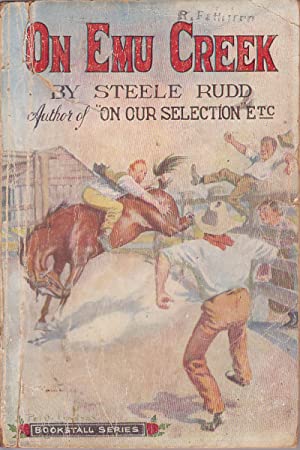
    • 27. Davis (A. H.), On Our Selection, Sydney, 1898. Lively humorous sketches of farm life and character.
    • 28. Dyson (E. G.), Factory ‘Ands, Melbourne, 1906. City life and character shown with brilliant satirical humour.
    • 29. Franklin (S. M.), My Brilliant Career, London, 1901. The first novel of a high spirited Australian girl- individual and characteristic.
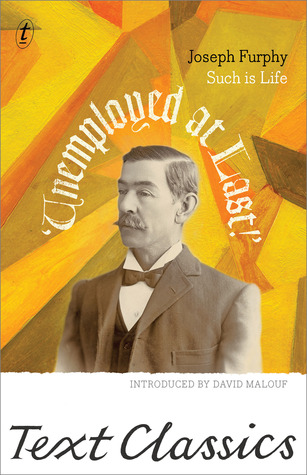
    • 30. Furphy (J.), Such is Life, Sydney, 1903. Lengthy, slow, meditative, a lifelike gallery of bush scenes and bush people.
    • 31. Hay (W.), An Australian Rip Van Winkle, London, 1921. Personal and descriptive sketches are fully written and skilfully elaborated.
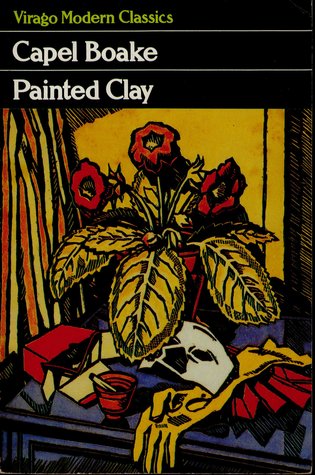
    • 32. Kerr (D. B.), Painted Clay, Melbourne, 1917. An Australian girl’s first novel, representing current fiction.
    • 33. Jones (D. E.), Peter Piper, London, 1913. The book of a typical Australian girl.
    • 34. Lawson (H.), While the Billy Boils, Sydney, 1896. Early collection of stories and sketches by the chief of Australian realistic writers.
    • 35. Lloyd (M. E.), Susan’s Little Sins, Sydney, 1919. Rare fertility of natural humour.
    • 36. Mander (J.), The Story of a New Zealand River, London, 1920. Best recent Zealandian novel, truthful and powerful.
    • 37. Russell (F. A.), The Ashes of Achievement, Melbourne, 1920. Placed first in De Garis prize competition of several hundred writers.
    • 38. Stephens (A. G.). ed. The Bulletin Story Book, Sydney, 1902. Many Austra-Zealand short stories permanently highly valuable.
    • 39. Stone (L.), Jonah, London, 1911. Keen observation, firm characterization, and witty exact description of city life.
    • 40. Wolla Meranda, Pavots de la Nuit, Paris, 1922. An Australian woman’s novel written in English, and first published in a French translation—a vivid story of sex in Australian scenes.
    • 41. Wright (A.), A Game of Chance, Sydney, 1922. One of the best books of a popular Australian writer of two score sporting stories. 

    So now, some thoughts. Remember that this was 1923. Many of our better-known early 20th century writers were just getting going. Katharine Susannah Prichard, for example, had written just three books by then, and Vance Palmer two. Others, like Christina Stead, M Barnard Eldershaw and Frank Dalby Davison had not quite started. Of course, some had, and are not included, like Catherine Helen Spence, as Bill (The Australian Legend) would say, and Price Warung, to name just two. Louise Mack is included, but in the Juvenile category – along with writers like Mary Grant Bruce and Ethel Turner.

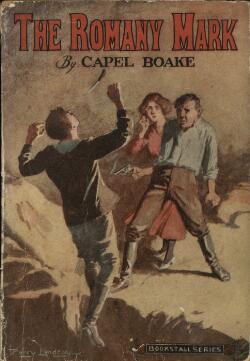
    Capel Boake, Painted clay

    People will always complain about lists. Indeed, I think an important role of lists is to get book talk into the public arena. I shared some criticisms of this list last week. I’m therefore going to leave that issue and look briefly at what Stephens included. There are books here, for example, that we still know today – those by Barbara Baynton, TA Browne (aka Rolf Boldrewood), MAH (Marcus) Clarke, AH Davis (aka Steele Rudd), SM (Miles) Franklin, J Furphy, DB Kerr (aka Capel Boake) and H(enry) Lawson.

    There are some surprises here – for me. Wolla Meranda is completely new to me, and I plan to research her for a future post. EG Dyson’s Factory ‘Ands, with its “brilliant satirical humour” also intrigues.

    As some critics complained (in my post last week), there is one by Stephens himself – but it is an anthology so is surely not, really, self-aggrandisement?

    Finally, his annotations. Love them. Some read a bit strangely – syntactically speaking. However, as well as reflecting his own preferences, of course, they are succinct, not bland, and they convey how the works meet that commission – to represent Austra-New Zealand thought and character in readable but quality literature!

    Others

    To avoid writing a tome, I’m now going to share a few from Drama and Verse. Of the two Drama works listed, one is by Louis Esson, who was critical of the list. Stephens includes his 1912 Three Short Plays and annotates it with “exhibits dramatic power as far as he goes”. 

    Verse contains quite a few “Zealandians” (to use the language of the time). Australian poets include many still known to us, like Barcroft Boake, Christopher Brennan, Zora Cross, CJ Dennis, Adam Lindsay Gordon, and Henry Kendall. Several poets are noted (annotated) for their satirical or sardonic humour, which appeals to me. But I’ll conclude with one I don’t know, R Crawford’s 1921 The Leafy Bliss. Stephens’ annotation is “Awkward verse with astonishing aptitudes; the uncouth elf suddenly disclosing the high shining face of poetry”. (Should this be “uncouth self”? Anyhow, I love this annotation.)

    Thoughts?

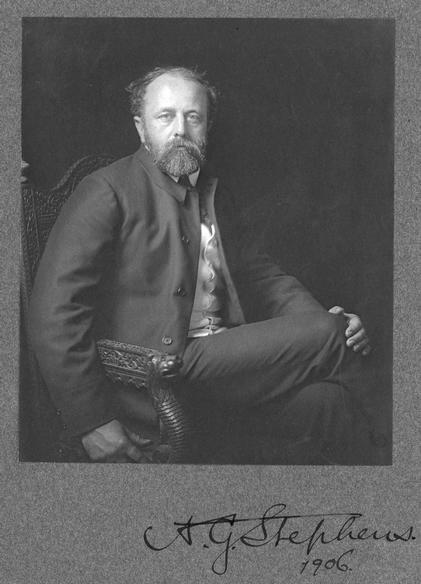
    Picture Credit: Alfred Stephens, 1906, Public Domain, from National Library of Australia.

    Other posts in the series: 1. Bookstall Co (update); 2. Platypus Series; 3. Austra-Zealand’s best books and Canada (1)

    Monday musings on Australian literature: on 1923: 3, Austra-Zealand’s best books and Canada (1)

    For my third post in my Monday Musings 1923 series, I’m moving away from publisher initiatives, like the NSW Bookstall Co and the Platypus Series, to something a bit different. It’s an intriguing story about what one paper called “inter-Imperial amity”. It goes like this …

    Mr. George H. Locke (1870-1937) – as the newspapers of the day referred to him – was, at the time, the Chief Librarian of the Public Library of Toronto. He was significant enough to have a Wikipedia page, which tells us that he had that role from 1908 to his death. Wikipedia also says that he was the second Canadian to be president of the American Library Association (ALA). The Toronto Public Library website tells us a little more. He was their second chief librarian, and his memorial plaque credits him with having “transformed a small institution into one of the most respected library systems on the continent.” They say he was the first Canadian to be president of the ALA – but who’s counting! The important point is that he was an active librarian who not only “promoted library training and professionalism” but was intellectually engaged in the world of letters.

    All very well, I hear you saying, but what’s that got to do with us? Well, in 1923, he commissioned Mr. A.G. Stephens (1865-1933) to “choose the best 100 imaginative Australian and New Zealand books for exhibition in the Toronto library” (as reported by many newspapers of the day, like Brisbane’s The Queenslander, 3 March 1923). His aim, the newspapers say, was “to inform Canadian readers of the literary aspirations and performances of Australian and New Zealand authors”. This is an inspired and inspiring librarian!

    Now, A.G. Stephens, who also has a Wikipedia page, is well known to those steeped in the history of Australian literary criticism and publishing. He was famous for his “Red Page” literary column in The Bulletin, which he ran for over a decade until 1906. Stuart Lee, who wrote Stephens’ ADB article, says of this column:

    Stephens’ common practice was to spark controversy by attacking an established writer, such as Burns, Thackeray, Kipling, or Tennyson, thereby enticing correspondents as varied as Chris Brennan or George Burns to attack and counter-attack, sometimes over weeks. It was heady stuff.

    After leaving The Bulletin, Stephens worked as a freelance writer and editor. Some of the newspaper articles reporting on Mr. Locke’s initiative, also reference Stephens’ being the editor of the literary magazine, The Bookfellow. He had edited 5 issues of it in 1899, and then revived it as a weekly for a few months in 1907. After that more issues were published, at intervals, until 1925. Overall, Stephens was recognised for his criticism, literary journalism and literary biography. After he died, critic Nettie Palmer, writes Stuart Lee, complained about ‘the appalling lack of public response’ to the news of his death, while Mary Gilmore wrote in an obituary, that “only those who were intellectually shaped by his hand, only those who stood on the strong steps of his work, know with what a sense of loss the words were uttered, ‘A. G. Stephens is gone’.” All this suggests that he was a person well-placed to fulfil Locke’s commission.

    So, back to the commission. I found very little detail about it. Most of the papers announcing it merely explained what it was – which is what I’ve told you already. A few made the point – as did The Queenslander above – that ‘The “hundred best books” task has not been attempted in Australia before. An initial difficulty is that many of our best books are out of print, and have to be painstakingly sought for.’

    But, here’s the thing, on 3 August 1923, a few months after the commission was announced, The Sydney Morning Herald reminded readers of the commission, and then wrote

    The collection has now been made, and the books have been despatched to Canada.

    Nothing more! Back to the drawing board for me. After trying various search strategies – which produced a few comments on the list – I finally found the full annotated list. It’s way too long to share in this post – and it needs a lot of editing in Trove for it to be shareable. In the meantime, I’ll whet your appetite with this response to the list by critic and poet Louis Esson (1878-1943) in Melbourne’s The Herald (1 September 1923):

    Mr Stephens has now published his list of a hundred representative books. As might have been expected, they make a rather arbitrary and unsatisfactory collection. Half of them at least might have been omitted with advantage. Mr Stephens has an exaggerated opinion of the value of the writings and critical opinions of Mr A. G. Stephens. Fifteen of his hundred representative books have been either written or edited by himself. A number of feeble writers have been included while more important writers like Bernard O’Dowd, Frank Wilmot, Vance Palmer, Francis Adams, Walter Murdoch, Katharine Susannah Prichard, Price Warung and others are inadequately represented or not selected at all. Mr Stephens, no doubt, has done his best. He has a perfect right to his own opinion; but readers in Canada and Australia must be on their guard against accepting A.G.S.’s list as being in any way critical or authoritative.

    Esson isn’t the only one who commented on Stephens including himself.

    If you are interested, watch this space … the list is not quite what I expected, based on those early announcements. I’ll try to share it next week.

    Picture Credit: Alfred Stephens, 1906, Public Domain, from National Library of Australia.

    Other posts in the series: 1. Bookstall Co (update); 2. Platypus Series

    Meet the Author: Dervla McTiernan

    You’ve heard me say it before and I’m sure to say it again, I am not a “crime reader” – but I do read crime novels when something about them catches my attention. I have been interested to read Irish-born Australian writer Dervla McTiernan since her first book started appearing with positive reviews on the AWW database. As it turned out, this conversation brought out a couple of points that particularly interested me, and further spurred my interest in McTiernan’s novels.

    The participants

    Dervla McTiernan: author of the internationally bestselling Cormac Reilly series (The rúinThe scholarThe good turn), and of three audio novellas The sistersThe roommate and The wrong one. She has won many awards, including an International Thriller Writer Award. Her latest novel is a standalone, The murder rule.

    Anna Steele: since retirement has reviewed crime, historical and literary fiction for The Canberra Times and the ACM Press, using her nom-de-plume, Anna Creer. Before that, Anna was Head of English at Canberra Grammar School. I should add that I count Anna as a friend, as for many years we have been active members of our local Jane Austen group, JASACT.

    The conversation

    Anna commenced by explaining that the conversation would be structured as a retrospective of Dervla’s career so far, meaning it would not be one of those latest-book focused conversations. She also reassured Dervla and the audience that there would be no spoilers!

    On how she started

    Dervla McTiernan, The ruin, book cover

    Anna then mentioned Dervla’s Irish heritage, which is known for story-telling, and yet Dervla has said her writing would not have happened if she’d stayed in Ireland. Why? She followed this up with “why crime?”

    Dervla said she’d been a lawyer in Ireland, but the 2007 GFC and its aftermath had been traumatic, with suicides and other serious distress amongst family and clients. By time she and her partner left Ireland in 2011, she never wanted to practise law again. After arriving in Perth and needing to support themselves, she nearly returned to law, but her husband reminded her of their promise to each other to now do it their way, so she got quasi legal work and wrote for two hours every night. The result was a contract with Harper Collins, and The rúin was born.

    She said she had not initially intended to write crime, but she had a story she wanted to tell – about two siblings she named Maud and Jack. Up popped a young, uncertain twenty-something cop, Cormac Reilly, whose job it was to save the children. Also, she was a crime fiction reader.

    On her detective, Cormac Reilly, and her success

    Anna then asked more about Cormac Reilly. He’s not an alcoholic, not tormented, and he arrived on the scene, Anna felt, fully fledged. Dervla has called him, a “man of my generation”. What did this mean, Anna asked. Anna felt that he is one of the reasons for the success of the first novel, but wondered what Dervla thought.

    Cormac, said Dervla, was a reaction to the crime fiction she was reading. She enjoys Ian Rankin, and others, but their male heroes tended to not have other responsibilities, which is not true to her generation’s experience of men. She wanted to write about someone she could admire, who could sustain relationships long term, about men who could change nappies, cook meals, and so on. She felt she’d be lying if she wrote an inept man. Love this – though I don’t think it’s only her generation that has “ept” men!

    As for the novel’s success, although Anna instructed her not to be modest, Dervla said she really didn’t know. But, she did say that the story has to matter, that writers need to have genuine emotion about what they are writing, otherwise the writing is “dead on the page”.

    On place

    The next few questions concerned place, about which Dervla feels strongly. Why were her first three novels set in Ireland?

    Dervla said that Galway, the setting for The rúin, is the place she knows best. Also, the story of Maud and Jack is an Irish story, and beyond that, she has questions and concerns about various aspects of Irish history.

    Developing this, and moving us on to the second novel, The scholar, which is set in a university, Anna quoted Dervla’s statement that “all writers bring their life experience to their books”. Anna wondered what experience she’d brought to this novel. Again, Dervla said that she knows that place, a place that can be both safe and unsafe (particularly for women). The novel involves Cormac’s girlfriend, who is a scientist, which is not Dervla’s experience, but she has dealt with scientific issues in her legal work. Besides these are more subtle things such as how people talk.

    Regarding the third Cormac Reilly book, The good turn, Anna, who clearly knows Dervla’s books well, noted that in this novel, policeman Peter Fisher, who had appeared in The scholar, has a much stronger role. She wondered why. She also noted that it is not set in Galway.

    Dervla talked a bit about Peter Fisher, whom she clearly enjoyed writing. She was interested in his relationship with his father. Also, Cormac is a good person but is not universally liked, giving Peter a challenge – stick with Cormac or go with the consensus?

    She set this novel in a rural area that she also knows well. She has decided to only write about places she wants to spend time in, but she also said that with Irish villages, they may be beautiful but you only have to scratch the surface …

    On the trilogy

    One of the things I enjoyed learning from this interview was Dervla’s decision to create in Cormac a competent man with outside responsibilities. The other thing I loved was Dervla’s response to Anna’s question regarding whether, given her comment that The good turn “rounds off” the previous two, she always knew Cormac Reilly was going to be a trilogy,

    Dervla said that yes, she thinks it’s a trilogy – though she may write about Cormac again later. She didn’t want to write a long procedural series, as they tend to be episodic without overall narrative arcs. She wanted to challenge Cormac, to have a narrative arc which would see him changed by the end. I don’t like series, so I enjoyed hearing her perspective.

    More on characters

    Anna asked her about the female detective she’d started but not finished, and about the unlikeable Hannah Rokeby in The murder rule. Dervla said that she’d been waylaid from her female detective by the idea that became The murder rule. She was interested in the Innocence Project, which many Irish students get involved in, but felt she didn’t have a story. Then, she had the idea of flipping it: from having the traditional idealistic young woman to an angry, bitter one. She likes Hannah Rokeby. Hannah is “wish fulfilment” for her because Hannah represents the younger generation of women who don’t feel they have to be “the nice girl”, who, when they think something, “they own it”! Hannah’s problems are separate from her competence.

    On police abuse of power in her books

    Anna asked whether the police abuse of power that threads through the books was conscious or just part of the stories. Dervla felt it was the latter, but commented that in any community where there’s power there’s corruption. She said that teams like the police work very closely together and when something even a little untoward happens the tendency is to support the team rather than remember their true role!

    On coming books, adaptations and the pandemic

    The interview wrapped up with a number of questions about Dervla’s plans. Dervla explained that due to The murder rule she’d been given a three-book contract by Harper Collins’ American arm for books set in America. Her new book, now completed, is set in Vermont, which she visited. It’s about a young couple, in love and beloved in their community. They go away. He comes back, without her. Her parents want the truth, while his parents want to protect him.

    Regarding when she will write an Australian-set novel, Dervla said she is currently working on a novella set in Perth and Margaret River.

    Anna also asked her about the screen optioning of two of her novels. She’s not heard about The Rúin, but a miniseries for The murder rule is moving into full script.

    Anna then asked whether the pandemic affected her writing, given she’d been writing a book a year until then. Dervla said it had been a weird artificial environment, and was a time of needing to focus more on family. She is usually always thinking of her characters when she is not doing other things, but the pandemic broke that pattern. It’s coming back though!

    Q&A

    There was a brief Q&A, which I’ll summarise:

    • On staying motivated when starting out: the two hours a night was her present to herself; she gave herself permission to have those two hours. This kept her going.
    • On support, like a writing group or mentor: she’s a solitary person, and so decided to put all her focus on writing, on doing the best writing she could. (It is a lonely profession, she had earlier admitted to Anna, so it is good for writers to make opportunities to engage with each other.)
    • On knowing how a police station works: research and common sense, she said. The Irish police produce useful annual reports.
    • On writing to deadlines: it is important if you are going to be a good publishing partner, but she also wants to write the best story she can, so deadlines are important but sometimes you need to take space.
    • On whether she feels the need to make female characters (like the tough Hannah Rokeby) likeable: no, she’s not driven to make her as likeable as Cormac.
    • On whether there’s a difference writing for audio versus print: can use fewer attributions (he said, she said, etc) and don’t need to describe responses (like “she gasped”) though she might provide a stage-type direction to person doing the reading.
    • On literary critics being scornful of crime: There are two writing worlds “commercial fiction” which is “story and character driven” and “literary fiction” which is not so. Some literary fiction can lift off the page, but not all. There is good and bad in both types, but for some, literary fiction is seen as the “real” writing. However, it is commercial fiction which supports publishing and bookshops. She’d like critics to recognise what people like to read. Anna commented that John Banville who has started writing crime, said that he “found freedom” in writing it.
    • On writing about murky psychological and social issues: she needs to start with character and let the story go from there. She doesn’t like to start with the theme. She doesn’t want to write issues-based books, but she will often write about something she’s angry about.

    Another excellent conversation – well-prepared and generously answered.

    Meet the author: Dervla McTiernan (with Anna Steele)
    Webinar via Zoom, organised by the Friends of the National Library of Australia
    Wednesday, 15 February 2023, 6-7pm

    Monday musings on Australian literature: Trove treasures (1), Reading novels

    During my Trove searches for specific topics, I come across – serendipitously – other articles that are interesting and worth sharing. So, I have decided to create an occasional sub-series called Trove Treasures. My first group comprises some random little pieces, particularly jokes, that I’ve come across about reading novels.

    Humorous snippets

    Woman reading with cushion

    The interesting thing about all these is what the humour tells us about the values of their time particularly regarding novel reading … see what you think. The ones I’m sharing here all relate to women reading novels, and the dangers that may or may not ensue!

    From 21 December 1892, in Townsville’s The North Queensland Register, comes this one titled “Worse than novels”:

    Father (impatiently): Where is your mother?
    Little pet: Upstairs, reading.
    ‘Hush! Reading novels, I suppose, when she ought to be–‘
    ‘No. She’s readin’ a perfumed letter she found in your inside vest-pocket.’
    ‘Hem! Tell her I’ve gone out to buy her some new novels.’

    My next one comes from 27 May 1905 in Sydney’s The World’s News. It’s titled “Silly fellow” (though I also found it in an earlier paper, Melbourne’s Leader of 26 December 1903, titled “Unpardonable”):

    He: So the engagement is broken off?
    She: Yes; he told her he thought she should stop reading novels and read something more substantial—something that would improve her.
    He: Well?
    She: Well, the idea of a man intimating to his fiancee that she could be improved in any way!

    Then, there’s this one that particularly made me laugh from 4 February 1909 in Melbourne’s Table Talk. It’s a cartoon caption, and is titled “The Cause of the Trouble“:

    Mistress (entering suddenly): Mary, how is it I find you reading novels instead of doing your work?
    Mary: Oh, it’s ‘cos you wear them sand shoes, mum.

    I’m interested in Mary’s “mum” not “ma’am” for her Mistress?

    Finally comes this one from 19 March 1926 in Hurstville’s The propeller. It is headed “Flapperism” with a subheading, “Reading novels”:

    He: Do you read all the popular novels of the day!
    She: Gracious, no! I have only just time to see how they end.

    In a future Trove Treasure, I plan to share a piece about impatiently reading endings!

    A little more serious

    On 2 April 1928, Perth’s The West Australian ran a paragraph headed “Reading novels!” with the subheading “Admiral’s calmness“. The same story was run in two Kalgoorlie papers, Kalgoorlie Miner on 5 April 1928, and the Western Argus on 10 April 1928. Here is the text from The West Australian:

    GIBRALTAR, March 31.— Before the court-martial opened the calmest figure seemed to be Rear-Admiral Collard, who, clad in flannels, spent hours in reading novels in hotel lounges. Commander Daniel and Flag-Captain Dewar spent yesterday conferring with their counsel aboard the warship Valiant, which is moored off-shore, preparing a reply to the charges. Meanwhile their wives show plain evidence of the strain.

    I found an article in Trove about this far-flung event written before the court-martial – in Brisbane’s Daily Standard of 28 March 1928. It provides some background. (I have not fully edited it, so it’s quite messy to read.) There are a few articles about the court-martial, including this one that I have edited from The Sydney Morning Herald on 6 April 1928. Read them if you are interested in naval history – my interest is in the Admiral’s novel reading!

    My next Trove Treasures post might be one on novel reading and men.

    Meanwhile, do any of these grab your attention?

      Monday musings on Australian literature: Beach (or Summer) reads

      It is currently summer down under and so, despite some unseasonably cold weather in various parts, the thoughts of many have turned to “beach reads”. Most of us understand that to mean escapist, easy-to-read, non-demanding fiction, although we don’t all define our own “beach reading” that way. But, do you know the history of the term and concept? Last month, Julian Novitz, from Swinburne University of Technology, wrote an article for The Conversation titled “Melodramatic potboilers, worthy classics and DIY escapism: a brief history of the beach read”. Of course I was interested.

      Do you know when the term “beach read” originated? I was surprised to read that it only dates back to the 1990s. Novitz cites as his source a 2016 article by Michelle Dean in The Guardian. Dean wrote that:

      the term only emerged in the 1990s, usually in book trade publications such as Booklist and Publisher’s Weekly. It was only around the middle of the decade that it migrated into the general lexicon and became something literary journalists began using.

      (An aside: I did find a reference to “beach books” in the 1960s, on which more below.) Dean continues that

      vacation reading is not a new concept. Ever since the 19th century, when novels were considered relatively sinful indulgences, leisure and fiction-reading have been closely associated. But it was not until the wide popularization of paperbacks in America in the middle of the last century that you began to see the beach so closely entwined with a page-turning thriller.

      Dean doesn’t explore the history further, but Novitz does. He writes that communications scholar Donna Harrington-Lueker says that in the early 19th century, “holiday reading was often viewed as a mark of gentility and refinement” and that “travellers were encouraged to use their abundant time to appreciate worthy classics”. Recommendations for “perfect” summer reading included works of Lord Byron and Charles Lamb.

      A combination of social, economic and technological developments – including increased literacy and the ability to publish books more cheaply – contributed to the rise of reading for leisure. The resultant “dime novels” popularised sensationalist thrills and adventure, and publishers started marketing “light literature” for summer reading. Novitz writes that:

      Summer novels were typically presented as “agreeable” fiction, easy for vacationers to pick up and put down, cheap enough to be happily left or exchanged in hotels.

      Of course, not all approved this trend, including those who didn’t think much of fiction in the first place. Novitz gives the example of the popular Brooklyn preacher Reverend Thomas De Witt Talmage who in 1876, labelled summer novels as “literary poison” and “pestiferous trash”.  However, even in the nineteenth century, not all saw summer reading as necessarily light. Novitz reports on Scribner’s suggested summer reading list of 1885. It included “Frances Hodgson Burnett’s passionate exploration of inequity and exploitation in the Lancashire coal pits (That Lass O’ Lowrie’s), the surreal, proto-science-fiction tales of Fritz James O’Brien, as well as travel writing, histories, and a small collection of Plato’s dialogues”.

      Critics and publishers, Novitz says, have ‘defended summer reading as a necessary “release” from the stresses of the year’, but he argues that this “doesn’t necessarily imply triviality”, and concludes that

      the best lesson to take from the history of the beach read is that if you can only get through a book or two while on holiday, then make sure they are ones you will like.

      Amen to that …

      What about Australia?

      However, this is my Monday musings series, so to bring the discussion specifically to Australia, I went of course to Trove. I’m sharing just a handful of articles I found. They are too few to be regarded as conclusive or even properly representative, but they offer some insights …

      On 26 December 1903, Rockhampton’s Capricornian ran an article titled “Summer reading”, in which the first half discusses the topic in some detail. It suggests that, for many, “a pleasant book in a shady nook will afford welcome relief and give agreeable exercise to the mind in the contemplation of novel thoughts, strange characters, and startling incidents”, but few will think about whether this time “will be well spent”. However, it says, this is being discussed “in some quarters”. The books most demanded from public libraries are “those classed under the head of fiction. All conditions of readers are alike imperious in their demand [my emph] for novels”. In fact, “the publication of works of imagination exceeds that of all other classes of literature” across the English-speaking world. The article describes in some detail what these works offer, including that “places and persons are portrayed with vivid realism” and that “good and bad characters are met with just as in real life, but those in fiction are the more interesting because the moving springs of their action can always be traced, and the consequences of their conduct considered and discussed. Human nature in all its strange developments and infinite varieties is strikingly illustrated in modern fiction and its consideration under diverse aspects and in startling forms is always pleasant occupation”.

      Hmmm … just “pleasant occupation”. Indeed, says our writer, “the value of novel reading is meeting with lively condemnation”, with the time spent being “alleged to be not a pastime, but a waste-time”. S/he is not prepared to disagree outright with this, but does suggest that novel reading offers “a change of exercise to the wearied brain, and a subtle form of excitement to the system [and, for these reasons] it must be admitted to be worth more than can be readily estimated”.

      A few years later, in Sydney’s The Daily Telegraph (3 November 1911), there is a brief article titled “Books for summer reading”. It lists 20 books compiled by Andrew Lang, “an accomplished and quick-witted writer and editor”. Lang apparently suggested that “no one who is happily placed during the summer months reads at all” and then proferred his list, which included ‘… 3, “The High History of the Holy Graal”; (Mr. Sebastian Evans’s translation)… 8. Hazlitt (Essays); 9. Leigh Hunt (Essays) … “‘Confessions of St. Augustine; 12 Boswell’s “Johnson” … 19, Gibbon’s “Decline and Fall”‘. You get the picture. The article writer assesses the list:

      Every book in this list is full of meat; there is no whipped syllabub for the undisciplined and the indolent. But when one considers the taste of the average summer reader as disclosed by the books placed at his disposal at summer resorts and on ocean steamers, this list is a huge satire.

      Love it. Two decades later, we are moving on. In Adelaide’s Southern Cross on 10 January 1930, “K”, recommends some books suitable “for the holiday season in Australia, when the heat of summer interferes with serious, and sustained reading… the kind of mental fare palatable to those who are recuperating at the seaside or in the hills”. The books are published by Mills and Boon, “the enterprising London publishers … [who] … are constantly bringing out novels which are suitable for general reading.” Clearly “K” is happy with light summer reading.

      More fascinating to me though is the Editor of W.A. Amateur Sports (20 November, 1931) who says about summer reading:

      I am sure readers will have observed from their experience that, as in the case of our dietary needs, it is not in the best interest of our health to live on rich matter continually. Generally, there is no difficulty about that, since really good books are certainly in the minority, and we are compelled, in fairness to others, particularly if our reading is catered for by a circulating library, to be inflicted with a great deal of trash at frequent intervals. 

      Oh dear … to be so “inflicted with a great deal of trash”. Anyhow, s/he sees summer reading as more varied:

      Thrillers are in regular demand, whilst in more enlightened circles travelogues are never far from the hand of those who seek the Muse in solitude. Poetry comes once more into its own and the sun sets on many a magazine flung carelessly on beach or hammock.

      Not “just” light fiction here.

      Jumping now to times a bit closer to ours, we get Bookman in The Australian Jewish Times (3 November, 1961). He reviews three books by Australian writers, but starts off with:

      Summertime is a period when ‘‘light reading”” is thought to be in order.

      Whether this is because prolonged sunshine and heat make profound reading too much of a strain, or because so many people are making holiday moves that they cannot be expected to stick a hard text, l don’t know.

      But round the world we get such publishers’ categories as “summer reading,” “hammock novels” and “beach books.”

      There we have it, “beach books”. Not “beach read”, but much the same in concept.

      He continues that these sorts of books generally come in “two types: the so-called light fiction, including detective and adventure novels; and the more or less diverting non-fiction of general interest and limited importance”. The three books he reviews are of the latter type, all non-fiction published by Angus and Robertson – John Bechervaise’s book on Antarctica, The far south; Alice Duncan-Kemp’s on life in northern Australia, Our channel country; and Helen McLeod’s on living in Papua New Guinea as the wife of a government official, Cannibals are human.

      There is more to say, including about these books in particular so I’ll return to them. Now, though, it’s late so I’m closing here on a question:

      What does “beach read” mean to you (if anything)?

      .