Novellas in November 2023: Week 1, My year in novellas

I love novellas and have written on and reviewed novellas almost since this blog started, because I love the form, but I have only tinkered around the edges of Novellas in November (run by Cathy of 746 Books and Rebecca of Bookish Beck). Last year, I wrote a Monday Musings on Classic Australian novellas and the year before I did one on Supporting Novellas (here in Australia). Otherwise, I have written a few novella reviews for the month. But I have not focused on the weekly themes suggested by Cathy and Beck. I may not again, because I might become a bit repetitive, but I’m going to start at least.

However, this has been a very strange reading year for me, so I won’t have a lot to say, which is probably good, as it means my posts will be short for you to read! For Week 1, which just runs from 1 to 5 November, the theme is “My year in novellas”. It asks us to write about novellas we’ve read since last November.

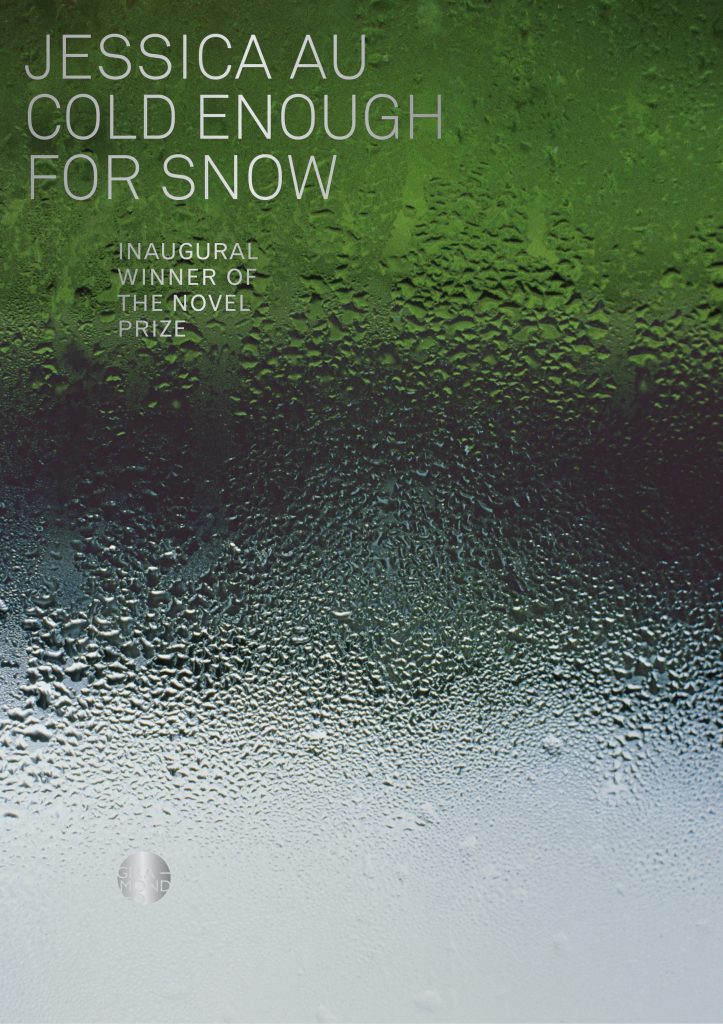
Well, I’ve only read one, and that was Jessica Au’s quiet, meditative, award-winning Cold enough for snow (my review). It was the inaugural Novel Prize winner, and also won the Victorian Premier’s Literary Awards prize for fiction (as well as being the overall winner). It’s been shortlisted for more prizes, including, most recently the Prime Minister’s Literary Awards fiction prize. It’s one of those books that’s perfect for the novella form, because it’s an intense, concentrated book rather than a plot-driven page-turner. It says a lot that it has held its own so well in the “novel” world – in terms of awards and overall critical reception – despite its short length. (See publisher Giramondo’s site for its awards to date.)

Cold enough for snow tells the story of a mother-daughter trip to Japan, but its focus is not the trip. Told from the daughter’s point-of-view, it tells about a relationship that is characterised by closeness and distance, by tender caring and frustration, by needs that aren’t always satisfied perhaps because they can’t always be, by a desire to connect. For me it was about the paradoxical nature and mutability of life. But everyone who reads this book – as in my reading group – seems to see something different because it speaks so closely to our individual experiences of life and close relationships. The Prime Minister’s Literary Award judges capture this well in their comment (see the Giramondo site above) that it is “intricately structured and with a flow and reach that, like all remarkable writing, is without boundaries”. “Without boundaries” is a good description …

Au’s book might have been my only novella review in the last twelve months, but all has not been quiet on the novella front. Back in July I wrote a Monday Musings about support for “short novels” from various points of view over the first half of the 20th century – that I found in Trove. And, just a few days ago I wrote about the winners of the new 20/40 novella prize being run by Finlay Lloyd publishers. I plan to read these two winners for this year’s Novellas in November.

Written for Novellas in November 2023

Monday musings on Australian literature: Australian Political Book of the Year

It’s fascinating just how many book awards there are in specialised areas. Last week I posted on the Dame Mary Gilmore Award, which started as a trade union supported award, but is now a more general poetry award. Yesterday I posted about the winners of the 20/40 short form prose award. Another specialised award is the Australian Political Book of the Year Award.

This is a new award that was first made in 2022. It is not a huge award in prize money, but it’s not minuscule either. The winning author (or authors) receives $15,000 and each shortlisted author receives $1,000. It’s great to see, in fact, more and more awards offering a monetary prize to the shortlisted books.

The award’s website says that the award

recognises the vital part political books play in better understanding Australian politics and public policy. Well researched, balanced and compelling political books that engage Australians are vital to the strength or our democracy.

Further, it says, the longlisted, shortlisted and winning books will be those the judges determine to have

provided the most compelling contribution to the understanding of Australian political events and debates.

The award is sponsored by a Melbourne independent bookshop, Hill of Content Bookshop, and the York Park Group.

Last year’s lists (that is winner, short and long for 2022) are available on the site. The shortlist for 2023 is on the site too, but I’ll also share them here:

  • James Curran, Australia’s China odyssey: From euphoria to fear (NewSouth Publishing): looks at the relationship between China and Australia through Australia’s prime minister from Gough Whitlam in 1972.
  • Russell Marks, Black lives, white law: Locked up and locked out in Australia (La Trobe University Press): interrogates the fact that First Nations Australians are the most incarcerated people on the planet. This book has also just been shortlisted for the Australian History section of the 2023 Prime Minister’s Literary Awards.
  • Nick Mackenzie, Crossing the line (Hachette Australia): exposes the story behind the fall of SAS hero Ben Roberts-Smith.
  • Nikki Sava, Bulldozed: Scott Morrison’s fall and Anthony Albanese’s rise (Scribe Publications): self-explanatory, I’d say!

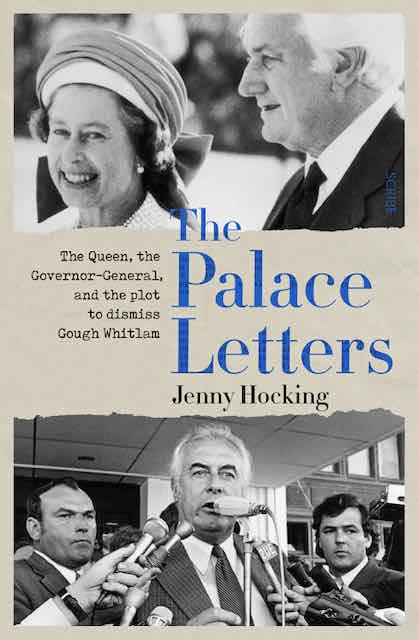
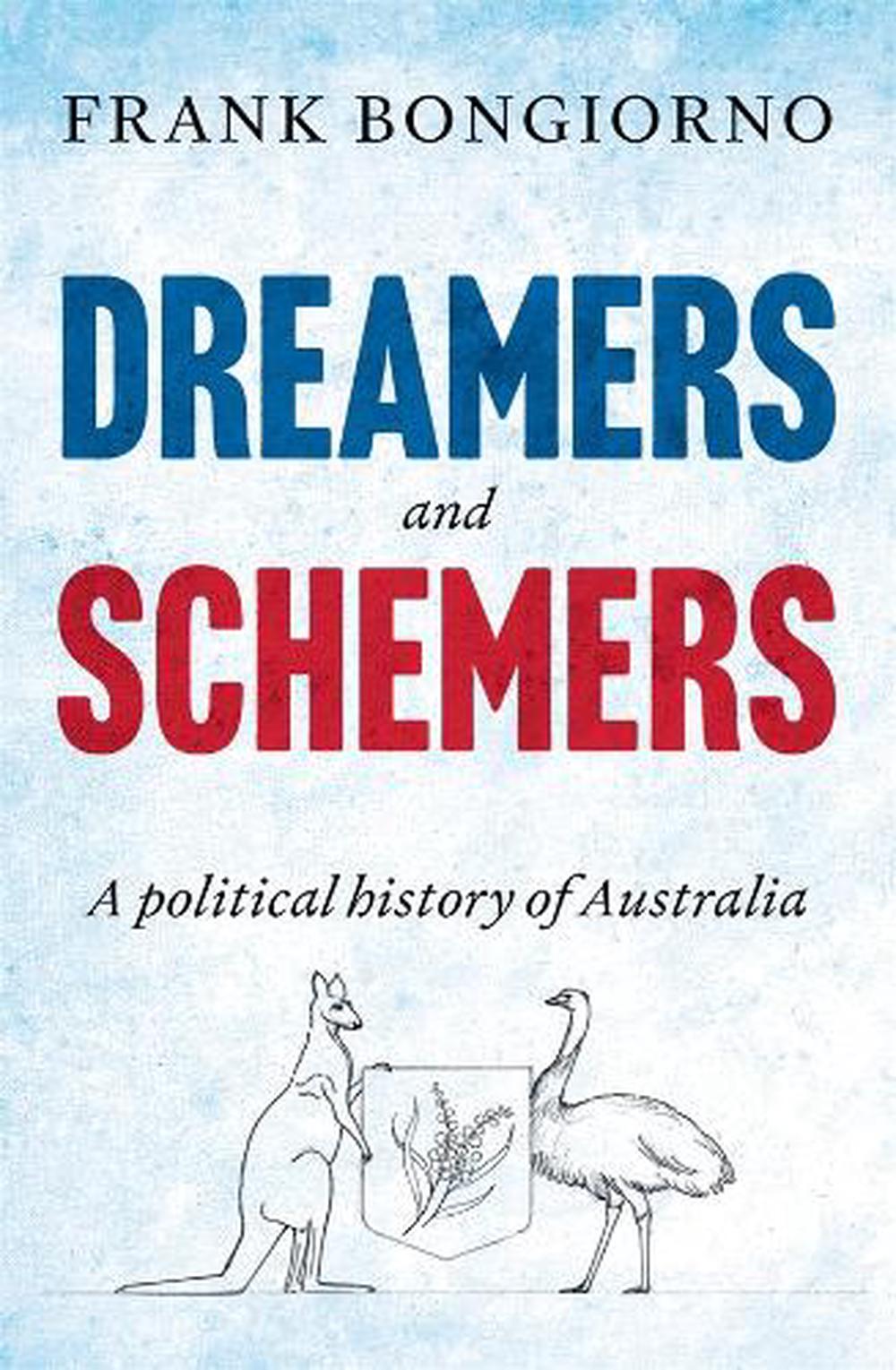
You can see the 2023 longlist on the same page. It includes books by the historian Frank Bongiorno, First Nations author Stan Grant, and author, ex-political advisor and speechwriter, Don Watson. This year’s judges are well-known political journalists Laura Tingle and Barrie Cassidy, and the academic John Warhurst.

Australia’s current treasurer, Jim Chalmers, announced the 2022 winner at a National Press Club event, the winner being Dean Ashenden’s Telling Tennant’s Story: the strange career of the great Australian silence. It’s about Tennant Creek’s, and by extension, Australia’s silence about the past, about the truth of what happened between settler and First Nations Australians.

Anyhow, back to Chalmers … he spoke, of course, about the prize, the judges and the books. I particularly liked this point he made about political books:

A good book is never just a collection of speeches or an extra-long feature piece – it’s a true study of an issue or idea, full of complications and confirmation, and with the pleasure of illustration, story-telling, portraiture.

He says more, but I’ll just share one more excerpt from his speech, in which he talked about “narratives that don’t just help us recognise patterns but also help us question our assumptions about the patterns we think we see”. That’s the important thing, isn’t it – to keep questioning the assumptions we make, because it is too easy to get locked into them, even when the world and/or our own lives and experiences change.

POSTSCRIPT: Nancy Elin noted in the comments that she has read all the shortlist, and has predicted the winner. Rather than link to each post, I’m giving you this link to her blog as she is an assiduous reader of Aussie books.

Had you heard of the Australian Political Book of the Year Award, and, regardless, does such an award interest you?

Winners announced for the inaugural 20/40 Prize

Last November, I announced the creation of the new 20/40 Publishing Prize by independent, non-profit publisher, Finlay Lloyd. And then, early this month, I announced the shortlist for the inaugural prize. Today, I announce the Winners.

First though, I’ll remind you that 20/40 is a manuscript award, with the prize being publication. It is not limited to debut or young or women or any other subgroup of writers, as some manuscript awards are. However, it does have some criteria, in addition to looking for “writing of the highest quality”. Submissions must be prose, and must be between 20,000 and 40,000 words (hence the name). Outside of these criteria, works submitted can be “all genres … including hybrid forms”. The plan is to choose two winners, as they have this year, and they hope to run this prize for many years to come.

And now, the Winners

From six on the shortlist, we now have our two winners:

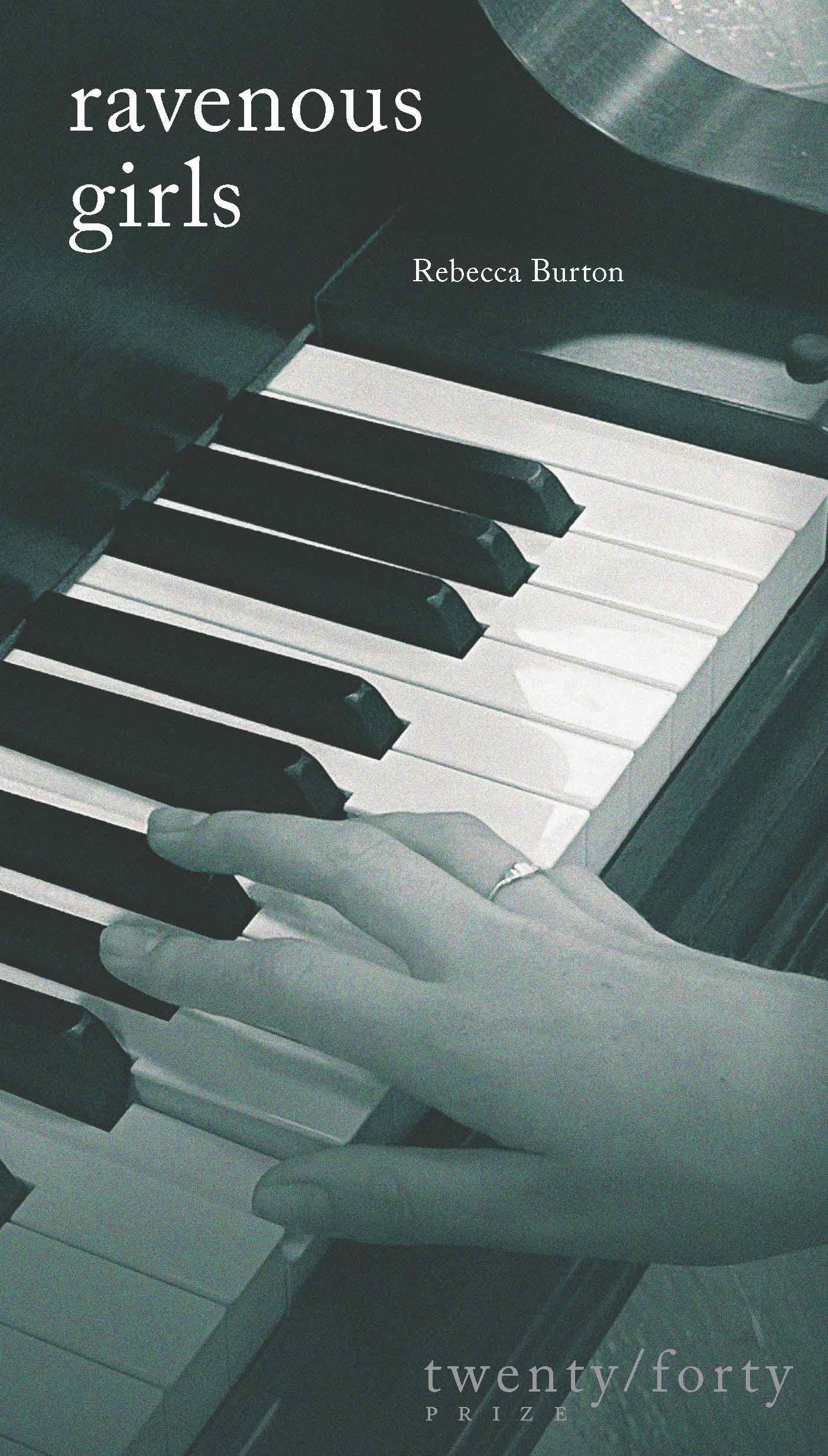
  • Rebecca BurtonRavenous girls. FL says “Stories of family dysfunction often expose us to relentless failure. And while Ravenous Girls is about the tensions and growing distance between two sisters—the elder burdened by anorexia, the younger by self-doubt—it is distinguished by its lithe and tender understanding of the complexities of growing up.”. Burton is an editor, and author of two young adult novels, Leaving Jetty Road and Beyond Evie, both published by HarperCollins Australia.
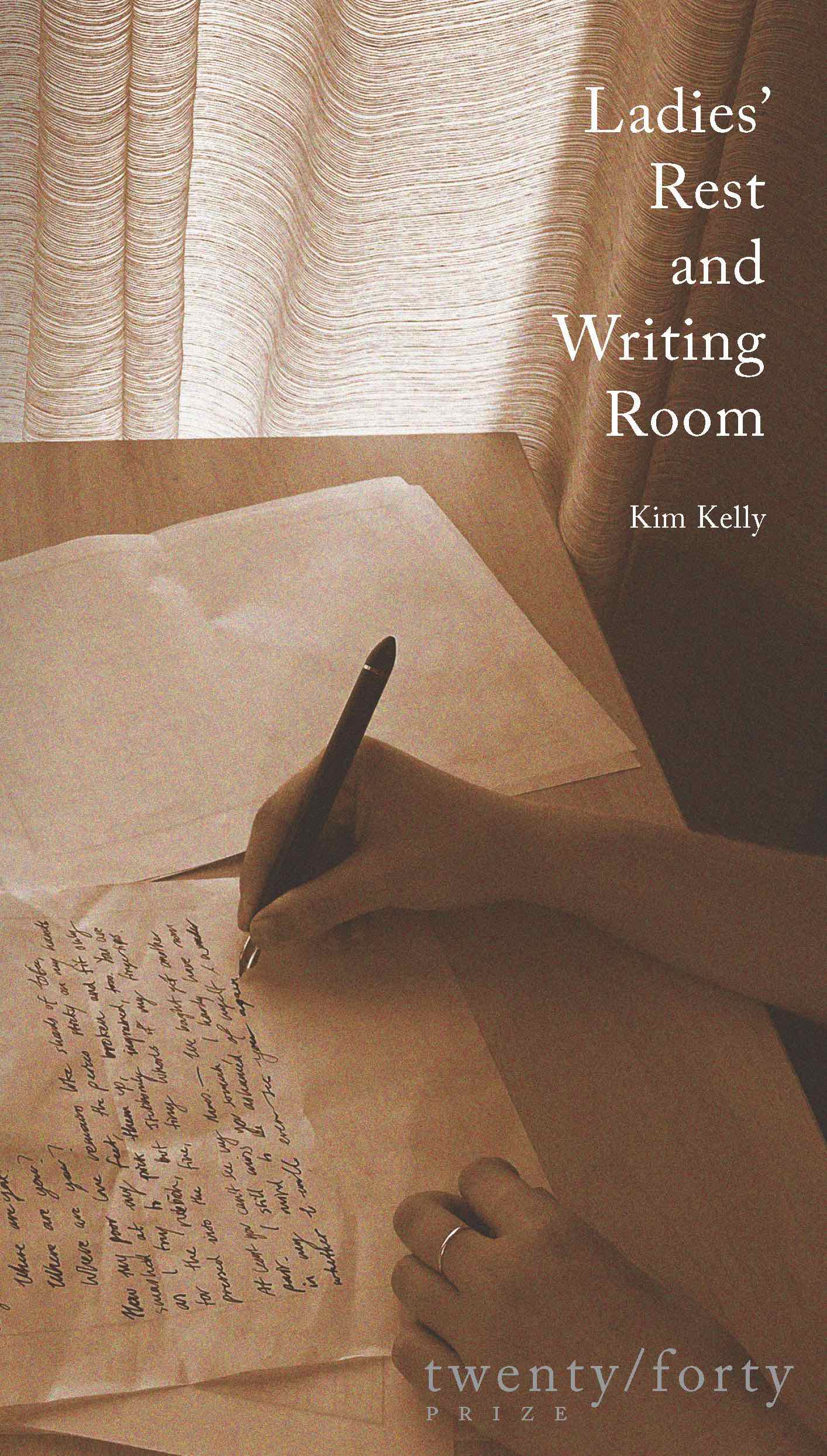
  • Kim KellyLadies’ Rest and Writing Room. FL says “Two young women, brought up to expect conventional lives, are thrown together in unexpected circumstances. Each has suffered a devastating loss that challenges their belief in life and themselves. It’s rare to come across a work of deep psychological insight conveyed with such verve and lightness of touch”. Kelly is known to many already, I think, as the author of historical fiction, most if not all published now by Brio Books.

Finlay Lloyd had hoped to make one award to fiction and one to non-fiction, but there were not enough strong non-fiction entries this year. They hope this changes as the prize becomes better known. I hope so too, as I enjoy creative non-fiction.

You can read Finlay Lloyd’s announcement here. Also, Lisa has read the winners, while I plan to read them for Novellas in November. Here is Lisa’s post.

It would be great to see Aussie readers, not to mention others, get behind this publishing prize. You can order the winners at Finlay Lloyd, with a special deal if you buy the two.

There is to be a launch of the books in Canberra on 18 November. If you will be in town that day, and would like to attend, comment here, and I will contact you with the details.

Hal Porter, Francis Silver (#Review, #1962 Club)

Introducing my first review for the 1962 Year Club – Shirley Hazzard’s “The picnic” – I said I had read two short stories and might post on the second one. I am doing so now but, stupidly, I left the book back in Canberra and here I am in Melbourne, so my post will be limited, and without the usual quotes to convey Porter’s writing style. But, it was this, or not at all, because by the time we return home, I will be onto other things. I am cross though, because Kerryn Goldsworthy did write a useful introduction, which, if I remember correctly, placed Porter as part of a change in short story writing from the more realist school that had held on strongly since Lawson.

Like Hazzard’s story, “Francis Silver” appears in the Carmel Bird edited anthology, The Penguin century of Australian stories.

Who was Hal Porter?

Porter (1911-1984) was an Australian novelist, playwright, poet and short story writer. His first autobiography, The watcher on the cast-iron balcony (1963), is regarded as a classic.

The Wikipedia article, linked on his name, is relatively brief, but there is a more thorough biographical entry for him in the Australian dictionary of biography (ADB). Written by literary critic and academic, Peter Pierce, it tells us that he had many occupations, including teaching (on-and-off at many schools), librarian, and shorter term jobs like window-dresser and sheep-station cook. But, cutting to the chase, it also reveals Porter as a problematic figure, because of his pederast behaviour. Peter Pierce writes, for example, that, around 1940, he had “an affair” with a male student at the school where he taught, “an indiscretion that went unpunished”. Those were the days, I suppose. This “affair” – should we grace it with that description? – is apparently fictionalised in his short story “The dream”.

Pierce also writes that, in her 1993 book, Hal Porter: Man of many parts, Porter’s biographer, Mary Lord was, “even-handed in judging an old friend and sensational in revealing Porter’s paedophilia, in particular his sexual relations with one of her sons.” Hard to understand. Moreover, Pierce says that Porter’s third autobiography, The extra (1975),

ventilated many of Porter’s prejudices — against Jews, ‘foreigners’ and Aborigines. The counterpart of Porter’s grace, charm and cultivation was an intense snobbery that, for instance, saw him elevate his father’s occupation from engine-driver to engineer. His facility at winning friends was matched by ceaseless demands on their patience.

So, a difficult man, and one I thought twice about sharing here. However, I read the story, liked it, and as it doesn’t smell of these difficult issues, I am covering it in the uncomfortable spirit of separating the work from its creator. Peter Pierce described him in his 2012 ADB entry as “one of the finest of all Australia’s authors of short stories and a pioneer of the first flowering of autobiographical writing in this country”. (This piece by the late academic Noel Rowe explores the Porter issue in depth.)

“Francis Silver”

“Francis Silver” is a first-person story in which an older man tells of fulfilling a deathbed request from his mother who had died at the age of 41 when he was 18. All through his childhood, he had heard about a man called Francis Silver, who, his mother had implied, had been not only a beau, but an alternative potential husband to the country-living man she did marry, the narrator’s seemingly long-suffering father.

Through our narrator’s childhood, his mother had shared with him an album of postcards sent to her by Francis Silver. Along with sharing this album, she had told stories about this man which suggested he was a worldly, debonair man, who loved the theatre. Her wish was for him to give the postcard album to Silver – but, on no account, was he to also give the lock of her hair that she had kept in an envelope with Francis Silver’s name on it. He was to burn that.

Francis Silver, his mother told him, had worked in a picture-framing shop, and that is where our narrator finds him – but what he finds doesn’t gel at all with the stories his mother had told. The story, then, is about memory, illusion and reality, and the boy’s recognition of the difference. In his own romantic fantasy, he had decided to ignore his mother’s second request and give Francis Silver (whose name works as a mantra in the story, hence my using it in full for each reference here) the lock of hair too. But, as he confronts reality, he changes his mind. The closing sentence vividly conveys his decision in an act that encompasses layers of meaning and feeling.

The father is a less developed figure, because the son was in his lively mother’s thrall, but the sense we get is of a man who loves his wife, and who tolerates her flights of fancy, feeling comfortable, it seems, that she chose – and remains with – him. He seems to recognise (or trust) that Francis Silver is one of those escape fantasies people have to help them cope with the tedium of life, the fantasy that, should it get too hard, there were, or perhaps even are, other options. The narrator, as a boy, doesn’t understand these nuances.

There was a strong autobiographical element, I understand, to Porter’s writing. From the little I read for this post, I am aware that there are such elements in this story. For example, Porter’s beloved mother died when he was 18 years old, as does the narrator’s mother in this story. How much else might be autobiographical though, I don’t know.

Anyhow, just to finish … in the end, the narrator resolves the differences he confronts and is generous to his father for whom Francis Silver had seemed an imagined (if not, as it turns out, real) rival. Our narrator has also learned something about the imagined, illusory past, and its relationship to present realities. A tight, neat, engrossing story.

* Read for the 1962 reading week run by Karen (Kaggsy’s Bookish Rambling) and Simon (Stuck in a Book).

Hal Porter
“Francis Silver” (orig. pub. in Hal Porter, A bachelor’s children, 1962)
in Carmel Bird (ed.), The Penguin century of Australian stories
Camberwell: Penguin Books, 2006 (first ed. 2000)
pp. 186-197

Monday musings on Australian literature: Dame Mary Gilmore Award

In last week’s 1962-themed Monday Musings post, I mentioned that I would post separately on the Dame Mary Gilmore Award. This was because it has an interesting history.

Mary Gilmore, 1927 (Public Domain, State Library of QLD, via Wikipedia)

First though, a bit on Mary Gilmore, for those who don’t know here. She was an Australian writer and journalist, best known as a poet. One day, I will write separately on her, but for now, I will just say that she was highly political, and was part of the utopian socialist New Australia colony set up by William Lane in Paraguay. I wrote about this in another Monday Musings back in 2015.

Gilmore lived a long life, dying in 1962 (in fact!), at the age of 97. She was involved in socialist and trade union movements, and wrote for Tribune, the Communist Party of Australia’s newspaper, though she was apparently never a party member. Her political interests are relevant to the award.

The Award has been known by different names since its creation in 1956 by the ACTU, the Australian Council of Trade Unions. According to AustLit, it was called the ACTU Dame Mary Gilmore Award, and its goal was, ‘to encourage literature “significant to the life and aspirations of the Australian People”‘. Over the years, says Wikipedia, it has been “awarded for a range of categories, including novels, poetry, a three-act (full-length) play, and a short story”. Reading between the lines, I assume this means it was more about content than form.

Since 1985, it has been confined to poetry – to a first book of poetry, in fact – and since around 2019 has been managed by ASAL, the Association for the Study of Australian Literature. Its specific history, I must say, is not particularly clear, but at some time its name was simplified to the Mary Gilmore Award. It was awarded annually until 1998, was then biennial until 2016, but now seems to be annual again. It’s a good example of the challenge to survive that many awards face. The Wikipedia article linked above lists the winners from 1985 to the present.

Pre-1985

It’s the early years of the award that I’m most interested in, mainly because they are less well documented. I’ve tried various search permutations in Trove and have found scattered bits of information, some of which I’ll share here. My first comment is, Wot’s in a name?

I have not found a formal announcement of the award, unless this advertisement in the Tribune of 21 March 1956, the year the award was apparently established, is it. It calls the award the Mary Gilmore Prize, and says submissions should be made to the Victorian May Day Committee. The May Day Committee isn’t the ACTU, but they are closely related, and both support workers’ rights. Indeed, the Victorian May Day Committee page notes that “The labour movement and the trade union movement should continue to build this day as it is the working people’s day”.

Anyhow, the ad invites submissions to the “May Day competitions” and then says that “the best three stories and the best three verses will be eligible for consideration for the Mary Gilmore Prize of £50”. It sounds like May Day literary competitions were already established – the prizes were small, just £5 and £3  – but now a bigger prize was to be offered in the name of Mary Gilmore. And, this year at least, short stories and poetry were the chosen forms. The ad also says that:

The short story and verse most favored by the judges will be those best expressing the aspirations and democratic traditions of the Australian people.

Then, on 12 December 1956, the Tribune announced that “two Mary Gilmore Literary Competitions have been announced by the May Day Committees of Melbourne; Sydney, Brisbane and Newcastle”. For May Day 1957, the “Mary Gilmore Literary Competition” would award prizes for the “first and second short stories and poems, in each of two classes”, meaning four prizes in each class. Class A was for “established” (or )published writers, and B for “new” writers. For May Day 1958, they offered the “Mary Gilmore Novel Competition”, with “a substantial prize, to be announced later” for the “best novel submitted”. The overall announcement added that:

The judges will prefer stories and poems which deal with the life and aspirations of the Australian people.

You can see how tricky the history of awards can be. I have to assume this is the “ACTU Dame Mary Gilmore Award”.

The next mention I found – and I could have missed some – was from the Tribune of 6 January 1960, which, announcing some new publications from the Australasian Book Society, included

Available now, The last blue sea – David Forrest (Winner, Dame Mary Gilmore Award). 

Interestingly, it’s a World War II set story.

Then, again in the Tribune, but this one, almost two years later on 13 December 1961, there is a report on a reception for Ron Tullipan who had won “the 1961 Dame Mary Gilmore Award for his novel, Rear vision“. It’s quite an extensive report which includes references to Jack Beasley, who was “one of the judges of the competition, which is sponsored each year in association with May Day celebrations”. He was concerned about the suggested takeover of the publisher, Angus and Robertson, by Consolidated Press. Read the article if you are interested. The report also noted that:

The Dame Mary Gilmore Award was probably unique in the capitalist world, and a real contribution to Australian literature.

On 22 August 1962, the Tribune announced the presentation of the Dame Mary Gilmore Awards for “poetry, novels and stories”. The winners were Jack Penberthy’s story, “The Bridge”, and Dennis Kevans’ poem, “For Rebecca”. Mysteriously, no novel is named. This report also helpfully names past winners of the award, but without more detail – Joan Hendry, Vera Deacon, Ron Tullipan, Dorothy Hewett, Hugh Mason, and David Forrest. Dorothy Hewett is probably the only one of these still known today.

This article also shared that the Award’s National Chairman, George Seelaf, believed that “in a few years they would be the major literary competitions in our country” but “still more financial support from more unions” was “urgently required”:

“Trade Unionism has always been strongest and literature has always been strongest when writers and unions were closest together. We will encourage writers who tell of the life and aspirations of the  Australian people”.

Don’t you love this conviction about the value of literature?

Also in 1962, another Tribune article (5 September), quotes the Dame herself. She didn’t attend the presentation, but the paper reports

that she was particularly glad to learn of the high standard and the large number of entries. “The more writers, the better expressed will be the thoughts and wishes of Australians,” she says. 

The Canberra Times – for a change – reported on 29 September 1962 that Ron Tullipan had won the “Mary Gilmore Award” with his “hard novel”, March into morning (which I described in my last Monday Musings). Is this the novel not mentioned in Tribune’s August report?

I found more award-winners from the 1960s, and they are interesting in terms of form. In 1963, for example, Hesba Brinsmead’s manuscript of the children’s (young adult) book, Pastures of the blue crane, won. That year, the “Mary Gilmore Award” was for a children’s book, with a second award for a book by a teenager. (Tribune 16 January 1963). In 1967, Pat Flower won the “Dame Mary Gilmore Award” for her hour-long television drama, Tilley landed on our shores. By then, the award was worth $500.

More work needs to be done on this, but it looks like the Dame Mary Gilmore Award Committee would decide each year what the award was for, rather than make it always open to multiple forms. The 1964 award, for example, seems to have been for a novel, while the 1966 one was for poetry. Whatever, the point is that all through this era of the award, the trade unions were behind it, until – well, I haven’t discovered yet how that aspect of it ended. But, what an interesting award.

Thoughts?

Shirley Hazzard, The picnic (#Review, #1962 Club)

As I have done for most “year” reading weeks*, I decided for 1962 to read a short story by an Australian author. I read two, in fact, and may post on the second one later.

Today’s story, though, is Shirley Hazzard’s “The picnic” which I found in an anthology edited by Carmel Bird, The Penguin century of Australian stories. It was my mother’s book, which Daughter (or Granddaughter to her) Gums gave her for Christmas 2006. I’m glad she kept it when she downsized. Shirley Hazzard is a writer I’ve loved. I have read three of her books, including the novels, Transit of Venus and The great fire, but all of this was long before blogging. I have mentioned her on the blog many times for different reasons, but an early one was in my Monday Musings on expat novelists back in 2010.

Who was Shirley Hazzard?

Hazzard (1931-2016) is difficult to pin down, and can hardly be called Australian given she left Australia in 1947 when she 16, returned here briefly, but left here for good when she was 20. Wikipedia calls her an Australian-born American novelist. As I wrote in my expat post, Hazzard didn’t like to be thought of in terms of nationality. However, she did set some of her writing in Australia, and did win the Miles Franklin Award in 2004 with her novel The great fire, against some stiff competition.

According to Wikipedia, she wrote her first short story, “Woollahra Road”, in 1960, while she was living in Italy, and it was published by The New Yorker magazine the following year. This means, of course, that “The picnic”, first published in 1962, comes from early in her writing career. Her first book, Cliffs of fall, was published in 1963. It was a collection of previously published stories, including this one. Her first novel, The evening of the holiday, was published in 1966, and her second, The bay of noon, was published in 1970, but it was her third novel, The transit of Venus, published in 1980, that established her.

She is known for the quality, particularly the clarity, of her prose, which, it has been suggested, was partly due to her love of poetry

“The picnic”

It didn’t take long for me to discover that “The picnic” is the second story of a linked pair, which were both published in The New Yorker in 1962. Together they tell of an affair between the married Clem and a younger woman, Nettie, his wife May’s cousin. The first story, “A place in the country”, concerns the end of the affair, while in “The picnic” the ex-lovers meet again, eight years later. They are left alone by May, probably deliberately thinks Clem, while she plays with their youngest son down the hillside.

This is a character-driven slice-of-life story in which not a lot happens in terms of action but which offers much insight into human nature – and into that grandest passion of all, love.

In 2020, The Guardian ran a review of Shirley Hazzard’s Collected stories, edited by Hazzard biographer Brigitta Olubas. Reviewer Stephanie Merritt writes that “Hazzard’s recurring themes here – enlarged upon in her novels – are love, self-knowledge and disappointment”. From my memory of Transit of Venus in particular, this rings true. And, it is certainly played out in “The picnic”.

So, love, albeit a failed love, is presumably played out in the first story, but in this story it is still present in its complicated messiness. The two ex-lovers look at each other uncomfortably. Self-knowledge is part of it, but it’s not easily achieved for Clem for whom self-deception has also powerful sway. There’s resignation about love – “an indignity, a reducing thing” which he sees can be a “form of insanity” – and about marriage, which involves “a sort of perseverance, and persistent understanding”. There’s also a male arrogance. He didn’t, he realises, “know much about her [Nettie’s] life these past few years – which alone showed there couldn’t be much to learn”. By the end of his reverie, he comes to some self-understanding, despite earlier denials, about his true feelings and about the decision he’d made. Whether the reader agrees or not, he feels he has “grown”.

Nettie’s reveries tread a roughly similar path. There’s not a lot of regret to start with. She sees he is nearly fifty, and with “a fretful, touchy air”. She sees his self-deceptions, and his caution, and yet her feelings, like his, are conflicted. For her, too, love is a complicated thing:

… one couldn’t cope with love. (In her experience, at any rate, it always got out of hand).

What I haven’t conveyed here, because you have to read it all to see and enjoy it, is the delicious way Hazzard conveys their internal to-ing and fro-ing, through irony and other contradictions. They say nothing to each other, but in their thoughts and observations, while they rationalise what happened and why it was right, they reveal their true feelings. Love and disappointment or disillusion live side by side, never quite resolved.

The story is told third person but from shifting perspectives. First Clem, followed by Nettie, reflect on their situation at some length. Then, in a surprise switch, the short last paragraph moves to May, whose feelings neither of them had seriously considered in all their internal ponderings. But Hazzard makes sure we see them. This technique reminded me of Kevin Brophy’s very different short story “Hillside” which does a similarly powerful switch of perspective in the last paragraph. In both cases, concluding with the perspective of someone who is both outsider but very much affected by the situation just nails it.

Not only did I enjoy this story, but I’m very glad to finally have Hazzard reviewed on my blog.

* Read for the 1962 reading week run by Karen (Kaggsy’s Bookish Rambling) and Simon (Stuck in a Book). This week’s Monday Musings was devoted to the year.

Shirley Hazzard
“The picnic” (orig. pub. The New Yorker, 16 June 1962)
in Carmel Bird (ed.), The Penguin century of Australian short stories
Camberwell: Penguin Books, 2006 (first ed. 2000)
pp. 178-185

Monday musings on Australian literature: 1962 in fiction

Once again it’s Karen’s (Kaggsy’s Bookish Rambling) and Simon’s (Stuck in a Book) “Year Club” week. This time the year is 1962, and it runs from today, 16th to 22nd October. As has become my practice, I am devoting my Monday Musings to the week.

The 1960s was an exciting decade for those of us who lived it. Change was in the air, and we truly thought we were making a fairer society. (Little did we know.) Wikipedia describes it thus:

Known as the “countercultural decade” in the United States and other Western countries, the Sixties is noted for its counterculture. There was a revolution in social norms, including clothing, music (such as the Altamont Free Concert), drugs, dress, sexuality, formalities, civil rights, precepts of military duty, and schooling.

I was in primary school in 1962, and my life was simple and stable. It wasn’t until the mid to late 60s that I became caught up in the excitement in the air. This is not only because I was a bit older, I think, but because the momentum was still building in the early part of the decade. However, there were hints of change in my 1962 research. But, let’s start with the books …

I found books published across all forms, but given my focus is fiction and I want to keep things a bit tight here, I’m just sharing a selection of 1962-published novels:

  • James Aldridge, A captive in the land
  • Thea Astley, The well dressed explorer (Lisa’s review)
  • Elizabeth Backhouse, Death of a clown
  • Martin Boyd, When blackbirds sing (Lisa’s review)
  • Patricia Carlon, Danger in the dark
  • Gavin Casey, Amid the plenty
  • Nancy Cato, But still the stream
  • Jon Cleary, The country of marriage
  • Robert S. Close, She’s my lovely
  • Frank Clune and P.R. Stephenson, The pirates of the brig Cyprus
  • Kenneth Cook, Chain of darkness
  • Dymphna Cusack, Picnic races
  • David Forrest (pseud. for David Denholm), The hollow woodheap
  • Catherine Gaskin, I know my love (Brona’s review)
  • Stuart Gore, Down the golden mile
  • Helen Heney, The leaping blaze
  • George Johnston, The far road
  • Elizabeth Kata, Someone will conquer them
  • Eric Lambert, Ballarat
  • Joan Lindsay, Time without clocks (Brona’s review)
  • David Martin, The young wife
  • John Naish, The cruel field
  • John O’Grady, Gone fishin’
  • Nancy Phelan, The river and the brook
  • Criena Rohan (pseud. for Deirdre Cash), The delinquent
  • Donald Stuart, Yaralie
  • Geoff Taylor, Dreamboat
  • Ron Tullipan, March into morning
  • George Turner, The cupboard under the stairs (Lisa’s review)
  • Arthur Upfield, The will of the tribe

Children’s literature was going strongly at the time, with books published by authors still remembered as writers of our children’s classics, such as Nan Chauncy, Ruth Park, Ivan Southall, P.L. Travers, and Patricia Wrightson.

There were very few literary awards at the time. The ALS Gold Medal went to Vincent Buckley’s Masters in Israel, and for the first time since I started taking part in the Year Club, the Miles Franklin Award was in existence. It was shared by the Thea Astley and George Turner novels listed above. There was also, though Wikipedia doesn’t list it, the ACTU Dame Mary Gilmore Award, but I plan a special post on it, so watch this space.

Writers born this year are mostly still around though I haven’t reviewed many: Matthew Condon, Alison Croggon (my post on her memoir), Luke Davies, and Craig Sherborne. Deaths included the novelist Jean Devanny and poet Mary Gilmore. The librarian Nita Kibble (for whom the Nita B Kibble Awards – now seemingly in abeyance – were named) died this year, as did the critic HM Green.

The state of the art

Of course, I checked Trove to see what newspapers were saying about Australian literature, and fiction in particular, and will just share two threads I found.

First Nations Australians

With the devastating loss of The Voice referendum here last weekend, I would like to start with some First Nations (or Aboriginal) Australians that came up in my Trove travels, which mainly involved references to writers including Aboriginal characters in their books. One was Helen Heney (1907-1990) whose father was the first Australian-born editor of the Sydney Morning Herald. Heney wrote several novels – plus social commentary, translation and a biography – but the one published in 1962 was The leaping blaze. It is set in a station in western New South Wales, which is now in the hands of the latest generation, the “spinster” Evangeline Wade. The Canberra Times’ reviewer (January 5, 1963) explains that Evangeline has been frustrated through her life, and now wants power over others. Part of her plan is to create an “aboriginal station on her property as. an experiment”, but this plan, says our reviewer, is “motivated more by a desire to gain further power than it is to further native welfare”. Unfortunately, our reviewer continues, the novel lacks a clear focus, which 

is a pity because Miss Heney is essentially a writer of ideas. She is not just telling a story. / She is obviously out to give her views on a number of sociological problems but the canvas is too large for anything more than a casual sketching of them.

The other novel I want to share is Yaralie by Donald Stuart (1913- 1982) which tells “the story of the daughter of a white father and a half-caste mother, and the people among whom they live”. The Nepean Times’ reviewer (October 11) writes:

Told with a good deal of warmth, the story is set in a native settlement in north-west Australia during the depression and deals with the ever-present problem concerning the treatment of the aborigines in a white Australia.

Donald Stuart is new to me, but seems worth following up. His work is sure to be dated now we have First Nations people telling their own stories, but he’s part of a tradition. Wikipedia says

Stuart attempts to view the world from the Aboriginal point of view, making him one of the few Australian writers, along with anthropologists such as T.G.H. StrehlowCharles Pearcy MountfordRonald Berndt and Catherine Berndt, to even attempt to come close to a personal knowledge of Aboriginal people.

Realist literature and The Australasian Book Society

The main thread I found through Trove, however, concerned communist writers and realist literature. This emphasis might be partly due to the fact that Trove’s content in this period is somewhat skewed as the Australian Communist Party’s newspaper, Tribune, has been digitised, because, like The Canberra Times, they have given permission despite still being under copyright. 

However, before I searched Trove, I had already noticed the significant number of authors in the list who were Communists – often members of the Communist  Party of Australia (CPA) – or Communist-sympathisers, so the slant may be real to some degree! Anyhow, what these writers tended to write were realist (or social realist) novels, the preferred genre for Communist writers. 

It was clear from several articles that these social realist writers felt under-appreciated at home. The Tribune regularly reported on the success of Australian social realist writers overseas. On January 17, the Tribune wrote that CPA-member Dorothy Hewett’s realist 1959 novel, Bobbin Up, about women in a spinning factory, was “becoming a novel of world repute” with translations being published, or to be published, in the German Democratic Republic, Rumania, Hungary and, very likely, the Netherlands. 

And on February 7, under the heading “Success despite critics”, the Tribune advised that another book by an Australian Communist author was garnering interest overseas ‘despite class-prejudiced criticisms by Australian daily press “experts”.’ Progressive authors like Katharine Prichard, Frank Hardy, Dorothy Hewett, and Mona Brand were being published overseas, it said, and now they’d heard Judah Waten’s Shares in murder, “a murder story that is different because of its social exposure content” was to be serialised in New Berlin Illustrated, and published in book form in Germany, Czechoslovakia, and, they expected, the Soviet Union.  

It is this very Judah Waten who, in another article, is scathing about Australia’s literary darlings of the time. On March 28, again in the Tribune, he wrote:

In Australia today the writers who are acclaimed in the daily press, win awards and prizes are those distinguished for the obscurity of their prose, their irrational characters, their dream symbolism, parallels to ancient myths, feudal attitudes and pornography.

Who are these writers? Patrick White? Hal Porter? Thea Astley too perhaps?

I also noticed that many of the books praised in the Tribune were published by the Australasian Book Society, so I went hunting, and found a seminar was held about it in 2021.  The seminar promo described the Society as

a mid-twentieth-century, book-club style, cooperative publisher with a subscription model that promised four books a year to members and distribution through unions, industry associations, education organisations and the communities of the organised left in Australia, including the communist party. It sought to find readers who did not read literature and to develop writers who did not yet write it.

Fascinating. In 1962, this Society celebrated its 10th anniversary … but, like the Dame Mary Gilmore Prize, I think it deserves its own post.

Meanwhile, just to show that not all my research ended up at the Tribune, I’ll close with a review from The Canberra Times of Ron Tullipan’s novel March into morning, which was published by the Australasian Book Society in 1962, and won the Dame Mary Gilmore prize. It tells the story of a man “who started life as a ward of the State and was hired out to a slave-driving cocky, whose only interest in him was how to exploit him”. Writing on September 29, reviewer G.C.P. says it

may sound like one of those hopeless novels whose authors are only concerned to spit into Authority’s eye and point out wickedness in high places. / Fortunately, it is not, and reads more like an honest piece of reporting.

G.C.P. assesses its strengths and weaknesses, and concludes that “it is not great literature, [but] it is a very readable book”. Judah Waten would probably see this as damning it with faint praise! 

Sources

  • 1962 in Australian Literature (Wikipedia
  • Joy Hooton and Harry Heseltine, Annals of Australian literature, 2nd ed. OUP, 1992 (with Bill’s help)

Previous Monday Musings for the “years”: 1929, 1936, 1954 and 1940.

Do you plan to take part in the 1962 Club – and if so how?

Kevin Brophy, The lion in love (#BookReview)

This year has been, for me, the year of the short story, partly because short stories have fitted in with the sort of year I’ve had, but also because short stories – individually, in anthologies, and in collections – have been coming my way in great number. This is fine, because I love a good short story. Fortunately, this latest collection, The lion in love by Kevin Brophy, contains good short stories.

The lion in love is Brophy’s second collection, but I’ve not read him before. He worked in many jobs, but his last job was teaching creative writing at the University of Melbourne, where he is now an Emeritus Professor. According to the university’s page for him, he has twenty books of poetry, fiction and essays to his name. Finlay Lloyd’s page lists some of his awards and other accolades, and adds that “as a writer he has chronicled urban Melbourne, especially the street life of his heartland, Brunswick”. This focus is evident in The lion in love, but not exclusively so, as several stories are set in other places. The opening story, “The lesson”, for example, is set in England, while “Apartment with balcony” is mostly set in Amsterdam, and the tight little “Experience” is set in Spain, to name some. I loved those set in Melbourne and Victoria – because these are places I’m getting to know – but the inclusion of these more exotic settings gave the book a richness I wasn’t expecting.

What also gives this book its richness is the variety in voice, tone and form present in the collection. Some stories are first person, and some third; some are realistic, while others, like “The googly” and the titular “The lion in love”, are more fable-like; some are dark, some a little melancholy, and some contain humour while others offer little slices of a time in a life. They range in length from the single-page “A child’s tale” to the 16-page “Apartment with balcony”. Despite the variety, however, every story feels carefully observed.

What, then, are they observing? Good question! The answer, to put it simply, is human beings – old ones, young ones, male ones, female ones, the seekers and questioners, the sad, the curious, the certain, the uncertain, and so on. Take for example, “Apartment with balcony”, in which the unnamed third person narrator tells the story of his youthful friendship – from school days to young adulthood – with rich boy, Herman. It starts in Melbourne, but mostly takes place in Amsterdam where they have been given the opportunity to apartment-sit. The apparently “ugly” Herman is sure of himself, while our narrator is far less so, with his thoughts frequently turning to death – but he is willing to watch and learn. The boys are interested in girls, and Herman talks about them a lot:

He was a dreamer, I guess. I admired that, because it meant he might one day dream about more serious things, more ambitious things, once we got the talking-about-girls thing out of the way. And he would be okay, we both knew that, because he was from a wealthy-enough family of well-educated parents, uncles, aunts and cousins. When he was ready for it, the right girl would hook up with him, we both knew that without having to say it.  Whether I would find a girl eventually was a more difficult question.

There’s a familiar sensible-poor-boy-accompanies-more-reckless-rich-boy trope here, and the ending won’t greatly surprise, but there’s much to enjoy and think about in the telling.

Now, though, let’s go back to the beginning, to “The lesson”, an English-set realist story about a young boy living with his recently separated mother. Like “Apartment with balcony”, this is a coming-of-age story. Our third person narrator is on the cusp. He’s interested in girls, and experiences his first kiss, but more significantly, he’s trying to work out who he is and how life works. Insecure, uncertain, but imaginative, he peppers his mother with “what if” questions, but she’s too mired in her own grief to engage.

This story perfectly exemplifies the subtle way Brophy conveys meaning. It starts with our protagonist in a tumble-down church cemetery where “tombstones lean at all sorts of angles”, but it is spring with jonquils and bluebells growing “any-which-way”. Already a contrast is established between dark chaos and a more lively one. The opening paragraph ends at the church gate, where the sombre meets the mundane, with one sign “listing the names of local men who died in the First World War” and another “asking people to take away their rubbish when they leave”. Such is the stuff of life where big things jostle against the everyday. Without spoiling anything, the story ends with the boy holding “an ice cream in one hand and a grey sea stone in the other hand, a stone, not much smaller than his boy’s heart”.

Closing the collection is the more surreal titular story, “The lion in love”, whose first person narrator is an older, experienced woman. It’s set in a Melbourne street – in Brunswick, presumably, given the referenced proximity to the zoo – during the pandemic. As people’s hair grows longer and wilder during Melbourne’s long lockdown, our protagonist’s neighbour across the road looks increasingly like a lion, and starts to behave like one, at least in the eyes of our narrator whose imagination runs amok. In a very different way, this story, which traverses that fine line between the wild and the civilised, also jostles the everyday with bigger questions about “love and pain”.

In between these two are fifteen other stories. In many, the characters aren’t named, creating a detached tone that encourages us to observe and think, rather than be emotionally led through identifying with characters. It works well, particularly in the stories that are more fairy-tale or fable-like, such as “The googly” which is about the middle of three brothers. It riffs, surely, on the traditional “three bears” story, but in this case the “middle” one is not necessarily “just right”, though neither is he the opposite. He is just another being working his way through life’s ups and downs:

He knew now that the difference between fiction and living is that in living there are no shapely endings, there can only be endurance.

“Hillside” is one of the shorter stories, and tells of an ageing couple who visit their son’s grave. The third person perspective subtly shifts between the husband, wife, and an omniscient narrator, as the couple contemplate life, death, grief and ageing:

They bend over their son, close together, their heads so close they might be looking down over a bassinet. She says something. He nods because whatever it is she is saying he knows he would agree with her. He notices some clay has splashed across the lettering on the plaque in one corner, so he takes out his handkerchief and bends down to wipe it. This cleaning is something he can do even if he cannot weep or pray or say words his heart should be composing.

Look at that spare precision. Soon after, the husband and wife topple over, and must wait for a cemetery worker to help them up. The next day the wife tells their daughter what had happened. Upon that, in the last sentence, the perspective suddenly shifts to the daughter’s, and we see a whole other element to this story.

The lion in love is full of characters who engage us with their quiet sincerity. Whether they know it or not, they offer us wisdoms that are worth heeding, because they are like us. I’m going to leave you with a couple of my favourite takeaways. The first comes from “The lesson” and refers to the arrival of the Vikings on the English coast. Our young narrator considers their impact:

Those mad pagan Vikings taught the men of Beeston how to make the boats that would make them famous, so you can’t know, can you, whether what you see coming out of the water in front of you is a dog of doom or an angel of salvation?

No, you can’t – but you can always be open to possibility. The other is from one of the few stories with named characters, “But if she did”. This is another observer story, and is a little reminiscent of “Apartment with balcony” except it traverses a longer period of time and thus of life. Our observer, watching his rich friend struggle with grief, notes that

There are no true endings, only pauses for one thing to stop and another thing to start.

I, however, need to end this post. I’m not sure I’ve done this collection justice, but I hope I’ve conveyed enough of its subtle beauty and quiet truths to encourage you to give it a try.

Lisa reviewed this in a far more timely fashion than I, but I offer this, now, to Brona for her 2023 AusReading Month.

Kevin Brophy
The lion in love
Braidwood: Finlay Lloyd, 2022
173pp.
ISBN: 9780994516572

(Review copy courtesy Finlay Lloyd)

Melissa Lucashenko in conversation with Alex Sloan

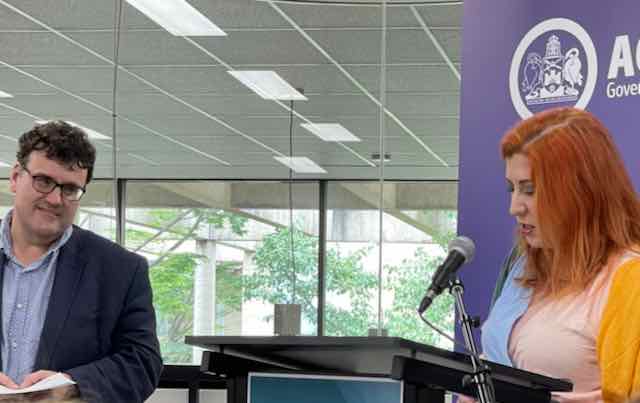
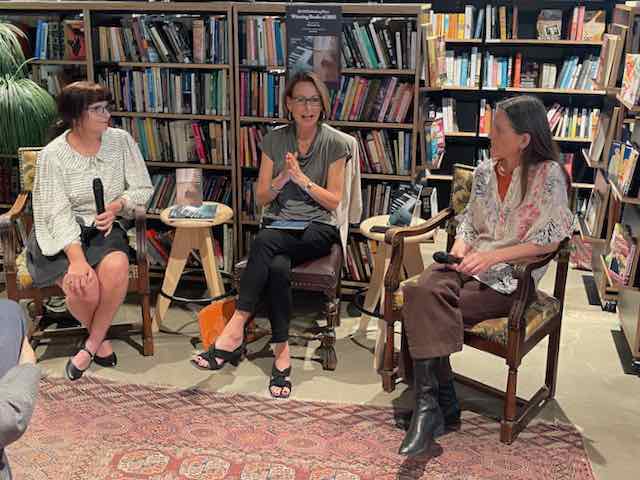
I can’t believe it’s been a year since I attended an ANU/The Canberra Times Meet the Author event, but this year has been packed. Finally, though, we were free on at the right time – and the event happened to be one of high interest for me, Melissa Lucashenko being interviewed about her latest book, Edenglassie. The interviewer was popular ex-radio journalist and well-known Canberra booklover, Alex Sloan.

I have posted on Lucashenko several times before, including on her Miles Franklin award winning novel, Too much lip. I don’t always hang around for book signings these days – do authors really like doing them? – but we thought we’d see how long the line was. It wasn’t too long, so I decided to hang around. When it got to my turn I told her that I loved that she could write with humour about serious things. It’s a skill. Quick as a flash, she signed my book “For Sue / Keep laughing/ Melissa Lucashenko”. It was worth lining up for.

The conversation

The event started as always with MC Colin Steele, acknowledging country and introducing the speakers. He explained that the title of Lucashenko’s latest book Edenglassie, comes from the name, combining Edinburgh and Glasgow, that was nearly given to Brisbane in early colonial times. He summarised the book as being about the “impact of loss of country” but also being a “novel of strength and love”.

Before getting into the conversation, Alex Sloan referred to the elders at Uluru and their request of us, the Voice, that we are now voting on in this weekend’s referendum – and asked us all “to do the right thing”. Problem is she was probably preaching to the converted.

I’m going to use first names, mostly, in the rest of the report where the alternative would feel too formal.

Alex started the conversation by referring to a review in The Guardian which described the novel in terms of its “flair, humour, generosity” and as being a novel about ongoing resistance. She then asked Melissa to share the origins of her novel.

Melissa commenced with “hello friends” and said she’d like to “extend good feelings to anyone touched by events in the Middle East”. There’s nothing much else she can say, she said, but “war crimes are never ok”.

She then introduced her novel, describing it as a historical novel, with a contemporary thread to add some humour. She said it had grown out of the memoir she’d read of the Queensland “pioneer” Tom Petrie. She told an amusing story about being in London at the same time as Alexis Wright, then working on Carpentaria (my post), and as Peter Carey, who had won the Booker Prize with True history of the Kelly Gang. We are talking around 2001, I guess. Apparently, after they’d had a brief moment with Carey, Wright, who liked Carey’s book, also said that the problem was that Australians “write too many historical novels”.

Melissa took this to heart, and so her first three novels were contemporary novels. But, on catching up with Alexis Wright several years later, she reminded Wright of her comment. Wright looked at her, and clarified that she meant “white people write too many historical novels, not us”. Lucashenko went back to her historical novel interest!

Alex then moved the discussion on to place, noting the epigraph from Jean Rhys’ Wide Sargasso Sea. It comes from when the now locked-up Antoinette is told she is in England, and responds “I don’t believe it…and I will never believe it”. Lucashenko explained its application to her novel, to the fact that Australia is “aways Aboriginal land”. All her books are about place she said.

Alex asked about the novel’s first line, which describes Granny Eddie “falling, falling, falling”. Lucashenko said that besides Granny’s literal fall, it also alludes to an old woman “falling, falling, falling” in a Thea Astley* novel, and to the biblical fall.

Next, Alex turned to the novel’s love theme. Lucashenko said it has two love stories, one in each time period. Blackfellas are human too, she said, and deserve “love, joy and peace” like anyone else. I hate that she feels she has to say this. What sort of world do we live in? Anyhow, Alex described the historical lover Mulanyin as “hot, move over Mr Darcy”, she said. She asked Melissa to do a reading, which she did, from Chapter 8, when the historical section lovers meet. “Love at first sight,” said Alex.

The conversation moved from Mulanyin and his love interest Nita to the modern storyline and the character of Winona, who, Lucashenko said, is around 27 or 28, and “likes to tell it straight”. Alex asked her why she interlinked this modern story with the historical one, and the answer was clear and to the point. She wanted to counteract the trope of the dying race. It has been slowly changing since Mabo, but is still evident. Because of it, she never kills off her Aboriginal characters. She also wanted to balance feisty characters still here in 2024, who are talking back, with her historical figures.

From here, Alex asked Melissa about Edenglassie being a work of fiction. Lucashenko responded that although it was a work of fiction, she’d done a lot of research. She’d agonised on getting facts right, because she had Keith Windschuttle on one shoulder and Andrew Bolt on the other (an image that tickled Alex.) She knew her novel would be attacked because she was telling the story from a non-conservative position. Her historian friend reassured her, though, that “it’s all fiction” – a position I don’t disagree with. Melissa also shared Barry Lopez’s point that everything in life is “story and compassion”.

At this point we returned to the title. Lucashenko elaborated on Colin Steele’s intro, saying it had come from the Scottish Chief Justice Forbes who had established a property in NSW called Edenglassie, and had liked it so much that he tried to later give this name to Brisbane. It’s a great find for a writer. Lucashenko loved it with its “Eden” and “lassie” (for a feminist like her) references. 

In terms of the novel’s perspective, she said that at the time the historical part of the novel is set, the Aboriginal people, who were in the majority at that point, felt the whites would go away. This brought us back to discussing Mulanyin, whom Lucashenko described as brave, and a fisherman. She did another wonderful reading from early in the book, when he is taught some lessons by his elders, but taught in the way First Nations culture does it, which, as Lucashenko describes it, is “you go work it out”. In this case, the lesson involved honouring old ones and not being destructive out of greed. 

Lucashenko also explained that her idea for the novel had its origins in the fact that next year will be the bicentenary of white Queensland. She wanted to provide an Aboriginal perspective on the story but it developed into something more complex, that included love, and also encompassed the idea of “what could have been”. 

She talked quite a bit about Tom Petrie who had established a pastoral station with the permission of the local Aboriginal headman – in a location that was strategically chosen by that headman. The central question of the novel concerns “what was going through these people’s minds”. Things could have been different then, she said, and could still be now. There’s the paradoxical idea of British pluck and courage versus the facts involving murder, mayhem, theft. The conversation teased out several complex ideas about colonisation – attitudes to law, and to beliefs, for example. Lucashenko talked about pastoral workers being branded, and how that can be seen in two ways – it marks a person as a slave, but it can also work as protection (as in “don’t shoot me, I belong to Petrie”.)

Her story explores how colonisation could have been done differently. In Petrie’s case, for example, it was still colonisation, but the way he did it saved Aboriginal lives and partly at least protected their culture. I’m intrigued. Without having read it yet, I can see why she felt the need to prepare herself for attacks. (She’s been attacked before for her “non-conservative”, confronting exploration of difficult subjects.)

Alex talked about the section in the book where Mulanyin asks for permission to marry Nita. She felt it explained things about Aboriginal practices and beliefs that she had not known (which is how Debra Dank’s We come with this place impacted me, so I look forward to continuing that journey here.) Lucashenko then talked about the novel’s modern thread, about Winona confronting the wanna-be (my term) Aboriginal, and her upfront message to him. About this, Lucashenko said that “being harsh is not blackfella law” but there is also a “right way”.

Q & A

On what she learnt about herself through writing each novel: That she has stamina for writing, though not for much else. So, the lesson is, “Do what you are good at”! 

On not providing a glossary for words in language: Meaning can be understood with a little work; knowledge is best earned not given. (Love this.) 

On the novel taking four years: She has been writing this novel her own life, but serious research for it started in 2019, just before the fires, floods and pestilence!

On how Brisbane is affected by its history: All Australia is affected by colonisation, but in Brisbane’s case it was a brutal penal settlement, giving meaning to that phrase, “Another day in the colony”, which still has meaning today. Melissa talked about the question “Are you a monkey or an ape” experienced by an Aboriginal woman prisoner in Logan in 2014.

Vote of thanks

Lucy Neave (whose novel Believe in me I’ve reviewed), gave a sincere vote of thanks, which included thanking Melissa for the special readings from her book (there were three.) She described Edenglassie as a generous book, that’s “compelling, accessible, and meticulously researched”. It encompasses diverse values, she said, and shows what enormous value we can get “if we listen”. 

I would add thanks to Lucashenko for her gracious handling of occasional clumsiness from her questioners, because we whitefellas can be hamfisted at times.

* First Chris Flynn (Here be Leviathans) and now Lucashenko admit to the influence of Thea Astley. Love it

ANU/The Canberra Times Meet the Author
MC: Colin Steele
Australian National University
12 October 2023

Monday musings on Australian literature: Shortlist for the inaugural 20/40 Prize

Last November, I announced the creation of the new 20/40 Publishing Prize by the wonderful (and local-ish to me), independent, non-profit publisher, Finlay Lloyd. Now, eleven months later, the awarding of the inaugural prize is imminent, with the shortlist being announced last Friday and the winners to be announced on 28 October.

But, just to recap, 20/40 is a manuscript award, with the prize being publication. It is not limited to debut or young or women or any other subgroup of writers, as some manuscript awards are. However, it does have some criteria, in addition to looking for “writing of the highest quality”. The submissions can be fiction or non-fiction, must be prose (but “all genres … including hybrid forms” are welcome), and must be between 20,000 and 40,000 words (hence the award’s name, the 20/40 Prize). They aim to choose two winners, each year. In the communication I received last week about the shortlist, Finlay Lloyd publisher and commissioning editor, Julian Davies, says:

Our passion for creating this opportunity for writers and bringing their work to the reading public will continue next year and, we hope, for many more.

That’s great to hear … and we can do our bit to help by buying and reading the winning published novels.

And now, the Shortlist

You can read a brief description of the six works at the announcement link above, so here I will provide some brief author information that I have found online.

  • Roger AverillSlippage: freelance researcher, editor and writer, with four books published by Transit Lounge – Exile: The lives and hope of Werner Pelz (Lisa’s review), the memoir Boy he cry: An island odyssey, and two novels, Keeping faith and Relatively famous (Lisa’s review).
  • Rebecca BurtonRavenous girls: editor, and author of two young adult novels, Leaving Jetty Road and Beyond Evie, both published by HarperCollins Australia.
  • Rachel FlynnNew moon rising: author of children’s picture books and novels, including the I hate Friday series, published by Penguin.
  • Kim KellyLadies’ Rest and Writing Room: author of 12 , mostly historical fiction, novels, most if not all published by Brio Books.
  • Jane Skelton, Breathing water: writer of poetry, short fiction and novels, published by Flying River Press, Rochford Press, Spineless Wonders and others.
  • Olivia De ZilvaHold on tight: writer and poet.

Julian Davies explains on the shortlist page that the works were judged blind.

The judging panel for the inaugural prize comprised Katia Ariel (author and editor), Christina Balint (whose novella, Water music, I’ve reviewed), John Clanchy (novelist and short story writer whom I’ve reviewed a few times), Julian Davies (the publisher and also an author whom I’ve also reviewed a few times), and Stefanie Markidis (writer and researcher).

When I first announced this prize last November, I noted its relevance to Novellas in November. So, I am thrilled about the timing of this announcement, because you can pre-order the two winning novellas at the Finlay Lloyd site, for a special discounted price of $43.20 (instead of $24 each). A bargain. And, if you’ve never read a Finlay Lloyd book before, you won’t be disappointed I’m sure in the artefacts themselves, as publishing good writing in beautiful packaging is what they do. Pre-ordered books will be shipped on announcement day, October 28, giving you time to read one or both by the end of November! I plan to.