Craig Silvey, Jasper Jones (Review)

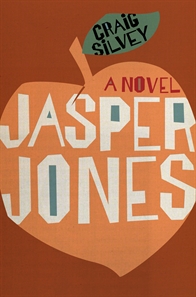
Jasper Jones cover (Courtesy Allen & Unwin)

Jasper Jones cover (Courtesy Allen & Unwin)

What is is about coming-of-age novels? Why do we like to read them long after we’ve (hopefully) come of age ourselves? Is it because we like to compare our own experience with that of others? Whatever the reason, it is clear that we do like to read them because they sure keep being written and published. In my few months of blogging I have already written about two, and have now read another, Craig Silvey’s Jasper Jones.

Like many, though not all, such novels, Jasper Jones has a first person narrator. It is set in a small country town in Western Australia in the late 1960s, and the protagonist, Charlie, is the nearly 14-year-old son of a high school literature teacher. He is a reader and therefore, almost by definition in the world of teenage boys, not “cool”. The book opens with the town’s bad-boy, Jasper Jones, knocking on his window in the middle of the night and, to Charlie’s surprise and delight, asking him for his help. The plot revolves around the shocking help that Jasper wants, how Charlie responds and the impact on him, his friends and family.

It is  a pretty dark and gritty story, and Silvey, mostly, controls it well, though there are times when he pushes the melodrama button a little too heavily. Silvey teases us at the beginning with the notion that the book will be a re-setting of Harper Lee’s To kill a mockingbird. There’s a death, an indigenous person likely to be blamed for it, a much maligned apparently “mad” person,  an apparently thoughtful and wise father AND Charlie’s own regular reference to the book and to how Atticus Finch might think in particular situations. However, fortunately I think, Silvey is a little more sophisticated a writer than that and Harper Lee’s book functions more as a frame for the story and the ideas being explored than as a direct model for the plot.

One of the things I like in the novel is the friendship between Charlie and his Vietnamese refugee school-mate, Jeffrey Lu. I’m not a teenage boy but I have known some in my time! The dialogue between the two boys rings pretty true – their puns, their ribbing of each other, their jokey arguments. True too is their uneven burgeoning interest in the opposite sex – Charlie is attracted to classmate Eliza Wishart  and to enjoying some “sassytime” with her, while Jeffrey’s focus is on making the town cricket team.

The novel is neatly plotted – and while some of it is predictable it is not all so. The fact that Charlie fears insects seems to be resolved when we discover that his love-interest Eliza has a similar fear – but it reappears again, cleverly, in the denouement. The story is well-paced, and it deals with a range of side issues, such as racism (against the Vietnamese refugee family, and the “half-caste” Jasper Jones), on top of the usual coming-of-age ones, such as loss of innocence (in several meanings of the word). Many of the characters could be seen as stereotyped – the “bastard” cricket coach who aligns himself with the “boorish” bully boys, and the cold-hearted status-seeking shire president, to name two – but most of them work despite this. Charlie’s mother though stretches the imagination a little too much: she has married down, she has been forced to live in a country town too small for her, and she has lost a child. This does seem a bit of overkill and the panning out of her part of the story feels a bit like one too many layers in the book.

One of the concepts that Charlie explores is that of “timing and chance”. He learns that despite your best laid plans, time and chance sometimes take over and there’s not much you can do about it. Another issue that runs through the book is that of reading, words and language. Early on Jasper Jones tells Charlie he trusts him because:

But I hope you might see things from my end. That’s what you do, right?  When you’re reading. You’re seeing what it’s like for other people.

With this coming near the beginning of the book, it’s not surprising that Charlie’s ability to empathise, to see things from other points of view, is pushed to the limits as the story progresses. Charlie, whose ambition is to be a writer, also learns about the limits of words, about when they are useful and when they are not, and about finding the right ones to use when they are.

There are many thematic and stylistic things that can be talked about in this book, making it a good one for discussion but, in the end, it is a fairly traditional coming-of-age story in its style, tone and structure. That said, if you like such stories, as I do, there’s a good chance you’ll find this a compelling and entertaining even if not a particularly challenging read. And is there anything wrong with that?

Craig Silvey
Jasper Jones
Sydney: Allen & Unwin, 2009
368pp.
ISBN: 9781741757743
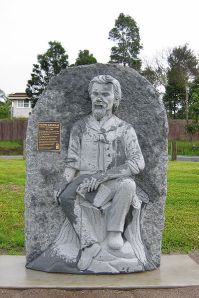
Kendall’s favourite son

Statue of Henry Kendall, on an inclement day in Kendall, NSW

Statue of Henry Kendall, on an inclement day in Kendall, NSW

…is the Australian poet, Henry Kendall. Except, he’s not REALLY a son – he was not born there,  and he only lived there for 6 years, from 1875 to 1881, when he was New South Wales’ first Forest Inspector. But, you know the story, when you are on a good thing…! And, anyhow, as a lover of Australian literature, I’m not going to argue against naming a town after one of our favourite poets. Anything that keeps our writers front and centre is fine by me.

Henry Kendall’s most famous poem is “Bell-birds”. It’s not quite as famous as Dorothea Mackellar’s “My country” and Banjo Paterson’s “Waltzing Matilda” but it is definitely up there. It is, for example, included in last year’s anthology, 100 Australian poems you need to know. It was written in 1869, two years before he went to Camden Haven (ie, Kendall as it was then known) and it reflects his love of nature – the sort of temperate forest landscape he would have found around Kendall. You can imagine the bell-birds in this scene can’t you? The first verse goes like this:

Driving towards Kendall

Driving towards Kendall

By channels of coolness the echoes are calling,
And down the dim gorges I hear the creek falling:
It lives in the mountain where moss and the sedges
Touch with their beauty the banks and the ledges.
Through breaks of the cedar and sycamore bowers
Struggles the light that is love to the flowers;
And, softer than slumber, and sweeter than singing,
The notes of the bell-birds are running and ringing.

And I will close on this little Henry Kendall taster … posting from an iffy Internet Cafe in sunny Port Macquarie (about 30mins drive from the little village of Kendall).

Thinking of peace in 1941

Oh the benefits (and sadness) of hindsight! This week, during my reading of the 1941 issues of The ABC Weekly, I came across a few references to peace and the need to plan for it. Oh dear! It’s probably just as well they didn’t know how much longer they had to go.

Anyhow, one of these references came in the form of a poem by writer-actor Hal Percy in his regular column, “Hal Percy on Parade”. Hal was not really a poet – more of an all-round performer – but his verse, “Toast to the women” (issue of 8 March 1941), feels like it came from the heart. Here is an excerpt:

When the cease-fire has been sounded, when victory has been won
And the earth no longer trembles to the thunder of the gun;
When historians write the chapter of our fight for liberty

When the Nation sings the praises of her gallant sons
The Air Force and the Navy and the boys who manned our guns;
Then let us pause,  remembering the women of our race
Whose deeds of love and sacrifice should find an honoured place
In the pages of our history. …

I have to say that I found this rather touching and, in fact, encouraging: that, in 1941, a man would write that women deserved a place in history. The question is, though, how well was his request heeded?

A.B. (Banjo, to most of us) Paterson

Within the next few weeks I will be reviewing the Australian Classic Library’s re-release of Paterson’s The man from Snowy River and other verses, so this post is just a teaser. It was inspired by a column in The ABC Weekly (of 22 February 1941). Paterson died on 5 February 1941 – and less than three weeks later Australian novelist and critic, Vance Palmer, wrote a short item on Paterson’s impact on him:

I very well remember the excitement that filled me when, as a boy, I came across his new book, “The Man From Snowy River”, and I know that others around me shared the excitement. Here was the life we had known, suddenly given meaning, significance, a fresh interest. … It was as if a word had been uttered that was to awaken a dumb country, giving it a language of its own, and spreading a sense of fellowship between one man and another.

They were different times then – The man from Snowy River was first published in 1890, when Vance Palmer was 5 years old. We now have a language of our own, and we are a far more urbanised society than the one Paterson wrote about, and yet, I too have a soft spot for Paterson. Like Palmer, my love for Paterson also started when I was a child – when my father would read Paterson’s ballads to us. And in fact, I shared this Paterson-love only recently in an exchange with American blogger, Waltzing Australia, after she quoted “The Man From Snowy River” poem in full on her blog. We traded some favourite poems and lines, but I have to give her the award for the best response when she quoted these lines from his poem, “An Answer to Various Bards”, in which he responds to poets such as Henry Lawson with “their dreadful, dismal stories”:

If it ain’t all “golden sunshine” where the “wattle branches wave.”
Well, it ain’t all damp and dismal, and it ain’t all “lonely grave.”
And, of course, there’s no denying that the bushman’s life is rough,
But a man can easy stand it if he’s built of sterling stuff…

Yes, I can take a lot of Banjo – and so I greatly look forward to reading the recent re-release with its new introductory comments. Watch this spot!

Australian Battle Cry, circa 1941

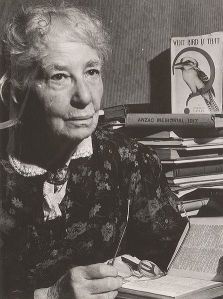
Dame Mary Gilmore, 1948 (Presumed Public Domain, from the State Library of NSW, via Wikipedia)

Dame Mary Gilmore, 1948 (Presumed Public Domain, from the State Library of NSW, via Wikipedia)

Somehow I would not have thought of socialism and patriotism being combined in the same person but, logically I suppose, there’s no real reason why they shouldn’t be. And it does appear they were combined in Dame Mary Gilmore, a famous Australian poet and journalist who was also well-known as a socialist.

How do I know? Well, today in my reading of The ABC Weekly (issue of 22 February 1941), I came across the words and music for a song titled “Australian Battle Cry”. I’m not sure what the copyright situation is for reproducing a song, but I’m going to take a risk and quote the lyrics in full – anything less (and you will soon see why) would seem rather ridiculous:

We’re the Boomeranglanders, we’re the Boomeranglanders, we’re the Boomeranglanders,
Sons of the Boomerangland !
We’re the Boomeranglanders, we’re the Boomeranglanders, we’re the Boomeranglanders,
We fight for the Boomerangland !
Boomerang, Boomerang, Boomerang*, Boomerang!

(* Pause for effect – as per instructions on the score).

The music was set by Madame (I suppose if you’re not a Dame, Madame will do!) Evelyn Grieg.

Now, the introductory notes to this, Australia’s first, “national battle cry”, calls it “a deep-throated and rousing theme calculated to stir a nation to action in war and effort in peace”. It goes on to say that Gilmore based it on an “Aboriginal corroboree cry” she heard as a child in 1872 in central New South Wales. These notes also inform the ABC Weekly’s readers that copies of the words and music have been sent to “our fighting forces in Africa and Palestine” and have been published in The Education Gazette so that schools can use it “to rally the rising generation in Australia”.

And so now I bring it to you. Consider yourselves (well, the Aussies among you anyhow) rallied!

Poet’s advice to Australian writers, 1940

In 1940, Ernest G Moll’s poetry collection, Cut from mulga, was chosen by the Commonwealth Literary Committee as the book of the year. In that same year, in a talk on the ABC, he exhorted Australian writers to stop being apologetic about being Australian.

So, who was Ernest G Moll? He was born in Victoria in 1900, but moved to the USA in 1920 and was appointed the Assistant Professor of English at the University of Oregon in 1929. He retired from there in 1966, and lived out the rest of his life – he died in 1997 – in California. However, he did return frequently to Australia during this time, including in 1939-40 when he lectured on exchange at Sydney Teacher’s College. I must admit that I am not familiar with Moll or his work but he is clearly of some note – one of his poems, “On having grown old” (don’t you love the way this title is worded?), was selected for the rather gorgeous anthology published in 2008, 100 Australian poems you need to know.

Moll, then, has a certain amount of cred – and presumably did back in 1940 when he gave his talk on the ABC. A brief summary of this talk was reported in The ABC Weekly of 28 September 1940. Here is an excerpt:

If we write of things as they affect us as individuals – imaginatively and not as adherents of a literary tradition or of a relatively impersonal discipline of scholarship – we must write as Australians.

There’s no other way.

Our skies, our seas, our birds and plants, our landscapes, the qualities of our men and women, surely we have an eye for these.

Scientists find them distinctive enough and surely the eye of the artist is not second to the microscope in delicacy, discrimination, penetration?

I’m not sure what specifically prompted this outburst. There were many Australians writing “as Australians” in the 1920s and 1930s – Katharine Susannah Prichard, M. Barnard Eldershaw, Henry Handel Richardson, and Frank Dalby Davison to name a few. However, it is possible that they were working against a backdrop of cultural cringe: M. Barnard Eldershaw, for example, could not find a publisher in Australia for their award-winning novel A house is built, and so it was first published in England (1929).  Perhaps there was some politics behind Moll’s exhortation?

(NB The ABC Weekly column attributes the talk to “Professor E J Moll”. However, my research has not turned up a likely EJ Moll and so, given EG Moll’s background and the fact that he was in Australia at the time, I have assumed that this was a typo.)

Australian Classics Library

Am I the last to know? I have just discovered that Sydney University Press is publishing a new set of Australian Classics, using a grant from the CAL Cultural Fund. Each title has a newly written critical introduction and, in a nice bit of collaboration, some biographical and bibliographical information from AustLit.

The titles – an interesting lot really – were selected from over 80 titles already sold by the Press and were chosen for “their importance in the canon of Australian literature and their applicability to the education market”. They are:

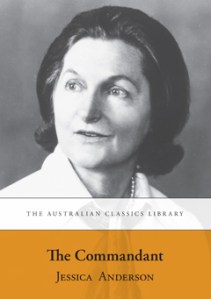
The commandant, by Jessica Anderson (SUP website, applying their fair dealing statement)

The commandant, by Jessica Anderson (SUP website, applying their fair dealing statement)

The prices, ranging from around $22.95 to $32.95, are a little high I think. Some (though by no means all) of these are still in copyright so that makes a difference, and there’s also the additional editorial material (but presumably that has been covered by the grant?). However, with the recent and very cheap original-look Penguin Classics range, the comparison may put people off, particularly when the covers of these, with their orange and white theme, appear to riff a little off those Penguins.

Anyhow, back to the selection. I’m embarrassed to say that I’ve read almost none of these books though I have owned the Cappiello for quite a few years, and bought Maurice Guest a few years ago to fill a gap in my reading. I have read and do like Jessica Anderson – just not The commandant. It’s encouraging, in fact, to see a decent, well 33% anyhow, proportion of women in the list. Oh, and I must admit that I haven’t heard of Price Warung (apparently, according to Wikipedia, a pseudonym for one William Astley, 1855-1911).

The advertisement (and I have to remember that it IS an advertisement) that drew my attention to this new series described it as “12 best-known and loved works of Australian literature”. Hmmm…I have no serious quibble with the selection – after all, it is encouraging to see such support for our classics and any selection is going have a large degree of subjectivity. However, I’m not sure that I’d quite describe this set – fine as it is – as our “12 best-known and loved”. Would you?

Kath Walker aka Oodgeroo Noonuccal

I fell in love with Kath Walker, as she was known then, in my teens and bought her book of poems, My people. I loved her passion for her people and the intensity but accessibility of her poems. Every now and then I look at them again. Today, however, my mum gave me a dear little illustrated book produced by the National Library of Australia called Little book of dogs. It contains a small selection of Australian poems on, well, dogs. One of them was also in My people, and is called “Freedom”. It’s a powerful little poem about man’s (and the implication is white man’s) desire to tame “all things wild and tameless”.

Brumbies on the run in Central Australia

Brumbies on the run in Central Australia

For copyright reasons I don’t believe I can quote the whole poem – it only has four verses – but here is the first verse:

Brumby on the wild plain
All men out to break you,
My warm fellow-feeling
Hopes they never take you!

Simple stuff really but, if you have a message you must get across to as many people as possible, simple is sometimes best.

Breakfast with David, Malouf that is

Malouf reading from Ransom, National Library of Australia, 16 August 2009

Malouf reading from Ransom, National Library of Australia, 16 August 2009

“Exploring in the dark” is how David Malouf frames the process of writing. In other words, writing, he says, brings out what is within the writer but is not fully understood until the writing starts. Furthering this notion, he quoted Herman Hesse as saying that a writer needs to be “a sleepwalker with the absolute assurance that he will put his foot down in the right place”. These were the first thoughts David Malouf shared with us, this morning, at the National Library of Australia’s last Books with Breakfast event of the year. He was in conversation with academic Brigid Rooney.

This is the second time my friend and I have attended a David Malouf literary event, the first being in 1990 when The great world came out. Admittedly that was a bigger event but we both felt that he was more relaxed today. I guess that’s not surprising given nearly 20 years of literary events have passed since then.

The focus of the conversation was, not surprisingly, Malouf’s most recent book, Ransom, which essentially recounts the last 24 hours of Achilles’ and Priam’s lives at Troy. Malouf explained his fascination with Troy, from his first introduction to the story in 1943 when he was 9 years old, through a poem he wrote around 1969/1970 called “Episode from an Early War”, to this latest novel of his, Ransom. Explaining his obsession, he talked about Troy being a city under siege waiting for war, and how Brisbane had felt the same in 1943; and about the 1960s being a period of maximum anxiety about nuclear war, and how Troy reminds us of the destruction of a civilisation. He sees Troy as an important part of our cultural inheritance and as emblematic of many of the things that confront us today – particularly in relation to war and its victims.

The discussion returned several times during the conversation to writing and storytelling, things of major concern to Malouf and about which he is wonderfully eloquent. He recounted Henry James’ description of “experience” as being “threads suspended in the chamber of consciousness”. Henry James also said that “a writer is someone on whom nothing is lost”. Similarly, Malouf said that he sees our consciousness as “whole”, by which he means “all our experience is always with us”. Writing, he said, is about making connections in our experience and is “an extraordinary illustration of how our consciousness works”.

At one point in the morning, he discussed his book An imaginary life, which explores the exile of the Roman poet Ovid. He said it initially puzzled people as to why an Australian would write such a book, and that it was not really comprehended until European commentators started noticing that it dealt with the issue of “living at the centre versus living at the edge”. Just as the exiled Ovid was “living at the edge”, so do we in the New World. This recognition, he said, helped readers see it as a book that was indeed about and relevant to Australia.

Towards the end, the conversation returned to Ransom…but as I have only read 20 pages (after all, while I wasn’t concerned about spoilers, I didn’t want to go to the event completely unprepared) I will save discussing those comments until I review the book (probably next year the rate I’m going!) The event concluded with Malouf giving a brief reading from the book. Rather tellingly – and perhaps cheekily – he chose a section that ended with the words:

This old fellow, like most storytellers, is a stealer of other men’s tales, of other men’s lives.

Would that I could be such a stealer!

Some Australian literary classics

Lisa at ANZ LitLovers referred yesterday to ABC Radio National’s The Book Show program on Patrick White’s The solid mandala. This is in fact part of weeklong series they are doing on Australian classics. They have chosen an intriguing – but not unappealing – list of works to discuss:

Dare I admit it? I’ve only read two of these: the White and the Astley.

Although I haven’t read as much of White as I want (plan) to, I’ve liked everything I’ve read. I like his style; I like the things he talks about. The solid mandala’s style includes multiple points of view, sentence fragments, and a somewhat complicated time structure: I’m a bit of a sucker for these techniques as they tend to keep my brain in gear while I’m reading. And while it sounds terrible really, there’s an aridity to his characters that fascinates me. This aridity is well evident in The solid mandala. It’s there in the repetition of yellow-brown colours: the main characters’ surname is Brown, their neighbours are the Duns, and the colour yellow features regularly (“waves of yellowing grass”, “yellow fluctuating light”, “yellow feet”). It’s there in the description of characters as dry and brittle (Waldo is “dry and correct”, “felt as brittle as a sponge” and “had shrivelled up”). And, somewhat ironically, it’s even there in the colour blue (“the moons of sky-blue ice fell crashing” and “his heart contracted inside the blue, reverberating ice”). It’s a desperately sad book about failed ambitions and missed connections – and yet it’s also about kindness and about the “truth above truth” (that is there if you look for it).

As to Astley, I have been promising for a while to write my next Favourite writers post on her – and I will do it soon!  Since reading Chloe Hooper’s The tall man earlier this year, I have been wanting to re-read The multiple effects of rainshadow as it’s been a lo-o-o-ng time since my first reading. Both, as you probably know, deal with violence and racial tensions on Palm Island – Astley through fiction, Hooper through non-fiction. Hooper is interviewed briefly in The Book Show’s program. She says of Astley that:

I think that she was very much interested in the violence of the frontier and she wrote about it and was very brave, because she was one of the first writers of her generation to deal with this question.

And that was Astley. Fearless, forthright and prepared to be confronting. I will get to her soon…

As simple Arthur says to would-be intellectual Waldo in The solid mandala, “it doesn’t matter what you write about, provided you tell the truth about it”. White’s and Astley’s truths are often uncomfortable – but that didn’t stop them and we, I think, are the richer for it.