Helen Garner, Cosmo cosmolino

When I returned to seriously reading Australian writers back in the 1980s, there were four women writers who caught my attention, and I have loved them ever since. They were Elizabeth Jolley (1923-2007), Thea Astley (1925-2004), Olga Masters (1919-1986) and Helen Garner (b. 1942). Garner, the youngest by a couple of decades, is the only one still here, still writing novels, short stories, non-fiction and journal articles. I say I love her, but I can’t say I always agree with her. In fact, sometimes she makes me mad – but I admire her honesty and love her writing.

Cosmo cosmolino is not her most recent work. It was published in 1992 and has been on my TBR pile since my brother gave it to me in 1995. How embarrassing! But it finally managed to scramble to the top and I’m glad it did. It’s an intriguing book: it looks like two short stories (“Recording angel” and “Vigil”) and a novella (“Cosmo cosmolino”), but nowhere on the cover or the title page does it say “a collection of short stories”. This means, I think, that we are meant to see it as a novel.

So, how does it work as a novel? Each story would, I’m sure, stand perfectly well alone, but the two short stories also work as back stories to the novella. The tricky thing though is that the connections between these three are only obvious if you are an attentive reader – or, if you re-read it. For me it was a bit of both. I got some of the connections first time around, and others when I flicked through it to prepare this review. This is not a big problem but there is more depth if you have “got” the back stories when you read the final story.

And so, what are the three stories?

  • “Recording angel”. A recently separated woman (who is clearly Janet in the final story) visits an old friend and his wife in Sydney. This friend is seriously ill with brain cancer. He has not only been an important support and rescuer for her but the one who has “recorded” her life. And, he is never backward about telling her his view of what that is. She doesn’t always like or agree with this view, but she nonetheless fears the possibility that in sickness he will “forget everything” and that she will thereby lose an important connection with herself. There is a brief mention in this story of Ursula, who is the mother of the girl in the second story.
  • “Vigil”. A young woman, who is clearly “out of it” and waiting for her father to rescue her, has a boyfriend Ray(mond), who appears to be there more for the “good times” than for a mutually supportive relationship. When things go wrong, he’s not there for the count. This, we discover in the final story, is something he’s been trying to rectify ever since.
  • “Cosmo Cosmolino”. Three rather lonely people – the aforementioned Janet and Ray plus the rather fey artist, Maxine – find themselves sharing Janet’s house. It’s an uneasy grouping.  Ray is waiting for his big brother Alby (who once lived in Janet’s house) to arrive and take him away; Maxine would like a baby but is running out of time; and Janet is recovering from a broken marriage and doesn’t really know what she wants.

These are not strongly plot-driven stories. However, quite a bit happens on the emotional front, and this is Garner’s real subject.

Which brings us to the themes

Taken together, these stories are about the muddles people get into, particularly regarding their relationships with each other. Poor decisions, missed opportunities and the never-ending seeking for meaningful connection are the stuff of her fiction. But there is a departure in this book: the introduction of a spiritual (and at times magical) element, often involving some sense of “visitation”.

Angel Wings

Angel wings(Courtesy: OCAL via clker.com)

In the first story, the distraught woman is visited at the end by “a small, serious, stone-eyed angel of mercy”. In the second story Ray is dragged into a rather ghoulish underworld-like scene, after which he is told “You’ll be right … Things’ll be different now”. And in the final story there are all sorts of hints of spiritual happenings, including the “dark column” that shadows Janet, and Maxine’s “magical realist” flight “into the blinding upper sky” where “nameless souls and sacraments outrageously disport themselves”.

It all feels very un-Garner-like. She is usually firmly grounded in the real world of messy relationships where people struggle to connect and find meaning. But I should have been prepared: the novel’s epigraph from Rilke reads “Every angel is terrible”. “Terrible”, of course, has two meanings, and I suspect Garner is playing on both here – on the fear angels engender and the awe. As this paradox implies, there is no suggestion here of easy answers but more of possibilities. Here is Janet at the end:

Our minds are not hopeful, thought Janet; but our nerves are made of optimistic stuff.

I was intrigued by the use of “nerves” rather than “souls” or “spirits” given what had gone before, but I rather like her use of that word. It’s effectively ambiguous.

Finally, the style

The thing that marks Garner out for me is her expressive language. Her books are rarely long. This isn’t because she doesn’t have much to say but because she doesn’t waste words. Read this:

… The heart of the house was broken. It ought to have been blown up and scraped off the surface of the earth.

But houses as well as their owners must soldier on …

and this:

… and the architraves had lost their grip on the walls, and slouched this way and that …

and, finally, this:

The room contracted around Ray again, fitting itself tightly to the shape of him, squeezing …

I love the atmosphere and emotion conveyed by language like this.  Garner uses a lot of imagery and symbolism – but never simply. Birds, for example, can augur wonder and hope, or, particularly when “the failure bird” appears, something completely different. There are also biblical allusions, such as when Ray denies three times that he knew his girlfriend. No wonder he’s dragged into the underworld for a bit of shock therapy! From beginning to tend, the language never sways from conveying a sense of things being awry because the characters’ lives are so.

Cosmo Cosmolino is one of those books that is both accessible and challenging – and that is just the sort of book I like to read.

Helen Garner
Cosmo cosmolino
Ringwood, Vic: McPhee Gribble, 1992
221pp.
ISBN: 0869142844
ALS Gold Medal, 2009 (announced 2010)

Since many book bloggers are posting the Booker longlist, I don’t think I need to do so here. I don’t expect to read many of them, not so much due to a lack of interest as to the fact that I’ve a pretty full reading schedule in front of me without adding these to it! I have read and reviewed Christos Tsiolkas’s The slap, and expect to read in the next few months Peter Carey’s Parrot and Olivier in America and David Mitchell’s The Thousand Autumns of Jacob de Zoet. There are a couple of others I would like to read, but time will probably defeat me.

David Malouf Ransom
UK edition cover (Used by permission of the Random House Group)

However, I will instead announce – because it gets such little publicity – that David Malouf has won this year’s ALS Gold Medal for Literature with his novel, Ransom. As I wrote in my earlier post on this award, it does not come with a monetary prize and so tends to be overlooked by the media. Nonetheless it is an award well worthwhile watching (how’s that for some alliteration!) because its winners do tend to be among our more notable authors and books.

The other awards made by the Association for the Study of Australian Literature for the year are:

Congratulations to David Malouf – and the rest of the awardees. What a shame there hasn’t been a little more fanfare…

Indigenous Australian stories – and digital technologies

In my recent on the literary road post, I referred briefly to Indigenous Australian stories. Rather coincidentally, I have just spent three days at a conference titled Information Technology and Indigenous Communities, hosted, primarily, by the Australian Institute of Aboriginal and Torres Strait Islander Studies (AIATSIS) with the aim of exploring “the ever-increasing use of IT to access, create and collate tangible and intangible cultural information and heritage”.  That’s the background – now onto more the interesting stuff!

Nabulwinjbulwinj rock art at Nourlangie Rock

A warning and a story: Narbulwinjbulwinj is a dangerous spirit who eats females after killing them by striking them with a yam

As I said in that literary road post, indigenous Australians have a rich story-telling culture. Theirs was a non-written culture and so stories and traditions were passed on orally and via art, music and dance. All these forms of communication have continued post-contact but, due to breaks in contact with country, many stories and traditions have, tragically, been lost.  It was consequently encouraging to hear, at the conference, about how remote indigenous communities are using modern digital technologies to tell stories – traditional and modern – and thereby re-engage with and reinvigorate their culture.

I hope this doesn’t sound paternalistic because it is not meant to – and I hope it also doesn’t suggest that the real problems don’t exist – but it was exciting to hear positive stories about these communities because most of what we, living in predominantly white urban Australia, hear are the negative – and hopeless sounding – stories of substance abuse, domestic abuse, and the awful health problems that are resulting in unacceptable disparities in life expectancy.

We were given a wonderful taster of what is being produced at the film night held on the first evening of the conference. We saw films by professional artists such as Warwick Thornton and Tracey Moffatt and by makers from various remote community projects. You can see a couple of these on the internet:

If you’d like to see more, here are a couple of sites, both providing access to self-produced and home-grown audiovisual content:

  • Mulka Project from the Yolngu people in northeast Arnhemland – and to see some of the variety of their work, using live action, animation, archival footage, check their YouTube site
  • IndigiTube, which contains media produced by a number of remote indigenous groups. If you click on Watch Videos you will see on the right hand side the variety of topics the videos cover from informational to “creative”, from traditional to modern.

But none of this is easy:

  • resources are minimal, so people spend way too much time writing grant applications – not just to run projects but for their very existence;
  • training is difficult and tends to be organised in-house often by people already stretched too thinly; and
  • access to the Internet is expensive, usually slow, and flakey or non-existent – the digital divide is a fundamental problem. (This was well demonstrated at the conference when they could not get a Skype session to work from a remote community in central Australia but could for a speaker from Montreal).

In other words, the challenges are immense, but the commitment and creativity are inspiring. There’s a long way to go and what culture has been lost is unlikely to be found, but the opportunities digital technologies offer for people to re-engage with each other, their communities and their culture are immense. It was a privilege to be able to there.

Hilary McPhee on Australian writing

I was going to write my next post on why I like short stories – as a prelude to my next review – when I heard on the radio today that Hilary McPhee has just edited a book of Australian short fiction. To most Australians, Hilary McPhee is – and if she’s not she should be – a literary giant. With her friend Diana Gribble, she founded in 1975 a small independent publishing company called McPhee Gribble. Together they filled a major gap in Australian publishing at the time by introducing new Australian authors like, oh, you know, Tim Winton, Helen Garner and Murray Bail! Writers, in other words, who have gone on to be giants themselves. McPhee Gribble survived for 14 years before being sold in 1989 to Penguin.

Some years later, McPhee wrote a part-memoir part-history, titled Other people’s words (2001), of her experience as publisher/editor. For anyone interested in publishing, editing and the booktrade, particularly in the Australian scene, it’s an eye-opening book. And, I’d happily write a mini-review of it right now if I had a copy to hand – but unfortunately it’s one of those few books I’ve read that I don’t own myself. What I remember about it is her thorough description of the publishing industry and booktrade in general, and of the role of editors in nurturing and developing authors. She particularly details the problems in the booktrade at that time of getting books out there in an increasingly commercialised and commodified market. She was also concerned about the fact that, in the late 70s and 80s, British publishers and reviewers in general did not give much credence to Australian writers and writing, whereas the same Australian writers were generally well reviewed in the US. In today’s interview, she indicated that Australian writing still seems to not be a part of the world, and said that our writers are instead “cherry picked”.  From my experience of the blogosphere, I’d say she’s not wrong.

And this brings me to the new book. Titled Wordlines: Contemporary Australian writing it contains pieces of Australian short fiction that, as McPhee said in the Radio National interview today, meet her criteria of being “international, engaged and political”. She doesn’t define these, particularly “political”, narrowly but in terms of exploring a “different moral universe”. In other words, she doesn’t look to Australian literature to define what being Australian is, but to its ability to offer a particularly Australian sensibility or perspective on the world.

The writers in this collection include those she has loved (and often nurtured) from her publishing days – such as Gerald Murnane, Drusilla Modjeska, Carmel Bird and Cate Kennedy – and new authors she has discovered since her return from a stint overseas – such as Nam Le, Amra Pajalic and Abigail Ulman. The pieces include some that have been previously published and others written specifically for the volume.

It sounds a fascinating collection. Having been compiled by McPhee, it is, as some of the promos suggest, likely to be idiosyncratic; and it includes some writers I haven’t yet read and some I’ve barely heard of. But the main reason I’d like to read it is because she believes there is a new sensibility in Australian writing, a new way of looking at and being part of the world. I’d like to see exactly what she means by that.

On the literary (cultural) road, in the Top End

Last month, Mr Gums and I holidayed in the Top End (of Downunder). I’m not quite sure where the Top End ends as it is a loose description for the northern part of Australia’s Northern Territory, but I believe it encompasses all the areas we visited. For ten days, we explored Katherine and Nitmiluk National Park for the first time, and re-visited Kakadu National Park and Darwin. Besides the fact that we love exploring Australia, it provided a good opportunity to escape the cold. The maximum in our city the day we left was 7.8degC. In Darwin, that same day, it was 32degC. A little different, n’est-ce pas?

Katherine Gorge

Gorgeous gorges in Nitmiluk National Park

Landscape

The landscapes here are ancient (dating back 1650 million years and more) and are home to some weird and wonderful flora and fauna, of which the crocodile is probably the most (in)famous. Like most landscapes, they have inspired many artists: writers, painters, songwriters, filmmakers (think Jedda and Crocodile Dundee for a start) and so on. And there is a rich and fascinating indigenous culture to learn about.

Jedda Rock

Jedda Rock, Nitmiluk National Park, taken from a helicopter

We didn’t really spend much time tracking white culture in the area, as I have in my other “literary road” posts, so I will just mention Charles Chauvel’s film, Jedda. Jedda (1955) is notable for a couple of reasons. Firstly, it was the first Australian film shot in colour. But, more significantly, it was the first to use indigenous actors in leading roles – and to confront some of the implications of white colonisation on indigenous Australians. It was shot on location in the Northern Territory, with the final tragic scene being shot at what is now called Jedda Rock at Nitmiluk. However, that footage was lost in a plane crash, and the scene was re-shot in rather different landscape – the Blue Mountains just west of Sydney! As a retired film archivist, it was special to me to see this rock.

Indigenous culture

Sign re Jarwoyn Rock Art in Nitmiluk

There are stories here ...

We took as many opportunities as we could to learn more about indigenous culture, as there are far fewer prospects for doing so down south.

The best way for short-term tourists like us to do this is to join tours, particularly those which have indigenous guides – and so this is what we did. The most interesting of these tours were:

Through these, we added to our slowly growing knowledge of how indigenous people relate to country and of their food and cultural practices. We dug for yams, threw spears and ate green ants. It was all good!

As KevinfromCanada wrote in one of his posts, indigenous people tend to have a strong oral story-telling tradition, and this is the case with indigenous Australians. No only did we hear some of their creation stories – and saw rock art depicting these stories – but we also heard more recent life stories, some humorous, and some not so. This story-telling reminded me of a rather infectious book recently reviewed at Musings of a Literary Dilettante, Every secret thing by new Australian indigenous writer, Marie Munkara. I have dipped into it, as it’s currently next to my bed, and it reads like an orally told story. Anyhow, it was a real privilege to have these stories shared with us.

… and in conclusion

Crocodile in the Katherine River

...but he can smile at you!

This was our second trip up north and won’t be our last. I could ramble on more about sites seen and lessons learnt but I’d rather leave you wanting… And so, because you know I like a bit of nonsense, I will finish here with the following, rather apposite words for the Top End:

Never smile at a crocodile!
No, you can’t get friendly with a crocodile;
Don’t be taken in by his welcome grin;
He’s imagining how well you’d fit within his skin!
Never smile at a crocodile!
(Words by Jack Lawrence)

Eva Hornung, Dog boy

Eva Hornung, Dogboy

Dog boy cover (Courtesy: Text Publishing)

I first read Eva Hornung when she was writing as Eva Sallis. It was her second novel The city of sealions, which is a pretty passionate and evocatively written exploration of cultural alienation and dislocation brought about primarily by migration.

In some ways Dog boy explores similar concerns, but its alienation is played out in a different way – through that fascinating archetype of the feral or wild child. In the novel, Hornung refers to a few modern examples of feral children, such as Oksana from the Ukraine; in an interview on the Literary Minded blog she says that the novel was inspired by a news story about a child living with dogs in Moscow. Guess where this book is set? You got it – Moscow! This intrigued me somewhat. Why would an Australian novelist read about a feral child in Moscow, go there to research and then write a novel? But Eva Hornung seems to be no ordinary novelist. She did her PhD in the Yemen and her settings – even if not her overriding theme – range rather widely.

And so to Dog boy. At the beginning of the novel Romochka, 4 years old, is alone in an apartment. He hasn’t seen his mother for a week or more and suddenly his uncle does not return. He senses the apartment building is being emptied and so after a couple of days being alone he heads out, and manages to get himself adopted by a dog, Mamochka, who lives with her four young puppies and two older offspring. How and why he is left alone is not the concern of this novel (which reminded me a little of Cormac McCarthy’s The road in which the cause of the devastation is also not the point). The novel tells the story of his life with the dogs and of what happens when he, four years later, comes to the attention of humans, specifically two scientists/doctors working in a children’s rehabilitation centre.

[WARNING: MINOR SPOILERS]

The story is told chronologically, and is divided into 5 parts. The first two parts cover Romochka’s first two years in the lair and how he gradually learns “to be a dog”. In the third part, Mamochka introduces a baby to the pack – to provide human company for Romochka. The baby is, ironically, called Puppy (by Romochka). Without giving any important plot points away, the final two parts deal with the boys’ renewed contact with the human world. It’s told in 3rd person but the perspective does shift, particularly in the last two parts where we see what’s happening through different eyes – the two scientists, Dmitry and Natalya, and Romochka himself. But even before this, we occasionally move between Romochka’s and the author’s perspective. It’s a technique that encourages us to understand, if not empathise with, the various experiences as they play out.

As I read this book, I felt I was in the hands of someone who knew what she was doing – even though at times I wondered exactly why she was telling this story. Not only does she viscerally describe Romochka’s gradual acceptance into the dog clan, his learning to hunt and his slow rise to dominance, but she starts to introduce humans at a time when our interest in an ongoing dog story would start to pall. This shift starts with Romochka’s increasing interest in people and builds up to the more or less inevitable conclusion – but that conclusion is not simple and is open-ended.

The language is evocative – sometimes beautiful but more often earthy and confronting to our senses. Hornung evokes Romochka’s life with the dogs with such attention to detail that it is entirely believable. She describes his animality, without being heavy-handed – he moves in “a wide lope”, uses his “paws”, and carries with him a horrible “stench” – but also shows his ability to use human logic and reasoning. At the time of his first capture, Romochka’s inner dog-human conflict is obvious:

Romochka wished bitterly … for true doghood. Were he really a dog, he would understand only their bodies, and not their words. Were he really a dog, he wouldn’t know their names, and their kids’ names. He wouldn’t … be paralysed by these lives that stretched before and after the station: he would know only their smell, only their aggression and torments; and what they ate.

The fight went out of him altogether. He stared dumbly, balefully without growling or snapping, unresistant even when he was pushed around. He was no longer sure that hiding his human side would get him released, but he remained a dog …

The big question to ask is, Why did Hornung choose to tell such a story? There is the obvious reason, that of our ongoing fascination with the wild child phenomenon and what it might tell us about what it means to be human. But there is also Hornung’s ongoing interest in alienation and, related to that, the abuse of humans by other humans (particularly where there is social disintegration). For all our horror at the way Romochka lives, we also see that he is not only safe but well nurtured in his life with the dogs. Was this boy, Natalya and Dmitry ponder, “better off living with dogs than with humans”. This question, that comes towards the end, represents a big shift from Dmitry’s earlier “proper awareness of the philosophic and scientific divide between man and animal”. The second part of the novel, in fact, explores this question at some depth. How big is the divide really? And to what extent is man a beast? All this is explored with more than just a little skepticism about scientific research and the tension between nice neat theory (and the chance it offers for professional glory) and messy reality. There is a lot in this book for keen readers to consider. It’s one that I will remember for some time.

Dog boy is Sallis aka Hornung’s 6th novel. She has won or been nominated for awards for many of her novels and yet she is not particularly well-known. Her change of name may have contributed to this but, whatever the reason, I think it’s a shame. Her writing is clear, accessible and evocative – and yet has a depth and passion that is worthy of the prizes she wins. May we see more of her.

Eva Hornung
Dogboy
Melbourne: Text Publishing, 2009
293pp.
ISBN: 9781921656378

(Review copy supplied by Text Publishing)

Peter Temple’s Miles Franklin win, Ruckus

Peter Temple’s winning this year’s Miles Franklin award* with his crime novel Truth has caused a bit of a ruckus – and, consequently, there’s been some interesting discussion about it on various blogs. The discussion mainly concerns the implications of a so-called genre novel winning this traditionally “literary fiction” award, but there is also some discussion of the literary “worthiness” of Temple’s work. If you are interested in this discussion, you may like to check out:

As I wrote in my own post and have commented elsewhere:

  • I have not read this novel yet – though I did read and was impressed by his previous novel The broken shore;
  • I am not a reader, in general, of crime fiction.

As is my wont, I don’t have strong feelings about this. I was surprised by the win (not so much because of its “genre” nature but because I’d read more mixed reviews of it than of some of the other shortlisted books), but I’m also interested in the strength of feeling its win has engendered. I would be sorry if we tried to categorise eligibility for the prize based on some notion of “genre”, and yet I recognise that “genre” implies adherence to conventions that can make it hard for writers to achieve the level of creativity and “difference” (or innovation) that we tend to expect in our literary prize winners. For me, then, the issue is whether the novels longlisted, shortlisted and then awarded literary prizes like this have achieved that level of  “literary” interest that we readers look for. Time will tell whether I think Temple has achieved this in Truth.

* The Miles Franklin Award conditions are that the work express “Australian life in all its phases”. I’m not sure what “in all its phases” means as I can’t imagine any one book exploring all aspects of Australian life. I have to assume that Peter Temple’s novel being set in Melbourne does meet this criterion.

PS (a few hours later): Silly me did not check the conditions. It is not “in all its phases” as I read elsewhere but “in any of its phases”. That makes more sense and is what I assumed was meant anyhow. Temple clearly meets this.

Peter Temple’s Truth wins the 2010 Miles Franklin

Peter Temple, Truth

Truth bookcover (Courtesy: Text Publishing)

So, the waiting is over and Peter Temple has won the 2010 Miles Franklin Award. I’m kicking myself that I haven’t read it yet. I am not much of a crime-fiction reader – in fact I could probably count on one hand the crime novels I’ve read – but I did like his The broken shore (which itself won quite a few awards, though not the Miles Franklin). Truth is a sequel – at least in part – to The broken shore.

I’ll be interested to read the commentary on this announcement over the next few days but the win does suggest that the literary crime novel is becoming fully ensconced into the literary mainstream. According to one report Truth is the first work of “genre fiction” to win this award since it was established in 1957.

The Miles Franklin Trust website describes the novel as follows:

Temple’s winning novel is the much anticipated sequel to The Broken Shore and comprehends murder, corruption, family, friends, honour, honesty, deceit, love, betrayal – and truth. A stunning story about contemporary Australian life, Truth is written with great moral sophistication.

I’m not averse to a bit of moral sophistication, and you all know by now that explorations of truth engage me – so Truth here I come, soon!

ALS Gold Medal (and 2009 award shortlist)

My recent review of Herz Bergner’s Between sky and sea reminded me of a rather ignored Australian literary award, the ALS Gold Medal, that I’d come across a few years ago but have let slip beneath my radar. It is time, methinks, to bring it to the fore. It was initially awarded by the Australian Literary Society (ALS) – hence its name – but this society was incorporated, in 1982, into the Association for the Study of Australian Literature (ASAL) and they now make the award. I suspect it does not receive the exposure that other awards do because there is no money attached, just – obviously – a gold medal, and oh, the glory, though perhaps there’s not much glory if no-one knows about it! There is a judging panel convened by an ASAL member from a state different to that of the previous year’s convenor and comprising other ASAL members.

The Gold Medal, just one of several awards they make, is awarded to “an outstanding literary work in the preceding calendar year”. They identify the award by the year for which the award is made and not in which it is announced and so last year’s winner, Christos Tsiolkas’ The slap, was announced in 2009, as the 2008 winner. This year’s award will be announced in July after ASAL’s annual conference, but the shortlist is out. It is:

While I haven’t read all of these, they are by respected writers who have won and/or been shortlisted for other significant Australian awards. It is therefore an award worth watching, if only because it represents another contribution to our assessment of Australian literature. I will keep you posted…

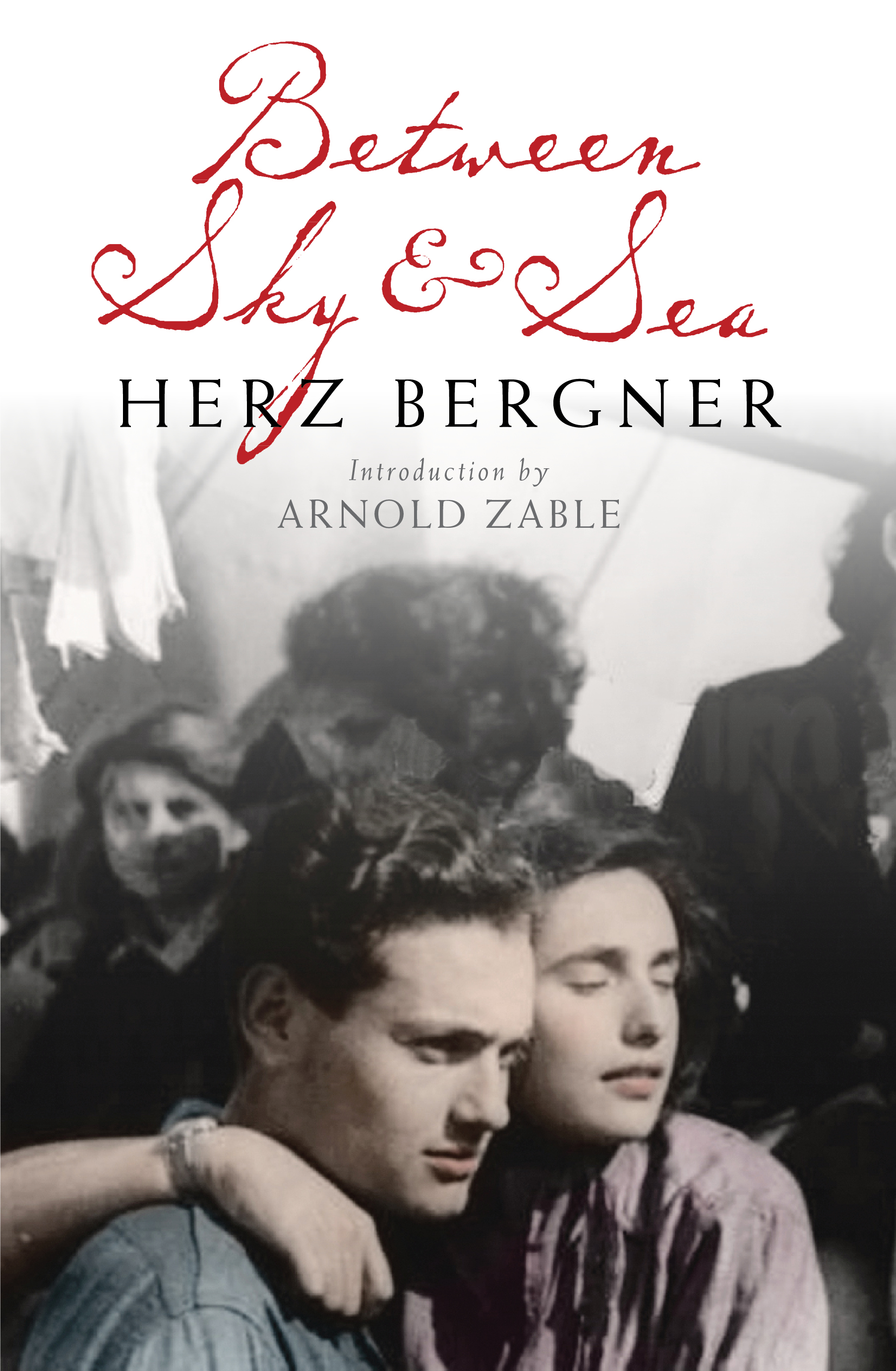
Herz Bergner, Between sky and sea

Hans Bergner, Between sea and sky
Book cover (Courtesy: Text Publishing)

Do you read introductions to novels? And, if you do, do you read them before or after you read the novel itself? I read them, but always afterwards because I like to come to  novels as objectively as I can. And so, this is what I did with Herz Bergner’s  Between sky and sea which won the Australian Literature Society’s Gold Medal for Book of the Year in 1948. I’d never heard of it. (Well, I wasn’t around then, but still …!) However, this year Text Publishing has republished it, which is a pretty savvy decision because, as Arnold Zable suggests in the introduction, it has some resonances for contemporary Australia – but more on that anon. Zable also tells us that while Bergner, a Polish Jew who emigrated to Australia in 1938, wrote the book in Yiddish, it was first published in English, having been translated by another Australian Jewish novelist, Judah Waten.

The novel has a straightforward plot. It tells the story of a group of Jewish refugees from the Nazi invasion of Poland who are passengers on an old Greek freighter bound for Australia where they hope for a new life. (Australians, at least, will see the contemporary resonances now. Think SIEV X, for example). There is, though, an older resonance which Bergner presumably knew – that of the MS St Louis which tried to find a home for Jewish refugees in 1939 after they were turned away from Cuba (and which later inspired the book Voyage of the damned, so titled because, as many of you know I’m sure, they continued to be turned away as they went from port to port). These resonances and more are all referred to in the Introduction. Knowing readers will pick many of them up, but isn’t that the fun of reading? To pick them up yourself? So, read the book, I say, and then the rather fine Introduction.

Anyhow, back to the book. As I was reading it, I couldn’t help also thinking of that allegorical boat trip, the Ship of Fools. This is not that allegory – they are not fools, and the boat does have a captain, but as I read the novel I felt that awful sense of a world out of control that the allegory represents.

If this book were a film, it would be described as having an ensemble cast, because it has no identifiable heroes or heroines, no real anti-heroes either. Rather, it has a bunch of people who are thrown together by circumstance but who have little in common other than that they are Jewish refugees. Their backgrounds are diverse and they vary in their practice of Judaism (if they practise it at all). They include Nathan and Ida (who lost their respective spouses and children while escaping the invasion), the know-it-all Fabyash and his family, the flirty but mostly kind-hearted Bronya and her stolid overweight husband Marcus, Mrs Hudess and her two daughters (whose only remaining possession is one doll), and several others. As you might expect with such a set up, the novel explores the increasing tensions – the arguments, the pettinesses alongside the kindnesses – that occur as supplies of food and water dwindle and people get sick, while the journey goes on and on without an end in sight:

They were ashamed to lift their heads, to look each other in the face, and for two reasons. Because Fabyash had sunk so low that he had stolen food from a child, and because Mrs Hudess, who was regarded as such a refined person, had burst forth with the language of the coarsest market vendor. To what depths suffering can bring a person.

The strength of the novel is, in fact, its characterisation. Despite its almost non-existent plot (though there is a climax that I won’t give away), the novel maintains our interest because its characters are real in the way they relate to each other and their circumstances. We know these people, we are these people. In this regard it is a little different from those Holocaust novels – many of which also deal with “ordinary” people – that work on a larger-than-life heroism-betrayal scale.

Towards the end of his introduction, Zable quotes Waten regarding the translation. Waten apparently translated it with Bergner by his side, and says that Bergner was “very odd because he wanted every word translated, and if the number of words came out fewer in English he wasn’t very happy. He never really mastered the English language”. This makes a bit of sense because there are times when the novel feels a little – well – wordy. This never becomes a big problem, however, because Bergner’s imagery (mostly simile and analogy) tends to be fresh and is often two-edged:

A soft haze shimmered in the summer air, caressing their faces like spider webs. [on Nathan and Ida’s escape from Warsaw]

and

For a moment the moon shone through, glittering like a lance, and then it was quickly hidden again.

and

… at midday when the sun was ripe and full like a great golden pear that hung heavily from the centre of the sky.

I enjoy writing like this that contains layers of meaning that make you think a little before you move on. The language is not particularly complex, but Bergner has a habit of inserting a word or phrase that undercuts your expectation and keeps you reading.

The themes are both particular and universal – particular because they specifically depict the anti-Semitism that was rife during World War 2 (to the extent that even the crew on the boat treat the passengers as less than human), and universal because they explore the various ways humans behave under stress. The overriding theme – the biggie, in fact – is the way we continue to turn away other. The irony is that even when we are the other – such as the Jews on this boat – we find otherness amongst ourselves to turn away (until a bigger calamity forces us to reconnect). Will we ever change? I fear not. In fact, that’s what makes the universal, universal, isn’t it?

It is encouraging to see publishers like Sydney University Press and Text Publishing – not to mention of course Penguin –  reissuing long out-of-print Australian classics. I hope it pays off, not only because I like to see forgotten Australian classics brought to life again but because, as in this book, the messages conveyed by these classics can be as valid today as they were when they were first written.

Herz Bergner (trans. by Judah Waten)
Between sky and sea
Melbourne: Text Publishing, 2010 (first ed. 1946)
215pp.
ISBN: 9781921656316

(Review copy supplied by Text Publishing)