Monday musings on Australian literature: A message from the remote west

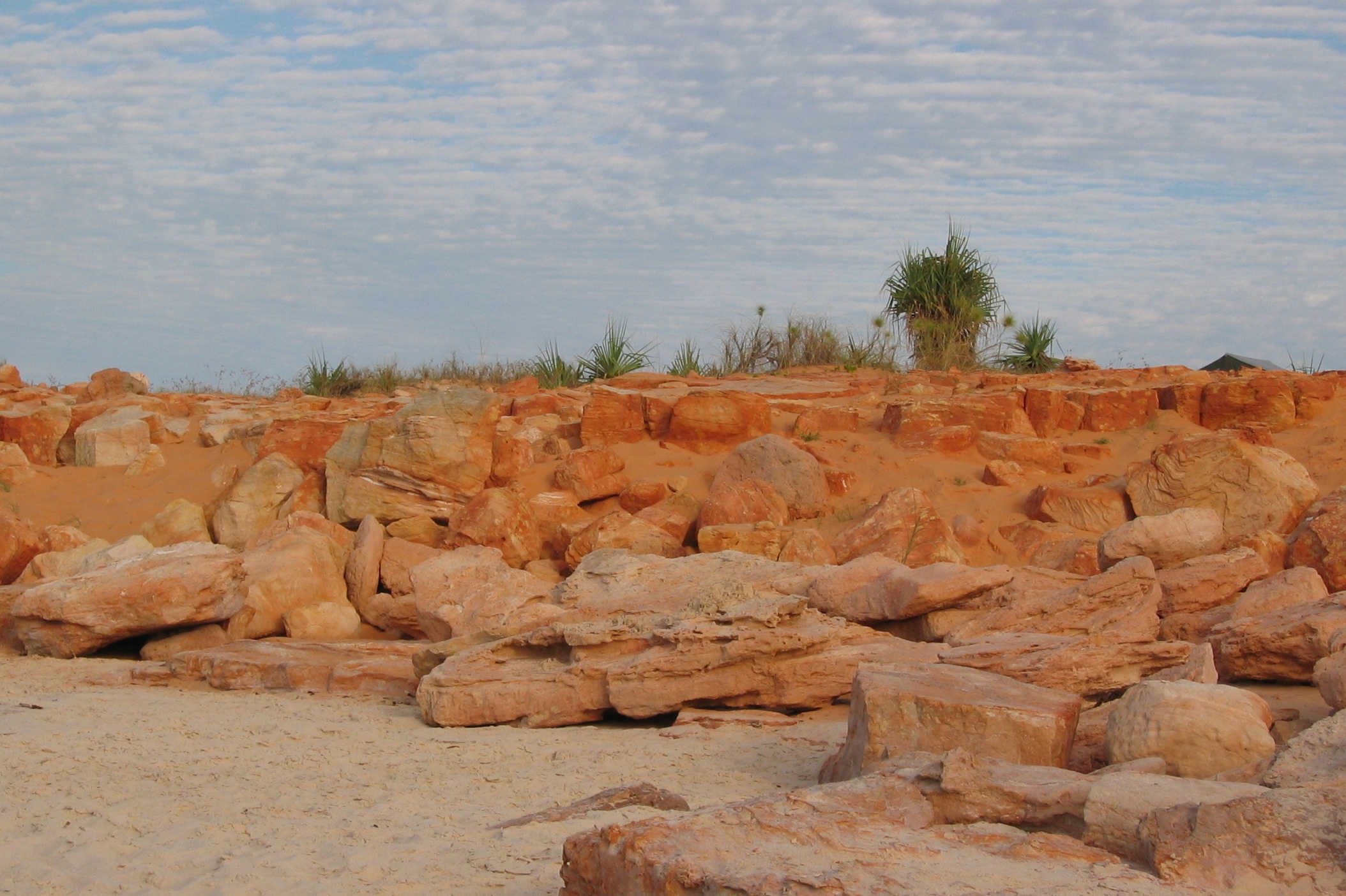
Cape Leveque

Section of beach at Cape Leveque (rather north of Shark Bay)

Do you look at those airline magazines you find in planes? I usually do … and often find something of interest in Qantas: The Australian Way. Yesterday I left Mr Gums behind and flew west for a week’s work in a remote town in north-west-ish Western Australia. It was a long flight (three actually) so I managed to watch a movie or two, read most of my novel, do a crossword and dip into the magazine. And, I’m glad I did because …

… in it was an excerpt from a new edition of Tim Winton‘s Land’s edge. The article described is as memoir, but the back of an earlier edition called it “an autobiographical meditation about his obsession with the coast”. Whatever you call it, it is clearly about his experience of one aspect of his life. I like writers’ memoirs but have yet to read this one. Its language is, needless to say (well, for me, because I like Winton), delicious:

The land around it [Shark Bay] looks blotchy and beaten. Desert right up to the water, it stains the white beaches vaguely pink. The water is variegated with sandbar whorls, veins of channels, meadows of seagrasses like bruises. It’s here that Europeans first met the Great South Land – Hartog, Vlamigh, Dampier – and they didn’t linger because the landscape seemed to shut its eyes and fold its arm against them: it was inscrutable.

I love that description of the landscape. It’s actually a wide open landscape but it “looks” empty and mysterious, rather beautiful but also somewhat unwelcoming. These days though, people flock to Shark Bay because this is where Monkey Mia is, the place where you can swim with dolphins. I haven’t been there yet, but I’m planning to:

This is the only place in the world you can do this naturally, expect to stand in the water, before breakfast, in the middle of the morning, just before sunset, and touch a free dolphin, feel its powerful bulk, look it directly in the eye and feel it slide back out of reach, unafraid. This is what all these people have caught planes and buses or spent 10 hours in a hot car for. Because none of this is normal, and the ritual has gone on since 1964, before Flipper, before environmentalism, before the New Age came slinking upon us. Generations of humans and dolphins meeting on land’s verandah.

And I think I’ll leave it at that …

Leah Swann, Bearings

Bearings bookcover, by Leah Swan

Bookcover (Courtesy: Affirm Press)

When I read a collection of short stories, I look to see whether there is an overriding theme. It’s not essential that there be one, of course, but it can add to the satisfaction, if only because looking for a theme forces me to think a little more about what I’ve been reading. Well, I didn’t have to look too far with this most recent collection, as the title pretty well gives it away. Bearings, by Leah Swann, is a collection of seven short stories and a novella and, as the back cover blurb says, is about “challenging the course of our lives and keeping a foothold during unpredictable times”. That’s a pretty good description and, I must say, it’s appealing, for a change, to have a short story collection whose title is not that of one of the stories within.

Bearings is the fifth book in Affirm Press’s series, Long Story Shorts. (I reviewed the fourth one, Having cried wolf, a few months ago.) It’s a gorgeously produced series. The books are a little more squat than the usual paperback, and each has a cover designed by Dean Gorissen. They are books you want to hold (fondle even) and look at.

Anyhow, on with the show. This is a varied bunch of stories. Some are told in first person, some third, and the first story is told in the less common second person. The subject matter includes broken families, suicide, grief, foster children, and motherhood. That is, all those things that happen in people’s lives to challenge them. However, as the title suggests, the stories are not totally depressing. Sad at times, yes, but not hopeless. They are more about finding ways to survive the challenges.

The stories grew on me. It’s not that I didn’t like them from the start because I did, but I think the writing got surer and more interesting, less predictable, by the end. Whether, of course, they are presented in the order written I have no idea. Probably not, but that’s how it feels. Of the first few stories, I especially liked “All the mothers”, a first person story about a foster child. He starts off as a naive narrator, not quite understanding what is happening as he moves from “mother” to “mother”. Take, for example, Mr Gordon who sometimes gives him an Eskimo Pie “especially if I have a cuddle”. When Mrs Gordon catches him on Mr Gordon’s knee one day, she pulls him off but he’s mystified: “I keep saying I’m okay, but she doesn’t believe me. Or maybe she’s not listening”. Gradually, of course, he becomes less naive and, more angry. It’s a well realised, psychologically real, slice-of-life story.

The central novella, “Silver hands”, is a little predictable. You can see most of it coming before you get there, but it’s nonetheless a good read because the characters are engaging and the language is fresh. I enjoyed descriptions like this:

His laugh goes up and down the scale like a hammer on chimes.

And this one on a woman starting to see signs of aging:

My skin is drying like the pages of a manuscript lettered with childbirth, lovemaking, nicotine and alcohol, and under it all the bones are losing density. But the letters of my true being are not written here. I am not only my body. I’ve never believed that yet here I am mourning it, sucked into that great big lie, measuring myself by flesh more than ever.

This is (obviously) a first person story. The set up is a marriage in the process of breaking down, but it’s more about how experiences in our past can come back to bite us if we don’t properly address them at the time. There are some “mysteries” for the reader to uncover and Swann plots them nicely. An enjoyable read.

My very favourite stories though are the last two, “The Easter Hare” and “The Ringwood Madonna”. Many of Swann’s protagonists are artists – potters, musicians, painters, writers – and this is so in these two stories. “The Ringwood Madonna” is about an artist who is struggling with motherhood, about how she meets a homeless tagger and engages in her own little act of rebellion. She creates a Madonna poster which she pastes like graffiti on a railway cutting wall. It attracts a lot of attention but an art expert says that holy images should not be sprayed around town. However,

Her graffiti Mary was  – to her – a beautiful lamp in suburban ugliness. A gift. Subconsciously she’d hoped that by creating Mary she would create beauty inside herself, she could see that now. And she had felt warmth when she was creating. Yes. Even joy.

The story’s conclusion nicely resolves some of the conflicts in her life while also making a comment on art as being not only about expression but communication too.

“The Easter Hare” takes place over Easter (of course) and beautifully reflects on the Easter story of death and redemption through a loose parallel describing a suicide and the response of strangers to it. It’s a finely told tale, and its conclusion brought tears to my eyes.

Swann describes the mother in “The Easter Hare” as wanting to write an Easter story for her children that is not “bloody and harsh” like the Crucifixion story, as wanting, rather, to “create something gentler for them”. This seems also to be what Swann wanted to create for us. She chronicles the challenges, sufferings and miseries of life but, as her title suggests, her worldview is a positive one, one that believes we can all find our “bearings” if we just take the time to look for them. This collection would be a good place to start.

Leah Swann
Bearings
(Series: Long Story Shorts, 5)
Mulgrave: Affirm Press, 2011
198pp.
ISBN: 9780980790429

(Review copy supplied by Affirm Press)
Monday musings on Australian literature: Writers from our Deep South

Yes, Australia has a “deep south”, though we may not necessarily call it that. It’s Tasmania, an island hanging off the southeast of mainland Australia. Like Western Australia, it can sometimes feel like another country. You have to go over the sea to it – and when you get there, you sometimes find yourself saying, “In Australia …”. Very embarrassing when you catch yourself doing it, but it does reflect how “different” Tasmania can seem. It can feel a bit English – it’s cooler, greener and more compact. And, because of its relative insularity, there are, I have to say, jokes about the mental acuity of its inhabitants (like those you also hear of about places like Appalachia). Totally unfair of course! Not only does my brother live there, but Tasmania is home to some significant Australian writers, not to mention creators of all persuasions. Peter Sculthorpe, who is arguably our most famous composer, is a Taswegian.

Saltwater River penal settlement ruins

Ruins of penal settlement at Saltwater River

Tasmania has a rather dramatic history, from the early days of white settlement when it was home to some of our worst convict prisons to more recent times when it has been at the centre of some of our most dramatic conflicts over the environment. It is also where one of the worst shooting rampages in the 20th century occurred (in 1996). Add to this the fact that it contains some of Australia’s most beautiful and inaccessible wilderness, and you can see why gothic is part of its literary tradition.

Probably the state’s two most famous writers are Marcus Clarke and Richard Flanagan, and Gothic influences can be found in the writings of both. Marcus Clarke wrote what is probably regarded as the Australian convict novel, (For the term of) His natural life (published in 1874). It tells the story of a young man wrongly transported for murder, and it documents the worst of the convict system. It is an Australian classic – and has been adapted to film and television.

Richard Flanagan is a contemporary writer and environmental activist. Most of his books are set in Tasmania. Gould’s book of fish (2001) is another convict novel and is inspired by convict artist, William Buelow Gould. It’s some years since I read it but I’d recommend it for its evocation of the horrors of colonial Tasmania in a voice you don’t quickly forget. Here he is on George Augustus Robinson (Chief Protector of Aborigines in Tasmania, 1839 to 1849):

Robinson treated the savages as though they were his entourage, & the savages treated him like he was one of the many stray dogs they picked up on their travels. Neither seemed to notice the earth falling away beneath them as a breaking wave.

No indeed… Gould’s main subject, though, is not the plight of “the savages” but his own survival in a world not kind to the poor and powerless:

For as Capois Death said, if shit ever becomes valuable, the poor will be born without arseholes. That was our fate, & I didn’t pretend I could alter it. I only wished to survive as best I could …

It is hard to find excerpts from this wild novel that make sense out of context, but I hope these two will give you a sense of the language and black comic tone. Flanagan’s latest novel Wanting (2008) also deals with Tasmania’s early colonial days and is similarly worth reading.

As with my post on Western Australian writers, I’m not going to give you a long list, so I’ll just mention a few other writers. High on my TBR is Jessie Couvreur (or Tasma). She migrated to Tasmania with her family as a young child in the early 1850s and lived there until her marriage. The book I have is her A Sydney sovereign and other tales (1890), but she also wrote novels. Anyhow, the first story in my book is titled “What an artist discovered in Tasmania” and concerns one Richard (“who is an artist, perhaps, more in sentiment than in execution”) and his trip to Tasmania (from England) to find “the most hardened criminal on earth” to sit for a portrait. When he announces his plan, his sister Polly asks where Tasmania is, and here is the narrator’s response:

Kind Tasmanians – whose blossom garlanded isle is the original Eden of the Anthropoghagi; whose aromatous breezes greet the pallid stranger, and efface from his recollection the haunting odours of Yarra* bank noisomeness – do not stigmatise Polly for her ignorance. She had been through a course in  school geography, and had mastered, you may be sure, the latitude and longitude of Hobart Town, just as she had mastered the latitude and longitude of Acapulca; but somehow the whereabouts of Tasmania had escaped her.

There is a delightful tongue-in-cheek tone to the story of an artist who doesn’t quite find what he went looking for … I must read the rest of the book.

Other writers from Tasmania worth checking out (but they aren’t the only ones) include novelist-essayist Amanda Lohrey, poet Gwen Harwood, and novelist Helen Hodgman (who emigrated from Scotland with her family, when she was a teenager, and some of whose novels are now being re-released by Text Publishing).

How I dreamed of Paradise,
this southern land at the world’s edge,
weeks of blue water separating old from new.
I tasted air in my dreams,
faint hills, mounds of whales;
the beginning of things.
(from Jane, Lady Franklin, by Adrienne Eberhard)

For all its ferocious past, Tasmania is a place many Australians dream of as our little Paradise down south. If you never have a chance to get there, you could do worse than check out some of its writers.

* With apologies to Melburnians. This is Tasma writing, not me!

Monday musings on Australian literature: The Australian bildungsroman

Miles Franklin

Miles Franklin, c. 1940s (Presumed Public Domain, via Wikipedia)

I know the sad truth. About everything.
(Craig Silvey, Jasper Jones)

In past posts, I’ve talked of enjoying coming-of-age novels (aka bildungsroman) and so today I thought I’d share 5 (cos 5 seems like a manageable number for a list like this – and gives you an opportunity to contribute your own!) Australian novels in the genre.

In the introduction to a course on “The European bildungsroman” at Columbia University in the USA, there is a brief discussion on the definition of the term. The unnamed writer (so let’s call him/her Columbia) of the introduction says:

My particular approach to defining the genre … returns to Dilthey‘s original definition. According to Dilthey, the prototypical Bildungsroman is Goethe’s Wilhelm Meister’s Apprenticeship in which the hero engages in a double task of self-integration and integration into society.

Columbia then expounds a little on this definition arguing that, while Dilthey see this as an affirmative, conservative genre which aims to find the “hero” a productive place in a valid society, s/he sees it as involving a tension – that between “the priorities of self-integration and social integration”, between personal desire and social obligation. For Columbia this tension is a major criterion for the Bildungsroman genre. This makes sense to me … perhaps this tension isn’t an issue for every young person who is coming of age, but a coming-of-age story without that tension, without some conflict to resolve, is probably not going to be interesting to read!

(By the way, I’m not sure that this necessarily negates Dilthey’s definition. The difference between Dilthey and Columbia seems to me to be that Dilthey focuses on the end result, while Columbia focuses on the process which may or may not culminate in Dilthey’s goal.)

And so, five Australian coming-of-age novels (choosing from those I’ve read):

  • Miles Franklin‘s My brilliant career (1901) is probably Australia’s best known book of the genre. It’s a semi-autobiographical novel about Sybylla, a young girl on an outback property who must choose between her passion for a man and her passion to be a writer. It was made into a film by Australian director Gillian Armstrong.
  • Henry Handel Richardson‘s The getting of wisdom (1910) is another novel about a blue-stocking girl. Laura’s innocence and idealism are sorely tested by the city sophistication of her well-to-do peers. In this story, the awakening is more intellectual and philosophical than sexual. According to the Henry Handel Richardson Society, this novel was admired by HG Wells. It was also made into a film.
  • Melina Marchetta‘s Looking for Alibrandi (1992) is a young adult novel (and, later, a film) which adds an immigrant background to the heroine’s challenge. Not only is she a young intelligent girl who confronts her awakening sexuality but she must do so within the strictures of a conservative Italian family.
  • Tim Winton‘s Breath (2008) explores the youthful drive to prove oneself, to take risks, and the complications that arise from choosing an imperfect male role model and from becoming embroiled in a rather unhealthy sexual relationship with an older woman. Eva is no Mrs Robinson. The question left for the reader at the end goes to the heart of Columbia’s disagreement with Dilthey.
  • Craig Silvey‘s Jasper Jones (2009) is set in rural 1960s Western Australia and, with a nod to To kill a mockingbird, combines a somewhat Gothic mystery with a more traditional coming-of-age story. Racism (against immigrants and indigenous people), sexuality and learning who you can trust are some of the adult issues that Charlie confronts in his growth to maturity.

I’m intrigued by how many of these books have a rural or small town setting. (Even Laura, in The getting of wisdom, is a country child, though the book is set in a city boarding school. Looking for Alibrandi is the only truly urban novel here.) Is this because we equate country with innocence? Because rural life tends to be more conservative and therefore presents a greater challenge to a burgeoning self? Is it simply that the books I’ve chosen are not representative? Or? What do you think?

Hate trees! Love bumpy roads!

I was a contrary child. When my family went on long car trips, a few decades ago now, I would, in my sunny way, announce to my parents, “I hate trees, love bumpy roads”. Guess what my parents were talking about prior to this pronouncement from their co-operative first-born? This refrain, as you can imagine, has become one of those enduring family jokes, and particularly so now with my gums-inspired blog.

Anyhow, the thing is, while reading my current book, Andre Gide‘s The immoralist, I came across a description of trees:

Huge olive and carob trees, with cyclamen growing in their shadow; above, woods of chestnut trees, cool air, northern plants; below, lemon trees by the sea. The last are arranged in small terraces because of the slope, like a staircase of gardens, almost all the same, with a narrow path running through the middle from end to end. One enters them silently, like a thief. There one can dream, in the green shadows. The foliage is dense and heavy, no direct light can penetrate. The fragrant lemons hang like thick drops of wax; in the shade they look greenish-white; they are within reach, and taste sweet, sharp and refreshing.

And I realised that I have always loved trees. I did say I was a contrary child, didn’t I?

Pialligo gardenTrees are the stuff of childhood – they evoke adventure, magic, imagination. They are places to climb, to hide or rest in, to swing from or, of course, to read in. I had a climbing tree when I was young – a lovely old spreading custard apple tree. It’s an important part of my childhood memories. Naturally, this got me to thinking about my childhood reading and I realised that trees were always there too. I didn’t “know” many of them in my Australian environment but I loved the sound of them – large spreading oak trees, fragrant magnolias, lush weeping willows, elms, lindens, firs and so on. Trees, in fact, abound in children’s books, so I’m choosing just three that are particularly memorable to me. I’d love to know whether trees conjure up any special feelings from your childhood.

Like many young girls, I fancied myself Jo March (of Louisa May Alcott‘s Little women fame). What better role model could we find but this lively, adventurous young woman who also loved to read:

“No,” said Jo, “that dozy way wouldn’t suit me. I’ve laid in a heap of books, and I’m going to improve my shining hours reading on my perch in the old apple tree…”

Another favourite childhood novel was Johanna Spyri‘s Heidi (of which I was recently reminded by Iris). When Heidi is sent to Frankfurt to keep the sickly Clara company, she misses her home in the Alps:

It was still early, for Heidi was accustomed to get up early and run out at once to see how everything was looking, if the sky was blue and if the sun was already above the mountains, or if the fir trees were waving and the flowers had opened their eyes.

Heidi was one of those books which introduced me – an urban child – to the love of the countryside. (It also made me crave white bread rolls. Those rolls seemed so much better than anything I’d ever seen, and they introduced me to the vicarious enjoyment of food through literature, but that’s another story).

In Australian books, there were of course the gums, the most memorable being the one in Seven little Australians:

There was a tree falling, one of the great, gaunt, naked things that had been ringbarked long ago. All day it had swayed to and fro, rotten through and through; now there came up across the plain a puff of wind, and down it went before it. One wild ringing cry Judy gave, then she leaped across the ground, her arms outstretched to the little lad running with laughing eyes and lips straight to death.

I’ve always been fascinated by the fact that while Louisa May Alcott had the sweet, gentle Beth die, Ethel Turner did the reverse and chose that fate for the “cleverest” of the siblings, the one whose “brilliant inventive powers plunged them all into ceaseless scrapes”.  Interesting eh?


Monday musings on Australian literature: West Coast Writers

Western Australian cities, towns, settlements ...

Adapted by Mark Ryan (Image from Wikipedia under the GNU Free Documentation License)

For the non-Australians among you, Western Australia is our biggest state and, for many of us, is further away from where we live than New Zealand. Moreover, its main population areas are on the coast: there is a lot of desert between the eastern states and where most Western Australians live. Consequently, it would be true to say that more eastern Australians visit places like New Zealand and Bali than visit Western Australia – and, conversely, more Western Australians visit Bali than visit the eastern states. Every now and then they rattle the cage and speak of secession!

Western Australia was one of the first parts of the Australian mainland to have been visited by European explorers. Dutch explorer Dirk Hartog famously (to Australians) affixed a pewter plate when he visited the west coast in 1616. The first white settlement though did not occur until 1826 in Albany, followed by Swan River (now Perth) in 1829, some 40 years after Botany Bay was settled on the east. But, I am not here to give you a history of Western Australia. Rather, I’d like to introduce you to some of the writers the state has produced.

The state’s most famous writer – past or present – has to be Tim Winton. He has won the Miles Franklin award four times (only the second writer to do so) and he is still producing. He writes novels, short stories and children’s books – and he is a significant advocate for the environment. If there is such a thing as the GAN, Winton is currently seen as a major contender. Winton loves the land, and particularly the Western Australian coast. Most of his books are set there and place is significant in the lives of his characters. He once said to an Australian literary editor that “The place comes first. If the place isn’t interesting to me then I can’t feel it. I can’t feel any people in it. I can’t feel what the people are on about or likely to get up to”. He is the writer to read if you want to “feel” the state. Here are a couple of excerpts from Dirt music, on the more remote northwest:

Fitzroy River

Aerial shot of the Fitzroy River

… and Fox [in a plane] sees how the land is with its crone-skin patterns, its wens and scars and open wounds. The plains, with their sparse, grey tufts of mulga scrub, rise into the high skeletal  disarray of the sandstone ranges where rivers run like green gashes towards the sea. All rigid geometry falls away; no roads, no fences, just a confusion of colour. Out at the horizon the jagged, island-choked coast.

AND

The water is like shot silk and he barely raises a crease. It’s so hot out there, so still and clear that the distances seem to expand until everything looks twice as far as it did on the map.

But he’s not the only writer to evoke life in the West. Robert Drewe, who moved to Western Australia when he was 6 and spent his formative years there, has also written evocatively about the place. His autobiographical-cum-fictional book The shark net is a pretty confronting story about his childhood and, in particular, the role played in it by serial killer Eric Cooke who committed 8 murders the late 1950s to early 1960s.

And then there’s one of my favourite writers, Elizabeth Jolley. She migrated to Western Australia with her husband in 1959. Her writing though tends to be more interior, with place and setting used symbolically, metaphorically. Alienation and marginalisation are big themes for her, so I can’t help surmising that her dislocation from England combined with the remoteness of Western Australia contributed to this sense in her work, but it mightn’t be quite that simple. Here she is in an essay titled “A small fragment of the earth”:

In a country where a 10-centimetre map would produce sheets of blank spaces, the emptiness and the silence are impressive.

At times, in this silence, the traveller is tempted to stop the car with the idea of walking. To get out of the car and to walk. The road between empty paddocks is quiet and deserted. When walking it would be possible to accept a different view of time and journey. It would be possible to feel small and safe, walking and then pausing to stand still.

The occupation of a small fragment of the earth is known only to the person who is alone in it. It is possible to imagine the feelings of being unseen and not known about while standing alone in one isolated place, low down under the immense, clear blue sky. It might even be possible to think that all anxieties and fears will disappear. They might dissolve, dissipate themselves into the silence.

There are other significant writers too – such as Katharine Susannah Prichard, Randolph StowSally Morgan, Dorothy Hewett, Gail Jones and Craig Silvey – but I can’t possibly write about them all without becoming rather tedious. They are all worth checking out though.

Monday musings on Australian literature: Japan and Australia

I had another post partly drafted for today but, due to the events of last week in Japan, I’ve decided to postpone that idea for another time. Australia (and we are not the only country in this) has a close relationship with Japan – much of it positive, some of it negative (this latter to do with, most recently, whaling, and before that the Second World War). Like most good relationships though we accommodate the good and the bad and strive always to improve it. And here endeth that particular lesson!

Canberra Nara Candle Festival, 2008

Canberra Nara Candle Festival, 2008

I’m not going to detail the full history of our relationship now, but Japanese people have lived and worked in Australia since the nineteenth century – back then, in industries like pearl diving and sugar cane farming. Japan is an important trading partner for Australia – and so, largely for this reason, not only is Japanese a popular language taught in schools, but many cities, towns and schools across the country have sister relationships with their counterparts in Japan. Our city, Australia’s capital, is sister city to Nara, a previous Japanese capital. Our son taught English in Japan for three years. Mr Gums and I have visited Japan twice, and are booked to go again this May.

In other words, Australia’s connections with Japan are political, economic and cultural. Consequently, things Japanese are not hard to spot. Food, cars, computers and other electronic goods are the obvious manifestations, but they are in our culture too. Manga and anime for a start. However, for today’s post I’m choosing just one example. It’s a poem that was written in response to the 2004 earthquake and subsequent tsunami in the Indian Ocean. I’ve chosen it because it’s relevant now, and because it shows how language transcends boundaries. After all, when I grew up, we talked of tidal waves.

Tsunami
such a pretty word
trips off
the tongue
saltily
in pleasing phonemes
(Japanese
– you know –
like sakura and
kimono)
[ … ]

Tsunami
a slash
of syllables
– tabloid terrible –
a crackle of images
ravage
our screens.
[ … ]
lives shatter [ … ]

(from “Tsunami”, by Anita Patel, in Summer conversations, 6(2), 2006)

It’s a beautifully conceived poem, with a very Japanese sense of form and  symmetry, but for copyright reasons I don’t believe I can quote it in full.

And now, in respect for those suffering, I’ll finish here and leave further discussion of Japanese culture and Australia for better times.

Note: I have not here, or in previous posts, provided links for donations to relief efforts for the way-too-many disasters that have occurred during the time I’ve been blogging. I’m sure, after all, that you, like us, have your favourite charities to use if you wish to donate.

Delicious descriptions from Down Under: Nam Le on a storm

Australia is not all surf, sand and sea, as much as the tourist industry likes to have it so. We actually do have “weather”, as many quaintly call anything that is not fine, sunny and calm. It is, in fact, autumn here now … after a rather unusual summer (in most parts of the country). It wasn’t as hot, and we had a lot more rain than the average. There have been, in different parts of the country, fires, floods and cyclones, all wreaking their own special form of damage, so I thought it was time for a description that wasn’t sun. What about storms?

Storms in literature, of course, usually have a symbolic as well as literal function, and this is the case in Nam Le‘s story “Halfhead Bay”. Storms can reflect strong emotions or conflict, herald a disturbance, suggest chaos or violence, and/or imply divine intervention. In King Lear, for example, the storm reflects his growing madness and, as is generally regarded, signposts divine intervention. But, symbols like that are most effective when they work well on the literal level first. King Lear feels the power of the actual storm as we readers see its import. Nam Le’s storm, too, is visceral:

And she was right, the storm was coming in – it was streaking like a grey mouth snarled with wind, like a shredded howl, rendering the land into a dark, unchartered coast. The bay turning black. For centuries, fleets had broken themselves against the teeth of that coast.

It’s not unusual to personify storms … but this one here is particularly powerful, not to mention rather malevolent sounding.  Some storms can be powerful in a beautiful way. This, however, is not one of them.

Note: I read Nam Le’s award-winning short story collection, The boat, a couple of months before I started blogging, so you won’t have seen a review here. It’s an astonishingly versatile collection and well worth reading.

Marie Munkara, Every secret thing

They all nodded, not knowing what the hell curry* was but getting gist of the story all the same.

Marie Munkara leads us a merry dance with Every secret thing, her first book, which won the David Unaipon Award for an unpublished Aboriginal or Torres Strait Islander writer. What exactly is this “thing” she presents to us? A novel? A short story collection? Well, I think it’s a bit of both. It looks like stand-alone short stories, and can probably be read that way. But, the same characters keep reappearing in the stories and there is a chronological thrust to it with a conclusion of sorts in the final story, so I’d call it connected short stories.

Form, though, is not the only way in which she leads us a merry dance. This is a genuinely funny book – sometimes slapstick or ribald, sometimes more bitter, satiric and/or ironic, but pretty well always funny. However, her subject matter is desperately serious – the destruction of indigenous culture through contact with white culture, specifically in this book through contact with missions and missionaries.

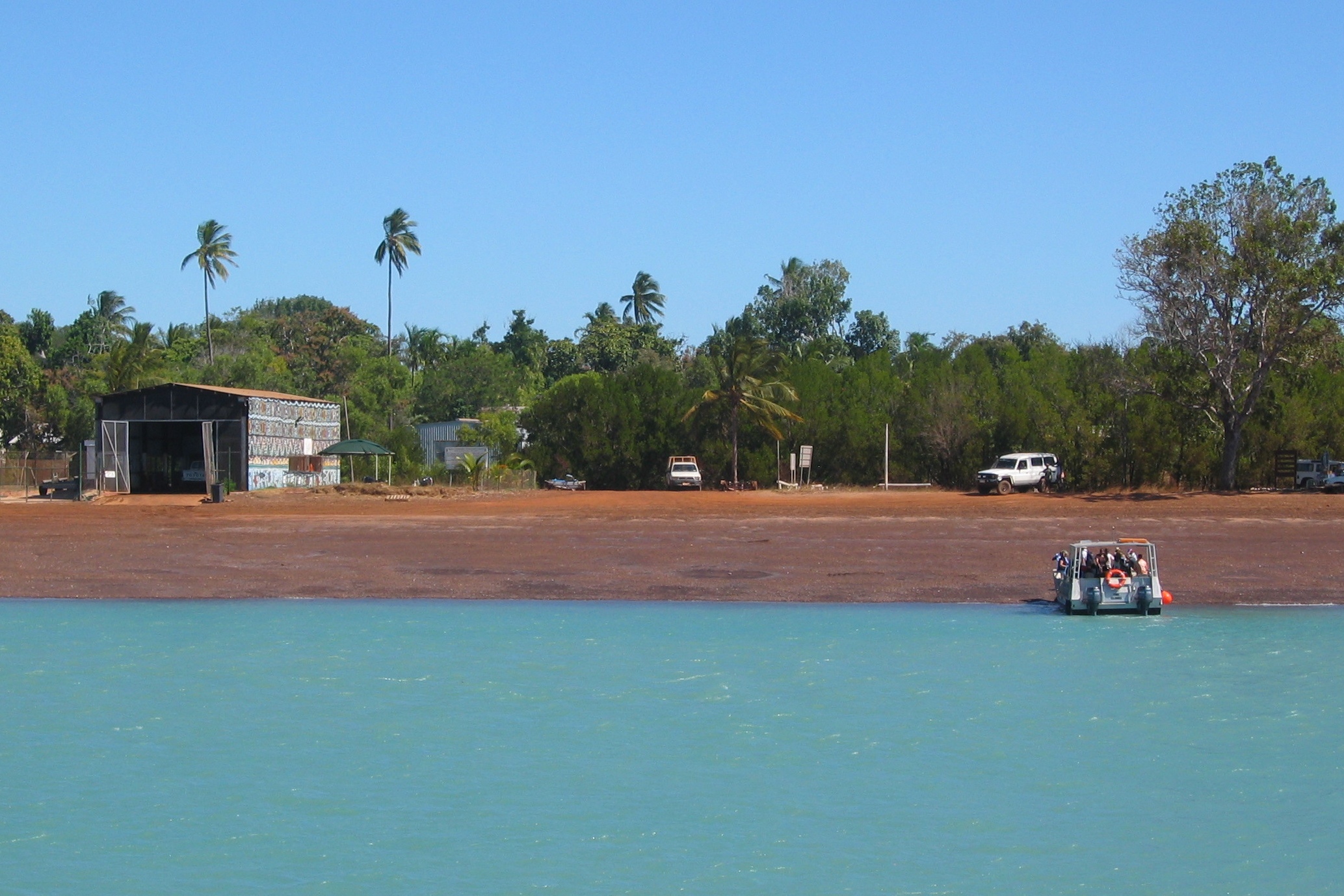
Bathurst Island (Tiwi Islands)
Approaching beautiful Bathurst Island (Tiwi Islands)

Marie Munkara was born in Arnhem Land and spent the first few years of her life on Bathurst Island in the Tiwi Islands. She left there when she was 3 years old, and didn’t return until she was 28. These stories, she says, are drawn from those told to her by friends and family, and are set, I think, in the early to mid twentieth century. She explores a wide range of issues reflective of indigenous-white contact at that time, including education and religion, the stolen generation, sexual abuse, the introduction of alcohol and disease, and anthropological research.

Munkara sees humour in everything (more or less) but her more biting humour is reserved for the “mission mob” because, of course, it is they who wield the power over the “bush mob”. The “bush mob” are shown to be intelligent and resourceful but no match for the power of the muruntawi (white people). Her language draws on a wide range of traditions – including indigenous storytelling, biblical, common clichés – and from these she tells stories that are only too believable. Here she tells us about one of the Brothers:

And so time passed and the natural progression of things came to be and the bullied became the bully, and the bully became the misogynist, and the misogynist became a Brother in a Catholic mission in a remote place in the Northern Territory… (“The sound of music”)

A too familiar story, told in a biblical tone. There is a funny story in which the “bush mob” tries to lead an anthropologist astray by feeding him incorrect information (such as obscene or silly names for ordinary objects), but their victory is Pyrrhic, as the end of the story conveys:

And after all, it was difficult sometimes to tell the difference between the missionaries and the madmen and the mercenaries because their eyes all looked the same and their tongues all spoke the same language of greed. If it wasn’t your soul they wanted, it was something else. Until it became an automatic response whenever a strange muruntani appeared to put out your hand for the specimen bottle to piss into or extend your arm for a blood sample to be taken or for the ungracious thought to pass through their mind that here was yet another who had come to take but as always gave nothing in return. (“Wurruwataka”)

Her stories about the stolen generations are particularly bitter, but again she uses humour. She tells the story of Marigold (née Tapalinga) who’d returned “home” after years away, only to find that she no longer fit, but:

Nor did Mrs Jones want the hussy back as their servant having sprung the little slut underneath Mr Jones in the spare room. The poor man was still traumatised by the ordeal. This wasn’t the first time she’d raped him, he claimed. (“Marigold”)

Only an indigenous writer could write something so patently ridiculous on this topic – and so drive the point home!

Munkara neatly tracks the Bishop’s behaviour and impact on his flock by constantly changing her epithet for him. In the first story, “The Bishop”, he is introduced as “his Most Distinguished” but is then referred to by various names including “his Most Garrulous”, “his Most Impatient” and “his Most Impious”. This changing of names for the Bishop is rather unsubtle humour but it carries a sly comment on the “mission mob’s” disrespect for indigenous culture by insisting on naming indigenous people, completely ignoring the fact that they have their own names. And so, in the first story, we are introduced to Matthew, Mark, Luke and John, to Epiphany, Lazarus, and John the Baptist, to name just a few of the cast of characters populating the book.

Another technique Munkara uses is to pepper her stories with white culture sayings and clichés, such as, “misery loves company alright”, “looking on the bright side”, “but you just can’t please everyone”, and this one:

And so it came to be that for the first time ever, the mission mob found themselves sitting where they’d never sat before – between a rock called ‘you didn’t see that one coming did you’ and a hard place called ‘bush mob’s indifference’. (“The good doctor”)

Overall, this is deceptively simple but clever writing that sets up and undermines its premises every step of the way. First “the mission mob” seems to be winning, and then “the bush mob”. However, while it could be said that “the bush mob” were “clever individuals who had learnt to sit on the wobbly fence of cultural evolution without falling off”, the real truth is that

They didn’t have to die to go to hell because the mission had happily brought that with them when they’d arrived unasked on the fateful shores of the place that was their heaven all those years ago. (“The movies”)

A spoonful of sugar, they say, makes the medicine go down, and that’s certainly true of this book. The sugar is not so strong though that you miss the medicine. Munkara makes sure of that – and the end result is a very funny but also very sobering book. I suspect and hope that Munkara has more … because the missions are only one facet of the history of contact in Australia. There is plenty for her to sink her teeth into.

Musings of a Literary Dilettante and Resident Judge have also reviewed this book.

Marie Munkara
Every secret thing
St Lucia: University of Queensland Press, 2009
181pp.
ISBN: 9780702237195

* Reference to the colloquialism “giving them curry”.

Monday musings on Australian literature: SPUNC has spunk

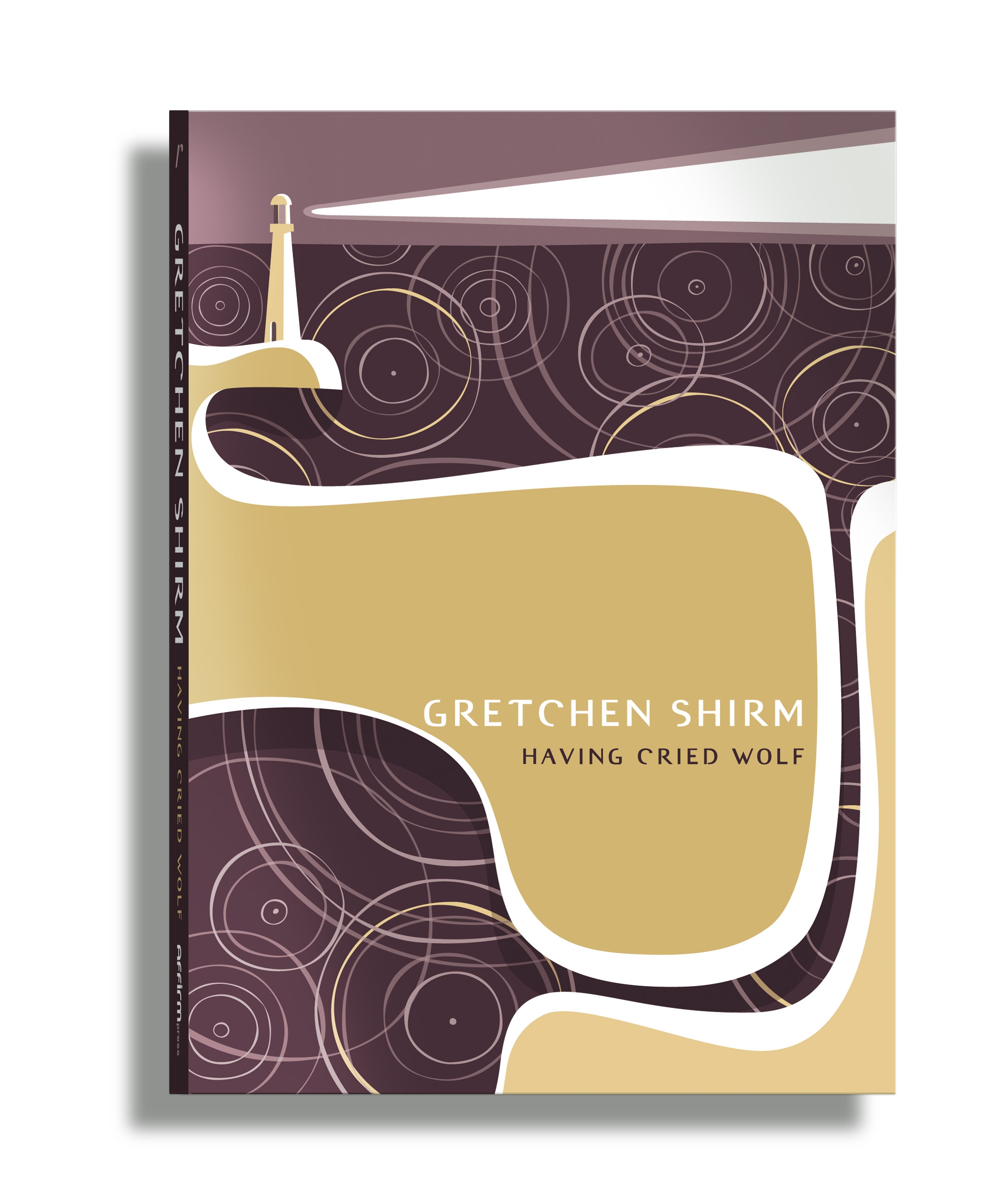
Having cried wolf, book cover

Isn’t this cover gorgeous? (Courtesy: Affirm Press)

Yes, come here for your wit. I bet I’m the first one to have thought of that line! SPUNC*, in case you haven’t heard of them and you probably haven’t, is the Small Press Network (in Australia). The acronym actually stands for Small Press Underground Networking Community. It was formed in Melbourne in 2006 and its aim – as you would have guessed – is, in its own words, “to promote independent publishing and support the principle of diversity within the publishing industry as a vital component of Australian literary culture”.

Its definition of small is, I think, pretty broad. I suspect the key word is “independent” more than “small” as its members range from what seems to me to be well-established companies, like Text Publishing, which publishes some high volume works, to smaller more boutique publishers like Ginninderra Press and, a new kid on the block, Affirm Press.

In 2007, SPUNC commissioned a report into independent publishing in Australia. It was titled A lovely kind of madness: Small and independent publishing in Australia. Aha, there it is “small” and “independent” and it seems that for the purposes of this report the focus was on the smaller end of the scale.

In fact, definition is one of the issues the report confronted and so, using the evidence they gathered from their survey and overseas research, they came up with one. Their suggested guidelines for ‘small press’ is that they are independent publishers who:

  • Have published at least one book title or journal issue (in hardcopy);
  • Have an annual turnover of $500 000 or less;
  • Have print runs of usually less than 2000;
  • Have published more than one author;
  • Publish fewer than 10 book titles per year; and
  • Usually do not charge authors fees for production, editing or distribution.

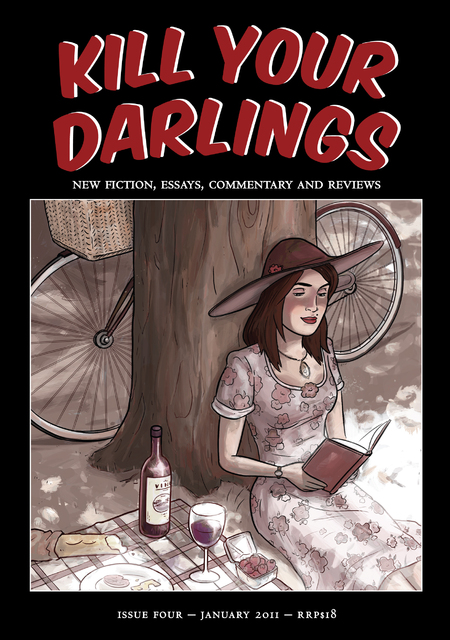
Kill Your Darlings Issue 4

Kill Your Darlings

Guess what the report found? Well, in case you can’t, I’ll tell you: it’s that the main problems faced by smaller presses are publicity and distribution. Who’da thought it?! They do admit though, that distribution in particular is a problem for all publishers, not just the small ones, due to “the combined effects of a crowded market, a geographically wide distribution area, low margins and relatively small print runs”. It’s hard running any business in “a wide brown land”.

Why am I writing this? Because I do read books from small presses, including Affirm Press, Black Inc, Ginninderra PressGiramondo Publishing, Griffith Review, and Kill Your Darlings to name just a few. And because I want them to survive: they pick up new upcoming writers; they publish poetry; they publish essays; they, in fact, make the major contribution to the diversity of publishing in Australia; they foster local talent; and they are often simply just beautiful to look at and hold.

Do you read small presses? Do they contribute to your literary scene? What do you think they could do to lift their visibility?

* POSTSCRIPT: SPUNC link removed due to Small Press Network changing its “name” from SPUNC to SPN (for obvious reasons), 20 Feb 2022.