Several months ago I wrote a Monday musings post on Australian expat novelists, so I thought it was only fair to write one on reverse expat novelists, that is, writers from elsewhere who have settled in Australia. Because, yes, some people DO come here as well as leave!
For this post, I’m choosing a few writers who settled (permanently or semi-permanently) in Australia in their adult lives … they are all English or South African born. (I wonder what that says? We are, of course, all Commonwealth countries, which may have some bearing on it all … but after that, I’ll leave it to others to ponder.) And, because I need to choose some order in which to list them, I’ve chosen the order of their arrival in Australia.
Elizabeth Jolley
(born in England in 1923, arrived in Western Australia in 1959, died in Western Australia in 2007)
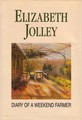
Regular readers of my blog will know that Jolley is one of my favourite writers. All her novels were published after her arrival in Australia. In fact, like many authors, she was rejected many times before her first books, Miss Peabody’s inheritance and Mr Scobie’s riddle, were published in 1983. All the books of hers that I’ve read, with the exception of the autobiographical novel My father’s moon, are set in Australia though travel elsewhere does occur in some. Jolley clearly settled well into Australia – and in 1970, when still living in Perth, she and her husband bought a 5 acre rural property outside of Perth. She chronicles this in her delightful “memoir” (if you can quite call it that), Diary of a weekend farmer. It is very much diary-style and starts with the search for land. You might like this one (from 10 October 1970):
Told of another place Mount Helena drove there, like a place in a Patrick White novel 27 acres covered in scrub and burned trees old cars and trucks, washing machines, it was like a dump, several dogs so turned the car as quickly as I could.
A week later, though, they find just the spot. It sounds English by her description (17 October 1970):
Serene. A high verandah, a fig tree, a loquat, honeysuckle, a hedge of rosemary. A gentle slope of bush down to a meadow, stream on land at both bottom corners …
And on 6 November she says “You look across to Tolstoy country. A paddock with horses running …”
It is however Australian – the snakes and bushfires tell us that. And, it is clear, this land, this experience, informed much of her writing, including, specifically, The five acre virgin and other stories, and The newspaper of Clarement Street.
Peter Temple
(born in South Africa in 1946, arrived in Australia in 1980)
Temple is one of Australia’s best regarded crime writers. In fact, his latest novel Truth was, rather controversially, the first genre novel to win our top literary award, the Miles Franklin. As with Jolley, all his novels have been published after his arrival in Australia and they are, at least to the best of my knowledge as I’ve only read two, set in Australia and very much imbued with Australian landscape and culture. His description of the land (in Victoria this time) in The broken shore sounds a bit Patrick White too:
Early settlers planted cypress trees and hedges as windbreaks around their houses. It worked to some extent but the displaced wind took its revenge. Trees, shrubs, hedges, tanks, windmills, dunnies, dog kennels, chickenhouses, old car bodies – everything in its path sloped to leeward.
Nicholas Shakespeare
(born in England in 1957, first visited Tasmania in 1999 and now divides his year between Tasmania and England)
Unfortunately, I haven’t yet read any Shakespeare, but I have Snowleg on my TBR pile and I have been wanting to read The dancer upstairs for some time too. So, I’ll just report on him using an interview with Susan Wyndham in 2007. He said that “the thing about Tasmania that’s exciting for a writer is how close to the surface history is”. And, guess what, Patrick White rears his head again. Shakespeare tells Wyndham:
In my shed, one of the discoveries I made was Patrick White and The Tree of Man. It is extraordinary the way he took a marriage through all its vicissitude; most writers don’t take on that challenge.
A commenter on Susan Wyndham’s blog described his book Secrets of the sea as “So Australian with a strong thread connecting to Britain”. I must, must, must get to this writer.
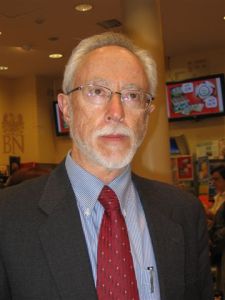
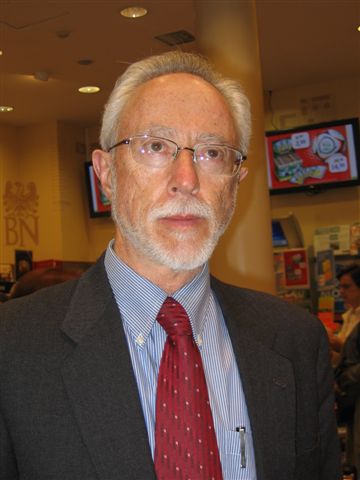
Coetzee, Poland, 2006 (Photo: Mariusz Kubik, from Wikipedia, using CC-BY-SA 3.0)
JM Coetzee
(born in South Africa in 1940, arrived in Australia in 2002)
Coetzee, of course, had an established literary career before he arrived in Australia, but his rather stellar career has continued unabated since then. Elizabeth Costello concerns an Australian novelist, and Diary of a bad year is set in Australia. These books tend to the intellectual or philosophical, yet they too reflect on Australian culture often counterpointing international concerns. Coetzee is a rather reclusive man, but I have managed to once hear him speak. He briefly introduced and read from Slow man, and then immediately left the podium. There was, in other words, no opportunity for questions and answers. While that was a pity, I bear him no grudges. He is a writer after all and doesn’t have to join the literary promotion juggernaut if he doesn’t want to!
I’ve chosen these four reverse expats because they are of particular interest to me. There are others, such as British comedian and writer Ben Elton, and best-selling South African born author Bryce Courtenay. Having lived overseas on a couple of occasions, I am fascinated by the decision people make to leave their homes permanently for another country. There are many reasons why people might do so – political (of course), economic, personal (such as having a partner from another country), cultural, and so on. Some of you who read my blog have, I know, made the jump. I’d love to hear your perspectives on being an expat.




 Whispering Gums