Monday musings on Australian literature: Quiet achievers 2, Barry Scott of Transit Lounge

Back in August, I wrote the first post in my Monday Musings sub-series on Quiet Achievers in Australia’s literary landscapes, meaning people like publishers, for example. My first post was on Terri-ann White from Upswell Publishing.

Of course, most of these people aren’t really Quiet Achievers. Those in the industry will know them, often well. However, for the general reading public, people in the industry are not necessarily well-known, hence this new little sub-series.

Barry Scott (Transit Lounge)

I have read and reviewed many books published by Transit Lounge over the years because they publish the sorts of books and authors I like. According to Wikipedia, Transit Lounge was founded in Melbourne in 2005 – 20 twenty years ago – by two librarians Barry Scott and Tess Rice. It is an independent Australian literary small press, which publishes literary fiction, narrative and trade non-fiction. Its focus is to “show the diversity of Australian culture”. Their website says they are

dedicated to the publication of exciting new fiction and non-fiction.  Our tastes are broad and encompass literary fiction and upmarket genre writing such as  psychological thrillers.  We have a particular interest in creative literary publishing that explores the relationships between East and West and entertains and promotes insights into diverse cultures.

As far as I can tell, Scott works full-time on the press, while artist and photographer Rice works part-time. In 2018, Scott was interviewed by Books+Publishing, and said their books:

go in search of the outsider, the marginalised, the immigrant, the different or the disappearing. We are always searching for what seems beautiful, unique, true, and isn’t afraid to push beyond the current zeitgeist in terms of themes or genre tweaking.

AS Patric, Black rock white city

And, they have been successful in doing so. AS Patrić won the Miles Franklin Award in 2016 for his immigrant story, Black rock white city (my review), and Jane Rawson’s “genre-tweaking” From the wreck (Bill’s review), won the 2017 Aurealis Award for best science fiction novel, with its blend of historical and science fiction. Many other Transit Lounge books have been listed or won significant awards, including, recently, Lisa Kenway winning the Ned Kelly Award for Debut Crime Fiction with All you took from me (my post).  We often wonder about the impact of awards on sales, so I was interested to see a comment by Scott, in the Sydney Morning Herald (SMH) after Patrić’s win, that the company overall “will be more visible” and that he had “already noticed more people following the company on Twitter and wanting to see its books”.

In 2023, Scott was interviewed by ABR (the Australian Book Review), and here we hear his motivation for getting into publishing:

I was involved with administering the Victorian Premier’s Literary Awards in 2003 when the Unpublished Manuscript Prize was conceived. … I became acutely aware that there were many talented writers unable to achieve publication. Transit Lounge always has been and always will be about giving some of those new writers a voice, as well as publishing more established authors.

A bit like Terri-ann White! That said, Transit Lounge’s focus in terms of what they publish has changed a little over the years. In the above-mentioned SMH article, Scott said that he initially ‘wanted to publish Australian authors writing about other cultures and people writing from overseas about here. “We have moved away from that a bit; we were a bit more travel based than we are now”.’

Once in the publishing game, it seems that Barry Scott was fully invested, that is, he became involved in the industry. He was a director of the Board of the now-unfortunately-defunct Small Press Network. In 2009, he visited the US for several weeks, under a Copyright Agency Limited grant to find out about small independent publishers there, including the state of the industry. You can read his report at Overland.

Meanwhile, I’ll return to the ABR interview. Over the years, it has run several interviews with publishers, and I will refer to those – if or when I focus on those people. It’s illuminating to see their different reactions to the questions. For example, when asked about the significance of book reviews, Scott replied:

They are gold, even when negative. As Oscar Wilde said, ‘There’s only one thing in the world worse than being talked about, and that is not being talked about.’

Not all publishers responded so positively to this question, although most recognised that reviews mean something to authors. I recently listened to the interview with Graeme Simsion and Anne Buist on the Secrets from the Green Room podcast, and Simsion, a “data person” who has researched bookselling at some length, said that the main impact on sales comes from “word of mouth”. He didn’t talk about how you get that word-of-mouth started, but surely reviews, as Scott implies, are a contributing factor? I wonder whether the current fragmentation of book “reviewing” across traditional media, websites, blogs and social media, is, in fact, resulting in increased “word of mouth” exposure?
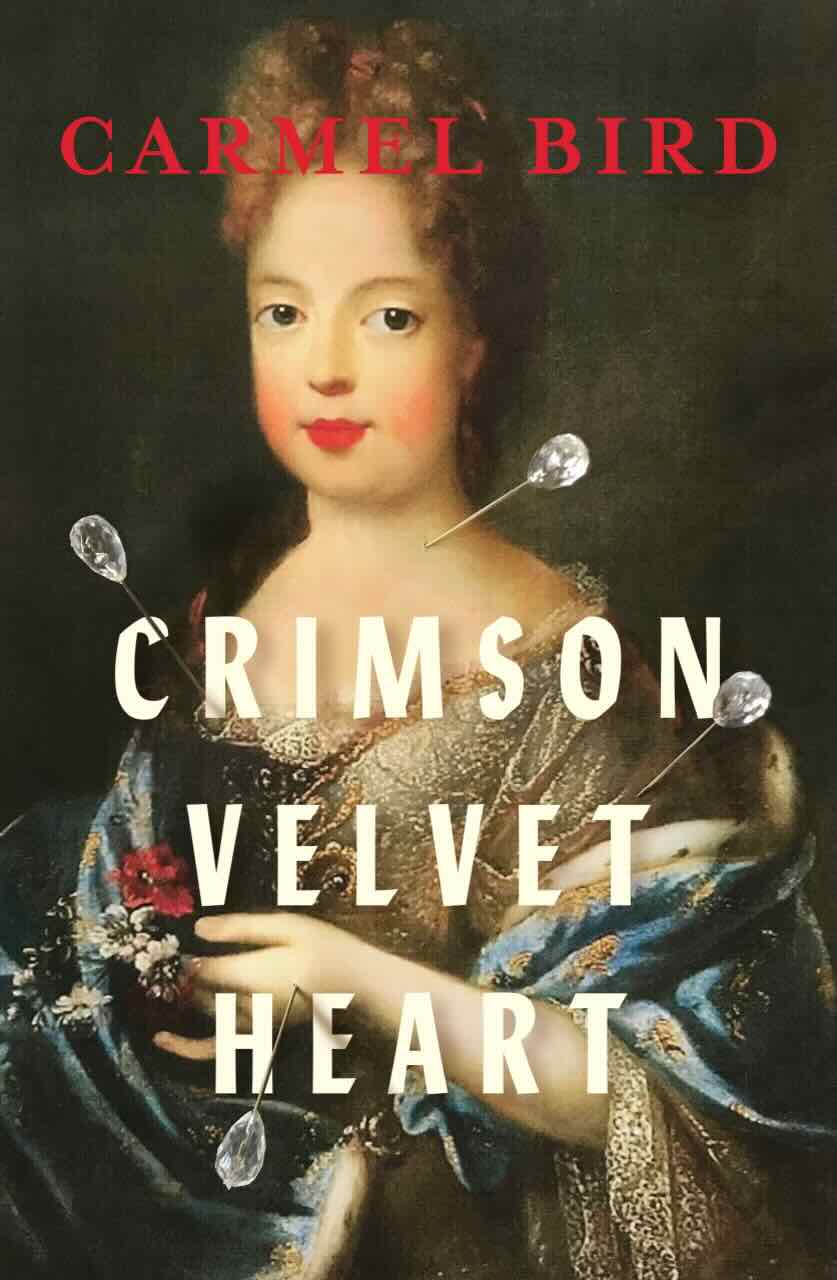
I have a few Transit Lounge books on my TBR, as I write, including Carmel Bird’s latest novel – a foray into historical fiction with Crimson velvet heart, set in Versailles at the end of the 17th century.

I’ll conclude, however, with a comment made by another author. In the blog, In Their Own Write, Mandy Sayer says

Barry Scott at Transit Lounge is a truly collaborative publisher, and I’m grateful for the opportunity to work with him.

This was August 2025, just before the publication of her memoir, No dancing in the lift. It seems that the fire is still burning in Scott.
Monday musings on Australian literature: Quiet achievers 1, Terri-ann White of Upswell Publishing

Over the years I have started several Monday Musings sub-series, some of which I’ve nearly completed (such as those on writers centres and on supporting genres) while others are still continuing (like Forgotten writers). Today, I’m introducing a new one. It was inspired by an email I received the other day from Terri-ann White of Upswell Publishing. It occurred to me that not only was here a quiet achiever, but that people like her were worth posting about.

Okay, so those in the industry will say that White is no quiet achiever. After all, she’s been around publishing for a long time, and successfully so. However, for the general reading public, people in the industry are not necessarily well-known, hence this new little sub-series. I hope to focus on the people more than their companies, but they and their jobs are intertwined. Still, I hope to at least give a sense of who they are. I start with Terri-ann White, but there will be more …

Terri-ann White

In 2022, I wrote about two new indie publishers, of which Upswell Publishing was one. As I wrote then, it came across as a passion project, but the passion project of someone with significant cred. It was triggered by – hmm – adversity. White had been running UWAP (University of Western Australia Press) since 2006 when, in 2019, the University announced that it would close its publishing arm. As most of us know, that didn’t happen, but White left in 2020 anyhow, unhappy with how she had been treated.

Not long after, on 25 December 2020 in fact, the Sydney Morning Herald’s Jason Steger reported that White had a plan. She wanted to publish books that for some reason couldn’t find an easy route to publication, “books that are too quiet, or the authors are older than 25, that are not about misery, that are not about trends”. She wanted to publish books, wrote Jason, “that speak to each other across a set of intellectual interests, and how they work language and revere it”. And so, Upswell Publishing was born.

Books are in White’s blood. As Upswell’s About page tells it, all her working life, from 1980 on, “has been arranged around books and ideas: as a bookseller, writer, publisher and organiser of public events involving literature and writing”. This new venture, however, broke new ground. For a start, it has been set up as a not-for-profit company, with three impressive women, Carmen LawrenceLinda Savage and White, as its directors. It also has DGR status, which means that (Australian) donations to them are tax-deductible. Their tagline is “Support the future of Australian literary writing and publishing”. They hope that “the generosity of rusted-on, passionate readers” will help them extend their “work of commissioning writers and building audiences”.

Upswell is also selling a bit differently. While individual books can be bought from them directly or from booksellers, they also have a subscription program. I subscribed the first two years, but not since. They have been experimenting with their subscription packages, but my main issue is that I’m a bit too overwhelmed with books to keep subscribing (for a while, at least). I did however preorder two of their 2025 books. One has arrived, with Jessica White’s Silence is my habitat: Ecobiographical essays, to come.

Despite this, however, I have been watching and drooling, partially attracted, I admit, to their recognisable and gorgeous design, but also the content. White is, I believe, achieving what she set out to do, which was to publish distinctive works across narrative nonfiction, fiction and poetry, to publish books that “elude easy categorising and work somewhat against the grain of current trends … books that may have trouble finding a home in the contemporary Australian publishing sector”.

It hasn’t all been smooth sailing. In 2022 she was, as publisher, unwittingly caught up in the plagiarism controversy over John Hughes’ novel The dogs (my review) which was initially longlisted for the Miles Franklin Award.

If you really want to understand who she is, and what she believes, check out this opinion piece she wrote for Seesaw in September 2021. She wrote of

a withering of success for Australian literature of the ground-breaking variety. I think you’ll know what I’m getting at here: books that take more concentration, perhaps, with less of a direct connection to the idea of entertainment. By which I don’t mean the equivalence of cod liver oil – good for you but it’s unfathomable that you are sinking it down your gullet. I could be more explicit and name some names often cited as difficult writers: Shirley Hazzard, Randolph Stow, Beverley Farmer, Elizabeth Jolley, Kim Scott, Gerard Murnane. Or I could name literary forms that are not novels (including poetry and short stories, for instance).

Or, see her report, ‘There is nothing else quite like it’, in Books+Publishing about the Sharjah Publishers Conference, which she describes as “a corrective from the world of English-language commercial publishing, and a rich chance to meet the Arab world’s publishing enterprises, along with a raft of Eastern European book people and representatives from the wide-ranging Indian book industry.” Tells you something about her publishing philosophy.

Then there’s her interview in the Australian Book Review (ABR, November 2022, paywalled). Regarding the value of reviews, she says that they are “Very significant for the author and, to a lesser extent, the publisher. Potentially useful for finding readers”. And, regarding whether she thought individuality was a casualty of a highly competitive market, she responded:

No. I’m in this for the long haul. Even books that flop in their time end up in libraries and second-hand bookshops, ripe for discovery. The prospect of a living wage for writers, on the other hand, is even less likely these days.

I love this long view of what writing an publishing is about.

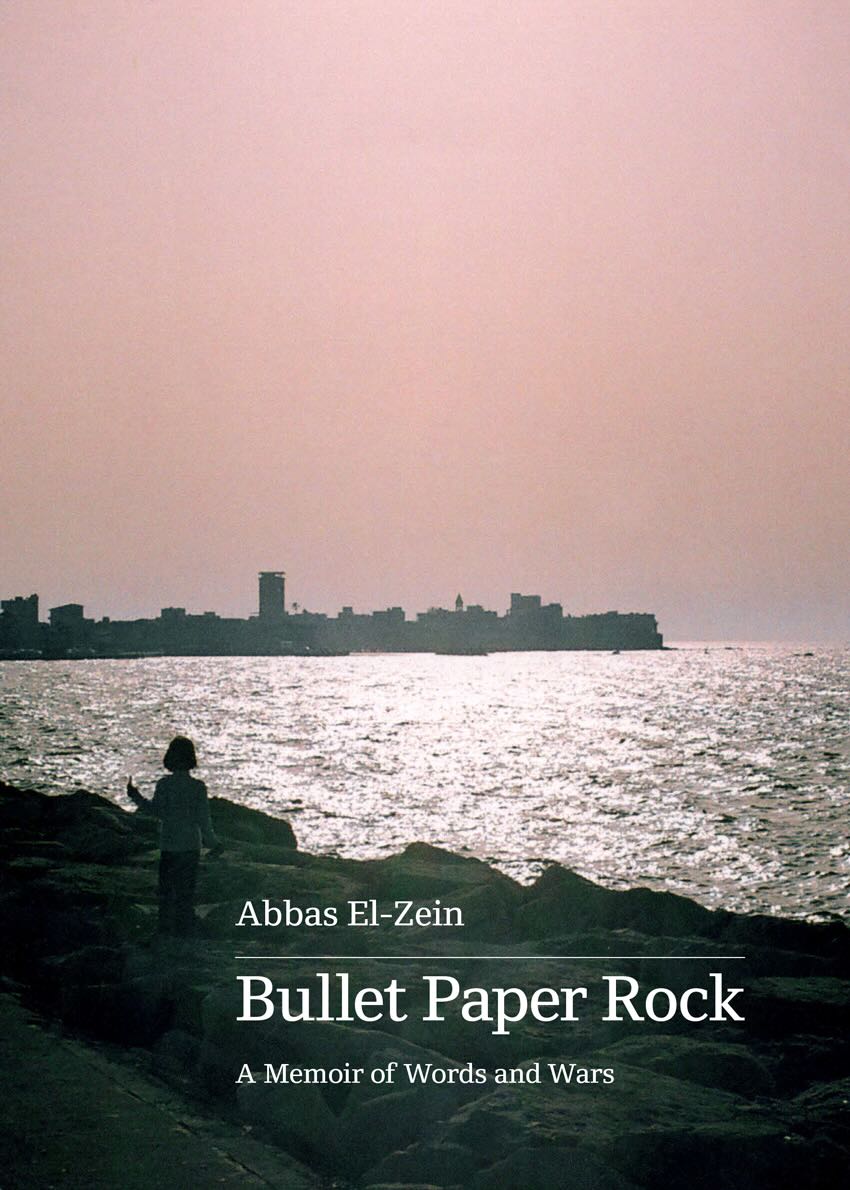
Finally, I’ll return to the email that inspired this post. It announced that Upswell’s book, Abbas El-Zein’s memoir, Bullet paper rock: A memoir of words and wars, had won the 2025 National Biography Award (having already won in the 2024 Queensland Literary Awards and been shortlisted in the 2024 NSW Premier’s Literary Awards). The NBA judges called it “a work of rare linguistic and emotional insight, and a tribute to the resilience of the human condition”. Awards aren’t the be-all and end-all of publishing, but it is still be a thrill for authors and their publishers when they win.

Any thoughts on this quiet achiever – and her contribution to the Australian literary scene?