Monday Musings on Australian literature: Diverse publishing

With the idea and practice of diversity under attack in more than one place around this world of ours, it’s encouraging to see publishers continuing to support the need for more diversity in their output.

I’ve written several Monday Musings about diversity in publishing, including these, listed from the most recent to the earliest:

  • Bundyi (2024): on a new First Nations imprint, being curated by Dr Anita Heiss, and under the auspices of Simon & Schuster
  • Canberra Writers Festival 2023: 2, Celebrating the classics (2023): on a panel discussion about UQP’s First Nations Classics initiative
  • First Nations Classics (2022): introducing UQP’s First Nations Classics initiative.
  • Magabala Books (2022): spotlight on this First Nations publisher, which was established in 1984.
  • Diversity and memoir (2021): on the issue that people from diverse backgrounds are expected to write memoirs about their experience rather than free to write on their choice of subject.
  • Multicultural NSW Award (2019): on this award that celebrates the publishing of books dealing with or furthering our understanding of migrant experience, cultural diversity or multiculturalism in Australia
  • Who is publishing the interesting books (2014): looks at what “interesting”means from a number of angles including diverse writers

Of course I’ve written posts on diversity from other angles – such as on festivals, or listing books by diverse writers – and I have reviewed many books by diverse writers.

I was inspired to write this post by another publishing initiative in this space, Allen & Unwin’s Joan Press. It was created, in fact, in 2020, but I only cam across it recently. Curated by Nakkiah Lui, a Gamilaroi and Torres Strait Islander woman, and a writer, actor and director, it describes itself as “Radical, inclusive, rebellious”. Its simple home page says:

Joan publishes books across all genres and forms. Each Joan title creates space for voices that get pushed to the fringes; voices that challenge and interrogate the world around them. Named after Lui’s grandmother, Joan Press recognises that storytelling is both the legacy and the future of any community, and aims to be a home for stories and storytellers who are redefining the mainstream in a way that is radical, inclusive and bold.

As far as I can tell, Joan has so far published three books:

  • Emma Darragh, Thanks for having me (2024), Joan Press’s first fiction title, described as comprising “interwoven stories about three generations of women in one family as they navigate girlhood, motherhood and selfhood, perfect for fans of Jennifer Egan, Meg Mason and Paige Clark”. 
  • Sarah Firth, Eventually everything connects (2023), a work of graphic non-fiction, described as  a delicious mix of daily life, science, philosophy, pop culture, daydreams and irreverent humour”
  • Madison Godfrey, Dress rehearsals (2023), described as “A memoir made of poetry, Dress Rehearsals documents a decade of performing womanhood in a non-binary body”.

Unlike some of the publisher sites I’ve visited recently, Joan does seem to be currently still accepting submissions.

And a little extra …

Related to the issue of diversity in publishing is that of diversity in the publishing workforce. In March and April of 2022, a survey was conducted of diversity and inclusion in the Australian publishing industry. You can read about it here 9where there are links to further details including the full report, but the summary drawn was that

The publishing industry in Australia is highly educated, driven by women and has strong LGBTQ+ representation, yet struggles to reflect Australia’s cultural and social diversity, according to the first survey examining diversity in Australian publishing.

The summary said that the survey yielded “important insights that will help to push for change in the sector”. Some of you may remember this survey, because it got quite a bit of coverage at the time. But what has happened since? That has been hard to find, as my search on the subject produced a page or more of hits on the 2022 survey, but a page or so in, I found a Books + Publishing article from February 2024, titled “APA [Australian Publishers Assoication] releases diversity and inclusion plan” and stating that APA had released ‘a diversity and inclusion plan “to guide and support industry progress over the next two years”‘. The article lists eight recommendations for publishers to work on, and provides a link to the plan.

I also find an announcement from August 2024 that Hachette Australia and Media Diversity Australia (MDA) “are excited to announce a significant partnership, with Hachette becoming the inaugural book publisher member of MDA. This collaboration also marks the launch of the Hachette x MDA Publishing Traineeship, aimed at championing diversity and inclusivity within the publishing industry”. Besides this traineeship, membership of MDA apparently gives Hachette “access to a suite of valuable services, including the MDA TalentHub to reach a more diverse talent pool; participation in advocacy initiatives and industry roundtables; and customised Diversity, Equity, and Inclusion training and guidance”.

Too early to see how all this is playing out, but it’s surely positive.

Any thoughts? Do you seek writing my diverse authors, and if so, how easy is it to find?

Monday musings on Australian literature: Supporting genres, 9: Romance novels

Back in 2020 I commenced a Monday Musings subseries I called “supporting genres”. Some of the posts have, admittedly, been more form- than genre-based. Today’s however is a genre, and one I have been putting off because it’s not one I am at all familiar with. However, with Valentine’s Day looming this week, I felt it was now or never. The problem is that not only am I not familiar with this genre, but it is a huge field, so this will be basic, and more suited to the generalist like me, not specialist readers of Romance.

jane Austen, Love and Freindship

This is not the only problem. Defining Romance – given the multiple uses of the word through time – is a challenge, so in the interest of keeping this tight, I’m going to keep tightly to the “genre” which Wikipedia describes as follows:

romance novel or romantic novel is a genre fiction novel that primarily focuses on the relationship and romantic love between two people, typically with an emotionally satisfying and optimistic ending. Authors who have contributed to the development of this genre include Maria Edgeworth, Samuel Richardson, Jane Austen, and Charlotte Brontë.

As with many genres, Romance fiction encompasses many subgenres – including crossovers with other genres. Sub-genres include fantasy, contemporary, historical romance, paranormal fiction, and science fiction. According to the Wikipedia link above, “women have traditionally been the primary readers of romance novels, but according to the Romance Writers of America, 16% of men read romance novels”. I certainly know some here in Oz.

Modern romance fiction has moved on from what it was in the mid-twentieth century – in variety and diversity of its characters, and in storylines. It is also not averse to grappling with significant issues in relationships, like rape. RWA (see below) is focusing on increasing inclusivity and diversity in its mission, and says its “working definition of diverse encompasses all ages, cultures, ethnicities, social backgrounds, neurodiverse and physical abilities and attributes, all genders, and all sexual identities”.

Perhaps – but don’t quote me as I’m no expert – the grand dame of romance fiction in Australia was Valerie Parv (1951-2021). You can check her out at Wikipedia, but Secrets from the Green Room podcast also did an excellent interview with her. For more writers, the Romance Writers Australia blog is a good source, with their Author Spotlight and New Release posts. The blog seems to go back to 2015, but doesn’t have the usual navigation tools (at least as far as I can see).

Organisations

There seems to be two main organisations supporting romance fiction in Australia.

Romance Writers Australia (RWA)

Describing itself as the “Home and Heart of Romance Writing in Australia”, RWA was established in Sydney around 1991, with its membership now including writers from Australia, New Zealand, Singapore, the United States and the United Kingdom. It has “become internationally recognised and respected by both category and mainstream publishers of romance”. Its aim is:

to promote excellence in romantic fiction, to help aspiring writers become published and published authors to maintain and establish their careers, to foster a safe, equitable, inclusive and diverse community, and to provide continuing support for romance writers – whatever their genre – within the romance publishing industry.

Their big event of the year is the Romance Writers of Australia Annual Conference. The 2025 conference, themed “Writer Wonderland”, will be held in Hobart from 22 to 24 August. As you can see from the program, this is clearly a conference geared more to writers than readers.

RWA also, apparently, organise “write-ins, library panels, workshops, retreats, and social gatherings in capital and regional cities”, plus other “special events and book launches”, but there were none listed on the website at the time of writing this post.

Australian Romance Readers Association Inc (ARRA)

Formed in 2007/2008, ARRA is an association “created by romance readers, for romance readers”. Starting with sixteen members, it now has well over three hundred. They outline their goals and activities on their About page.

They too run events. They held five Australian Romance Readers Conventions, with the last one being 2017. In 2019, they reinvented their convention to what they call A Romantic Rendezvous, which comprised multi-author, multi-city events, held in March 2019 in Brisbane, Sydney, Melbourne and Perth. They repeated this in 2020, and then the pandemic hit. Not to be thwarted, they held a Locked Down version. They returned to annual live events in 2023, with the 2025 event now locked in (as against locked down!) You can read all about these on their site. They also have what looks like an active blog.

Awards

Romance writing seems less well-served with major awards than, say, Crime Fiction and Science Fiction, which is interesting. However, some awards are offered by and/or coordinated by the above organisations:

  • Romantic Book of the Year (Ruby) Awards: According to Books+Publishing, which lists the 2024 winners, these are RWA’s awards, but I can’t find them on their site, except through a site search which retrieves random historical hits.
  • RWA Contests: RWA seems to offer a variety of contests which they say offer not only a “wonderful way” for writers to “showcase” their talent but also a “chance to receive valuable feedback from experienced judges and industry experts”. The contests cater for different experience levels as well as a broad range of romance genres. Current contests can be found on this page.
  • ARR (Australian Romance Readers) Awards: ARRA offers awards for the best romance books in several categories, and are voted for by ARRA members. The 2024 awards will be announced at a dinner in Melbourne on 28 March 2025. You can see a list of Previous Winners on their site. How do you like this for an award category, “Best Banter in a Romance”? What fun.

Publishers

As with awards, I found fewer specialist romance publishers in Australia, than for science fiction, but the best known romance publisher of all, Mills and Boon, does have an Australian arm. Last year ABC News wrote that while the company launched in 1908, “it wasn’t until 1974 that it set hearts aflutter among Australian readers in its first venture outside of Britain and North America”. This makes it now 50 years old in Australia. According to the ABC, “there’s a growing appetite for romance novels”, which they support by sharing Books+Publishing’s report in late 2023 that sales of romance fiction were up 37 per cent in Austra last year in Australia.

  • Hot Tree Publishing: Established in 2015 HTPubs seems to specialise in diverse romance. Their Submissions page states that they “are currently seeking M/F+, M/M+, and F/F+ series novels in the following CONTEMPORARY and PARANORMAL subgenres”. This is “not a restrictive list and exceptional stand-alones may be considered” but they are not “open to historical romances” (accessed: 10 February 2025).
  • Mills and Boon Australia: Established in Australia in 1974. Currently, according to their website, there are over 75 Australian and New Zealand authors amongst their 1,300+ authors.

Of course, most of the general publishing houses also publish romance. It is a well-served field.

Romance and me

While I understand the attraction of romance fiction, I don’t seek the genre. However, I do read many books containing romance. After all, love and relationships underpin most of our lives. What did the Beatles say – yes, “all you need is love … love … love is all you need”.

My first romance novels were, of course, Jane Austen’s (see all my Austen posts). When I first read them in my teens, my biggest interest was, as I recollect, the romance component. But since then, it’s not the romance that sets my heart aflutter, but Austen’s wit and her timeless insights into humanity, into how we think and why we behave the way we do.

Anita Heiss Paris Dreaming

However, since blogging, I have read some romance fiction – mostly what the industry calls chick-lit – Anita Heiss’s choc-lit novel, Paris dreaming (my post), Tony Jordan’s Addition (my review) and Fall girl (my review), and Graeme Simsion’s The Rosie project (my review). These books attracted me because they reflected that trend I mentioned above, including more diverse characters – First Nations, neurodiverse, and so on.

Do you like romance fiction and, if so, care to share why?

Previous supporting genre posts: 1. Historical fiction; 2. Short stories; 3. Biography; 4. Literary nonfiction; 5. Crime; 6. Novellas; 7. Poetry; 8. Science Fiction

Monday musings on Australian literature: Prime Minister’s Summer Reading List, 2024

In early December last year, I started looking out for the Grattan Institute’s Prime Minister’s Summer Reading List for 2024. But somehow, although it was published on their website on 9 December, I missed it. I have no idea how, because I went to their website, but maybe I was a day or two too early, and then forgot in my Christmas-busyness-befuddlement. Anyhow, I believe it still has value, even if the PM is back at work, so here goes …

For those of you who haven’t caught up with this initiative, some background. The Grattan Institute is an Australian non-aligned, public policy think tank, which produces readable, reasoned reports on significant issues. They have also published annually, since 2009, their Prime Minister’s Summer Reading List which, as they wrote back in 2009, comprises “books and articles that the Prime Minister, or any Australian interested in public debate, will find both stimulating and cracking good reads”.

Here is the 2024 list in their order (but with the author first), accompanied by an excerpt from their reasoning, which is available in full on their site):

  • Clare Wright, Ṉäku Dhäruk The Bark Petitions: How the people of Yirrkala changed the course of Australian democracy (Australian): “The truths told in Wright’s Näku Dhäruk make it essential reading for the Prime Minister and the Australian people. If studying history helps us learn from our mistakes, Australia’s dismissal of the bark petitions is a chapter worth poring over.”
  • Adam Higginbotham, Challenger: A true story of heroism and disaster on the edge of space (British): “At its heart, Challenger is a human story … The frozen rubber O-rings that ultimately led to the disaster were a known problem. But a flawed decision-making process allowed it to become merely one ‘acceptable risk’ among many. As demands on governments grow even as trust in institutions declines, Higginbotham provides a timely reminder of the role of individual agency in shaping the success or failure of humanity’s greatest endeavours.” 
  • J. Doyne Farmer, Making sense of chaos: A better economics for a better world (American): “Farmer argues that traditional economics fails to grapple with the complexity and uncertainty of real-world economies. He makes the case for complexity economics, a new approach that draws insights from biology, neuroscience, and physics. This framework models the economy from the ground up, simulating the dynamic web of interactions between people, goods, and institutions … With vast data and computational power now available, complexity economics could be the next testbed for evidence-based policy.”
  • Caitlin Dickerson, Seventy miles in hell (American): “In contemporary debates, where migration policies are entwined with political positioning, easy scapegoating, and a way for politicians to signal ‘toughness’, migrants are often treated as numbers, inputs into an economy, or worse, rather than as human beings with their own hopes, strengths, and impossible choices … Dickerson’s message is clear … ‘What I saw in the jungle confirmed the pattern that has played out elsewhere: The harder migration is, the more cartels and other dangerous groups will profit, and the more migrants will die.’”
  • Madhumita Murgia, Code dependent: Living in the shadow of AI (Indian): “as AI is increasingly embedded in our systems and decisions, what does this mean for our society? … Murgia argues that our blindness to AI systems and how they work makes it harder for us to understand when they go wrong or cause harm. And there’s a risk that those harms disproportionately affect marginalised groups … The questions that policymakers must grapple with are almost as numerous as the possible uses of AI: How do we know if AI technologies are safe, or if they are being manipulated or used in discriminatory ways? Which laws need to be amended to take AI into account? More broadly, who is ultimately responsible when AI technologies cause harm?” 
  • Ceridwen Dovey, Only the astronauts (Australian): “Dovey, an Australian science writer as well as novelist, shows us humans as they might appear to the objects we create and use. Like Adam Higginbotham in Challenger, Dovey critiques the masculine bravado of the space race … This inventive collection of stories has moments of beauty, as well as laugh-out-loud fun …”

The selection process, we’re told, was rigorous. The staff book club “read, loved, loathed, and debated an extensive array of novels, non-fiction books, essays, and articles”. They believe their final six are “all cracking good reads”, and summarise their choices as follows:

Ṉäku Dhäruk and Challenger are case studies in how a handful of people can shape the course of history, for better or for worse.

Making Sense of Chaos argues that we can glean new insights into the economy by modelling individuals’ behaviour from the ground up.

Seventy Miles in Hell and Code Dependent remind us of the human consequences of our high-level policy choices on migration and AI.

Our last pick, Only the Astronauts, is a little different: it’s a series of vignettes about inanimate space objects. But it too offers a new perspective on the human experience by looking in from the outside.

It’s interesting – and, I admit, disappointing – that only two are by Australian writers. And again, only one is a work of fiction. Also, while the ongoing challenge of reconciling our colonial past is included, it’s not in a work by a First Nations writer – as excellent as Clare Wright is. However, I do like that, while it may look like some critical issues are not covered, there seems to be some big picture and lateral thinking included here, which is important.

My track record for reading Grattan’s selections is poor. To date, I have read two of 2022’s list, Debra Dank’s We come with this place (my review) and Jessica Au’s Cold enough for snow (my review), and only one of 2023’s list, Anna Funder’s Wifedom (my review), though I had hoped to also read Ellen van Neerven’s Personal score. Let’s see how I go with 2024’s list!

You can see all the lists to date at these links: 2009, 2010, 2011, 2012, 2013, 2014, 2015, 2016, 2017, 2018, 2019, 2020, 2021, 2022, 2023.

If you had the opportunity to make one book recommendation to the leader of your country, what would it be?

Monday musings on Australian literature: Historical fiction by First Nations writers

With this weekend in Australia being a long weekend for Australia Day (or, Invasion Day), I decided that the best thing I could do would be to write a post promoting historical fiction by First Nations Australian writers. While there are First Nations historians writing histories, I figure more people read historical fiction, given I’d like to encourage us all to broaden, fill out, revise our understanding of Australia’s history, then historical fiction seemed a good place to start.

Of course, there’s the obvious proviso. Historical fiction is not history. However, I believe that good historical fiction does provide truths about the past that can inform our understanding of what happened. Historical fiction by First Nations writers ensures that this understanding extends beyond the point of view of the victors to that of those who were displaced and dispossessed. Historical fiction can also provide some facts, but we can’t assume what we read is factual. It is fiction after all. All the books I list here have some basis in fact, but how much, and what sort of fact varies. All, though, offer important truths.

The books – which include some I’ve not read – are listed in rough chronological order by their time setting, and organised under some broad “eras”, because while some issues are overarching or ongoing, there are experiences and ideas particular to different eras. Stories that encompass multiple timeframes are listed under the earliest one. Where possible, and to the best of my ability, I have identified places using both their local and settler names.

Early settlement

The books set in this period explore what happened when white settlers first appeared on land belonging to First Nations peoples. These novels explore the clashes that occurred, the mistakes that were made, the possibilities for doing it differently or the moments where it might have gone differently, and the ultimate dispossession of the traditional owners.

Jane Harrison, The visitors (2021): 1788; Warrane/Sydney Cove: reimagines the arrival of the First Fleet from the perspectives of elders from seven nations (Brona’s review).

Julie Janson, Benevolence: 1816-1842, Dharug Nation/Western Sydney: based on the author’s ancestor, tells the story of Muraging who, when around 12 years old, is handed over by her father to the Parramatta Native Institution, in the hope that she will help their people by learning British language and ways (my review).

Anita Heiss, Dirrayawadha (Rise up): around 1824, Wiradyuri Country/Bathurst: inspired by the 1824 Bathurst War, fought between the Wiradyuri people and the British, tells the story of the Wiradjuri resistance leader Windradyne, through the eyes of his fictional sister Miinaa (my CWF 2024 post).

Kim Scott, That deadman dance (2011): 1826-1844, Noongar Country/Southwest WA: a first contact story set in Western Australia in which the generosity of the local people, and their willingness to engage, is ultimately met by rapaciousness and violence (my review).

Julie Janson, Compassion (2024): 1836 on, Dharug Nation/Western Sydney: sequel to Benevolence, and based on the life of another Janson ancestor, Muraging’s outlaw daughter, a horse thief and resistance fighter who took on colonial authorities (including in the courts). 

Melissa Lucashenko, Edenglassie (2023): 1850s and 2020s, Magandjin/Brisbane: a “what if” story in which armed resistance to the dispossession, massacres and other brutalities from the colonisers is told alongside attempts from both sides to work together (my review).

Mid to late 19th century

By this period, the settlers had established themselves throughout Australia, with First Nations people surviving as best they could – often in the employ of the settlers and living, of course, under British law. Their lives, health and culture were severely affected by dislocation, and they lived at the mercy of the settlers. Many were separated from their Country, with culture, including language, was being lost.

Anita Heiss, Bila Yarrudhanggalangdhuray (River of dreams) (2021): 1852 on, Wiradjuri Country/Gundagai and Wagga Wagga: inspired by the story of the four First Nations men who, using bark canoes, saved 40-70 people during Gundagai’s 1852 flood; tells the fictionalised story of the daughter of one those men, her ending up working for one of the landowning families, and being forced to leave her country (my review).

Ali Cobby Eckermann, Ruby Moonlight (2012): 1880s, mid-north South Australia: verse novel about a teenage girl, Ruby Moonlight, whose family is massacred by white settlers, and who meets the lonely “colourless man”, Miner Jack (my review).

Leah Purcell, The drover’s wife (2017): 1890s, Ngarigo and Walgalu Country/Snowy Mountains: re-visioning of Henry Lawson’s classic short story, turning the drover’s wife into a First Nations woman left to fend for herself in a hostile world (my review of the film version).

Federation to 1930s

Larissa Behrendt, Home

While the facts of First Nations lives at this time are largely a continuation of the previous era, fiction set in this period starts to address more specifically the impact of the missions, and of government policies, on First Nations’ lives.

Larissa Behrendt, Home (2004): 1918 through to 1980s, Eualeyai Country/North-western New South Wales: based on the story of the author’s grandmother, who was abducted from her camp in 1918, and following her seven children. (Lisa’s review)

Post World War 2

As we move closer to contemporary times, the fiction addresses more contemporary issues, particularly regarding government polity, while still retrieving stories from the past that are little known.

Anita Heiss, Barbed wire and cherry blossoms (2017): 1944, Wiradyuri Country/Cowra: inspired by the 1844 breakout from the Cowra POW Camp, imagines a relationship between escaped Japanese POW Hiroshi and the daughter of a First Nations couple who offer him refuge at Erambie Mission. But, mission rules, and government protection and assimilation policies limit their choices. (Lisa’s review)

Marie Munkara, A most peculiar act (2020): 1940s, Larrakia Nation/Darwin: follows the trials and tribulations of a 16 year-old Aboriginal fringe-camp dweller, in Darwin during the Japanese bombing raids, and her resistance to protectionist policies like the Aboriginal Ordinances Act and the “White Australia” policy (Lisa’s review).

Dylan Coleman, Mazin Grace (2012): 1940s and 50s, Kokatha Mula Country/western South Australia: fictionalised version of the author’s mother’s childhood at the Koonibba Lutheran Mission (Lisa’s review).

Alexis Wright, The plains of promise (1997): 1950s Gulf Country of Queensland: starts at St Dominic’s Mission in the Gulf Country of Far North Queensland, where a young Aboriginal woman is taken away from her mother, and explores the brutality of colonisation at the mission and beyond (Tony’s review).

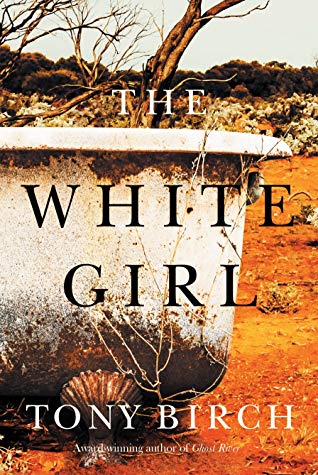
Book cover

Tony Birch, The white girl (2019): 1960s, fictional rural town: tells the story of Odette who is determined to save her granddaughter from being removed, against the backdrop of the egregious restrictions of the Aboriginal Protection Act are in force (my review).

Karen Wyld, Where the fruit falls (2020): 1960s-70s, multiple locations: spans four generations of women, over several decades, with a focus on the 1960s and 70s, a time of rapid social change and burgeoning Aboriginal rights (Lisa’s review)

There should be something here for everyone!

Any thoughts? Or, do you have any historical fiction titles to add?

Monday musings on Australian literature: Vale SPN or?

Late last year I went looking for the 2024 winner of the Small Press Network’s Book of the Year (BOTY) Award, originally called the MUBA (Most Underrated Book Award). It is/was an annual award highlighting ‘authorial and publishing excellence by small and independent publishers’, and is/was open to any book released by an SPN member during the previous calendar year. It aimed to provide some of the recognition and promotional opportunities for publishers and authors that the big awards facilitate. I didn’t always post on this award but I always checked it out.

But, I was surprised and disappointed to find no mention of the 2024 award. Instead I found articles suggesting that the sponsoring organisation, the Small Press Network, was on the brink of collapse.

I wrote a post back in 2011, on SPUNC (or, Small Press Underground Networking Community) as it was initially called until – as with their award – they renamed it to something with a little more gravitas, to the inoffensive SPN! It was formed in Melbourne in 2006 and its aim was “to promote independent publishing and support the principle of diversity within the publishing industry as a vital component of Australian literary culture”. It seemed to be a wonderful organisation, with an information-rich website (no longer available as far as I can tell) and an active Facebook page (but inactive since March last year.)

So, what happened? Unfortunately, most of the information sources, like Books+Publishing and ArtsHub, are paywalled, but I did glean some information from ArtsHub. On 22 October 2024, Thuy On penned a news report headlined “Small Press Network to terminate unless new board is formed” followed by the news that the organisation was at risk of ceasing operations within the month. The full article is paywalled. However, the article’s publicly available intro said that SPN had emailed its members and supporters that the current Board would be wound up, but there was an option for the community to reform a new Board. Failing that the organisation would cease to exist. SPN’s email apparently cited “numerous reasons” for all this, but those are presumably hidden behind the paywall.

Coming soon from Anna Solding’s MidnightSun

Around the same time, on 17 October, writer, author advocate and presenter, Anna Featherstone wrote a brief blog post titled “Australia’s Small Press Network (SPN) to shutter”. She writes that she’s loved attending SPN conferences over the years “for some incredible nuggets of wisdom and plenty of publishing and book stats” so was sad to hear that it was “officially winding down”. “Totally understandable”, she writes, “but still a loss for the local publishing industry who aren’t the Big Five”. She then quotes SPN’s then board chair, Anna Solding, as saying the the Board had “worked hard to find feasible ways to make SPN financially tenable again but have not found any viable way to achieve this”. Featherstone concludes her post with links to her highlights posts from the 2021, 2022 and 2023 conferences.

The next piece of information I found was also at ArtsHub. Dated 13 December and written by George Dunford, a writer and digital content expert, its headline is “The future of Australian small press”. It continues that the pausing of the SPN was seen by many as “a death knell for independent publishing” but that it had a new Board and “looks set to again champion small press in 2025”. It says that former SPN General Manager Tim Coronel had said that SPN ‘saw “a big membership boost during COVID” as many writers thought it would be a great time to start self-publishing’ … and then we go behind the pay wall. Doh!

So, with the website gone and Facebook inactive, I can find out nothing more, but I do hope it survives, that it revives those sites, and offers its BOTY award again.

Does anyone know anything more?

Monday musings on Australian literature: Bill’s Australian White Men Gen 1-3

For several years now, Bill (The Australian Legend blog) has run a week dedicated to “generations” in Australian literature, focusing until this year on Australian Women Writers. This year, however, he has changed tack, and decided to look at Australia’s early male writers – who were, of course, in that colonial landscape, mostly white. He has also decided to do three generations at once, which means we are covering writers who were active from 1788 to the 1950s. This, says Bill, will be his last “Gen” – and fair enough, it’s been a big effort, one that many of us have enjoyed taking part in. Bill deserves a big thanks for bringing older Australian writers to the fore, and encouraging discussion about our literary history – the writers, the influences (including his “favourite”, The Bulletin) and the trends.

As before, Bill has created a page of Gen 1-3 writers to which he will add reviews posted for them or for writers he’s not yet listed. In this post I am going to list the writers I have read who suit this period, as my first contribution to Bill’s project.

Now, like Bill, my reading focus is women writers. Each year they represent 65-75% of my reading. I do like reading men too – and I would read more, if I could carve out more reading time – but my point here is to explain why my contribution is paltry.

Sometimes a bloke gits glimpses uv the truth
(CJ Dennis, “In Spadger’s Lane” in The moods of Ginger Mick)

The Gums’ Gen 1-3 List

In alphabetical order by author (compared with Bill’s chronological one by date of birth) … and with links on titles to my reviews of their books.

Knowledgable eyes will notice that my list does not include some of the big names of Australia’s male writers of the 19th century – Rolf Boldrewood, Marcus Clarke, Joseph Furphy, Henry Kingsley and Henry Lawson. Or Watkin Tench’s first hand accounts of the early colony. I have read a couple of these before blogging, but overall they have not been high priorities for me.

But, just to prove my interest, I have also read a couple of biographies of Australian male writers:

I have also read a couple of short journalistic pieces by Vance Palmer.

The books in my list span a century, from John Lang in the 1850s to Martin Boyd and D’Arcy Niland in the 1950s. John Lang’s A forger’s wife is a colonial novel with a 19th century melodrama feel, and is about, as I wrote in my post, issues like “the survival of the wiliest, and the challenge of identifying who you can trust”, things deemed critical to survival in the colonial mindset. By the ’90s, we were well into the time of social realism* and writers were looking outwards – to the sociopolitical conditions which oppressed so many. This is reflected in William Lane’s novel. It is also reflected in Price Warung’s stories, which, although “historical fiction” about the convict days, are written with a social realist’s eye on the inhumanity of the system. By the time we get to the mid-20th century, fiction was increasingly diversified. The world wars, increasing awareness of gender and continued concern about those issues the social realists cared about, not to mention modernism’s interest in the self, intellect, art, and their intersection with each other (to put it very loosely) can be found in the books I’ve read from that period.

When Bill started this project, he was inspired by the divisions suggested by Henry Green in his history of Australian literature. Green’s divisions were “conflict”, 1789-1850; “consolidation”, 1850-1890; “self-conscious nationalism” 1890-1923; and “world consciousness and disillusion”, 1923-1950. There is some sense to these divisions, and they provided a loose skeleton for the Gens! However, in her introduction to The Cambridge companion to Australian literature, Elizabeth Webby shares several studies or surveys of Australian literature, discussing their different approaches and goals, but she does say that several identify the 1890s as “being crucial to the development of a national literature”.

I could go on delving more deeply, but I won’t, as this post’s main goal was to tell Bill which books I can contribute to his male Gen 1 to 3 list, and I’ve done that.

Are you joining in or do you have any thoughts to add?

* There is some confusion regarding social versus socialist realism, but I am using social realism broadly to mean concern with sociopolitical issues – particularly regarding the working classes – with or without political “isms” behind it.

Monday musings on Australian literature: Some New Releases in 2025

For some years now, my first Monday Musings of the year has comprised a selected list of new Australian book releases for the coming year. And, for many years, the bulk of this post came from a comprehensive list prepared by Jane Sullivan for the Sydney Morning Herald. However, this year’s SMH’s list, prepared by Melanie Kembrey, is highly selective, comprising just fifteen fiction and fifteen nonfiction titles. Further, it only covers the first half of the year, and as usual includes non-Australian books – meaning it has only a handful of Aussie titles.

So, I did a lot more research than usual. I checked many publisher websites, and found a couple of publisher emails useful. I also found The ArtsHub’s list prepared by Thuy On, which is a little longer than Kembrey’s and comprises selected Australian new releases for the first half of the year. I gleaned my list from these disparate sources, which varied in how well and thoroughly they shared their forthcoming titles.

The information I provide for each title varies a little, depending on what information I found easily. Links on the authors’ names are to my posts on those authors.

Fiction

As always, I have included some but not all the genre fiction I found to keep the list manageable and somewhat focused. Here’s my selection:

  • Mandy Beaumont, The thrill of it (March, Hachette)
  • Ashley Kalagian Blunt, Cold truth (February, Ultimo)
  • Tara Calaby, The spirit circle (historical fiction, January, Text)
  • Jane Caro, Lyrebird (April)
  • Shankari Chandran, Unfinished business (January, Ultimo)
  • Madeleine Cleary, The butterfly women (historical crime, April, Affirm Press)
  • Rachel Coad, Stray cats and bad fish: Silence of the eels (graphic novel, September, Upswell)
  • Anna Dombroski, After the great storm (February, Transit Lounge)
  • Laura Elvey, Nightingale (genre-bender, May, UQP)
  • Beverley Farmer, The seal woman (repub. of 1992 edition, March, Giramondo)
  • Irma Gold, Shift (March, MidnightSun)
  • Andrea Goldsmith, The buried life (March, Transit Lounge)
  • CE Grimes, The Guts (literary thriller, April, Puncher and Wattman)
  • Joanna Horton, Catching the light (April, Ultimo Press)
  • Luke Horton, Time together (March, Scribe)
  • Catherine Jinks, Panic (crime, January, Text)
  • Gail Jones, The name of the sister (June, Text)
  • Yumna Kassab, The theory of everything (March, Ultimo Press)
  • Vijay Khurana, The passenger seat (April, Ultimo Press)
  • William Lane, Saturation (May, Transit Lounge)
  • Zane Lovitt, The body next door (crime, March, Text)
  • Charlotte McConaghy, Wild dark shore (March, Penguin)
  • Nadia Mahjouri, Half truth (February, Penguin)
  • Steve MinOn, First name second name (March, UQP)
  • Debra Oswald, One hundred years of Betty (March, Allen & Unwin)
  • Jacquie Pham, Those opulent days (February, Upswell)
  • Sophie Quick, Confidence woman (April)
  • Diana Reid, Signs of damage (March)
  • Madeleine Ryan, The knowing (February, Scribe)
  • Josephine Rowe, Little world (April, Black Inc)
  • Ronni Salt, Gunnawah (historical rural crime fiction, January, Hachette)
  • Gretchen Shirm, Out of the woods (April, Transit Lounge)
  • Anna Snoekstra, The ones we love (June, Ultimo Press)
  • Jessica Stanley, Consider yourself kissed (April, Text)
  • Sinéad Stubbins, Stinkbug (May/June, Affirm Press)
  • Marion Taffe, By her hand (historical fiction, HarperCollins)
  • Hannah Tunnicliffe, The pool (January, Ultimo Press)
  • Madeleine Watts, Elegy, southwest (March, Ultimo Press)
  • Chloe Elisabeth Wilson, Rytual (May, Penguin)
  • Sean Wilson, You must remember this (January, Affirm Press)
  • Ouyang Yu, The sun at eight or nine (February, Puncher and Wattman)

Short stories

  • Peter M. Ball, What we talk about when we talk about brains: The Red Rain stories (January) 

Nonfiction

I am sorting these into two broad categories …

Life-writing (loosely defined)

  • Clem Bastow and Jo Case, Someone like me: An anthology of nonfiction by autistic writers (anthology, March, UQP)
  • Bron Bateman (ed), Women of a certain courage: Life stories (anthology, no month, Fremantle Press)
  • Brooke Boney, All of it (memoir, April)
  • Judith Brett, Fearless Beatrice Faust: Sex, feminism and body politics (biography, April, Text)
  • Geraldine Brooks, Memorial days (memoir, January)
  • Kerrie Davies, My brilliant career, Miles Franklin undercover (autobiography, March)
  • Robert Dessaix, Chameleon: A memoir of art, travel, ideas and love (memoir, March, Text)
  • Kate Grenville, Unsettled: A journey through time and place (Black Inc, April)
  • Hannah Kent, Always home, always homesick (memoir, May)
  • Sukhjit Kaur Khalsa, Fully Sikh: Hot chips and turmeric stains (memoir, February, Upswell)
  • Josie McSkimming, Gutsy girls (memoir, February, UQP)
  • Robert Manne, A political memoir: Intellectual combat in the Cold War and the Culture Wars (Black Inc, April)
  • Dean Manning, Mr Blank (memoir/biography, March, Puncher and Wattman)
  • Paul Marshall (ed), Raparapa: Stories from the Fitzroy River drovers (anthology, February, Magabala Books)
  • Brenda Niall, Joan Lindsay: The hidden life of the woman who wrote Picnic at Hanging Rock (biography, February, Text)
  • Sonia Orchard, Groomed: A memoir about abuse, the search for justice and how we fail to keep our children safe (memoir, January, Affirm Press)
  • Lucy Sussex and Megan Brown, Outrageous fortunes: The adventures of Mary Fortune, crime-writer, and her criminal son George (biography, Black Inc, February)
  • Grace Tame, The ninth life of a diamond miner: A memoir (memoir, repub., March, Pan Australia)
  • Naomi Watts, Dare I say it (memoir, January)
  • Jessica White, Silence is my habitat: Ecobiographical essays (memoir/ecoliterature, October, Upswell)

History and other non-fiction

  • Vanessa Berry, Calendar (essays, October, Upswell)
  • Anne-Marie Conde, The prime minister’s potato and other essays (June, Upswell)
  • Stephen Gapps, The Rising War in the colony of New South Wales, 1838-1944 (history, April)
  • Joshua Gilbert, Australia’s agricultural identity: an Aboriginal yarn (First Nations, Penguin, May)
  • Robert Godfree, Drought country: The dry times that have shaped Australia (eco-literature, February, CSIRO Publishing)
  • Alyx Gorman, All women want (women’s studies, March, HarperCollins)
  • Tom McIlroy, Blue Poles: Jackson Pollock, Gough Whitlam and the painting that changed a nation (history/biography, February/March, Hachette)
  • Alison Pouliot, Funga obscura: Photo journeys among fungi (photography/ecology, March, New South)
  • Belinda Probert, Bill’s secrets: Class, war and ambition (narrative nonfiction, January, Upswell)

Poetry

Finally, for poetry lovers, I found these, almost entirely from publisher websites:

  • Gregory Day, Southsightedness (April, Transit Lounge)
  • Yvette Henry Holt, Fitzroy North 3068 (March, Upswell)
  • Anna Jacobson, All rage blaze light (September, Upswell)
  • Šime Knežević, In your dreams (February, Giramondo)
  • Cameron Lowe, BliNk (February, Puncher and Wattman)
  • Thuy On, Essence (February, UWAP)
  • Helena Pantsis, Captcha (February, Puncher and Wattman)
  • Omar Sakr and Safdar Ahmed, The nightmare sequence (April, UQP)
  • David Stavanger, The drop off (April, Upswell)

So far I have read only three from my 2024 lists, though have several more on the TBR. How will I go this year?

Meanwhile, anything here interest you?

Monday musings on Australian literature: Some little recaps (2)

Last year, my last Monday Musings of the year fell on Christmas Day, so I did what I called a little recap post. This year, my last Monday Musings occurs the day before my big two end-of-year posts – Reading Highlights and Blogging Highlights – so I’ve decided to do another little undemanding Recap Post.

Recap 1: Some All-time Tops

Back in May I celebrated fifteen years of blogging, but in that post I didn’t share much in the way of overall statistics. However, trends and stats interest me so I’m sharing a couple here. Do you ever look at long term stats and trends on your blogs? See anything interesting?

Book Cover

My top review post of all time is one I wrote back in 2010 on Edith Wharton’s short story “A journey”. It was a Top Ten post for a long time, and continues to garner enough hits each year to keep it in the top 30. Close on its heels is my top Australian review post of all time, the one on Red Dog, the movie and the book. Like Wharton’s story, it was a serial Top Ten post, but was a bit of an outlier because, for many years, my Top Ten was dominated by my posts on older short stories. The last few years, though, have seen a gradual switch to more recent posts on more recent works occupying the top. I wonder why?

My strangest Top, though, comes from the list of sites that “refer” (sends visitors) to my blog. Next in the list after obvious sites – WordPress Reader, WordPress Android App, Facebook and Twitter – comes mumsnet.com! It’s the “UK’s biggest network for parents” and for some reason my posts, such as one on Germaine Greer, seem to get discussed there, resulting in visitors to my site. Is it just me?

Recap 2: Australian Women Writers Challenge

I’ve been involved in the Australian Women Writers blog since 2012. In January 2022, it changed from being an all-encompassing challenge to a blog/website devoted to promoting older, often under-recognised or overlooked, women writers, from the 19th- and 20th-centuries. This year, Elizabeth Lhuede and I tried a new “twist” for our posts, and featured a work by authors who had published something in 1924. Some of the writers were so fascinating that I also wrote them up for my Forgotten Writers series.

We made another change in 2024, which was to reduce our posting from twice a week to once a week. For Elizabeth and me, this post comprised an introduction to our chosen writer followed by a piece published by that person, while Bill continued with his survey of the Independent Woman in Australian Literature (with posts by himself and some guest contributors). Bill has written a useful wrap-up of his AWWC posts over the year on his blog.

Despite these changes, including fewer posts, our stats continued to increase, after dropping in 2022. As last year, my post on Barbara Baynton’s short story “A dreamer” was the blog’s most visited post during the year.

The blog does take a lot of time, and we are currently talking about future plans. Bill has decided to hang up his commissioning editor’s hat after three hardworking years. We are hugely grateful for all he did, including finding guest contributors. Those contributors produced some of our most popular posts of the year. Michelle Scott Tucker’s post on the Billabong series, for example, was our third most-visited post for 2024.

Recap 3: Books given this year

As I wrote last year, this is not, technically, a recap, but I have often in the past shared the titles of Australian books I’ve given as Christmas gifts. This year I’m including Australian books I have given during the year – for birthdays, giveaways, and Christmas. They are not necessarily my favourite reads – indeed, I haven’t read them all – but were chosen to suit the recipients’ likes. Those I have read I did enjoy, otherwise I wouldn’t have given them to someone else, and some of those I haven’t read are on my TBR.

  • Carmel Bird, Love letter to Lola (my review, short stories; also in my gift list last year)
  • Carmel Bird and Jace Rogers, Arabella (my review, children’s picture book)
  • P.S. Cottier and N.G. Hartland, The thirty-one legs of Vladimir Putin (my review, novella)
  • Ceridwen Dovey, Once were astronauts (to Melanie of Grab the Lapels – her review, short stories)
  • Ali Cobby Eckermann, Ruby Moonlight (my review, verse novel)
  • Anita Heiss, Barbed wire and cherry blossoms (novel)
  • Tania McCartney, Wildlife compendium of the world (children’s nonfiction book)
  • Andrew McDonald and Ben Woods, Hello Twigs: Time to paint (early graphic-novel reader)
  • Emily Maguire, Rapture (my CWF Conversations 1 and 2, novel)
  • Inga Simpson, The thinning (novel)
  • Nardi Simpson, Bellburd (novel)
  • Stephen Orr, Shining like the sun (my review, novel)
  • Benjamin Stevenson, Everyone on the train has murdered someone (novel)
  • Karen Viggers, Sidelines (my review, novel)
  • Sonya Voumard, Tremor (my review, memory/nonfiction)

This year I seem to have given more non-Australian writers as gifts than usual, including Mick Herron, Toshikazu Kawaguchi, Claire Keegan, Thomas King and Natasha Donovan, Seichō Matsumoto, Haruki Murakami, Sigrid Nunez, and the New Zealand children’s writer Pamela Allen. This might not support Australian writers, but it does support our bookshops, and literary culture which is what it’s all about – ultimately, isn’t it.

Care to share your Christmas book-giving?

Monday musings on Australian literature: Forgotten writers 9, Dulcie Deamer

Dulcie Deamer, like my most recent Forgotten Writer, Jessie Urquhart, has retained some level of recognition – or, at least notability, with there being articles for her not only in Wikipedia and the AustLit database, but also in the Australian dictionary of biography (ADB). I have briefly mentioned her in my blog before, in Monday Musings posts on the 1930s and 40s.

Dulcie Deamer

Born Mary Elizabeth Kathleen Dulcie Deamer, Dulcie Deamer (1890-1972) was, says Wikipedia, a “novelist, poet, journalist, and actress”. ADB biographer Martha Rutledge, however, is more to the point, describing her as “writer and bohemian”, while her contemporary, the journalist and author Aidan de Brune, puts it differently again, commencing his piece with, “Dulcie Deamer has had an adventurous life”. From the little I’ve read of her and her work, it’s clear she was imaginative and fearless.

Born in Christchurch, New Zealand, to George Edwin Deamer, a physician from Lincolnshire, and his New Zealand-born wife Mable Reader, Dulcie Deamer was taught at home by her ex-governess mother. The timelines of her youth are sketchy in places, but Rutledge says that at 9, she appeared on stage, and De Brune writes that she was writing verses by the age of 11. A year after that, in 1902, De Brune and Rutledge agree that her family moved to Featherston, a small bush township in the North Island of New Zealand, where, de Brune says, “she ran wild” for five years, “riding unbroken colts, shooting, learning to swim in snow-fed creeks, and going for long, solitary rambles of exploration through the virgin bush”. It was here ‘that what she describes as “memories of the Stone Age” came to her’. Somewhere during this time, according to Rutledge, she was sent to Wellington to learn elocution and ballet lessons, apparently in preparation for the stage. At the age of 16, she submitted a story to the new Lone Hand magazine, and won the prize of 25 pounds. It was “a story of the savage love of a cave-man” and it changed the course of her life.

This story, “As it was in the beginning”, won the prize in 1907, from around 300 entries, said one contemporary report (The Wellington Times, NSW, 18 November 1909), and was published in The Lone Hand at the beginning of 1908, illustrated by Norman Lindsay. The critical responses were shocked but, mostly, admiring, that such virile writing could come from such a young woman. The story went on to be published in a collection of her stories in 1909, titled In the beginning” : six studies of the stone age, and other stories ; including “A daughter of the Incas”, a short novel of the conquest of Peru. One reviewer of this collection (Barrier Miner, 27 May 1910), wrote that Deamer “writes with a freedom of speech and a knowledge of things in general which must have fairly astounded her respectable parents, one would think, when they first read her compositions”! You get the gist. This work was republished in 1929 in a special limited edition titled, As it was in the beginning. The Australasian (21 December 1929) reviewed this and wrote of that original award winning story:

It was a tale of primitive man and woman, of a wooing and winning and retaining with club and spear— an unmoral tale, utterly pagan, terrifically dramatic. Its paganism was unsophisticated; its dramatic force was the expression of natural gift. Mr. Norman Lindsay illustrated the story. His paganism could hardly be called unsophisticated, but there was no doubt about his dramatic power. 

She was really quite something it seems and I might research her a little more. Meanwhile, Wikipedia picks up the story (sourced from newspapers of the time). As well as writing, she continued her stage career. She married Albert Goldie, who was a theatrical agent for JC Williamson’s, in Perth, Australia, in 1908. She had six children, but separated from Goldie in 1922. Rutledge, writes that

In the crowded years 1908-1924 Dulcie bore six children (two sons died in infancy), travelled overseas in 1912, 1913-14, 1916-19 and 1921 and published a collection of short stories and four novels—The Suttee of Safa (New York, 1913) ‘a hot and strong love story about Akbar the Great’; Revelation (London, 1921) and The Street of the Gazelle (London, 1922), set in Jerusalem at the time of Christ; and The Devil’s Saint (London, 1924). Three were syndicated in Randolph Hearst’s newspapers in the United States of America. Her themes, including witchcraft, gave ‘free play to the lavish style of her writing, displaying opulence and sensuality or squalor of traditional scenes.

Reviewing The devil’s saint for Sydney’s The Sun, The Stoic gives a flavour of Deamer’s writing. “She has style (a little too ecstatic perhaps) and she has a fine instinct for story-telling”, but there is much kissing – quite explicitly described – and “Sheikish stuff”. However, as The Stoic knows, there are readers for such writing, and s/he concludes that ‘If anybody wants romance, with a flavor of the supernatural and plenty of “pash,” this is the book’.

Deamer left her husband in 1922, and lived a Bohemian life in Kings Cross, while her mother brought up her children. She worked as a freelance journalist, contributing stories, articles and verse to the Australian Woman’s Mirror, other journals and newspapers, including the Bulletin and the Sydney Morning Herald. Like other writers we have featured, she often used pseudonyms. Rutledge tells us that Zora Cross described her in 1928 as ‘Speedy as a swallow in movement, quick as sunlight in speech … [and] restless as the sea’. Debra Adelaide writes that she was known as the “Queen of Bohemia” due to her involvement with Norman Lindsay’s literary and artistic circle, with Kings Cross Bohemianism, and with vaudeville. Various commentators and critics refer to her interest in religion, mythology, classical literature and the ancient world.

Deamer was a founder in 1929 and committee-member of the Fellowship of Australian Writers. In the 1930s she wrote plays, and a volume of mystical poetry titled Messalina (1932), while in the 1940s she another novel, Holiday (1940), another volume of mystical poetry, and The silver branch (1948). De Brune, writing in 1933, says that she was also hoping “to contribute screen stories to the newly-established Australian film industry” but it doesn’t appear that she achieved in this sphere.

In their short entry on her, Wilde, Hooton and Andrews say that her unpublished biography, The golden decade, “is informative on the literary circles of Sydney in the 1920s and 1930s”. They also say that she features in Peter Kirkpatrick’s 1992 book, The sea coast of Bohemia. Whatever we might think of her novels now, she was a lively and creative force in her time, and worth knowing about.

The piece I posted for the Australian Women Writers Challenge is titled “Fancy dress” (linked below). It provides insight into her interests in the magical and mystical and conveys something of her lively, humorous style.

Sources

  • Debra Adelaide, Australian women writers: A bibliographic guide. London, Sydney: Pandora, 1988.
  • Aidan de Brune, “Dulcie Deamer (1890-1972)” in Ten Australian Authors, by Aidan de Brune, Project Gutenberg Australia and Roy Glashan’s Library, 2017 (originally published in The West Australian, 13 May 1933) [Accessed: 21 November 2024]
  • Dulcie Deamer, “As it was in the beginning“, The Lone Hand (1 January 1908) [Accessed: 23 December 2024]
  • Dulcie Deamer, “Fancy Dress“, The Daily Mail (12 July 1924). [Accessed: 21 November 2024]
  • Dulcie Deamer“, Wikipedia [Accessed 21 November 2024]
  • Martha Rutledge, ‘Deamer, Dulcie (1890–1972)‘, Australian Dictionary of Biography, National Centre of Biography, Australian National University, 1981 [Accessed: 21 November 2024]
  • William H. Wilde, Joy Hooton and Barry Andrews, The Oxford companion to Australian literature. Melbourne, Oxford University Press, 2nd, edition, 1994

Monday musings on Australian literature: Favourite fiction 2024

Around this time of December, I have, for a few years now, shared favourite Aussie reads of the year from various sources. The specific sources have varied a little from time to time. Last year, a significant source – The Sydney Morning Herald/The Age – became unavailable to me as it is now paywalled, and I haven’t prioritised going to the library to access the paper. I have no problem with paywalling. We should pay for journalism, and I do, but for different news sources (such as The Canberra Times, because it’s my local; The Guardian via its app; The Saturday Paper and The Monthly digital editions; and The Conversation by donation). Not being able to access The Age/SMH is a bit disappointing, because theirs is a comprehensive listing. I’d love it if more sites offered the option to buy individual articles.

Anyhow, these lists are all subjective, of course. Plus, the pickers vary. There are critics and reviewers, commentators and subject specialists, and publishers and booksellers. Also, different pickers use different criteria, besides the fact that what they are asked to do, in the first place, varies. For example, some pickers are “allowed” to name several books while others are limited to “one” best (or favourite). Further, as The Conversation wrote, these lists rely not only on what each person has read, but what they remember, all of which means this exercise of mine is more serendipitous than authoritative. But, I think it is still interesting!

As always, I’m only including the Aussie choices, but I am providing links, where they exist, to the original article/post so you can read all about it yourselves, should you so wish.

Here are the sources I used:

  • ABC RN (radio broadcaster), in which presenters and guests named their recommendations from their reading of the year
  • Allen & Unwin (publisher) email, which shared one favourite A&U book per staff member
  • Australian Financial Review (newspaper, traditional and online), which shared “the top picks from our journalists to make your summer reading list sizzle” 
  • The Conversation (online news source), which invited 30 of their writers, “from fields as disparate as wildlife ecology and mathematics to literature and politics, to share their best books of 2024”, as well as letting the Books and Ideas team name theirs!
  • The Guardian (online news source), which promotes its list as “Guardian Australia’s critics and staff pick[ing] out the best of the best”
  • Readings (independent bookseller), which has its staff “vote” for their favourite books of the year, and then lists the Top Ten in various categories – Australian fiction, picture books, international fiction, junior & middle grade fiction, nonfiction, and adult nonfiction.

I apologise in advance for those of you who love poetry, nonfiction, and children’s books – which I also enjoy – but to keep this post a manageable length, I have decided this year to limit the list to my main interest, fiction.

Novels

  • Robbie Arnott, Dusk (Michaela Kalowski and Kate Evans, ABC RN; James Bradley, The Guardian; Readings Staff; see my CWF conversation) (Lisa’s review)
  • Ella Baxter, Woo woo (Bec Kavanagh, The Guardian; Readings Staff)
  • Brian Castro, Chinese postman (Tony Hughes-d’Aeth, The Conversation)
  • Melanie Cheng, The burrow (Jason Steger, ABC RN; Steph Harmon, The Guardian; Readings Staff; on my TBR)
  • Pitaya Chin, The director and the demon (Giselle Au-Nhien Nguyen, The Guardian)
  • Miranda Darling, Thunderhead (Readings Staff)
  • Emma Darragh, Thanks for having me (Readings Staff)
  • Michelle de Kretser, Theory & practice (Julianne Van Loon, The Conversation; Susan Wyndham, The Guardian; on my TBR)
  • Alison Edwards, Two daughters (Jess, Allen & Unwin)
  • Lexi Freiman, The Book of Ayn (Michaela Kalowski, ABC RN)
  • Katerina Gibson, The temperature (Readings Staff)
  • Sara Haddad, The sunbird (Jumana Bayeh, The Conversation)
  • Dylin Hardcastle, A language of limbs (Kate Evans)
  • Anita Heiss, Dirrayawadha (Charmaine Papertalk-Green, The Conversation; see my CWF Conversation)
  • Heather Taylor Johnson, Little bit (Jason Steger, ABC RN)
  • Malcolm Knox, The first friend (James Bradley, The Guardian)
  • Siang Lu, Ghost cities (Beejay Silcox, The Guardian; Readings Staff)
  • Catherine McKinnon, To sing of war (Michaela Kalowski and Kate Evans, ABC RN; see my CWF Conversation)
  • Emily Maguire, Rapture (Rafqa Touma, The Guardian; see my CWF conversations one and two) (Lisa’s review)
  • Murray Middleton, No church in the wild (Readings Staff)
  • Louise Milligan, Pheasants Nest (Eleanor, Allen & Unwin)
  • Kylie Mirmohamadi, Diving, falling (Sian Cain, The Guardian)
  • Liane Moriarty, Here one moment (Cosima Marriner, Australian Financial Review)
  • Bruce Pascoe, Imperial harvest (Joseph Cummins, The Guardian)
  • Ailsa Piper, For life (Michaela Kalowski, ABC RN)
  • Jordan Prosser, Big time (Steph Harmon, The Guardian)
  • Jock Serong, Cherrywood (Dennis Altman, The Conversation) (Lisa’s review)
  • Inga Simpson, The thinning (Kate Evans, ABC RN; James Bradley, The Guardian) (Brona’s review)
  • Jessica Tu, The honeyeater (Anabel, Allen & Unwin)
  • Tim Winton, Juice (Michaela Kalowski, ABC RN; Sian Cain, The Guardian; Readings Staff; on my TBR)
  • Charlotte Wood, Stone Yard devotional (Cosima Marriner, Australian Financial Review) (my review)
  • Evie Wyld, The echoes (Readings Staff)

Short stories

  • Ceridwen Dovey, Only the Astronauts (Cassie McCullagh, ABC RN) (Melanie’s review)
  • Fiona McFarlane, Highway Thirteen: Stories (Jo Case, Honorable Mention, The Conversation; Kate Evans, ABC RN; Ash, Allen & Unwin) (Brona’s review)

Finally …

It’s interesting to see what books feature most. Popularity doesn’t equal quality, but it does provides a guide to the books that attracted the most attention in the year. Of last year’s six most mentioned books, three did receive significant notice at awards time, particularly the most popular 2023 pick, Alexis Wright’s Praiseworthy (as I noted in a recent post). The other two of the six which also featured well at awards time were Melissa Lucashenko’s Edenglassie and Charlotte Wood’s Stone yard devotional.

This year, I have a bit of help with identifying the most popular picks, because, thanks to Colin Steele again, I can report that Books + Publishing (an online book trade site) listed the most mentioned Australian books from five sources, three of which I’ve accessed (Guardian Australia, ABC RN and the Australian Financial Review) and two of which I’ve not been able to (The Age/Sydney Morning Herald and Australian Book Review)

These are the fiction books which received at least three mentions across the publications were (in alphabetical order):

  • Ella Baxter, Woo woo
  • Melanie Cheng, The burrow 
  • Michelle de Kretser, Theory & practice
  • Malcolm Knox, The first friend 
  • Emily Maguire, Rapture 
  • Tim Winton, Juice 
  • Charlotte Wood, Stone Yard devotional 

To these, I would add, from my sites:

  • Robbie Arnott, Dusk
  • Fiona McFarlane, Highway Thirteen

In 2024, I read five books from 2023’s lists, three novels (Shankari Chandran’s Chai time at Cinnamon Gardens, Melissa Lucashenko’s Edenglassie and Charlotte Wood’s Stone yard devotional) and two works of nonfiction (Anna Funder’s Wifedom, and Richard Flanagan’s Question 7). I would love to have read more, but I can attest that those I read were all worthy favourites.

So, what has caught my eye from this year’s list. Those on my TBR, of course, and those I heard about at this year’s Canberra Writers Festival. Several more have now caught my eye, but as I’m unlikely to read many of them, I’ll just keep them to myself, and pass the baton over to you for your …

Thoughts – on this or lists from your neck of the wood?