Monday musings on Australian literature: Grandparent-lit

Last week’s Monday Musings about the Les Murray Award for Refugee Recognition reminded me of the assumptions we make when engrossed in our own little world. When I first heard of this award being made to the slam poet Huda the Goddess, I assumed it was in the name of the Australian poet, Les Murray, only to find it was named for Les Murray the sports commentator. Various commenters weighed in with which Les Murray they first thought of when they heard the name.

Well, this ambiguity raised its head again this week’s post. It was inspired by Western Port Writes first literary event for 2025, held back in February. It was a panel discussion themed “The Family Lode” and featured Australian writers Tony Birch, Melanie Cheng, and Kylie Ladd in conversation with literary/arts editor Jason Steger. I heard about it through Steger’s weekly emailed newsletter:

‘Grandparents underpin each family and story,’ says Steger. ‘They are a hugely important anchor to family. We should have a category called Grandparent-Lit.’

Grandparent-Lit? My ears perked up, and I thought that would make a fun Monday Musings in the future, one of those posts where I could introduce the idea and then let you all fly with your suggestions from your neck of the reading world.

However, first I did a quick internet search to see if there’s anything out there on the topic. And, faster than you can say grandparent-lit, up popped an article from The Guardian published in late 2020. It was by Imogen Dewey and was titled “Jolly, artificial and extremely satisfying: the simple joy of ‘Grandma lit'”. Great, I thought, but my pleasure was short-lived, because her idea of “grandma [not grandparent] lit” was something very different. It was in a series framed “How I fell in love with …” which, in Dewey’s case, was – wait for it – crime fiction! For Dewey “grandma-lit” is not books about grandmas (or grandparents) but about ‘the sort of books grandmothers love … The sort some people refer to as “comforting” or “cosy”, in that Certain Tone reserved also for “comfort eating”, “comfy clothes”, “comfortable relationships” – the insinuation being that it is slovenly to crave to be comfortable’. Oh well, back to the drawing board I went.

AI – that little summary at the top of most internet searches these days – knew what I was talking about. It said this:

“Grandparent lit” is a literary genre that often explores the relationships between grandparents and their grandchildren, focusing on themes of intergenerational connections, family history, and the unique perspectives of different generations. It can include various forms of literature, from picture books for children to novels for adults, with some works specifically targeting grandparents or exploring the grandparenting experience.

AI suggests common themes in these books: Intergenerational connections which explore the relationships between grandparents and grandchildren; family history and cultural heritage meaning stories, traditions and values are shared with younger generations; the grandparenting experience which examines the challenges and rewards of being a grandparent; and memory and nostalgia which encompasses reflecting on past events and relationships.

And I found a 2024 post in Substack, titled “Where are grandparents in literature“, by novelist and journalist Penny Hancock. She writes that “she’d been told by publishers that people don’t want to read about older people’s lives because no one wants to think about getting old”. She argues that this presupposes that grandparents are old (whatever that means) and that readers are narrow-minded. Whatever the reason, she found that, with the exception of children’s books, it is unusual to get a grandparent’s point of view in novels. She asks whether we are still marginalising and generalising a group that has always been subject to prejudice. Anyhow she names a few great books, which most of you will know (but check out the post!) Meanwhile …

Select list of (mostly recent) grandparent-lit books

Now, here is where the fun starts. I will share a few books (mostly novels but with some exceptions) in which grandparents feature significantly – and then hand it over to you. I am not including children’s books because they are too numerous and geared to a different audience to my readers, albeit some of us are grandparents and might like to promote ourselves! (If you are interested, Readings has produced a list of picturebooks for grandparents.)

My books will, of course, be Australian, but you can share anything you like (even if you’re Australian. I’m generous like that!)

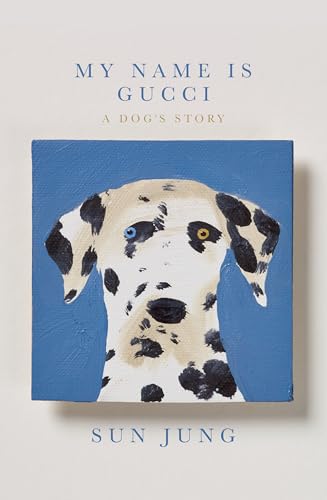
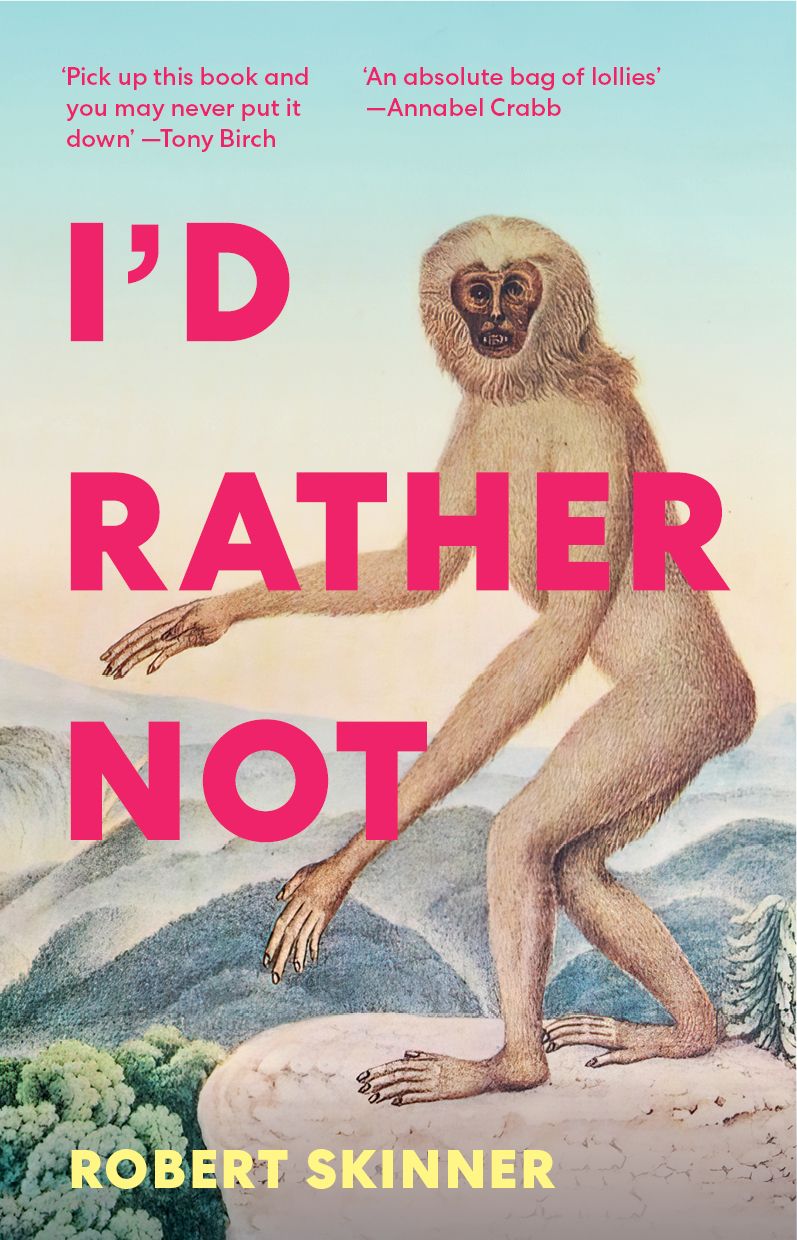
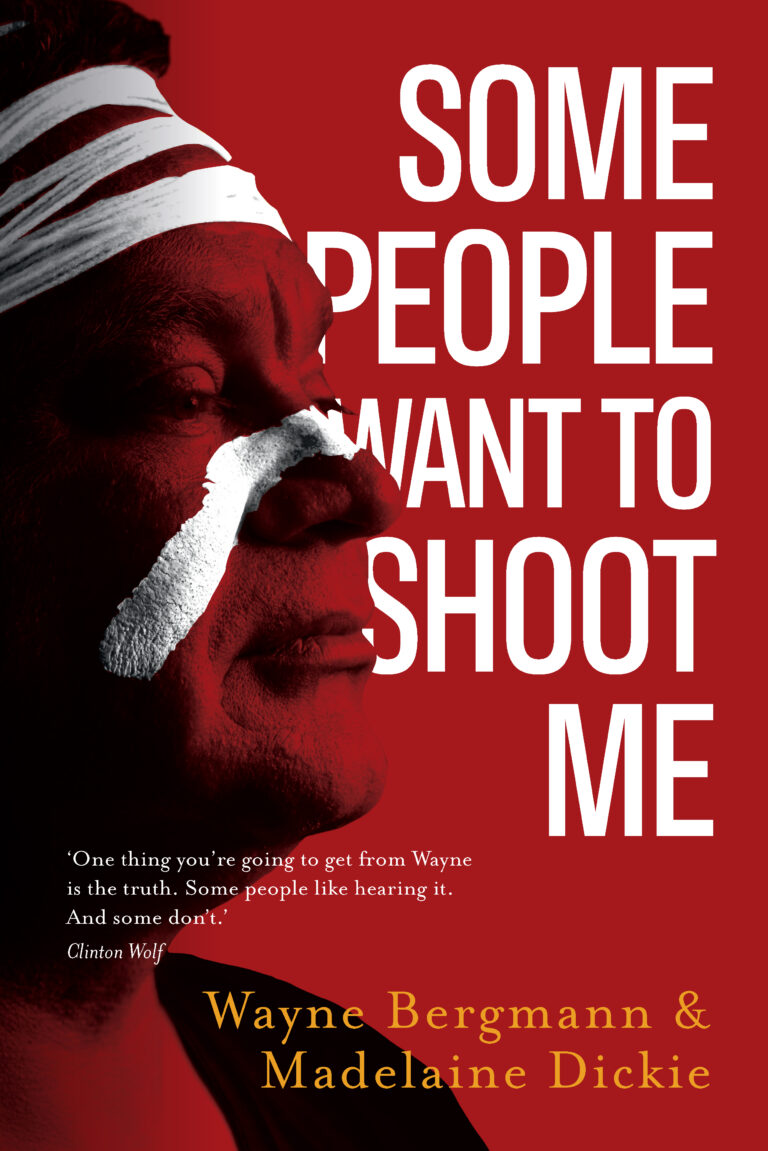
Book cover
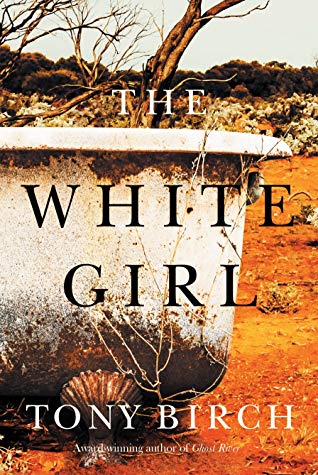
  • Tony Birch, The white girl (my review): a novel about Odette, a First Nations grandmother, who is determined to save her grand-daughter from falling under the control of white authorities.
  • Melanie Cheng, The burrow (my review): a novel about grief, and the role played by a rabbit and the grandmother in restoring some sort of balance.
  • Helen Garner, The season (my review): nonfiction/memoir about Garner’s spending a football season with her teenage grandson, and the insights she gains into boys and men (among other things).
  • Elizabeth Jolley, The orchard thieves (my review): a meditative novel in which a grandmother ponders the meaning of family and children, and quietly uses her wisdom and humanity to rebalance some family tensions.
  • Jeanine Leane, Purple threads (my review): a First Nations multigenerational story told by two girls, their matriarch grandmother Nan, and two aunts, all working together to forge an authentic and sincere way to live when you are “not the ideal colour”.
  • Eleanor Limprecht, The passengers (my review): dual narrative journey story of an American war-bride returning to her home after 68 years, with her 20-something Australian granddaughter.
  • Favell Parrett, There was still love (my review): a novel about two Czech sisters, one who ends up in Melbourne while the other remains in Prague, told mainly through the eyes of their grandchildren who learn that love can survive, that home is wherever you make it, and the importance of keeping on going.
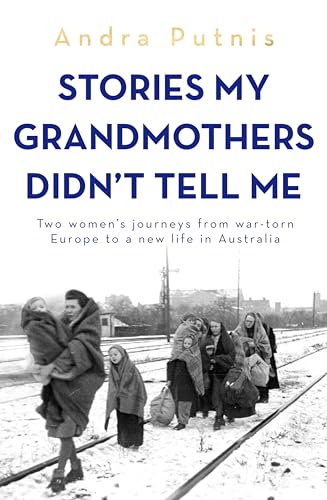
  • Andra Putnis, Stories my grandmothers never told me (my review): dual biography-memoir of the author’s two Latvian grandmothers, with reflections on her relationship with them.
Cover

Various themes recur here, including the offering of protection and support, showing resilience, and passing on traditions. While some of these stories are warm-hearted, none are sentimental. These grandparents tend to be real and flawed, with their own demons, but they also tend to offer, either directly or indirectly, some wisdom about how to keep on going, even when times are hard.

Now, do you have any favourite grandparent stories?

Monday musings on Australian literature: Les Murray Award for Refugee Recognition

Now THIS is something different for Monday Musings. Yes, it is Australian, but it’s not a literary award. Its full title is The Australia for UNHCR – SBS Les Murray Award for Refugee Recognition and, according to Australia’s UNHCR website, it “recognises and celebrates the contribution of refugees who are shining a light on the situation of forcibly displaced people”. The winner receives $10,000, which is donated by SBS, as part of their goal to promote positive awareness and understanding of refugees.

The site explains that the Award, which is supported by Murray’s daughters, Tania and Natalie Murray, is “offered in memory of Les Murray AM, the iconic sports broadcaster and much-loved host of The World Game on SBS television”. In other words, NOT Les Murray the poet. This Les Murray (1945-2017) was born László Ürge in Hungary, but fled Hungary with his family as a refugee in 1956, arriving in Australia in 1957.

Wikipedia’s page, linked on his name, says that he began work as a journalist in 1971, and was also lead singer of a small rock music group, The Rubber Band. He joined the Australian television station, Network Ten, as a commentator in 1977, which is apparently when he changed his name to Les Murray. He moved to Australia’s multicultural broadcasting service, SBS in 1980, initially as a Hungarian language subtitler, but soon turned to sports commentary – football, primarily. In 2011, he won the inaugural “Blogger of the Year” award at the FFDU Australian Football Media awards.

UNHCR says he used his public profile and his own refugee experience to advocate for refugee rights, and this, of course, is what’s behind these awards. To be eligible for the Award nominates must “have settled in Australia as refugees”; “demonstrate significant contributions to raising awareness of refugees and forcibly displaced people in Australia”; “be committed to continuing to engage the Australian public in support of refugees”; and be willing “to engage in Australia for UNHCR and SBS events” including participating in media coverage as requested.

The award was first made in 2022, and the winners have been:

  • 2022: Danijel Malbasa: former Yugoslav refugee, now “a powerful advocate, writer and lawyer”
  • 2023: Anyier Yuol: former South Sudanese refugee, recognised for “her diverse achievements across sport, women’s empowerment and refugee advocacy”.
  • 2024: Hedayat Osyan: a former refugee from Afghanistan, founder of a leading social enterprise that employs refugees in the construction industry

So, as I said, not a literary award per se. However, the 2025 winner, whom I read about in With You (Australia for UNHCR’s newsletter), is Huda Fadlelmawla, otherwise known as Huda the Goddess. She is an “internationally renowned slam poet”, hence her relevance to my Monday Musings.

Huda the Goddess

Fadlelmawla tells her story in With You (Issue 1, 2025, p. 7). I’ll provide a quick summary, but you can read it at the link. Her mother decided they should flee Sudan when Huda was 5 years old, because, under the dictatorship, her mother couldn’t work properly, put her daughter through school, help the family, or “even move around freely as a woman”. They spent 5 years in Egypt, living in poverty, before coming to Australia, when Huda was 10.

She writes of her mother’s telling her this was her chance to be what she wanted to be, and she was determined to take it. But, school wasn’t easy:

In school, I wasn’t good at English at all. Writing was just not my subject. But I had a very, very good teacher in Grade 7. She was the one who motivated me to master verbal language. She also asked me to do the graduation speech. It was the first time I was properly on stage. I thought I was going to throw up. I don’t even remember what I said, but I got a standing ovation from everyone.

After school, she started a nursing degree, but also started attending events. It was here that she saw/heard/met a poet named Anisa Nandaula, who encouraged her to do an open mic. She writes of the impact of the experience of doing open mics:

That was a time in my life when I didn’t know who I was outside of being smart and being a good oldest daughter, a good refugee. It was the first time it wasn’t about how good I was. It was about how I made people feel. I wanted to make people feel better – that was now my objective.

She must have been “good” because in 2021 she won the Australian Poetry Slam. She describes herself as “an improvised poet”, meaning she makes up her poems on stage. They are “not pre-written, edited” works. What she does is “deeply spiritual … deeply ancestral”. She talks about her activism as things she’s “had to do”, because, for her, “activists are not birthed out of choice … [but] … out of urgency … out of care … out of obligation”.

She wants to speak for her country and advocate for the youth. Refugees, she points out, do not need to be saved. Indeed, “sometimes they just need people to get the hell out of their way so they can rebuild countries that were taken from them”. She ends on this:

I am here for every Black girl who does not get to dream out loud. I have to stay in the room so that, when they step through the door, there is another Black face waiting for them.

That of course is the critical thing – for there to be role models, for us all to see people like us on the stage, in print, on TV, in art, and so on.

She will perform at Australia for UNHCR’s World Refugee Day lunch, Sydney, Thursday 19 June 2025. Click here for more info.

In the meantime, here she is on a UNHCR-published YouTube – and doing a TedX talk/improvisation a few months ago:

Art has been my greatest gift.
It is my greatest privilege.
It is my greatest weapon.

Have you either heard, or heard of, Huda the Goddess?

PS Oops, this is late. I scheduled it and then forgot to press the green button!

Monday musings on Australian literature: Stella Prize Shortlist 2025

I missed reporting on the Stella Prize shortlist when it was announced in April, which is unusual for me, but it was a busy time and I just didn’t get to it. It was well reported at the time, so I’m sure those who wanted to know didn’t miss the news.

Consequently, my aim here is not so much to share the shortlist – though I do want a record for my blog – but to value-add by sharing some resources that are available which might help those who are interested in checking out or reading the shortlist.

I’ll start, though, with the shortlist – for the record:

  • Jumaana Abdu, Translations (fiction, kimbofo’s review)
  • Melanie Cheng, The burrow (fiction, my review)
  • Santilla Chingaipe, Black convicts: How slavery shaped Australia (non-fiction/history)
  • Michelle de Kretser, Theory & practice (fiction, review coming soon but here is kimbofo’s review)
  • Amy McQuire, Black witness: The power of Indigenous media (non-fiction/essays)
  • Samah Sabawi, Cactus pear for my beloved: A family story from Gaza (memoir/non-fiction)

As Judging panel chair, Astrid Edwards, pointed out, this is the first time that all Stella shortlistees are women of colour:

“This year’s shortlist is consequential for Australian literary history, as it is the first time the Stella Shortlist features only women of colour. Now in its 13th year, these works showcase an incredible command of craft and understanding of our uncertain time. These works are riveting, and they stood out to the judging panel for their integrity, compassion and fearlessness.” 

The winner will be announced at 5pm on 23 May, at the Sydney Writers’ Festival, and will be live-streamed for those of us unable to attend.

Now, here are the value-adds:

  • Shortlist Films: Created by Stella, these short films feature actors presenting extracts from each of the six shortlisted books: Susie Youssef on Cactus pear for my beloved, Tiana Hogben on The burrow, Chika Ikogwe on Black convicts, Salme Geransar on Translations, Ella Ferris on Black witness, and Michelle Perera on Theory & practice.
  • Reading Guide: The ABC’s Kate Evans (The Bookshelf), Claire Nichols (The Book Show), Daniel Browning, Nicola Heath, Anna Kelsey-Sugg, and Declan Fry have put together a Reading Guide for the six shortlisted books. It briefly introduces the Stella, and then provides an overview of each book, along with links to some other content, such as a discussion about it on an ABC program.

However, Stella has created, for each shortlisted book, an almost one-stop-shop page that includes the judges’ comments, the short film, review excerpts with links to the full review, other av content where available such as from the ABC, and podcasts): Juumana Abdu’s Translations, Melanie Cheng’s The burrow, Santilla Chingaipe’s Black convicts, Michelle de Kretser’s Theory & practice, Amy McQuire’s Black witness, and Samah Sabawi’s Cactus pear for my beloved.

A related value-add: Early last year I wrote a Monday Musings on the Stella Book of the Month. Only three had been nominated at the time, but by the end of 2024 they had named ten (here). It looks like they may not be continuing the initiative this year.

Anyhow, I’d love to know if you are reading any of the shortlist, and/or your thoughts on the list.

Monday musings on Australian literature: 1952 in fiction (2), a national stocktaking

I said in last week’s Monday Musing, which was dedicated to (Kaggsy’s Bookish Rambling) and Simon’s (Stuck in a Book) 1952 “Year Club”, that I wouldn’t write about the ongoing issue of journalists and academics feeling the need to defend Australian literature, because I’ve discussed it before. However, I did read an interesting article on the wider issue that I thought worth sharing. Yes, I know the week officially ended yesterday, 27 April!

Bartlett on Aussie culture

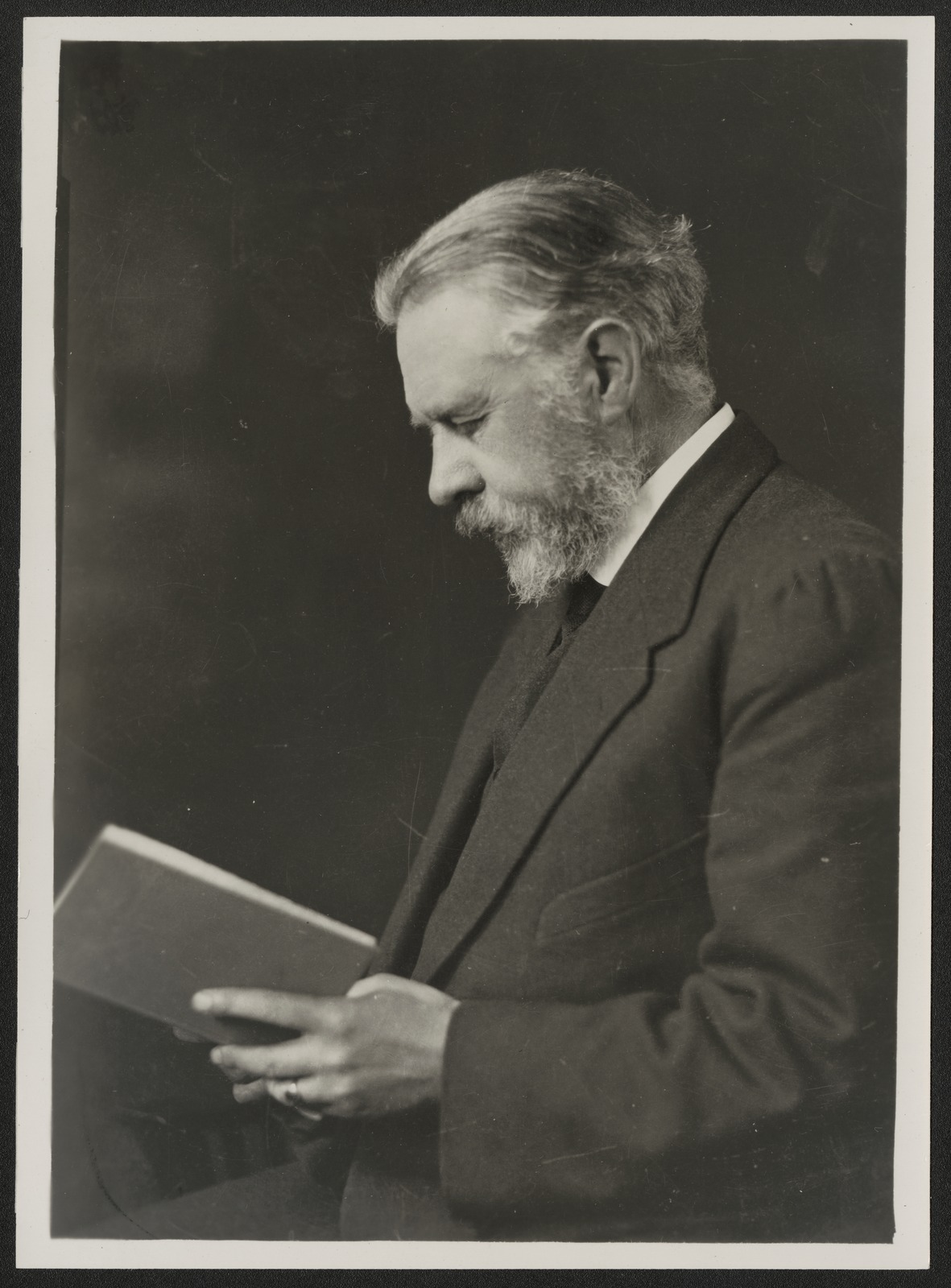
The article I’m talking about came from someone called Norman Bartlett. Born in England in 1908, he migrated to Western Australia with his parents in 1911, so he grew up Australian (albeit he did live in England again with his mother and sister between 1919 and 1924). According to the NLA’s Finding Aid for his papers, he studied journalism, obtained an Arts degree, and served with the RAAF in World War 2. In 1952, he was literary editor and leader writer for Sydney Daily Telegraph and Sunday Telegraph. The article in question was written in reflection of the 1951 Golden Jubilee of the Commonwealth of Australia.

Titled “Let’s take stock of Australian culture”, it appeared in the Daily Telegraph (5 January). Bartlett’s fundamental question was whether Australia had “grown up as a nation”. This meant, he argued, much more than things like “Dominion status, industrial development, the fighting reputation of the A.I.F., a record wool cheque, and prowess at tennis, cricket, and, with reservations, Rugby, football”. Yes, indeed! Rather, it means

maturity in art and literature; a distinct and original “way of life”; a quickened awareness of what being an Australian means; and why being an Australian is different from being an Englishman, an American, or a European. 

A national culture is much more than a cultivated minority’s appreciation of good books, pictures, music, and architecture. 

It is the way we — the majority — feel, think, act, talk, wear our clothes, play our games, and fight our wars.

When our literature, art, music, architecture, and philosophy reflect our national idioms and attitudes they become part of our national culture. Thus, a truly national culture is the expression of a particular people living in a particular place for a long time.

Of course, he doesn’t consider the nation’s original inhabitants in any of this, particularly when he says “originally, Australians were colonials. That is, slips from older stock transplanted into an initially alien soil”. I will just leave that thought, because we are talking 1952 and I think the best thing for us to do is to recognise this context in all he says.

His article aimed to analyse “whether we’ve taken root; whether we are making a collective, intelligent attempt to adjust ourselves to our environment; whether our environment reflects itself in our speech, attitudes, art, music, and literature”. He argues that by the late 19th and beginning of the 20th centuries, writers and artists were moving away from “writing and painting in the English style”. They were “beginning to wake up to the fact that Australians had grown different from the parent British stem”. Not only were writers like Henry Lawson, Joseph Furphy (“Tom Collins”), “Banjo” Paterson, A. H. Davis (“Steele Rudd”) expressing this difference in their stories and verse, but they were writing in “everyday idioms of the Australian people”, as Mark Twain had done in America.

He quotes American critic, C. Hartley Grattan, who argued that a fundamental characteristic of ‘this budding Australian literature was an “aggressive insistence on the worth and unique importance of the common man”.’ But, Bartlett says, with “the growth of a more sophisticated city life, many writers began to feel that aggressive semi-socialistic nationalism [as seen in many of the above-named writers] wasn’t enough”. Writers and artists like the Lindsays and Kenneth Slessor wanted to “liberate the Australian imagination from droughts, gum trees, drovers, and the wide-open spaces”. In 1923, they created a literary magazine called Vision, but soon, says Bartlett, the Lindsays’ romanticism, with its “bookish carnivalia rosy with the fumes of canary wine and cheerful with the seductions of full-breasted wantons … blunted itself on Australian realism”. Love this!

By the Jubilee, increasingly more Australian writers were “realising that life is where you look for it”. He said writers like Kylie Tennant, Frank Dalby Davison, and Xavier Herbert showed there was ‘still plenty of kick in the Australian “bush” tradition”‘ while those like Ruth Park, Dymphna Cusack, M. Barnard Eldershaw, and Dal Stivens, were “more interested in the cities”. He separates out Eleanor Dark, who, despite setting some of her novels in country towns, had “a sophisticated interest in character rather than place”. Overall, he argued, that Australia’s contemporary fiction writers were “more analytical than exultant about the Australian way of life”.

Bartlett also wrote about poetry, visual arts, music and, briefly, dance. You can read these thoughts at the link provided above. He concludes by stating that “Australians are a reading people”, who spent significantly more on books than Americans and Canadians. This rather quantitative conclusion doesn’t answer much in terms of his framing question. However, I liked his discussion of how the bush and city strands were playing out in mid-20th century Australian literature, and his assessment of contemporary writers being more “analytical than exultant” is what I’d like from our artists of all persuasions. What do you think?

Monday musings on Australian literature: 1952 in fiction

Once again it’s Karen’s (Kaggsy’s Bookish Rambling) and Simon’s (Stuck in a Book) “Year Club” week. This week, it is 1952, and it runs from today, 21 to 27 April. As for the last 7 clubs, I am devoting my Monday Musings to the week.

The 1950s represent the main period of the Baby Boomer generation (1945-1964), but of course, those born at this time had little to say about the literature of the period! Instead, Baby Boomers, of which I am one, are the product of times that were prosperous in the west (at least) but also overshadowed by the Cold War and its fear of a nuclear war. It was a conservative time, with men in charge, and women and other minority groups oppressed, which led to the various rights movements that appeared in the 1960s.

I wrote a post on 1954 when that was the Club’s year back in 2018, so much of what I found for that year, applies to 1952.

A brief 1952 literary recap

Books were, naturally, published across all forms, but my focus is Australian fiction, so here is a selection of novels published in 1952:

  • Martin Boyd, The cardboard crown (on my TBR)
  • Jon Cleary, The sundowners (read long before blogging)
  • Ralph de Boissière, Crown jewel
  • Helen Fowler, These shades shall not vanish
  • T.A.G. Hungerford, The ridge and the river
  • Rex Ingamells, Aranda boy AND Of us now living
  • Philip Lindsay, The merry mistress AND The shadow of the red barn
  • Colin MacInnes, June in her spring (aka Colin McInnes and Colin Thirkell; son of Angela Thirkell; primarily known as an English novelist)
  • Charles Shaw, Heaven knows, Mr Allison
  • Nevil Shute, The far country (read in my teens)
  • Colin Simpson, Come away, pearler
  • Christina Stead, The people with the dogs
  • E.V. Timms, The challenge
  • Arthur Upfield, Venom house

Two of these writers – Martin Boyd and Christina Stead – are recognised today as part of Australia’s literary heritage. Others are still remembered, and at least occasionally read, such as Jon Cleary (whose The sundowners was adapted to a film starring Robert Mitchum in the main Aussie role!), Arthur Upfield (whose novels were adapted for the Boney TV series , and Nevil Shute (who has been adapted mutilple times for film and television). T.A.G Hungerford is especially remembered in the West where there is an unpublished manuscript award in his name.

Born this year were novelists Janine Burke, Nicholas Jose, Larry Buttrose, John Embling, Suzanne Falkiner, and John Foulcher. Suzanne Falkiner edited the first book my reading group did back in 1988, an anthology of short stores by Australian women writers, Room to move.

Cover

There were not many literary awards, but the ALS Gold Medal went to T.A.G. Hungerford for his novel, The ridge and the river. Fourtriplezed who often comments here has reviewed it on GoodReads, noting that its racist language would not be acceptable today, but that it is nonetheless “a very “important and significant piece of Australian literature”. The Grace Leven Prize for Poetry went to R.D. Fitzgerald (whom I don’t know).

The state of the art

As for previous club years, I checked Trove to see what newspapers were saying about Australian fiction. There was the ongoing issue of writers/journalists/academics feeling the need to defend Australian literature, but I’ve discussed that often before, so will not focus on it here, because they essentially bring out the same arguments, including that Australia did have great writers, like Henry Handel Richardson, Christina Stead, and Xavier Herbert.

However, two issues, in particular, captured the imagination of the papers – the idea of banning “indecent” or “crude” literature for Australia’s youth, and the place of “red” or Communist literature in Australian society. These two issues in particular encapsulate much about 1950s Australia – its conservatism, and fear of Communism.

On “indecent” or “crude” literature

The main issue here seemed to be the influx of American comics and movies. It got a wide range of people excited, including First Constable Pat Loftus, Children’s Court prosecutor, and the visiting Mrs J. Kalker, a Dutch headmistress representing the International Montessori Organisation. North Queensland’s The Northern Miner (5 July) cited these two as urging parents to censor what children were reading and seeing. Mrs Kalker, for example, “was horrified to see so many Australian children going to picture matinees and reading comics” and said that “some films and comics are evil influences that contribute to sex crimes and delinquency”. She also said

Australian children were more intense, more restless, and more undisciplined than Dutch children.

Ouch!

On 9 July, in the Illawarra Daily Mercuryit was the state premiers who took up the cause. Indeed, “a magazine with a photograph of a nude woman on the cover was passed around the table at the Premiers’ Conference” during a discussion about “the undesirable comic books being imported into or published in Australia”. Tasmanian Premier, Mr. Crosgrove, wanted such books and comic magazines to “be passed by the censor before their distribution was permitted” but conservative Prime Minister Robert Menzies neatly side-stepped, saying that works published in Australia, to which Cosgrove had referred, was a State issue!

Meanwhile, in the same newspaper report we are told that Mr. Kelly, the N.S.W. Chief Secretary, had received complaints about children being “found during school hours examining indecent publications they kept hidden under their desks” and that he’d sought “legal advice whether a number of publications now circulating in N.S.W. could be regarded as indecent literature. Churchmen and others had represented to him that an evil existed through these publications”.

In August, there were reports in papers like Tasmania’s Advocate (18 August), about the Young Christian Workers’ Movement aligning itself ‘in the battle for a ban on the sale of indecent literature … especially the violent and sex-ridden U.S. “comics”.’ They were developing their own campaign, and were including in their sights an Australian nudist magazine.

The articles abounded, including another report later in the year from the Australian Council of School Organisations, but I think you get the drift.

On “red” literature

There was an earnestness about socialist literature at the time, one that led to what now seems like a narrow definition of what is “valid” literature. Joan Clarke, President Sydney Realist Writers, praised the Communist newspaper the Tribune (28 May), for “publishing so many of the winning poems and stories from the Literary Competitions run by the Youth Carnival for Peace and Friendship” but offered a criticism of two winning stories in the spirit of encouraging development. The authors of the stories aren’t named, but their stories failed in her eyes because, while they were in the approved “realist” style, one failed to identify the “larger reality” surrounding the issue at hand while the other failed to extract “the essential dramatic truth” (as, she says, Frank Hardy does in Power Without Glory).

This was the year that the Australasian Book Society, about which I wrote last month, was formed. Frank Hardy, a member of the Communist Party of Australia, was quoted by Queensland’s Maryborough Chronicle (25 October) as saying its aim was to “foster the country’s cultural literature”, and that “the best authors were people who would concentrate upon human and down-to-earth stories” – and these, the Society believed, were realist stories.

Of course, this was the 1950s and there was much anxiety about Communist influences. On 5 September, the Sydney Morning Herald reported on a little furore regarding Commonwealth Literary Fund grants. Apparently during the parliamentary Estimates debate, Liberal MP, Mr. W. C. Wentworth, and Labor MP, Mr. S. M. Keon charged that too many of the fellowships granted by the Fund had gone to Communists. The paper presented the arguments for and against, referencing past and present Prime Ministers, and identifying several writers who were accused of being said Communists, such as Judah Waten, Frank Hardy, John Morrison, Frank Dalby Davison, and Marjorie Barnard. It was a he-said-she-said type article, with no resolution, but concluded with a reply by Labor MP, Mr Haylen. The article closes on:

“There are certainly no Communists in the literary fund, whose leader is the Prime Minister himself.”

Mr. Haylen said members of the advisory committee had done an honest job. There had not been one book published under sponsorship of the committee that had the faintest tinge of Communist propaganda.

Politics never changes!

That will do for my brief introduction to 1952, unless I decide to share a little more next Monday!

Sources

  • 1952 in Australian Literature (Wikipedia)
  • Joy Hooton and Harry Heseltine, Annals of Australian literature, 2nd ed. OUP, 1992

Previous Monday Musings for the “years”: 1929, 1936, 1937, 1940, 1954, 1962 and 1970.

Do you plan to take part in the 1952 Club – and if so how?

Monday musings on Australian literature: Vale Kerry Greenwood

I was sorry to hear a few days ago that the Australian writer Kerry Greenwood (1954-2025) had died on 26 March, at the too-young age of 70. Her death was only publicly announced week ago, which is fair enough. Families have a right to grieve their loved person in private if they so desire. It appears she had been seriously ill for some years, but was still writing to the end. Once a writer …

Kerry Greenwood, The Castlemaine murders

Greenwood has appeared a few times on my blog, but more in passing – such as being the inaugural winner of the Davitt Lifetime Achievement Award in 2013 – than as a featured author. This is because she mostly wrote in a genre I don’t tend to read, crime fiction. She is best known for her Phryne Fisher historical crime detective series, which was turned into a very successful television series, and a movie. I saw both the series and the film, which is how I consume most of my crime, rather than through reading.

She was, however, a prolific writer, as you can tell from her Wikipedia page. She wrote across many forms and genres including mysteries, science fiction, historical fiction, children’s stories, and plays. She won many awards for her books, including Australia’s various crime awards, and a few children’s book awards. She was, from what I’ve read, as colourful, brave and inventive as her heroine.

Allen & Unwin, Greenwood’s publisher since 1997, wrote on Facebook that:

Kerry was a gifted writer, a generous spirit, and a fierce advocate for creativity, joy and justice. She brought us the iconic Phryne Fisher and Corinna Chapman—two unforgettable heroines who continue to inspire readers around the world.

Since 1997, we’ve had the honour of publishing her work, with over 1.4 million copies sold globally. A new Phryne Fisher novel, Murder in the Cathedral, will be published later this year.

The Guardian’s obituary shares more from Allen & Unwin, including that she’d said she “had two burning ambitions in life: to be a legal aid solicitor and defend the poor and voiceless; and to be a famous author”. She certainly achieved the latter, and I understand that as a lawyer she did her best to achieve the former. Melbourne’s Her Place Museum shared this little video on Facebook, in which she talks about her decision to become a lawyer. The beautiful obituary on her website, by her partner, the “Duty Wombat” (aka David Greagg), tells more about her legal work.

But, I’ll end with some words from Sue Turnbull’s obituary in The Conversation. Many of her books, she writes

sit within what has often been characterised as the “cosy” genre: a subgenre of crime fiction to which Kerry’s crime fiction certainly belongs. Until recently, cosy crime has tended to be underrated, compared to the kind of “gritty” crime fiction that wins accolades. 

This has obscured the achievement of crime fiction such as Kerry’s, in which historical and contemporary social issues are reflected back to us in ways that give us pause, even as they are presented in a form designed to entertain.

This is Kerry’s legacy: a wealth of entertainment with a heart. Her novels are provocations to care about social justice.

Many tributes are being planned, such as a screening of the outrageously flamboyant movie, Miss Fisher and the Crypt of Tears, at Yarraville’s Sun Theatre, on 16 April.

Vale Kerry Greenwood.

Monday musings on Australian literature: the Australasian Book Society

Back in 2023, I briefly mentioned the Australasian Book Society (ABS) in my Monday Musings post for the 1962 Year Club, adding that the society deserved its own post. Finally, here it is, albeit still introductory. There is a lot to research and tease out about this initiative, and I am not planning to write a thesis.

The ABS has a very brief page in Wikipedia, which tells us that it was a cooperative publishing society that ran in Australia between 1952 and 1981. It was co-founded in Melbourne by trade union leader and community activist George Seelaf, at the suggestion of novelist Frank Hardy.

In 2021, the ANU offered a Zoom seminar, titled “The Australasian Book Society: Making a Literary Working Class During the Cultural Cold War”, with Professor Nicole Moore, UNSW Canberra, as speaker. The promotion explained that one of the Society’s “masthead aims”, was

“To encourage mass participation in and responsibility for the publication of progressive Australian literature”.

According to the Zoom promo, it was “a mid-twentieth-century, book-club style, cooperative publisher with a subscription model that promised four books a year to members and distribution through unions, industry associations, education organisations and the communities of the organised left in Australia, including the communist party”. Wikipedia suggests that it was “perhaps a unique venture in Australian publishing history”. The Zoom promo explains that it produced “a long list of notable books by Australian, New Zealand and other regional authors through the polarised years of the cultural Cold War”, and was also a “conduit for Eastern Bloc publishers”.

However, there is apparently still much research to be done into “its model of production and the readership it mobilised”, into how successful it was in “creating a literary working-class readership”, and more. Hopefully someone is out there working on this.

In the meantime, I’ll share some things I found through Trove. Tribune announced the establishment of the society with much enthusiasm. On 28 May 1952 it said that

THE formation in Melbourne the Australasian Book Society is being widely hailed as an event of outstanding importance to every Australian reader and to all our serious writers. 

Six years later, on 4 June 1958, it carried an article by the writer and Communist, Judah Waten, who was the Society’s chairman. He believed strongly in the society and its value to Australian culture. He wrote:

FROM its inception the Australasian Book Society has taken an active part in the great contemporary battle of books and ideas between the forces of reaction and the forces of progress.

On the side of advancement, the ABS, as a co-operative organisation of writers and readers, has published books by writers who have endeavored to describe life truthfully and thus deepen our understanding of human relations and problems.

Unlike today’s fashionable writers who preach pessimism and man’s helplessness, the writers whose books have been published by the ABS look to the future as well as the past, arousing in their readers a determination to end the evil conditions which give rise to unhappiness. 

These writers, perhaps more than any other group of writers in the country, have continued the democratic traditions in our literature and are outstanding exponents of Australian realism.

Back in 1953, however, Melbourne’s more conservative Weekly Times (6 May) noted that not all readers who subscribed to the Society knew who was behind it:

Many people throughout Australia and New Zealand have joined the society unaware of its association with Communists. 

The society’s printed publicity said they would get “worthwhile books at the lowest possible prices.” Instead, they have got books by well-known Communist authors such as Frank Hardy. 

It doesn’t seem like the ABS hid its origins, but it probably didn’t shout it out either.

Anyhow, ten years after its inception, in 1962, the ABS was still going, and newspapers carried little tidbits of news about its achievements, such as:

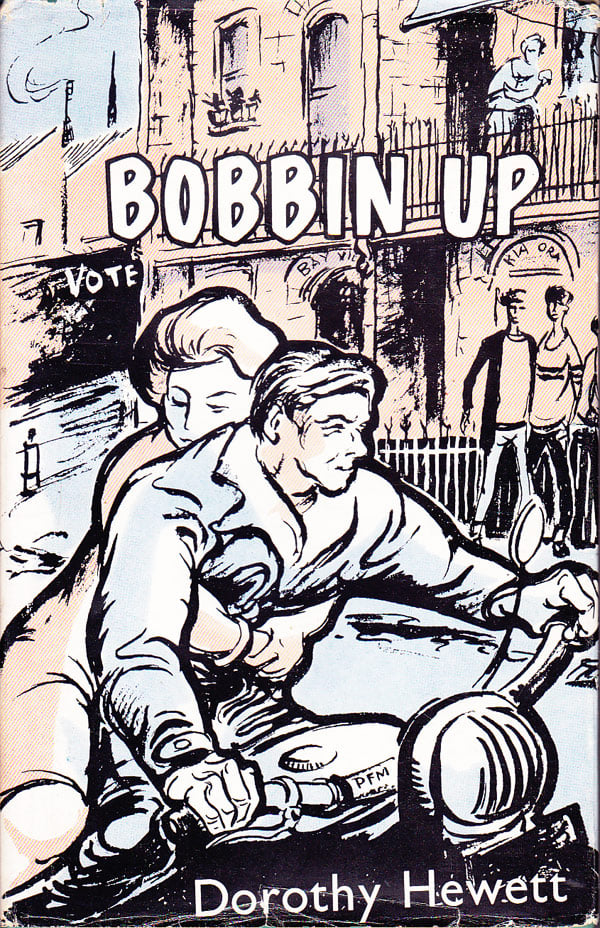
  • Many Australian books published by ABS were finding their way into foreign translated editions: Dorothy Hewitt’s Bobbin up (see kimbofo’s review), about women factory workers, had already been published in the German Democratic Republic, was soon to appear in a Rumanian edition, and Hungarian and Dutch editions were looking likely (Tribune 17 January 1962); Judah Waten’s Shares in murder, was being serialised in the New Berlin Illustrated magazine, with book editions being published in both Germany and Czechoslovakia, and a Soviet edition expected “at any time” (Tribune 7 February 1962). 
  • Gavin Casey’s Amid the plenty, was, according to R.T. (Canberra Times 24 March), a truly Australian novel that bucked the modern anti-colloquial world-aware trend. “Most of the self-elected realists in Australian writing spend too much of their time explaining their characters”, says R.T., but “Casey lets them explain themselves in rip-roaring, hell-for-Ieather, damn ’em all slang”.
  • Ron Tullipan toured northern New South Wales and southern Queensland with the secretary of the Australasian Book Society Jack Beasley to promote his book March into morning, which won the 1961 Mary Gilmore Award (Tribune 10 October 1962). Tullipan is recorded as saying that “Australian people are very interested in Australian literature — if it is sincere.”

As we move into the 1970s in Trove, there are still articles about books being published by the ABS, but I could find nothing in the 1980s about its demise. This could be because, for copyright reasons, fewer newspapers from more recent decades have been digitised.

I will close with a review from the Tribune (18 July 1979) of another book published by ABS, the memoir, Red letter days: Notes from inside an era, by the above-mentioned Jack Beasley. Beasley covers the writers he knew – including Judah Waten – but also the Society as a whole. Reviewer Bob Makinson discusses the pros and cons of an insider’s view, but suggests that “those who seek to examine Australia’s cultural-political history must be prepared to accept the value of studies like this”.

Makinson concludes:

The ABS has had more than its share of problems since its official formation if 1952. The founding members had different ideas about its aims: should it publish books with “progressive social content” oriented to a trade union readership, or promote Australian literature at a time when it was stifled by establishment publishers? 

He goes on to say that “The ABS was forced to answer these questions during a period of extreme red baiting and sometimes heavy handed interference from the left” and then, concludes – he’s writing in the Tribune after all, that “it came through and still provides many Australian writers with their first publishing break. Tribune readers who wish to join ABS or find out more about it should write to …. In a period of cultural confusion and struggle ABS is worth supporting.”

A fascinating part of Australian literary culture, and one that’s ripe for study.

Monday musings on Australian literature: on 1924: 2, New novels

Then as now, newspapers regularly announced new Australian novels as they are published. In these year-based series, I’ve not done a post specifically on the new releases, so have decided to do it for this year. This is not complete but contains books by authors who had some career longevity.

New novel releases

I’ve listed the books alphabetically by title, and have included some of the assessments made by the papers. I’m not including the books published by Bookstall, of course, because I listed them last week.

Dale Collins, Ordeal (Cornstalk Publishing): The Land (1 August) says that “it may be said without hesitation that Ordeal would be a remarkable and arresting story under any circumstances, but it is all the more remarkable for being a first essay in this class of fiction” (this class being, I think, a sea adventure). However, there are also reservations: “Occasionally the writer does not appear to be over-sure of his ground, and here and there we have lapses into excessive analyses of emotions, with a slight over emphasis of subtle suggestion, but on the whole the work is admirable. 

Zora Cross, Daughters of the Seven Mile (Hutchinson): Cross’s debut novel was praised, albeit faults were also identified by The Australasian (10 May): “It is not by any means a book without faults, but its merits are many and considerable, and most of them are to be found in the drawing of its characters. The scene is laid in Queensland, in the bush country outside a promising mining town, and the theme of the story is the difficulty of bringing two great forces into harmony, the call of the bush and the allurement of life in great cities.” The paper claims that with her first novel she has “won an important place in the ranks of Australian novelists”.

Ruby M. Doyle, The winning of Miriam Heron (Edward Dunlop): I wrote a recent Forgotten Writers post on Doyle, so I won’t say much. The Australasian (8 November) says that “its best points lie in the studies of bush life, with which the author is evidently familiar”. The plot “is slight”, but Doyle “shows a facile, kindly pen in dealing with the humorous type, and writes a straight, healthy story, that has less of morbidity than has the usual Australian bush tale”. The Advertiser (18 November) also admires her ability to write of the bush. However, The Queenslander (15 November), which also criticises the plot, concludes, interestingly, with “Miss Doyle appears to have attempted to graft something of the Ku Klux mystery into the character of the Australian bush, and so the story develops an atmosphere in places that is not Australian”.

Mabel Forrest, The wild moth (Caswell): According to The Advertiser (9 August), its strength is less its story as its descriptions of the bush. It concludes that “the vivid descriptions of the various phases of Australian life are its most enduring and attractive features”. 

Fergus Hume, The moth woman (Hutchinson): Hume is not Australian, but he did live in Australia for while, and published his detective novel The mystery of a hansom cab (my review) here, which made him of interest to Australians. The Australasian (26 January) says it is “written with a vigour and a freshness that a younger man ambitious of writing stories of the kind might envy” and that “the night life of London, the drug traffic, a mysterious murder following upon efforts to cope with the vices of the under world, provide thrills enough to satisfy the most blase reader of “shockers.” Then the little kicker: “Probabilities or possibilities matter little when one excitement follows on another, when the reader likes that sort of thing.”

DH Lawrence, ML Skinner, The boy in the bush
First US ed., Thomas Seltzer, 1924

D.H. Lawrence and M.L. Skinner, The boy in the bush (Martin Seeker): Bill and I have both written about Lawrence and Skinner’s collaboration so I won’t repeat that here, but The Australasian (1 November) says that it’s “not easy to decide where Mr. Skinner [except it’s not Mr.] comes in, since there seems to be not a page in the book that is not unmistakably stamped with Mr. Lawrence’s peculiar genius”. Overall, the reviewer is not overly impressed, saying “an irritating mannerism is the repetition, of certain words and phrases, particularly in the description of physical peculiarities. While at times the story is vivid and almost overwhelmingly powerful, it lacks somehow the vital spark”. The Advertiser (22 November), on the other hand, is positive about its humour and insight, and calls it “readable”, but also comments that “at times Australians may be inclined to resent some of the severer criticisms of habits, dress, and customs”.

Vance Palmer, Cronulla (Cornstalk): The Australasian (13 December) gives Palmer’s book fairly short shrift, saying it “will be read with interest by reason of its Australian setting and the act of its being the work of a leading Australian writer”. For the reviewer, however, this station-life story is “built on well-worn lines, and has nothing new to offer either in plot or treatment”.

A few points about this list. First, there is the focus on bush and rural stories. Only two, it seems, are not; one is a sea story, and the other set in London. Even though our population was well urbanised, the bush was how we differentiated ourselves – both to ourselves, and in marketing ourselves to others. Then, there’s the fact that women writers are well in evidence, which confirms again what we know about Australia’s literary scene from the 1920s to 1940s. And, finally, I notice here, as I frequently notice in these earlier Trove articles, a willingness to identify faults. The comments are generally not smart-alecky or cruel, just clear about what they see as strengths and weaknesses. In some cases they recognise that the identified weaknesses are not important to the readers. In other cases, they note that it is a new author who can work on the problem areas. I wonder how the authors felt.

Thoughts?

Previous posts in the series: 1, Bookstall again

Monday musings on Australian literature: on 1924: 1, Bookstall, again

During 2022 and 2023, I wrote a series of posts on Australian literature as it was read, and thought about, a century earlier, in 1922 and 1923. Last year, I researched 1924, with a view to doing the same, and in fact heralded the upcoming 1924 series, but didn’t end up writing any posts. This was partly because many of the concerns were the similar to those of 1923, and partly because other ideas overtook me. But there were some interesting things said, so, nearly a quarter of the way through 2025, I’ve decided to write at least a couple of posts relating to 2024, starting with the Bookstall Company’s Bookstall series of Australian fiction.

This series of cheap paperbacks of Australian novels, as I have posted before, were introduced to the Australian market in 1904. I featured them in posts on 1922 and 1923, and am here updating us with 1924’s output. The series continued to serve its purpose, it seems, of supporting Australian writers as well as of providing reading matter at an affordable price. The Queenslander, introducing two new books in the series, started its brief article on June 7 with:

Australian novelists owe a great deal to the New South Wales Bookstall Company, which, during the last few years, has published more than 200 novels by Australian writers. 

Sydney’s The Labor Daily made a similar comment on December 16.

As far as I can tell from the research I did, publication did slow down with significantly fewer books published in 1924 than in 1923. Here is what I found.

  • Roy Bridges, By mountain tracks
  • Ernest Osborne, The copra trader
  • S.W. Powell, The trader of Kameko: South Seas
  • Lilian M. Pyke, The harp of life
  • W. Sabelberg, The key of mystery
  • H.E. Wickham, The great western road

So, just 6 books, compared with 20 in 1923, and only one by a woman. (There may have been a few more, but it’s these six that kept popping up in my searches.) Most are adventures of some sort and most feature a “love interest”.

Bushranger stories were still popular at this time, even though the worst of the bushranger era had ended by the 1880s. Both Roy Bridges’ By mountain tracks and Wickham’s The great western road belong to this genre. That said, Bridges’ book is described in The Queenslander (7 June) as “a story associated with the Kelly gang, but the theme generally is that of a romantic love episode”.

Two of the books, those by Pyke and Sabelberg, seem to be contemporary stories, Pyke’s being a tangled story about a waif rescued from the arms of its dead mother on a Queensland beach, and Sabelberg’s a mystery/thriller.

Adventures in the South Seas were apparently making a come-back around this time, with Jack McLaren (who appeared in my 1923 post), Ernest Osborne and S.W. Powell all setting books there. Hobart’s World (12 February) wrote of Powell’s novel as being “full of incident and adventure, and aglow with the rich color of the South Seas. A good shilling’s worth.” This latter point was frequently mentioned in reviews of Bookstall books. Indeed the World, in the same article, said of Wickham’s novel that

“Most of the characters in the book are well-drawn, and convincing, and there are humorous episodes to relieve the tragedies, and compensate for the author’s rather marked tendency to waste words in trite moralisings, and in a too-conscious elaboration of dialogue. Just the same, it is a marvellous shilling’s worth.”

Most reviewers of these books understood their intention as escapist reads or, what we would call today, commercial fiction, and wrote about them within that context. They either praised the works – with one, in fact, describing Osborne’s novel as “brilliantly written” – or, where they were critical, they tempered it with this understanding, as in the Powell example above. However, a report in the Murray Pioneer and Australian River Record (5 December) was not so generous. Sabelberg’s The key of mystery, it said, “is a crude murder story, crudely written”; Powell’s The trader of Kameko, “is a story, with no literary merit, of a white man, two brown girls and a hurricane”; and Wickham’s The great western road “is a story of the early gold rushes in N.S.W. of the same crude character as the other two”. Of course, reviewers do pitch their writing to their audience. Perhaps readers of the Murray Pioneer and Australian River Record had more refined tastes, and more money to spend, and our writer recognised that?

Some newspaper articles noted that some of these writers had already developed their writing skills in other forms. Sabelberg and Wickham, for example, are described as established, successful short story writers, and Lilian Pyke as a writer of “capital” stories for boys and girls – all of which proves, I guess, the point about Bookstall’s role in supporting Australian writers. How better to cut your teeth as a novelist than with a company like this?

And I will leave 1924 on this point. Life has been very busy this last week … so I have not been able to pay as much attention to reading and my blog as I’d like, but I do hope to post a review this week.

Monday musings on Australian literature: Forgotten writers 10, Ruby Mary Doyle

Unlike my last forgotten writer, Dulcie Deamer, today’s writer, though a prolific contributor to newspapers in her day, has slipped into the shadows. Neither Wikipedia nor the Australian dictionary of biography (ADB) contain articles for her, but the AustLit database does. As with many of my Forgotten Writers articles, I researched and posted a versions of this on the Australian Women Writers’ site.

Ruby Mary Doyle

Ruby Mary Doyle (1887-1943) wrote short stories and serialised novels, newspaper articles including travel and nature pieces, and plays, mostly publishing as Ruby Doyle or Ruby M. Doyle. Much of her writing was published in Fairfax’s weekly magazine, The Sydney Mail. By the 1930s she had, says AustLit, gained a reputation as a writer of some standing. She was also active in the Lyceum Club and the Pioneer Club in Sydney. And yet, there are no articles for her in Wikipedia or the Australian Dictionary of Biography.

Doyle was born on the 20 February 1887 in Gunnedah, New South Wales, to Joseph McCormick Doyle, a bank manager for the Commercial Bank, and Annie (née Hooke). She was the first of six children. In 1935, in an article titled “The making of the writer”, Doyle wrote of how she came to writing:

As a child, when I walked through the bush, well behind the family party, every tree seemed an enchanted castle. Birds, butterflies, flowers talked, and I understood them. Imagination — that blessed gift from the gods — had come to me from every side of my family, and finally led me, whether I would or not, into the realm of writing.

According to Kingston, of the Dungog Historical Society, her first published serial was The Dragon, which appeared in The Sydney Mail from 4 June 1913, and was later published in book form as The mystery of the hills. Promoting the book form, which was published in 1919, The World’s News wrote that:

Those who love a story which is thoroughly and typically Australian and of the country will enjoy this tale of love and adventure … The “mystery” we shall not, of course, say anything about, except that it has to do with men who defy the law and have a chief, who is a man of importance. There are several love stories, and they have the usual course, and there is quite a fund of information as to how we Australians live in the country, and how we manage to enjoy ourselves there. 

This little piece says much about how Australia saw itself. “How we manage to enjoy ourselves there [ie “in the country”]” suggests that Australia was well on the way to urbanisation, but fascinated by its bush self.

Further stories and serialisations appeared, including The winning of Miriam Heron in The Sydney Mail in 1918, which was published in book form by Edwards Dunlop in 1924. Announcing this new serial in 1918, The Sydney Mail wrote:

She [Doyle] has already contributed to the ‘Mail,’ and has disclosed literary and dramatic ability of a high order. It is gratifying to note that she shows no disposition to ‘write herself out.’ On the contrary, ‘The Winning of Miriam Heron’ reveals that she has mastered the art of construction, and thus gives her readers a better chance than previously to fully appreciate her literary powers.

From 1924 to 1926, Ruby travelled overseas a few times – to the United Kingdom, the continent, Canada and America – during which time she regularly submitted travel articles to the Dungog Chronicle, which, according to that paper, “were reprinted in many country papers throughout the State.”

Doyle wrote for local papers through the 1920s and 1930s. AustLit lists over 30 works of hers published over this time. She also tried her hand at playwriting. Kingston writes that her play The Family Tree came second in a competition at the Independent Theatre, Sydney, in 1933, and that the following year, The Man from Murrumbidgee, was produced at the Kursaal Theatre, also in Sydney. I believe these are the same play, given The Man from Murrumbidgee is about a status-seeking wife who tries to find “a worthy ancestor” on the family tree.

Doyle’s writing reflects the versatility of the working writer. Her short stories dealt largely with domestic subjects, while her serialised novels included historical stories about the colonial days, and romantic adventure stories. Her non-fiction focused particularly on nature, travel and local history, rather than on social or political commentary. Many of her local history pieces drew on her own family’s long history in the region, and include some delightful touches of humour. For example, she describes a pioneer family (hers it seems), coming out to Australia in 1828 with various things, including merino sheep and

rolls and rolls of beautiful silks, Mr. Hooke having an idea that he would be able to deal successfully in such merchandise. It proved only a supposition, and for the rest of her life Mrs Hooke had a marvellous collection of silks from which her dresses were made. 

There is also some recognition of the original people of the land. Writing in The Sydney Mail 1931 on the town of Gresford, she says that:

Most of the homes in the vicinity bear English and Welsh names — Norwood, Clevedon, Goulston, Camyr ‘Allyn, Caergule, Penshurst, Tre vallyn, etc. The river, named Paterson by the white man, was called Yimmang by the aborigines; one of our poets has written a very beautiful poem, “Ode to the Yimmang,” in which he extols its beauty.

Ruby Doyle was regularly written up in the local Dungog Chronicle, clearly being of interest to the community. She went to England, again, in 1935, planning to be away for two or three years. On 1 March, the Dungog Chronicle,reported on a farewell for this “gifted novelist”, and named Flora Eldershaw – one half of the M. Barnard Eldershaw collaboration – as a co-guest at the event. This suggests Doyle was known to the literati of her time. Doyle died in England in 1943, having never returned home again. A small obituary appeared in various local newspapers, including The Gloucester Advocate (see under Sources). The obituary noted her three published works, but also commented on her writing overall, commenting in particular that

a keen observer of nature, she had the gift of translating her thoughts on paper in an easy readable way.

The piece I posted for the Australian Women Writers Challenge is titled “The flame” (linked below). It is an intriguing story about a disgruntled wife, and invites – particularly from modern eyes – a variety of readings. I’d love to hear your thoughts.

Sources

  • Miss Ruby Doyle, The Gloucester Advocate, 12 January 1943 [Accessed: 14 January 2025]
  • Ruby Doyle, “The flame“, Sydney Mail, 24 July 1935 [Accessed: 3 February 2025]
  • Ruby M. DoyleAustLit [Accessed: 3 Feb 2025]
  • Maureen Kingston, “Was Ruby Doyle our first local travel writer?”, Dungog Chronicle, 25 August 2021 [Accessed via the NLA eResources service: 3 February 1924]