Monday musings on Australian literature: Dame Mary Gilmore Award

In last week’s 1962-themed Monday Musings post, I mentioned that I would post separately on the Dame Mary Gilmore Award. This was because it has an interesting history.

Mary Gilmore, 1927 (Public Domain, State Library of QLD, via Wikipedia)

First though, a bit on Mary Gilmore, for those who don’t know here. She was an Australian writer and journalist, best known as a poet. One day, I will write separately on her, but for now, I will just say that she was highly political, and was part of the utopian socialist New Australia colony set up by William Lane in Paraguay. I wrote about this in another Monday Musings back in 2015.

Gilmore lived a long life, dying in 1962 (in fact!), at the age of 97. She was involved in socialist and trade union movements, and wrote for Tribune, the Communist Party of Australia’s newspaper, though she was apparently never a party member. Her political interests are relevant to the award.

The Award has been known by different names since its creation in 1956 by the ACTU, the Australian Council of Trade Unions. According to AustLit, it was called the ACTU Dame Mary Gilmore Award, and its goal was, ‘to encourage literature “significant to the life and aspirations of the Australian People”‘. Over the years, says Wikipedia, it has been “awarded for a range of categories, including novels, poetry, a three-act (full-length) play, and a short story”. Reading between the lines, I assume this means it was more about content than form.

Since 1985, it has been confined to poetry – to a first book of poetry, in fact – and since around 2019 has been managed by ASAL, the Association for the Study of Australian Literature. Its specific history, I must say, is not particularly clear, but at some time its name was simplified to the Mary Gilmore Award. It was awarded annually until 1998, was then biennial until 2016, but now seems to be annual again. It’s a good example of the challenge to survive that many awards face. The Wikipedia article linked above lists the winners from 1985 to the present.

Pre-1985

It’s the early years of the award that I’m most interested in, mainly because they are less well documented. I’ve tried various search permutations in Trove and have found scattered bits of information, some of which I’ll share here. My first comment is, Wot’s in a name?

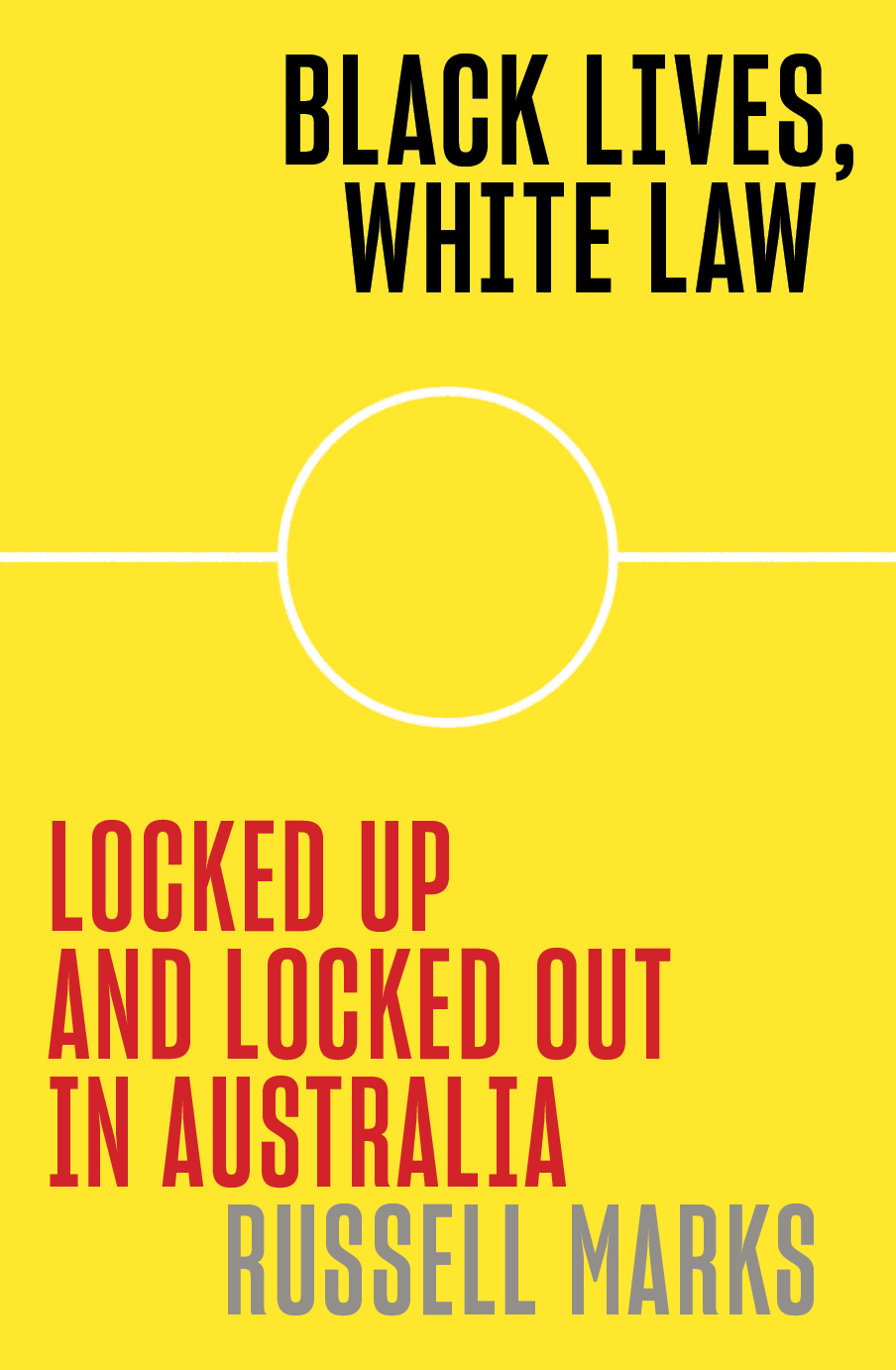
I have not found a formal announcement of the award, unless this advertisement in the Tribune of 21 March 1956, the year the award was apparently established, is it. It calls the award the Mary Gilmore Prize, and says submissions should be made to the Victorian May Day Committee. The May Day Committee isn’t the ACTU, but they are closely related, and both support workers’ rights. Indeed, the Victorian May Day Committee page notes that “The labour movement and the trade union movement should continue to build this day as it is the working people’s day”.

Anyhow, the ad invites submissions to the “May Day competitions” and then says that “the best three stories and the best three verses will be eligible for consideration for the Mary Gilmore Prize of £50”. It sounds like May Day literary competitions were already established – the prizes were small, just £5 and £3  – but now a bigger prize was to be offered in the name of Mary Gilmore. And, this year at least, short stories and poetry were the chosen forms. The ad also says that:

The short story and verse most favored by the judges will be those best expressing the aspirations and democratic traditions of the Australian people.

Then, on 12 December 1956, the Tribune announced that “two Mary Gilmore Literary Competitions have been announced by the May Day Committees of Melbourne; Sydney, Brisbane and Newcastle”. For May Day 1957, the “Mary Gilmore Literary Competition” would award prizes for the “first and second short stories and poems, in each of two classes”, meaning four prizes in each class. Class A was for “established” (or )published writers, and B for “new” writers. For May Day 1958, they offered the “Mary Gilmore Novel Competition”, with “a substantial prize, to be announced later” for the “best novel submitted”. The overall announcement added that:

The judges will prefer stories and poems which deal with the life and aspirations of the Australian people.

You can see how tricky the history of awards can be. I have to assume this is the “ACTU Dame Mary Gilmore Award”.

The next mention I found – and I could have missed some – was from the Tribune of 6 January 1960, which, announcing some new publications from the Australasian Book Society, included

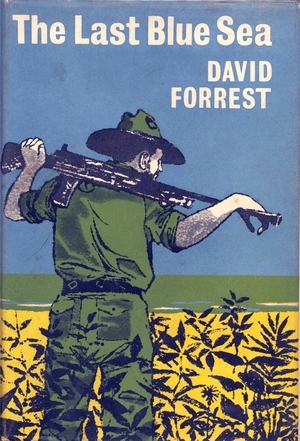
Available now, The last blue sea – David Forrest (Winner, Dame Mary Gilmore Award). 

Interestingly, it’s a World War II set story.

Then, again in the Tribune, but this one, almost two years later on 13 December 1961, there is a report on a reception for Ron Tullipan who had won “the 1961 Dame Mary Gilmore Award for his novel, Rear vision“. It’s quite an extensive report which includes references to Jack Beasley, who was “one of the judges of the competition, which is sponsored each year in association with May Day celebrations”. He was concerned about the suggested takeover of the publisher, Angus and Robertson, by Consolidated Press. Read the article if you are interested. The report also noted that:

The Dame Mary Gilmore Award was probably unique in the capitalist world, and a real contribution to Australian literature.

On 22 August 1962, the Tribune announced the presentation of the Dame Mary Gilmore Awards for “poetry, novels and stories”. The winners were Jack Penberthy’s story, “The Bridge”, and Dennis Kevans’ poem, “For Rebecca”. Mysteriously, no novel is named. This report also helpfully names past winners of the award, but without more detail – Joan Hendry, Vera Deacon, Ron Tullipan, Dorothy Hewett, Hugh Mason, and David Forrest. Dorothy Hewett is probably the only one of these still known today.

This article also shared that the Award’s National Chairman, George Seelaf, believed that “in a few years they would be the major literary competitions in our country” but “still more financial support from more unions” was “urgently required”:

“Trade Unionism has always been strongest and literature has always been strongest when writers and unions were closest together. We will encourage writers who tell of the life and aspirations of the  Australian people”.

Don’t you love this conviction about the value of literature?

Also in 1962, another Tribune article (5 September), quotes the Dame herself. She didn’t attend the presentation, but the paper reports

that she was particularly glad to learn of the high standard and the large number of entries. “The more writers, the better expressed will be the thoughts and wishes of Australians,” she says. 

The Canberra Times – for a change – reported on 29 September 1962 that Ron Tullipan had won the “Mary Gilmore Award” with his “hard novel”, March into morning (which I described in my last Monday Musings). Is this the novel not mentioned in Tribune’s August report?

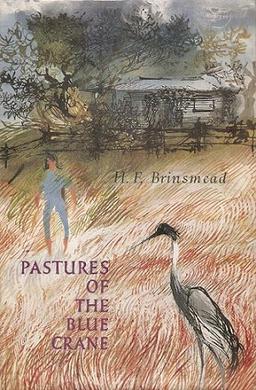
I found more award-winners from the 1960s, and they are interesting in terms of form. In 1963, for example, Hesba Brinsmead’s manuscript of the children’s (young adult) book, Pastures of the blue crane, won. That year, the “Mary Gilmore Award” was for a children’s book, with a second award for a book by a teenager. (Tribune 16 January 1963). In 1967, Pat Flower won the “Dame Mary Gilmore Award” for her hour-long television drama, Tilley landed on our shores. By then, the award was worth $500.

More work needs to be done on this, but it looks like the Dame Mary Gilmore Award Committee would decide each year what the award was for, rather than make it always open to multiple forms. The 1964 award, for example, seems to have been for a novel, while the 1966 one was for poetry. Whatever, the point is that all through this era of the award, the trade unions were behind it, until – well, I haven’t discovered yet how that aspect of it ended. But, what an interesting award.

Thoughts?

Monday musings on Australian literature: 1962 in fiction

Once again it’s Karen’s (Kaggsy’s Bookish Rambling) and Simon’s (Stuck in a Book) “Year Club” week. This time the year is 1962, and it runs from today, 16th to 22nd October. As has become my practice, I am devoting my Monday Musings to the week.

The 1960s was an exciting decade for those of us who lived it. Change was in the air, and we truly thought we were making a fairer society. (Little did we know.) Wikipedia describes it thus:

Known as the “countercultural decade” in the United States and other Western countries, the Sixties is noted for its counterculture. There was a revolution in social norms, including clothing, music (such as the Altamont Free Concert), drugs, dress, sexuality, formalities, civil rights, precepts of military duty, and schooling.

I was in primary school in 1962, and my life was simple and stable. It wasn’t until the mid to late 60s that I became caught up in the excitement in the air. This is not only because I was a bit older, I think, but because the momentum was still building in the early part of the decade. However, there were hints of change in my 1962 research. But, let’s start with the books …

I found books published across all forms, but given my focus is fiction and I want to keep things a bit tight here, I’m just sharing a selection of 1962-published novels:

  • James Aldridge, A captive in the land
  • Thea Astley, The well dressed explorer (Lisa’s review)
  • Elizabeth Backhouse, Death of a clown
  • Martin Boyd, When blackbirds sing (Lisa’s review)
  • Patricia Carlon, Danger in the dark
  • Gavin Casey, Amid the plenty
  • Nancy Cato, But still the stream
  • Jon Cleary, The country of marriage
  • Robert S. Close, She’s my lovely
  • Frank Clune and P.R. Stephenson, The pirates of the brig Cyprus
  • Kenneth Cook, Chain of darkness
  • Dymphna Cusack, Picnic races
  • David Forrest (pseud. for David Denholm), The hollow woodheap
  • Catherine Gaskin, I know my love (Brona’s review)
  • Stuart Gore, Down the golden mile
  • Helen Heney, The leaping blaze
  • George Johnston, The far road
  • Elizabeth Kata, Someone will conquer them
  • Eric Lambert, Ballarat
  • Joan Lindsay, Time without clocks (Brona’s review)
  • David Martin, The young wife
  • John Naish, The cruel field
  • John O’Grady, Gone fishin’
  • Nancy Phelan, The river and the brook
  • Criena Rohan (pseud. for Deirdre Cash), The delinquent
  • Donald Stuart, Yaralie
  • Geoff Taylor, Dreamboat
  • Ron Tullipan, March into morning
  • George Turner, The cupboard under the stairs (Lisa’s review)
  • Arthur Upfield, The will of the tribe

Children’s literature was going strongly at the time, with books published by authors still remembered as writers of our children’s classics, such as Nan Chauncy, Ruth Park, Ivan Southall, P.L. Travers, and Patricia Wrightson.

There were very few literary awards at the time. The ALS Gold Medal went to Vincent Buckley’s Masters in Israel, and for the first time since I started taking part in the Year Club, the Miles Franklin Award was in existence. It was shared by the Thea Astley and George Turner novels listed above. There was also, though Wikipedia doesn’t list it, the ACTU Dame Mary Gilmore Award, but I plan a special post on it, so watch this space.

Writers born this year are mostly still around though I haven’t reviewed many: Matthew Condon, Alison Croggon (my post on her memoir), Luke Davies, and Craig Sherborne. Deaths included the novelist Jean Devanny and poet Mary Gilmore. The librarian Nita Kibble (for whom the Nita B Kibble Awards – now seemingly in abeyance – were named) died this year, as did the critic HM Green.

The state of the art

Of course, I checked Trove to see what newspapers were saying about Australian literature, and fiction in particular, and will just share two threads I found.

First Nations Australians

With the devastating loss of The Voice referendum here last weekend, I would like to start with some First Nations (or Aboriginal) Australians that came up in my Trove travels, which mainly involved references to writers including Aboriginal characters in their books. One was Helen Heney (1907-1990) whose father was the first Australian-born editor of the Sydney Morning Herald. Heney wrote several novels – plus social commentary, translation and a biography – but the one published in 1962 was The leaping blaze. It is set in a station in western New South Wales, which is now in the hands of the latest generation, the “spinster” Evangeline Wade. The Canberra Times’ reviewer (January 5, 1963) explains that Evangeline has been frustrated through her life, and now wants power over others. Part of her plan is to create an “aboriginal station on her property as. an experiment”, but this plan, says our reviewer, is “motivated more by a desire to gain further power than it is to further native welfare”. Unfortunately, our reviewer continues, the novel lacks a clear focus, which 

is a pity because Miss Heney is essentially a writer of ideas. She is not just telling a story. / She is obviously out to give her views on a number of sociological problems but the canvas is too large for anything more than a casual sketching of them.

The other novel I want to share is Yaralie by Donald Stuart (1913- 1982) which tells “the story of the daughter of a white father and a half-caste mother, and the people among whom they live”. The Nepean Times’ reviewer (October 11) writes:

Told with a good deal of warmth, the story is set in a native settlement in north-west Australia during the depression and deals with the ever-present problem concerning the treatment of the aborigines in a white Australia.

Donald Stuart is new to me, but seems worth following up. His work is sure to be dated now we have First Nations people telling their own stories, but he’s part of a tradition. Wikipedia says

Stuart attempts to view the world from the Aboriginal point of view, making him one of the few Australian writers, along with anthropologists such as T.G.H. StrehlowCharles Pearcy MountfordRonald Berndt and Catherine Berndt, to even attempt to come close to a personal knowledge of Aboriginal people.

Realist literature and The Australasian Book Society

The main thread I found through Trove, however, concerned communist writers and realist literature. This emphasis might be partly due to the fact that Trove’s content in this period is somewhat skewed as the Australian Communist Party’s newspaper, Tribune, has been digitised, because, like The Canberra Times, they have given permission despite still being under copyright. 

However, before I searched Trove, I had already noticed the significant number of authors in the list who were Communists – often members of the Communist  Party of Australia (CPA) – or Communist-sympathisers, so the slant may be real to some degree! Anyhow, what these writers tended to write were realist (or social realist) novels, the preferred genre for Communist writers. 

It was clear from several articles that these social realist writers felt under-appreciated at home. The Tribune regularly reported on the success of Australian social realist writers overseas. On January 17, the Tribune wrote that CPA-member Dorothy Hewett’s realist 1959 novel, Bobbin Up, about women in a spinning factory, was “becoming a novel of world repute” with translations being published, or to be published, in the German Democratic Republic, Rumania, Hungary and, very likely, the Netherlands. 

And on February 7, under the heading “Success despite critics”, the Tribune advised that another book by an Australian Communist author was garnering interest overseas ‘despite class-prejudiced criticisms by Australian daily press “experts”.’ Progressive authors like Katharine Prichard, Frank Hardy, Dorothy Hewett, and Mona Brand were being published overseas, it said, and now they’d heard Judah Waten’s Shares in murder, “a murder story that is different because of its social exposure content” was to be serialised in New Berlin Illustrated, and published in book form in Germany, Czechoslovakia, and, they expected, the Soviet Union.  

It is this very Judah Waten who, in another article, is scathing about Australia’s literary darlings of the time. On March 28, again in the Tribune, he wrote:

In Australia today the writers who are acclaimed in the daily press, win awards and prizes are those distinguished for the obscurity of their prose, their irrational characters, their dream symbolism, parallels to ancient myths, feudal attitudes and pornography.

Who are these writers? Patrick White? Hal Porter? Thea Astley too perhaps?

I also noticed that many of the books praised in the Tribune were published by the Australasian Book Society, so I went hunting, and found a seminar was held about it in 2021.  The seminar promo described the Society as

a mid-twentieth-century, book-club style, cooperative publisher with a subscription model that promised four books a year to members and distribution through unions, industry associations, education organisations and the communities of the organised left in Australia, including the communist party. It sought to find readers who did not read literature and to develop writers who did not yet write it.

Fascinating. In 1962, this Society celebrated its 10th anniversary … but, like the Dame Mary Gilmore Prize, I think it deserves its own post.

Meanwhile, just to show that not all my research ended up at the Tribune, I’ll close with a review from The Canberra Times of Ron Tullipan’s novel March into morning, which was published by the Australasian Book Society in 1962, and won the Dame Mary Gilmore prize. It tells the story of a man “who started life as a ward of the State and was hired out to a slave-driving cocky, whose only interest in him was how to exploit him”. Writing on September 29, reviewer G.C.P. says it

may sound like one of those hopeless novels whose authors are only concerned to spit into Authority’s eye and point out wickedness in high places. / Fortunately, it is not, and reads more like an honest piece of reporting.

G.C.P. assesses its strengths and weaknesses, and concludes that “it is not great literature, [but] it is a very readable book”. Judah Waten would probably see this as damning it with faint praise! 

Sources

  • 1962 in Australian Literature (Wikipedia
  • Joy Hooton and Harry Heseltine, Annals of Australian literature, 2nd ed. OUP, 1992 (with Bill’s help)

Previous Monday Musings for the “years”: 1929, 1936, 1954 and 1940.

Do you plan to take part in the 1962 Club – and if so how?

Monday musings on Australian literature: Shortlist for the inaugural 20/40 Prize

Last November, I announced the creation of the new 20/40 Publishing Prize by the wonderful (and local-ish to me), independent, non-profit publisher, Finlay Lloyd. Now, eleven months later, the awarding of the inaugural prize is imminent, with the shortlist being announced last Friday and the winners to be announced on 28 October.

But, just to recap, 20/40 is a manuscript award, with the prize being publication. It is not limited to debut or young or women or any other subgroup of writers, as some manuscript awards are. However, it does have some criteria, in addition to looking for “writing of the highest quality”. The submissions can be fiction or non-fiction, must be prose (but “all genres … including hybrid forms” are welcome), and must be between 20,000 and 40,000 words (hence the award’s name, the 20/40 Prize). They aim to choose two winners, each year. In the communication I received last week about the shortlist, Finlay Lloyd publisher and commissioning editor, Julian Davies, says:

Our passion for creating this opportunity for writers and bringing their work to the reading public will continue next year and, we hope, for many more.

That’s great to hear … and we can do our bit to help by buying and reading the winning published novels.

And now, the Shortlist

You can read a brief description of the six works at the announcement link above, so here I will provide some brief author information that I have found online.

  • Roger AverillSlippage: freelance researcher, editor and writer, with four books published by Transit Lounge – Exile: The lives and hope of Werner Pelz (Lisa’s review), the memoir Boy he cry: An island odyssey, and two novels, Keeping faith and Relatively famous (Lisa’s review).
  • Rebecca BurtonRavenous girls: editor, and author of two young adult novels, Leaving Jetty Road and Beyond Evie, both published by HarperCollins Australia.
  • Rachel FlynnNew moon rising: author of children’s picture books and novels, including the I hate Friday series, published by Penguin.
  • Kim KellyLadies’ Rest and Writing Room: author of 12 , mostly historical fiction, novels, most if not all published by Brio Books.
  • Jane Skelton, Breathing water: writer of poetry, short fiction and novels, published by Flying River Press, Rochford Press, Spineless Wonders and others.
  • Olivia De ZilvaHold on tight: writer and poet.

Julian Davies explains on the shortlist page that the works were judged blind.

The judging panel for the inaugural prize comprised Katia Ariel (author and editor), Christina Balint (whose novella, Water music, I’ve reviewed), John Clanchy (novelist and short story writer whom I’ve reviewed a few times), Julian Davies (the publisher and also an author whom I’ve also reviewed a few times), and Stefanie Markidis (writer and researcher).

When I first announced this prize last November, I noted its relevance to Novellas in November. So, I am thrilled about the timing of this announcement, because you can pre-order the two winning novellas at the Finlay Lloyd site, for a special discounted price of $43.20 (instead of $24 each). A bargain. And, if you’ve never read a Finlay Lloyd book before, you won’t be disappointed I’m sure in the artefacts themselves, as publishing good writing in beautiful packaging is what they do. Pre-ordered books will be shipped on announcement day, October 28, giving you time to read one or both by the end of November! I plan to.

Monday musings on Australian literature: Spineless Wonders

For a small, specialist, independent publisher, Spineless Wonders has appeared on my blog more times than you might expect, sometimes in passing, sometimes as the publisher of an author I’ve reviewed, and a few times in posts on publishing and publishers. All that, I’ve decided, has earned them their own post.

The first – and main – time I mentioned Spineless Wonders specifically was back in 2013 in a Monday Musings on Specialist Presses, in which they were one of five presses I chose to introduce. I said then that I thought they’d been established around 2011 – and I added an aside that I wished all organisations would include at least some history on their websites. Well, they have now confirmed on their About page that they were indeed founded in 2011 by Bronwyn Mehan.

Who is Bronwyn Mehan?

Like other keen Aussie litbloggers, I know the names of several publishing company CEOs (or directors or managers, or whatever they are called), particularly at the small presses, but Bronwyn Mehan is not one of them. So, I went searching, and didn’t find much, but there was something on SPN, the website for the Small Press Network. Her entry there is not extensive, but it tells us a few things. It says, not surprisingly, that she “looks for innovative ways to connect Australian authors with new audiences, collaborating with artists and organisations engaged in multi-media and performing arts”. “New” audiences is so important to those of us who believe in the value of the arts, isn’t it?

Anyhow, it also said that in 2018, she spent a month in New York as part of a Publishing Fellowship researching trends in multi-platform publishing. She has also been a peer assessor for the Australia Council Literature Board and in 2021 she took part in the Australia Council’s (now Creative Australia) Future Form program. As far as I can tell it’s a “leadership program” intended to help small to medium arts organisations “transform and innovate their core business model”. And that’s about it, except that I did read elsewhere that she also writes – short and long fiction, and poetry.

What is Spineless Wonders doing?

At the time of my 2013 post, they described themselves as being “devoted to short, quality fiction produced by Australian writers … [to] brief fiction in all its forms – short story, novella, sudden fiction and prose poetry”. And, as I explained, their name referred to the fact that they delivered their publications “to readers via  smart phones and laptops”, but they did (and do) also in print and audio forms. Since, then, however they have expanded further, to, in their words, “a short story production company working collaboratively with authors and artists across many disciplines to get short fiction out into the world – everywhere”.

What does this mean? These initiatives, from their About page, give you an idea:

  • Performed Fiction: Since 2014, they have produced something they call Little Fictions (originally known as Spineless Wonders Presents… a short evening of tall stories). They describe this as a “unique literary event” involving short stories being read by actors to a live audience. Inspired perhaps by poetry readings? In 2017, the City of Sydney invited them to produce a series of these for their Late Night Library program. Ongoing funding from this has apparently enabled them to create something they call Off the Page, which is a multi-media platform for performed short fiction. Sounds wonderful to me.
  • Storybombing: In 2016, they formed an interdisciplinary artists’ collective called #Storybombing, which aims “to find innovative ways to activate public spaces with short Australian fiction curated and produced” by themselves. Examples of the initiatives include stories spraypainted onto pavements, installed in retro pushbutton phones, or projected onto buildings. They say you can find examples on their #storybombing tab, but I see there’s nothing there since 2020 so maybe this is a victim of COVID.
  • Microflix: In 2018, they established the Microflix Awards and Festival, which aimed “to encourage more Australian filmmakers to use work by Australian authors, to reward excellence and creativity in film adaptations and to champion the importance of the writer, and the original text, in the filmmaking process”. Sounds great as short stories make perfect starting points for film. Just look, for example, at how many short stories by Somerset Maugham have been adapted to film. However, around 2021, this initiative ended, but they note on their website that they had partnered with SF3 to continue to encourage collaboration between writers and filmmakers.

What these initiatives tell me is that Spineless Wonders is an innovative company with a clear goal to support short (including micro and flash) fiction. It’s also clear that this is not easy, but that the company is active, flexible, and willing to pivot where they can to achieve their goal. The goal is clearly the thing.

If you look on their home page, you will see in their side-bar other activities and initiatives, like their Es-Press imprint, their work In Translation, and their Audio Lounge. It’s inspired and ambitious, though looking at the dates when things have happened, I suspect these things happen somewhat in fits and starts, but they are clearly exploring every angle they can to get creators works to readers, listeners, and viewers.

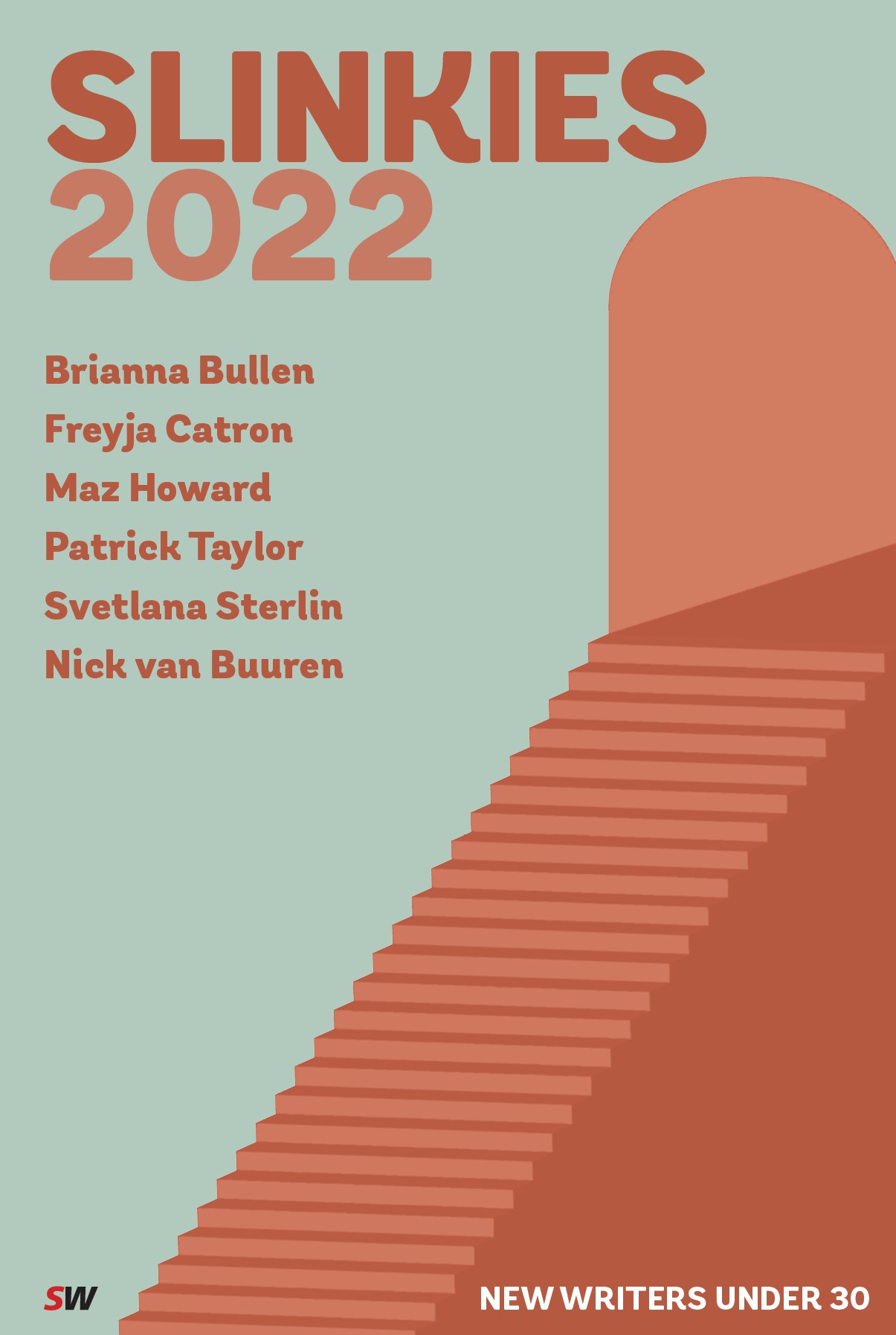
You will also see a link to Opportunities and Awards. These include a current call for “startling stories set in Sydney’s past” for Imaginative Recreation – Sydney. There are talks and masterclasses to help creators “invent stories drawn from the archives”, and submissions are due by midnight 17 December 2023. This is where you will also find the Carmel Bird Digital Literary Award, but it seems to be in abeyance at the moment. It was funded by the Copyright Agency. They did run again this year, though, their Slinkies Competition for writers under 30. This results in an anthology, and Slinkies 2023 can be pre-ordered now.

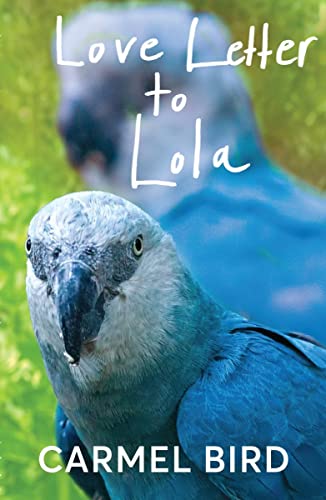
Meanwhile, though, Spineless Wonders continues to publish short stories, of which I’ve reviewed a few – two collections by Carmel Bird (The dead aviatrix and, most recently, Love letter to Lola) and the anthology The great unknown edited by Angela Meyer.

And, their YouTube channel has some current content, which provides another opportunity to get to know them.

My point overall, though, is that here is a publishing company working in a challenging form – short fiction – in a way that is inventive and always looking for new ways of reaching people. And, twelve years after being founded, they are still here.

Monday musings on Australian literature: Introducing Uninnocent landscapes

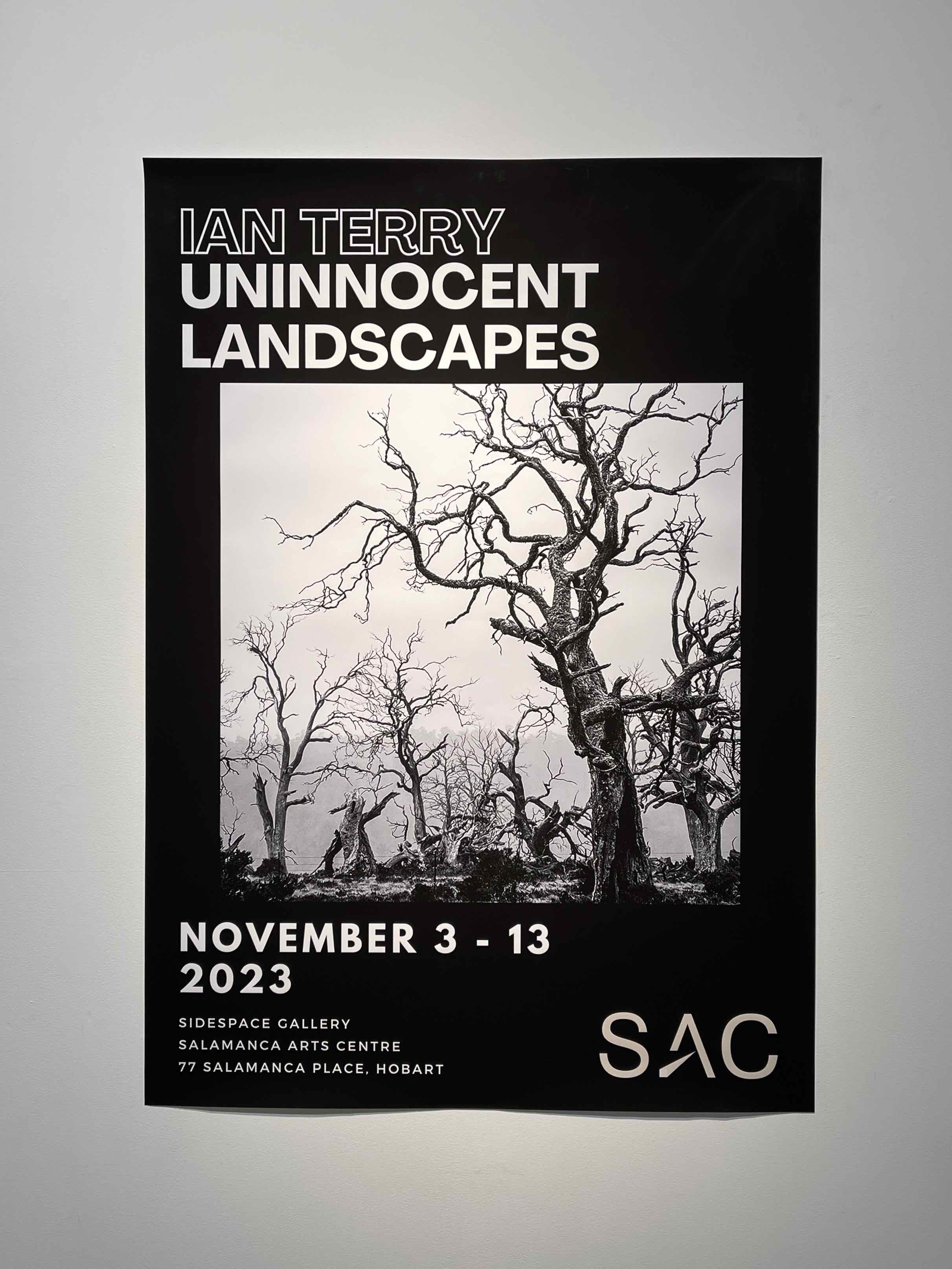
You heard it here first – or, first(ish) anyhow, as the webpage is up and orders are already coming in for a new, beautiful book, Uninnocent landscapes: Following George Augustus Robinson’s Big River Mission. Yes, I admit it isn’t out yet so I haven’t actually seen it, but I know it is beautiful because I’ve seen some of the content over the years, and I’ve seen the cover on the website. It looks stunning.

Of course, I’m biased because the creator is my brother, Ian Terry. However, it goes without saying that I wouldn’t be writing this if I didn’t feel his project was worthwhile.

So, the project … Ian introduces his motivation on the publisher’s website:

Without invasion, colonisation and the near destruction of lutruwita’s First People, without Robinson’s ‘Friendly Mission’, I would not have had the opportunity to feel so much at home on this island. This is a reality that, as much as we might try to ignore it, non-Indigenous Tasmanians cannot escape. How do we come to terms with our privilege and its Janus face, the violent and continuing dispossession of palawa/pakana?

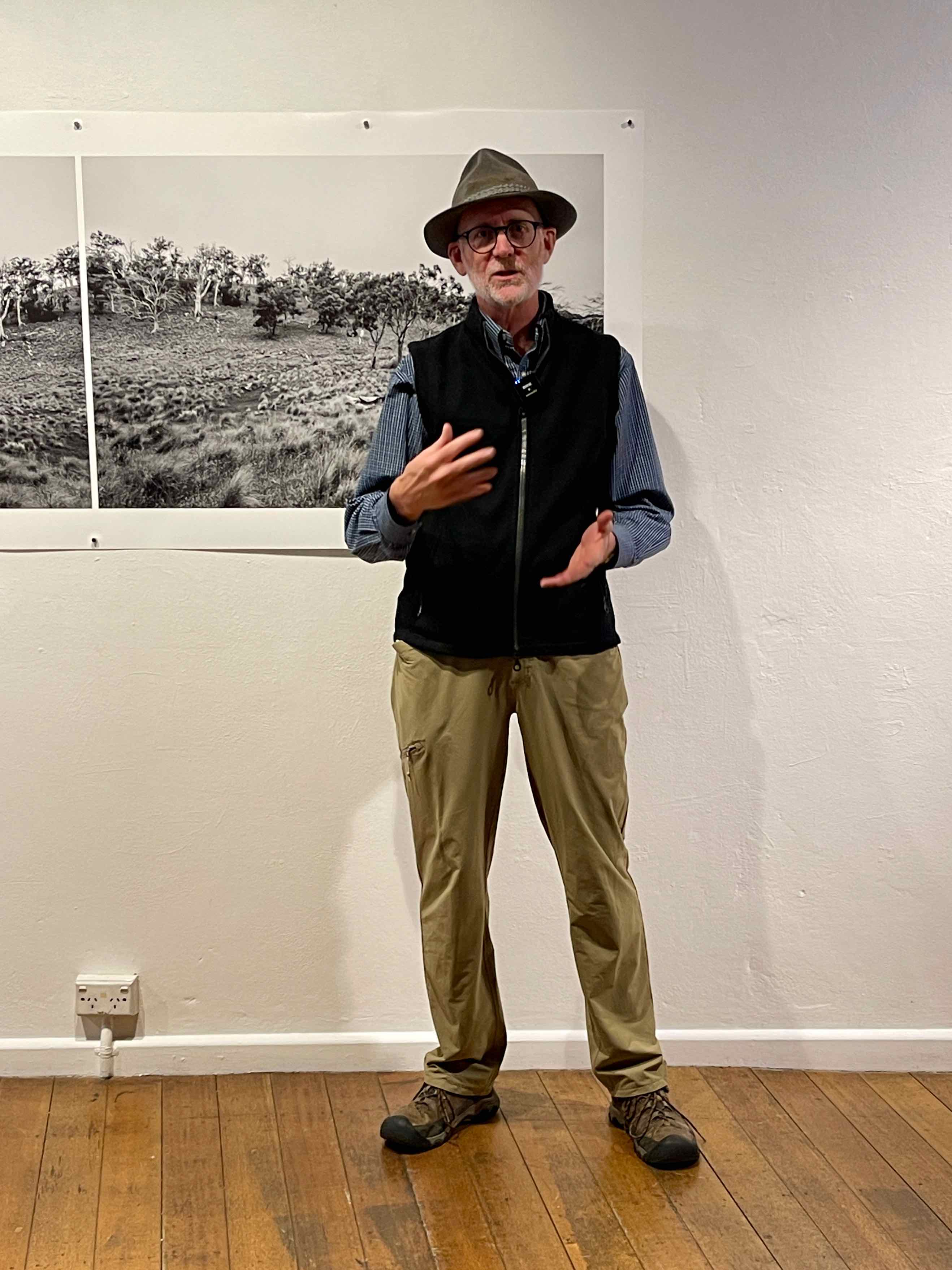
Now, Ian’s last job before retirement was a senior curator of history at the Tasmanian Museum and Art Gallery, during which time, among other things, he mounted exhibitions on First Nations history. He has, for nearly three decades, been an active and contributing member of THRA, the Tasmanian Historical Research Association. History was his undergraduate major, and in the early 1990s he complemented these studies with a Graduate Diploma in Cultural Heritage Management, after which he began working as a freelance history consultant – in lutruwita/Tasmania. History, you could say, is in his blood – and was not going to stop flowing after he retired. Enter the project …

But first, I need to add that in addition to his love of history, Ian has been a photographer since early adulthood. Way back in the the fall of 1983, he joined Mr Gums and me on a road trip through New England and Eastern Canada. We all took photos, but Ian was the one who would climb the hill behind the gorgeous white-spired church, or run across the bridge to the other side of a pretty river, to get the best shot. That interest has never waned and he has honed his skills to the point that he is now achieving recognition in photographic competitions.

This project, which involved his following the steps of George Augustus Robinson’s 1831 Big River Mission (brief description), combines these two passions. It has required historical research to identify Robinson’s movements and actions. It also called on Ian’s negotiating skills when, for example, he needed to enter private property to take the desired photos. It used his well-developed bush skills when he needed to explore more difficult landscapes. And, it depended on his photographic skills because photographs form the core of the book.

Of course, Ian’s tracing of Robinson’s path was not aimless. As the above-linked publisher’s website says, he had various questions in his head as he worked through his project, questions like

What memories do the landscapes of lutruwita/Tasmania hold? What stories are embedded in the rocks, the trees and grasses, the waters of rivers and lagoons? What could the landscape tell us about invasion, colonisation and the destruction of First People’s life and culture? What could it tell us about our own lives here on this island?

Uninnocent landscapes, the book, comprises a selection of Ian’s photographs documenting the landscape in a way that also expresses his ideas about it. It also contains an introduction by Tasmanian art historian, curator, essayist and commentator on identity and place Greg Lehman (a descendant of the Trawulwuy people of north-east Tasmania), and four essays, one by him and three he commissioned from:

  • Rebecca Digney (manager, Aboriginal Land Council of Tasmania)
  • Roderic O’Connor (woolgrower and Connorville custodian)
  • Nunami Sculthorpe-Green (activist/artist and proud palawa and Warlpiri woman)  

I can’t wait to see and read it – and, isn’t it a great title?

Ian with our mother, 2017

But wait, there’s more … there is also Uninnocent landscapes, the exhibition. It will feature large-scale archival prints from the book, and will be held in the Sidespace Gallery at Salamanca Arts Centre in nipaluna/Hobart from 2–14 November 2023. I will be there at the opening.

Uninnocent landscapes is published and distributed by OUTSIDE THE BOX / Earth Arts Rights under their imprint An Artist’s Own Book, and will be available from early November. It costs $65, and all proceeds will go to the Aboriginal Land Council of Tasmania’s Giving Land Back fund. You can preorder here.

To fully disclose: Ian did not pay (or even ask) for this announcement, but he is accommodating me (I hope) on my trip to lutruwita to attend the exhibition opening!


Monday musings on Australian literature: Series or standalone?

I started my recent post on Shelley Burr’s crime novel Ripper with a statement that crime novels are often written in series and that I am not a big series fan. Ripper looked at the start to be a standalone novel, but a few chapters in the protagonist from her first novel Wake appears. From then on, his voice is irregularly alternated with the novel’s main voice. But, more on that anon.

When I started reading Ripper, then, and thought it was going to be a standalone novel, I considered starting my post with singing the praises of standalones, but then, finding it wasn’t as it seemed, I shelved that issue for another day – like today. I did a little browser searching on the topic and found some useful discussions. They included ideas I’d considered, but some new ones too.

This topic is not specifically Australian, but there are many Australian crime novelists, and most of the ones I know, which is a smidgeon of what’s out there, write series. Crime is not the only genre in which series are common, of course, but it’s the one I’m using to exemplify the issue.

Here is a small selection of Australian crime, mostly authors I have reviewed or would like to read:

I have also read some Australian stand-alone crime – Emily O’Grady’s The yellow house and Emily Maguire’s An isolated incident, being examples. These are more likely to be promoted as “literary crime” as against “genre crime”, though the distinction is loose and not necessarily helpful.

Anyhow, here are some ideas on the subject…

On series

Dorothy Johnston, Through a camel's eye

My non-preference for series is based on a few things, the main one being that I read to hear different voices in different settings about different people, places and ideas. Series novels tend to be set in the same place and milieu, with some continuing characters. Another reason is that I like to be challenged by different approaches to story-telling a story, but series novels tend to follow a formula. It might be a good formula, the writing and characterisation might be great, but it risks becoming familiar rather than challenging or exciting.

These reasons relate in fact to what the Kill Zone named as the single biggest advantage to a series, for both writer and reader. Series, they say, provide “comfort food for the imagination”. However, they also recognise the risk that series can become formulaic.

Another issue for me is the amount of backstory that novels in series tend to include. I guess that’s for readers who start a series in the middle, but if you have read the previous novels, it can be irritating. The Kill Zone suggests that this backstory aspect is a challenge for writers too: “How much backstory does the author include in subsequent books without boring the dedicated series fan or confusing the mid-series pick-up reader?” Good question. The Career Authors site looks at it this way: “You want to make sure,” it says, “that each series title is a potential standalone, so that you can tell readers you don’t have to read my books in order!”

British crime writer Carol Wyer writes about the work involved in writing a series. She says:

You’ll need to know your characters inside out, especially those who will appear in each book, and you must continue their personal stories, weaving them in between each storyline and… you need a theme, one that permeates each book and links them all. It must be something that hooks your readers, so they will want to read the next book, maybe another overriding storyline or simply reader investment in each of your main characters.

She has “notebooks and manilla files” for every character, recording their likes and dislikes, how they pronounce things, and so on. The Career Authors site also describes in some detail what writing a series involves for an author. You can’t kill the main character off, for example!

Still, says Wyer, “the rewards are huge” because authors are usually bereft when they end a book and have to “say goodbye to the characters”. With a series they don’t have to!

On standalone

Emily Maguire, An isolated incident

I’ve already implied why I like standalone novels. The Kill Zone, looking at it particularly from the series author’s point of view, says that “the advantage of writing a standalone … is it can bring on a breath of fresh air for you and the reader”. A standalone, that is, lets a writer explore or experiment with new approaches, techniques, subjects, and it lets the reader see new talents in a loved writer. However, the Kill Zone warns writers to not stray so far from their norm that their fans won’t recognise them.

On a Kindle discussion board, I found the warning that “standalone genre novels can be harder to sell”.

Happy mediums

Series vs Standalone looks like an either-or situation, but, is there a happy medium? Well, yes, there is. One is the approach that Shelley Burr took in Ripper. It is set in a different location, and has a different main protagonist, but the protagonist from her first novel plays a subsidiary investigating role from another location. The Kill Zone, in fact, suggests something like this when it recommends that authors could “touch on something” in their new book that had “appeared in a previous series”.

Dervla McTiernan, The ruin, book cover

The other idea, one that has a foot firmly planted in both camps is the “trilogy”. While she didn’t frame it in terms of this debate, Dervla McTiernan, in the meet-the-author event I attended, said about writing her Cormac Reilly trilogy, that she didn’t want to write a long procedural series, because they tend to be episodic without overall narrative arcs. She wanted to challenge her character Cormac; she wanted him to have a narrative arc which would see him changed by the end. That said, she did admit that Cormac might re-appear some time in the future!

Some sources

I found a few discussions on the internet that made some good points regarding the series vs stand-alone debate. The main ones were the Kill Zone blog (a joint blog), Carol Wyer, and Career Authors.

I’d love to hear your thoughts, whether you are author or reader. Do you prefer one or the other, or don’t you care? Over to you …

Monday musings on Australian literature: Elizabeth Webby (1941-2023)

This might be a first for me, an obituary-style post for an academic/literary scholar rather than for an author. However, this post seemed appropriate as, Elizabeth Webby, who died last month, is someone whom I’ve mentioned several times in my blog due to her having written in areas that are of interest to me. Specifically, these areas were colonial Australian literature and contemporary Australian writers, particularly women writers. I heard about her death from the Association of the Study of Australian Literature, for which she was a founding member and of which she was President from 1988 to 1990.

A significant legacy

Julieanne Lamond, current president of ASAL and co-editor of its online journal, Australian Literary Studies, has posted a tribute to her on ASAL’s website. It is well worth reading, because it outlines her major roles and achievements, which include her being Professor of Australian Literature at the University of Sydney from 1990 to 2007. This involved her “supporting works of scholarly infrastructure including the AustLit Database, numerous scholarly editions, and the online Australian Poetry Library”. I have often used AustLit (albeit much of the content is paywalled) and the Australian Poetry Library (which seems not to be currently available, perhaps due to lack of ongoing support?) Webby also edited the Southerly literary journal for over a decade.

However, my “experience” of Webby has also been more specific. While I had come across her before, I became seriously aware of her through The Cambridge companion to Australian literature (1996), which she edited. This book is a little different from those “companion” style books which contain alphabetic encyclopaedic entries related to their chosen topic. Rather, it comprises essays which provide a partly chronological, partly thematic, survey of Australian literature starting with “Indigenous texts and narratives”. It works, in other words, more like a text book or history than a reference book. I often dip into it, when I am researching specific aspects of Australian literature, and find it sometimes useful sometimes not, depending on how well my particular interest has been covered.

However, I had came across Webby earlier via her essay on colonial poets in Debra Adelaide’s A bright and fiery troop (1988), which is another book of essays on Australian literature, but this one limited to 19th century women writers. It’s another book I often dip into when researching earlier writers.

Both these books, though, were in my ken before I started blogging. Skip a couple of decades to 2018 when I wrote a Monday Musings post titled Literary culture in colonial Australia drawing on Webby’s work. It was fascinating research, both for what she found and for the sorts of sources she used and their varying levels of completeness. Then in 2021, I wrote another Monday Musings on the Irish-Australian poet, Eliza Hamilton Dunlop (1796-1880), using research by Elizabeth Webby and another academic, Anna Johnston. These are just two examples of Webby’s work but, as Lamond of ASAL writes, her research interests spanned the breadth and depth of Australian literature, from early colonial literature, through early 20th century writers like Miles Franklin and Barbara Baynton, and mid-20th century ones like Patrick White, to those more contemporary to her own times like Frank Moorhouse, Elizabeth Harrower and Joan London. She was also, apparently, a loved and respected teacher, academic supervisor and mentor.

All this is important and significant, but another measure of who she was can be found in the funeral notice for her in the Sydney Morning Herald where can be found the following request, “In lieu of floral tributes, please consider a donation to the Indigenous Literary Foundation”. Presumably that was her own request – or from her family based on their knowledge of her passions. Either way, it’s the icing on the cake. Vale, indeed, Elizabeth Webby.

Monday musings on Australian literature: 2023 Mark and Evette Moran Nib Literary Award shortlist

Occasionally, as you know, I use my Monday Musings post to make awards announcements, particularly if the announcement is made on Monday, as this award usually is. And so it happened again today, a Monday, that the shortlist for this award was announced.

I have written about it before and so if you are interested to read about its origins and intentions please check that link. In a nutshell, it celebrates “excellence in research and writing”, and, like the Stella Prize, it is not limited by genre. However, given its research focus, nonfiction always features heavily.

The new thing, though, that is worth sharing in today’s post is that in April this year, Waverley Council which manages the award announced that the winner’s prize had doubled in value from $20,000 to $40,000, thanks, they say on their website, “to an ongoing multiyear commitment by the award’s principal sponsors, Sydney philanthropists, Mark and Evette Moran, Co-Founders/Co-CEOs of the Mark Moran Group”. This is a significant prize. The Council’s announcement also said that it had “also increased the People’s Choice Prize to $4000 and will be offering six shortlist prizes of $1,500 each”.

The Award is also supported by community partner Gertrude and Alice Bookshop and Café.

The judges for the 2023 award are Katerina Cosgrove (author), Jamie Grant (poet and editor), and Julia Carlomagno (publisher).

The 2023 shortlist

  • Alison Bashford, An intimate history of evolution: The story of the Huxley family (family biography, Allen Lane)
  • André Dao, Anam (debut novel, Hamish Hamilton) (Brona’s review)
  • Jim Davidson, Emperors in Lilliput: Clem Christesen of Meanjin and Stephen Murray-Smith of Overland (dual literary biography, The Miegunyah Press)
  • Fiona McMillian-Webster, The age of seeds: How plants hacked time and why our future depends on it (science nonfiction, Thames & Hudson Australia)
  • Ross McMullin, Life so full of promise: further biographies of Australia’s lost generation (multi-biography, Scribe)
  • Brigitta Olubas, Shirley Hazzard: A writing life (literary biography, Virago, on my TBR)

Waverley Council Mayor, Paula Masselos, said that the shortlist was chosen from more than 230 nominations, a number that, she said, reinforces “the importance and gravitas of this award”.

As commonly happens with this award, life-writing features heavily in the shortlist, with just one work of fiction. It is not as diverse as other awards are increasingly becoming, but most of these books wold interest me.

The winner of the overall prize and the People’s Choice Award will be announced on 9 November. For information on how to vote for the People’s Choice Award, check out the shortlist announcement page.

Do you know any of these books?

Monday musings on Australian literature: Masterpieces of fiction, 1910-style

A straightforward post this week, and one shared in the spirit that readers love lists of books. This list is not Australian (despite my posting it in my Monday Musings series) but it was shared in multiple Australian newspapers in 1910 which makes it part of Australia’s literary history, don’t you think?

The list was headed in most newspapers as “A short list of masterpieces of fiction” and the explanation provided was essentially this, “An American paper offers the following as an excellent though, of course, limited list of the best books for one to read”. The papers don’t value add, so we don’t know which American paper produced the list or under what circumstances. However, I thought it was a fun one to share because it’s not just a list of recommended books, but of the “best” in different categories. Here they are:

William Makepeace Thackeray, Vanity Fair
  • The best historical novel — Ivanhoe (Sir Walter Scott, Scottish) 
  • The best dramatic novel — The Count of Monte Cristo (Alexandre Dumas, French)
  • The best domestic novel — The vicar of Wakefield (Oliver Goldsmith, English)
  • The best marine novel — Mr. Midshipman Easy (Frederick Marryat, English)
  • The best country life novel — Adam Bede (George Eliot, English)
  • The best military novel — Charles O’Malley (Charles Lever, Irish)
  • The best religious novel — Ben Hur (Lew Wallace, American) 
  • The best political novel — Lothair (Benjamin Disraeli, English)
  • The best novel written for a purpose — Uncle Tom’s Cabin (Harriet Beecher Stowe, American)
  • The best imaginative novel — She (H. Rider Haggard, English)
  • The best pathetic novel — The Old Curiosity Shop (Charles Dickens, English) 
  • The best humorous novel — The Pickwick Papers (Charles Dickens, English) 
  • The best Irish novel— Handy Andy (Samuel Lover, Irish) 
  • The best Scotch novel — The heart of Midlothian (Sir Walter Scott, Scottish)
  • The best English novel — Vanity Fair (William Thackeray, English)
  • The best American novel — The scarlet letter (Nathaniel Hawthorne, American)
  • The best sensational novel — The woman in white (Wilkie Collins, English) 

And:

  • The best of all — Vanity Fair (William Thackeray, English)

I was interested, and infuriated, that the authors’ names were not included in the over ten published versions I saw, so I’ve added them in parentheses. I don’t care whether readers at the time knew the names of the authors or not, the authors should be identified. It is a little soap-box issue of mine that there is often not enough recognition of the authors of the books we read. This is why I always start my review posts with the name of the author not the title of the book. It’s my little bit of literary activism!

Like all such lists, this one is interesting for what is and isn’t there. Where are Austen or the Brontes for example, while other authors like Dickens and Scott appear twice? Clearly their popularity hadn’t waned. More to the point, perhaps, why only one non-English language book? No Russians, for example? It’s also interesting to see which books have dropped off the radar. Does anyone know Mr Midshipman Easy for example? Wikipedia tells me that it’s been adapted to film twice,

The “best” categories also tell us about the interests and reading habits of the time – “best pathetic novel” anyone? Or “best religious”? Or “best novel written for a purpose”? And so on.

Anyhow, I’ll leave it there … and ask you,

Just for fun, what categories would you suggest for a similar list today?

Source: The first paper in which I saw the list was Victoria’s The Elmore Standard, 12 February 1910.

Monday musings on Australian literature: Thoughts on literature’s moral purpose

I struggled with titling this post because I don’t want it to sound like a thoroughly thought through treatise on the topic. However, I jettisoned my original plan for today’s post to respond to Angela Savage’s question on my CWF post on the Robbie Arnott interview because it seemed worth exploring.

If you haven’t read that post, the gist is that Robbie Arnott talked about why he writes fiction and what he likes to read. Responding to a question about whether fiction does something, he made clear that for him it does (or at least that he would like it to.) Fiction, he said, can expand our consciousness, can make us feel things. We come away a different person after reading it. In this way fiction shapes who we become. Later in the interview, he talked about there being a moral aspect to everything we do, which for him, includes writing. This translates into his feeling a strong responsibility, for example, to tell stories about the land in a way that improves our country. My response to this was that I loved Arnott’s absolute commitment to fiction – to its ability to change us, and to its moral (but not didactic) heft.

Enter the lovely Angela Savage, award winning novelist, former director of Writers Victoria, and current CEO of Public Libraries Victoria who comments occasionally on my blog. She commented on the post with:

Interestingly, I just read an article arguing against the premise that literature/fiction needs to be moral or change us. Would be interested in your opinion.

The article appeared in last Friday’s The Conversation, and is by Dan Dixon, Adjunct Lecturer at the University of Sydney. It’s titled “Friday essay: what do publishers’ revisions and content warnings say about the moral purpose of literature?” It was inspired by two recent issues: the controversy about the rewriting of passages from authors like Roald Dahl to remove “potentially offensive material”, and the “precautionary measure” being adopted by some publishers of adding content warnings and disclaimers to some older books.

It’s a thoughtful piece, and I recommend it to you because I only going to discuss bits of it here, the bits that relate to my answer to Angela’s question.

Dixon makes the point that the media only becomes interested in literary stories when there are “moral concerns” and that these discussions are part of a “moral battle which encourages the application of the same ethical criteria to books that might be apply to elected officials or ministers of religion.” He then suggests that writers’ festival programs demonstrate that we “struggle” to talk about books on any other terms.

Dixon looks at the economic drivers behind these controversies and how they can commodify books. He recognises that literature is affected by the marketplace but argues that it also pushes back against that. Do read his argument if you are interested. Meanwhile, I want to focus on his exploration of what literature is about.

A common question, he says, is:

is there a necessary connection between a work’s literary value and its moral quality? When we read a book do we expect a degree of moral instruction, as to how we should or should not live?

He believes this is a worthwhile question, but that it is not the only question. Literature is more than this. Indeed, he argues that limiting discussion to moral debates encourages “definitive judgements” which enables us, he says, to

avoid what Keats described as negative capability: “being in uncertainties, mysteries, doubts, without any irritable reaching after fact and reason”.

This is where I want to come in, because I am perfectly happy with what Dixon calls “the unpleasantness of irresolution” – and so, I believe, is Robbie Arnott. In Limberlost, for example, Ned’s daughters confront him with being a farmer on stolen land. Arnott believe it was important for Ned to be confronted with this fact, that to ignore the issue would not be real. But he offers no resolution, no moral closure; it just sits there, as it often does in life.

I’m not sure what Arnott meant exactly by his statements, but I think he’s right that there’s a moral aspect to everything. However, I don’t think he means, as a result, to provide the moral answers. In fact, I’m confident that he knows there aren’t necessarily any, or at least not easy ones. Rather, I understood him to mean that he is aware of the moral implications of the way we live and wants to include those in his books, because that’s real. This is subtly different from saying there must be a moral to the story (to literature, to any art).

Now, I’ll return to Dixon and some things he says about literature. First:

The best literature can be spiky, ambiguous, difficult, cruel, strange, unpredictable, hectoring and unpleasant. It is not the job of a book to ease the life of its reader. Reading a good book might mean having a terrible day, a day in which you are scared, sad, distressed. 

I can agree with this. Arnott’s point that you come away changed could work with this!

Then Dixon says:

But literature does not have an obligation to be useful; we do not have to learn anything from it. It need not produce anything except a readerly response.

I also agree with this. My belief is that, at the purest level, the only thing literature (art) needs to be is whatever its creator wants it to be. It is then up to the reader/viewer/listener (whatever the art form is) to decide whether they appreciate the art. I know this is simplistic as creators are, for a start, constrained by any mix of economic, legal, social, political and practical factors, but this is my theoretical starting point.

Returning to Dixon one more time, he says near the end of his piece that “any argument that treats literature as fundamentally therapeutic, self-improving or society-improving, risks reducing literature to self-help”. This is a bit trickier, but I think it hangs on the word “treat”. And it takes me back to my previous point. If I argue that literature doesn’t “need” to be anything, then by definition I should not “treat” it as needing to be something. I can, however, prefer literature that tries to improve or change things. A fine line perhaps but I think it’s defensible.

I therefore like Dixon’s conclusion that the best way to think about literature might be as a “conversation”. He expands this to say that conversations “can be morally nourishing or deadening … neither good nor bad”. Seeing literature this way suggests for him that “reading resembles conversation … an ongoing exchange between reader and writer”. Which brings me back to Arnott who sees novels as a two-way communication between author and reader, one in which he’d love to know whether what he feels resonates with the reader. 

I hope I’ve answered Angela’s question, and I also hope I have accurately represented Arnott in terms of the question. What do you think?