Monday musings on Australian literature: on 1923: 1, Bookstall Co. (update)

Last year I wrote a series of posts about 1922, drawing primarily from Trove. I enjoyed doing it, and have decided to repeat the exercise this year, and perhaps continue annually, to build up a picture of the times. My first 1922 post was about the NSW Bookstall Company which was established in 1880, but which around 1904 began publishing and selling Australian books for one shilling each. When I started my 1923 Trove search, this company featured heavily, so I’ve decided to lead off with an update of it.

Now, I noted last year, that the company’s longstanding managing director, A.C. Rowlandson, had died that year, but that the company planned to continue. During this year’s research, I found that in 2000 the University of Melbourne’s Baillieu Library put on an exhibition titled “Sensational Tales: Australian Popular Publishing 1850s-1990s”. One of the “tales” concerned the NSW Bookstall Co. They confirmed that the Company had “helped make writing a viable occupation for a generation of Australians, a number of whom – including Norman Lindsay, Vance Palmer and ‘Steele Rudd’ – achieved lasting reputations”. However, they also say that the Company’s publishing program did decline after Rowlandson’s death, and that it issued fewer than 70 titles between 1924 and 1946. By the end of World War II, the Company had “reverted to being a retail distributor of books and magazines”. How much of this decline was due to Rowlandson’s death and how much to changing times, they don’t say, but, from what I’ve read of him, I suspect the former played a role, as Rowlandson was clearly a powerful and inspirational force.

Anyhow, on with 1923. I plan to share the fiction that I’ve identified as published by them in 1923. What is interesting is not just who the Australian authors were and what they were writing, but what the reviewers and commentators were saying about both the company and the specific books, and what it all reveals about Australia’s literary environment of the time.

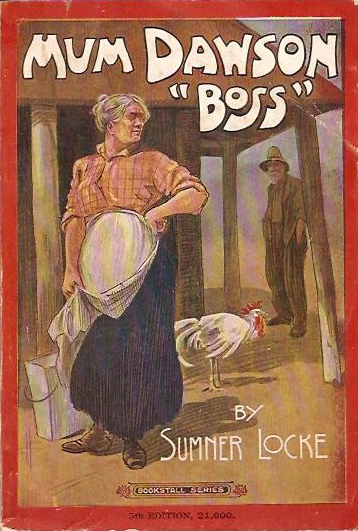
Bookstall Series books, 1923
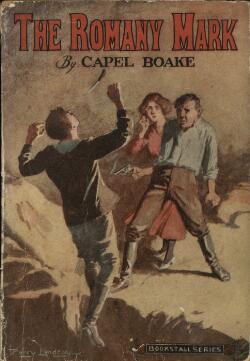
Although the University of Melbourne’s exhibition notes the company’s decline, it was still going strong in 1923:

  • Vera Baker, The mystery outlaw (pub. 1920, and 1923)
  • Capel Boake, The Romany mark
  • Dale Collins, Stolen or strayed
  • Arthur Crocker, The great Turon mystery
  • A.R. Falk, The red star
  • J.D. Fitzgerald, Children of the sunlight: stories of Australian circus life
  • Jack McLaren, Fagaloa’s daughter
  • Jack North, A son of the bush
  • Ernest Osborne, The plantation manager
  • Steele Rudd, On Emu Creek
  • Charles E. Sayers, The jumping double: a racing story
  • H.F. Wickham, The Great Western Road

Most of these authors are male. Indeed, Capel Boake and Vera Baker seem to be the only woman here.

I found several references for most of the books listed above. Some were not much more than listings, and some seemed to be somewhat repetitive (which could be due to syndication and/or drawing from publisher’s publicity. It’s hard to know without deeper analysis.) However, there was also some more extensive commentary.

First though, as you can probably tell from the titles, the books tend to be “commercial” or genre books, most of them adventure with some mystery thrown in. One of my 1922 posts focused on the time’s interest in adventure, so I won’t repeat much of that except to say that many of the reviewers/columnists talked about “thrills”, “exciting reading”, fast pacing, and the like. The majority of the novels are set in the bush, reflecting our well-documented ongoing interest in outback stories. But A.R. Falk’s detective novel The red star, is set in Sydney. The Brisbane Courier’s reviewer (23 June) argues that Australian writers hadn’t “developed the field of detective fiction to any extent”, which is interesting given its popularity now. This reviewer praises the book saying that Falk had “written a far better detective story than the majority of those that are imported”. S/he says that “the fight between detectives and a clever gang of thieves and murderers is told in a very convincing manner” and that while “the ending, perhaps, is forced” the story “takes a high place among current detective fiction”.
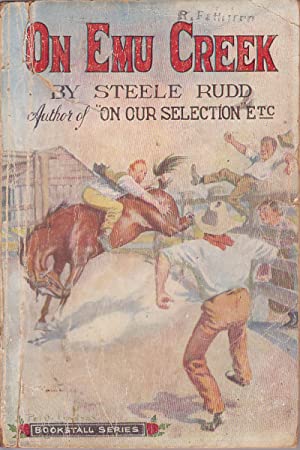
That’s higher praise than some of the books received at the hands of our reviewers. J.Penn tended to write a little more analytically. I haven’t been able to identify who J.Penn is, but s/he wrote a new books column in Adelaide’s Observer and Register titled “The Library Table”. S/he generally praised Ernest Osborne’s The plantation manager but did note a weakness at times for ‘making people “talk like a book”‘ (Observer, 5 May) and was critical of Steele Rudd’s On Emu Creek which s/he felt lacked the satirical edge of his Dad works. S/he writes that “Steele Rudd is firmly convinced that his readers will find sufficient fun in the mere fact of some one being humiliated or hurt, without the author’s having to worry to hunt for words” (Register, 19 May). The Murray Pioneer and Australian River Record (3 August) described On Emu Creek as humorous but qualified this with “the reader may be pardoned if he fails to see in the more recent books the same rich vein of humor that characterised the earlier chronicles of the Rudd family” while The Age (5 May) was gentler, calling it “an agreeable story, without any affectation of style, and containing points of humor”

Penn described (Register, 21 April) Dale Collins’ Stolen or strayed as ‘a “shilling shocker” of modern Australia’. Set mostly on the Murray, “it is,” writes Penn “a joyous yarn, and, as generally happens nowadays, the literary style is more than worthy of the tale it unfolds”. Interestingly, though, Collins’ book generated more disagreement than most. The Queenslander (12 May) was less impressed, saying that “neither the workmanship nor the characterisation show any especial ability” and The Sun (22 April) said that “It is a story just good enough, so far as construction is concerned, to lead one to hope that the author will do much better some day.”

Overall, several reviewers commented along the lines of Perth’s Western Mail (26 April) reviewer, who said, regarding Stolen or strayed and The planation manager, that “both books will no doubt be read with avidity by those who care for stories of this kind”. This is fair enough given these readers were Bookstall’s target market.

Now, some quick observations, before closing. I was interested that some reviewers seemed to give the whole plot away, which we don’t see now. Also, I’ve not (yet) been able to identify several of the authors, but a few were also journalists – like Dale Collins and Jack North – and some used pseudonyms, like Capel Boake about whom I’ve written before.

Finally, despite what seemed to be qualified praise for many of the books, it’s clear that the endeavour was valued for providing a career for Australian writers and illustrators at a time when they struggled to get published. And, as Hobart’s Mercury (18 August) wrote

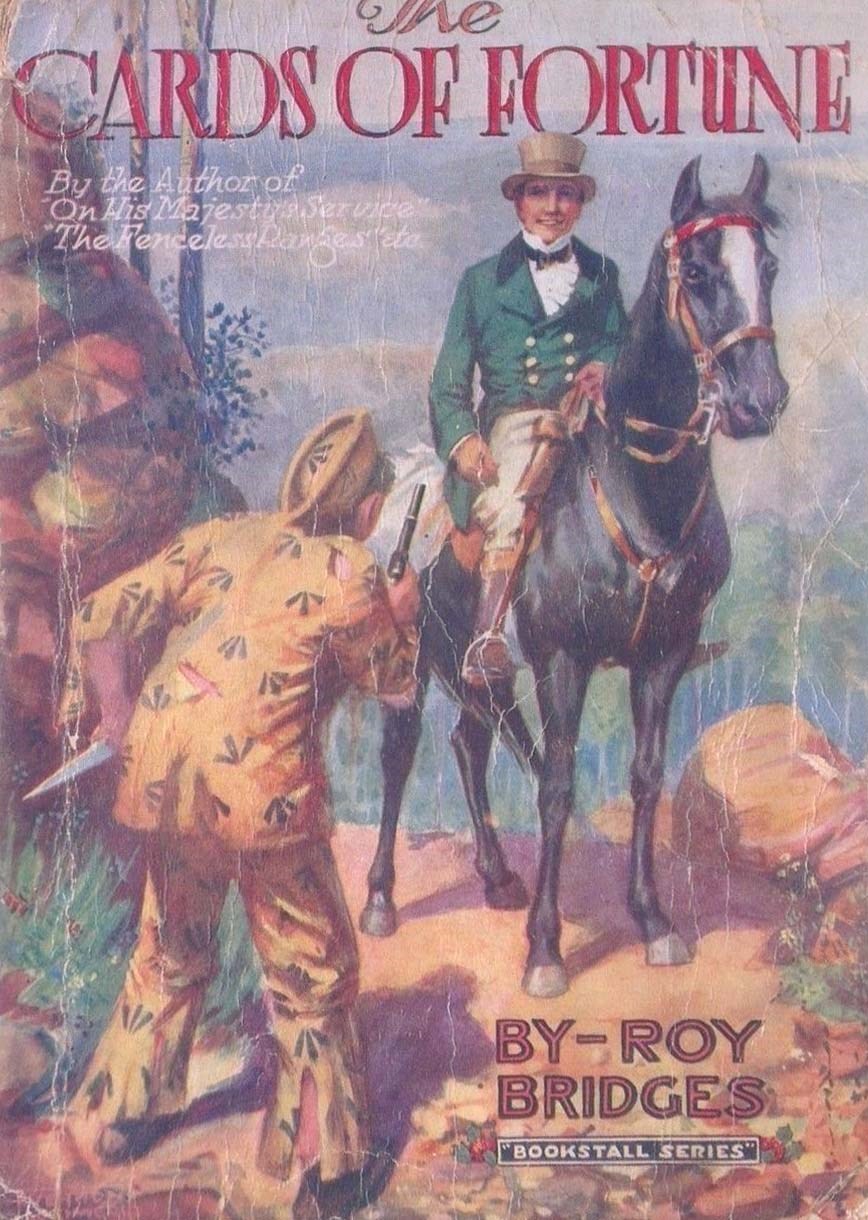
Beyond question, they are more than worth the money, the thing most prejudicial to their success being the gaudy “Deadwood Dick” types of covers in which they appear.

Trove (et al) under threat

You all know how much I rely on Trove. Back in 2016 I wrote a post in support of it when its survival was threatened. Well, it’s under threat again, and Lisa posted on it today. She references an(other) article in The Conversation that addresses not only the situation for the National Library of Australia and Trove, but other significant national cultural institutions like the National Film and Sound Archive and the National Gallery of Australia. These services and institutions are the lifeblood of academics, writers, journalists and other researchers (professional and general). Their role is to acquire, preserve and make available our heritage. They are not dispensable. They are essential.
Monday musings on Australian literature: on 1922: 6, Great Australian novel (again)

The things you find in Trove! As l was trawling Trove for my 1922-project earlier this year, I came across a reference to the Great Australian novel. Just one. So, I put it aside, thinking it would be a neat, quick little post for a busy week like this one. Little did I know …

Before writing this post, I thought I should do one more quick little search. Nothing much came up, except that buried in one of the few articles my search retrieved was a reference to a book titled The luck of 1825 by Horace B. Pithouse. Launceston’s Daily Telegraph (18 November), wrote that “the rough draft of the MS was originally sent for sake of a criticism to the de Garis Great Australian novel competition”. The de Garis Great Novel Competition? Ever heard of it? I certainly hadn’t.

So, I decided to do an Internet search, and up popped the Australian Dictionary of Biography (ADB) with an article on one Clement John De Garis (1884-1936). Heard of him? I certainly hadn’t.

However, he was quite a character, and you can read about him at the link on his name above. In a nutshell, ADB lists his occupations as aviator, financier/investor, novelist, produce merchant, and short story writer, and describes him as “a man of effervescent charm and superhuman energy—a ‘prince of ballyhoo'”. Born in Mildura, he got involved in the dried fruit industry and was entrepreneurial in developing and promoting the product. But, it didn’t stop there. ADB writes that his “ambitions took on a manic quality and he began to see himself as all things to all men. A self-constituted patron of the arts, he launched a Great Australian Novel Competition”. This competition was advertised in 1919 with a closing date in early 1920. Hobart’s World (3 January 1920) promoted the competition, which had three prizes (£300 for first, £150 second, and £100 third). The goal was a “really great Australian novel”; the writer had to be Australian born; and “the story must be typically Australian”, which did not mean that ‘”local color” must be that of a shearing shed, or of the thirsty tracks in the Never Never.’

A humorist named “Dip-Tin” in Western Australia’s The Moora Herald and Midland Districts Advocate (5 May 1920) promoted it in verse, and included this on the potential subject matter:

There’ll be yarns about Ned Kelly. 
And Judge Bevan, and Oenpelli— 
Bet your life! 
And be sure each central figure 
Will become a dinkum digger, 
Plus a wife. 

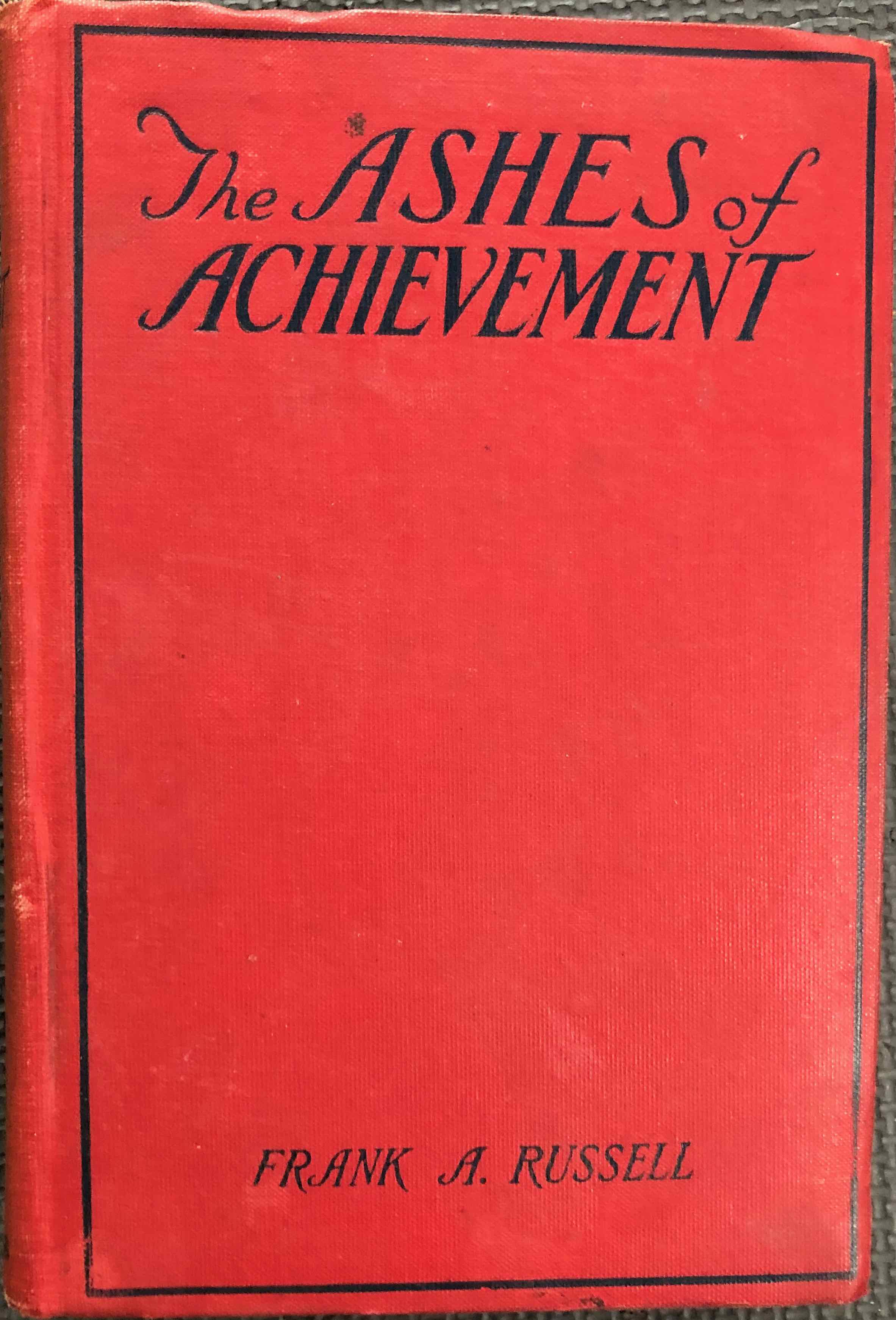
Late in 1920, the winner was announced – Frank A Russell’s The ashes of achievement. Heard of it? No, nor have I! And that’s not surprising because the reviews, overall, were poor. Take this one (with an unreadable by-line) in Perth’s The Call (31 December 1920), titled ‘When DeGaris slept! The prize Australian novel candidly reviewed. A literary “Dud” – which isn’t brilliant – and isn’t even Australian’. You get the gist. The writer critiques the book’s failure at length, exposing its weaknesses in subject-matter, characterisation and language. If you’d like to know how to thoroughly pan a book, here is a good example, and if what he (I think it’s a Hector) says about it is right, his assessment is fair enough. Hector (?) concludes that:

With the publicity that has been given it The ashes of achievement will probably be widely read. But it will not be remembered.

The Queenslander (1 January 1920) agrees with The Call, albeit with brevity:

The C.J. DeGaris Publishing Company is worthy of commendation for its courage and confidence, because the work of publishing in these days is a very expensive business, but if the remaining novels are not better than The ashes of achievement the effort to enhance the literature of Australia will not be very considerable. There is more real Australian atmosphere in a few chapters of a score of other Australian novels than in the whole of Mr. Russell’s very long and mediocre production. The test of a novel lies in its atmosphere and character studies, but while in the 30 chapters of “The Ashes of Achievement” one is continually meeting new characters, and as suddenly dropping them, there is none of any outstanding merit …

I did find one positive report – in Perth’s The Southern Argus and Wagin-Arthur Express (8 January 1920) – but it was cursory:

Under such circumstances [that is, winning this prize] one would naturally expect a good novel, and one is not disappointed. The ashes of achievement is an Australian novel, by an Australian author, and not flavored with gum leaves to make it so. It maintains the reader’s interest from beginning to the end, and will rank amongst the best of international novels.

Fair point about the “gum leaves”, but …

I’ll leave De Garis here, and will get to the article from Smith’s Weekly (16 December 1922) that inspired this post. It starts by saying that ‘about once a week in our “esteemed contemporaries,” Australian authors are adjured to write the Great Australian Novel’ and goes on, tongue-in-cheek, to explain why it’s so difficult. It’s because, for example, Australian heroes and heroines can’t match the English versions with their titles and valets, and rose-leaf skin. Further,

No British hero or heroine has to work. Readers dislike working heroes and heroines. They know all about work without reading about it. 

Smith’s writer concludes:

Instead of picturesque characters, ivy-clad ruins and dear old London, we have galvanised-iron, bank managers, kerosene-tins, gum-trees, the golden wattle-bloom, shearers’ strikes, drought, the W.C.T.U., the blue, blue sky (over-worked), the last-lady-help-but-one, Old Pardon the son of Reprieve, Clancy of the Overflow, and dear old Woop Woop.

That is all the material we have. Personally, I don’t see how we can make the Great Australian Novel out of it. 

Love it … the less said about the Great Australian novel the better, I reckon.

This was the sixth post in my 1922 series.

Previous 1922 posts: 1. Bookstall Co; 2. Reviewers on Australianness; 3. ALS Women’s night; 4. Adventure novels; 5. Art books

Monday musings on Australian literature: on 1922: 5, Art books

As I wrote in my fourth 1922-themed post, some genres and forms kept popping up in the articles I was reading about Australian literature. One was the adventure genre which I featured in the last post. That wasn’t particularly surprising, but today’s topic, art, is another matter.

However, before we get onto that, a note about by-lines. I’ve had it in mind for some time to do a Monday Musings post on by-lines. I probably will one day, but I need to do more research. One of the issues is that many of the articles I read in Trove have no by-lines, while those that do are often pseudonyms – and my, are some of them difficult to identify. There are two relevant to this post – Narrung who appears in the Sydney Mail (and Smith’s Weekly) and J. Penn in Adelaide’s The Register. I haven’t identified either of them yet, so if you know anything, please say so in the comments.

Now, onto art … I was intrigued to see such focus on writing about art, but I suppose I shouldn’t be, as the 1920s was a lively time in Australian art when Modernism, along with other exciting new styles and approaches, was taking hold.

Art in Australia

Issue no. 4

It’s not often that whole journals are reviewed these days – though there are exceptions, like the Griffith Review. I was surprised then to see how often Art in Australia was featured in 1922. The journal, which was published from 1916 to 1942, had a chequered publication history. Wikipedia explains that it had four “series”: (1) No.1, 1916 – No.11, 1921; (2) New Series Vol.1. No.1. (February 1922) – Vol.1. No.2 (May 1922); (3) Third Series No.1 (August 1922) – No.81 (November 1940); (4) Series 4, No.1 (March 1941) – No.6 (June 1942).

Two of the articles I read came from early 1922, and they discuss Issue no. 11. Penn, writing in Adelaide’s The Register (7 January), starts by saying that the introduction to the eleventh issue of this “fine literary and artistic serial … confirms an opinion frequently expressed in The Register Literary Page that the publication of such beautiful works as have emanated from the enthusiastic publishers in Sydney must … have been largely a labour of love”.  Penn says this because after this issue the new version will be a larger (newspaper-style?) format and produced less frequently.

The eleventh issue “is one of the best”, Penn says. It contains reproductions from artists like the Lindsays, Arthur Streeton, and G. W. Lambert, and literary contents from people like Lionel Lindsay, Sydney Ure Smith (the journal’s editor), Zora Cross, A. G. Stephens, and Christopher Brennan. Those of you interested in the history of Australian literature will recognise some names here like Cross, Stephens and Brennan.

The writer in Melbourne’s The Argus (21 January) also talked about this issue, but focuses on describing some of the art works produced within its pages. S/he writes, for example, that:

George Lambert is represented by his head of Miss Mollie Dangar, a pencil sketch that most critics would probably prefer to his “Bush Landscape,” reproduced in this number, though one must make liberal allowances, of course, for the loss inevitable in all coloured process work. 

The issue also includes “Red Gum Tree” by George Streeton (presumably a typo for Arthur). The article concludes by advising of the changed format to come. It will be “in larger size, though there will be fewer plates. The price will be only half that charged now, but the publishers say that there will be no diminution in quality.”

Late in the year, Adelaide’s The Mail (2 December) wrote about the November 1922 issue of Art in Australia, from the third series, but starts by commenting on the journal as a whole:

Once in each quarter the soul of Australia is nourished and kept alive by the group of artistic and literary spirits who under the name of “Art in Australia, Ltd.,” register the vitality and departures of art and the arts in Australia to-day.

I love the belief that “the soul of Australia” is “nourished and kept alive” by a “group of artistic and literary spirits”. The writer argues that, while painting in Australia can’t “yet compare in range and extent of output with English resource”, this journal “can proudly take its place beside the older Studio“. Not only is it “accomplished in its colour reproduction” but it has “a freshness and virility characteristically Australian”.

Moreover, the issue is, the writer continues, “possessed especially of literary strength centring upon living and candid appreciations of Henry Lawson on the part of A. G. Stephens and J. Le Gay Brereton”. Melbourne’s National Gallery director, L. Bernard Hall, writes on aesthetics, and someone called “F. Bennicke Hart deals suggestively with the prospect before Australian music, stressing the propriety of at any rate continuity with the British spirit”. (Hmm…) There are also “characteristically caustic comments and epigrams” from Norman Lindsay, and poetry from writers like Dorothea Mackellar and Leon Gellert. And much more, but you get the gist of the breadth of the arts covered by the journal.

The writer concludes that “the duty and privilege” of all who support progress in Australian art is to not only support the journal, but introduce it to others.

Art books

Newspapers in 1922 also carried articles about art books, but Narrung, in the Sydney Mail (28 June) starts by discussing the book production industry in Australia, noting that books produced here had been of poor quality: “the less said about them the better; no library would care to own them, and they remain a sad record of ignoble effort and artistic failure”. Meanwhile, overseas, beautiful books were being produced, books that “should have set a great example locally for those who had eyes to see and admire”. Angus and Robertson’s and The Bulletin had produced some beautiful books, but they were made overseas.

Then, Narrung writes,

after a long period of sterility the subscription edition of “Satyrs and sunlight,” by Norman Lindsay and Hugh McGrae, made its appearance some 10 or 12 years ago, and until recently remained probably the handsomest example of a book ever turned out in Australia.

After a few more years, books of “great artistic merit” finally started to be produced here, like Elves and fairies by Ida Rentoul Outhwaite, The art of Fred McCubbin, and the famous catalogue, the first Hilder book. Suddenly, Australian publishers, including Art in Australia, were publishing beautiful books, albeit many being limited or subscription editions. A particularly beautiful example, according to Narrung, was Norman Lindsay and Leon Gallery’s The Isle of San. Narrung concludes with:

The fact remains that when some local artist or author is singled out nowadays for a special edition the result is always a delight, and Australian books, like other of our products, compare with the best of the world’s market.

The writer in Melbourne’s The Herald (2 December) also takes up this issue of publishing beautiful books, saying that “every painter whose work is worthy gains nowadays the recognition for which, in the past, genius often strove vainly”. S/he reviews The art of Sara Levi, published in 1922, calling it an “attractive portfolio”. Sara Levi was a nature painter, and was involved in several art societies at the time. “Brighton Beach”, a “charming picture” that was included in this volume, apparently fetched $4,400 in 1990, the highest price she’s fetched to date.

A superficial survey, but I’m enjoying learning (and sharing) these little insights into literary Australia of a century ago.

Previous 1922 posts: 1. Bookstall Co; 2. Reviewers on Australianness; 3. ALS Women’s night; 4. Adventure novels

Monday musings on Australian literature: on 1922: 4, Adventure novels

Continuing my 1922-themed posts, it became clear as I delved into Trove that certain genres or forms kept recurring in the reviews and articles I was reading about Australian literature. I plan to share them over the next few 1922 posts, starting with adventure in this post.

You might remember that my first 1922-themed post was on the N.S.W. Bookstall Co. Adventure novels, it seems, were among their popular fare. A brief article in The Australian Worker (22 February) discusses a couple such novels, but starts by saying that the N.S.W. Bookstall Co.

continues to deliver the goods, and as the goods, in the shape of vigorous yarns by Australian writers, appear to be selling well enough to make a further continuation certain, the company can be congratulated in believing years ago that local talent would make good if it were given the chance hitherto denied it.

Adventure novels

Some of you might remember a recent Monday Musings I did on Australia’s favourite genres, in which I reported that a Swiss-based study had determined that Adventure and Classics were our favourites. I won’t revisit that now, as you can read the post and its source information yourself if you’d like, but I was surprised that Adventure seemed so popular now. I am not so surprised, however, given the still relative newness of the Australian settler colony in 1922, that adventure was popular then. What did surprise me, however, was that, despite the longstanding strength of the bush myth, the bush was not the main setting I found – but I did find a few.

One was titled The black opal. I don’t know how many novels have been titled The black opal, but they abound, including Katharine Susannah Prichard’s of 1921. In 1922, however, there was one by journalist-cum-novelist Jack North. The Northern Territory Times and Gazette (16 September) writes that it is sub-titled “A story of Australian love and adventure”, but that

it is more than that. Notwithstanding the melodramatic incident which Percy Lindsay selected for his cover design, The black opal is a wholesome, well-written novel in which the lure of the bush triumphs over the glamor of the city.

I think “Jack North” might be a pseudonym. He had written, at that time, two other popular novels, Harry Dale’s Grand National and The son of the bush, plus, apparently, scenarios for the “movies”. (The article writer used those quotation marks for this clearly still strange new medium.)

A more traditional-sounding bush-adventure novel is Roy Bridges’ historical fiction, The cards of fortune, which the writer in the Kandina and Wallaroo Times (20 December), says is set in “the stirring days of the first settlement in Tasmania”. (Not sure all would call those days “stirring”, at least with a positive connotation!) It is, says the writer, “an appealing love story which is developed with the aid of stirring adventure”. (There’s “stirring” again”.) The novel, about a bushranger hunt, is described as a “bright little story of the early days”. Adventure novels are, I guess, escapist!

Island adventure novels

The most common adventure novels I found, however, were island adventures, which I think could qualify as a sub-genre?

The Australian Worker article I mentioned in this post’s opening briefly discusses two novels, S.W. Powell’s Hermit Island and Jack McLaren’s Feathers of heaven. The reviewer clearly admires the publisher, but not necessarily these books. They are both set to the northeast of Australia, and, s/he says,

are big-bulged with thrilling adventures in those places where the codes of life, to put it mildly, are not exactly of the parlor or the Sunday school variety.

They hope “this island type of yarn won’t be overdone”, because, they say

There’s plenty of love, and adventure, and goodness, and badness in Australia without going north-east in a boat to look for these elements of a readable story.

I will digress briefly here to say a little about Jack McLaren (1884-1954), because he was quite a prolific and popular writer. According to Wikipedia, he wrote novels based on his own experiences and was renowned for his “authenticity of background”. The son of a minister, he apparently ran away from school when he was 16, and worked as a cabin boy and seaman before landing in North Queensland in 1902. For the next 10 years he worked and travelled around the islands north and northeast of Australia, like Fiji, Java, New Guinea, Malaya and the Solomon Islands. He wrote for The Bulletin before turning to novels in 1919. Feathers in heaven was around his 7th novel.

The writer in the Kadina and Wallaroo Times (8 March) says that McLaren was one of Australia’s most popular authors. Feathers in heaven, this writer says, “is a novel of stirring adventure written round the illegal hunting of New Guinea’s beautiful birds-of-paradise … [and] … of course there is a girl in the story”. For this writer, the novel offers “wholesome adventure”.

Our Kadina and Wallaroo Times writer also discusses Powell’s Hermit Island, identifying it as being “of the Islands adventure class”, and set “off the beaten track” in Tahiti. It involves suspicion of piracy, for which there is “circumstantial evidence” and “develops rapidly to a wholly unexpected climax”. Sydney’s Sun (12 February), reviewing the same novel, makes a strong point about its Australian quality, starting the review with:

For a fine adventure story, neatly told, it is not always necessary to go overseas. Here is an Australian author, S. W. Powell, who knows the knack. Hermit Island is excellent value … The yarn is as capably done and as well imagined as any that comes out of California, and it has the advantage of speaking our own Australian language. 

S.W. Powell had, at the time, written four popular island-adventure novels. The genre was clearly a goer back in the 1920s.

Another reviewer, this time in the Northern Territory Times and Gazette (18 July), discusses Powell’s The pearls of Cheong Tah. Like the previous reviewers, this one comments on Powell’s inclusion of humour in his novels – along with tragedy and romance.

Some random concluding observations

Did you notice the focus on “wholesome”? “Little” things like this provide such insight into their times.

Also, I struggled to find cover images. These books may have been popular, but most were cheap paperbacks and have not, apparently, survived well. Neither have the literary reputations of most of their authors. As always, it’s interesting to see how popular authors of a time fare over the long term. Could it be argued that the more popular a work, the greater the likelihood of appealing to more ephemeral interests and tastes and therefore of dating?

Previous 1922 posts: 1. Bookstall Co; 2. Reviewers on Australianness; 3. ALS Women’s night

Monday musings on Australian literature: on 1922: 3, ALS Women’s Night

Continuing my 1922-themed posts, I was intrigued that, in 1922, the Australian Literature Society held a Women’s Night. This Society was formed in Melbourne in 1899, with the aim of encouraging both the study of Australian literature and Australian authors.

According to the National Library the Society:

  • held regular meetings which included talks, recitations, readings of unpublished works, musical items and reviews
  • established a general library of first editions and important Australian works which it maintained for nearly eighty years.
  • published a journal Corroboree from 1921 to 23

In 1928, it established the ALS Gold Medal to be awarded to the author of the best novel published in the previous year. The first winner was Martin Boyd’s The Montforts, but that, obviously, came after 1922! What also came later was that this society merged in 1982 with the Association for the Study of Australian Literature, which continues to award the ALS Gold Medal.

Now, back to 1922, and the Society’s Women’s Night. I’ve had a little look at Trove for 1920 and 1921, and while there are references to women’s topics being discussed at ALS meetings, it seems that 1922 may have been the first time they devoted a night to Women’s writing.

As far as I’ve been able to ascertain, there were just two papers presented: Australian Women Prose Writers, by Mrs Vernon Williams, and Australian Women Poets, by Elsie Cole. Before I share the idea that inspired this post, I did find mentions of Women’s Nights in 1927 and 1929. In 1927, The Age (July 12) reports that there was a paper on Stella Miles Franklin, followed by some readings and recitations of works by women, while in 1929, The Age (July 15), again, reported that the night would ‘take the form of a debate, the subject, being “Australia is Lacking in a Back Ground to Inspire Romantic Writing”‘.

And now, back to 1922 again. The report in Table Talk (August 3) reported that Elsie Cole’s paper on the poets said that “We had reason to be proud, if critical, of our present output of women’s work” and that “the prospect for the immediate future was encouraging”. Unfortunately, none of the reports I read gave any details about the content of the papers, so what, for example, were the criticisms?

As for Mrs. Vernon Williams’* paper on the prose writers, they reported her saying that “one outstanding feature of the Australian novel is its purity” but they didn’t elaborate. Williams also apparently said that the Australian novel was full of sincerity and the glamour of romance.

The report shared one other idea from the talk, which was that:

In the early days of Australian literature the output of women writers was more prolific than that of men writers, because the opening of a new continent did not give men opportunity to concentrate their activities in that direction.

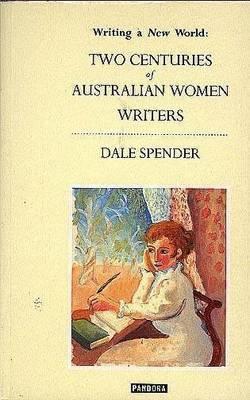
I haven’t seen this specifically articulated before, and would love to know exactly what she was talking about. The first “Australian-made novel” novel, Henry Savery’s Quintus Servinton (my post), was published in 1830, with the first novel by a woman published in Australia, Anna Maria Bunn’s The guardian, appearing in 1838. But, “the output of women writers” did start before this. Dale Spender writes, in Writing a New World: Two centuries of Australian women writers (see Bill’s post), that from very early on women wrote letters and

women’s ‘world of letters’ provides an alternative and rich resource of information. Women’s thoughts and feelings find expression in a literature which stands as a repository for women’s consciousness and a record of their endurance in the strange land. So the letters of Elizabeth Macarthur and Rachel Henning, for example, tell a story of settlement, create heroines of stature who experience a series of adventures which could readily and reassuringly be recounted ‘back home’; but at the same time these letters plot personal struggles with independence and identity. Miles Franklin begins My Brilliant Career at the point at which Elizabeth Macarthur and Rachel Henning leave off …

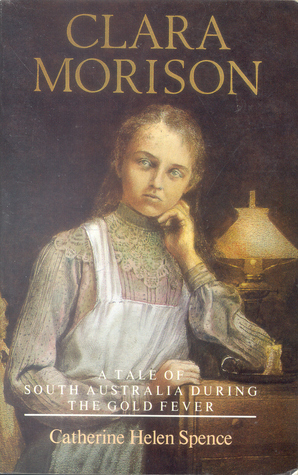
Women’s letters and journals, as Spender shows, provided a rich and important literature, but novels by women did start appearing by the middle of the century with Catherine Helen Spence’s Clara Morison in 1854, and Louisa Atkinson’s Gertrude the Emigrant in 1857. Ellen Davitt followed with a crime novel in 1864, and then, in the 1880s, novels by Ada Cambridge, Rosa Praed, Tasma, and others were published.

Presumably it’s to these novelists that Williams refers, but, to suggest that, somehow, men had less opportunity to write in the colony’s first century feels like a backhanded compliment – as if women’s lives were easy, and men’s not. However, her recognition of the depth of women’s writing tradition is notable. It’s a recognition that got lost by the middle of the 20th century and that we are still trying to recover now. I must try to access Williams’ paper.

* AustLit explains that Mrs Vernon Williams is the writing name for Elvie Williams, the wife of Vernon Williams, who was “a member of the Australian Literature Society, Melbourne”. She had two articles, “Australian Women Novelists, Parts 1 and 2”, published in two consecutive issues of Corroboree : The Journal of the Australian Literature Society, vol. 1 nos. 10-11, July-August 1922, but they aren’t available online.

Previous 1922 posts: 1. Bookstall Co; 2. Reviewers on Australianness

Monday musings on Australian literature: on 1922: 2, Reviewers on Australianness

This is the second post in a series I plan to do this year inspired by articles in Trove from 1922, that is, from 100 years ago. My first post was on the NSW Bookstall Company, and I have several more 1922 post ideas. However, I thought a good choice for the second one would be to share some of the things reviewers/critics/ columnists at that time were saying about “Australianness” in the writing. Representing Australia – writing Australian novels – seemed to be important. But what did that mean to them?

I’ll start by repeating something from my first 1922 post. The columnist from Freeman’s Journal (July), wrote that Vance Palmer’s upcoming book, The boss of Killara, was “an entertaining story, … most entertainingly written, and … true in every detail to Australian bush-life”. I wanted to share this again because, by the 1920s, Australia was (and had been for some time) a highly urbanised nation, and yet bush-life seemed to define us in most reviewers’ (and presumably our own) eyes. It suggests that was our point of difference from the rest of the world, regardless of the truth of our lives.

Note that not all books discussed in 1922 were published that year, but most were.

Historical fiction

I didn’t come across a lot of historical fiction, but there were some, and when I did, reviewers were interested, naturally, in whether the past was properly evoked. The Western Mail’s (November) reviewer approved of J.H.M. Abbott’s Ensign Calder, saying that “The writer’s descriptions of life in Sydney, early in the nineteenth century during the governorship of Macquarie, are very faithfully rendered”. Wikipedia’s brief article on Abbott quotes Miller and Macartney from their book, Australian literature. Miller and Macartney describe his writing as being “of a simple kind, without subtleties or motive or characterization, against a background of the Australian past as revealed by historical records, and introducing actual personages”. So, not great literary writing, but accurate. This assessment (acceptance) was, I found, also a fairly common thread in 1922.

Romance and adventure

I will write more about adventure in a later post, because it seemed to be a popular genre. However, it’s worth sharing here some reviewers’ thoughts relevant to this week’s topic.

One adventure story exponent was Walter G Henderson. He was a country solicitor and grazier, as well as writer, and his novel, Bush bred (serialised in 1918, published 1922), was an adventure romance. J. Penn, who wrote for Adelaide’s Observer, called it (July) “a truly Australian product”, then described the wild adventures of its protagonists, including on the goldfields north of Port Augusta. He notes – and I found it interesting that this is one of the things he chose to emphasise – that “the author’s knowledge of camels and their ways is extensive”. Penn also writes that the 1922 edition included a commendation from Viscount Novar who, says Penn, claims that “the preservation of fugitive incident, illustrating different phases of life in a developing country, is a valuable contribution to literature.” Here, at least, is a reference to the idea of “illustrating different phases of life”.

Another popular adventure book was Jack North’s The black opal, which The Northern Territory Times and Gazette (May), describes as “a wholesome, well-written novel in which the lure of the bush triumphs over the glamor of the city”. See!

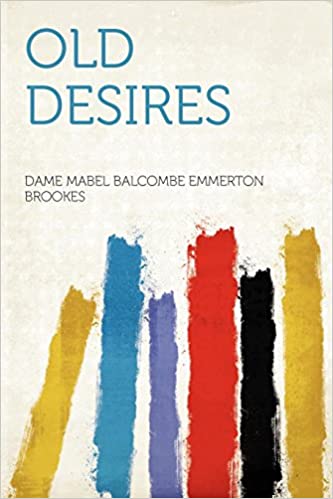
Mrs Norman (aka Mabel) Brookes’ novel, Old desires, is set partly in Cairo, but, writes the reviewer in Adelaide’s The Mail (October),

Separate from its dramatic qualities, the book is most admirable in its prelude chapters of way-back Australian life. Description of the recognisable routine, normal and often exciting, of station experience in the great interior, has, of its kind, seldom been more truthfully achieved. Occasional conventions link it, nevertheless, to a standard of accomplishment more familiar. Harris tweeds here preserve their familiar and apparently irresistible smell. That Mary, climbing through the stockyard fence, should vouchsafe a generous display of stocking is unimpressive to reading mankind inured to daily main street exhibition requiring neither fence nor stile.

As I’ve said before about these older Trove articles, I love their formal language. Formal this may be, but we get the gist that her description of Australian (station) life is authentic, albeit her English origins can’t help creeping in. Oh, and poor Mary, showing off her stocking unnecessarily, given the (city) worldliness of her readers!

What seemed to be mostly admired about “Australian” novels was not so much their exploration of Australian identity, or other themes, or their writing, but their description of Australian life. The reviewer in Brisbane’s Telegraph (August) of William Anderson’s The silent sin says

The great merit of this story in our eyes is that it is thoroughly Australian. The characters are Australian, and for the most part the scenes are laid in New South Wales and Queensland. For the rest it is told without pretension to literary ornament. 

Realist fiction

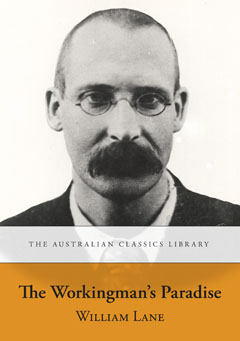
Then as now, older books were given new life, and one such book was William Lane’s 1892 novel The workingman’s paradise (my review). The report is not about a new publication, but about its being serialised in Brisbane’s Daily Standard (August). The columnist writes – remember, this is 30 years after its original publication – that

It is truly a remarkable book, more remarkable now, perhaps, than when it was published, because it is as inspiring to-day as it was intended to be then, and its story of the class struggle and road that lies before the Labor movement has increased in significance by the developments of the last quarter-century.

At last, a book that deals with some critical issues! Yes, yes, I’m showing my colours, I know, but I’m sure that won’t surprise you!

This is a brief, and superficial survey, but it comes from several pages of Trove hits and is a fair representation of what I saw as trends at the time. I have found some, let us say, outlier articles, which I will also share as 2022 progresses!

Monday musings on Australian literature: on 1922: 1, Bookstall Co.

I haven’t done many Trove-inspired posts lately, but, I do enjoy pottering around Trove’s Newspapers and Gazettes database, so thought that for today’s Monday Musings I’d have a little look at what was happening in the Australian book world in 1922. My broad search retrieved around 8,000 articles! I can’t read them all, but I found several items of interest, to me at least, that I’d like to share, which I’ll do over the year.

For my first post, I’ve chosen a new publisher to me. In the Books Received column in the Kadina and Wallaroo Times of 8 March, the columnist refers to the N.S.W. Bookstall Company, writing “now that publishing difficulties have eased, the N.S.W. Bookstall Co. proposes to add rapidly to its popular Australian fiction series”.

Who was this company I wondered? Well, they were “notable” enough to have a Wikipedia page, and the man who turned it into a successful business, A. C. Rowlandson, has an entry in The Oxford companion to Australian literature. The Companion tells me that in 1991, the book, The New South Wales Bookstall Company as a publisher, by Carol Mills, was published. The Publishing History website also devotes a page to them.

So, the company … It was started by Henry Lloyd around 1880 as a newsagent, with its first foray into publishing possibly being racebooks for the Hawkesbury Race Club around 1886. The Wikipedia article stops with a discussion of World War Two, which suggests that the company folded soon after the war, but I haven’t confirmed this.

I have however found out a bit about Alfred Cecil Rowlandson. He started with the company in 1883 as a tram ticket seller, presumably from one on the company’s bookstalls. Wikipedia says that “the greatest part of the company’s business consisted of retailing local, interstate and overseas periodicals, postcards (Neville Cayley produced a series) and stationery from its eight city shops and fifty-odd railway stall outlets”. Rowlandson worked his way up, and in 1897, bought the company from Lloyd’s widow. He ran it from then until his death in, coincidentally, mid-1922.

From the Bookstall series. Image: Publishing History website

He was clearly a visionary, because, as the Companion says, the company became “one of Australia’s most successful book-publishing and selling ventures, publishing in paperback about 200 titles by Australian authors and selling four to five million copies”. The above-linked Publishing History page lists some of its books in chronological order, while the Wikipedia page lists a selection by author’s name. The authors include names familiar to me like Louis Becke, Charles Chauvel, Norman Lindsay,  Sumner Locke, Vance Palmer, and Steele Rudd.

Rowlandson came up with the idea of selling Australian books at one shilling each, and created the Bookstall series in 1904. Wikipedia says that despite his belief in a market for cheap Australian books, the prospects were not encouraging, because Australians had not shown much faith in the the work of their own novelists.

However, Rowlandson put his money where his mouth was. He paid £500 for the publication rights for Steele Rudd’s Sandy’s Selection. It was the largest sum paid in advance for an Australian book at that time. Rowlandson also apparently spent “comparatively large sums in readers’ fees”. And, he believed, it seems, in bright catchy covers, employing artists and cartoonists as illustrators, like Norman Lindsay, Sydney Ure Smith, cartoonist Will Dyson, and war artist George W Lambert.

The Companion says that “the remarkable sales of of these Australian books confirmed Rowlandson’s intuition that the Australian reading public was keen for local reading matter, and the impact of his company on the development of Australian writing was considerable.”

Now, back to Trove. The columnist of the aforementioned Kandina and Wallaroo Times, writing, remember, in 1922, says “now that publishing difficulties have eased, the N.S.W. Bookstall Co., proposes to add rapidly to its popular Australian fiction series”. My guess is that these “publishing difficulties” stem from the war. The Companion says that during the war, due to the shortage and cost of paper, the “bob” (or “shilling”) price was increased by threepence, but Rowlandson – good for him – reverted to the “bob” after the war.

Anyhow, our columnist wrote that three new novels were in the presses, and that “the enterprising publishing house” had nearly 20 more under way. One of the books was S.W. Powell’s Hermit Island. It’s “of the Islands adventure class, but, like its predecessor, is off the beaten track”. Our columnist says that the predecessor, Powell’s first novel, The maker of pearls, was “one of the best of last year’s contributions to Australian fiction”. Still 1s 3d at this stage. 

Rowlandson died in June 1922 at the age of 57. Soon after, in July, Freeman’s Journal advised that the Company’s intention was to “continue the publication of Australian novels at popular prices, as during the life of the founder, Mr. A. C. Rowlandson, the late managing director”. Founder? Not correct. And so inaccuracies creep into the historical record, eh?

Freeman’s columnist goes on to say that

The late Mr. Rowlandson had profound faith in the literary resources of the Commonwealth, and during his life was wholly responsible for the publication of at least 150 Australian novels, the sales of which have totalled nearly four millions. During recent years the standard of the series has been steadily improved; and the manuscripts now in hand show still further improvement. 

And, s/he announces that the next book is Vance Palmer’s The boss of Killara, which is “an entertaining story, … most entertainingly written, and … true in every detail to Australian, bush-life”.

Trove provides information about more books published in 1922, including:

  • J.H.M. Abbott’s Ensign Calder, which contains stories which originally appeared in the Bulletin. These are historical fiction, being set in the nineteenth century during the governorship of Macquarie. The Western Mail‘s correspondent says that the stories “are very faithfully rendered, and … highly amusing”.
  • Hilda Bridges’ The squatter’s daughter, which interests me because it’s an adaptation of a 1907 play pf the same name by Bert Bailey and Edmund Duggan. The play was adapted into film twice, one silent and one talkie, as well as into this novel. The Midlands Advertiser says it’s “capably written, and gives a faithfully and permanent record of the play”
  • Jack McLaren’s Feathers of heaven from, says Freeman’s Journal correspondent, “one of the most popular Australian authors”. It’s set in “the wilds of New Guinea” and is “a novel of stirring adventure written round the illegal hunting of New Guinea’s beautiful birds-of-paradise”. A volume of “wholesome adventure”!

Of course, there were also reports of Rowlandson’s death, funeral and estate, but I’ll end with some comments on his legacy from the The Australian Worker:

Some of the writers taken up by A.C.R. have since capitalised their ‘bob’ start, and made overseas reputations. Rowlandson, by instinct and practice, was a tremendous live-wire hustler, and probably his business intensity contributed to his all too early death—a death which will grieve hundreds of thousands who enjoyed cheap local fiction of exceptional merit as a result of his enterprise, and by scores of young writers who never would have been heard of only for his faith in local literary products, his kindly and sympathetic disposition, and his never-resting determination to give Australian literature a show.