Vale Sarah Watt

Non-Australians may not be aware of Sarah Watt, unless they are interested in Australian film. Sarah Watt is an animator-writer-photographer-film director who made a small number of well-reviewed films, one of which, My year without sex, I reviewed on this blog.

Sarah (aged 53) died on Friday from secondary bone cancer (diagnosed in 2009), having been originally diagnosed with breast cancer in 2005. Just before her first diagnosis, she made the award-winning film Look both ways (2005) which gorgeously incorporated animation into live action to tell a story about a man (played by her husband William McInnes) coping with a cancer diagnosis. It’s a clever, whimsical, sad (but prescient) film about ordinary lives in an ordinary suburb. Ten years earlier, she had made the film which brought her to public attention: a short animated film called Small treasures (1995) about the loss of a baby during birth, something Sarah and William experienced. It won a short film award at the Venice Film Festival in 1995 – and gave us a sense of what she was about.

In an interview some years ago Sarah wrote of her work, that

I probably make films that are autobiographical more because I think they make better stories because they’re real and therefore more likely to, sort of, touch other people and pull other people into the story and into the drama  … When I go and see films or look at paintings or whatever, I want to be moved and touched and, and usually it’s coming from something personal in the, in the artist, so, that’s why I probably raid my own life a bit to, to make films.

If you haven’t seen a Sarah Watt film, do yourself a favour and go hire one. I can’t imagine you’d be disappointed.

In a recent interview about their jointly written (amazingly titled) book Worse things happen at sea (2011), William paid tribute to Sarah and all those who struggle with cancer. They are, he said, the bravest people I know. I think he’s right.

Vale Sarah … we’ll miss your humour, humanity and beautiful work.

The Hunter (movie)

The Hunter. Daniel Nettheim. Porchlight Films, 2011

Tasmanian Tiger (lithograph)

Lithograph of the Tasmania Tiger, after H. C. Richter's illustration in The Mammals of Australia (Gould) (Public Domain, via Wikipedia)

A guilty confession. I hadn’t heard of or read Julia’s Leigh’s apparently highly acclaimed novel, The Hunter, before this recent Australian movie was made. I’m not quite sure why that is. Maybe it was just child-rearing busy-ness at the time of its publication. Anyhow, the film is now out and I saw it this weekend. It was produced – but not directed – by the same people who made the excellent Animal Kingdom, and its cast includes Willem Dafoe (as “the hunter”), Sam Neill and Frances O’Connor. All actors I am always happy to see. And it was set in our beautiful southern island state, Tasmania.

The basic plot is straightforward. Martin (Dafoe) is a mercenary sent by a biotech company to find and kill a Tasmanian Tiger in order to bring back the necessary biological specimens for, it appears, biological warfare purposes. Now, if you know your Tasmanian history, you’ll know that the Tasmanian Tiger has been officially extinct since 1936 – but, like the Loch Ness Monster, there are always reports of sightings. The story, of course, has complications. The company organises for Dafoe to stay with a widow (well, her husband has been missing for a year) and her two young children who live on the edge of the bush … and from there the mystery thickens somewhat. What did happen to her husband?

The movie tos-and-fros between Dafoe “hunting” in the bush and spending time in the large log house with Sally (O’Connor) and her young daughter and son. Dafoe, established in the opening scene as a task-oriented person who likes cleanliness and order, a loner, arrives at Sally’s cabin to find the children running free, the house dirty and disordered, and the mother out-to-it (from, we soon learn, prescription drugs) in bed. He finds nowhere else in town: the logging-oriented townsfolk mistake him for a “greenie” and are therefore not willing to accommodate him, so he settles into Sally’s house, fixing it up to suit his needs. While doing so, he starts to engage with the two children and then the mother, which doesn’t endear him to Jack (Sam Neill).

This is billed as a thriller, and there certainly is tension. Can he find a Tasmanian Tiger? And do we want him to? What happened to Sally’s husband? Is Jack hiding something? Does Bike (Sally’s son who doesn’t speak) know something? The film doesn’t quite have the sophisticated moral and emotional complexity of Animal Kingdom. It is more a film of archetypes: the hunter who becomes the hunted, the silent child who knows something, the withdrawn grieving wife, and so on. The tension is enhanced by the remote, forbidding landscape, and the cinematography used to convey it. The colours are cold blues and greens, the lighting dark. There is also the sense of menace suggested first by the loggers but then by something less definite, more mysterious. Is it animal or human?

This is a difficult film to review. I enjoyed the movie, but had some reservations. The performances are excellent, particularly the taciturn but expressive Dafoe, and the two children. The pacing is slow, and yet it’s not too long. The cinematography is captivating overall, though I didn’t always like the unsubtle way parts of a scene would move in and out of focus. The soundtrack – the natural sounds in the bush, and Martin’s classics set against Sally’s Springsteen in the domestic scenes – is effective. The plot is perhaps its main problem. The initial set-up – that of expecting to find an extinct animal – needs a major suspension of disbelief, which was not a problem on its own, but the plot is then so tightly managed it was a little difficult in the end to know exactly who had been implicated in what. And this leads, I think, to a confusion of themes.  The logger-environmentalist conflict is introduced but never really developed. Was it there for necessary background*, or for its red herring purposes? There’s a bevy of themes concerning nature and extinct animals versus man, science and corporate greed. These are all touched upon and developed to some degree, but not as strongly as they could be. The overriding theme though is probably Martin’s emotional journey – from an isolated, self-contained man at the beginning to … well, I don’t want to give away the plot, but his character’s development was, though somewhat predictable in that archetypal way, nicely and movingly done.

Having seen the film, I’d rather like to read the book – to see how I would interpret the characters, plot and themes. In the meantime, I would recommend the film … it may not be perfect but it has plenty to recommend it and is well worth the price of a ticket.

* For more on why this could be so, see my review of Into the woods.

Red Dog (Movie and Book)

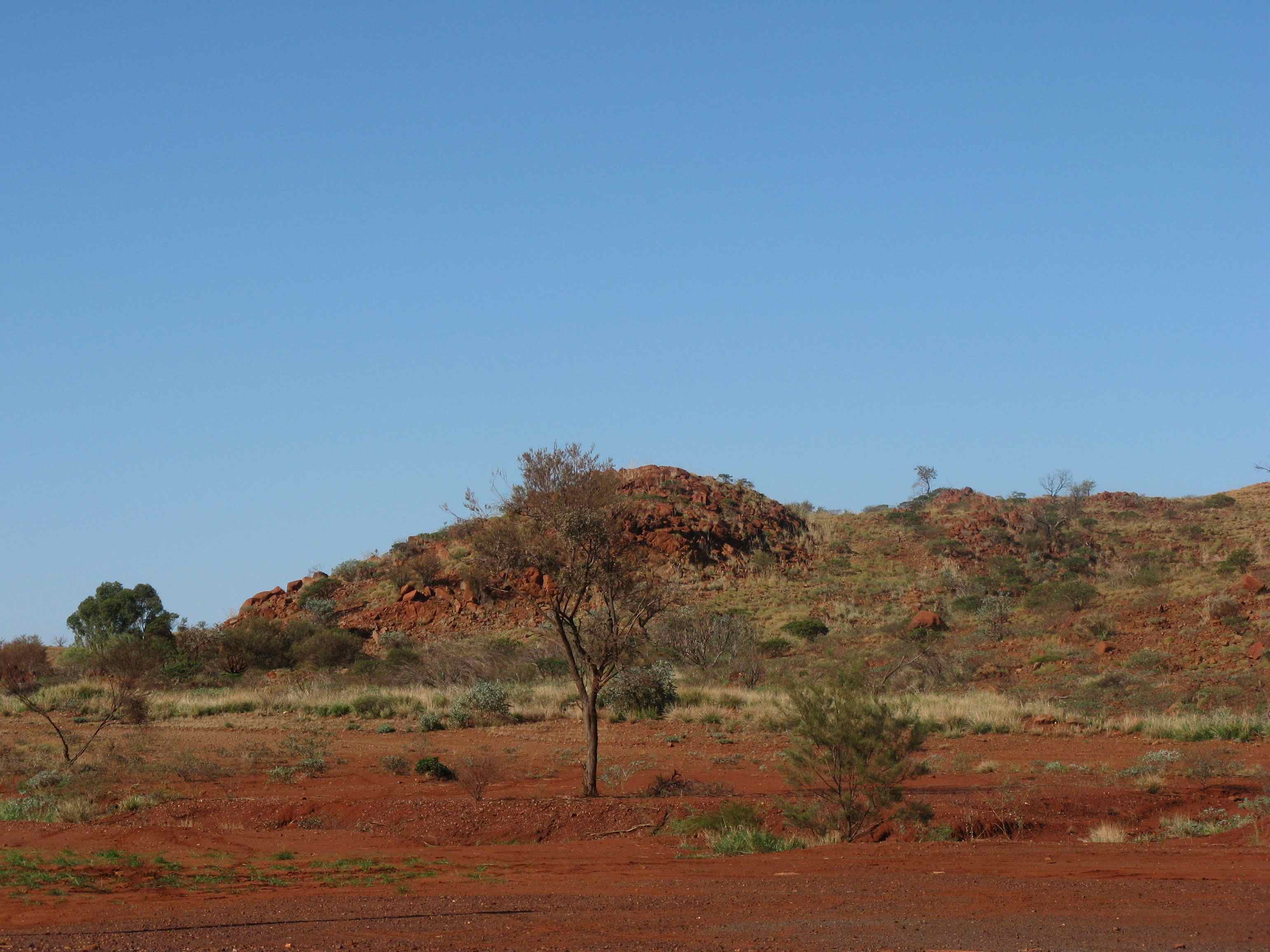
Pilbara landscape

Pilbara landscape

First, the disclaimer: I’m a dog person and am therefore a sucker for stories about dogs and their loyalty. I know, I know, it’s their nature, but that doesn’t stop me crying over doggie devotion stories. Red Dog is one of these! If dogs don’t move you, you may not want to see this film, but that would be a shame because while the dog – and it is based on a real dog – is the central idea, the film, and novel from which it draws, are about more than “just” a dog and his devotion to a master.

I first came across Red Dog – the (apparently famous) Pilbara Wanderer – several years ago through Louis de Bernières‘ novella (of sorts) which was first published in 2001. It’s a slim little tome and is based on stories de Bernières gathered about the dog, who lived from 1971 to 1979. De Bernières claims in his Author’s Note that the stories “are all based upon what really happened” to the dog but that he invented all of the characters, partly because he knew little about the people in Red Dog’s life and partly because he did not want to offend people by misrepresenting them. John though, he says, is “real”.

There is a simple plot in the book – it tells how Red Dog decides on John as his master and it then chronicles Red Dog’s various adventures in the mining communities of the Pilbara. The film follows de Bernières’ book pretty closely, though it takes a little artistic license, including adding a romance into the mix.

The story – and the film – is set in the Pilbara, the red earth country of Western Australia where mining is the main industry. It was – particularly back in the 1970s – a male dominated place and the workers at that time were mostly migrants:

It was lucky for him [Red Dog] that the town [Dampier] was so full of lonely men … They were either rootless or uprooted. They were from Poland, New Zealand, Italy, Ireland, Greece,  England, Yugoslavia and from other parts of Australia too. … Some were rough and some gentle, some were honest and some not. There were those who got rowdy and drunk, and picked fights, there were those who were quiet and sad,  and there were those who told jokes and could be happy anywhere at all. With no women to keep an eye on them, they easily turned into eccentrics.

And it is this* that the film, directed by Kriv Stenders, does so well … capturing men’s lives in a male dominated environment, against the backdrop of the starkly beautiful Pilbara. The cinematography is gorgeous, setting the region’s natural beauty against the ugliness (or beauty, depending on your point of view) of a mining environment. The music is what you’d expect, mostly 70s rock including, of course, Daddy Cool, but is appropriate rather than clichéd. And the dog is played by 6-year old Koko with aplomb!

The central story concerns John (Josh Lucas), Red Dog and Nancy (Rachael Taylor), but there are other smaller “stories” – the publican (Noah Taylor) and his wife, the Italian (Arthur Angel) who can’t stop talking about his beautiful home town, the brawny he-man (John Batchelor) who knits in secret, the miserly caravan park owners, to name just a few. Their stories are slightly exaggerated, and there is fairly frequent use of slightly low angle close-ups that give an almost, but not quite, cartoonish larger-than-life look to the scenes. These all work effectively to convey something rather authentic about character and place.

That said, occasionally the humour is too broad and the script a little clumsy – but these are minor. Overall, the film keeps moving at a pace that ensures it never gets bogged down in too much sentiment or romance or adventure or comedy. In other words, it’s not a perfect movie and yet it perfectly captures the resilient, egalitarian spirit of those people in that time. It’s a film I’d happily, if somewhat tearily, see again.

Louis de Bernières
Red dog
London: Vintage, 2002
119pp
ISBN: 9780099429043

*POSTSCRIPT: I quoted this passage from the book for a reason, and then got carried away on another point, but Kate’s comment below reminded me of what that reason was: it was of course to refer to Red Dog’s role in this male dominated environment. Not only does he symbolise the men’s independence and spirit of adventure that brought them to the Pilbara, but he also provides an outlet for their affection. Through this, he forges a community out of a bunch of individuals. As the publican says at the beginning of the film, it’s not so much what Red Dog did as who he was …

Writer-Artist Shaun Tan wins an Oscar

Shaun Tan 2008 Taipei International Book Exhibition

Shaun Tan, 2008 (Courtesy: Rico Shen, via Wikipedia, under CC-BY-SA 3.0)

Shaun Tan, whose Eric (an excerpt from Tales from Outer Suburbia) I reviewed here a few months ago, won the Oscar this week for Best Animated Short Film. (Tan shared the prize with British producer, Andrew Ruhemann). This is the third time, I believe, an Australian film has won this category, the previous ones being Adam Elliot‘s Harvie Krumpet and Bruce Petty‘s Leisure, both of which I’ve seen and would happily recommend.

Tan’s film is titled The lost thing, and is based on his 1999 picture book of the same title. Like Eric, it is (to be very simplistic) about difference and, accepting it or not, but unlike Eric it is set in a more dystopian, alien world. I need to see it now, clearly.

Shaun Tan was born in 1974 … he already has a swag of awards to his name. He also has a positive and flexible attitude to sharing his art. In an interview in 2009, he talked about directing The lost thing and its being a close adaptation of the book, and about how with other adaptations, he has said “Do what you want”. I like this, this willingness to be “precious” about some projects but let other things go and see where they are taken:

My approach has always been to remain very open to adaptations of my own work in other media, and trust in the vision of collaborators. This is partly because I see my own imagery as open-ended and ‘unfinished’. (Shaun Tan)

He is a man to watch.

Animal Kingdom scoops the 2010 AFI Awards

Australia’s version of the Oscars – the AFI (Australian Film Institute) Awards – was held last night and, as my post title announces, Animal Kingdom (which I reviewed a few months ago) won, deservedly I think, almost every major category . The major awards were as follows:

BEST FILM: Animal Kingdom
BEST DIRECTION: David Michôd, Animal Kingdom
BEST ORIGINAL SCREENPLAY: David Michôd, Animal Kingdom
BEST ADAPTED SCREENPLAY: Stuart Beattie, Tomorrow When the War Began
BEST LEAD ACTOR: Ben Mendelsohn, Animal Kingdom
BEST LEAD ACTRESS: Jacki Weaver, Animal Kingdom
BEST SUPPORTING ACTOR: Joel Edgerton, Animal Kingdom
BEST SUPPORTING ACTRESS: Deborah Mailman, Bran Nue Dae (also reviewed)

BEST FEATURE LENGTH DOCUMENTARY: Contact

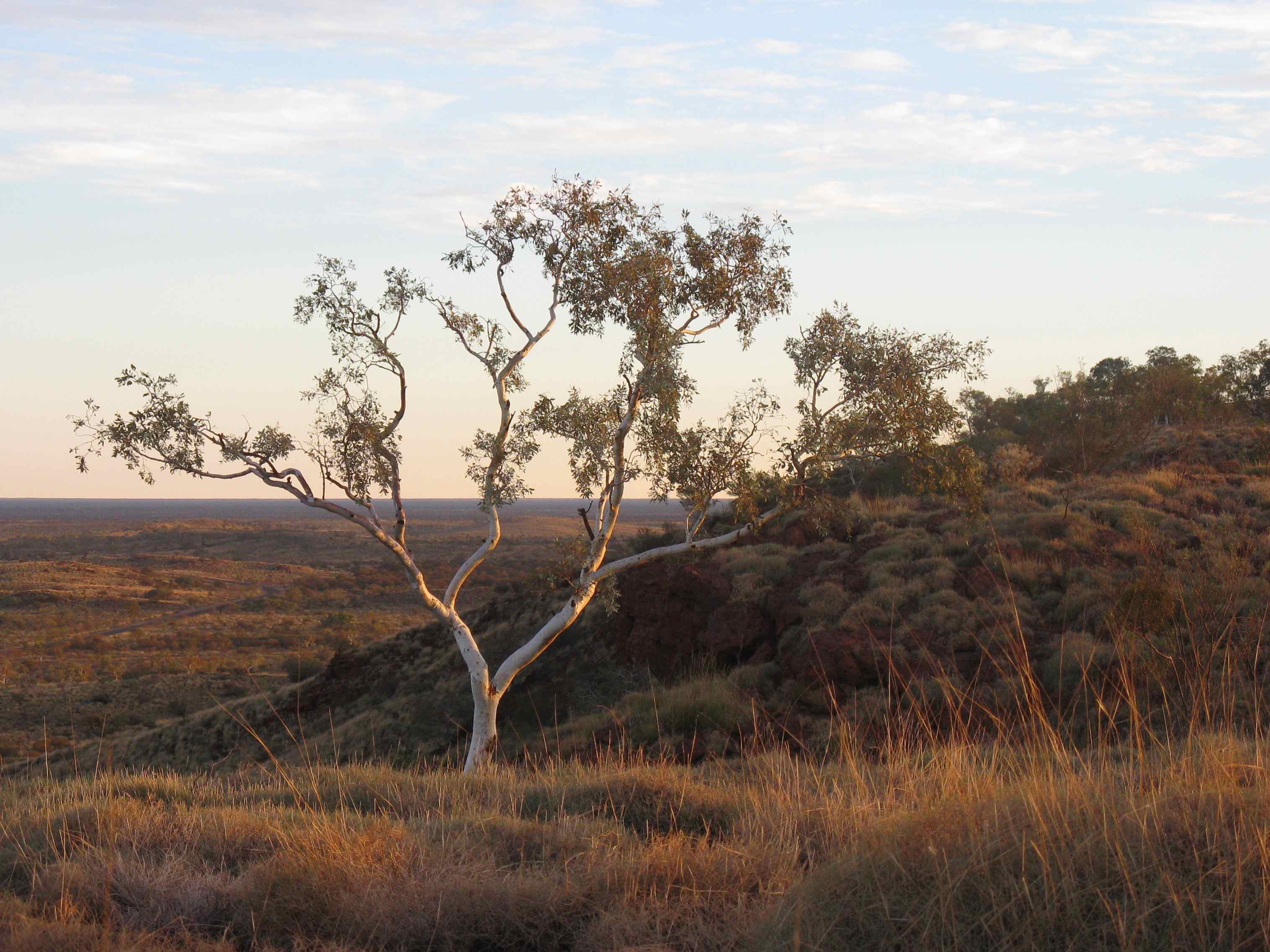
Pilbara, near Newman, WA

In the Pilbara (part of the homelands of the Martu people) taken by me in April this year.


Animal Kingdom is one of the grittiest films I’ve seen this year, while Bran Nue Dae has to have been the cheeriest. In between these two on the “grittiness” continuum is Bright Star, another favourite of mine from this year’s awards. It received multiple nominations and won in three categories: Best Cinematography (Greig Fraser), Best Production Design (Janet Patterson), and Best Costume Design (also Janet Patterson).

Finally, I was pleased to see that Contact won the Feature Length Documentary award. It tells the story of the first contact a group of indigenous Martu people had with white society in 1964. At the time, they were one of the last – if not the last – indigenous Australians to still be living traditionally with no knowledge of or contact with modern Australia. Amazing, eh? Just shows how big – and empty – Australia is.


South Solitary (Movie)

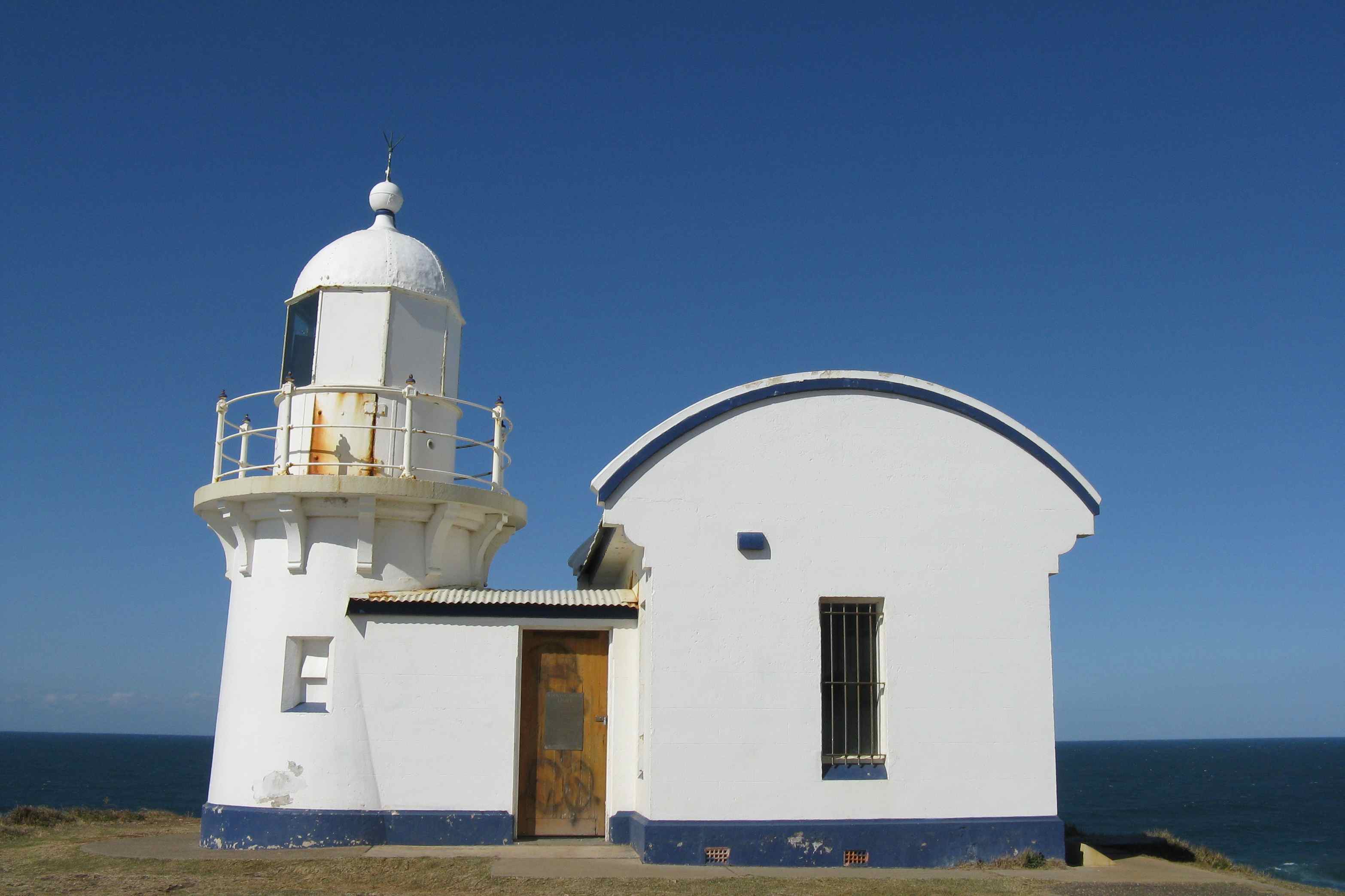
Tacking Point Lighthouse

Not on an island, not to the south, but an Aussie lighthouse - Tacking Point

What is it about lighthouses? They conjure up such a romantic notion of life in the wild, of communing with and/or battling the elements. They excite us with their extremes of remoteness and loneliness which can push people to their limits. And they paradoxically symbolise both life (light) and danger (warning). All of these are present to some degree in Shirley Barrett’s latest film, South Solitary, which is set on a remote lighthouse in the southern seas off Australia, in the late 1920s. Barrett says she chose this time period because it was before radio communications, and thus enabled her to explore how humans behave under extreme isolation.

The basic plot is that George Wadsworth (Barry Otto) and his niece, Meredith Appleton (Miranda Otto) arrive at an island lighthouse where George is to be head keeper. Already on the island are assistant lighthouse keeper Harry (Rohan Nichol) and his family, and the war damaged Mr. Fleet (Marton Csokas). These characters are all recognisable and the story is pretty predictable. Meredith is single, having lost her almost-fiancé in the first world war. Her uncle is the tough and somewhat unbending keeper of the old school. Harry is the “never-let-a-chance-go-by” womaniser, and Fleet the broody, awkward silent type. It’s generally realistic – Barrett doesn’t push the drama much  beyond the limits of our belief (though there are a couple of debatable points) – but it is also rather archetypal, and so nothing in the story really surprises.

For these reasons, I found it to be an enjoyable – though not great – movie. The things I particularly enjoyed were:

  • the cast, particularly Miranda Otto who perfectly juggles her fragile, rather too naive but also a little coquettish character; Rohan Nicol who plays the “cad” to perfection; Annie Martin who plays a knowing and unsentimental 10-year old; and Marton Csokas who, despite his almost clichéd stiff gruffness, has a voice to die for;
  • the setting – the way the island and the sea are filmed to convey, at different times, beauty, freedom and terror;
  • the social history of lighthouse living – such as the use of carrier pigeons and semaphore flags for “comms” (as we’d call it today).

Overall, this film is just a little too predictable to match the power of Beautiful Kate or Samson and Delilah or Animal Kingdom, but, it is an eminently watchable movie, primarily because of the cast and the setting. I’m not at all sorry I saw it – I could watch Miranda Otto, in particular, forever – but I’m not sure how long I’ll remember it.

Indigenous Australian stories – and digital technologies

In my recent on the literary road post, I referred briefly to Indigenous Australian stories. Rather coincidentally, I have just spent three days at a conference titled Information Technology and Indigenous Communities, hosted, primarily, by the Australian Institute of Aboriginal and Torres Strait Islander Studies (AIATSIS) with the aim of exploring “the ever-increasing use of IT to access, create and collate tangible and intangible cultural information and heritage”.  That’s the background – now onto more the interesting stuff!

Nabulwinjbulwinj rock art at Nourlangie Rock

A warning and a story: Narbulwinjbulwinj is a dangerous spirit who eats females after killing them by striking them with a yam

As I said in that literary road post, indigenous Australians have a rich story-telling culture. Theirs was a non-written culture and so stories and traditions were passed on orally and via art, music and dance. All these forms of communication have continued post-contact but, due to breaks in contact with country, many stories and traditions have, tragically, been lost.  It was consequently encouraging to hear, at the conference, about how remote indigenous communities are using modern digital technologies to tell stories – traditional and modern – and thereby re-engage with and reinvigorate their culture.

I hope this doesn’t sound paternalistic because it is not meant to – and I hope it also doesn’t suggest that the real problems don’t exist – but it was exciting to hear positive stories about these communities because most of what we, living in predominantly white urban Australia, hear are the negative – and hopeless sounding – stories of substance abuse, domestic abuse, and the awful health problems that are resulting in unacceptable disparities in life expectancy.

We were given a wonderful taster of what is being produced at the film night held on the first evening of the conference. We saw films by professional artists such as Warwick Thornton and Tracey Moffatt and by makers from various remote community projects. You can see a couple of these on the internet:

If you’d like to see more, here are a couple of sites, both providing access to self-produced and home-grown audiovisual content:

  • Mulka Project from the Yolngu people in northeast Arnhemland – and to see some of the variety of their work, using live action, animation, archival footage, check their YouTube site
  • IndigiTube, which contains media produced by a number of remote indigenous groups. If you click on Watch Videos you will see on the right hand side the variety of topics the videos cover from informational to “creative”, from traditional to modern.

But none of this is easy:

  • resources are minimal, so people spend way too much time writing grant applications – not just to run projects but for their very existence;
  • training is difficult and tends to be organised in-house often by people already stretched too thinly; and
  • access to the Internet is expensive, usually slow, and flakey or non-existent – the digital divide is a fundamental problem. (This was well demonstrated at the conference when they could not get a Skype session to work from a remote community in central Australia but could for a speaker from Montreal).

In other words, the challenges are immense, but the commitment and creativity are inspiring. There’s a long way to go and what culture has been lost is unlikely to be found, but the opportunities digital technologies offer for people to re-engage with each other, their communities and their culture are immense. It was a privilege to be able to there.

On the literary (cultural) road, in the Top End

Last month, Mr Gums and I holidayed in the Top End (of Downunder). I’m not quite sure where the Top End ends as it is a loose description for the northern part of Australia’s Northern Territory, but I believe it encompasses all the areas we visited. For ten days, we explored Katherine and Nitmiluk National Park for the first time, and re-visited Kakadu National Park and Darwin. Besides the fact that we love exploring Australia, it provided a good opportunity to escape the cold. The maximum in our city the day we left was 7.8degC. In Darwin, that same day, it was 32degC. A little different, n’est-ce pas?

Katherine Gorge

Gorgeous gorges in Nitmiluk National Park

Landscape

The landscapes here are ancient (dating back 1650 million years and more) and are home to some weird and wonderful flora and fauna, of which the crocodile is probably the most (in)famous. Like most landscapes, they have inspired many artists: writers, painters, songwriters, filmmakers (think Jedda and Crocodile Dundee for a start) and so on. And there is a rich and fascinating indigenous culture to learn about.

Jedda Rock

Jedda Rock, Nitmiluk National Park, taken from a helicopter

We didn’t really spend much time tracking white culture in the area, as I have in my other “literary road” posts, so I will just mention Charles Chauvel’s film, Jedda. Jedda (1955) is notable for a couple of reasons. Firstly, it was the first Australian film shot in colour. But, more significantly, it was the first to use indigenous actors in leading roles – and to confront some of the implications of white colonisation on indigenous Australians. It was shot on location in the Northern Territory, with the final tragic scene being shot at what is now called Jedda Rock at Nitmiluk. However, that footage was lost in a plane crash, and the scene was re-shot in rather different landscape – the Blue Mountains just west of Sydney! As a retired film archivist, it was special to me to see this rock.

Indigenous culture

Sign re Jarwoyn Rock Art in Nitmiluk

There are stories here ...

We took as many opportunities as we could to learn more about indigenous culture, as there are far fewer prospects for doing so down south.

The best way for short-term tourists like us to do this is to join tours, particularly those which have indigenous guides – and so this is what we did. The most interesting of these tours were:

Through these, we added to our slowly growing knowledge of how indigenous people relate to country and of their food and cultural practices. We dug for yams, threw spears and ate green ants. It was all good!

As KevinfromCanada wrote in one of his posts, indigenous people tend to have a strong oral story-telling tradition, and this is the case with indigenous Australians. No only did we hear some of their creation stories – and saw rock art depicting these stories – but we also heard more recent life stories, some humorous, and some not so. This story-telling reminded me of a rather infectious book recently reviewed at Musings of a Literary Dilettante, Every secret thing by new Australian indigenous writer, Marie Munkara. I have dipped into it, as it’s currently next to my bed, and it reads like an orally told story. Anyhow, it was a real privilege to have these stories shared with us.

… and in conclusion

Crocodile in the Katherine River

...but he can smile at you!

This was our second trip up north and won’t be our last. I could ramble on more about sites seen and lessons learnt but I’d rather leave you wanting… And so, because you know I like a bit of nonsense, I will finish here with the following, rather apposite words for the Top End:

Never smile at a crocodile!
No, you can’t get friendly with a crocodile;
Don’t be taken in by his welcome grin;
He’s imagining how well you’d fit within his skin!
Never smile at a crocodile!
(Words by Jack Lawrence)

Animal Kingdom (Movie)

If you thought No Country for Old Men was grim, take a look at the new Australian movie Animal Kingdom which won the World Cinema Jury Prize at the 2010 Sundance Film Festival. While No Country for Old Men was chilling in its portrayal of – there’s no other way to say it – evil, Animal Kingdom is more “down and dirty”. It deals with the escalation of violence between a relatively small-time (or so it seemed at the start) crime family and the police – and comprehends those grand themes of love, loyalty and betrayal. It’s set in Melbourne in the 1980s, a time when lawlessness was, let’s say, a little rife not only among criminals (ha!) but within the police force. I can’t remember the last time I saw a drama that brought so many shocked gasps from the audience – even when you knew what was going to happen!

The focus of the story is “J” (Josh), played by newcomer James Frecheville, whose mother dies at the start of the film. This results in his moving in with his grandmother and uncles, they making up the crime family in question. Josh, not yet 18 years old, quickly finds himself in a tricky situation from which he seems unable to extricate himself. As the criminal behaviours increase, so does our awareness of just how dysfunctional Josh’s extended family is, not to mention how murky the so-called “law” is, so that we, the audience, become almost as disoriented as Josh about who to trust. The film is beautifully controlled right up to the end: it has a (partially) satisfying resolution but at the same time leaves much unresolved. How good is that?

There is not a dud amongst the cast. Frecheville’s playing of Josh as a rather naive, (superficially) expressionless and uncommunicative teen is so well done that it’s hard to tell when he actually grows up, but grow up he does do as the film progresses. It is in his interests though not to let on…and that certainly adds to the tension for the audience.  Jacki Weaver (who went to my old high school – that of the “whispering gums”) plays the increasingly disturbing – or is it disturbed? – unsubtle mother of her family of criminals with great subtlety. Her true colours are a long time coming out though you suspect that, being the mother of such a family, those colours are there! (The gorgeous) Guy Pearce manages to play the sensitive cop so sensitively that he comes across as real, rather than sentimental as can happen with such roles. And Ben Mendelsohn (last reviewed here in Beautiful Kate) plays the most unhinged of the criminal brothers with a quiet coldness that is truly scary. The rest of the cast is equally good … but it’s time to move on to ….

First time director David Michôd’s direction is sure. The camera is often low and in your face – so that you really are in there with the characters much of the time. The lighting is, appropriately, mostly subdued. The pace is slow, but not too much so, as nothing is overly dwelt on. There’s no playing for our emotions here: things happen, people react, and we move on. (I’d love to give an example or two but don’t want to spoil it). Some significant scenes aren’t shown at all – Michôd gives his audience the benefit of the doubt that we will get it.

A quick Google search brings up a number of tags for this film. Teen drama, Gangster film,  and Thriller are some I’ve seen. I, however, prefer plain old Crime drama. Whichever way you classify it, though, this is a film to see – but only if you don’t mind gritty, confronting films. If you prefer your movies light and cheery, go see Sex and the City 2!

Bran Nue Dae

Broome

The gorgeous colours of Broome

You could hardly get two more different films than Warwick Thornton’s Samson and Delilah and Rachel Perkins’ Bran Nue Dae. Both are directed by indigenous Australians and both address indigenous Australian issues but, wow, how differently they do it. While Samson and Delilah is spare and almost without dialogue, Bran Nue Dae is exuberant and highly verbal. Of course it is, it’s a musical set in 1969.

There’s nothing I would rather be
Than to be an Aborigine
and watch you take my precious land away.

You have to see it to fully appreciate the contrast between the joyful (in fact cliched-musical-style) presentation of this song and the sting in its tail. Bran Nue Dae started life as a set of songs written by indigenous Australian musicians about growing up in Broome in the 1960s. Some time later, these musically eclectic songs were transformed into a musical that was a hit at the Festival of Perth in 1990. Rachel Perkins has apparently long wanted to adapt it for film. I have not seen the original play and so cannot comment on how the film compares with the original. Others can do that if they wish: I’m not always convinced that it is a worthwhile exercise to compare originals and their adaptations. Judge each work on its own terms is, I think, a better policy.

Briefly, the plot. Willy’s devout mother has scrimped and saved so he can go to boarding school in Perth and train to be a priest, but Willy (newcomer Rocky McKenzie) has met a girl (Jessica Mauboy), in his hometown of Broome, and is not so sure that priesthood is what he wants. Following conflict with the school’s priest (Geoffrey Rush), he heads back home from Perth, more or less under the wing of newly met Uncle Tadpole (Ernie Sigley). They obtain a ride with a hippie couple (Missy Higgins and Tom Budge), and the rest as they say is …. The encouraging thing about the film is that it celebrates our similarities (this is, after all, a coming-of-age story) while at the same time recognising significant differences (specifically the cultural dislocation experienced by indigenous people).

Comedy always seems to me to be a little tricky to review. There is such a fine line between being funny and being cringe-making. This film has the odd awkward or cringe-making moment – it verges on vaudeville and has its share of stereotypical if not downright cliched scenes. But these moments are few – and in fact they are, I’m sure, self-consciously there. Perkins wants us to make the connections between traditional musical comedy and her movie so that we can see its subversiveness – and it is subtly (or not so subtly) subversive. I found it genuinely funny – but with enough satire and moments of pathos (such as the references to deaths in custody) – that I got the message as well.

This film is at the other end of the black-white dialogue in Australia from Samson and Delilah. It is also starkly different from Rachel Perkins’ other musical (but definitely not comedy) film, One night the moon, which deals tragically with the refusal to engage in dialogue. It too is a spare film. These are both great must-see films, but it is also good to see humour being used in this important but mostly oh-so earnestly explored area.

And so, if you like to have a laugh – but with a little bite in it – go see Bran Nue Dae.