Monday musings on Australian literature: on 1925: 2, fostering Australian sentiment

During 1925, two sets of articles appeared which discussed the issue of fostering “Australian sentiment”.

Australian literature and labour
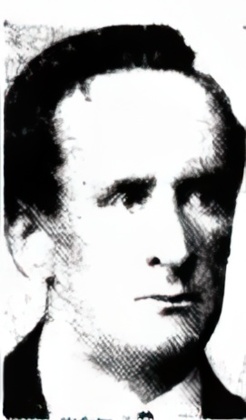
During the year, John McKellar (1881-1966) gave lectures on topics relating to literature and labour or the working class. On February 12, a newspaper titled Labor Call advised that at the February 17 meeting of the Malvern Branch of the ALP, Mr McKellar would speak on “Literature: Its relation to working class progress.” I didn’t know John McKellar but he has an entry in the ANU’s Labour Australia site. He was an “engineer, trade union official, editor and author”. He unsuccessfully stood for Labor in both state and federal elections and was associated with the Jindyworobak movement which focused on promoting Australian culture. He published books of essays, and historical articles, including one on a Gippsland-based Christian Socialist commune. His political and cultural interests are clear.

Anyhow, on June 11, this Labor Call wrote on another address given by Mr J. McKellar to the ALP’s Port Melbourne branch:

The lecturer prefaced his remarks by instancing the deep and lasting pleasure to be gained from the cultivation of the love of books. He spoke of the wonderful wealth of literature in the English language, and said that a feature of modern literature was that it got closer to the lives of the people.

He said writers like Bernard Shaw, H. G. Wells, and G. K. Chesterton “held the mirror of life by their works”, and recommended other works, including The Communist manifesto. But, reported the paper, he also said that

Too little appreciation was shown for our own Australian writers. One of the planks of the Australian Labor Party declared for the cultivation of an Australian sentiment. This was not, he stated, to be taken only in a political sense. The cultivation of an Australian sentiment was equally the work of Australia’s literary men.

And he apparently named some who had done just this, including Fernlea Maurice (actually Furnley!), R. H. Long, and Vance Palmer. (R.H. Long does appear in the Australian Dictionary of Biography. It says he wrote “wrote topical verse, prompted to do homage to Nature and to denounce capitalism …”)

A few days later, on June 17, The Australian Worker reported on the same lecture. They also wrote of his comments on the lack of appreciation for Australian writers, and on the fact that one of the ALP’s planks was “the cultivation of an Australian sentiment”. They continued:

He might have added that, generally speaking, Australian writers have to go to London for an audience that will appreciate — and pay for — their songs and stories of the land that froze them out.

Ouch!

Australian literature and art in schools

Quite coincidentally, the topic of teaching Australian literature in schools that came up in my 1925 Trove research also came up, briefly, in comments on a #Six Degrees post this weekend – on host Kate’s (booksaremyfavouriteandbest) post, in fact. She linked to David Malouf’s Ransom because one of her children had studied it at school this year (as they had, the American starting book, Shirley Jackson’s We have always lived in the castle). Rose (RoseReadsNovels) chimed in saying her children had, in the past, read another Australian novel for school, Melina Marchetta’s Looking for Alibrandi. I remember being disappointed when my children were in Year 11 and 12 that there was little if any contemporary (or any) Australian literature in their curricula.

The inclusion of Australian books in school curricula was also mentioned, in passing, in a Canberra Writers Festival session I attended – Poems of Love and Rage – with both Evelyn Araluen and Maxine Beneba Clarke mentioning that their books, Dropbear (my review) and The hate race (my review), were taught in schools. I love that recent Australian books speaking to current lives and issues are being taught. I know it’s neither easy nor cheap for schools to teach recent books, but I believe it is important.

This is not, of course, a new issue. It was discussed in the newspapers in late 1925 – on December 17 in Sydney’s Evening News (briefly) and The Sydney Morning Herald, and on December 18 in Newcastle Morning Herald and Miners’ Advocate (not then part of the SMH group) – after members of the Australian Journalists’ Association (AJA) had met with Mr Mutch, the Minister for Education. They argued that “to foster a pure Australian sentiment” there needed to be “an increased study in the schools of Australian literature and art”.

The best definition of “pure Australian sentiment” came from the critic A.G. Stephens, who, said the SMH, declared that “our literature was the mirror of our lives, and naturally we desired to see reflected in it our own country, lives, and characteristics.” He argued, wrote the SMH, that it was better “for children to read of gum-trees and their 400 varieties than of oak and fir trees” but that children were only learning “scraps of Australian literature, the lives, personalities, and ideals of the writers”.

The AJA also said that “the Australian author and artist were not getting a fair show in their own country”. They wanted the Department to work towards a “proportion at least 50 per cent” of Australian works in the schools. The Minister, a political being of course, disagreed with some of their condemnation but generally agreed with their sentiment! However, he said that “The department suffered from a constant financial malnutrition, and the purchase of Australian books was restricted on this account”. (The NMH&MA described the money issue as “a chronic state of financial stringency”.) Then he offered them another tack. They could

also arrange with the grand council of the Parents and Citizens’ Association that at least half of the prizes purchased for distribution at the end of the year should be Australian-made.

Nothing like passing the buck! But, not a bad suggestion all the same. The Evening News had its own suggestion. It argued that “if Australian literature were used largely in the examination papers, it would be taught as a matter of course in all the schools” and suggested that rather than approach the Minister, the delegation approach the University! I presume examinations were set by the University at that time.

And so it goes … (to use my best Vonnegut).

Thoughts, anyone?

Monday musings on Australian literature: Creative Australia Awards in Literature

Creative Australia is the – how shall we say it – rebranded Australia Council for the Arts / Australia Council. Under whatever name it has, this is the body that serves as the major arts funding and advisory body for the Australian Government. You can read its history on Wikipedia if you are interested.

The Australia Council Awards were established around 1981, and over time have been offered in various categories, but Literature has been one of them since at least 1987, again under different guises. These awards recognise outstanding and sustained contributions to arts and culture across a range of disciplines, including literature, music, dance, but sorting out a full and proper history of these awards is not easy. They are now named under the Creative Australia umbrella. The writers who have been given these awards include novelists, poets, nonfiction writers and children’s literature writers. They include First Nations Writers, like Ruby Langford Ginibi, Herbert Wharton and Bruce Pascoe as well as Alexis Wright.

In the lists below, links are to posts I have written on the writers.

Creative Australia Awards for Lifetime Achievement in Literature

As far as I can gather, the “Creative Australia Awards for Lifetime Achievement in Literature” dates just from 2023, and acknowledges “the achievements of eminent literary writers over the age of 60 who have made an outstanding and lifelong contribution to Australian literature”.

Australian Council Awards for Lifetime in Literature

ArtsHub calls the 2021 award that went to Arnold Zable a “Lifetime Achievement in Literature” award, and says he follows writers like Malouf and Garner in receiving this award. Earlier research I did suggested that in 2015 it was also called a “Lifetime Achievement award”.

Previous Award Recipients

You will see that this section of my list includes “awards” and “fellowships”. I could have just included the “award” but decided the fellowships might be interesting too. You might notice that some women are listed under their “married name”, like Judith Wright as Judith Wright McKinney, and Mary Durack as Mark Durack Miller. In the 1990s!

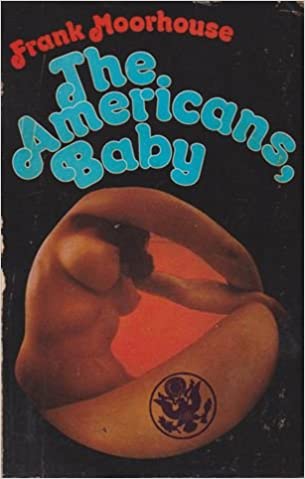
  • 2013: Australia Council Award for Lifetime Achievement in Literature: Frank Moorhouse
  • 2012: Australia Council Award for Lifetime Achievement in Literature: Herbert Wharton
  • 2011: Emeritus Award: Robert Gray
  • 2010: Emeritus Award: Peter Kocan
  • 2007: Emeritus Award: Christopher Koch and Gerald Murnane
  • 2006: Emeritus Award: Alice Wrightson
  • 2005: Emeritus Award: Ruby Langford Ginibi
  • 2004: Emeritus Award: Margaret Scott
  • 2003: Emeritus Award: Don’o Kim and Barry Oakley
  • 2001: Emeritus Award: Dimitris Tsaloumas and Amy Witting 
  • 2000: Emeritus Award: Donald (Bruce) Dawe and John Hooker
  • 2000: Emeritus Fellowship: Eric Charles Rolls
  • 1999: Emeritus Award: James Henderson and Eleanor Witcombe
  • 1998: Emeritus Award: Peter Porter
  • 1997: Emeritus Award: Boro Wongar
  • 1996: Emeritus Award: Rosemary Dobson and David Martin
  • 1996: Emeritus Award: Dorothy Hewitt
  • 1995: Emeritus Fellowship: Victor Beaver, Michael M Cannon, Barbara Jefferis, Ray Lawler, Vincent Noel Serventy, Ivan Southall, and Maslyn Williams
  • 1993: Emeritus Award: Ivan Southall and Judith Wright McKinney
  • 1993: Emeritus Fellowship: Hugh Geddes Atkinson 
  • 1992: Emeritus Award: Mary Durack Miller
  • 1992: Emeritus Fellowship: John Blight, Beatrice Bridges, David Rowbotham, Harold Stewart
  • 1990: Emeritus Fellowship: Dorothy Green and Roland Robinson
  • 1989: Emeritus Fellowship: Jack Lindsay
  • 1987: Emeritus Fellowship: Olaf Ruhen

The Story of the Oars

Back in 2018, I wrote a post on local author Nigel Featherstone’s first theatrical work, an art-song piece titled The Weight of Light. Seven years later, his second work of theatre, The Story of the Oars, has just finished its short season at The Street Theatre. Having just got back from Japan on Friday afternoon, Mr Gums and I managed to get to the last show this afternoon. For those of you who are not regular readers here, Nigel Featherstone, who has written several novellas/novels and has started spreading his wings into theatre, music and poetry, has featured on my blog several times. However, as I wrote in my post on The Weight of Light, I’m not an experienced theatre reviewer. I don’t have the language, and, as a reader, I find it challenging seeing something only once, and not being able to go back to check something out, as you can with a book! But, I do want to share something about this work.

The Story of the Oars

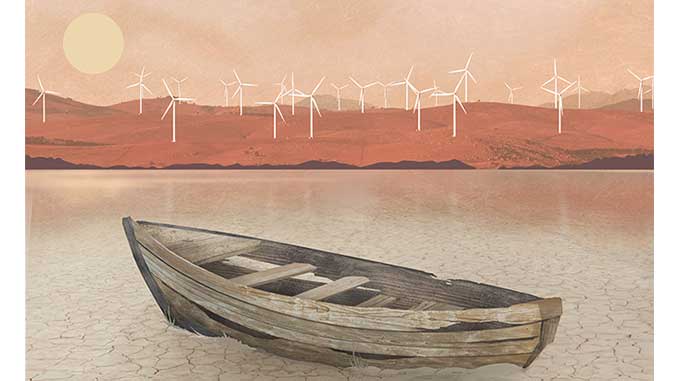
Promotion, designed by Tobi Skera

People from the Canberra region might get a hint about the setting of this play from the gorgeous graphic used to promote it. The setting, in other words, is Weereewa (in Ngunnawal language) or Lake George (as settler society named it), a lake that appears and disappears with changes in the weather. Over the 50 years I have lived in Canberra, I have seen it empty, full and in between several times.

So, this mesmerising lake and its behaviour is the setting for The Story of the Oars, which The Street’s promotion describes as “a play with spoken-word songs and music”. As the play opens, the lake is dry, and a father (Clocker) and son (Tom), played by Craig Alexander and Callum Doherty, have stopped to have a look. There is much intergenerational humour in the opening dialogue between these two as they spar about how much time to spend there, where to next, and so on. It’s “normal” Aussie stuff, until two women, played by Louise Bennet and Sally Marett, appear, and it soon becomes apparent that there’s a mystery involving Clocker that his son doesn’t know about. This mystery, and Clocker’s reluctance to admit to his son that he knows the lake, underpins the story. What Clocker learns though is, you can’t come back without the truth coming out …

“I am fictitious history” (Clocker)

The story draws on some familiar tropes – a father-son road trip, mysterious deaths in which bodies are never found, the master-servant class and privilege dynamic, a return from the past – but these are not heavy-handed. Instead, they are subtly revealed through a script which shifts smoothly back and forth between natural dialogue, with its humour and recognisability, and poetic soliloquies, with their strong rhythms. This is powerful, not only because the shifts between the two “forms” create breaks in intensity, but also because the natural dialogue conveys the main narrative thread, while the poetic pieces embody more of the emotional and thematic power. The language is beautiful, and it’s accessible, which frees the audience to focus on thinking about the themes and responding to the ideas rather than on trying to understand what’s being said and told.

Then there’s the music, which was composed and played by Jay Cameron on a partly dismantled piano that remained centre stage throughout. We attended a Meet the Makers panel before the performance, and the discussion about the music was particularly relevant. Nigel, for whom text and music are dual passions, had written the initial music, but then Jay was brought in for further development. They thought about the theme of revealing truth, of opening up things, and wanted a radical or physical approach to the music to support this. Then they had the idea of “opening up” the piano. The play commences with the piano’s boards or panels being removed, exposing its working parts. This is the condition in which it is played throughout. The music is minimally percussive at times, or softly melodic or intense at others, always supporting the prevailing emotions without dominating them or being cliched. We loved it.

It was clear from the panel discussion that much thought was given to the piano. It was seen as a core part of the show not just in terms of its role as music maker, but regarding its relationship to the actors, and to the lake. Which brings me to the staging. The stage itself represented the lake and all the action took place there. The titular oars – represented by two light rods – were also permanently on the stage. The lighting of the rods, of the lake’s outline on the floor, and of the backdrop, all changed dynamically to reflect who was in focus, or what was happening between the characters. The stage-lake, like the real one, thus came across as a living thing, a place within which people operate, to which they relate, and which can create fear or sustain or heal.

I wondered as we watched this show, how well it would translate to another place. Weereewa has such meaning for the Canberra region – physically and spiritually. Even if we understand the science behind its behaviour, we still respond to its mystery, to the way it dries up with what lies beneath being revealed only to be inevitably covered up again. Like truths and lies, perhaps. The universals – the narrative tropes and themes – would translate, but would the power of the place? It would all depend on the direction.

The story of the oars doesn’t resolve all the questions it poses about the decisions we make, the truths we withhold or reveal, but it ends on a moment in time when hope is a possibility. We liked that too. It’s a heartfelt, thoughtful and accessible work. It would be great to think that all this work doesn’t end here.

The Story of the Oars
Words and story by Nigel Featherstone
Music by Jay Cameron
Directed by Shelly Higgs
The Street Theatre, 19-21 September 2025

Monday musings on Australian literature: on 1925: 1, Literary societies

As I’ve done in recent years, I decided to start a little Monday Musings sub-series drawing on researching Trove to get a picture of Australian literature a century ago, that is, in 1925. One of the things that popped up as I started this year’s Trove trawl was the existence of an active community of people enjoying literary activities in the company of others, including through various literary and arts societies. I’m going to focus on two such societies.

Australian Literature Society

The most serious was probably the Australian Literature Society. I wrote a little about this society in one of my 1922 posts, so won’t spend a lot of time on it here. Essentially, it was formed in Melbourne in 1899, aimed at encouraging the study of both Australian literature and Australian authors. It still exists today, as a result of its merging in 1982 into the Association for the Study of Australian Literature. It is a scholarly organisation.

In the 1920s, it held meetings that were open to the public and were reported publicly in the newspapers. They presented lectures, held “review” nights, dramatic nights, a “woman’s night” (which I have researched for the Australian Women Writers blog), and more. So, for example, in 1925, they held a review night in May at which papers were presented reviewing Australian works. One work reviewed was Myra Morris’ Us five, a children’s book published in 1922. The Age (May 12) reports that J. McKellar’s paper (read by someone else) “said Miss Morris had woven a garland perfumed with the delicate flowers of fancy and imagination” but her book had been neglected. The question was how “to galvanise the Australian reading public into a realisation of the good work Australians were doing”. Other writers reviewed included Dowell O’Reilly, Bancroft Boake, and Conrad Sayce, mostly little known now.

At their dramatic meeting in September, they presented four “playlets” by Australian writers, three of them women, including Mary Simpson (whom we have featured on the Australian Women Writers blog). In other words their events focused very much, as per their aims, on Australian writing.

Australian Institute of Arts and Literature

This society is referred to by variations of its names in the papers, including the Australian Institute of the Arts and Literature and the Australian Institution of Arts and Literature. Minor differences perhaps, but why is there such sloppiness about getting the names of organisations right? It still happens!

Anyhow, this Institute was quite different from the ALS – and a big distinction is there in its name. It’s not about “Australian” literature, but is an Australian organisation interested in “arts and literature”. Like the ALS, it has a Wikipedia article, but unlike the ALS, it was short-lived. It seems to have been founded in Melbourne in 1921 and it folded around 1930. According to Wikipedia, the club gained significantly in status and membership numbers when lawyer and respected public servant, Sir Robert Garran, became president. However, 1927, he was transferred to Canberra and, again according to Wikipedia, “the Institute felt his loss keenly, and never recovered”.

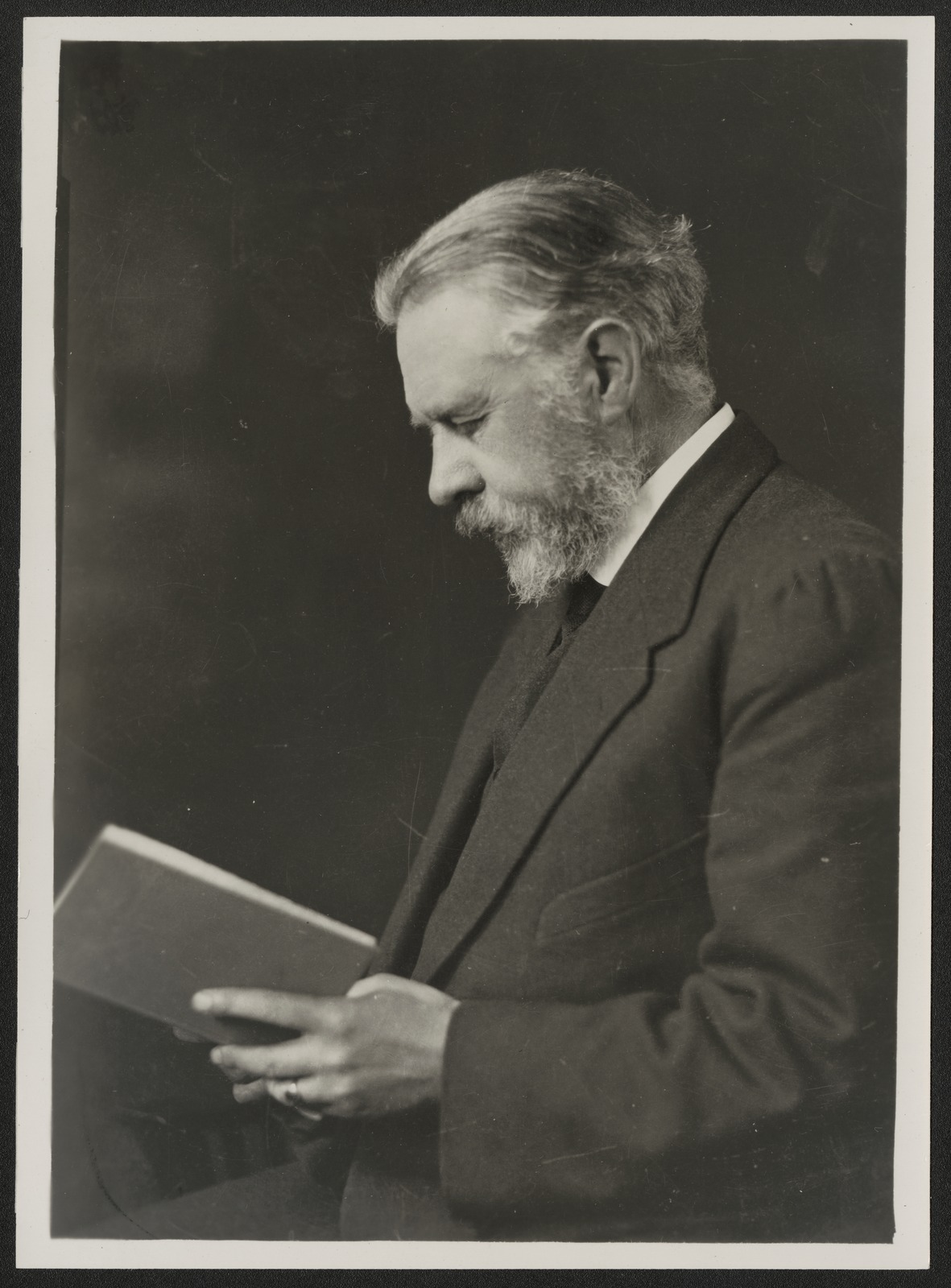
Louis Lavater, c 1917, Public Domain from the State Library of Victoria

However, during its heyday, it was highly active, meeting weekly during some of this time, and providing much entertainment and cultural nourishment for its members/attendees. Many of the meetings were reported in the papers. As Melbourne’s Table Talk (4 June) wrote, “music played an important part” in the pleasure of the meetings. And, while there was some music composed by Australians – specifically Louis Lavater whom Wikipedia describes as “a gifted leader of music in rural Victoria” – most of the music performed were the standards (Handel, Beethoven, and Mozart for example). However, there was one event devoted to Russian music, with songs by Gretchaninoff, Kveneman, Tchaikowsky; violin pieces by Wieniawski and Rimsky-Korsakov; and piano works by Rachmaninoff, Rebikoff and Liadow*. The report in Melbourne’s The Age (27 June) describes it “as altogether a programme out of the beaten track”. The music was followed by the clearly all-round Lavatar giving a lecture on “The Sonnet” which, the report said, dealt “sympathetically and appreciatively” with the work of “many of our sonnet writers during the past century”. I don’t know how long these meetings were, but it seems like they packed a lot in.

I’ll give one more example, this one reported by The Argus (31 August), which called it a varied program, “covering literature, music, and the drama”. So, ‘Louis Lavater, poet and composer, read a short paper supplementary to one previously given on “The Sonnet,” and dealing this time specially with some of the more important written in Australasia’. In addition, Vera Buck gave “an enjoyable piano and song recital” including two songs she’d composed (sung by Mary Killey); and Marie Tuck played piano pieces by Schumann (six delightful “Scenes from Childhood”), Beethoven, Chopin, and Schubert. Also, Frank Goddard, from the Melbourne Repertory Society, “gave two capital recitations”, and Don Mather and Pauline Abrahams acted the “Helen and Modus” scene from Sheridan Knowles’ drama, The Hunchback. Phew!

I think you get the gist. While it lasted, this was an active organisation and must have brought so much pleasure to Melbourne’s “culture vultures” (can I say that?).

Are you aware of any literary organisations from the past, where you abide?

* These are the spellings used in the report.

Hell Herons, The Wreck Event

In late June I attended the 2024 ACT Literary Awards which were held in the Canberra Contemporary Art Space. In my post on those awards, I shared the MCs’ acknowledgement of CCAS’s ongoing sponsorship. They made the point that this space is an appropriate venue because there are links between all artists, including the fact that many have interdisciplinary practices. At the end of that week, on 29 June, a work was launched that epitomises that idea.

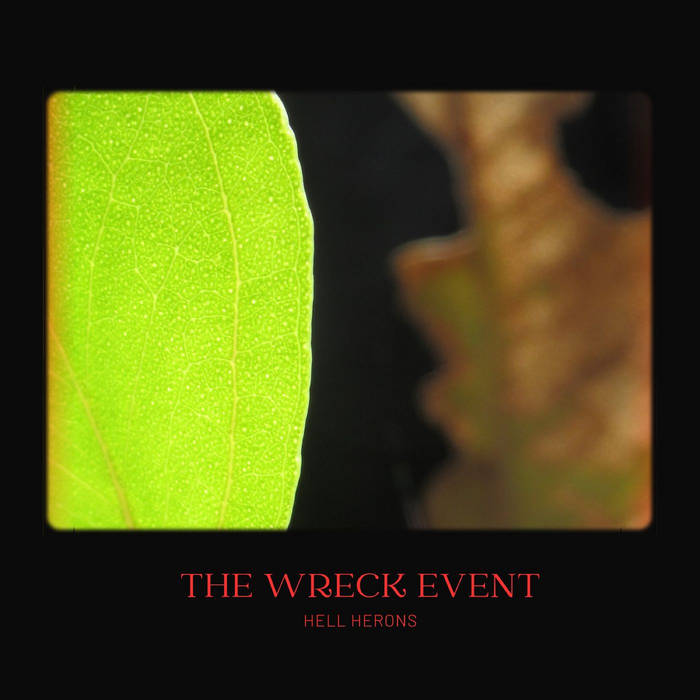
The work is called The Wreck Event, and it is a spoken-word-and-music album, produced by the Hell Herons. While I had gradually become aware of it through my various social media channels, it was an email from one of the creators, Nigel Featherstone, which filled me in on the details. The Hell Herrons are, he said, a “new ACT-based (mostly!) spoken-word/music collective”.

This collective comprises four inspiring creators:

  • Melinda Smith (ACT): won the 2014 Prime Minister’s Prize for poetry with her collection, Drag down to unlock or place an emergency call (still on my TBR); author of multiple poetry collections
  • CJ Bowerbird (ACT): won the 2012 Australian Poetry Slam, in addition to performances at literary, poetry and folk festivals in Australia and internationally
  • Stuart Barnes (QLD): won the 2015 Thomas Shapcott Poetry Prize, was shortlisted for the Montreal International Poetry Prize, among several prizes and commendations for his poetry including his most recent shortlisting for Like to the lark published by Upswell.
  • Nigel Featherstone (regional NSW, neighbouring the ACT): shortlisted for the Queensland Literary Award, and ACT Artist of the Year 2022; author of several novellas/novels, many of which I have loved. (See my posts.)

I described them as inspiring, not only because of the impressive body of work they have all produced over years of commitment to their practice, but because of their willingness to take risks and push boundaries, including this latest project.

Nigel wrote that over the last two and a half years, the Hell Herons worked “more or less in secret, combining spoken-word poetry with original music”, their aim being “to play, experiment, and test the limits of what’s possible with the way recorded spoken-word interplays with music, specifically the electronic kind”. For Nigel, this project has been “one of the most exciting, surprising and exhilarating projects” he’s ever worked on. It’s the first for which he has been responsible for all the music. (The closest he has come before was being librettist for The weight of light, which I reviewed back in 2018.)

All four wrote and performed the words, while Nigel wrote, performed and recorded all the music. Then, with funding from artsACT, the final 16-song album was mixed and mastered by Kimmo Vennonen of kv productions. Kimmo re-recorded all the vocals and added elements of noise manipulation to round out the sound.

More about Hell Herons’ story and detailed artist bios can be found at their website. But, I’m not sure that the site explains their strange name, Hell Herons. Apparently, it comes from the nickname for a dinosaur whose fossilised remains were found on the Isle of Wight some years go. The scientific name given to it, Ceratosuchops inferodios, translates to “horned crocodile-faced hell heron”. Project-supervisor Neil Gostling of the University of Southampton is quoted in the The Guardian as saying “This is a really exciting piece of news for the dinosaur world as these are some of the most charismatic and enigmatic predators.” I don’t think our four Aussie Hell Herons see themselves as predators, but they can lay claim to being both “charismatic and enigmatic”.

The Wreck Event is available on 40 music-streaming platforms, including Spotify, Apple Music, and Deezer. It can also be download through Bandcamp. Singles from the album are planned, with “Nocturnal” featuring Melinda Smith, already released. This will be followed soon by “Bitumen Stitches” featuring CJ Bowerbird, then “Off-World Ghazal” with Stuart Barnes, and Nigel’s “The Literaries” later in the year. It is categorised in AppleMusic as Electronica.

My thoughts

Some of you, I know, are like me and enjoy poetry but don’t always find the time to put in the effort it often needs to truly appreciate. I have enjoyed poetry since I was a child, but it hit me recently that it was introduced to me orally, via my parents reading it to me. And that, I think, is the best way to experience and understand poetry – read it out loud, or hear it spoken. In this blog, I have talked about spoken poetry before, including posts on an interactive app for TS Eliot’s The wasteland, with its compelling spoken performance by Fiona Shaw.

Now, I am speaking about spoken poetry again, this time set to music. I can imagine what an exciting, fun, demanding, uplifting – and yes probably also challenging – time the Hell Herons had putting this work together, but the end result is something beautiful and mesmerising. Interestingly, the tracks list and liner notes do not identify which poet is responsible for which. Because it’s a collective? If you know them you can work it out.

There is a trajectory, or arc, to the order of the pieces, starting with a wake-up poem, “Wake into you”, which commences,

Here it comes:
the first breath
of a new day

And ending with the beautiful and almost elegiac, “Be this your peace”, which closes on us going to bed,

A nap on the couch in the afternoon, another 
the next day if you need, nine 
novels piled high beside your bed,
light out before dark comes on,
dreams that lift you up, silence. 
when the moon lies beside you

Be this your peace. 

These have both narrative and symbolic value to the whole. Between them are poems that express things in the poet’s lives or of concern to them, some personal (like “Nocturnal”, and “True shelter, for Robyn”), some political (like “Off-World Ghazal, for Judith Wright”), and some of course both (like “Little Gods”). As this was a project which started during the pandemic, its impact is felt, indirectly, but also directly in poems like “Lockdown Week 9 (show me)”. Nature, which was probably more dear to us than ever during the pandemic, features strongly, but especially in poems like “Paperdaisies”.

The whole album is worth listening to, but of course, some poems and performances stand out. I can’t name them all, and anyhow, for each of us it will be different. Poetry, and music, are personal. I will close on one that I found both powerful, and interesting, “Off-World Ghazal, for Judith Wright”. This poem was inspired by Judith Wright who, at the end of her career, wrote a series of poems in an Arabic/Persian form called Ghazal. Ghazals, says Wikipedia, “often deal with topics of spiritual and romantic love and may be understood as a poetic expression of both the pain of loss or separation from the beloved and the beauty of love in spite of that pain”. They have a strict form, and must not exceed 15 rhyming couplets. Wikipedia also says that some argue that, traditionally, the poem is “addressed to a beloved by the narrator”. Stuart Barnes’ ghazal seems to encompass this, with the beloved being the “World”. It is cheeky, angry and sad all at once about what is happening to the World, and the separation or loss which feels imminent. The distorted voice, and Nigel’s insistent music, further enhance the poem’s power.

Do check out The Wreck Event on your preferred music streaming service. It’s an inspired project, and I’d love to hear what you think.

Monday musings on Australian literature: Digital Lending Right

Australia implemented a Public Lending Right (PLR) in 1975. It’s a Federal Government program which makes payments to eligible creators and publishers, in recognition of income they lose (in other words, don’t get!) through loans and other free uses of their books in public lending libraries. PLR schemes operate many countries around the world, including New Zealand, Canada, Israel and many in Europe. (There is a complementary ELR, which does the same for books held in educational institutions).

Fist full of money
(Courtesy: OCAL from clker.com)

To be eligible for Australia’s PLR (or ELR) payment, creators:

  • can be an author, editor, illustrator, translator or compiler;
  • must be an Australian citizen or a permanent resident;
  • must be entitled to receive royalties from their books; and
  • must be living.

What this list doesn’t say is that eligible books had to be printed, which was logical in 1975. However, the scheme has not kept up with technology – not with audiobooks (which have been around for a long time now) and certainly not with eBooks.

For most authors the payments are very small. Author Annabel Smith (whose Whiskey and Charlie I’ve reviewed) explained it in detail in her excellent How Authors Earn Money blog series. However, it has long been a thorn in their side that their digital and audio works have been excluded. That has now been rectified – at last – and the joy I’ve seen around the various sites, Twitter, Instagram, and so on, has made clear just how important it is, both practically and philosophically.

The ASA (Australian Society of Authors) has been lobbying for this extension for a long time, but stepped it up in recent years, arguing that

The outbreak of COVID-19 made the case for digital lending rights even more compelling. When libraries closed, patrons increasingly borrowed in ebook and e-audio format, and will possibly continue to do so into the future. We believe the increased investment in digital resources and new borrowing patterns may have a long term effect on the way patrons interact with libraries.

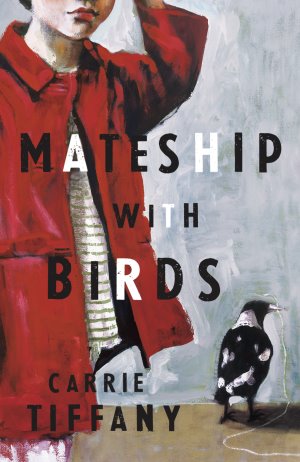
Mateship with Birds (Courtesy: Pan MacMillan)

Author Carrie Tiffany, whose Mateship with birds I’ve reviewed, was, apparently, a Digital Rights Lending Ambassador. The ASA quoted her on Instagram:

I am relieved and grateful that the injustice writers face around digital lending rights will finally be addressed. My thanks to the ASA, and to all of the writers who made submissions on this issue.

Writers are listeners. By putting our ear to the world we connect people and inspire compassion. At last the Australian Government has listened to us. Let’s hope this conversation will continue.

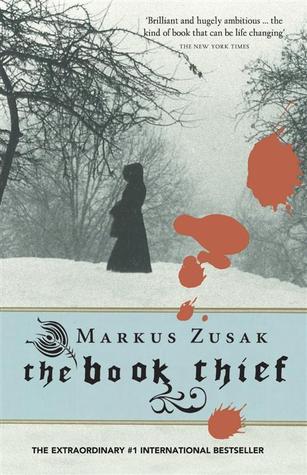
Markus Zusah, The book thief

Many authors weighed in, but I’ll just share one other writer quoted by the ASA, Marcus Zusak, whose The book thief I’ve also posted on:

The announcement of Digital Lending Rights is a great win for Australia’s writers. It’s not just the financial rewards, but the affirmation that our work still matters. Australian stories still matter.

We have to be a country that loves its own stories, and this is another step in supporting the people who write them.

“Have to be”? I would like to think we “are”.

“You are required”

This DLR announcement was just one small part of the new National Cultural Policy announced today (available online). It is titled “Revive” (which conveys something about the current state of our Arts industries), and is structured around “five interconnected pillars”:

  • First Nations First: Recognising and respecting the crucial place of First Nations stories at the centre of Australia’s arts and culture.
  • A Place for Every Story: Reflecting the breadth of our stories and the contribution of all Australians as the creators of culture.
  • Centrality of the Artist: Supporting the artist as worker and celebrating artists as creators.
  • Strong Cultural Infrastructure: Providing support across the spectrum of institutions which sustain our arts, culture and heritage.
  • Engaging the Audience: Making sure our stories connect with people at home and abroad.

The policy contains many initiatives across the arts sectors – literature, music, the screen and performing arts, and so on – including a recognition of minimum rates of pay for arts workers, but I’m not going to list them all here, nor critique them. After all, no policy will please everyone.

Announcing the policy today, Arts Minister Tony Burke said to the arts community, “you are required”. Yes they certainly are … I hope these are not just words, but Burke does have some cred in supporting the arts. Let’s hope this policy provides the kickstart our artists and arts companies need.

Meanwhile, those of us concerned about the “collecting and exhibiting institutions” – like the National Library of Australia, the National Film and Sound Archive, the National Gallery of Australia, and the National Museum of Australia – are pleased to see them included in the policy, under Pillar 4. The critical issue facing them – a real and serious reduction in their core funding – is not resolved here, but the policy states that:

There is an ongoing issue with respect to long-term neglect of core funding for the collecting institutions, for both capital and operations. Updated government policy on core funding and sustainability of the institutions does not form part of cultural policy but future funding for Australia’s collecting institutions is being assessed as part of the Budget process.

We wait with hope … but for now, I applaud this win for our literary creators. It augurs well for a revival of government interest in arts and culture.

Peter Wegner’s Centenarians

In 2021 Australian artist Peter Wegner won Australia’s prestigious portrait painting prize, the Archibald, with his painting of the Australian artist Guy Warren, who also happened to be a centenarian. That year also happened to be the prize’s centenary. Coincidence? Who knows! Regardless, the portrait was in fact part of a Centenarians project which Wegner has been working on since 2013.

As it so happens, on our drive down to Melbourne a few days ago we stopped, as we often do, at the lovely Benalla Art Gallery. It has a great cafe overlooking the Broken River (a tributary of the Goulburn); it has three exhibition spaces offering varied programs; and its little gift shop is also excellent. On this visit, the smallest space, the Simpson Gallery, was occupied by an exhibition titled Peter Wegner: The Centenarians. This exhibition comprises pencil and beeswax sketches of 20 centenarians made by Wegner between 2015 and 2019. (Given some of the subjects we saw were born in 2021, this means that “centenarians” includes those nearly 100 as well as those who were actually 100 when they were drawn).

The exhibition notes quote Wegner on the process and his aims:

Each drawing was completed from life in an afternoon or morning with little alteration to that first impression, they are moments captured within a time allowed.

The exploration of ageing and how well we age is central to this project. Maintaining human dignity and independent living are important issues as we age, alongside the question of what it means to have a productive and meaningful life. One’s good fortune in life was acknowledged by nearly all of my sitters—sometimes bewilderment about having reached such an age was expressed.

I loved them, partly for the art work which seemed to capture their subjects beautifully (though of course, I don’t know them), but also for the centenarians’ little commentaries which Wegner incorporated into the sketches.

Boz Parsons (b. 1918, sketched 2018)

Most of these commentaries reflected on how they’d lived to an old age – and here’s the probably-not-surprising thing, there was no consensus. For example, some never drank, some had a glass of wine with a meal, while one had beer before dinner and wine with dinner. A couple mentioned genes, though not many. A few mentioned work and/or attitude, like not worrying. As Boz Parsons said, “there is no secret to living a long life”!

So, for example, when sketched in 2019, Jack Bullen (born 1921) had two glasses of wine every night, and still had his driver’s licence but didn’t have many “close friends” because “they didn’t see the distance”. Sylvia Draeger (also born 1921) reckoned “the secret to a long life – take one day at a time”. Married twice, she says “I’m not looking for another husband”. Maisie Roadley, another born in 1921, says “I never worry. Hard work and a glass of wine every night”.

Erwin Fabian (b. 1915, sketched 2017)

But my favourite is Mim Edgar (born 1914, sketched 2018) who said “I don’ feel very old. When I’m sitting down I feel 16. When I then stand up I feel 100”. Haha, know the feeling!

Gallery Director, Eric Nash, introduces the exhibition in its catalogue. He comments that the portraits have both a “stillness, and a sense of energy and vitality”. He’s right. The life is there in the expressions, while the poses have a lovely stillness.

Nash also suggests that the portraits have lasting value for two reasons. One is that they preserve “the sitters’ accumulated knowledge and insights”. He notes that the artist has ensured this by dipping the drawings in beeswax “to protect the pencil markings”. This also gives the work an effective sepia tone. The other reason, Nash says, is that the works

could inform how we as a society support our older residents to continue enjoying enriching lives. Wegner has particularly sought sitters who “are still living lives with my mobility, curiosity and purpose … the exploration of ageing and how will we age is central to this project”.

Colin being congratulated on his 100th by two grandchildren.

To conclude, I thought I would include a photograph of my own centenarian, my Dad, who was born in 1920 and died in 2021. I’m not sure what he would have said to living a long life. He did have a whisky every night until his mid-90s; he was an optimist; and he valued good friends and family. He was alert until the end. Vale, again, dad.

Peter Wegner: The Centenarians
Benalla Art Gallery
1 July -28 August 2022

Note: For copyright reasons, I have not included images of complete portraits here, but you can see Wegner’s winning painted portrait of Guy Warren at Wikipedia.

Monday musings on Australian literature: on 1922: 6, Great Australian novel (again)

The things you find in Trove! As l was trawling Trove for my 1922-project earlier this year, I came across a reference to the Great Australian novel. Just one. So, I put it aside, thinking it would be a neat, quick little post for a busy week like this one. Little did I know …

Before writing this post, I thought I should do one more quick little search. Nothing much came up, except that buried in one of the few articles my search retrieved was a reference to a book titled The luck of 1825 by Horace B. Pithouse. Launceston’s Daily Telegraph (18 November), wrote that “the rough draft of the MS was originally sent for sake of a criticism to the de Garis Great Australian novel competition”. The de Garis Great Novel Competition? Ever heard of it? I certainly hadn’t.

So, I decided to do an Internet search, and up popped the Australian Dictionary of Biography (ADB) with an article on one Clement John De Garis (1884-1936). Heard of him? I certainly hadn’t.

However, he was quite a character, and you can read about him at the link on his name above. In a nutshell, ADB lists his occupations as aviator, financier/investor, novelist, produce merchant, and short story writer, and describes him as “a man of effervescent charm and superhuman energy—a ‘prince of ballyhoo'”. Born in Mildura, he got involved in the dried fruit industry and was entrepreneurial in developing and promoting the product. But, it didn’t stop there. ADB writes that his “ambitions took on a manic quality and he began to see himself as all things to all men. A self-constituted patron of the arts, he launched a Great Australian Novel Competition”. This competition was advertised in 1919 with a closing date in early 1920. Hobart’s World (3 January 1920) promoted the competition, which had three prizes (£300 for first, £150 second, and £100 third). The goal was a “really great Australian novel”; the writer had to be Australian born; and “the story must be typically Australian”, which did not mean that ‘”local color” must be that of a shearing shed, or of the thirsty tracks in the Never Never.’

A humorist named “Dip-Tin” in Western Australia’s The Moora Herald and Midland Districts Advocate (5 May 1920) promoted it in verse, and included this on the potential subject matter:

There’ll be yarns about Ned Kelly. 
And Judge Bevan, and Oenpelli— 
Bet your life! 
And be sure each central figure 
Will become a dinkum digger, 
Plus a wife. 

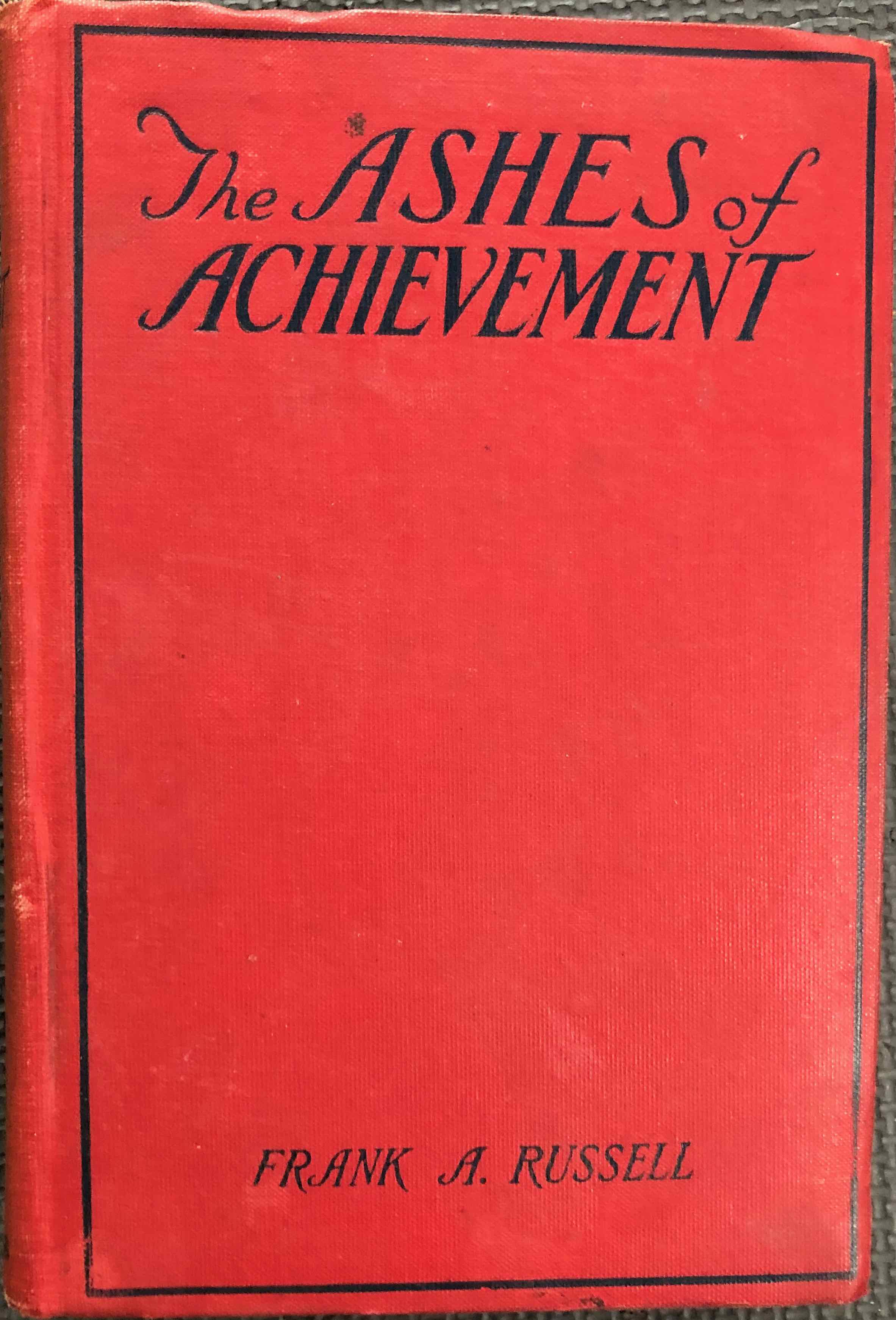
Late in 1920, the winner was announced – Frank A Russell’s The ashes of achievement. Heard of it? No, nor have I! And that’s not surprising because the reviews, overall, were poor. Take this one (with an unreadable by-line) in Perth’s The Call (31 December 1920), titled ‘When DeGaris slept! The prize Australian novel candidly reviewed. A literary “Dud” – which isn’t brilliant – and isn’t even Australian’. You get the gist. The writer critiques the book’s failure at length, exposing its weaknesses in subject-matter, characterisation and language. If you’d like to know how to thoroughly pan a book, here is a good example, and if what he (I think it’s a Hector) says about it is right, his assessment is fair enough. Hector (?) concludes that:

With the publicity that has been given it The ashes of achievement will probably be widely read. But it will not be remembered.

The Queenslander (1 January 1920) agrees with The Call, albeit with brevity:

The C.J. DeGaris Publishing Company is worthy of commendation for its courage and confidence, because the work of publishing in these days is a very expensive business, but if the remaining novels are not better than The ashes of achievement the effort to enhance the literature of Australia will not be very considerable. There is more real Australian atmosphere in a few chapters of a score of other Australian novels than in the whole of Mr. Russell’s very long and mediocre production. The test of a novel lies in its atmosphere and character studies, but while in the 30 chapters of “The Ashes of Achievement” one is continually meeting new characters, and as suddenly dropping them, there is none of any outstanding merit …

I did find one positive report – in Perth’s The Southern Argus and Wagin-Arthur Express (8 January 1920) – but it was cursory:

Under such circumstances [that is, winning this prize] one would naturally expect a good novel, and one is not disappointed. The ashes of achievement is an Australian novel, by an Australian author, and not flavored with gum leaves to make it so. It maintains the reader’s interest from beginning to the end, and will rank amongst the best of international novels.

Fair point about the “gum leaves”, but …

I’ll leave De Garis here, and will get to the article from Smith’s Weekly (16 December 1922) that inspired this post. It starts by saying that ‘about once a week in our “esteemed contemporaries,” Australian authors are adjured to write the Great Australian Novel’ and goes on, tongue-in-cheek, to explain why it’s so difficult. It’s because, for example, Australian heroes and heroines can’t match the English versions with their titles and valets, and rose-leaf skin. Further,

No British hero or heroine has to work. Readers dislike working heroes and heroines. They know all about work without reading about it. 

Smith’s writer concludes:

Instead of picturesque characters, ivy-clad ruins and dear old London, we have galvanised-iron, bank managers, kerosene-tins, gum-trees, the golden wattle-bloom, shearers’ strikes, drought, the W.C.T.U., the blue, blue sky (over-worked), the last-lady-help-but-one, Old Pardon the son of Reprieve, Clancy of the Overflow, and dear old Woop Woop.

That is all the material we have. Personally, I don’t see how we can make the Great Australian Novel out of it. 

Love it … the less said about the Great Australian novel the better, I reckon.

This was the sixth post in my 1922 series.

Previous 1922 posts: 1. Bookstall Co; 2. Reviewers on Australianness; 3. ALS Women’s night; 4. Adventure novels; 5. Art books

Monday musings on Australian literature: on 1922: 5, Art books

As I wrote in my fourth 1922-themed post, some genres and forms kept popping up in the articles I was reading about Australian literature. One was the adventure genre which I featured in the last post. That wasn’t particularly surprising, but today’s topic, art, is another matter.

However, before we get onto that, a note about by-lines. I’ve had it in mind for some time to do a Monday Musings post on by-lines. I probably will one day, but I need to do more research. One of the issues is that many of the articles I read in Trove have no by-lines, while those that do are often pseudonyms – and my, are some of them difficult to identify. There are two relevant to this post – Narrung who appears in the Sydney Mail (and Smith’s Weekly) and J. Penn in Adelaide’s The Register. I haven’t identified either of them yet, so if you know anything, please say so in the comments.

Now, onto art … I was intrigued to see such focus on writing about art, but I suppose I shouldn’t be, as the 1920s was a lively time in Australian art when Modernism, along with other exciting new styles and approaches, was taking hold.

Art in Australia

Issue no. 4

It’s not often that whole journals are reviewed these days – though there are exceptions, like the Griffith Review. I was surprised then to see how often Art in Australia was featured in 1922. The journal, which was published from 1916 to 1942, had a chequered publication history. Wikipedia explains that it had four “series”: (1) No.1, 1916 – No.11, 1921; (2) New Series Vol.1. No.1. (February 1922) – Vol.1. No.2 (May 1922); (3) Third Series No.1 (August 1922) – No.81 (November 1940); (4) Series 4, No.1 (March 1941) – No.6 (June 1942).

Two of the articles I read came from early 1922, and they discuss Issue no. 11. Penn, writing in Adelaide’s The Register (7 January), starts by saying that the introduction to the eleventh issue of this “fine literary and artistic serial … confirms an opinion frequently expressed in The Register Literary Page that the publication of such beautiful works as have emanated from the enthusiastic publishers in Sydney must … have been largely a labour of love”.  Penn says this because after this issue the new version will be a larger (newspaper-style?) format and produced less frequently.

The eleventh issue “is one of the best”, Penn says. It contains reproductions from artists like the Lindsays, Arthur Streeton, and G. W. Lambert, and literary contents from people like Lionel Lindsay, Sydney Ure Smith (the journal’s editor), Zora Cross, A. G. Stephens, and Christopher Brennan. Those of you interested in the history of Australian literature will recognise some names here like Cross, Stephens and Brennan.

The writer in Melbourne’s The Argus (21 January) also talked about this issue, but focuses on describing some of the art works produced within its pages. S/he writes, for example, that:

George Lambert is represented by his head of Miss Mollie Dangar, a pencil sketch that most critics would probably prefer to his “Bush Landscape,” reproduced in this number, though one must make liberal allowances, of course, for the loss inevitable in all coloured process work. 

The issue also includes “Red Gum Tree” by George Streeton (presumably a typo for Arthur). The article concludes by advising of the changed format to come. It will be “in larger size, though there will be fewer plates. The price will be only half that charged now, but the publishers say that there will be no diminution in quality.”

Late in the year, Adelaide’s The Mail (2 December) wrote about the November 1922 issue of Art in Australia, from the third series, but starts by commenting on the journal as a whole:

Once in each quarter the soul of Australia is nourished and kept alive by the group of artistic and literary spirits who under the name of “Art in Australia, Ltd.,” register the vitality and departures of art and the arts in Australia to-day.

I love the belief that “the soul of Australia” is “nourished and kept alive” by a “group of artistic and literary spirits”. The writer argues that, while painting in Australia can’t “yet compare in range and extent of output with English resource”, this journal “can proudly take its place beside the older Studio“. Not only is it “accomplished in its colour reproduction” but it has “a freshness and virility characteristically Australian”.

Moreover, the issue is, the writer continues, “possessed especially of literary strength centring upon living and candid appreciations of Henry Lawson on the part of A. G. Stephens and J. Le Gay Brereton”. Melbourne’s National Gallery director, L. Bernard Hall, writes on aesthetics, and someone called “F. Bennicke Hart deals suggestively with the prospect before Australian music, stressing the propriety of at any rate continuity with the British spirit”. (Hmm…) There are also “characteristically caustic comments and epigrams” from Norman Lindsay, and poetry from writers like Dorothea Mackellar and Leon Gellert. And much more, but you get the gist of the breadth of the arts covered by the journal.

The writer concludes that “the duty and privilege” of all who support progress in Australian art is to not only support the journal, but introduce it to others.

Art books

Newspapers in 1922 also carried articles about art books, but Narrung, in the Sydney Mail (28 June) starts by discussing the book production industry in Australia, noting that books produced here had been of poor quality: “the less said about them the better; no library would care to own them, and they remain a sad record of ignoble effort and artistic failure”. Meanwhile, overseas, beautiful books were being produced, books that “should have set a great example locally for those who had eyes to see and admire”. Angus and Robertson’s and The Bulletin had produced some beautiful books, but they were made overseas.

Then, Narrung writes,

after a long period of sterility the subscription edition of “Satyrs and sunlight,” by Norman Lindsay and Hugh McGrae, made its appearance some 10 or 12 years ago, and until recently remained probably the handsomest example of a book ever turned out in Australia.

After a few more years, books of “great artistic merit” finally started to be produced here, like Elves and fairies by Ida Rentoul Outhwaite, The art of Fred McCubbin, and the famous catalogue, the first Hilder book. Suddenly, Australian publishers, including Art in Australia, were publishing beautiful books, albeit many being limited or subscription editions. A particularly beautiful example, according to Narrung, was Norman Lindsay and Leon Gallery’s The Isle of San. Narrung concludes with:

The fact remains that when some local artist or author is singled out nowadays for a special edition the result is always a delight, and Australian books, like other of our products, compare with the best of the world’s market.

The writer in Melbourne’s The Herald (2 December) also takes up this issue of publishing beautiful books, saying that “every painter whose work is worthy gains nowadays the recognition for which, in the past, genius often strove vainly”. S/he reviews The art of Sara Levi, published in 1922, calling it an “attractive portfolio”. Sara Levi was a nature painter, and was involved in several art societies at the time. “Brighton Beach”, a “charming picture” that was included in this volume, apparently fetched $4,400 in 1990, the highest price she’s fetched to date.

A superficial survey, but I’m enjoying learning (and sharing) these little insights into literary Australia of a century ago.

Previous 1922 posts: 1. Bookstall Co; 2. Reviewers on Australianness; 3. ALS Women’s night; 4. Adventure novels

Monday musings on Australian literature: on 1922: 4, Adventure novels

Continuing my 1922-themed posts, it became clear as I delved into Trove that certain genres or forms kept recurring in the reviews and articles I was reading about Australian literature. I plan to share them over the next few 1922 posts, starting with adventure in this post.

You might remember that my first 1922-themed post was on the N.S.W. Bookstall Co. Adventure novels, it seems, were among their popular fare. A brief article in The Australian Worker (22 February) discusses a couple such novels, but starts by saying that the N.S.W. Bookstall Co.

continues to deliver the goods, and as the goods, in the shape of vigorous yarns by Australian writers, appear to be selling well enough to make a further continuation certain, the company can be congratulated in believing years ago that local talent would make good if it were given the chance hitherto denied it.

Adventure novels

Some of you might remember a recent Monday Musings I did on Australia’s favourite genres, in which I reported that a Swiss-based study had determined that Adventure and Classics were our favourites. I won’t revisit that now, as you can read the post and its source information yourself if you’d like, but I was surprised that Adventure seemed so popular now. I am not so surprised, however, given the still relative newness of the Australian settler colony in 1922, that adventure was popular then. What did surprise me, however, was that, despite the longstanding strength of the bush myth, the bush was not the main setting I found – but I did find a few.

One was titled The black opal. I don’t know how many novels have been titled The black opal, but they abound, including Katharine Susannah Prichard’s of 1921. In 1922, however, there was one by journalist-cum-novelist Jack North. The Northern Territory Times and Gazette (16 September) writes that it is sub-titled “A story of Australian love and adventure”, but that

it is more than that. Notwithstanding the melodramatic incident which Percy Lindsay selected for his cover design, The black opal is a wholesome, well-written novel in which the lure of the bush triumphs over the glamor of the city.

I think “Jack North” might be a pseudonym. He had written, at that time, two other popular novels, Harry Dale’s Grand National and The son of the bush, plus, apparently, scenarios for the “movies”. (The article writer used those quotation marks for this clearly still strange new medium.)

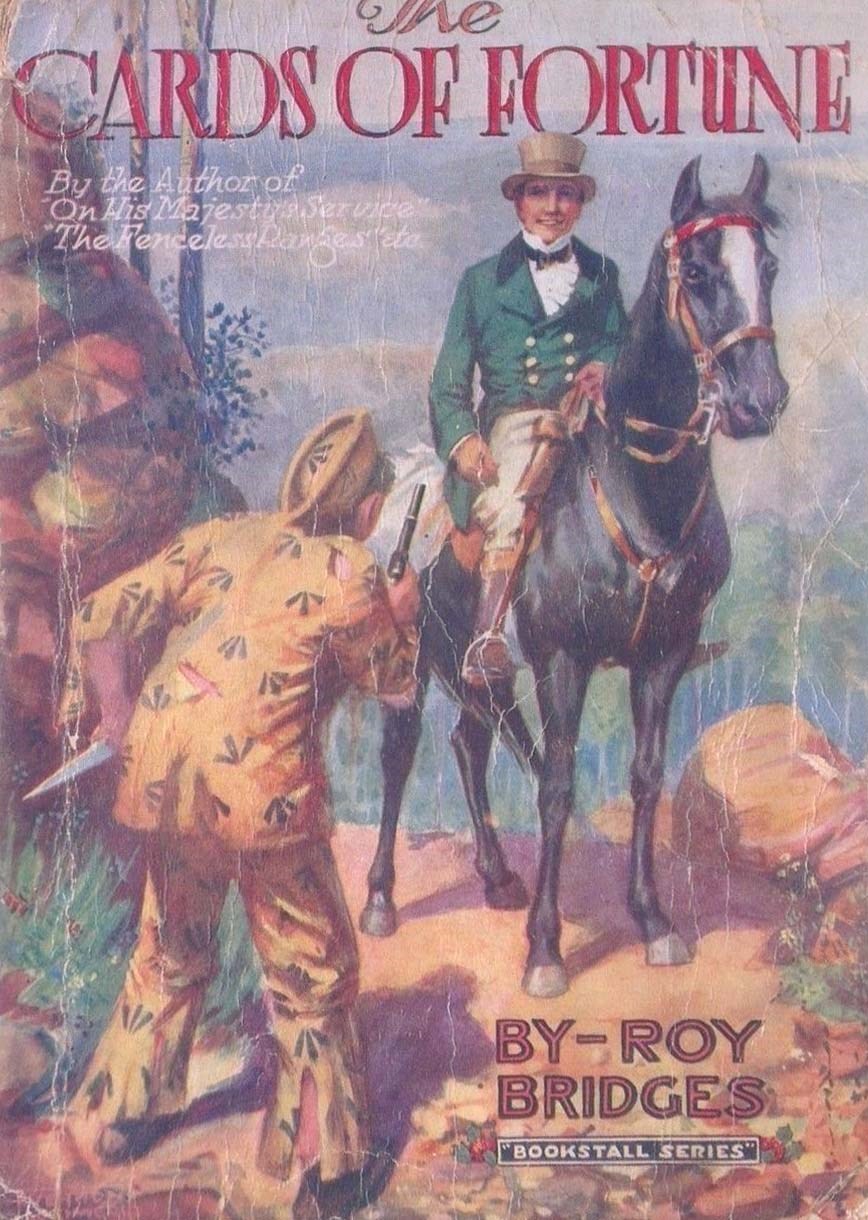
A more traditional-sounding bush-adventure novel is Roy Bridges’ historical fiction, The cards of fortune, which the writer in the Kandina and Wallaroo Times (20 December), says is set in “the stirring days of the first settlement in Tasmania”. (Not sure all would call those days “stirring”, at least with a positive connotation!) It is, says the writer, “an appealing love story which is developed with the aid of stirring adventure”. (There’s “stirring” again”.) The novel, about a bushranger hunt, is described as a “bright little story of the early days”. Adventure novels are, I guess, escapist!

Island adventure novels

The most common adventure novels I found, however, were island adventures, which I think could qualify as a sub-genre?

The Australian Worker article I mentioned in this post’s opening briefly discusses two novels, S.W. Powell’s Hermit Island and Jack McLaren’s Feathers of heaven. The reviewer clearly admires the publisher, but not necessarily these books. They are both set to the northeast of Australia, and, s/he says,

are big-bulged with thrilling adventures in those places where the codes of life, to put it mildly, are not exactly of the parlor or the Sunday school variety.

They hope “this island type of yarn won’t be overdone”, because, they say

There’s plenty of love, and adventure, and goodness, and badness in Australia without going north-east in a boat to look for these elements of a readable story.

I will digress briefly here to say a little about Jack McLaren (1884-1954), because he was quite a prolific and popular writer. According to Wikipedia, he wrote novels based on his own experiences and was renowned for his “authenticity of background”. The son of a minister, he apparently ran away from school when he was 16, and worked as a cabin boy and seaman before landing in North Queensland in 1902. For the next 10 years he worked and travelled around the islands north and northeast of Australia, like Fiji, Java, New Guinea, Malaya and the Solomon Islands. He wrote for The Bulletin before turning to novels in 1919. Feathers in heaven was around his 7th novel.

The writer in the Kadina and Wallaroo Times (8 March) says that McLaren was one of Australia’s most popular authors. Feathers in heaven, this writer says, “is a novel of stirring adventure written round the illegal hunting of New Guinea’s beautiful birds-of-paradise … [and] … of course there is a girl in the story”. For this writer, the novel offers “wholesome adventure”.

Our Kadina and Wallaroo Times writer also discusses Powell’s Hermit Island, identifying it as being “of the Islands adventure class”, and set “off the beaten track” in Tahiti. It involves suspicion of piracy, for which there is “circumstantial evidence” and “develops rapidly to a wholly unexpected climax”. Sydney’s Sun (12 February), reviewing the same novel, makes a strong point about its Australian quality, starting the review with:

For a fine adventure story, neatly told, it is not always necessary to go overseas. Here is an Australian author, S. W. Powell, who knows the knack. Hermit Island is excellent value … The yarn is as capably done and as well imagined as any that comes out of California, and it has the advantage of speaking our own Australian language. 

S.W. Powell had, at the time, written four popular island-adventure novels. The genre was clearly a goer back in the 1920s.

Another reviewer, this time in the Northern Territory Times and Gazette (18 July), discusses Powell’s The pearls of Cheong Tah. Like the previous reviewers, this one comments on Powell’s inclusion of humour in his novels – along with tragedy and romance.

Some random concluding observations

Did you notice the focus on “wholesome”? “Little” things like this provide such insight into their times.

Also, I struggled to find cover images. These books may have been popular, but most were cheap paperbacks and have not, apparently, survived well. Neither have the literary reputations of most of their authors. As always, it’s interesting to see how popular authors of a time fare over the long term. Could it be argued that the more popular a work, the greater the likelihood of appealing to more ephemeral interests and tastes and therefore of dating?

Previous 1922 posts: 1. Bookstall Co; 2. Reviewers on Australianness; 3. ALS Women’s night