Leslie Marmon Silko, The man to send rain clouds (#Review)

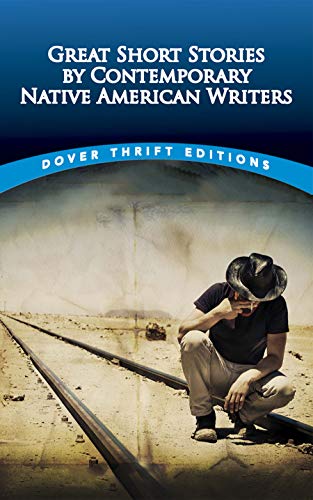
After a two-month hiatus, I return to my reading from Great short stories by contemporary Native American writers with a three-decade jump from D’Arcy McNickle’s 1936-published “Train time” to Leslie Marmon Silko’s “The man to send rain clouds”, which was published in 1968 .

Leslie Marmon Silko

Again, I’m using anthology editor Bob Blaisdell’s brief intro and Wikipedia’s article to introduce the author. According to Wikipedia, Leslie Marmon Silko (b. 1948) is one of the key figures in “the First Wave of what literary critic Kenneth Lincoln has called the Native American Renaissance“. I don’t know much about the trajectory of Native American writing, within the larger American culture, so this gives me a bit of a guide to how it has gone.

Silko was born in Albuquerque, of Laguna Pueblo ancestry, and grew up on the Laguna Pueblo reservation – which I visited with my family on a memorable road trip through New Mexico in December 1991. (For those of you who haven’t been to New Mexico, I recommend it as a special place to visit – physically, historically and culturally.) Silko, says Wikipedia, was schooled at local Indian schools, before attending the University of New Mexico from which she graduated with a BA in English Literature, in 1969. She then briefly attended law school, before deciding to pursue a literary career full-time, which has included teaching at several universities.

This post’s short story, “The man to send rain clouds”, was published while she was an undergraduate. It earned her a National Endowment for the Humanities Discovery Grant, and continues to be a popular anthology choice, apparently. She has, since then, written several novels, a “poetic memoir”, and many essays. In one of those essays, Wikipedia says, she criticised Louise Erdrich for abandoning “writing about the Native American struggle for sovereignty in exchange for writing “self-referential”, postmodern fiction”. Interesting. I’ve only read two books by Erdrich, and one so long ago I can’t recollect the details, but The bingo palace (1995) does confront the challenge of marrying tradition with contemporary life.

Blaisdell’s introduction includes a statement by Silko on why she writes, which is

to find out what I mean. I know some of the things I mean. I couldn’t tell you the best things I know. And I can’t know the best things I know until I write.

I understand what she means here. I don’t find talking easy. I find it easier through writing to work out what I know and mean.

“The man to send rain clouds”

Wikipedia summarises Silko’s themes as being grounded in a wish “to preserve cultural traditions and understand the impact of the past on contemporary life”. Her career, it says, “has been characterised by making people aware of ingrained racism and white cultural imperialism”. Many of her characters “attempt what some perceive a simple yet uneasy return to balance Native American traditions survivalism with the violence of modern America”. This is all part of a continuing theme in the Southwest regarding “the clash of civilisations” and “the difficult search for balance that the region’s inhabitants encounter”. Much of this is already evident in this early short story of hers.

“The man to send rain clouds” concerns the interaction between Pueblo Indians and Christianity. It reminded me in a small way of Marie Munkara’s Every little thing (my review) except that Munkara’s is a full-length and often laugh-out-loud work versus Silko’s more wry short story. However, both show the power-play between the original people of a land and the churches that came in to save them, and also how the oppressed First Nations people can sometimes, at least, work it to their advantage.

Silko’s story concerns the death of an old man, Teofilo. It opens with his body being found under a “big cottonwood tree” by brothers-in-law Ken and Leon. It describes their going through some traditional death rites, including preparing the old man’s body with face-paint, before bringing him back to the pueblo. It’s here that the title is explained: they say to the old man, after scattering cornmeal, “Send us rain clouds, Grandfather”, which specifically introduces the importance of rain to them and suggests its role in their rites. On their way back into the pueblo, they meet the priest who asks whether they had found Teofilo, but they give a noncommittal reply, telling him that “everything is OK now”. When the priest replies that they “shouldn’t allow him to stay at the sheep camp alone”, they continue with their obfuscation:

“No, he won’t do that any more now”.

I loved Silko’s subtle use of humour in the story. In this brief conversation, Silko sets up exactly how the locals deal with the priest, politely but also determined as much as possible to keep him out of their business. The rest of the story concerns their funeral business, including another delightful encounter with the priest when one of the pueblo’s members feels that some “holy water” wouldn’t go astray.

It’s a quiet story, but a strong one. The tone is measured, the pace unhurried, mirroring the values and attitudes of the pueblo people who are doing their best to preserve their customs while maintaining peace with those who have the power. The same tone is used for the priest’s non-confrontational response, and his own decisionmaking, reflecting, presumably, his need to work with rather than against the people. It’s a story ripe for discussion.

The imagery is beautiful, evoking the snow-capped mountains, the arroyos, mesas, and sandy flats that characterise that part of New Mexico. There is a strong use of colour, which is mostly muted, supporting the tone, with a touch of red to herald something bigger. And of course there’s the rain motif that runs through the story, reflecting its importance to the pueblo’s survival.

A moving story, that I commend to you. It’s a quick read.

Leslie Marmon Silko
“The man to send rain clouds” (orig. pub. 1968 under the name Leslie Chapman)
in Bob Blaisdell (ed.), Great short stories by contemporary Native American writers
Garden City: Dover Publications, 2014
pp. 45-49
ISBN: 9780486490953

Available online via the University of New Mexico.
Monday musings on Australian literature: Trove treasures (8), Pro-novel reading, 19th century

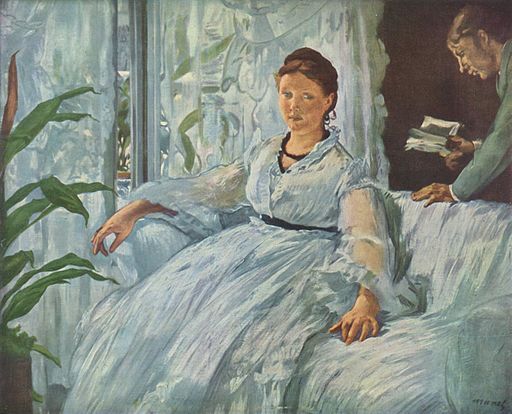
Édouard Manet, The Reading (1865-1873), Manet’s son reading in the background. Public domain, via Wikimedia Commons.

Continuing my Trove Treasures series, I am turning this week to some of the discussions I found about the value of novel-reading. Three months ago, I shared some of the arguments made against novel-reading, but in fact, in the papers I found, there seemed to be more arguments pro such reading. So much so that I’m planning two posts – one on the mid-to-late 19th century, and the other on the beginning of the 20th century.

Today’s 19th century articles range from 1867 to 1899, and they traverse the topic from some interesting angles.

Prose vs Poetry

The earliest article was published in the Geelong Advertiser, on 7 May 1867, but appears to be from London’s Saturday Review. So, not Australian-written but published here. Several of the articles I’ll discuss comment on what reading novels can teach us, but this one did surprise me. It commences:

As every novel turns upon love and matrimony, the first effect of universal novel reading must necessarily be to familiarise the young imagination with the idea of both. 

What’s this assumption that “every” novel is about love and matrimony? Was this so at the time? Well, not “every”, because then our writer offers exceptions. Regardless, the writer recognises that novels aren’t the means by which people become aware of the “matrimonial adventures to come”. Fairy tales, for example, contribute to the construction of “masculine and feminine ideals”. What is “left” for novels to do is “to train and develop an instinct which is already in existence in the germ” but, says our writer, this knowledge must “ripen gently”. Indeed,

premature cultivation tends to every species of social mischief. Nobody ever yet knew a very sentimental boy, unless indeed he came under the exceptional category of a genius, arrive at much good; and though to pass the same general censure upon sentimental girls would be hard upon the sex; it may be believed that women who go through life most happily whose capacity for sentiment has flowered late.

The language is convoluted but I think you get the gist. Basically, the article claims that sentimentality stimulates imagination at the expense of observation:

Sentimental boys and girls seldom notice nature, keenly, and with the eye of a student or an inquirer. They get into a lazy habit of liking sunsets, and deriving a number of prematurely solemn impressions from them; but they have no healthy interest in butterflies, birds nests, and fossils.

The problem, according to the article, is that this sentimentality – that comes, remember, from understanding “matrimonial adventures” too quickly – results in high sensitivity to natural phenomena but limited understanding of how it all works. For these reasons, the writer does not greatly like poets – particularly Byron. Wordsworth is acceptable, because the writer believes his “sentimentality” is that “of a middle-aged genius, not of an overgrown and morbid boy”.

Was this a common view of romantic poetry? The article then describes the value of novel-reading:

a fairly good novel presents young minds with a better and more correct notion of the relations between men and women than they would be likely to form if left to their unassisted efforts. It does away with a good deal of unnecessary mystery in which young people are inclined to clothe the idea of love. Marriage is not what it appears to be in most romances, but it is more like the literary pictures than it is like the vague and hazy conception which emanates from the youthful brain. Fiction in prose is truer to nature than fiction in verse, and novelists may be trusted more than poets. 

Take that, poets! The reason, says our writer, is that “prose fiction is generally written by less morbid people”. The article then discusses the sorts of people who write novels. Its point is that novelists (aka “literary men”) mix in the world while poets live in the closet or within garden walls. Surely a generalisation! Anyhow, then he gives a recommendation – Mr Trollope. Our writer is concerned about

flirtation with married women becoming an unnecessarily frequent ingredient in his literary conversaziones; but life is life, and it is probably difficult to produce monthly humour without a little impropriety. On the whole, the bent of his pen is to sketch love and matrimony as healthy domestic pleasures, and not to depict them in the artificial colours in which diseased imaginations dress them.

Basically, Trollope is a good example of the “better class of novel writers” and is much better for the English youth than French romance! I’ll leave you with that thought and move to the 1890s …

A practical education

The two articles from the 1890s were published in Queensland’s Darling Downs Gazette (17 December 1890) and Sydney’s Sunday Times (26 February 1899). The first article quotes two British men on the value of novel reading. The first was Sir Edward Clarke QC MP, who, opening a “free library” in London, said that reading novels “was not a mischievous but a good thing”. “Good novels”, he believed, contain “elements of history” that are more valuable and easier for readers to digest than can be found in other books.

The other was the Scottish poet, biographer and translator, Sir Theodore Martin, who was presiding at the annual meeting of another free library, this one in Wales. That year, 2,492 novels had been read versus 811 of everything else combined. This disproportion was similar in other libraries, and Sir Theodore had some qualms. He didn’t criticise “reasonable indulgence in the delights of good novels and romances” because they widen our sympathies, and, he hoped, they inculcated a taste for reading which might lead readers to more demanding studies in areas like natural history, biography, poetry, and science. (He, clearly, saw poetry as having a higher value than prose fiction!) For Sir Theodore, reading fiction does not leave the lasting impression or give the satisfaction that other reading does.

The 1899 article was titled “The reading of novels and the morals of the public” and came from Women’s World, edited by Vivienne. Vivienne’s interest is in whether reading novels is “a judicious measure of education” and whether it should be encouraged. Her response? She failed to see that such reading caused “any great harm or moral wrong”. Indeed, she argued that novel reading provided “a kind of practical education”.

Novels illustrate the mechanism of the world at large, and show the various points of the machinery of life. They tell of every-day episodes; of the romance of days gone by; and, in fact, deal with life in all its forms, from the lowest to the highest grades of society, and from the earliest ages to present times. 

Sounds right to me, but the passing comment at the end did stop me: “of course, children should not be allowed to read novels, for obvious reasons”. 

So, there you have it … there were those who viewed novel reading positively, even where they had some reservations. This is a tiny sample, but you can see some progression from the idea mid-century that novels were primarily about marriage to the end of the century when they were seen to have broader relevance to understanding the world. I’ll be interested to see if things change in the next few decades …

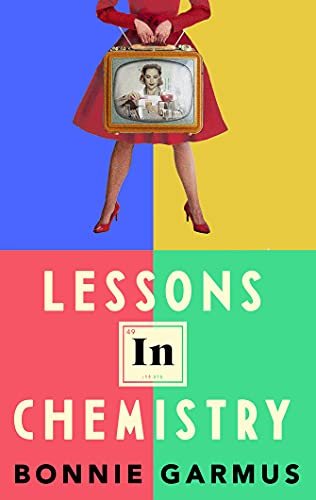
Bonnie Garmus, Lessons in chemistry (#BookReview)

Bonnie Garmus’ debut novel Lessons in chemistry made a splash on best-of-2022 booklists last year, resulting in my reading group scheduling it this year. It is an enjoyable read, but the intriguing thing is that more than one reader I know couldn’t remember what it was about a few months after reading it. Each remembered enjoying it but could not recollect the details. Why is this? Why, in fact, are there some books that we read and enjoy but forget quickly, while others linger long after we’ve turned the last page? I will leave this for you to ponder. Meanwhile, I’ll get onto the book.

Most of you will know the basic story, but I’m going to document it anyhow – because, you know, I might forget it down the track. It is historical fiction set in the 1960s, and tells the story of female scientist, Elizabeth Zott, whose only ambition is to be a research chemist but whose career is constantly derailed by powerful men’s determination to keep women out of the laboratory. She ends up in the most unlikely job, the host of an afternoon cooking show which, despite her best efforts not to fit the female-TV-star mould, becomes a hit.

Everyone in my reading group thoroughly enjoyed the read, despite some reservations, to which I’ll return later. Our overall assessment was that, with its stereotyped, larger-than-life characters who don’t really change, it read like a fairytale, fantasy or, revenge comedy. But, we also recognised that it dealt with some relevant and serious topics, particularly regarding the inequitable treatment of women – in science, and in life. So, here is the question: given my earlier comment regarding readers forgetting its details not long after reading it, how effective is its light, comedic approach to making the message stick? Humour is a tricky thing. We love reading it, but does it move us to take its target seriously?

Like all writing, some humour is more effective than others. Satire, for example, with its characteristic clever, ironic wit engages my brain and, in doing so, can help the message go down. Lessons in chemistry has some of these elements, but it felt more situational and laugh-out-loud than satiric. This is what makes it so enjoyable, but such humour can sometimes bury the message. Time will tell for me!

And now, let’s look at its humour. Some of my favourite scenes came from the cooking show which Elizabeth Zott uses to teach her housewife audience chemistry, but more than that, to empower them. In one show, she describes different chemical bonds, one being the hydrogen bond:

“I call this the ‘love at first sight’ bond because both parties are drawn to each other based solely on visual information: you like his smile, he likes your hair. But then you talk and discover he’s a closet Nazi and thinks women complain too much. Poof. Just like that the delicate bond is broken. That’s the hydrogen bond for you ladies — a chemical reminder that if things are too good to be true, they probably are.”

“See?” a woman in Santa Monica demanded as she turned to her sullen seventeen-year-old daughter, the girl’s eyeliner so thick, it looked as if planes could land there. “What did I tell you? Your bond with that boy is hydrogen only. When are you going to wake up and smell the ions?”

Her poor producer Walter Pine, whose boss is demanding sexy clothes and cocktails with the cooking, tries in vain to rein her in.

Rowing is another topic that recurs through the novel. Obstetrician Dr Mason wants to get single-mother Elizabeth back in the boat when her baby, Mad, is just one year old. He discovers that she has a keen, helpful neighbour, and suggests that she ask this neighbour to help out:

“At four thirty in the morning?”
“This is what is so unsung about rowing,” Dr. Mason said, turning to leave. “It happens at a time when no one’s really that busy.”

That made me splutter my coffee – as did so many other observations throughout the book. It is a chuckle-inducing read, replete with funny one-liners and surprising similes alongside its array of set pieces.

But, as I said, my group did have some reservations, though they varied. One, for example, didn’t like the anthropomorphism involving the dog, Six-Thirty, while others of us appreciated his astute commentary on his human companions. Another felt it read a bit like a catalogue of issues – suicide, rape, domestic abuse, single-parenthood, and plagiarism, among others. And a couple of us found it somewhat anachronistic. I usually give historical fiction authors a lot of leeway in this regard, but the novel felt imbued with a strong 21st century sensibility. For example, Elizabeth Zott’s young daughter responds to minister Wakeley’s question about her age with “I’m not allowed to give out private information.” Most of us remember the 1960s, but we don’t remember this sort of idea being promulgated. It was just “don’t talk to strangers”.

“Chemistry is change” (Elizabeth)

Garmus was 65 when the book was published, making her a late-bloomer in terms of a novelistic career. However, it also means that she has a lot of life experience to share. She – through Elizabeth – believes that science has much to offer human beings. Elizabeth is infuriated that “too many brilliant minds are kept from scientific research thanks to ignorant biases like gender and race”. She believes that science can be empowering – “when women understand chemistry, they understand how things work”. Indeed, for her science encompasses

the real rules that govern the physical world. When women understand these basic concepts, they can begin to see the false limits that have been created for them. 

Beyond this, however, is the over-riding philosophy that life, like chemistry, is all about change. Through the book Elizabeth has to cope with a range of challenges, some of them serious, and some, in fact, tragic. It is her faith in science – plus the support of some decent people, it has to be said – that see her through.

Lessons in chemistry is not a perfect book, but it is great fun to read and it has a big heart. I can forgive it its little failings for these.

Brona (Brona’s books) and kimbofo (Reading Matters) both enjoyed this book too.

Bonnie Garmus
Lessons in chemistry
Transworld, 2022
391pp.
ISBN: 9781473594531

Monday musings on Australian literature: Trove treasures (7), What police read

Number 7 in my Trove Treasures series was inspired by a little piece that appeared in Sydney’s Daily Telegraph on 6 December 1946. It was titled, “Men join police force after reading novels”. Naturally, I was intrigued. What novels, for example?

The story’s subject was one Constable J. Simons who had just resigned the police force, after having served for 17 years. He was speaking at a Police Association meeting and he said, to quote the Telegraph, that “most men joined the police force for adventure after reading detective stories”. (The rest of the piece was about why he is was resigning, which related to pay and and conditions, particularly regarding slow promotion due to the system operating at the time.)

It made sense that detective reading might inspire young men to look to the police as a career, but I wanted to find out more. Unfortunately, this proved quite difficult because it was hard to find specific search terms to get what I was looking for. As it turned out, in the time I gave to it, I didn’t find much, but what I did find was illuminating.

What I found were articles about what policemen (as they were mostly then) read – rather than about what caused them to join the police force. One article came from New York in 1914, and another two came from Queensland in the 1930s. All indicated that policemen did not read detective stories. Neither talked about what might have inspired them into the force, but both stated very clearly what they read once in the force.

New York New York

The 1914 article appeared in Sydney’s The Sun on 4 August. It commences with:

Whatever the world at large may think of detective stories, they do not win the esteem of those whose business it is to follow up crime. The police care least of all for this line of literature — a fact discovered by reports of books most favored among those consigned by the New York Public Library for use at the police stations. 

This story, then, is about the NYPL’s providing books to police stations for police reading. The article implied that what the police read might be affected by the sorts of books selected! They’d be, the article said, “standard and classic books” chosen by the library authorities “as to what they ought to read, that being an inclination of librarians everywhere”. (Oh dear, but I think this sort of high-minded prescription was more the case then, than in modern libraries!) Nonetheless, the article does explicitly discuss detective stories:

According to report, these particular readers find little of interest and nothing of profit in the ‘detective stories’ which have such a wide sale with the ununiformed public. The policemen say that ‘real’ detective work is not done after the fashion of the sagacious heroes of Conan Doyle and his predecessors, and therefore they scorn romantic crime-hunting. This condemnation involves the assumption that the methods of ‘practical’ men cannot be bettered — an assumption wildly fallacious, but entirely natural. The police antagonism to detective novels may be due in some part to the fact that in almost every such book it is the scientific amateur who works all the miracles, while the ‘headquarters man’ is usually a comic character who laboriously follows a false clue while the other fellow gets the results.

The article goes on to defend the writers of these books, suggesting that errors in detective work “may be intentionally made by an author for the sake of attaining some higher end of emphasis or excitement”. Indeed, says the article, “all the great advances in the task of crime-detection have been made, not by policemen, but by scientists”. Lest, however, we feel that the police were being unfairly targeted, the article continues that this is true of many professions and trades, so ‘that “the force” need not be humiliated by it”. Still, the article ends with a little sting in the tail for the poor copper, which I’ll leave for you to read.

Caring for police in Queensland

We then skip a couple of decades to Queensland and the creation of a library in that state’s Police Welfare Club. I found two articles on this initiative. One appeared in Brisbane’s The Courier Mail (24 November 1937), titled “Policemen’s reading: Logic, forensic ballistics: Why thrillers are unpopular”, and the other, nearly two years later, in that city’s The Telegraph (19 June 1939), titled “Our policemen study the classics”.

The 1937 article commences with

Few of Queensland’s detectives read detective stories. They find the novelists’ supermen unreal to the point of irritation.

The article quotes the C.I.B. man who showed the writer around the Club’s “fine new library” as saying that “We don’t detect that way”. This new library, the article claims, indicates “the higher education of the modern policeman”.

Both articles describe the broad content of the library, but it’s the second one that provides more detail about its genesis, noting something that harked back to that first article I found. It says that “a policeman’s pay does not ordinarily permit him to possess as his very own a library of any consequence”. Our detective novel reading Constable from 1946 would probably agree! Anyhow, the article’s writer, a “special correspondent”, explains that Queensland’s Commissioner of Police (Mr. C. J. Carroll), who had been appointed in 1934, had immediately set about creating a club “to give his men better facilities for recreation, educational advancement, and departmental advancement”. In 1936, after fundraising had got the club going, he turned to creating a communal library for the police and their families, in Brisbane and state-wide via mail.

Both articles write about the breadth of the collection, and engage in discussion about was being read, which ranged widely from poetry and the classics to political satire and books reconstructing real crimes and trials.

Towards the end of the second article, the writer asks the wife of a detective:

“Does he go in for detective stories?” 
“No, he reads to relax” she replied. Adventure stories—the lighter the better—were first favourite with him for recreational reading. 

The earlier article says that “Wild West books are the most popular in the relaxation class of reading”, so maybe this is what her husband was reading!

Much of the second article is anecdotal so it’s impossible to say just what “real” impact the library had on the state’s policing, but I’d like to think that our “special correspondent”, who concludes by quoting Arnold Bennet on the value of reading, is right when s/he says that

… with the aid of their library the men in the police force are developing greater understanding of mankind; consequently they must surely become better policemen.

Six degrees of separation, FROM Friendaholic TO …

My posting continues to be irregular and erratic, but things are looking up, and we are coming to the end of the BIG DECLUTTER. I really hope to get back to reading more books, and writing more posts very soon – and, to reading all the other blog posts that I’ve been so neglecting. Meanwhile, let’s move on from, and get onto Six Degrees. If you don’t know how it works, please check host Kate’s blog – booksaremyfavouriteandbest.

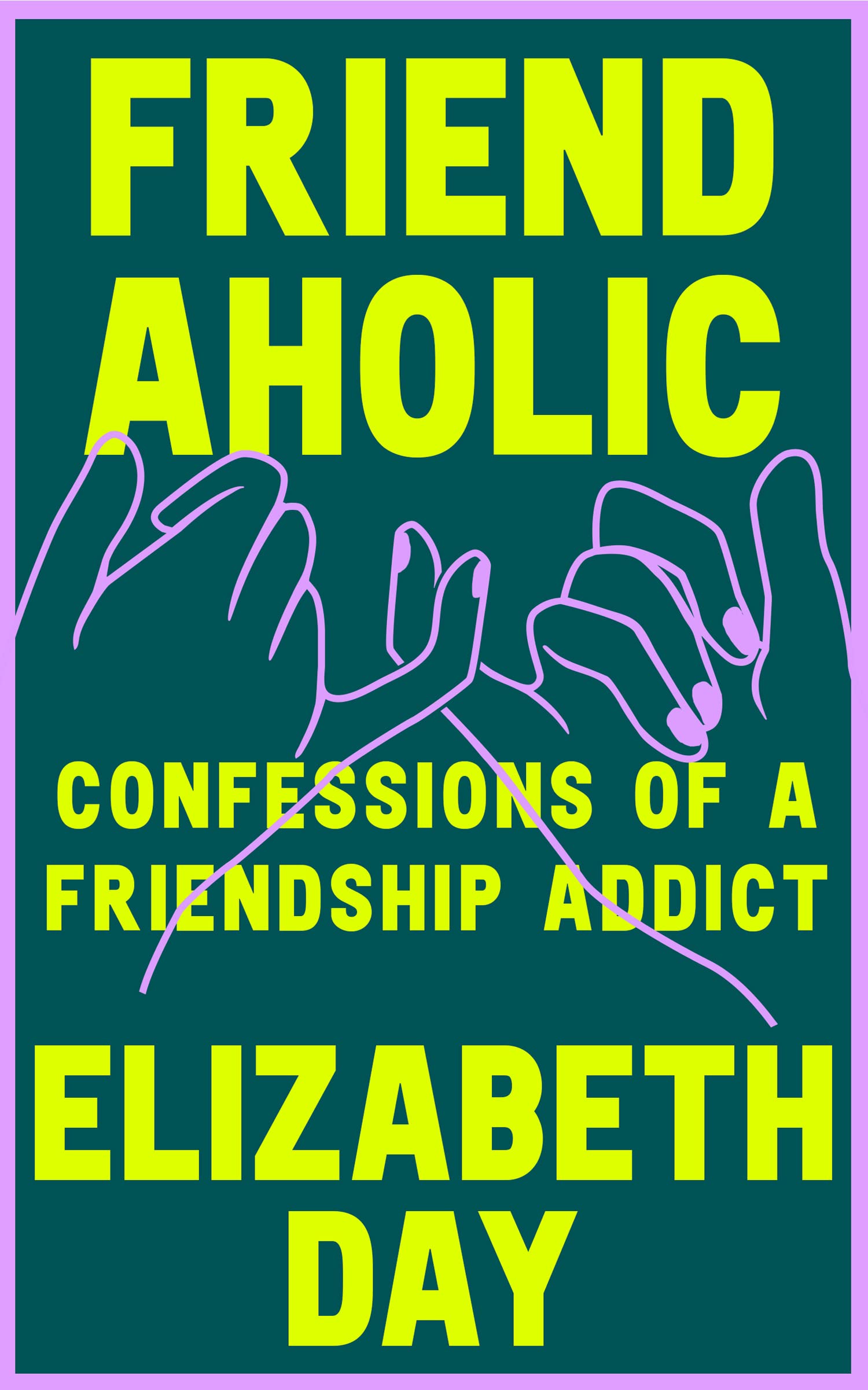
The first rule is that Kate sets our starting book. In June, it’s yes another book I haven’t read, Elizabeth Day’s Friendaholic: Confessions of a friendship addict. It sounds like a book I would enjoy because friends have always been a very important part of my life, but do I need to read a 400+ page book about friendship? Probably not right now, but I’d be interested to read some reviews by bloggers who do read it.

It’s a while since I’ve done Six Degrees title poem but Elizabeth Day’s Friendaholic seemed to be asking for it – and, I could do it in the time I had available. Hope you enjoy. (Links on the titles are to my reviews).

Friendaholic
Mrs Spring Fragrance,
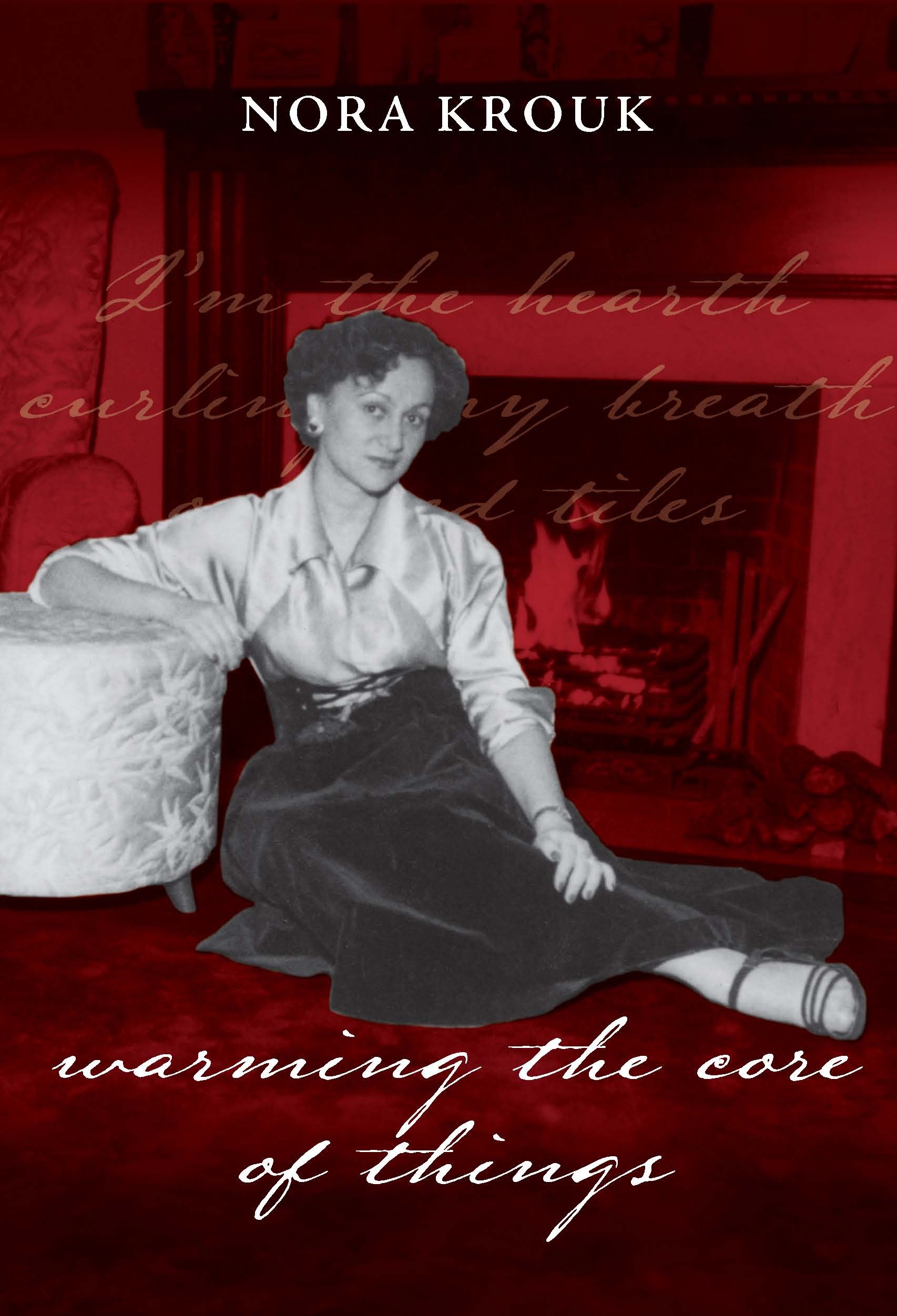
Warming the core of things
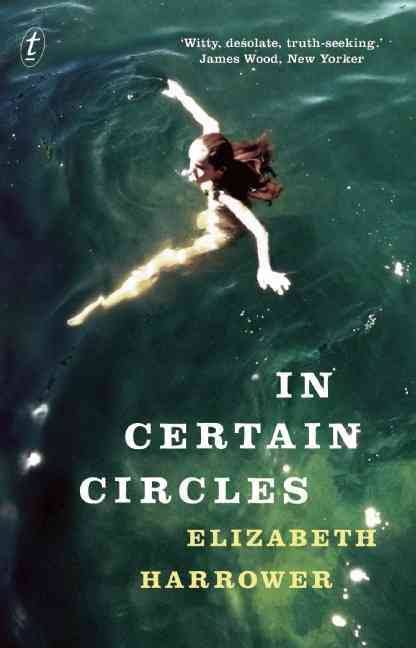
In certain circles,
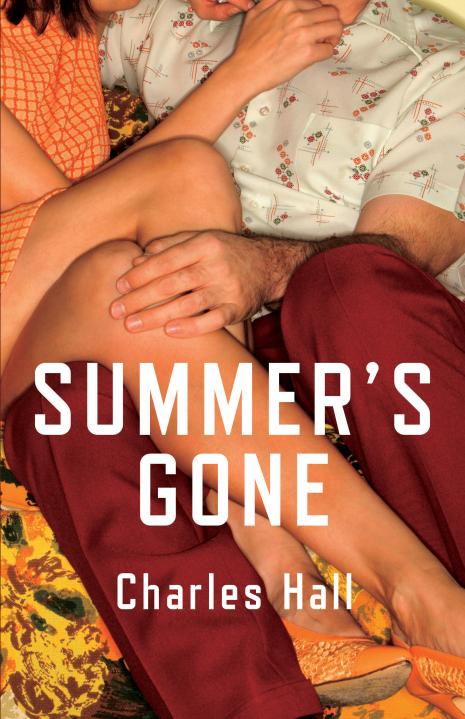
But now, Summer’s gone,
And we’re Paris dreaming
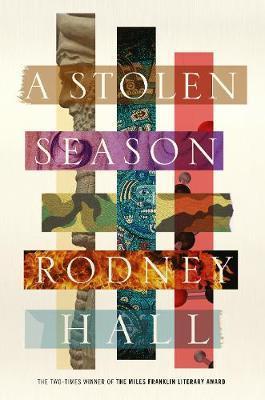
For A stolen season.

With thanks to the authors of my chosen works – Edith Maude Eaton, Elizabeth Harrower, Norma Krouk, Charles Hall, Anita Heiss and Rodney Hall. All are Australian, I’ve just realised, except for Edith Maude Eaton. She was an English-born Chinese American writer who wrote under various names including Sui Sin Far. The work of hers I’ve linked here is a Library of America published short story, hence no book cover.

Now, the usual: Have you read Friendaholic? And, regardless, what would you link to?

Monday musings on Australian literature: Reconciliation Day musings

Since 2018 in the Australian Capital Territory, the first Monday after (or on) 27 May (the anniversary of the 1967 referendum) is a public holiday called Reconciliation Day. It is part of Reconciliation Week which, says Wikipedia, aims “to celebrate Indigenous history and culture in Australia and foster reconciliation discussion and activities”. Because Mr Gums and I have reached crunch time in our downsizing project, we did not engage in any of the focused activities around town. However, quite coincidentally, my decluttering task today included the books that set me off down my own reconciliation path, not that we called it that then. So, I thought to share them with you – and some of my own journey, from the keen but naive teenager to the better-educated person I hope I am today.

It all started at high school in Sydney, although there were beginnings in my early high school years in the outback town of Mt Isa. In Sydney, though, it was two women – the school librarian, Miss (Ellen) Reeve, and my modern history teacher, Mrs (Mary) Reynolds – who encouraged my interest in civil rights and to whom I am eternally grateful. When I was 15, I wrote my first piece on the need for fair treatment of “Australian Aborigines”* – for the school magazine. I intended well, but looking at it now I can see that it was naive and simplistic.

The books I read in those days included:

  • Brian Hodge and Allen Whitehurst, Nation and people: An introduction to Australia in a changing world, 1967: its progress-focused tone was typical of the times. It did recognise, albeit in passing, “the first black owners of our continent” but it also conveyed that lie that they didn’t offer much opposition. It briefly discussed paternalism, assimilation, and integration, which, it says, “most thoughtful people are now favouring”.
  • Douglas Lockwood, I, the Aboriginal (1960 Bill’s post) and We, the Aborigines (1963, my ed. 1970): written by a white man in the voice of his Aboriginal subjects, these were some of my first introductions to Indigenous lives – at least outback ones. Such an approach is politically incorrect now but, in its favour, the table of contents lists every person by name and “tribe”.

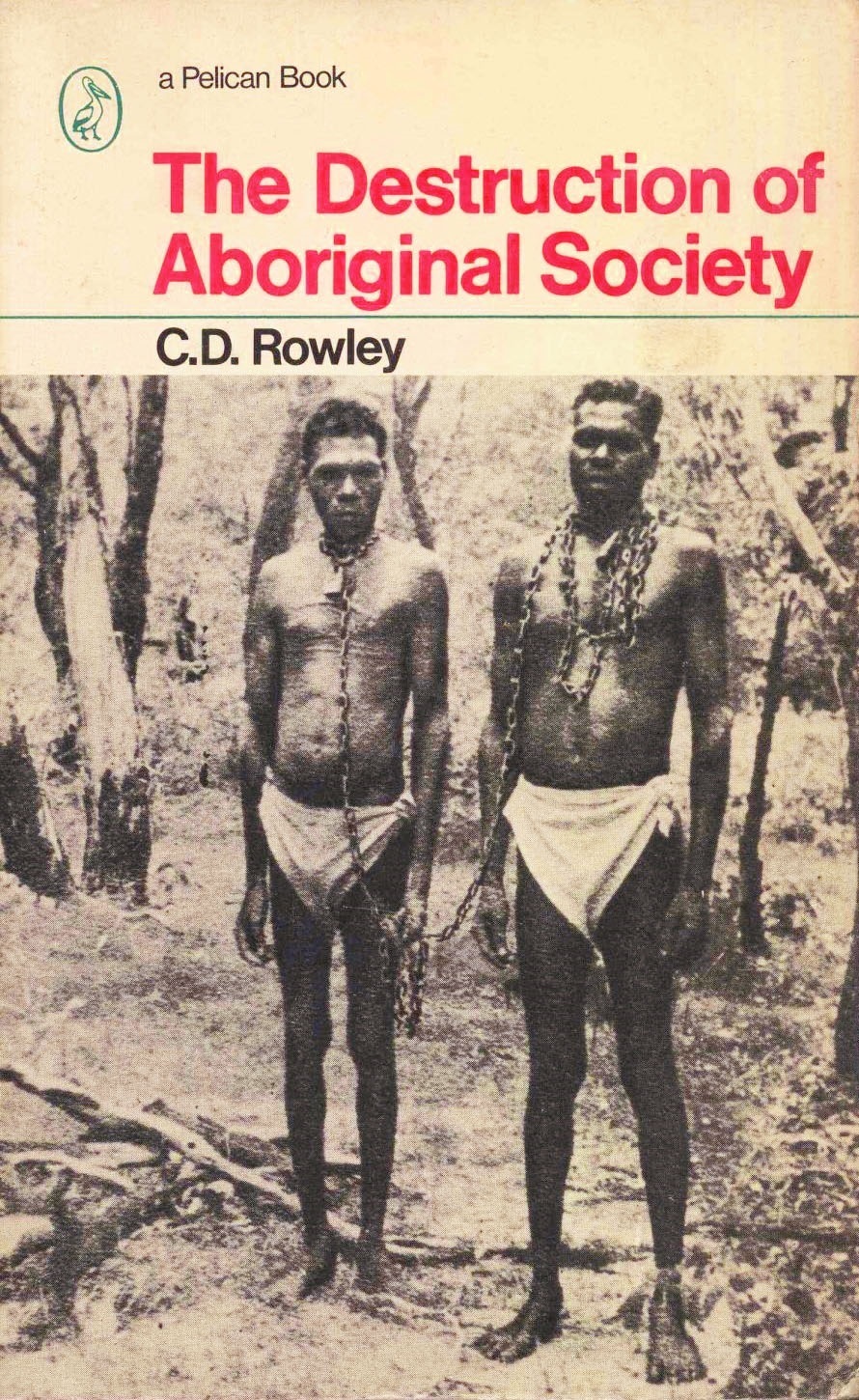
Then we move to my university years, and although my major was English literature, I also studied some anthropology. This included traditional ethnographic studies, using AP Elkin’s classic The Australian Aborigines (with its uncomfortable subtitle, How to understand them), but also involved more political reading, like CD Rowley’s The destruction of Aboriginal society (1970). It was my first serious literary introduction to the truths we are still learning now. Here is what the back cover of my 1972 Pelican edition says:

The destruction of Aboriginal society is a powerful and detailed study of the history and tragedy of the interaction between black and white Australians. Most white Australians today are unaware of the part the Aboriginal played in the history of settlement. Even if he only stood to be shot, he influenced profoundly the kind of man who made a successful settler.

The Aboriginal has been “written out” of Australian history; the tragic significance of conflicts have long been bowdlerised and forgotten. Yet, even if vicariously, our guilt remains, as does our responsibility. Aboriginal attitudes take on a new dimension in the light of history, and no policies should be formulated except in that light. This is a book to stir the sleeping white Australian conscience.

That was over 50 years ago! What have we been doing? Anyhow, it’s the book that informed my understanding, by which I mean it kickstarted my thinking from simple ideas about fairness and equality to comprehending the sociological complexity. It is also the book that, in 1982, the academic Peter Biskup said had begun, twelve years previously, “the process of rewriting the history of contact of Australian Aboriginals”.

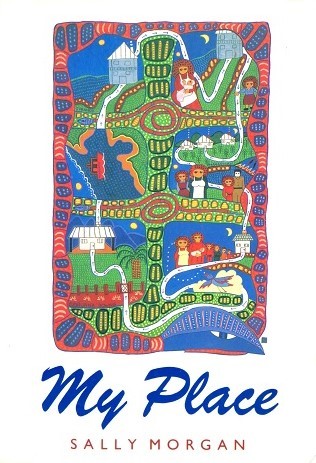
These writers were all white, however. The first work I read by a First Nations writer would have to be, as it was for many of my generation, Sally Morgan’s My place (1987). Sally Morgan conveyed the fear and shame that attended being Indigenous in modern Australia, how this caused her family members to try to hide their heritage if at all possible, and the devastating intergenerational (though we didn’t use that term then) impact this can have.

Since then, and particularly since 2000, my reading of First Nations writers has increased dramatically, much of it documented on this blog, so I’m not going to repeat all that now.

My main point is, really, how horrifyingly slow all this is. We have had, among other things, the 1967 Referendum; Mabo and Wik, and the related Native Title legislations in the 1990s; the Royal Commission into Aboriginal Deaths in Custody tabled in 1991; the Bringing Them Home report tabled in 1997; the National Apology in 2008; and most recently, the Uluru Statement from the Heart in 2017. Having come of age in the 1960s with all its idealistic fervour, I would never have believed that here I would be in the 2020s with so little real progress having been achieved, with relationships fraught and a referendum on constitutional recognition struggling to gain forward momentum.

But, it’s not about me, so I will share the theme of this year’s National Reconciliation Week, which is, appropraitely,

Be a Voice for Generations.

The theme  encourages all Australians to be a voice for reconciliation in tangible ways in our everyday lives – where we livework and socialise.

For the work of generations past, and the benefit of generations future, act today for a more just, equitable and reconciled country for all.

And will leave you with CD Rowley’s conclusion. The words are of his time but the meaning is still valid, wouldn’t you say?

The future status and role of the Aboriginal will be a significant indicator of the kind of society which eventually takes shape in Australia.

* Nomenclature has changed over time, but in this article I have used different terms as appropriate to the subject and time.

Slow reading: Jane Austen’s Pride and prejudice

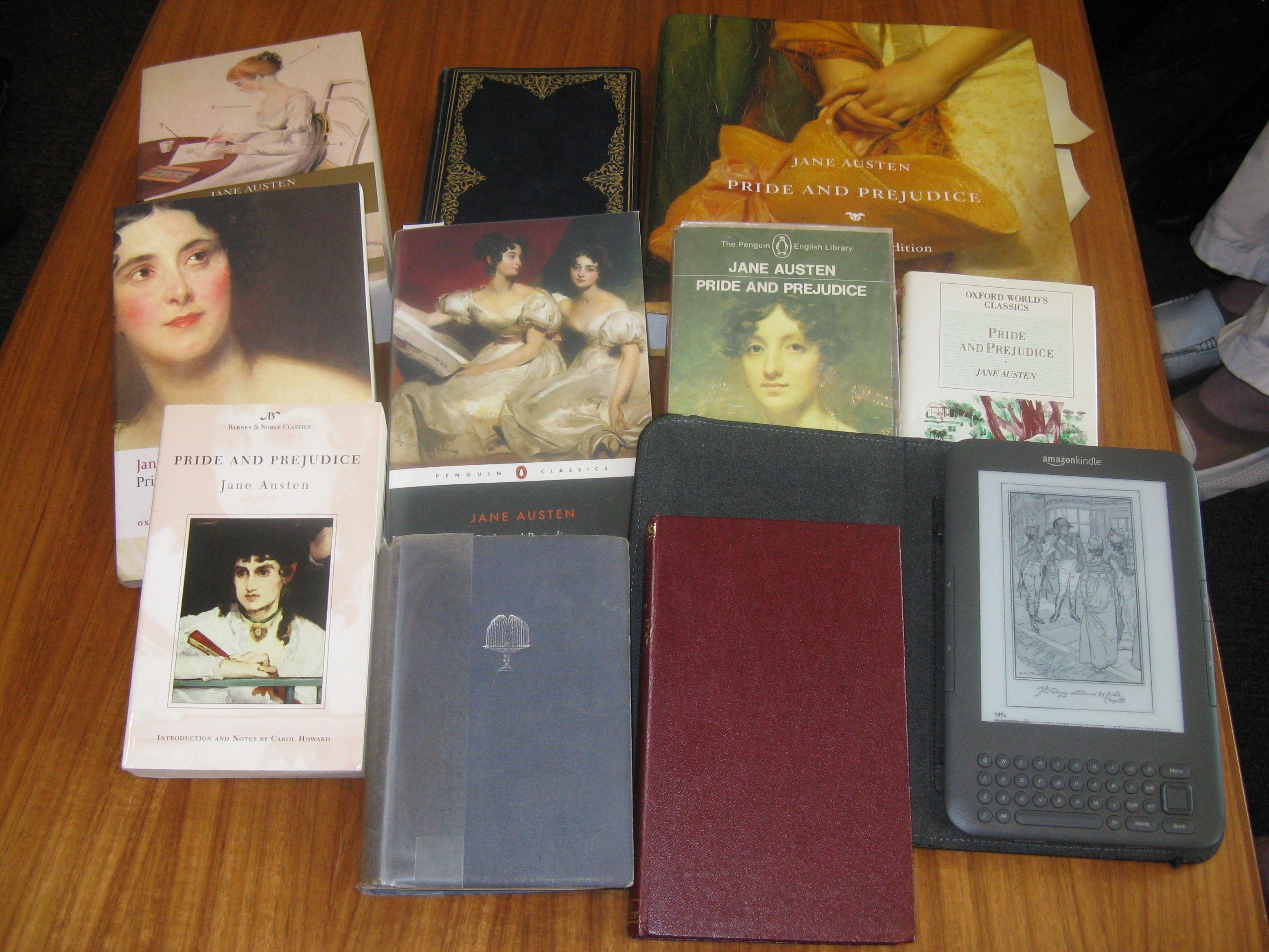
Pride and prejudice book covers
Some of the editions of Pride and Prejudice owned by my JA group

Back in the early to mid-2010s, my local Jane Austen group undertook a program of slow reading Jane Austen’s novels, coinciding with those books’ 200th anniversaries. Given that began around a decade ago, we decided last year that it was time to do another slow read program, and to stick with a chronological approach – that is, chronological in terms of publication. This meant that we did Sense and sensibility last year, and have just completed this year’s book, Pride and prejudice.

It is truly amazing just how much “new” we can find to talk about with books most of us have read not once, not twice, but multiple times, proving I suppose Italian writer Italo Calvino’s definition of a classic. Hmmm, no, not “definition” but “definitions”. He has fourteen of them, but here are the two that are most applicable to my post:

4. A classic is a book which with each rereading offers as much of a sense of discovery as the first reading.

6. A classic is a book which has never exhausted all it has to say to its readers.

These explain why slow reads can be particularly enjoyable with classics: once you know the plot, you are freed to discover how the author did it, to think about why they did it, and to notice more of the things they were telling you that you didn’t notice on the first read in your rush to find out what happens.

So, over the last three months, my group’s discussions have ranged across all of these, including finding some questions that we hadn’t thought to ask before. In Austen there are always those things she doesn’t tell us because they were known to her audience. These are the things we gradually pick up over years of Austen reading and research, such as the entail. But on this read, members raised questions regarding plot events that many of us hadn’t thought to ask before. For example, when Mr Darcy tells Elizabeth, on their meeting accidentally at Pemberley, that his sister “wishes to be known” to her, we wondered what had he told her about Elizabeth? Had he unburdened his heart to this shy young girl? Or, was it just an excuse to encourage Elizabeth to hang around a bit longer? And, when Lady Catherine visits Elizabeth because she fears there’s an engagement (or “an understanding”) between her and Darcy, where had she got this idea from?

We also found – yet again – that we had changed our minds about some of the characters, though sometimes these were diametrically opposed. For example, one remembered that when she first read the book as a schoolgirl, she felt “enormously sorry for ‘poor misunderstood Mrs Bennet’” but now she “would willingly strangle her”. For me, it’s the opposite. I had little sympathy for Mrs Bennet in my first readings, but now, understanding her worries about her daughters’ futures and Mr Bennet’s negligence in providing for them, I feel some sympathy for her – though her behaviour, all the same, is ridiculous. By contrast, in my early readings of Pride and prejudice I was far more sympathetic to Mr Bennet than I am now.

In fact, many of us in fact had little epiphanies regarding different characters that we shared with the group. Sweet Jane Bennet was thought just far too saccharine by one member, but she read some analyses that likened the angelic Jane to the sentimental 18th century heroines. Philosophers David Hume and Adam Smith argued, she told us, that feeling rather than reason provides the grounding for morality – and Jane exemplifies this. She sympathises with everyone, and behaves graciously to all. Our member wondered whether she should temper her view of Jane – though by the end she still felt Jane was just “too nice (to be real)”.

Some of these changes are due to the way slow reading exposes subtle clues that we don’t see on early reads, but some, I’m sure are due to life experiences. Austen is the perfect writer for illuminating (and then informing) our individual experiences of life.

We discussed which characters changed over the course of the novel, and, surprise, surprise, we didn’t all agree. No, let me rephrase that: we all agreed that Elizabeth and Darcy change, but some felt Mr Bennet did too, while others of us felt not – or, perhaps, only for a moment!

And then there’s the writing and the plotting. On each read we find more examples of just how beautifully, and cleverly, Austen writes. As one member said this week, as soon as he starts reading her sentences he’s drawn in – more than with any other writer. And then he shared a funny little quote from the novel that I had picked out too. It’s when Elizabeth first sees Pemberley from the outside, and takes in its beauty and grandness,

and, at that moment she felt that to be mistress of Pemberley might be something!

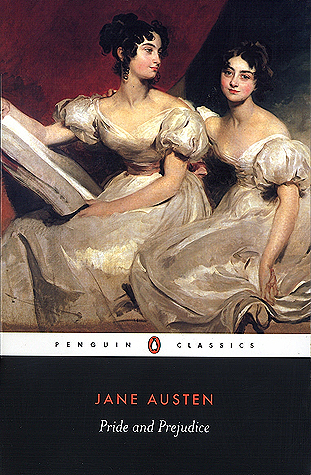
Book cover

Such an understatement … but of course the novel is full of statements like these, of satire and little ironies, of big and little insights. We also found interesting parallels, such as between those two ridiculous women, Mrs Bennet and Lady Catherine, who, said one member, are silly and illogical in different ways. Which brings me back to sweet Jane. Writing to Elizabeth to tell her about Lydia’s running off with Wickham, she says of her mother’s overwrought behaviour that “Could she exert herself, it would be better; but this is not to be expected.“But this is not to be expected” tells us that Jane knows her mother very well – and more, I’d argue, that Jane, while generous towards people, is not so taken in that she doesn’t see what’s what when it’s there in front of her. She just gives people the benefit of the doubt. I like that.

I fear this has been a self-indulgent ramble that hasn’t said much of substance, but it’s the best I can do right now!

Meanwhile, to those of you who do slow reads, why do you like doing them, and what you most get out of them?

Monday musings on Australian literature: Best Young Australian Novelists (5)

Okay, so last week I said that post would be the end of the current little run of awards posts – but then I saw the announcement of this year’s Best Young Australian Novelists award, and decided we could cope with just one more. I really will try to offer something new (or, do I mean old – time will tell) next week.

This award, as I have explained before, was established in 1997 by The Sydney Morning Herald‘s then literary editor, Susan Wyndham. This year is, thus, its 27th. It’s an emerging writers’ award, open to “writers aged 35 and younger” at the time their book (novel or short story collection) is published. They don’t have to be debuts, though they often are. Last year’s winner was Diana Reid’s Love and virtue, with Ella Baxter’s New animal and Michael Burrows’ Where the line breaks being runners-up.

This year we seem to have three equal winners, with each receiving $5,000:

  • Katerina Gibson’s Women I know (debut short story collection)
  • George Haddad’s Losing face (second novel, just longlisted for this year’s Miles Franklin award)
  • Jay Carmichael’s Marlo (second novel) (Lisa’s review)

The judging panel comprised the Sydney Morning Herald’s Spectrum editor, Melanie Kembrey (who also judged last year’s award), plus writers Bram Presser (whose The book of dirt won several prizes including the Christina Stead Prize for Fiction) and Fiona Kelly McGregor (whose Iris was longlisted for this year’s Miles Franklin award). The prize money comes from the Copyright Agency Cultural Fund.

The Herald‘s Melanie Kembrey, writing in the emailed newsletter I receive, said of the winners:

If these books haven’t already found a place on your reading list, they should. Gibson’s short story collection − clever, hilarious and inventive − will have you returning for rereads. Carmichael’s Marlo, the story of a love affair between two men in conservative 1950s Melbourne, will heal and break your heart in equal measure. It’s a slight novel that packs a big punch. Haddad’s Losing Face is alive with the sights and sounds of western Sydney, and deftly tackles the subjects of masculinity, misogyny and sexual violence

The winners, briefly

Most of the information below comes from the announcement in The Sydney Morning Herald (and, presumably, The Age).

Katerina Gibson

Women I know is a debut collection of short stories from an author whose work has appeared in such well-established literary journals as Granta, Kill your darlings, and Overland. She was also the Pacific regional winner of the 2021 Commonwealth Short Story Prize.

The SMH reported that the judges described this collection as showing “astonishing skill with the form – moving easily from actual to fantastical worlds, from sharp, straightforward prose to concrete poetry.”

Gibson herself is reported as saying that she loves the short story form, that “there’s something you can do with a short story that isn’t possible in longer writing. You can take more stylistic risks or try bolder concepts”.

George Haddad

Haddad’s first novel was, in fact, the novella, Populate and perish, which won the 2016 Viva La Novella competition. According to Star Observer, his second novel, Losing face, grew out of his doctoral studies at Western Sydney University “where he was researching the representation of masculinity in contemporary Australian literature, looking to authors like Christos Tsiolkas and Peter Polites for inspiration”. 

The SMH reported Haddad as saying that “It was really important for me to contribute to the conversation and to snapshot characters and situations that reflected contemporary Australian society as accurately as I knew it. The novel was always in me, but it was particularly sparked by my doctoral research on the intersection of masculinities, shame and suburbia.”

Jay Carmichael

Carmichael’s second novel, Marlo, follows his first novel Ironbark. It was about a young gay man coming of age in a small country town, and was, says The Guardian, “so deftly written it made Christos Tsiolkas jealous”. Lisa, in her review of Marlo linked above, writes that it “reveals the hostile environment of 1950s Melbourne for a young man discovering his sexuality when the laws of the land denied him the right to be.  It’s a very powerful, moving novella, tracing the coming-of-age of Christopher, a young gay man escaping the constrictions of the small Gippsland town of Marlo”. 

According to the SMH, Marlo is “a perfectly crafted story” and quotes the judges as saying that it “makes history immediate, every page pulsing with heart and sensuality”.

Have you read any of these books?

William Trevor, The dressmaker’s child (#Review)

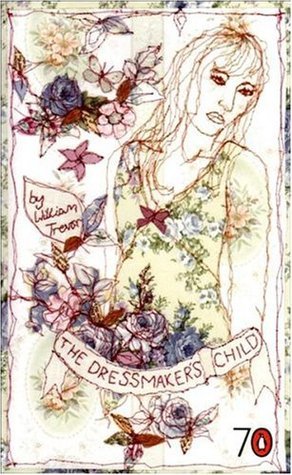
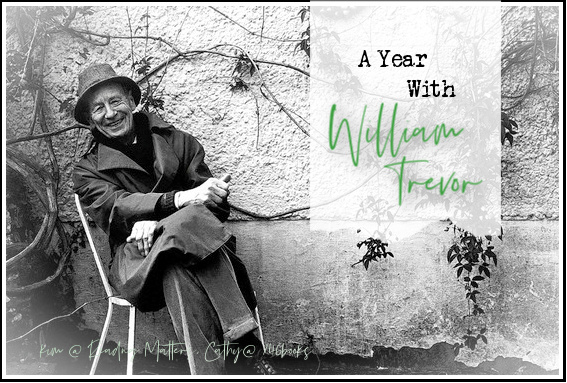
I knew, when Kim (Reading Matters) and Cathy (746 Books) announced their “A year with William Trevor” project, that I had a little book containing some William Trevor short stories but, could I find it? Nope. It was a little book after all. And then, voilà, just the other day while I was doing my book decluttering and packing, I came across it. It’s Pocket Penguin 22 from Penguin’s 70 Years celebration, and is called The dressmaker’s child, but it contains three short stories, so these will be my (very willing) contribution to the project. Two of the stories were chosen by the author from previous collections, but for the titular story this is its first appearance in book form.

Most of you will know of Trevor (1928-2016) but, in a nutshell, he’s an Irish writer of novels and novellas, short stories and plays. He won many literary awards in his life, and was particularly well regarded as a short story writer – making him right up my alley. In fact I have read one of his short stories before, early in this blog.

In her most recent Trevor review (of a novel titled The children of Dynmouth) kimbofo writes that it didn’t take her long to feel that she was in “familiar William Trevor turf in which he takes a seemingly ordinary character with eccentric traits and lets them loose in a confined setting”. This could apply to the short story, “The dressmaker’s child”, as it is about a young nineteen-year-old motor mechanic, Cahal, working for his father in a small town. He’s the only son in a family of girls – all of whom have left – and he is “scrawny” with a “long face usually unsmiling”. The story opens on him applying WD-40 “to the only bolt his spanner wouldn’t shift”, which sets a tone that perhaps other things are, or might be, locked up for our protagonist.

As he continues to work on the car, a young Spanish couple appears, wanting to be driven out to see the Sacred Virgin (Our Lady of Tears) who they believed – that is, they had been told so by a barman – would bless their marriage. Now Cahal knows the statue’s special spiritual status had been disproved and thus rejected by the church, but with a 50-euros job in the offing, he doesn’t actively dissuade them from their mission.

Trevor describes the trip, complete with hints of self-delusions, until on the way home Cahal’s car hits a child – the dressmaker’s child – who is known to run at cars and who, up till then at least, had never been hurt. With the Spanish couple kissing in the back of the car, and choosing avoidance over action, Cahal continues driving despite being aware of “something white lying” on the road behind him. Back in town, nothing is said about the dressmaker’s daughter for a few days, but Cahal remains uncertain. It affects his relationship with his young woman, and when the dressmaker herself starts to appear in town at his side, hinting that she knows what had happened, but is not reporting him, his fears and uncertainty increase.

This is not a thriller, but there is a plot and an ending (of course) so I will leave the story here. It’s nightmarish stuff, but very real too.

Trevor’s writing, his unfolding of story and character, is a pleasure to read. Take Cahal’s character, for example. From the stuck bolt (albeit does start to loosen, hinting at possibilities), he is depicted as rather gormless, bowling along, taking opportunities as they come without a lot of consideration – and somewhat different to his father who, during a conversation about the Swedish couple, shakes his head “as if he doubted his son, which he often did and usually with reason.”

This brings me to the point of the story which, as we are slowly brought to see, is the impact on Cahal of what he did or didn’t do – and the almost catatonic fear it engenders:

Continuing his familiar daily routine of repairs and servicing and answering the petrol bell, Cahal found himself unable to dismiss the connection between them that the dressmaker had made him aware of when she’d walked behind him in the night, and knew that the roots it came from spread and gathered strength and were nurtured, in himself, by fear. Cahal was afraid without knowing what he was afraid of, and when he tried to work this out he was bewildered. 

It changes his life – not in the way we might expect but in a way that shows with absolute clarity how avoidance and inaction can be as potent as anything else. Trevor, like my favourite short story writers, is less about drama and more about the complex realities of human interaction in which accommodations rather than simple resolutions are more often the go. I look forward to the next story.

William Trevor
“The dressmaker’s child”
in William Trevor, The dressmaker’s child
London: Penguin Books, 2005
pp. 1-20
ISBN: 9780141022536
(First published in The New Yorker magazine, October 4, 2004: available online)

Miles Franklin Award 2023 longlist

I haven’t posted a Miles Franklin longlist for a while, but when I saw today’s come through with its intriguing mix of titles, I decided it was time to do one again.

The longlist

  • Kgshak Akec, Hopeless kingdom (UWAP)
  • Robbie Arnott, Limberlost (Text) (my review)
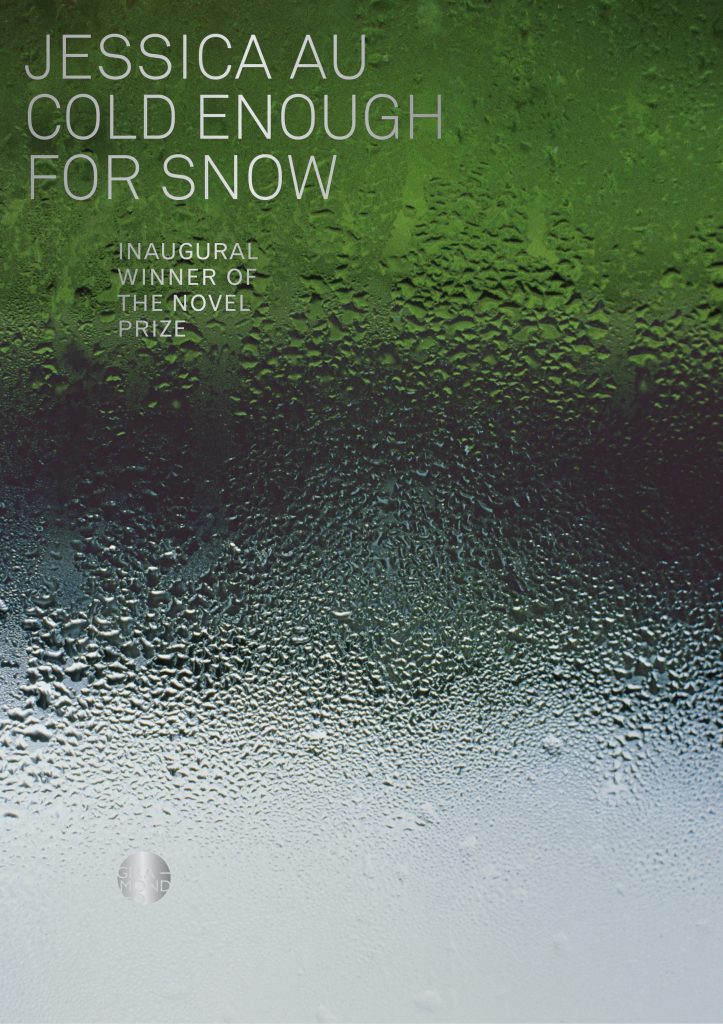
  • Jessica Au, Cold enough for snow (Giramondo) (my review)
  • Shankari Chandran, Chai time at Cinnamon Gardens (Ultimo Press) (Brona’s review)
  • Claire G Coleman, Enclave (Hachette) (Bill’s review, on my TBR)
  • George Haddad, Losing face (UQP)
  • Pirooz Jafari, Forty nights (Ultimo Press)
  • Julie Janson, Madukka: The river serpent (UWAP)
  • Yumna Kassab, The lovers (Ultimo Press)
  • Fiona Kelly McGregor, Iris (Pan Macmillan Australia) (Lisa’s review; kimbofo’s review)
  • Adam Ouston, Waypoints (Puncher & Wattmann) (Lisa’s review)

Some random observations:

  • There is impressive diversity in the writers listed as I recollect there was last year, including seven of the eleven being by women, and two being by First Nations writers.
  • Independent publishers are well represented, which is also becomings more common in recent prize listings
  • Only a small number of these have been reviewed by my usual list of litblogger suspects, which makes me wonder about our reading choices versus those being chosen for these awards lists.
  • Most of the novels are by authors with at least one book under their belt but Hopeless kingdom is a debut novel by a Sudanese-Australian author. Like many debut novels it is inspired by her own experience of migration from Africa to Australia. It won the Dorothy Hewett Award for unpublished manuscript in 2021. 
  • There’s been little commentary today on the news sites, but hopefully this is because the announcement is less than a day old – or, maybe longlists just don’t garner the same interest as shortlists?

The judging panel

The 2023 judges are, from the announcement on the Perpetual Trustees website, Richard Neville, Mitchell Librarian of the State Library of NSW and Chair; author and literary critic, Dr Bernadette Brennan; literary scholar and translator, Dr Mridula Nath Chakraborty; book critic, Dr James Ley; and author and editor, Dr Elfie Shiosaki. This is, I believe, the same panel as last year’s, but Chakraborty and Shiosaki were new last year so there is some commitment to refreshing the panel. I don’t think it hurts for there to be some stability in panels, but a managed turnover is also important. (Says she!)

From this website too is a statement from the judging panel:

The 2023 longlist is a reflection of the breadth and depth of contemporary Australian story-telling. The eleven longlisted novels define Australian literature as a transformative space where writers are singing the songs of the nation today. They reverberate with the cadences of this land where Indigenous sovereignty was never ceded, but also bring to us mellifluous sounds from far-away lands, weaving together literary traditions from around the world. The words of our novelists, grounded in personal experience, poetry and philosophy, are heralds of the new dawn of Australian fiction: they hum and hiss with language that is newly potent and styles that are imaginative and fresh.

The shortlist will be announced on 20 June, and the winner on 25 July.

Thoughts?