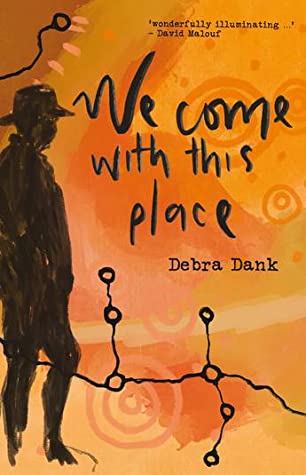
Miles Franklin Award 2023 winner announced

The winner of the 2023 Miles Franklin award was announced this evening, and it’s not one I’ve read, even though this year I’ve actually read two of the six shortlisted books! A record for me in recent times. The winner is:

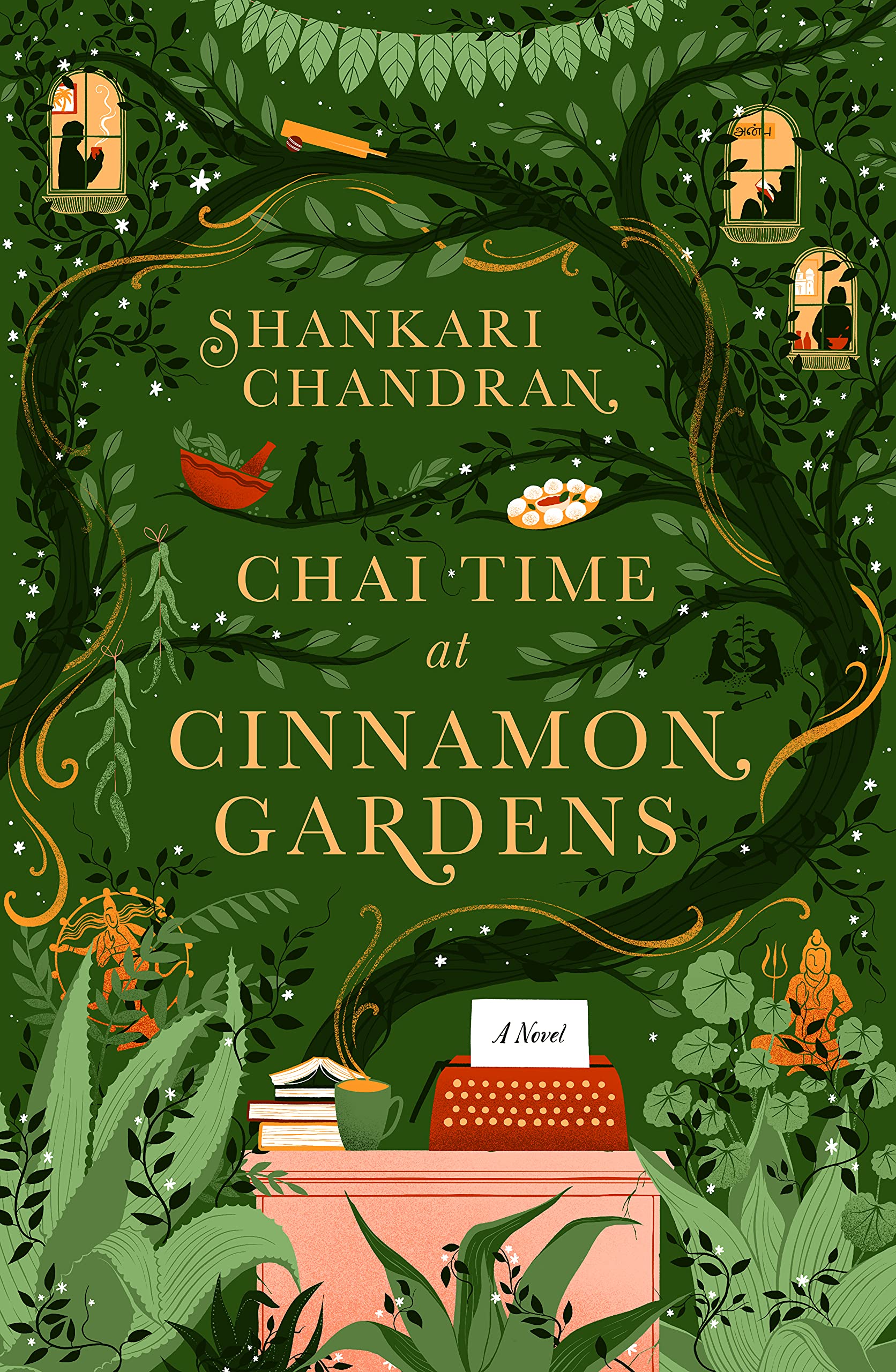
Shankari Chandran, Chai time at Cinnamon Gardens

It’s a book I’ve been toying with reading since it first came out, and it is on my reading group’s short list of schedule suggestions, so maybe its time will come.

ArtsHub, in announcing the award, quotes Chandran’s response to winning:

I’m excited by the prospect of a wider readership for for this novel. Chai Time at Cinnamon Gardens can take the reader to a difficult and uncomfortable place; there’s trauma and bigotry – but I have tried to explore that within a safe space of humour and love and respect

The book has a cutesy title and a pretty cover which I admit initially made me think it was one of those cosy murder stories. It is set in a nursing home in Western Sydney where, you know, you can imagine Miss Marple investigating a murder. But, after seeing Brona’s review (see below), I realised that this is not what this book is at all. It is, says ArtsHub, “a multigenerational and historical journey of revelation and reckoning across time and place”. Chandran, who calls Australia her “chosen home, and Sri Lanka her ancestral home” says her novel is set “against the backdrop of rising racism in contemporary Australia”. It also flashes back “to big movements in Sri Lanka’s history” and “dives into the contested formation and histories of both countries”.

Big congrats to Shankari Chandran!

Just to remind you … the shortlist

  • Kgshak Akec, Hopeless kingdom (UWAP)
  • Robbie Arnott, Limberlost (Text) (my review)
  • Jessica Au, Cold enough for snow (Giramondo) (my review)
  • Shankari Chandran, Chai time at Cinnamon Gardens (Ultimo Press) (Brona’s review)
  • Yumna Kassab, The lovers (Ultimo Press)
  • Fiona Kelly McGregor, Iris (Pan Macmillan Australia) (Lisa’s review; kimbofo’s review)

The 2023 judges wereRichard Neville, Mitchell Librarian of the State Library of NSW and Chair; author and literary critic, Dr Bernadette Brennan; literary scholar and translator, Dr Mridula Nath Chakraborty; book critic, Dr James Ley; and author and editor, Dr Elfie Shiosaki.

Thoughts?

Monday musings on Australian literature: on 1923: 6, A postal controversy

Who would have thought that the cost of postage would generate controversy in the book world? And the sorts of issues that would be raised as a result?

Help Books Clker.com
(Courtesy OCAL, via clker.com)

In my research of Trove for book-related issues in 1923, I came across a letter to the editor opposing some proposed changes in postal rates for books and other printed matter. Of course, I researched it a bit more, and discovered that the issue had started in 1922 (or perhaps even earlier. I didn’t look further, as my aim here is to document some issues that seem interesting rather than use all my reading time on detailed research!)

As far as I can work out, investigating postal rates had started perhaps in 1921, but it was in early 1922 that the Postmaster General promulgated new regulations. They are described in detail in Melbourne’s Age of 25 January, which explains why they were needed:

These regulations are the outcome of prolonged conversations between Postal officers and those interested in the trade, and are designed to put an end to the confusion which has existed for many months past, while removing some anomalies which caused great irritation, and were responsible for considerable loss. Up to the present none has been able to say definitely what constitutes a book from the stand point of the Post Office. The new regulations, while opposed by some who are engaged in the book selling and book buying business, will at least establish uniform practice throughout the Commonwealth. 

The article describes the new regulations in detail, which I won’t repeat here. You can click on the link above if you are interested. I will just share the main contentious issues:

  • the definition of a book for postal purposes: a cookbook, for example, isn’t one, and nor is one containing advertisements.
  • the requirement to register books that are wholly printed in Australia (because they will get a favourable rate). The article tells us that books printed in Australia would cost 1d. per 8oz to post, while those printed outside Australia would cost twice that, at 1d. per 4oz. 

Now, let’s jump forward to 29 January 1923 which is when I first clocked the issue. It was in a letter to the editor in Brisbane’s Telegraph by one E. Colclough who was the Hon. Secretary of the Queensland Authors’ and Artists’ Association. His beef primarily concerned the issue of advertisements preventing a book’s “registration” as a book:

Such a regulation renders it prohibitive for a poor individual to undertake the publishing of his own works because it frequently happens that only by the assistance of the kindly advertiser is he enabled to finance his literary venture.

His association wanted Australian writers to be “encouraged and assisted in every way possible”, and asked for the regulations to be amended.

A few months later, on 13 June 1923, W.T. Pike, President of the Booksellers’ Association, wrote a letter to Melbourne’s The Argus in which he enumerated seven changes the association wanted made to the regulations. Number three was for the book rate to be applied to

all books printed in Australia without regard to subject or where the author lives. At present books printed in Australia are subject to the pernickety whims of officials. For instance, postal officials say a “cookery book is not a book but printed matter.

The Association wanted “a reasonable number of general advertisements to be allowed” and for books to not have to be registered. They argued that this was an “unnecessary time waster” because the printer’s name and address always appear on books, and books are “automatically sent under the Copywright [sic] Act to two public libraries”. They also wanted reciprocity with New Zealand in terms of rates, and suggested the reduction of overseas postage rates from the “absurd” 8d per lb to 4d per lb would be beneficial. “Quite a lot of books would be sent South Africa if postal rates were reduced”, wrote Pike.

The Commonwealth’s proposed rates bill was moved in Parliament in August 1923, and reported in Adelaide’s The Register. It makes for some entertaining reading, with some arguing against the changes because the money could be spent on other things, such as improving the actual post offices. Do read the report, as it’s short and entertaining.

Meanwhile I will end with two things, one being that the bill was passed, and the other being The Register’s report of one MP’s contribution:

Dr. Maloney (V.) supported the measure, but pleaded hard for an increase to pay to officials in allowance post offices. Some of the women, he said, worked for eight hours daily, under great difficulties, and only got 20/ to 25/ a week, or less than messenger boys.

I like this Dr Maloney, who, according to Serle in the ADB, “loved humankind, fought inequality and pressed the rights and needs of the poor”. I’ve moved away from my topic here a bit but, you know, this little series is as much about serendipity as about books!

I hope you like serendipity as much as I do?

Other posts in the series: 1. Bookstall Co (update); 2. Platypus Series; 3 & 4. Austra-Zealand’s best books and Canada (1) and (2); 5. Novels and their subjects

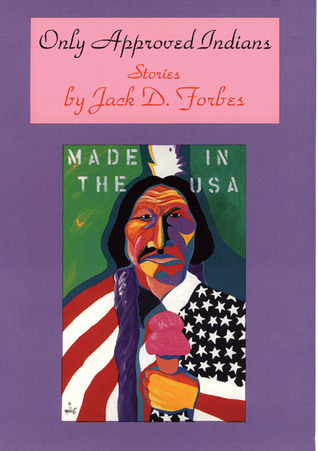
Jack D. Forbes, Only approved Indians can play made in USA (#Review)

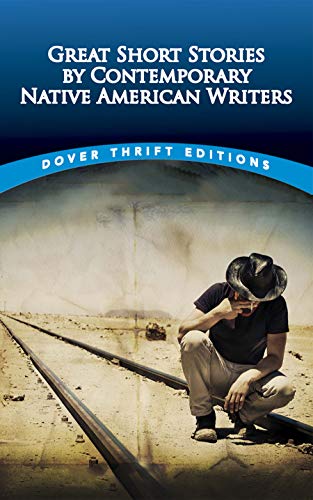
The title of the next story in Great short stories by contemporary Native American writers is almost as long as the story itself. Well, not quite, but, occupying just two pages in the anthology, it is a short short story. It was first published the same year, 1983, as the previous story, “Turtle meat” by Jospeh Bruchac III, but is very different in tone.

(I apologise to those of you who were expecting my next post to be on Chris Flynn’s Here be Leviathans. It is coming, soon, but I had to put it aside for my end-of-July reading group book, and I do want to do it justice.)

Jack D. Forbes

Again, I’m using anthology editor Bob Blaisdell’s intro and, mostly, Wikipedia to introduce the author. Forbes (1934-2011), says Wikipedia, was an historian, writer, scholar and activist who “identified as being of Powhatan-Renapé and Lenape descent”. He is best known for his role in establishing one of the first Native American studies programs at the University of California Davis. He also cofounded D-Q University, “a prominently Native American college in Davis, California”. His activist career started in the early 1960s, when he became involved in the Native American movement, which, Wikipedia explains, “asserted the rights to sovereignty and resisting assimilation into the majority culture”.

Blaisdell introduces his story with this: ‘”Only approved Indians can play made in USA” is almost too sad to be funny, but funny it is’. Or, is it?

“Only approved Indians can play made in USA”

I enjoyed this story because of the way it addresses that issue that can dog First Nations peoples in colonial settings, that of proving indigeneity, which feeds into ideas about identity. It’s an issue I’ve discussed here before, including in First Nations writer Anita Heiss’ Am I black enough for you (my review), and in the essay “Channelling Mannalargenna” (my review) by the non-Indigenous journalist Kathy Marks.

In her book, which is a few years old now, Heiss shares the working definition of an Aboriginal or Torres Strait Islander person used by Australia’s Federal Government:

An Aboriginal or Torres Strait Islander is a person of Aboriginal or Torres Strait Islander descent who identifies as an Aboriginal or Torres Strait Islander and is accepted as such by the community in which he “or she” lives.

I share this purely for background purposes to this story. I am not going to get into the Australian situation because it’s not an issue I have followed recently. It was particularly problematical in Tasmania in recent decades, but I believe that much of that has now been resolved, to the extent that self-identifcation and community recognition are the accepted criteria.

Meanwhile, though, Heiss’s comment is relevant to Forbes’ story which concerns an All-Indian Basketball Tournament, and the two teams that are about to play, one from Tucson and one from the Great Lakes. Many people had come to watch, “mostly Indians” we are told, with many being relatives or friends of the players. There was betting, and “tension was pretty great”. The issue is that the Tucson players are, in general, much darker. Many also have long hair, and some have goatees or moustaches. A rumour starts from the Great Lakes camp that they are Chicanos, not Indians. (If you know your American geography, you will know that Tucson is in southern Arizona, so not far from Mexico, while the Great Lakes are up there near Canada.)

Anyhow, this is a serious point because, as the story goes, the Indian Sports League’s rule is that “all players had to be one-quarter or more Indian blood and that they had to have their BIA [Bureau of Indian Affairs] roll numbers available if challenged”. The Great Lakes players, coming from a big Midwestern city, are all over this:

they all had their BIA identification cards, encased in plastic. This proved that they were all real Indians – even a blonde haired guy. He was really only about one-sixteenth but the BIA rolls had been changed for his tribe so legally he was one-fourth.

You can feel the tongue firmly planted in the cheek – the satirical tone – here can’t you! They challenge the Tucson players, many of whom, as it turns out, can speak their language. None of the urbanised Great Lakes players could, but they claim this proved nothing. Only the BIA card did! The story is short and you can read it at the link below.

“Only approved Indians can play made in USA” is a clever, and oh-so succinct story that draws on recognisable conventions of competitive sport to produce a satire that explores the role of regulation and law in people’s lives, the way power can be wielded, and its potential for destabilising cultural heritage and disrupting solidarity. The ending is particularly biting because after the Great Lakes team has had its way, the last word is given to a white BIA official. That tells you all you need to know about this story.

Jack D. Forbes
“Only approved Indians can play made in USA” (orig. pub. 1983; also published in Forbes’ collection, Only approved Indians: Stories, 1995)
in Bob Blaisdell (ed.), Great short stories by contemporary Native American writers
Garden City: Dover Publications, 2014
pp. 57-58
ISBN: 9780486490953

Available online at genius.com

Monday musings on Australian literature: Weird fiction

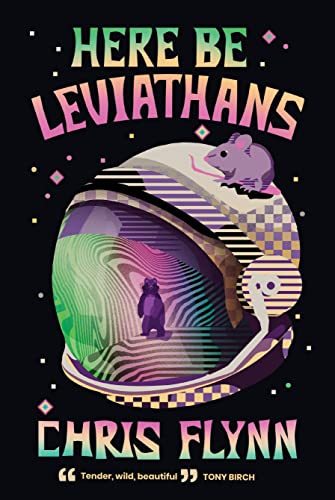
All being well, my next post – or, a very near future one – will be on Chris Flynn’s astonishing short story collection, Here be Leviathans. As I was reading it, I came quite serendipitously across Nina Culley’s article titled “Weird is in“, in Kill Your Darlings*. The article references Chris Flynn’s collection and some other works I’ve read recently that are a bit, well, off-centre.

Culley opens the article with:

Australian fiction has long been dominated by the realist novel. A new wave of writers continue the avant-garde tradition—but are experimental and offbeat stories always destined to be relegated to a literary niche? 

Now, I do tend to prefer realist (or realistic) novels. I am not much into the various forms/subgenres of speculative fiction (though I don’t mind dystopias, which just seem to me to be future realism!) However, this is not to say that I don’t occasionally venture into the more imaginative, surreal or even fantastical. I like Murakami, for example; I loved Jane Rawson’s A wrong turn at the Office of Unmade Lists (my review); and in more recent times I enjoyed Chris Flynn’s Mammoth (my review). I am certainly enjoying his Here be Leviathans. Would Culley’s article, I wondered, explain why?

She follows her intro with the point that “experimental and strange fiction is often viewed as a niche of the literary world, reserved for audacious writers who dare push the boundaries of storytelling and their open-minded readerships”. Such writing is also, she says, “frequently subjected to mixed reception – some ardent, some bamboozled”. I can understand the latter, because, almost by definition, weird writing tends to subvert, if not actively eschew, the conventions against which many of us think about what we read. When that happens, we can struggle to work out how to assess it. or example, if our benchmark is realistic characters, what do we do with characters who are determinedly not so?

Culley, who actively sought out unusual fiction, was surprised to find that there was more out there than she’d thought. It’s hard to categorise but she found it under genre labels like “bizarro fiction” and “new-weird fiction”. She suggests that these genres seem “to have a lot in common with post-modernism and early avant-garde movements, with self-reflexive tendencies towards satire, irony and pastiche”. They “playfully comment on their own artifice” and challenge readers with “bold questions”. I often enjoy writing like this. I have no problem with writers reminding me that it is art I’m consuming, not a representation of reality, because, well, it is art I’m reading and I want to think about the art.

Anyhow, she argues that Australian literature has moved on from a focus on ‘bush and beach’ to something she calls ‘urban existentialism’. Much of this is “wonderful” albeit often “bleak”, but it is also Euro-centric. She characterises it as being concerned with “weaving together a character’s multi-faceted relationship with their country—how it’s threatening and how it’s beautiful, notions with complex colonial implications”. The problem is that this writing might be significant to a point, but it is also homogenising. It “undermines the demand and presence of a diverse literary scene”.

And now, before you jump in with but, but, but, she agrees that Australia has “fostered bold voices and innovation” from the likes of Patrick White through Helen Garner, Gerald Murnane, Murray Bail, and that fascinating import from South Africa, JM Coetzee, to newer writers like Alexis Wright, Robbie Arnott, Ellen van Neerven and Evelyn Araluen. I’ve reviewed all of these writers here at lest once (and admit that while I have enjoyed their writing, most have challenged my reviewer faculties! Which is no bad thing!)

Culley then discusses the publishing of weird writing – who is publishing it and why enough isn’t publised – but I want to explore a little about why read “weird” fiction.

Take weird narrators, for example. Some readers don’t like them, they don’t like, say, skeletons (in Carmel Bird’s Family skeleton) or foetuses (in Ian McEwan’s Nutshell) but in the hands of authors who know what they are doing, weird narrators can jolt us with fresh perspectives on an idea or issue. Chris Flynn’s Mammoth, as I wrote in my review, tells the story of humanity’s destructive, often brutal march through time, through the eyes of those we supplanted, the fossils of extinct creatures. Seeing the world through such eyes is mind-bending and eye-opening.

Julie Koh takes a different approach. Most of her stories in Portable curiosities (my review) start realistically but often turn surreal or absurd. Her targets, though, are grounded – in issues like consumerism, capitalism, commercialism, and the stereotyping of Asian people in Australia. Again, the weirdness can jolt us into seeing (or feeling) things that realism may not expose because it’s all so familiar.

With First Nations writing, the situation can be different again. What we western readers might think is weird is perfectly natural to First Nations people, because, for example, there is no line between the humans and country. It is all interconnected. There is no hierarchy, but mutual responsibility. Reading the writing of others may not change our own worldview, but I like to think it can help us understand different worldviews and see that they are just as valid as our own.

Returning to Culley now, towards the end of her article, she says that Flynn’s Here be Leviathans was described as “boundary pushing”. His response was that this kind of labelling indicates “that the Australian literary scene has been beholden to a streak of misery realism for so long that it’s forgotten to…have fun.” I am not averse to “misery realism” – it has its place – but it’s not my only diet. I also like fun. I like cheeky writers who know how to make points with a light – or even bizarre – touch. Watch out for my review of Here be Leviathans to see what I mean.

Meanwhile, do you read “weird” fiction? Why or why not?

* KYD is an online subscription journal, but some free access is provided.

Joseph Bruchac III, Turtle meat (#Review)

I’m continuing to work through the stories in Great short stories by contemporary Native American writers. With this post, we jump from 1968 to 1983, which mens we are getting close to contemporary territory. The story is “Turtle meat” by Jospeh Bruchac III.

Joseph Bruchac III

As before, I’m using anthology editor Bob Blaisdell’s intro and Wikipedia to introduce the author, though in this case Blaisdell is extremely brief. Bruchac was born in 1942 and, says Wikipedia, “identifies as being of Abenaki, English, and Slovak ancestry” with his Abenaki heritage coming from his grandfather. He writes poetry, novels and short stories, with “a particular focus on northeastern Native American and Anglo-American lives and folklore”, and is the director of a press which publishes new Native American writers. He is also a performing storyteller and musician.

This post’s short story, “Turtle meat”, was first published, according to Blaisdell, in 1983, in an anthology titled Earth power coming: Short fiction in Native American literature, which was published by the Navajo Community College Press. It was published again in Bruchac’s own collection, Turtle meat and other stories, nearly a decade later in 1992.

“Turtle meat”

Wikipedia’s description of his focusing on “northeastern Native American and Anglo-American lives and folklore” certainly rings true for this story. Blaisdell introduces the story this way, “In this strange great story about an elderly Native American who has been living for years with a debilitated woman, Bruchac writes one of the most extraordinary fishing scenes in literature”. That sure sets up some expectations. It is also a bit misleading because “the debilitated woman” is simply old. She hadn’t always been so.

The story concerns Homer LaWare who, when the story opens, had been Amalia (Mollie) Wind’s hired hand for decades after she had kicked out her husband and come for him. There’s a little sense of “Driving Miss Daisy” here except we are on a farm and life is more earthy than Miss Daisy’s refined life with her Black American chauffeur. To start with, Homer and Mollie have been lovers from the beginning, even though Homer always slept in his cot in the shed – his decision it seems, because “it’s the Indian in me”.

The point at which the story starts, both are showing their age. The story opens with Mollie calling out to him because she needs help getting off the toilet. He comes in from the once-farmed but now overgrown field, and “gently” lifts her, reassuring her that she’s not old, that it “must of was just a cramp. Nothing more than that”. This opening scene tells us a few things – that they are old, of course; that they are comfortable with each other; and that he is sensitively attentive to her physical and emotional needs. We also learn that she has retained ownership of the farm that had originally been her father’s, and that Homer is happy with that: “It’s the Indian in me that don’t want to own no land”. Her grasping husband, Jack Wind, had been sent packing, and her “no-good daughter” had not been seen for years.

The central part of the story describes Homer’s fishing expedition – his catching (and cleaning) several yellow perch, and then an old snapping turtle. It’s a battle – it was easier when he was young “and his chest wasn’t caved in like a broken box” – but he does it. Finally, having been out longer than he’d expected, he returns home, muddy and bloody, to find Amalia missing. Where is Amalia, and why is her daughter – who has “Jack Wind written all over her face” – sitting in Amalia’s rocker?

In one sense, “Turtle meat” is a traditional story of ageing parents and grasping children, but it is imbued with a different sensibility. Homer’s battle with the turtle recalls other literary battles between fishermen and their prey, but in this case it is not only about Homer confronting his age, but is also symbolic of the battle Amalia simultaneously faces. I suspect, too, that the choice of a turtle has specific cultural references for Bruchac, given turtles seem to feature often in his writing.

It’s a great story, as Blaisdell says, but what makes it particularly so is the writing. The characters are more than just types. There’s a natural dignity to them, with an individuality that is conveyed mostly through dialogue – and in Homer’s case, also through his thoughts expressed via italics. The descriptive writing is tight and fresh. And it has a quiet humour. Take, for example, Homer out on his boat:

He looked in the water. He saw his face, the skin lined and brown as an old map. Wattles of flesh hung below his chin like the comb of a rooster.

“Shit, you’re a good-looking man, Homer LaWare,” he said to his reflection. “Easy to see what a woman sees in you.”

How can you not warm to such a character and such writing?

Unfortunately, I don’t think this story is available online so you’ll just have to believe me that it’s another one worth reading from this anthology.

Joseph Bruchac III
“Turtle meat” (orig. pub. 1983)
in Bob Blaisdell (ed.), Great short stories by contemporary Native American writers
Garden City: Dover Publications, 2014
pp. 50-56
ISBN: 9780486490953

Monday musings on Australian literature: Trove treasures (10), On short novels

As I’ve said before in this series, not all the “treasures” I find, particularly those from the 19th and early 20th centuries, are specifically Australian, but I justify them because in those colonial and early post-colonial times English content tended to reign supreme.

This post was inspired by my serendipitously coming across an article praising short novels. Most of you will know that I love short stories and short novels (or novellas) so of course I was interested. I went looking for anything else on the topic, and I found a few little items that I felt worth sharing.

Plea for shorter novels

The article that inspired this post appeared on 6 July 1907 in Sydney’s The Australian Star. It cites one Basil Tozer, who made a “plea for shorter novels” in the Monthly Review. Naturally, I researched Basil Tozer. He’s not in Wikipedia, but it looks like he was born in Devonshire around 1872 and died in 1949, and that he wrote some fiction and nonfiction. In the article, he seems to be railing against books like those Victorian “big baggy monsters”. He says:

The habit of loading a story with indifferent descriptive passages still prevails to a great extent, though it might with considerable advantage be dispensed with. A beautiful woman loses her charm when every good point she possesses, from the creamy smoothness of her complexion to the alluring, curve of her eyebrow, is described separately and in detail; and in the same way a glorious scenic panorama metaphorically falls flat when every square mile of it is analysed and dissected. 

These “faults”, he says, are “commonest among young writers” but they are also “flagrant enough still among some of our novelists who have served a long apprenticeship”. He names French writers like Daudet, Hugo and de Maupassant, suggesting there is no “superfluous verbiage” in them. These are, he admits, three of France’s most polished fiction writers, but even “the rank and file” French novelists “seldom err upon the side of overloading their work with unnecessary vocables and third-rate descriptive passages”. He believes that British novels would be strengthened if they were more condensed.

The long and short of it

The next article I found was published in late 1925 and early 1926 in several regional newspapers across Victoria, South Australia, and Tasmania. It reports on comments made by someone called Mark Over in Outlook. I struggled to identify Mark Over, but I assume the journal is the British magazine which Wikipedia says was, in full, The Outlook: In Politics, Life, Letters, and the Arts. It ran from 1898 to 1928. The first version of the article I found appeared on 14 January 1926 in Victoria’s Shepparton Advertiser. It reports that Mark Over had written that readers are appearing to prefer the short book over the long one, that they “seem to be frightened by the book of many closely printed pages, and choose the large type, thick-paper novel which is really hardly longer than a short story”.

However, this doesn’t spell the end of the long book because Over believes that “this type of reader” does like to buy long books as gifts, as they are – wait for it – “better value for money”! (I’ve heard this before as an argument against novellas.) Booksellers, he says, will vouch for this. And, he adds, library staff and owners also prefer long books: they mean less work because they take longer to read so they are changed less often and experience less wear and tear. Mark Over’s advice?

Let would-be novelists remember these prosaic facts, and count their words.

Love it …

Ten years later, on 31 August 1937, Melbourne’s The Herald shares a report from Arthur J Rees in London. This name rang a bell and yes, he is in Wikipedia. He was an Australian mystery writer, who “likely went to England” in his early twenties. He reports the opposite to Over, saying that the British don’t like short novels and that this had caused quite a controversy because “a leading critic” had recommended an American novel of 100 pages “worth many a contemporary English novel of four times the length”. Unfortunately, the newspaper I found this article in is in poor condition so the scanned text is not completely legible, but he wanted to know why English fiction writers didn’t attempt this sort of close writing “instead of plunging themselves and their readers into masses (?) of words and padding out their novels (?)”. 

Except, he knows why. Readers don’t like short novels. Libraries won’t stock them because they can’t “persuade library subscribers to take them out; they don’t think they are getting enough for their money”. (There it is again.) Readers, he reported to The Herald, like a “thick book”. So, of course, publishers also won’t publish short novels. On the rare occasion that they do, said Over, it is ‘printed in larger type, and “bulked out” by thicker paper’. (Short stories, he added, suffered a similar fate.)

I found a couple more articles, but these contain the gist of the pros and cons. Has anything changed much do you think?

Meanwhile, I will leave you with a funny little par I found in one of those literary news type columns. It was in Ian Mair’s The Argus Literary Supplement on 2 February 1946. Headed “Writing to space”, it went like this:

The factory chief of a New York publishing firm recently asked the author of a very long novel if she would mind cutting a few pages of her book, then in process of manufacture, not yet bound.

The author couldn’t help asking why the request didn’t come from one of the house’s editors.

“Because,” said the production man, “we have some thousands of cartons (book casings) to use up, and they’re a shade too narrow for this job.”

The author cut her book, which is now one-eighth of an inch thinner than it was before.

Now there’s a new type of editing – to suit the size of the cover!

Edwina Preston, Bad art mother (#BookReview)

Edwina Preston’s Bad art mother was my reading group’s June book, replacing our previously scheduled book because we’d heard Bad art mother was to be the featured book in the Canberra Writers Festival session, Canberra’s Biggest Book Club. This suited me, as, coincidentally, I’d just started reading it!

Bad art mother has been shortlisted for two awards this year (so far), the Stella Prize, and the Christina Stead Award for Fiction (in the NSW Premier’s Literary Awards). Not a bad achievement for a book that was rejected by publishers over 20 times before being picked up by Wakefield Press.

The novel is mostly set in 1960s Melbourne, which was a time of social change. While feminism was around the corner but not there yet, the city’s life was being influenced by the postwar influx of European migrants. Preston captures this well, said our Melbourne-born members. The story draws its inspiration from various Australian arts practitioners who were active in the mid-twentieth century – the Heide Circle and the artist Mirka Mora and her husband Georges, in Melbourne, and the Tasmanian poet Gwen Harwood. Bad art mother is the third book I’ve read in recent years inspired in some way by the Heide story, the others being Emily Bitto’s novel The strays (my review) and Jane Sinclair’s memoir, Shy love smiles and acid drops (my review). Interestingly, all of them focus to some degree on the damage done to children.

I enjoyed the experience of reading Bad art mother, not only for its expressive language, but also for its intriguing, complex structure. It is told primarily from the point of view of a young boy, Owen, whose mother, Veda Grey, is struggling to make her name as a poet. However, we also get Veda’s point-of-view through letters she writes to her sister. After opening with Veda’s book launch in 1970, the novel is told in six parts, which to-and-fro in time, but it has an overall chronological trajectory, with part one telling of his parents’ meeting and his birth, and the final part being set around 2016 when Veda’s book is about to be republished in an anniversary edition. The central four parts commence with Owen as an adult in the 1980s, before returning to his childhood in the 1960s. It sounds complicated but it works. Lives, after all, are rarely simple and linear. Owen’s certainly wasn’t. Wanting to be just a kid, he had to be the grown-up more often than not.

The other thing to mention is that Owen tells his story first person, but to a specific person, “you”, whom we soon discover is Ornella, his father’s “sister”. That is, she was the daughter of the Italian family that “adopted” his father when he came to work in their restaurant at the age of 19. Throughout his childhood, Owen is passed between his parents, the rich but dysfunctional Parishes (to whom his mother entrusts him in a deal that buys her more time for her art), and Ornella. It is Ornella who saves him when all the others fail. She is the unimaginative one, the stern one, but also the stable, reliable one, the one who picked him up “on time, every time“. Owen knows that he owes his life to her, and now, as she is failing with dementia, he visits her and tells her his story, expressing what she means to him, while also working through his feelings for his mother.

“I will hang my anger out to dry” (Veda)

The book spans Owen’s life from the 1960s to the 2010s, but with its focus being the 1960s, it is, essentially, a work of historical fiction. Why did Preston choose to write about this time? I like my historical fiction to have some relevance to the time in which it is written. Fortunately, Preston’s novel does – and it concerns the challenge creative women face. There are three such women in the story. Rosa, the muralist, works in Owen’s father’s restaurant, and does it her way. She is not a tortured soul, but it takes a long time for her art to be accepted. Mrs Parish is an ikebana artist who quietly finds her own way by removing herself to Japan. And, of course, Veda, the poet – the only one who is a mother. She struggles big-time with her drive to create and her role as a mother. She writes to her sister:

How does one protect them? Sometimes I think I would throw in every hope of my own, every dream of literary prowess or success, to protect him, even for one second, from any hurt that might come to him.

But would I, Tilde? Would I?

If it came to it, I wonder how I would make such a choice. I should hope that if ever given that choice I would make the right one, but I know I would resent it for the rest of my life. I would never be happy. I would be a bloody, injured banshee who ruined everyone around her.

What sort of a mother chooses a book over a child?

Sometimes I am not sure what I am capable of at all.

The point, then, is that it is hard for women to make art and be recognised for it, and it is especially hard when the woman is also a mother. The tension for Veda is palpable through both Owen’s story and her own letters. And this brings me to the issue which triggers the novel’s crisis, anger. When Veda shows her anger at how she and her work had been treated, things go wrong and her life falls apart. Owen’s partner Julia tells him in 2016 when Veda’s poems are being re-released, that she remains relevant because, for all the progress that had been made in the interim, “it’s still hard to be angry, if you’re a woman. It’s still not allowed”. This was a major takeaway from the book for my reading group.

Bad art mother is an intelligent novel that offers no answers to the quandary it presents, but that asks the right questions. Good on Wakefield for taking it on.

Lisa also enjoyed this book.

Edwina Preston
Bad art mother
Mile End: Wakefield Press, 2022
317pp.
ISBN: 9781743059012

Review copy courtesy Wakefield Press

Monday musings on Australian literature: First Nations Australian non-fiction

Since 2013, I have devoted the Monday Musings that occurs in NAIDOC Week to a First Nations topic. This year I’ve chosen First Nations Australian non-fiction. I have previously written Monday Musings on biographiesautobiographies and memoirs by First Nations writers, but what about other sorts of non-fiction?

Before I get to that though, a bit about this year’s NAIDOC Week theme, which is “For our elders”. The website says that

Across every generation, our Elders have played, and continue to play, an important role and hold a prominent place in our communities and families. 
They are cultural knowledge holders, trailblazers, nurturers, advocates, teachers, survivors, leaders, hard workers and our loved ones. 

And they say more, but you can read that at the website. I will just add that it was thrilling to watch the 2023 NAIDOC Week Awards on television on Saturday night and see Aunty Dr Matilda House-Williams win the Female Elder of the Year award. She has been an absolute force for her people – and for reconciliation – in my city for as long as I can remember. She was our city’s go-to Welcome-to-Country person way back when that practice started. She was involved in the creation of the historic (and still existing) Aboriginal Tent Embassy. And so much more. These days it is often her son, Paul, who does Welcome to Country, as he did last month at the 2023 ANU Reconciliation Lecture. However, accompanying him on stage was mum, Aunty Dr Matilda, and his son. It was truly special, as they performed a song for us as part of the Welcome. Anyhow, you can read more about her on the NAIDOC Awards site.

Now, today’s topic. There’s a wealth of literature to choose from so my aim here is to give some sense of the breadth of recent non-fiction writing by First Nations Australian writers.

Bruce Pasco, Dark emu

Probably the best known non-fiction book, today, by a First Nations writer is Dark emu (my review) by Bruce Pascoe. It argues for us to rethink our understanding of First Nations culture, specifically to appreciate that pre-colonial Aboriginal Australians were more than hunter-gatherers as they had been traditionally described. The book won several awards, has a younger people’s version, and was adapted into a ballet by Bangarra Dance Theatre. It has also had its share of controversy, but overall it has played a significant role in changing people’s attitudes to First Nations history and culture.

Pascoe’s book, however, is not the only First Nations book to address First Nations knowledge. Indeed, this seems to be a growing area of interest. Some of these books aim primarily to explain First Nations culture to others but most also share knowledge in the belief that it will help all Australians to better understand and thus more fully engage with our country. I’ll list a few of these, in alphabetical order by author:

  • Paul Callaghan and Uncle Paul Gordon (2022). The Dreaming path: Indigenous thinking to change your life
  • Gay’wu Group of Women (2019). Song spirals: Sharing women’s wisdom of country through songlines (Denise’s review)
  • Duane Hamacher with Elders and Knowledge Holders (2022). The first astronomers: How Indigenous elders read the stars
  • Terri Janke (2021). True tracks: Respecting Indigenous cultural knowledge and culture (Lisa’s review)
  • Marcia Langton and Aaron Corn (2023). Law: The way of the ancestors (in the First Knowledges series (on my TBR)
  • Katie Noon and Krystal de Napoli (2022). Astronomy: Sky country (in the First Knowledges series)

As you can imagine, it is difficult to categorise the non-fiction books I’ve selected into subject areas, because there’s so much overlap, but here are a couple books that are primarily history:

  • Larissa Behrendt (2016). Finding Eliza: Power and colonial storytelling (Lisa’s review; still on my TBR)
  • Rachel Perkins and Marcia Langton (2008). First Australians: An illustrated history

First Nations historians are working in academia, and producing important texts, but I want to focus here on books that are accessible to the general reader.

Many First Nations writers have written what I would call hybrid memoirs, books which in their case combine memoir with sociopolitical commentary. By definition, memoirs tend to have a specific focus, like Biff Ward’s Third chopstick (my review) in which she, as a Vietnam War protester, later talks to those who fought to understand their experience, and Carmel Bird’s bibliomemoir Telltale (my review) which examines her life through the books she’s read. However, with many First Nations hybrid memoirs, memoir elements are used to illustrate their exploration of issues like colonialism, racism, social injustice, dispossession and reconciliation. One of the best known writers in this area is Stan Grant whose Talking to my country (my review) and, most recently, The Queen is dead (kimbofo’s review), explore contemporary Australia with reference to his own experiences along with his extensive knowledge of history and philosophy.

But, he’s not the only one. Some others include:

Anita Heiss, Am I black enough for you?
  • Claire G Coleman (2022). Lies, Damned Lies: A personal exploration of the impact of colonisation (Bill’s review)
  • Inala Cooper (2022) Marrul: Aboriginal identity and the fight for rights
  • Anita Heiss (2012). Am I black enough for you? (my review)
  • Chelsea Watego (2021). Another day in the colony (Bill’s review; on my TBR)

For a good list – with reviews by some of your favourite litbloggers – of First Nations Australian nonfiction, check out Lisa’s page dedicated to this topic.

Are there any First Nations non-fiction books that you’d like to recommend?

Six degrees of separation, FROM Time shelter TO …

Well, the BIG DECLUTTER is essentially done. Now it is the BIG CLEAN. Boring! So let’s move on to something far more interesting than how to clean ovens, bathrooms and windows. In other words, let’s think about this month’s Six Degrees meme. If you don’t know how it works, please check host Kate’s blog – booksaremyfavouriteandbest.

The first rule is that Kate sets our starting book. In July, dare I say it, it’s another book I haven’t read, Time shelter, by Bulgarian writer Georgi Gospodinov (and translated by Angela Rodel). It won the 2023 International Booker Prize, and it sounds like a fascinating read. In deed, it sounds like one I’d be interested to read, moreso perhaps than some of this year’s other starting books.

Book cover

Goodreads starts its description of the book with: ‘In Time Shelter, an enigmatic flâneur named Gaustine opens a “clinic for the past” that offers a promising treatment for Alzheimer’s sufferers: each floor reproduces a decade in minute detail, transporting patients back in time’. What to link from this? I could have taken the quick way and chosen a book with “Time” in the title, as I’m afraid I haven’t read any Bulgarian authors. However, instead I’ve gone with a book in which Alzheimer’s or dementia plays a part, though it’s not the book’s main feature by any stretch, Carol Lefevre’s Murmurations (my review).

Marie Munkara, Every secret thing

Murmurations is one of those books that is tricky in terms of its form. Is it a novel? Or, is it short stories? Well, it’s probably best described as a book of connected short stories, so I’m linking to another book I’d describe that way, First Nations Australian writer Marie Munkara’s blackly funny Every secret thing (my review).

Now, each year in Australia, we celebrate NAIDOC Week in the first week of July (this year from 2 to 9 July), so in honour of that I’m linking from First Nations Australian writer Marie Munkara to the most recent work I’ve reviewed by a First Nations Australian writer, Claire G. Coleman’s short story “Nightbird” in the Unlimited futures anthology (my review).

From here I’m linking on two points, another First Nations story in another anthology, this one Native American-based. It’s Leslie Marmon Silko’s “The man to send rain clouds” (my review) in Great short stories by contemporary Native American writers. It is set in a New Mexico pueblo and deals with clashing religious practices over the death and funeral of an elder. Coincidentally, in my review, I wrote that the story reminded me, in a small way, of Munkara’s Every secret thing, so if I hadn’t already linked to that book, I could have done so now! Darn it.

Willa Cather
Willa Cather, 1936 (by Carl Van Vechten; Public domain, via Wikipedia)

So, instead, I’m going to another short story, this one by Willa Cather, “The enchanted bluff” (my review). The story is set, in fact, in Nebraska, and is about six boys on a camping trip at the end of summer, before they return to school. As people do around campfires, the boys share stories and mysteries, and end up talking about the legend of New Mexico’s Enchanted Bluff. They all vow to go there, when they grow up, and to share their experiences when they do so … The story is told by one of the boys from twenty years later.

I can’t resist staying with Willa Cather, and linking to another story by her – this time a novel – in which a man reflects on past events. If you haven’t guessed already, the book is My Ántonia (my post), one of the few non-Jane Austen books I’ve read more than once. That tells you something about how much I like it, despite its completely different style, subject matter and tone to Jane’s.

Hmm … we’ve not travelled very far at all this month, having moved smartly from Bulgaria to Australia and then to North America, but we have traversed a few different cultures and eras, so that’s something at least.

Now, the usual: Have you read Time shelter? And, regardless, what would you link to?

ACT Notable Book Awards 2023

Board Chair Emma Batchelor, and acting CEO Katy Mutton, at the Awards

Tonight I attended the presentation of the ACT Notable Book Awards which are made by Marion (the ACT Writers Centre). It was a well-organised event, but had a wonderfully natural and friendly feel to it at the same time, appeals to me. I’ll take natural over glitz every time. The venue was the Canberra Contemporary Art Space, where the featured exhibition was Bodies without Organs, a group show, says the website, by queer and non-binary artists, exploring “how contemporary artists transgress and subvert our understanding of materiality and form”. There was a little time to view the art before the formalities started, but I’m afraid I used that time to catch up with people.

As I didn’t share the shortlists for these awards, I am listing those, and highlighting the winners in bold.

Poetry

The shortlist:

  • Penelope Layland, Beloved (Recent Work Press)
  • Maurice Nevile, Translating loss: A haiku collection
  • Peter Ramm, Waterlines (Vagabond Press)
  • Kimberly K. Williams, Still lives (Life before man) (Gazebo Books)

Maurice Nevile won the self-published award, and Peter Ramm was highly commended.

Non fiction

The shortlist was:

  • Tabitha Carvan, This is not a book about Benedict Cumberbatch (HarperCollins)
  • Katrina Marson, Legitimate sexpectations (Scribe Publications)
  • Michael Richards, A maker of books: Alec Bolton and his Brindabella Press (NLA Publishing)
  • Helen Topor, Neither king nor saint
  • Biff Ward, The third chopstick (my review)
  • Jan Williams Smith, The glass cricket ball (Big Sky)

Helen Topor won the self-published award, and Katrina Marson was highly commended.

Children’s

  • Jackie French and Bruce Whatley, Diary of a rescued wombat: The untold story (HarperCollins Australia)
  • Irma Gold and Wayne Harris, Seree’s story (Walker Books Australia)
  • Dr Bryan Lessard (Dr Bry the Fly Guy), Eyes on flied (Pan Macmillan)
  • Stephanie Owen Reeder and Astred Hicks, Swifty the super-fast parrot (CSIRO Publishing)
  • Barbie Robinson and Ian Robertson, Charles the gallery dog (For Pity Sake Publishing)
  • Krys Saclier and Cathy Wilcox, Camp Canberra (Wild Dog Books)

Barbie Robinson and Ian Robertson won the self-published award. Two highly commendeds were announced: Irma Gold and Wayne Harris, and Stephanie Owen Reeder and Astred Hicks. It’s interesting, but perhaps not unusual, how many of the shortlisted books feature, as an American friend of mine would say, “critters”.

Fiction

  • S G Bryant, A death in black and white
  • Paul Daley, Jesustown (Allen & Unwin)
  • Tanya Davies, Then Eve
  • Chris Hammer, The tilt (Allen & Unwin)
  • Peter Papathanasiou, The invisible (Hachette)
  • Inga Simpson, The willowman (Hachette)

The self-published award went to Tanya Davies.

Marion Special Book Award

This award is not limited by genre, and this year’s was won by Dylan van Den Berg’s play, Whitefella yella tree.

Other awards

Two other awards were made:

  • The Anne Edgeworth Emerging Writers Award, now in its 11th year, is made to an emerging writer and this year’s winner was a screenwriter, Linda Chen.
  • The June Shenfield National Poetry Award for an individual poem was won by Rhian Healy from Western Australia for her poem “The gunshot”. ACT poet Rebecca Fleming won third prize for her poem “Anticipation”.

Canberra (the ACT) is a small jurisdiction, but has an active, engaged and, I’ve found, warm literary community that was well in evidence despite the awfully chilly evening outside. I’m glad I made the effort to go.