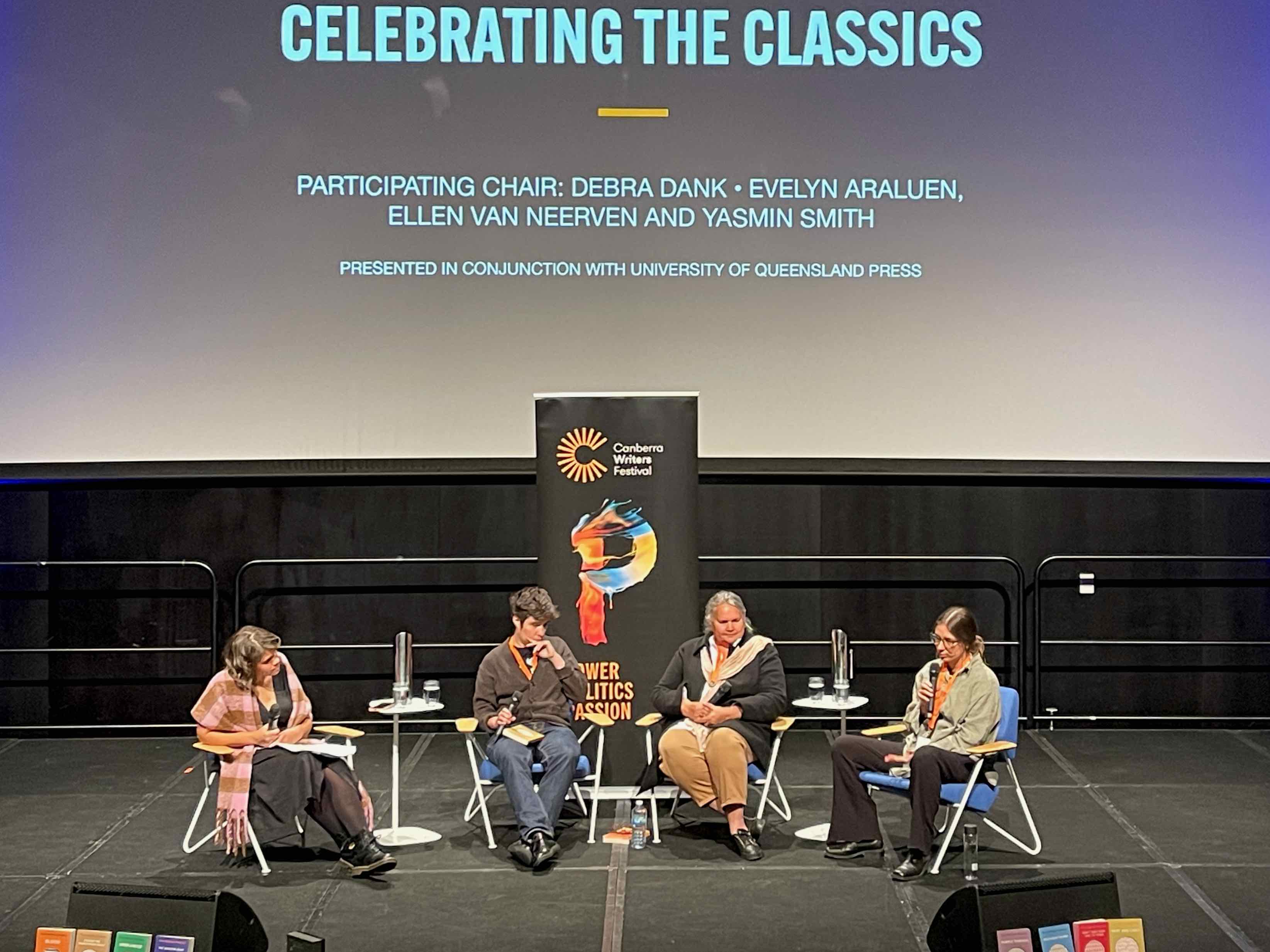
Canberra Writers Festival 2023: 2, Celebrating the classics

When I saw the line-up for this session – Debra Dank, Evelyn Araluen, Ellen Van Neerven and Yasmin Smith – I was in. I have read and admired writing by three of these writers and was keen to attend that rare thing, an all First Nations panel.

Its topic was described as follows:

A new literary project sets out to change the way we tell the story of Australian literature. Join series editor, Yasmin Smith and a stellar panel of writers as they celebrate the first edition of First Nations Classics. Essential reading for all generations.

The discussion

The program didn’t, for some reason, identify the publisher of this new series, but it is the wonderful University of Queensland Press which, as the panelists said several times, has an excellent track record in publishing and supporting First Nations writing. I wrote about this series late last year, so loved having the opportunity to hear it discussed by those involved.

The session started with acknowledgement of country, and then with each writer briefly introducing themselves, which they did primarily by identifying the country they belong to. I love that these country names are now becoming so familiar to us all. We are all learning – almost by osmosis – the First Nations make-up of the land we live on.
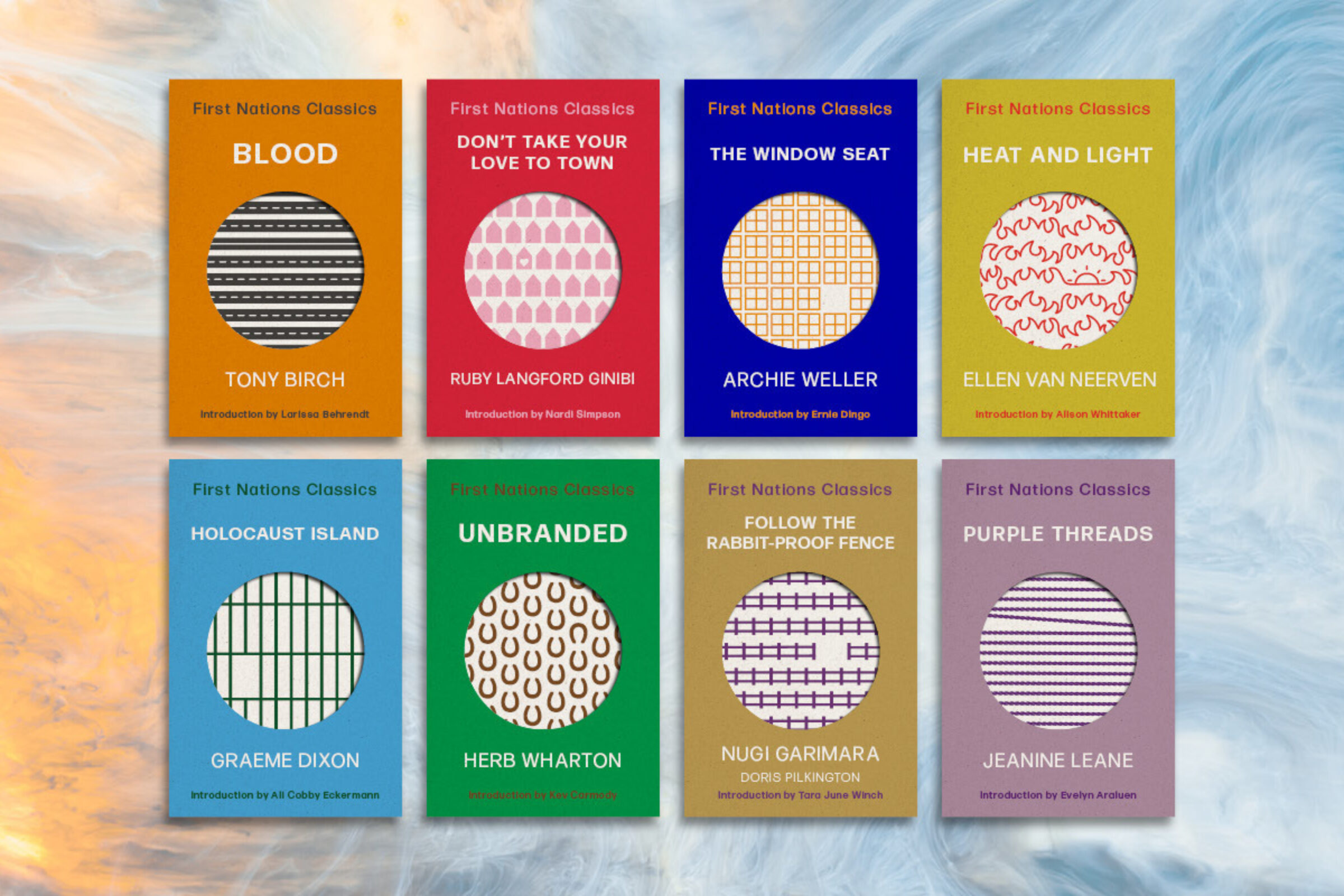
Smith then talked about the inspiration for the series, about UQP’s “incredible backlist” of books across a range of forms, that are timeless and have a clear relevance now. She then asked the panelists what makes a classic. The responses to this age-old question were varied, thoughtful and provocative . Araluen commenced because, she said laughingly, the “eye contact” had come to her! I loved her response – it’s when a book shifts into a communal relationship! The idea of “classics”, she said, is related to “the cannon”, and idea which is a western concept loaded with values of the the city-state(Plato), beauty and artistry (Aristotle), and – haha – sexual innuendo (Shakespeare). For her though a classic is a book that’s ground-changing, and that people incorporate into their lives. Real classics live within communities, outside universities. They are classics because they are valued by the people they are for and from.
She also talked about the musicality of writing, such as Ruby Langford Ginibi’s Don’t take your love to town. Dank picked up this idea and talked about musicality and rhythm. These make a classic, they are the “thing that beats within all of us”.

Van Neerven talked about classics being stories that can be read and heard, and about her own early reading as a 19-year-old of writers like Oodgeroo Noonuccal, Samuel Watson, and Leonard Fogarty. These spoke to her, though they were not alway widely celebrated in their times. She talked about Jackie Huggans’ book Sister girl. Rereleased last year, it had sold more in the next two months than it had in its first 30 years. Black literature is now being read and recognised; young people are people inspired to add to the conversation; and the publishing industry is more open to black stories.

It was then suggested that classics have great characters, a strong voice, truth-telling, and good evocation of place. Araluen identified Jeanine Leane’s Purple threads (my post) as an example of great evocation of place. You can “feel its realness, authenticity”. Classics also embody a sense of honouring what came before.

Smith next asked the panelists to talk about the growth of First Nations literature since their careers began, to which Debra Dank’s laughingly said that she was surrounded by “gorgeous, youthful folk” but that she was the youngest in terms of a writing career. Her PhD was in semiotics, which is what motivated her. She believes not many non-Indigenous Australians are aware of the depth of black writing, of its amazing richness. Blackfellas tell stories differently (which I loved hearing because I have commented on it before, and hoped I wasn’t making it up!)

Smith encouraged Van Neerven to talk about her Heat and light (my post) journey. She started with her unversity days when all her reading was “so white”. She then talked about learning what she didn’t know, how to break rules, and what she wanted to say; and about being part of the black&write! program. When Heat and light, a hybrid book, was published in 2013, there was little queer representation in First Nations literature, and little satirical/futuristic/speculative writing in the black space. There has been significant change in both these areas over the decade.

Araluen talked about Purple threads, which, like much First Nations literature, doesn’t fit into a neat package. There was talk of “blackfellas evading classification”! She found it both an honour and a challenge to be invited to contribute an introduction to Leane’s book. She tried three introductions: a literary analysis on why the book doesn’t fit the usual prose categories, but this came from our impulse to name; looking at it within the framework of Leane’s life but this would tell people how to read it; and finally, a focus on the place. She drove to Gundagai (under Leane’s guidance) and immersed herself in the place. It was an immense privilege to step into someone else’s story. All the books she said come from particular contexts, but are now in conversation with each other.

At this point she made a shout out to the Festival’s Artistic Director, Beejay Silcox, for her diversity and inclusiveness this year’s programming.

Smith then noted that classics hold deep, rich history, and asked Dank if she had any favourites. Dank neatly sidestepped this (almost), saying that each book reflects different times and experiences. She did though name Herb Wharton’s cattle country book (Unbranded) and said Ruby Ginibi’s book is a classic. She’s relatively new to Van Neerven’s work which she sees as profound in a different way. She really couldn’t pick favourites, she said. they are life markers, they guide us.

Araluen wondered what the series will do for kids, and then asked Smith about her experience managing the process. Smith said it felt overwhelming, but it was all based on consultation and community. The challenge was working out who could speak to which book for the intros. It was also very hard to choose the initial 8. She was 19 years old when she first read a black writer, Tara June Winch’s Swallow the air. It gave her a sense of belonging; she could see herself. So, she wanted books “that spoke to ourselves as black writers and black readers … to community”.

Q & A

  • On a second series and the production process: There is a second series of 8, coming out next June (2024). The process was complicated: some were out of print, some pre-digital, so there was scanning, rekeying, retypesetting; there was designing the covers to make them collectible as a set; there was no editing of the works, but there was the commissioning of the intros. It takes a long time.
  • On getting the books into school curriculums: Some are already (like Heat and light) but they are trying to get them into the educator’s market. Some have teacher notes.

The panelists then asked each other questions. Araluen asked Van Neerven how she felt about Alison Whittaker writing her book’s introduction. Van Neerven said she’d been daunted by the whole process when her book first came out, but this time felt more in control. She liked how Whittaker contextualised the book from her own experience. She loved feeling her work had been cared for.

Van Neerven then asked Dank what she was working on now. Dank wasn’t sure it was wise to talk about, but she is reframing the other part of her PhD which is about black narrative, but she is having second thoughts about its form. The problem is it’s about to go to the printers! Araluen answered the same question, saying it will be some time before she tries poetry again! Her next book is from her PhD on desire, haunting and healing in literature and storytelling.

Van Neerven didn’t get to answer her own question. She was saved, she said, by “1700 [the session end time] staring at her”!

This was truly lovely panel, in which the panelists showed such respect for each other but also exuded a quiet confidence in themselves – and gave me some new things to think about. Beautiful.

Canberra Writers Festival, 2023
Celebrating the classics
Saturday 19 August 2023, 4-5 pm
Canberra Writers Festival 2023: 1, Canberra’s Biggest Book Club

A preamble

The Canberra Writers Festival is back in 2023, with a new Artistic Director, the writer and critic Beejay Silcox. The Festival’s theme continues to be “Power Politics Passion”, which, for this year’s Festival organisers,

begs big questions: What do we value? Whose stories are heard? How do we reckon with the past and imagine the future? It is our hope that CWF will provide a space to explore these questions, and to celebrate the heft and craft of Australian storytellers — a joyful collision of art-makers, big thinkers, big dreamers and readers.

I love the look of this year’s Festival program. It feels more diverse and more literary, without losing the political flavour that makes it uniquely Canberran.

Canberra’s Biggest Book Club

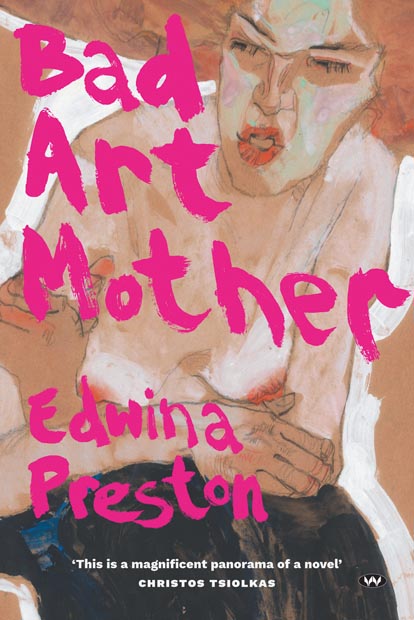
Canberra’s Biggest Book Club has been a regular Festival session, but I’ve not attended before, for various reasons, mainly to do with scheduling and location. This year, however, the stars aligned, including the fact that the featured book, Edwina Preston’s Bad art mother (my post), was one I’d read and was keen to see discussed.

The panel leading the “club” comprised Beejay Silcox, ABC’s The Bookshelf’s Kate Evans, and the author. The promotion for the session says:

There’s so much to unpick in this Stella Prize-shortlisted novel. Who gets to be an art-maker? At what cost? Whose artistic voices are valued, and whose are lost? These questions are as relevant today as they were half a century ago. That’s what makes this novel so vital and beguiling.

Because the session was framed as a “bookclub”, the format was that during the hour audience members could write questions on a piece of paper which would be collected by volunteers and handed to Beejay for inserting at intervals into the discussion.

Evans started by asking Preston for her “stuck in a lift” pitch for her book. Preston replied she wasn’t good at that but offered that it was about a female poet in the 60s coping with motherhood and a sexist culture.

Evans then asked Silcox, who had been chair of the Stella Prize panel that shortlisted this book, why this was the book she wanted us all to read. Silcox replied that the Stella books provide a core sample of the culture we are in right now, of the things we are thinking about. Bad art mother she said had urgency, and spoke to the collective history female Australian writers share. It was a YES on all levels for her – as a reader, critic and judge. I realised at this point that I like the way this woman thinks.

Evans then spoke to the point that this book had been rejected 25 times, and asked why. Preston said many reasons were offered such as it didn’t fit the “publishing cycle” (whatever that means), was likely to be commercially successful, didn’t like the voice of the child, not feminist enough …

This led to Evans to ask about her choosing a child’s voice. Preston said she had been thinking about Joy Hester and her son, and the idea of a parent giving up a child. The novel is not Sweeney’s story, but was inspired by that situation. She also thought later that a boy’s voice might offer an entry point for male readers. It also offered an opportunity to explore the sensitivity and vulnerability of male children. Silcox added that the use of the child’s point of view also provided an opportunity to explore different versions of mothering or parenting, through Owen’s perspective on all the people in his life. It’s a bit about urban family-making.

Next Evans moved to protagonist Veda’s antecedents, which included the Australian poet Gwen Harwood, whose letters Preston had read. This resulted in a fascinating discussion about Gwen Harwood, about women’s lives as artists, and about the role of correspondence in women’s lives. Preston talked about Harwood’s life, including the F*** ALL EDITORS acrostic poem scandal. Silcox talked about reading Harwood at school but knowing nothing about her radical side – and wishing she had. Harwood’s letters, we learnt, were brilliant, funny, scathing. She had a fighting, pioneer spirit, but she was also grounded by her children. Sometime around here, Harwood’s pointed poem “In the park“, was shared, including its last line, “They have eaten me alive”!

Preston talked about the challenges of being a woman artist and a mother. Veda feels she’s a bad mother while her son cuts her more slack. In Modjeska’s book Stravinsky’s lunch, said Preston, the artist Grace Cossington-Smith says that once her children left home, she had all the time but the urgency had gone. Veda faces a similar challenge when she has a weekend to herself.

Regarding her own time-management, Preston said she works best by writing in 1.5 hour blocks a few times a week. Working in short blocks means she always leaves something to work on next session. At this point we got an Audience Question, which was what surprised her most about her book. What an interesting questio. Preston’s response was not what I expected: she saw what her subconscious had created, how things she hadn’t explicitly planned had made the book work. This gave her confidence in her process. When asked for an example, she said introducing vegetarianism had opening up opportunities, like aligning meat-eating with masculine world views.

Another Audience Question concerned whose styles she admired. Preston had to think, but did say they included Jane Austen, George Eliot, Virginia Woolf and Elizabeth Harrower.

This provided a perfect segue to return to the idea of women creators, and a discussion that resonated with me. Do women, Silcox asked, need a room of their own? Preston talked about her PhD and her interest in women’s correspondence, which women tend to write in communal spaces. She contests the “room-of-one’s-own” myth. It’s a western, masculine view of art, she says. Interruptions are not a bad thing. Veda, however, subscribes to this “selfish artist” myth – as does Simone de Beauvoir. However, Preston asked, would de Beauvoir and Woolf have thought the same way had they had children? As someone who works happily in communal spaces, but has always worried about letting the sisterhood down, this spoke to me.

The panel then segued to the myth of genius, the sense that successful artists must be geniuses. Harwood was strong, but Veda is less strong, less sure, and destroyed herself. Silcox said that it was important to undermine these myths because it is hard enough “to carve a life on the page” in Australia without feeling you have to live up to these unrealistic ideas.

Evans then asked about Mr Parish, the man everyone loves to hate. Preston’s response was illuminating. He’s an archetype at the beginning, an early 20th century literary character, she said, but by the end he’s a human with fragilities and redeeming qualities.

Evans followed this by asking what the other women characters brought to the novel besides their art. They represent, was the answer, different relationships to art, and different family roles. These include the “I don’t have a creative bone in my body” Ornella who is not an artist, but is the most reliable person in the novel. All these women examine the themes from different perspectives. Silcox added that they offered “a polyphonic version of women”. She talked about the cages around us and finding ways to unlock them, about how you have to map the cage before you can break out of it. The book is so relevant, so resonant.

At this point another audience question was shared. Referencing Veda’s letters to her sister, it asked why women are so self-critical. Self-criticism is good for an artist, answered Preston.

Evans returned to the correspondence in the novel which offers a different more intimate voice. Preston talked about the role of correspondence in women’s lives, and how correspondence offers writing practice. Unlike diary writing, it involves considering the recipient, and providing details not always necessary in a diary. The letters in the novel are also, added Silcox, one-sided, which invites us to step in and wonder what Veda’s sister might have said (and how Veda might have responded to that). Good point, I certainly remember thinking about how Tilde might have responded.

The next audience question concerned the fact that all the women artists in the novel end up being successful. Had Preston considered including an unsuccessful artist. She hadn’t thought of this, she said, but the artists were, in fact, all successful later in life, and in Veda’s case, after her death.

This led to a discussion about ambition in women, and how it tends to be used pejoratively, as an insult.

Then there was an audience question about not liking Veda. Preston wondered if readers would like her. This didn’t concern her, but she knew it would be an issue for some. Silcox threw in that women being likable is another of those issues women have to deal with.

Evans, referencing a previous comment by Preston, asked her why she knew Veda had to die. Her answer was that the book needed to be a tragedy, though she also wanted to resuscitate Veda posthumously. The novel couldn’t be triumphantly feminist because everything isn’t fantastic.

This led to a discussion about Veda’s action that precipitated her downfall, and about her husband, the restaurateur and philanthropist. Again, Preston’s response was fascinating. She commented that men taking on cooking (like celebrity chefs) and public philanthropy results in their being celebrated for the things – cooking and caring – that women do invisibly.

Evans then quoted from the letter to Tilde in which Veda ponders what sort of mother she is, and whether if it came to the crunch she would sacrifice her art for her child. Is this question – Would I? – the heart of the book, she asked. Preston talked about 19th century women novelists discussing the writing-versus-babies quandary, and the “menopausal theory literary production”. She doesn’t agree it’s either-or. You can do both together, but it is a real quandary many women artists grapple with.

Finally, Silcox asked Preston to think about the writer she was before and after the book. What had it taught her? To trust herself, she said, and the workings of serendipity in her writing. What a great lesson.

And so ended another excellent writers’ festival session. I loved it for the number of ideas that went in different directions to those I expected, like the room-of-one’s-own discussion. Good stuff.

Canberra Writers Festival, 2023
Canberra’s Biggest Book Club
Saturday 19 August 2023, 2-3 pm

Jane Austen’s The Watsons in Trove: Finishing the unfinished

While searching Trove recently for my Monday Musings 1923 sub-series, I came across some articles on Jane Austen’s unfinished novel, The Watsons, and can’t resist sharing them with you.

I have written about unfinished books before, including on Jane Austen’s unfinished novels, The Watsons and Sanditon. Unfinished books aren’t to everyone’s taste but, if you love an author, you’ll read anything they wrote. Such is the case for me with Jane Austen.

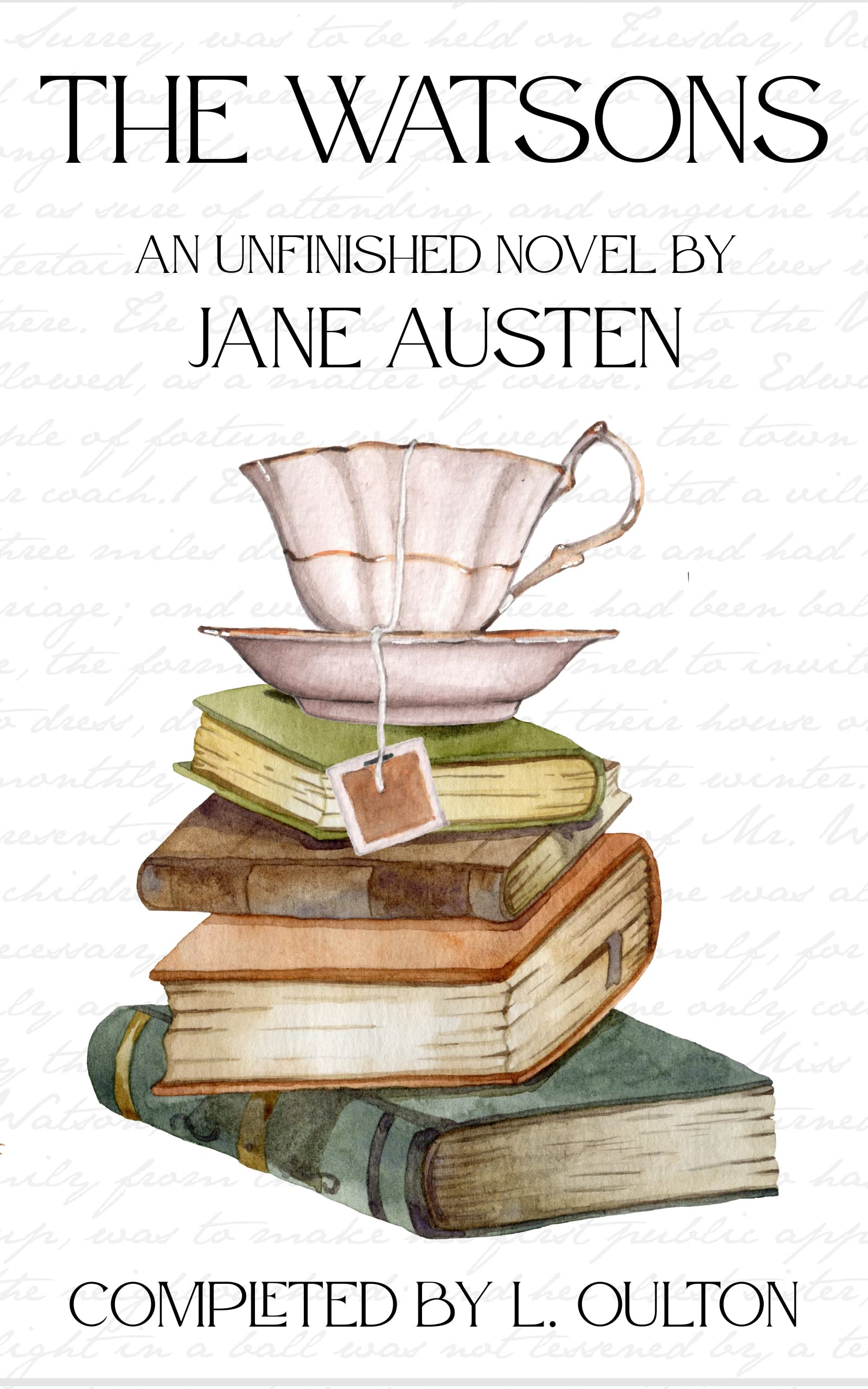
So, The Watsons. Just as writers can’t seem to stop writing sequels, prequels and multifarious other versions of Austen’s six published novels, they are also drawn to her unfinished novels. The Watsons, for example, which Austen abandoned around 1805, has been “finished” several times. The first appeared in 1850, and was not presented at the time as a continuation. Wikipedia provides a good summary, explaining that it was an “adaptation” written by Austen’s niece Catherine Hubback, who titled it The younger sister. The initial chapters were based on Austen’s writing, but Hubback did not copy her words verbatim. The first real continuation came in 1923, and was written by L. Oulton. Since then, there have been several more, including versions of Hubback’s version! And so it goes ….

You can read all about it in the Wikipedia article above. Meanwhile, I’m returning to Trove, and the two articles that inspired this post. Both appeared in May 192 – in Melbourne’s The Age (May 5) and in Sydney’s The Sun (May 13). They refer to the publication of two “editions” that year of The Watsons – an unfinished edition with, says The Age, “a pleasant and informative introduction by A. B. Walkley”, and one completed by “Miss L. Oulton”. The Sun describes these two editions:

One firm publishes this fragment with an introduction by A. B. Walkley; the other firm actually calls upon L. Oulton to finish the story! The reader is advised to read only to the place where Jane Austen threw down her pen.

Good advice, I say – but that’s because I am more interested in Austen’s writing than in what others might think were her intentions. This, however, is not why I wanted to share these pieces. What interested me were their attitudes to Austen.

The Age says:

A return to Jane Austen after a course of modern fiction is an experience. The prim dignity of her diction; her bookish, almost stilted, conversation; her expression of fine sentiments and descriptions of good manners; her special acquaintance with the somewhat narrow insular life of the well-to-do in the English provinces a century and a quarter ago; her well-bred young ladies, whose only ambition in life is to secure husbands; her shrewd insight into the human heart, and her capacity as a storyteller— the reader renews acquaintance with much pleasure.

Not surprisingly, I don’t agree with this assessment of Austen’s writing. “The prim dignity of her diction”? Good diction perhaps, but prim? Not my Jane. Her conversation does tend to be formal compared with today’s writing, but you just have to read Lydia’s slangy “Lordy” to know that Austen can capture the nuance of character through her dialogue. Further, describing her subject matter as “the somewhat narrow insular life of the well-to-do in the English provinces” is, in fact, “somewhat narrow”. Of course, I agree with “her shrewd insight into the human heart, and her capacity as a storyteller”.

It is this – “her well-bred young ladies, whose only ambition in life is to secure husbands” – that most offends. It reduces Austen’s concerns to something not worth reading, or, to something worthy only of a few hours of escapism. Her heroines do tend to be “well-bred” in terms of manners, but many are by no means “well-to-do”. Marriage is the outcome of her novels, but her themes and her heroines’ ambitions are far more complex.

The Sun was more off-handed about why we might read Austen:

The story bears all the characteristics of the author, though it does not compare with her other established works … Through this fragment, however, the modern reader may pleasantly peer at a vanished age, with a ballroom etiquette already long forgotten, sententious speeches, a slavish admiration of “the quality” in the county, love affairs that are hidden by hints and evasions, and a painful obedience to the conventions.

“Pleasantly peer at a vanished age” and “painful obedience to the conventions”? Even in the beginning of The Watsons we see Austen’s eye for superficiality versus substance in her society, and her willingness to expose it. We also see her awareness that not all women were well-to-do, as shown in this quote from the novel. In it, our not-so-well-off heroine Emma speaks to the aristocratic Lord Osborne:

‘I wonder every lady does not. – A woman never looks better than on horseback. –’
‘But every woman may not have the inclination, or the means.’
‘If they knew how much it became them, they would all have the inclination, and I fancy Miss Watson – when once they had the inclination, the means would soon follow.’
‘Your lordship thinks we always have our own way. – That is a point on which ladies and gentlemen have long disagreed. – But without pretending to decide it, I may say that there are some circumstances which even women cannot control. – Female economy will do a great deal my Lord, but it cannot turn a small income into a large one.’

Sure, Austen’s heroines were not in the poor-house, but not all were carefree either when it came to money. Indeed, several – Fanny Price and the Dashwoods, for example – rely on the kindness or generosity of others to live in reasonable comfort. And many minor characters – such as the Bateses in Emma – were identifiably poor. Marriage was a necessity not a luxury for many (Emma’s Emma notwithstanding!)

You are welcome to check my Austen posts to see my thoughts on these and other matters.

I enjoyed finding these articles, but was disappointed to find the same-old misunderstandings of Austen in vogue then as they continue to be now.

Monday musings on Australian literature: Australian literary biographies (2, poets)

Eight years ago, I wrote a Monday Musings on Australian literary biographies, but the main focus there was on novelists. With this month being National Poetry Month and with, coincidentally, this year’s National Biography Award going to a biography of a poet, it seemed a match made in heaven. In other words, it seemed appropriate to share some biographies of Australian poets, on those writers, that is, for whom poetry was their main literary output.

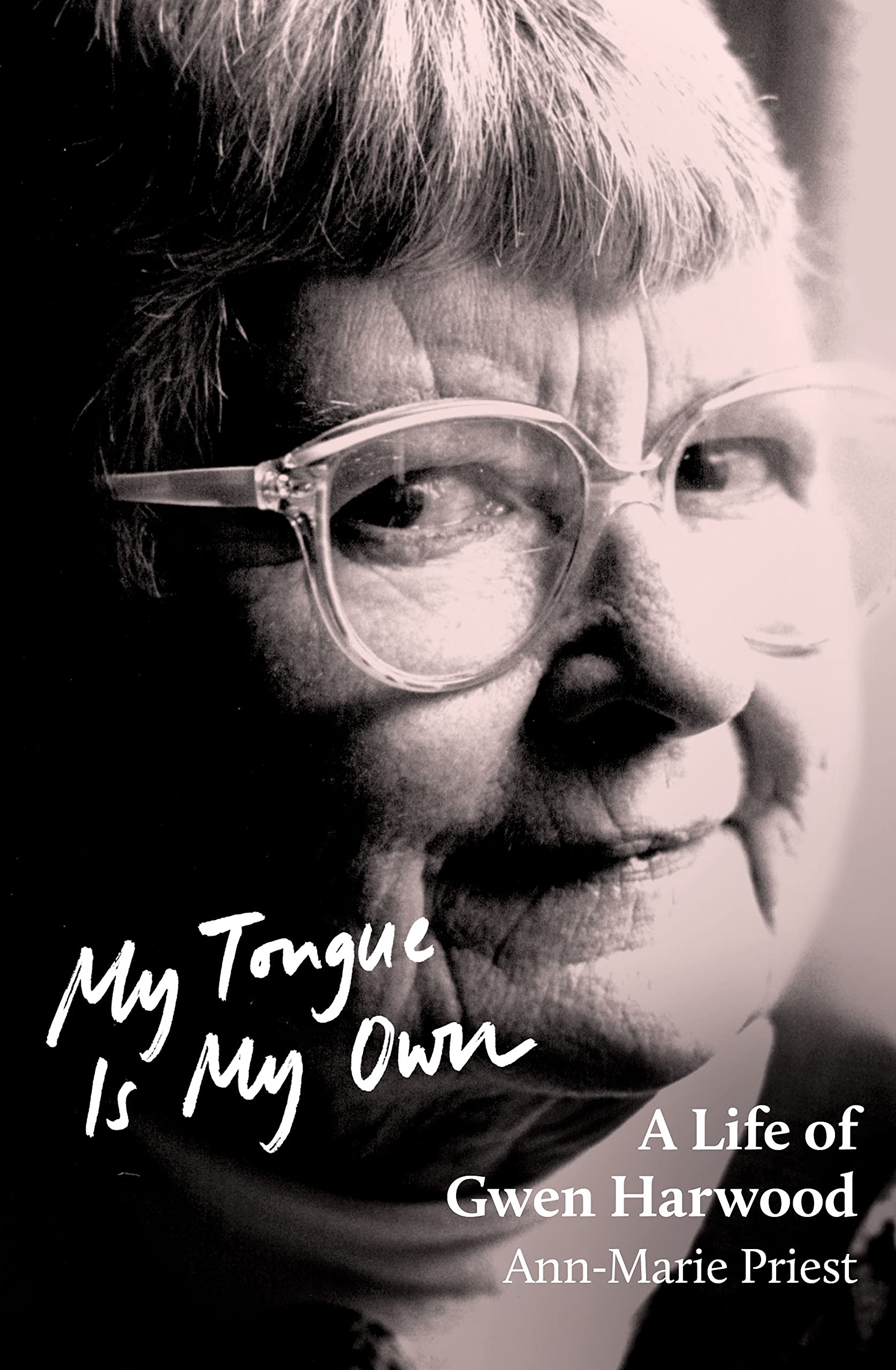
In his latest emailed newsletter, Jason Steger, Literary Editor of the Sydney Morning Herald and The Age, writes about this year’s National Biography Award winner, Ann-Marie Priest’s, My tongue is my own: A life of Gwen Harwood (2020). Harwood, some of you might remember, was one of Edwina Preston’s inspirations for her novel Bad art mother (my review). As a woman poet, she had to fight hard for recognition by the male-dominated publishing world. Steger explains that “Harwood’s was a complex life and Priest had to persevere to sort it all out”. Two would-be biographers, Alison Hoddinott and the late Gregory Kratzmann, who edited her collected poems, were, he explains, defeated by the task. Not Priest, though, for which we should be grateful. One of the judges, Suzanne Falkiner, says Steger, put it this way:

Ann-Marie Priest has captured completely the sprite-like nature of one of Australia’s finest poets; a woman who used a fierce intellect and penchant for trickery to upend dusty institutions that steadfastly refused to see women as capable or talented. Through these pages, the great poet feels so alive.

To completely capture the nature of their subject must surely be a biographer’s goal, by which I mean it is not to fill up the pages with unending chronicling of carefully researched facts, albeit facts are important, but to give readers a sense of who the person was. Sounds like Priest has done this.

Selected biographies of Australian poets

These are listed, in the time-honoured vein of biography sorting, by the last name of the poet being written about. It’s a small select list to get us started:

  • Sarah Mirams, Coasts of dream: A biography of E.J. Brady (2018): I had never heard of Edwin Brady (as a poet or otherwise) when this turned up in my search, but he was apparently “a socialist and bohemian who knew Henry Lawson and many other well-known writers”. He was mainly a composer of sea ballads. I haven’t read this but I am hoping to do a post on him next week, now that I’m on a Poetry Month roll.
  • Cathy Perkins, The shelf life of Zora Cross (2019, on my TBR): on poet and journalist Cross, who could be provocative and should, I think, be better known than she is. (See article by Jonathan Shaw on AWW.)
  • Phillip Buttress, An unsentimental bloke the life and work of C.J. Dennis( 2014): (my review)
  • W.H. Wilde, Courage, a grace: A biography of Dame Mary Gilmore (1985)
  • Gregory Bryan, Mates: The friendship that sustained Henry Lawson and Colin Roderick, Henry Lawson: A life (1999)
  • Deborah Fitzgerald, Her sunburnt country: The extraordinary literary life of Dorothea McKellar (2023, available for pre-order): apparently “the first definitive biography” of the author of one of Australia’s most favourite poems
  • Kathie Cochrane and Judith Wright, Oodgeroo (1994, on Oodgeroo Noonuccal)
  • Georgina Arnott, The unknown Judith Wright (2016) and Veronica Brady, South of my days: A biography of Judith Wright (1998)

“Enjoyably controversial” (John Docker)

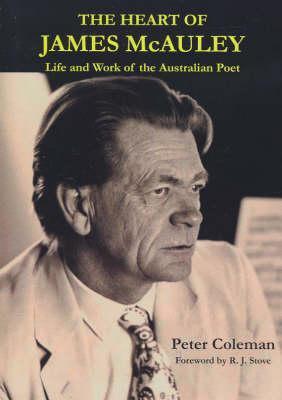
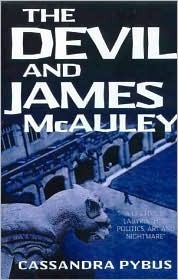
Biographies, of course, can be quite the battleground when there is disagreement about the legacy of the subject, particularly when that subject may have been controversial to start with. I found such an example in my research. It concerns the poet James McAuley, who was known for the Ern Malley modernist poetry hoax. I came across two biographies of him. One, The heart of James McAuley: life and work of the Australian poet, was published in 1980 and is by Peter Coleman. He was editor of Australia’s conservative journal Quadrant – which was founded by McAuley – and is on record as saying of McAuley that “no one else in Australian letters has so effectively exposed or ridiculed modernist verse, leftie politics and mindless liberalism”. The other was by Cassandra Pybus who could be described as Coleman’s political opposite. Her biography, published in 1999, was provocatively titled, The devil and James McAuley. Coleman wrote an excoriating review of it in which he detailed multiple inaccuracies and called it “a silly book degrading a great writer”. Literary critic and cultural historian, John Docker, launched Pybus’ “enjoyably controversial” book, concluding with:

Cassandra has written a lively, entertaining and enjoyable book, very alive to the conflicts and differences within conservative groupings. She has the daring to break with the stifling convention of Australian literary criticism, which bizarrely is that critics should abandon the critical function, they should be obsequious to Australian writers living and dead, they should puff and promote and endlessly praise them – as Leonie Kramer, Cassandra points out, has tirelessly effected for her friend McAuley.

Now that was a book launch! Not having read either book, I can’t make any judgements. It is possible that Pybus, writing 19 years after Coleman, had found more information on McAuley’s life that was not available to Coleman. It’s also possible that Coleman’s sharing political values with McAuley affected his assessment, just as Pybus’ different political views may have affected hers. Whatever the merits of this particular situation, it reminds readers of biographies to consider who is writing the biography and why. I do like biographies in which the biographer introduces their book with this sort of background.

(A revised edition of Coleman’s book was published in 2008, and Coleman spoke at the launch. Pybus still rankles. Ignore Tony Staley’s and Tony Abbott’s comments, if you like, and move on down to Coleman. I enjoyed his closing story.)

Can you share any favourite biographies of poets?

Rayna Green, High cotton (#Review)

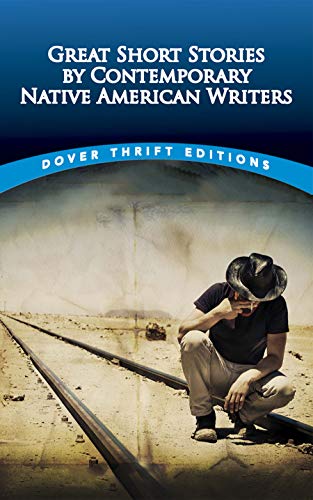
With Rayna Green’s short story, “High cotton”, we pass the halfway mark in that anthology I’ve been posting on over the last few months, Great short stories by contemporary Native American writers. We are also getting closer to the anthology’s publication date of 2014, so these chronologically listed stories are starting to bunch up in their dates. The previous two were both published in 1983, with “High cotton” being published just a year later in 1984.

Rayna Green

Again, I’m mostly using anthology editor Bob Blaisdell’s intro and Wikipedia to introduce the author. Blaisdell’s intro is brief, as usual, but it is he who formally clarifies Green’s identity as a Native American, explaining that her “Native background, through her father, is Cherokee”. Identity, as we’ve come across already in this collection, can be problematical so I was a bit unsure when Green’s Wikipedia article didn’t explicitly provide her tribal affiliation, as I’ve found for our preceding authors. As this anthology specifically contains stories by Native American writers, I do want to identify how each writer fits into this.

Wikipedia’s article on Green (b. 1942) isn’t completely silent. It does imply her heritage, describing her as the “first American Indian to receive a Ph.D.” in Folklore and American Studies, and stating, near the end, that she was “a founding member of both the Cherokee Honor Society and the American Indian Science and Engineering Society”.

Continuing with Wikipedia, I was also surprised that, unlike for our previous writers, Green is not introduced as a writer, but as a curator and folklorist – at the Smithsonian Institution, among other organisations – and as having worked in academia. Duke University is more useful regarding her writing career. In 2008, it said that she had written or edited four books and published “many essays on American Indian representations, American Indian women, American identity, American Indian material culture, and American Indian food and foodways”. The page also says, and this was of particular interest to me, that

Several of her short stories and essays on Native women and American identity have been widely reprinted and have served as standard reading for twenty years in courses in women’s studies, American Indian studies, and American studies (e.g., “The Pocahontas Perplex: The Image of American Indian Women in American Culture,” “The Tribe Called Wannabee: Playing Indian in Europe and America,” “Magnolias Grow in Dirt: Southern Women’s Bawdy Humor,” and “High Cotton”).

This seems like a good point to move to today’s short story …

“High cotton”

“High cotton” is a tricksy story. For a start, it is framed as a story within a story, which suggests that storytelling is one of its concerns. There is also the challenge of the Oklahoman Tahlequah vernacular that is used in the telling. Finally, there are complicated relationships, and, dare I admit it – identities – to unravel. I’m not sure I completely got them all, but that I think it part of the point about identities: To what extent are they what you are born as and to what extent what you choose?

The story-within-the-story concerns Rose who, in effect, gets the better of those who have made her life hell – the Baptist Church and her abusive alcoholic white husband Will – by emulating Jesus to encourage said husband to convert to Christianity and preach the word. The story turns to almost pure farce at this point as Rose prances around the bedroom in a cloudy, white nightgown exhorting her out-of-it husband to repent his ways. She can’t believe that he doesn’t recognise her, but she does such a good job of it that he does indeed repent and go on to preach the word while, in a pointedly ironic twist, she goes on to support herself by selling the very liquor that had made her life a misery. And, she stays away from the church.

Framing this is Grandma (Rose’s sister, I think) telling the story to Ramona (a great-niece, I think). Green opens her story with:

Is everything a story? Ramona asked her.

To which Grandma replies, somewhat cryptically:

It is if a story is what you’re looking for – otherwise it’s just people telling lies and there’s no end to it.

While Grandma waits for Ramona’s response, Ramona is watching some “purple cockscombs” through the kitchen door. This ends the opening paragraph so, hmmm, what do these “purple cockscombs” signify, as they seemed too deliberately placed there to mean nothing. They are flowers, but my first thought was of the cockscomb strutting about in foolish pride. My web search retrieved several, often paradoxical meanings. Symbolsage.com provides a good description, summarising them as symbolising “love, affection, silliness, partnership, individuality, strength”. Green could be calling on some of these, and/or on that “cockscomb” image of showy emptiness.

Perhaps more relevant to focus on is the black snake that runs across another character’s foot out in the cotton fields. The snake doesn’t bite her – a Cherokee named Gahno – but the event results in pandemonium and change that involves, over time, the women working on the cotton fields leaving. This infuriates the German plantation-owner Poppa, particularly when his daughter (Ramona’s mother) marries Gahno’s son: “Betrayal was bad enough, but race mixing was worse”.

It is only after we are told all this, and after Ramona has doctored Grandma’s iced tea with some “boogered Indian” whiskey, that we hear the story of Rose and Will. Grandma is quite the storyteller:

Rose got all the church women to pray and pray over him, week after week, and they kept poor Jesus awake yelling about Will’s sinful state. The more they prayed and hollered over him, the more he cussed and drank. And that made them pray more. You know how them prissy Baptist women is, honey—wouldn’t say shit if they had a mouthful—and they like to drove everyone to the ginmills and shake dance the parlors before long. But everyone was more disgusted with Will.

By the end of the story Will has been dead some years, and Rose “had turned Indian just as sure as she’d turned away from Christians”.

To conclude, we return to the aforementioned snakes. Grandma tells Ramona that Rose “always figured, just like Gahno, that snakes were meant to warn you, and she took the warning”. As for stories? Well, they may be lies or they may be what Grandma calls them, “snakebite medicine”. “High cotton” is an intriguing story. Green evokes a lively scene, and explores with dark humour the complexities of multiracial communities where personalities and cultures clash, but I did have to read it several times to work out who was who. If anyone else has read it, I’d love to hear your thoughts.

Rayna Green
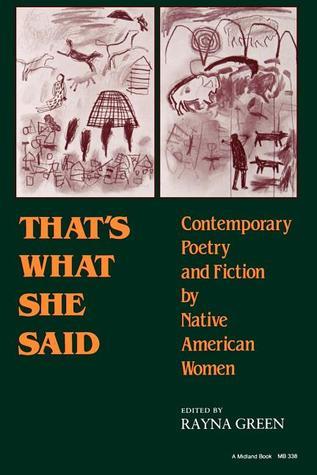
“High cotton” (orig. pub. 1984 in That’s what she said: Contemporary poetry and fiction Native American women, ed. Rayna Green)
in Bob Blaisdell (ed.), Great short stories by contemporary Native American writers
Garden City: Dover Publications, 2014
pp. 59-64
ISBN: 9780486490953

Monday musings on Australian literature: Poetry Month 2023

This year Red Room Poetry is running their third annual National Poetry Month. How excellent is that? I don’t know how successful it is at reaching its goal of increasing “access, awareness and visibility of poetry in all its forms and for all audiences” but sometimes you just have to hang in there and build recognition. Poetry Month runs throughout August.

They are offering similar events and activities to last year with their 30in30 daily writing competition with prompts from Red Room commissioned poets, poetry ambassadors, online workshops, showcases, a community calendar, and more. Do check their page, for events that might interest you.

National Poetry Gala … and more

This year they also, they said, returned their National Poetry Gala to celebrate Red Room’s 20th anniversary. It was held, unfortunately, on 4 August! It was emceed by Benjamin Law, and was held at the Australian Chamber Orchestra’s new venue near Sydney Harbour Bridge. It featured some of Australia’s “finest contemporary poets” including Jazz Money, Sara Saleh, Freya Daly Sadgrove (NZ), Rebecca Shaw, Red Room’s 2023 Fellow Charmaine Papertalk Green, and this year’s Stella Prize winner, Sarah Holland-Batt.

There was also to be a musical performance by First Nations choir Mudjingaal Yangamba and the current Minister for the Arts, Tony Burke, was a special guest.

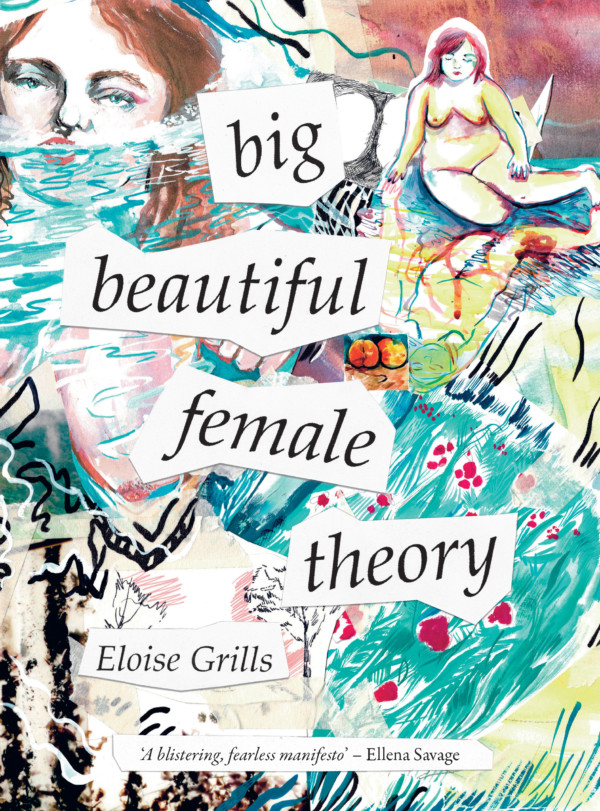
Also to commemorate their 20th anniversary, Red Room has published a poetry anthology titled A line in the sand: 20 years of Red Room Poetry. Its introduction is by Ali Cobby Eckermann, and it contains “over eighty pieces from leading poets and public figures in a retrospective that covers twenty years of the best commissioned Australian poetry”. They include writers I have heard of, and some of whom I’ve read, though not always their poetry, like Yassmin Abdel-Magied, Maxine Beneba Clarke, Tony Birch, Dorothy Porter, Eloise Grills, Sarah Holland-Batt, Jazz Money, Omar Musa, Bruce Pascoe, Maria Tumarkin and Uncle Archie Roach AC. Tomorrow night, Tuesday 8 August, they are holding an online showcase via Facebook. The event is free but you need to book.

Meanwhile, if you missed the National Poetry Gala, you might be interested to know that the Victorian Poetry Month Gala has not been held yet. It is scheduled for 17 August at the Wheeler Centre. The host is a poet-playright I haven’t heard of before, Izzy Roberts-Orr, and the event will feature, says the promotion, “new work from a dazzling line-up of poets working across forms – from spoken word and performance to music and multimedia”. I don’t know many of the names those I do include Andrea Goldsmith reading unpublished poems by Dorothy Porter, and Eloise Grills whose book big beautiful female theory has been shortlisted for several literary awards this year. There is also a mention of “a collaboration” between journalist and author Erik Jensen and musician Evelyn Ida Morris. For other state and regional showcases and galas, check Red Room’s Showcases page.

These are just three of many events – online and live – scheduled during the month. If you are interested, check out the Community Calendar which lists events from across the country.

Do you attend poetry events – of any sort?

Six degrees of separation, FROM Romantic comedy TO …

So now, the BIG CLEAN is done, and we are in the lap of the real estate gods. I hope to be able to tell you next month that we have sold, but in the meantime I’m taking my mind off it all to think about something that’s far more fun, this month’s Six Degrees. If you don’t know how this meme works, please check host Kate’s blog – booksaremyfavouriteandbest.

The first rule is that Kate sets our starting book. In August it’s another book I haven’t read – I am doing worse this year than I ever have before in this regard – Curtis Sittenfeld’s Romantic comedy. Those of you who know Sittenfeld and who know me might guess that I’d make my first link, Pride and prejudice, because she wrote a P&P adaptation titled Eligible as part of the Austen Project. I thought about it, but then decided not to do the obvious…

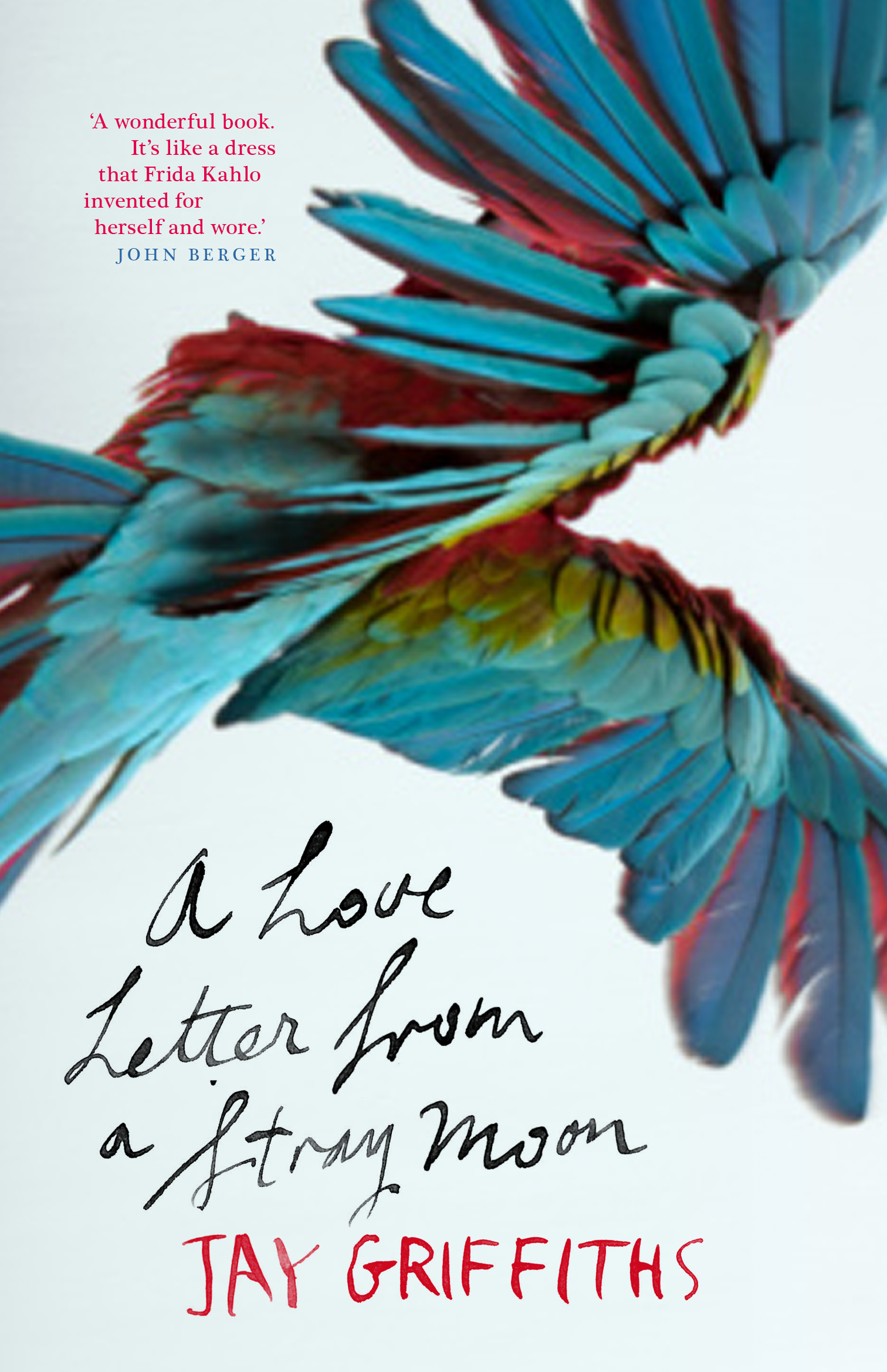
Jay Griffiths, A love letter from a stray moon cover

I also decided not to go the rom com/chick lit route, which is the genre to which Romantic comedy belongs, despite having considered a couple of options. Instead, I’ve gone way out on a limb and chosen a book by an author with, like Curtis Sittenfeld, a gender-neutral first name. The book is A love letter from a stray moon (my review) by the British writer, Jay Griffiths. It’s an historical fiction told in the voice of Mexican artist Frida Kahlo.

Ali Cobby Eckermann, Too afraid to cry

My next link is a very personal one. I read and reviewed A love letter from a stray moon while travelling in Japan in 2011. I don’t manage to write a lot of review posts when I travel, but another one that I did manage was First Nations author Ali Cobby Eckermann’s memoir, Too afraid to cry (my review), when we were travelling in the USA in 2017. She explores her heritage, including her family’s experience of the Stolen Generations and its impact on her.

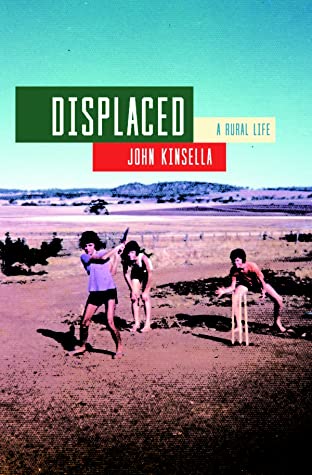
Ali Cobby Eckermann is primarily a poet. Another contemporary Australian poet who has written a memoir is John Kinsella, so it’s to his Displaced: A rural life (my review) that I am linking next. It’s a relevant link for other reasons too because in his memoir, which I described as part manifesto, Kinsella explores such things as finding a meaning for “home” that recognises Indigenous “dispossession” and that also doesn’t encompass exploitative colonial ideas of “ownership”.

Book cover

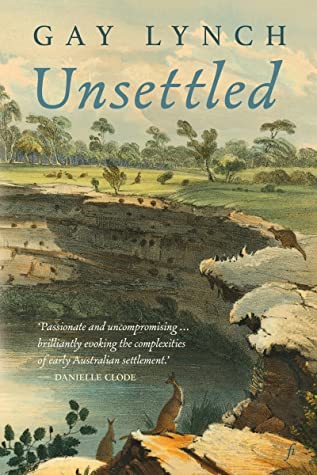
In the opening paragraph of my review of Kinsella’s book, I wrote that it reminded me of the book I had just finished, Gay Lynch’s historical novel Unsettled (my review), so that is my next link. I was reminded of Lynch’s novel for a few reasons: both have one-word titles which play with opposites; in both cases, those opposites refer to physical meanings and more abstract, intellectual, social and/or emotional ones; and, in both again, these meanings draw significantly from the colonial act of settling Australia and displacing its original inhabitants. 

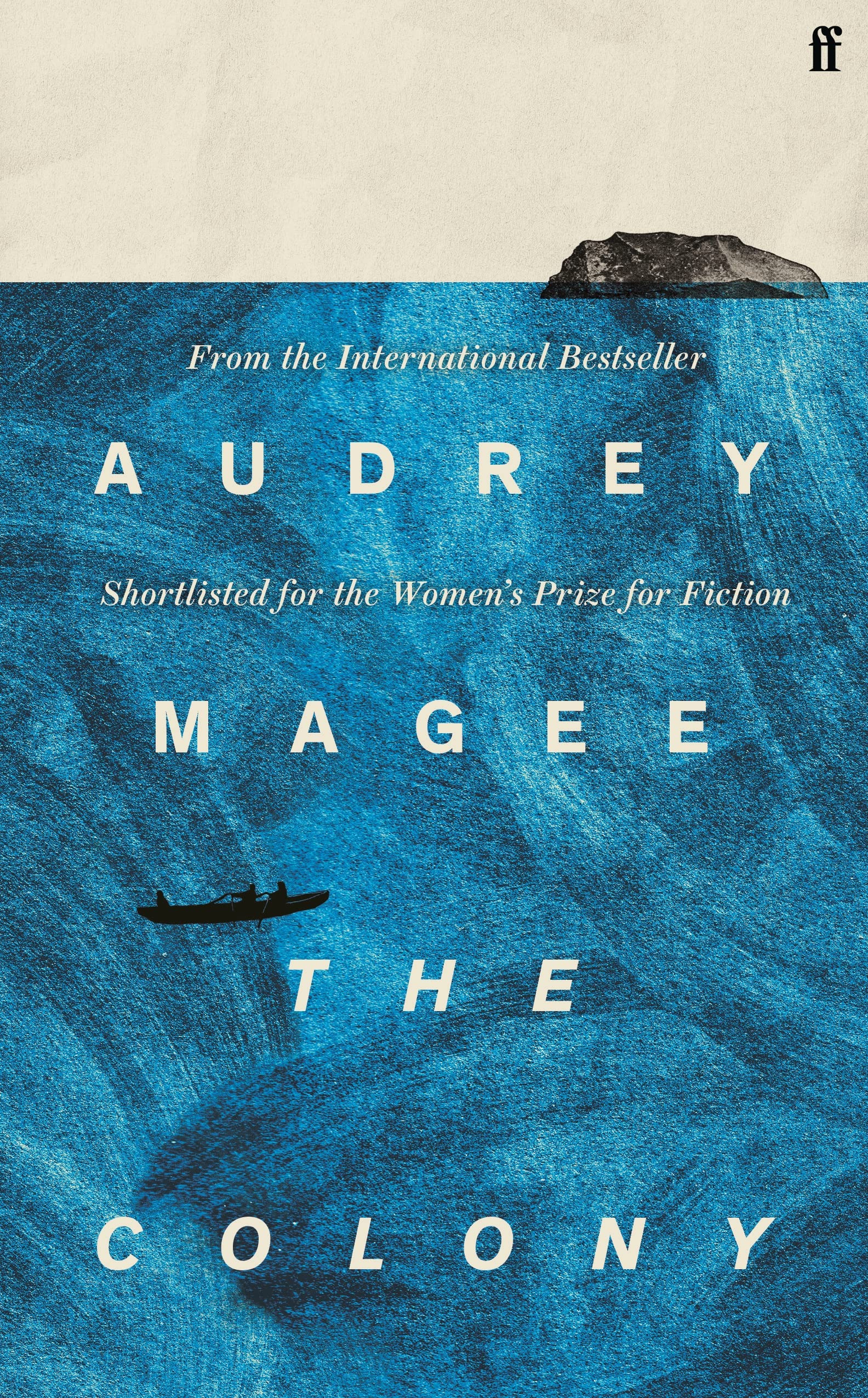
My next link is more obvious. It’s to another work of historical fiction that explores the act of colonisation, Audrey Magee’s The colony (my review), albeit this one is set in Ireland – on a small island off its west coast.

Marie Munkara, Of ashes and rivers than run to the sea

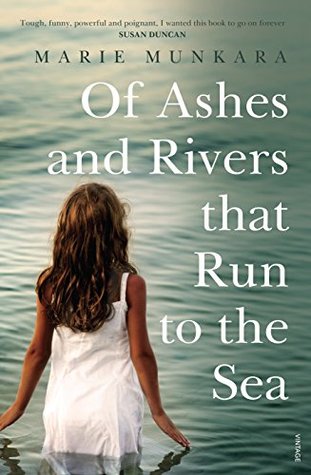
It seems I can’t get away from the issue of colonisation this month, although that theme is not the reason I chose my final link. The reason is that the majority of the book is also set on an island, this time Bathurst Island off the Northern Territory. The book is another memoir by a First Nations author, Marie Munkara’s, Of ashes and rivers that run to the sea (my review). Munkara, like Eckermann, was raised by a non-Indigenous family, and also experienced abuse.

My whole post this month has stayed in the British Isles and its colony, Australia, in terms of authors at least, though we do visit Mexico. That was purely by accident but I’m not sorry because as long as the fallout from colonisation continues to negatively affect people’s lives, I’m fine with keeping the issue front and centre.

Now, the usual: Have you read Romantic comedy? And, regardless, what would you link to?

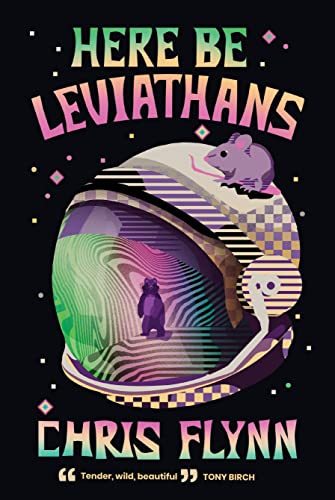
Chris Flynn, Here be Leviathans (#BookReview)

I am not one of those readers who shun weird narrators. Indeed, you’ll find several in this blog, including a skeleton, a dead baby, a foetus and a mammoth fossil. The critical thing for me is not who the narrator is, but whether that narrator is convincing and offers a perspective that engages my mind and heart. Of all the writers I’ve read over the last decade, one that stands out in his ability to surprise and excite me with different voices is Chris Flynn. His short story collection, Here be Leviathans, is astonishing from its first page to its last in its array of narrators.

There are nine stories in this collection, and it is a testament to Flynn that by the second or third one I was fully invested in who would be the narrator this time. I was never disappointed, albeit they ranged from the animate (like the grizzly bear which opens the collection, in “Inheritance”) to the inanimate (such as the airplane seat which narrates the second story, “22F”).

But, before I continue with Flynn’s book, I want to share something he says in his also entertaining “Afterword/Acknowledgements/Blame apportioned” statement. Describing one of his stories as having been inspired by Thea Astley, he refers to his role as one of the judges in Meanjin’s Tournament of Books and shares the exact words of his that I quoted back in my 2013 post on that tournament:

Astley was the progenitor, the chain-smoking, wise-cracking, jazz-loving four times Miles Franklin-winning champion of linguistic manipulation whose style got on Helen Garner’s nerves and who pushed the envelope of Australian literature when no-one else had the cojones to do so.

Flynn’s work is different to Astley’s – time and experimentation having moved on – but he too pushes the envelope of Australian literature, which is why he was one of the writers mentioned the article that inspired my recent Monday Musings on weird Australian fiction. And like Astley, his interests are personal and political. He’s interested in the ways we live in the world, in the injustices we enact, which translates to a concern with issues like colonialism, the environment, and the fallout from an unbridled interest in progress. His touch might feel lighter than Astley’s – he can be laugh-out-loud funny at times – but fundamentally both writers question who we are as human beings. What does what we do say about who we are?

“What a piece of work is man” (Shakespeare via Albert VI)

So, let’s explore Flynn’s brand of weirdness, and why I enjoyed it so much – despite the fact that the opening sentences of the first story, “Inheritance”, were truly shocking:

I ate a kid called Ash Tremblay yesterday. Parts of him, at least. The good bits. The crunchy skull, the brain, a juicy haunch.

What is a reader to think? Fortunately, you don’t have to think very long because very soon our narrator outs himself (it is a “he”) as a bear. He shares a few home truths about humans and our assumptions and behaviours. If you ignore the gruesomeness – after all, a bear has got to eat – the story is pretty funny. Its ostensible subject matter is inherited memory – in this case the bear has inherited Ash’s memory – but it is also a work of ecofiction, which includes exploration of issues like sustainability and colonialism. It is refreshingly bold, asking us to envisage different ways of acting in nature, and, at 30 pages, it is also long. But who cares?

The second, much shorter story, “22F”, is also a work of ecofiction. Its first line seemed ordinary enough, “The first day in a new workplace is always nerve-wracking”. It is, isn’t it? As the story progresses, however, you start to wonder just who this new employee is until the penny drops, it’s seat 22F on a plane. After this story, I thoroughly enjoyed the challenge of working out who was telling each story as I started it. But, back to 22F. In his Afterword, Flynn explains that the story was inspired by the Werner Herzog documentary Wings of Hope about the sole survivor of a 1971 airplane crash. Herzog and that survivor, Juliane Koepcke, return to the site of the crash, and find parts of the plane in the jungle. Flynn writes:

Memory and place. A reminder that we are only passing through and that everything is part of something larger.

Along the way, though, he discusses other issues, like workplace behaviour:

Toilets are inveterate boasters and disgusting perverts. You can’t believe half of what they say.

Eventually 22F’s plane crashes, and while the bodies disintegrate reasonably quickly, 22F is “fashioned from material that does not break down so readily … I will be here for a very long time”.

And so the stories continue, some with multiple voices. “The Strait of Magellan”, for example, is told by the appropriately named super yacht Nemesis, with interspersed commentary by a pandemic virus, HHSV1-ABAD. “Shot down in flames”, on the other hand, is told in sequential voices – by a creek which has been here for sixty-thousand years (that is, that’s how long it’s had its name!), a red fox, a rifle, and finally a bushfire, which wins the day:

I ate the defiant people who stayed.

Such arrogance. Who do they think they are, that they might resist me? I am elemental. I define this paltry world. I decide who stays in their current state and who transforms. I will find you and I will devour you, for I am Alpha and Omega. I was there at the beginning and I will be there at the end. There is no escape.

Many of the stories’ narrators, in fact, identify human stupidity – and arrogance.

In his Afterword, Flynn describes the last story “Kiss tomorrow goodbye” as the “hardest” story to read, but that does it an injustice. It’s the only one narrated by humans, and is inspired by the people who live in the tunnels under Las Vegas. It looks hard because there’s not a punctuation mark in its 30 pages, and its spelling is idiosyncratic to say the least, but in fact the voice and its rhythms are such that it’s not hard to read. It’s a story about survival and makes for a good end to the collection – one that leaves us in no doubt about all the troubling issues that Flynn has explored throughout but that also offers a glimmer of hope in the ingenuity and defiance of its protagonists.

The question of course is do these weird perspectives work or are they just a writerly exercise in “pushing the envelope”? For me they worked. It was fun trying to nut out whose voice it was this time. But there was a point to all this, because these are voices we can’t really argue with. They are not us, but they know us intimately. They speak their truths, like Albert VI, the space monkey (macaque) in “Alas, poor Yorick” who is so hopeful of surviving his space mission but who, like all the Alberts preceding him, is ultimately another pawn in the space race.

Colonial aggression and environmental destruction are recurring themes in the collection, but both are subsumed into an overriding idea which concerns something more paradoxical – mortality and survival. Death or its threat pervades the stories, but there are openings too. Some are small, but they are there.

In his Afterword, Flynn says that “they don’t make them like Astley anymore. She wrote what she wanted and didn’t give a shit”. I disagree. I think they do, and Flynn is one of them. It is great that there are publishers around like UQP who are willing to work with such writers.

Chris Flynn
Here be Leviathans
St Lucia: UQP, 2022
233pp.
ISBN: 9780702262777

Review copy courtesy UQP, via publicist Brendan Fredericks

Monday musings on Australian literature: Miles Franklin Award 2023 Shadow Jury

Some of you have probably heard of “shadow juries”. I took part in one a decade ago, for the now defunct Man Asian Literary Prize. It was great, but I haven’t taken part in any blogger-inspired shadow juries again because of the time commitment needed. If I was already impressed by the work of literary award juries, I was even more so after that experience. But, had any of you heard of a Shadow Jury for the Miles Franklin Award? I hadn’t.

It was a project of the University of Queensland’s Writing Centre. Their jury is a bit different to the blogger-run ones I’ve seen, because their aim was not to select a winner. Here is how they describe their idea of a shadow jury, its composition and its aims:

A shadow jury is an independent panel of passionate readers, critics, and literary enthusiasts who come together to review a longlist of books. While the official judging panel ultimately determines the award-winning book, the shadow jury offers an alternative lens through which to appreciate and analyse the longlisted works. 

In this post, we present reviews from our shadow jury, which included students, writers and critics from UQ who delved into each longlisted book. Through these reviews, we aim to provide readers with a multifaceted understanding of the longlisted works and spark engaging conversations about their literary significance.

So, what I am going to do here is add an excerpt from the Shadow Jury’s reviews, for each book, to whet your appetite. You might then go on and read the review (which you can find at the UQ link above) and/or, perhaps, the book itself! I’ve added UQ’s reviewer’s name in brackets at the end of the excerpt

  • Kgshak Akec, Hopeless kingdom (UWAP): “This impressive first novel is less about immigration itself, and more about family as a living organism that once uprooted, wills itself to do more than survive.” The reviewer also comments on the losses that come with immigration, such as “the normalcy of being Black in Sudan, [which is] replaced by minority status and the accompanying racism in Egypt and Australia” (Doreen Baingana)
  • Robbie Arnott, Limberlost (Text): “The first chapter is a revelation and a masterclass in the economy of words”. The whole novel is, I’d say. “Would I go as far as to declare that Arnott is Tasmania’s Tim Winton? Yes, I would, and I am willing to die on that hill. Limberlost is a superb rendering of a coming-of-age story. Tender, evocative, brutal and radiant.” (Carly-Jay Metcalfe)
  • Jessica Au, Cold enough for snow (Giramondo): “The novel’s elliptical tone plays constantly with time and memory. How much we can know another person, even those as intimately connected as mother and daughter, haunts the book, as does how much we can know our (past, present, future) self…New Australian fiction, especially from the second- and third-generation diasporic communities of Western Sydney, is quietly but determinedly shattering the white male ceiling of Australian literature, as Maxine Beneba Clarke notes elsewhere, creating a provincial literature that is both local and global in scale. ” (Professor Anna Johnston)
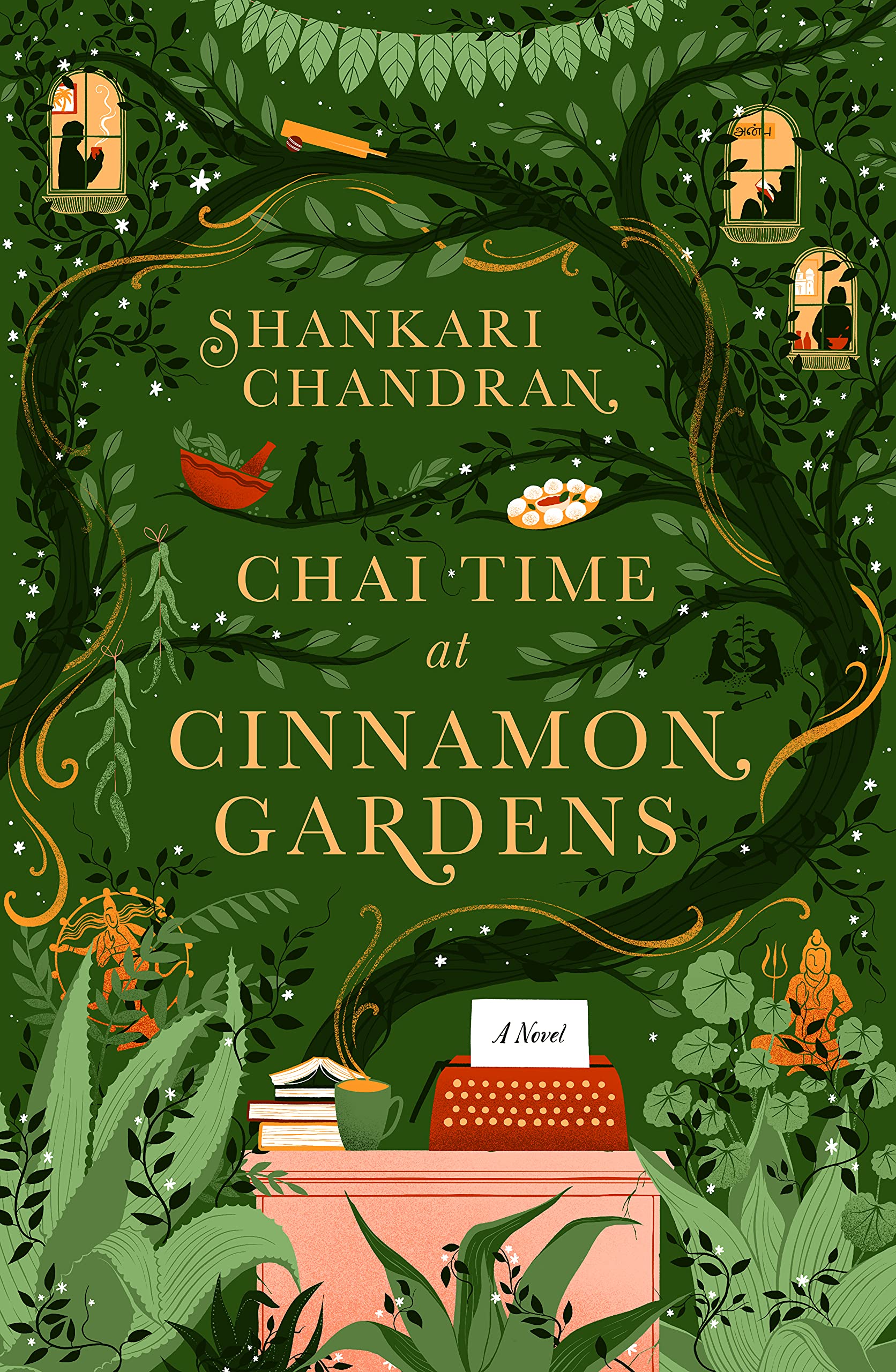
  • Shankari Chandran, Chai time at Cinnamon Gardens (Ultimo Press): “What does it mean to be Australian in the 21st century? Shankari Chandran’s Miles Franklin shortlisted novel Chai Time At Cinnamon Gardens ponders this question with grace, humility, and confronting depictions of racism raging with Shakespearean levels of drama and tragedy…Chai Time at Cinnamon Gardens is an important and enthralling read. While it lacks subtlety on some occasions, the message it evokes is damningly clear.” (Olivia de Silva)
  • Claire G Coleman, Enclave (Hachette): “Few works of speculative fiction have been considered for Australia’s most prestigious literary award, a symptom of the genre’s uneasy relationship to literary fiction and culture…In addition to its literary merits, Enclave is concerned with decolonising Australia’s stories about itself and its future. In the process, the unexamined racism still driving speculative fiction’s narratives of empire, progress, or pastoral idyll are also decolonised.” (Dr Natalie Collie)
  • George Haddad, Losing face (UQP): “Ivan and Joey’s romance is what makes this an understated, lovely book with an episode of Special Victims Unit wedged inside. It’s the unusual parts of Losing Face that make it a remarkable Australian novel, not the parts ripped from the headlines.” (Pierce Wilcox)
  • Pirooz Jafari, Forty nights (Ultimo Press): “Forty Nights is a debut work of literary fiction by Pirooz Jafari, who has fictionalised his own life story in this novel…Insightful, tender and whimsical, Forty Nights is a standout novel on this year’s longlist.” (Martine Kropkowski)
  • Julie Janson, Madukka: The river serpent (UWAP): “While at times I struggled to understand how Janson’s first foray into crime writing had qualified for the longlist of the Miles Franklin, Madukka’s handling of issues of racism, climate change, drug use, and the ongoing First Nations’ struggle for land back and recognition ultimately makes it worthwhile. I’ll end with my initial thought; I actually think I’d really enjoy seeing this story adapted for the screen.” (Rani Tesiram)
  • Yumna Kassab, The lovers (Ultimo Press): “I expected a modern fable underscored by Arabic folklore with more traditional, less didactic conventions. What I found instead was something far more poignant, raw and real…Irrespective of whether The Lovers is the recipient of the 2023 Miles Franklin, its nomination speaks to the state and tenor of contemporary Australian literature embracing the novel as an experimental form.” (Bianca Millroy)
  • Fiona Kelly McGregor, Iris (Pan Macmillan Australia): “The blurb of this book asks a simple question: is Iris Webber innocent or guilty? At the end of some 430 pages, however, such a dichotomy feels terribly pale. It is the larger questions of history, reclamation, oppression, and humanity that mark McGregor’s work and transform the form of the historical novel into something alive and urgent, innovative and instructive. At its heart, Iris is (as Peter Doyle notes) a remarkable work of conjuring. With charm and grit, Iris conjures up Sydney of the 1930s, in all its grim glory. And Fiona Kelly McGregor, in a feat of sensitivity and skill, has conjured Iris Webber.” (Madeleine Dale)
  • Adam Ouston, Waypoints (Puncher & Wattmann): “an anxiety dream of a novel… In a breathless spiralling narrative told (more or less) in a single feverish paragraph, Cripp [the protagonist] pinballs from one association to another, circling back to grasp at his bearings before bouncing off again into further tangents, digressions, curlicues and cul-de-sacs. In lengthy, slippery sentences, he details the history of Houdini’s failed record-breaking attempt, he dips into Victorian showmanship, the swirl of misinformation around the disappearance of MH370, the history of powered flight, Alzheimer’s disease and Australia itself…It’s a strange, ambitious, reckless thing. But it flies; it really flies…” (Vince Haig)

It is damning – but true to our time – that so many these novels address racism. But there are other subjects here too, plus a variety of forms, and, it seems, some bold new writing. I enjoyed these reviews, particularly because, as you’d expect, they critiqued the books as literary works, as content, and against the forms or styles they represent.

Shankari Chandran won the official jury’s prize with Chai time at Cinnamon Gardens – as most of you know.

Thoughts?

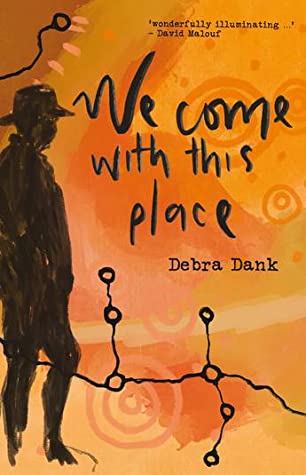
Debra Dank, We come with this place (#BookReview)

First Nations people are advised that this post contains the names of deceased people.

It has been my reading group’s tradition for some years now to read a book by a First Nations writer in July, the month in which NAIDOC Week occurs. Coincidentally, NAIDOC Week’s 2023 theme was “For our elders”, which worked beautifully with our chosen book, Debra Dank’s We come with this place, because a large part of it is about the value and importance of elders and ancestors.

This was not, however, why we chose Dank’s book from the options before us. Its subject matter intrigued us, about which more anon, but we were also influenced by the fact that, at the time we were choosing, it had just won a record number of four awards in the New South Wales Premier’s Literary Awards: the Douglas Stewart Prize for Non-Fiction, the UTS Glenda Adams Award for New Writing, the Indigenous Writers’ prize, and the overall Book of the Year. It was also shortlisted for this year’s Stella Prize, and, after we scheduled it, it won the ALS Gold Medal. These are significant awards and, for most of us, the book lived up to its advance publicity.

I mentioned the subject matter above, but We come with this place is one of those books that is tricky to categorise. It’s a sort of multigenerational memoir that is also a guide to her culture and a community history of her people, before and after colonisation. It grew out of her PhD in Narrative Theory and Semiotics. Dank describes it in her Preface as a:

strange kind of letter written to my place – a recording of events and activities that I and my family have experienced, in order to tell Garranjini that I remember, and I know. It is all based on real events. Some parts have been reimagined, because they happened outside my presence, and several names have been changed. Our relationship with our place, however, is genuine and lives in ways that not easily told in English words or western ways.

She goes on to say that she wanted to show “how story works in my community, and how it has contributed to our living with country for so long”. It also felt imperative, she says, to talk about the “voices, human and non-human, who guided the Gudanji for centuries before anyone else stepped onto this land”. This is a truly generous thing to do, and my group loved that, loved how Dank shared her story, and particularly how she helped us whitefellas “see” how First Nations people understand and relate to Country. I knew much of this from all I’ve read and heard, but this book really grew my understanding.

The other special thing about this book for me is that it is set in an area I know. I spent three formative late-childhood years in Mount Isa, close to Camooweal where Dank’s mother’s family were based. I visited Camooweal several times, and traversed parts of the Barkly Tableland which encompasses her Country. The first First Nations people I heard of were the Kalkadoons, whom Dank mentions in her book. Dank herself, though, is a Gudanji/Wakaja woman, the former through her mother and the latter, her father.

“to see the pain as it lies in the landscape”

We come with this place is a confronting book, from its perfect and defiant title to its chronicling of the atrocities that her people faced. The fear of children being taken away pervades the book. There are stories of massacres, and other appalling brutalities including a rape of her father’s mother. Lucy’s “choices were both dire – a drover’s boy or a special girl. The same, just in different clothes”. There is intergenerational trauma, which Dank exemplifies through her father, Soda. Hardworking and loving, he bears traumas, which she characterises as “newer stories … that pushed and jostled with the older stories” and sometimes “pushed their way out with a violence” that was often directed at her mother, and sometimes herself.

Dank doesn’t hold back; the way she tells it is strong, speaking her truths and segueing between past and present, between brutal history and rejuvenating story, between people and ancestors. Amongst the tough stories are warm-hearted anecdotes about family life. An example is Dank telling of being on country with her grandfather Bimbo and her surprise and joy in learning how to catch fish in arid land. The stories speaking of deep love sit alongside the hard ones, and together convey that the people, their ancestors, and Country are interconnected. This idea is mirrored in the structure.

However, I admit that I did, initially, find the structure a bit confusing, but as I read on, I started to sense an overriding arc similar to that of Bangarra Dance Theatre’s recent offering, Yuldea. Both start with origin stories, then move through colonial history, and conclude with the power of kinship and connection to Country. But it’s not as linear as this sounds. For example, starting the book, and threading through Dank’s narrative are the three Water-women who came from sea in the Gulf of Carpentaria, and travel far to create “the freshwater and hill country” of the Gudanji. They also end the book, giving it an overall cyclical structure which, I think, reflects First Nations’ understanding of life. Other cycles occur within this structure, so there is a continuous sense of moving forwards and back in time, as experiences and stories build on each other to create “Gudanji memory” – for us, and for her people to whom she is writing. This idea of building “memory” from stories, from lines between places and the things that have happened there, is strange to western ways of thinking, but Dank makes it make sense. She shows us how stories are made and passed on through Country.

I’ve been trying to decide how to end this post, and then it came to me that the best way might be with some words from Dr Tyson Yunkaporta’s Introduction to the book. He is a First Nations scholar, founder of the Indigenous Knowledge Systems Lab at Deakin University in Melbourne, and the author of Sand talk. He admits to not being able to face “the through line of history from the savagery of the frontier wars to the interventionist policies of today”. Dank, though, has. He writes:

She hurts us, digs bullets out of old wounds that never healed properly, sucks out the poison and then begins our healing with love and laughter. She does this for everybody, no matter which side of the rifle you’re on.

Dank, in other words, doesn’t pull any punches, but neither does she ram them down your gullet. Her aim is to tell the truth, proud and clear, but to do it in order for healing to take place. Isn’t that what we all want?

Kim (Reading Matters) also loved this book.

Debra Dank
We come with this place
London: Echo, 2022
252pp.
ISBN: 9781760687397