If you have ever been to Japan you will know that they are deeply interested in weather. Turn the TV on and more often than not you will get a weather report or a cooking program. This now old Internet article was written by a Canadian who, at the time, had lived in Japan for ten years. It explains it well. My American friend who lived in Japan for around 7 years has told me that the Japanese often open conversations with the weather. I;m telling you this as an excuse for my frequently opening my Six Degrees posts with the weather! Not that I’m Japanese … I will say no more about the weather this post, but next post … wait and see. Meanwhile, on with the meme. If you don’t know how it works, please check Kate’s blog – booksaremyfavouriteandbest.
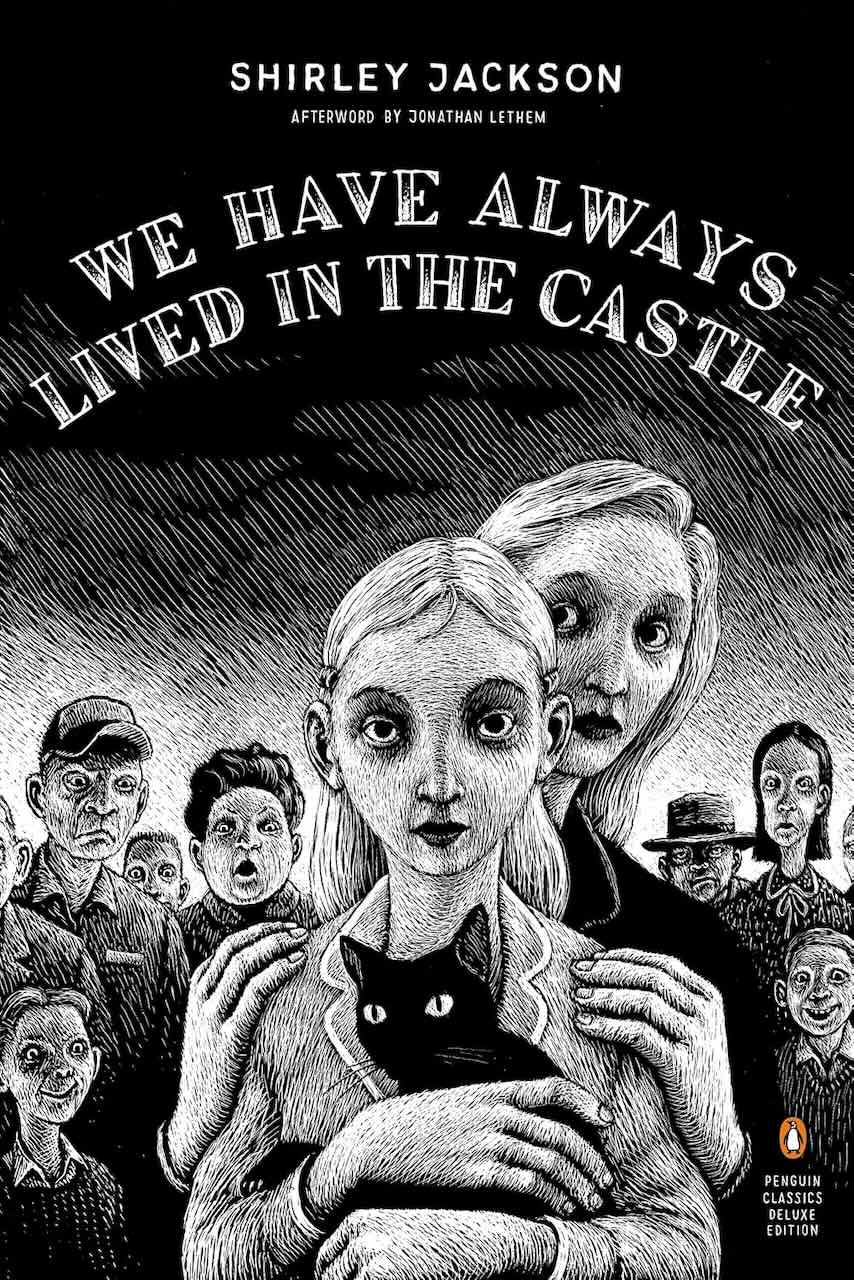
The first rule is that Kate sets our starting book, and this month she has given a nod to Halloween, given today is the day after that event. The novel she’s chosen is We have always lived in the castle, and it’s by America’s queen of gothic mystery and horror, Shirley Jackson. Of course I haven’t read it, though I have read her short story “The lottery” (my review).
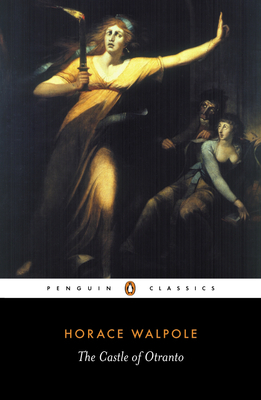
Jackson’s 1962 novel is set in a castle – or decaying mansion. The book commonly regarded as the first Gothic novel is also set in a castle, which is not surprising, given the tropes of the genre. It’s Horace Walpole’s The castle of Otranto (my review), and was written in 1764, two hundred years before Jackson’s novel. Horace Walpole has something to answer for if you ask me.
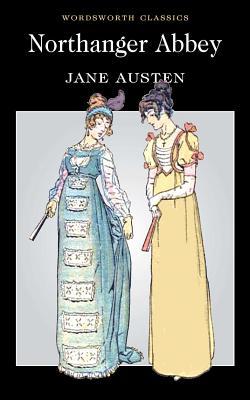
You might have guessed from that comment that Gothic horror is not my go-to reading. What is my go-to reading, on the other hand, is Jane Austen. The reason I read Walpole was to familiarise myself with the Gothic from her time because, according to many, Austen’s Northanger Abbey (one of my posts) spoofs the genre. I, on the other hand, see it more as a spoof of readers of Gothic novels, than of Gothic novels themselves, but let’s move on. (This cover doesn’t really emphasise the Gothic does it!)
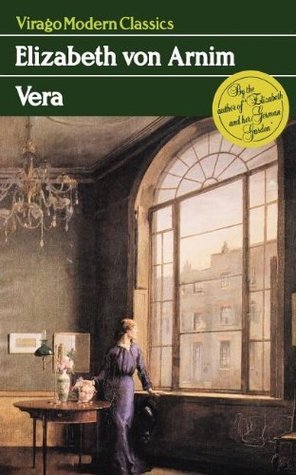
Jane Austen was a clever and witty writer, as was Elizabeth von Arnim. As I wrote in my review of her novel, Vera, some critics and readers questioned how “playful, witty Elizabeth von Arnim, author of light social comedies” had become “a gothic writer of macabre tragedy”? Good question, the answer to which has origins in her own experiences of a controlling relationship with a narcissistic man.
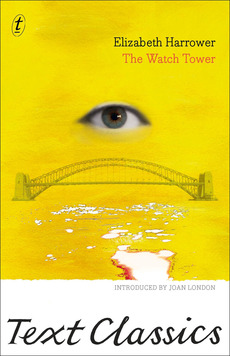
Vera was written in 1921. Forty years later, in 1966, another Elizabeth, Elizabeth Harrower, published her own frightening novel about a young woman trapped in a controlling relationship. It’s The watch tower (my review). It has a third protagonist, the wife’s younger sister who lives with the couple and is caught up in it all. She is more conscious of what is happening, and its effect on her sister (and on herself)
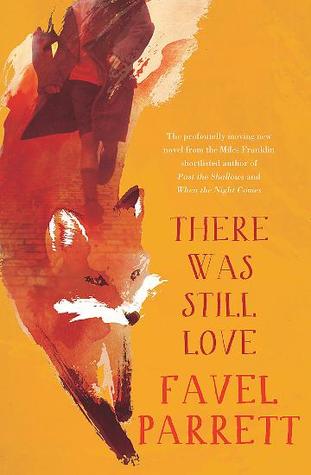
So, we are going to move on from coercive control to sisters, and Favel Parrett’s There was still love (my review), which is about two Czech sisters who lived through World War 2. One ends up in Melbourne, while the other remains in Prague. Parrett tells their story through the eyes of their grandchildren, Melbourne-based grand-daughter Malá Liška and Prague-based grand-son Luděk.
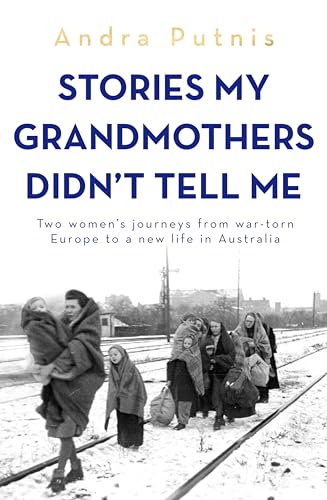
For my final book, we are staying with grandmothers, and a story told though the eyes of a grand-daughter. However, while Parrett’s book is a novel, albeit inspired by her grandmothers’ lives, my last link is a biography-memoir, Andra Putnis’ Stories my grandmothers didn’t tell me (my review). Her grandmothers, who also experienced the War, were Latvian.
Hmm, five of my six selections this month are by women, but we have again moved across the globe – from the USA to England to Australia with forays in Eastern Europe. We have spent time in the 18th, 19th, 20th and 21st centuries. And, unfortunately, we’ve met quite a bit of horror with the Gothic, coercive contol, and war. What can you expect, I suppose, with a chain whose starting book was inspired by Halloween?
Have you read We have always lived in the castle and, regardless, what would you link to?
 Whispering Gums
I hadn’t realised that gothic horror isn’t your thing!
Your comments have prompted me to read The Castle of Otranto so that I can make the connection between it and Northanger Abbey for myself.
I read a some gothic horror but draw the line at Southern gothic. I’ve tried several but they don’t grab me.
The things you learn! BTW I’m not sure there’s much connection between the two. It’s more that Gothic was popular in Austen’s time and there is the reference in Northanger Abbey so we decided to read something from the form and era.
We’re reading The Watch Tower at the Ivanhoe Reading Circle this month. I’ve read Vera– it will be interesting to see the connections.
Oh great Janine… they are different but there are similarities too. I keep an eye on the Circle. If I’m ever in town and free on the right night I’ll let you know.
Yes- do! I think you’d enjoy it. It’s quite a different format to most book groups.
I regularly look at the program … I prefer a discussion format which I don’t think this is is it? But they do the sorts of books that interest me.
Shirley Jackson ! – I discovered her when working at the Fremantle Public Library (my first job). But the only two of hers I’ve read are The Haunting of Hill House and The Sundial. She was awful prolific !
I agree wit’ yer about Northanger Abbey‘s being a send-up of the characters.
I detest the way Oz has fallen into the whole Halloween thing.
Did you like her?
I know what you mean about Halloween … but now I have grandchildren who are right into it so what to do.
I did – then. Doubt I still would, but.
You never know MR. I think her stories are varied, not that I know them of course.
( Ithink) a very quick first ever 6 degrees of separation.
We Have Always Lived in the Castle by Shirley Jackson. Never read, but I might if I find a copy cheap.
The Man In The High Castle by Philp K Dick. Read and overrated in my opinion.
Below deck by Sophie Hardcastle. On the TBR
The Seven Deaths of Evelyn Hardcastle BY Stuart Turtson. On the TBR
A Brief History of Seven Killings by Marlon James. Read and considered it masterful.
The Seven Moons of Maali Almeida by Shehan Karunatilaka. Just finished, but for me not in the same league as his excellent debut.
Very good John … love that you’ve joined in. I’ve not read any of those but I know of Dick of course, and should read the Marlon James. I don’t know Karunatilaka at all.
I might give it another go next month. It took little time. I must say, I am enjoying my 3-day working week. I seem to be able to get to the blogs I follow a little quicker and contribute.
Oh I hope you do … and I’m glad you are enjoying your easing into retirement. Shows you are a person with interests and that you’ll do retirement well.
I have read We Have Always Lived in a Castle, and liked the story. My links are I Capture the Castle by Dodie Smith; The Castle by Franz Kafka; The Dutch House by Ann Patchett; Rebecca by Daphne Du Maurier, The Cement Garden by Ian McEwan and Home by Marilynne Robinson. Halloween took over my quiet street yesterday evening, I never knew there were so many children in the street!
Oh thanks Meg. The first book I thought of was I capture the castle, but my policy is to only link to books I’ve reviewed on the blog, so I had to think of something else. I like your links, partly because I know all those books, though I haven’t read them all.
I hope you had some treats for all those kids!
I think a lot of us have gone with castles as our first link this month. I’ve read The Castle of Otranto and found it entertaining!
I think you are right Helen … too hard not to in a way!
Yes, well… I’m also not into Gothic or Horror, but Northenger Abbey… yeah, I love that book. Lovely chain here.
Thanks Davida … glad you love NA. Not everyone does!
I think it is because she really to criticize the gothic genre. That, and that she saw people who read them as being silly.
Being British and living in the UK, weather is not an unfamiliar topic! Enjoyable links – I particularly like your first.
Thanks Susan … I think many of us talk about the weather probably. It’s a big topic in Melbourne where the weather is highly changeable (not where I live but where my kids do!) However, I think the Japanese have a specific way of doing it because seasons are so bound up in their culture – in practices, activities and celebrations.
I almost started with Otranto myself but was fairly sure I’ve used it before and was too lazy to actually check 🙂 I’ve read that (I also read Udolpho because of Northanger) and Northanger from your chain while the rest aren’t ones I’ve read: Vera I know but haven’t yet picked up (so may Von Arnims left to explore) while the rest are new to me. I’m particularly intrigued by Stories my Grandmother Didn’t tell me since I have read something called Return to Latvia which touched on the war and the Shoah there.
Thanks Mallika … I wonder where you would have gone after Otranto? I have probably used it before but I don’t set myself that limitation. I do, however, try to make sure the links I make from a book I’ve used are different. I’m guessing Return to Latvia is nonfiction too.
I don’t always stick to that rule but try to as far as I can (keeping repeats to a minimum). Yes, Latvia is nonfiction: the author’s memoir about her visit back as a grownup. Her parents separated with much acrimony after which she and her sister went to Italy to their maternal grandparents while her father who was Jewish ended up losing his life in the Shoah.
I understand that. I keep it in mind, but don’t worry too much. That memoir sounds interesting.
Oh and from Otranto, may be something involving Henry the VIII? Manfred was trying to divorce his wife and take a new one much like Henry–I assume all the beheadings would fit it in with my dark/gothic theme!
Haha, good idea Mallika!
I agree that the weather is a good starting topic in these contentious times—-and I’m proud of myself because I have read two books on your list.
In a chain of books connected to Halloween, I would go the monster route and start with Mary Shelley’s Frankenstein, which is out in the theaters now. I’d go from there to Dracula, The Werewolf of Paris, Dr. Jekyll and Mr. Hyde, It by Steven King and The Halloween Tree (full of all sorts of monsters and evil creatures) by Ray Bradbury.
Haha thanks Carolyn for weighing in on the weather issue. And for giving the Meme a go. Enjoyed your chain. I’ve heard of most of those but not of that particular book by Bradbury.
As for mine, I guess you’ve read Northanger Abbey. But are you counting the Jackson or have you read the Walpole or Vera. Do I remember that you’ve read Vera?
Now that I think of it, I’ve read three of the books, because I forgot to include Northanger Abbey. The other two I have read are The Castle of Otranto and There was still Love.
How could you forget our Jane!! Did I send you the Parrett? I could have. Anyhow three is impressive.
Yes, you sent it to me. I guess I just crossed poor Jane off my list because I knew I’d read her books. 😢
Haha! I’d forgotten I’d sent you that one … but I remember now that I liked it, and that it was also not a heavy book to mail. Two wins!
I have not read We Have Always Lived in the Castle. However, I’m happy to weigh in the books that have castles in them somehow.
The first degree is the Autobiography of Benvenuto Cellini. He did not always live in a castle, but during a siege of Rome he served as an officer of the artillery of Castel San Angelo, and some years later he was imprisoned there.
Second is Henry IV, Part 1, since Shakespeare only just missed removing every trace of Sir John Oldcastle in favor of Sir John Falstaff.
Third will be The Deerslayer, by James Fenimore Cooper. Some of it is set in or around “Muskrat Castle”, a house on piles in the middle of a small lake. It does not seem to be particularly defensible; the proprietor ends up scalped.
Degree four is Two Years Before the Mast by Richard Henry Dana. As a sailor and not an officer, he berthed in the forecastle, whence “before the mast”. But apparently a berth in the forecastle had to be earned, so that he and another began in the steerage and reached the forecastle only on the second crossing of the equator.
Degree five is Axel’s Castle by Edmund Wilson. This one I have not read, though I did read Villiers de L’Isle Adam’s play Axel, from which it takes its title.
Degree six will be Solo, by Wright Morris, a memoir of a year or so spent in Europe while on leave (maybe French leave) from college. He spent much of the winter at Schloss Rana in Austria, and gives a curious, not at all romantic, picture of what life in a castle must have been like in the days when they had a practical use.
I see that this is a bit heavy on Americans, not to say on men. Maybe next time I can cast a wider net.
I think you can relax George… you are not always so American so you can be forgiven this one. I did love your throwing in the forecastle! And Muskrat Castle doesn’t sound wonderfully salubrious either.
Great chain of books that area all new to me!
Thanks Cathy … i hoped this chain would have some familiar books but that would be mostly Austen fans I guess!
it’s a nice touch this time having a halloween beginning. I like to read the turn of the screw around this time of year
Oh do you Becky? I’m embarrassed to say that while I’ve read a few by Henry James I’ve not read that one. I should try to read it for Novellas in November but I don’t think I can fit it in.
Did I ever tell you I have been to Horace Walpole’s house when there was an open day at least a decade ago. It was absolutely fascinating – everything was three-quarter size. https://en.wikipedia.org/wiki/Strawberry_Hill_House
I purchased a copy of his novel while there but have never read it…
No I don’t think you have … what a great experience. I can understand your not having trad the book but all I can say is, it’s a quick read!
I have read We Have Always Lived in the Castle, it’s is a wonderfully creepy book, though The Haunting of Hill House is even creepier. I like how you got Walpole in there and then connected it to Austen! Well done!
Thanks Stefanie … glad you liked that. And while I’m not much into creepy if I were it would be Shirley Jackson that I would read. I am a little intrigued by this book!
I mentioned in another comment that I love We Have Always Lived in the Castle. Jackson was so great at writing unsettling fiction, rather than gore and scares. I would argue Castle is more about not fitting in, and what happens when an outsider enters your safe space and changes things. It does have all that Gothic foreboding going on, especially when the main character hides things around the property as superstitious rituals with no bearing in any actual tradition to ward off what she doesn’t want to happen.
Thanks Melanie – it does sound interesting. And I’d be happy to give this a try if I could fit it in.
Coincidentally, I pulled out a Shirley Jackson omnibus from my shelves that I’ve been “meaning to read” for decades for this season; it includes eleven short stories (of course the infamous lottery win, which I’ve already gushed about on your previous post) and begins with “The Demon Lover” but, in the end, I was shocked how UNspooky they are. In fact, I didn’t even feel like I could include them in my October31st post! There are a couple that verge on psychological horror (like that first story…spoiler…there is NO DEMON to be found LOL) but they mostly feel like domestic stories with a tinge of darkness. Having said that, even the early B&W film based on Hill House still gives me the willies. (Is that a saying there?)
Yes, Marcie, giving someone the willies is a saying here. I am so happy to hear those stories were shockingly unspooky and demon-less. I might tip my toe into her stories again. As you say, though, you don’t have to have demons or spooks to be given the willies, do you.
Great chain! I need to check Vera
Thanks Emma. I don’t like to push books to busy readers, but Vera really is one of those books you won’t forget, and amazing for when it was written I think.