And here we are again at the last Six Degrees of the year. I’m not going to say the obvious about time, as you are all thinking it anyhow, I’m sure. Instead, I will just wish you the best of the season. I hope it’s a contented and peaceful one for you all. Now, on with the show … as always, if you don’t know how the #SixDegrees meme works, please check host Kate’s blog – booksaremyfavouriteandbest.
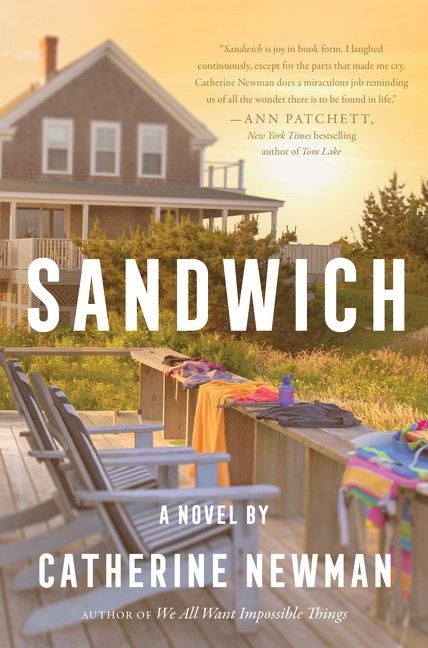
The first rule is that Kate sets our starting book. This month, it’s another book I haven’t read. Indeed it’s one I hadn’t even heard of, but it was chosen because it’s a beach read (and here, down under, it’s beach-time!) The book is Sandwich by Catherine Newman, and it’s about a family’s annual vacation to Cape Cod in northeast USA.
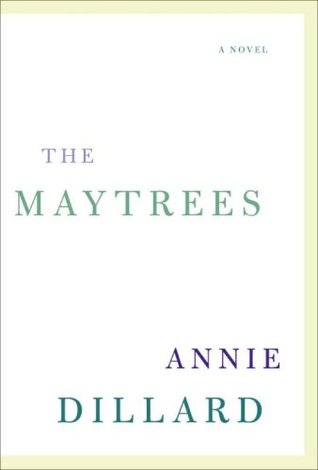
As frequently happens, I considered many options – beach read, a book about someone in the sandwich generation, a book with food in the title, a book by Anne Patchett who appears on the front cover, and so on. However, in the end I went with location, Cape Cod, and a family story, though my choice is a about a family which has lived on Cape Cod for generations rather than one which just visits there, The Maytrees, by Annie Dillard (my review).
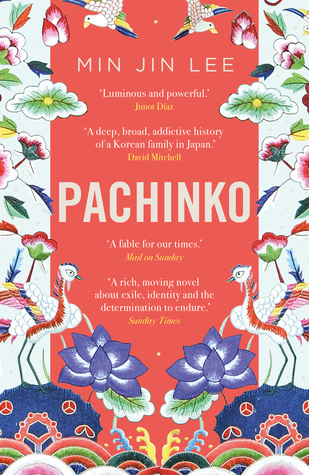
As best as I could determine, The Maytrees tells the story of a family over a period of around 60 years from the 1920s/30s to the 1990s. Min Jin Lee’s Pachinko (my review) is another family saga which spans most of the 20th century, from 1910 to 1989. It starts in a fishing village in Korea, before moving to Japan. (Provincetown in Cape Cod was also well known for fishing, though I suspect tourism might be its main industry now.)

Fishing village is my next link. Hoa Pham’s The lady of the realm (my review) opens in 1962, by introducing the protagonist Liên, who, as a young girl, has a prescient dream that the Viet Minh will come and destroy her fishing village. And thus starts a novel which explores the suffering wrought by war. The lady of the realm, like Pachinko and The Maytrees, spans multiple decades (albeit, in this case, in just 90 pages!)
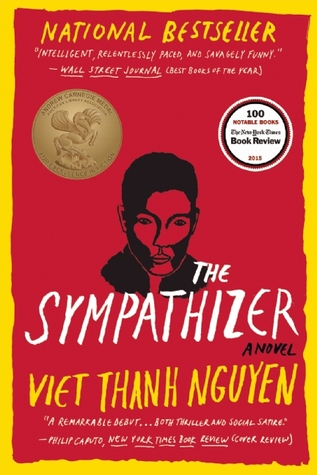
Another book I’ve read about the Vietnam War is Viet Thanh Nguyen’s Pulitzer Prize winning novel, The Sympathizer (my review). Quite coincidentally, I read it back in 2017 straight after reading The lady of the realm. They make, I said, an interesting pairing because both deal with the Vietnam (or American) War and its aftermath, both are written in first person from a Vietnamese character’s point of view, and both question what happens when revolutions win. But, the similarity ended there.
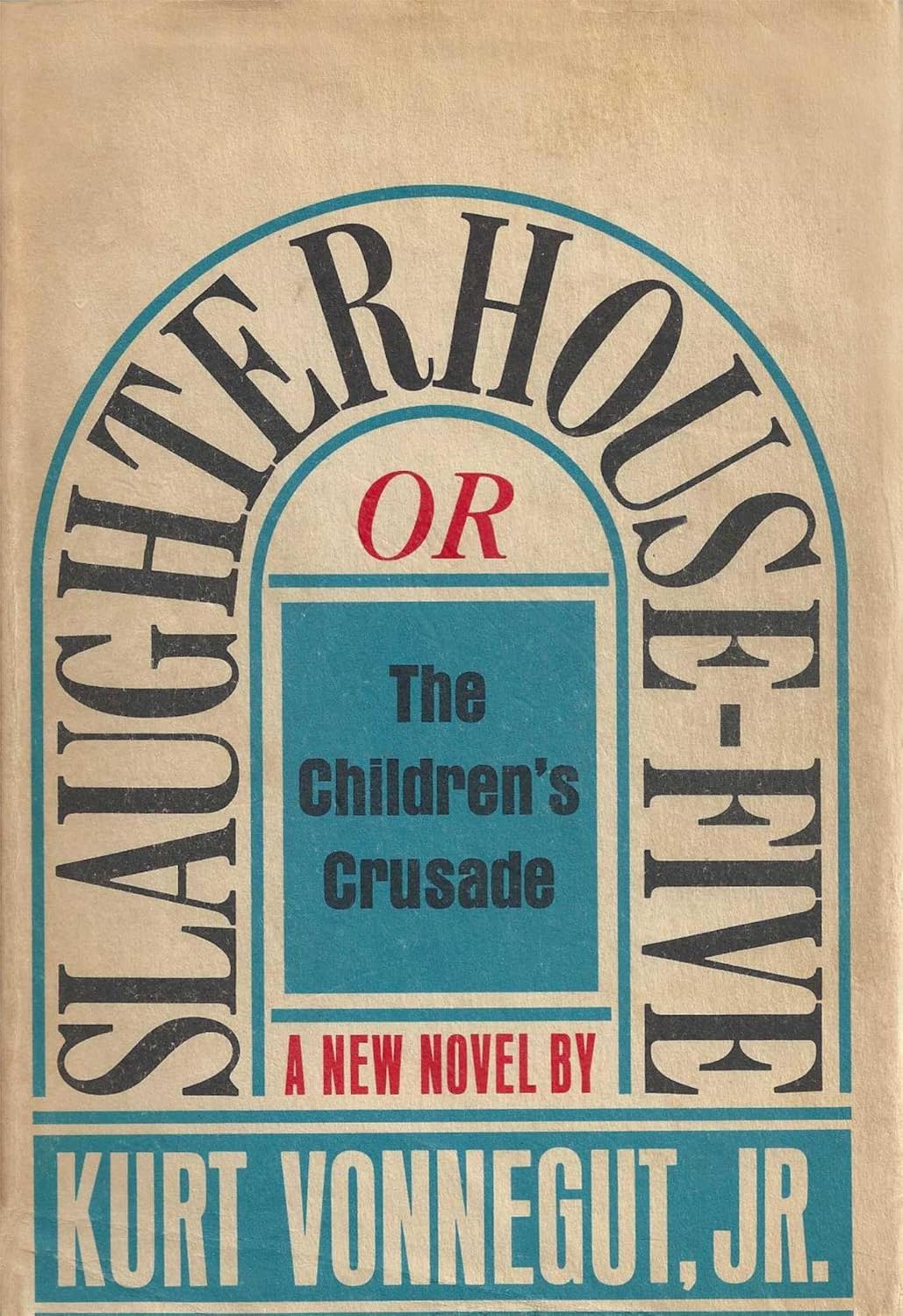
One of the reasons The Sympathizer differs from The lady of the realm, is that The Sympathizer is a satirical novel. Another anti-war satirical novel is Kurt Vonnegut’s now classic Slaughterhouse-Five (my review), so that’s an obvious next link – and I’ll leave it at that.
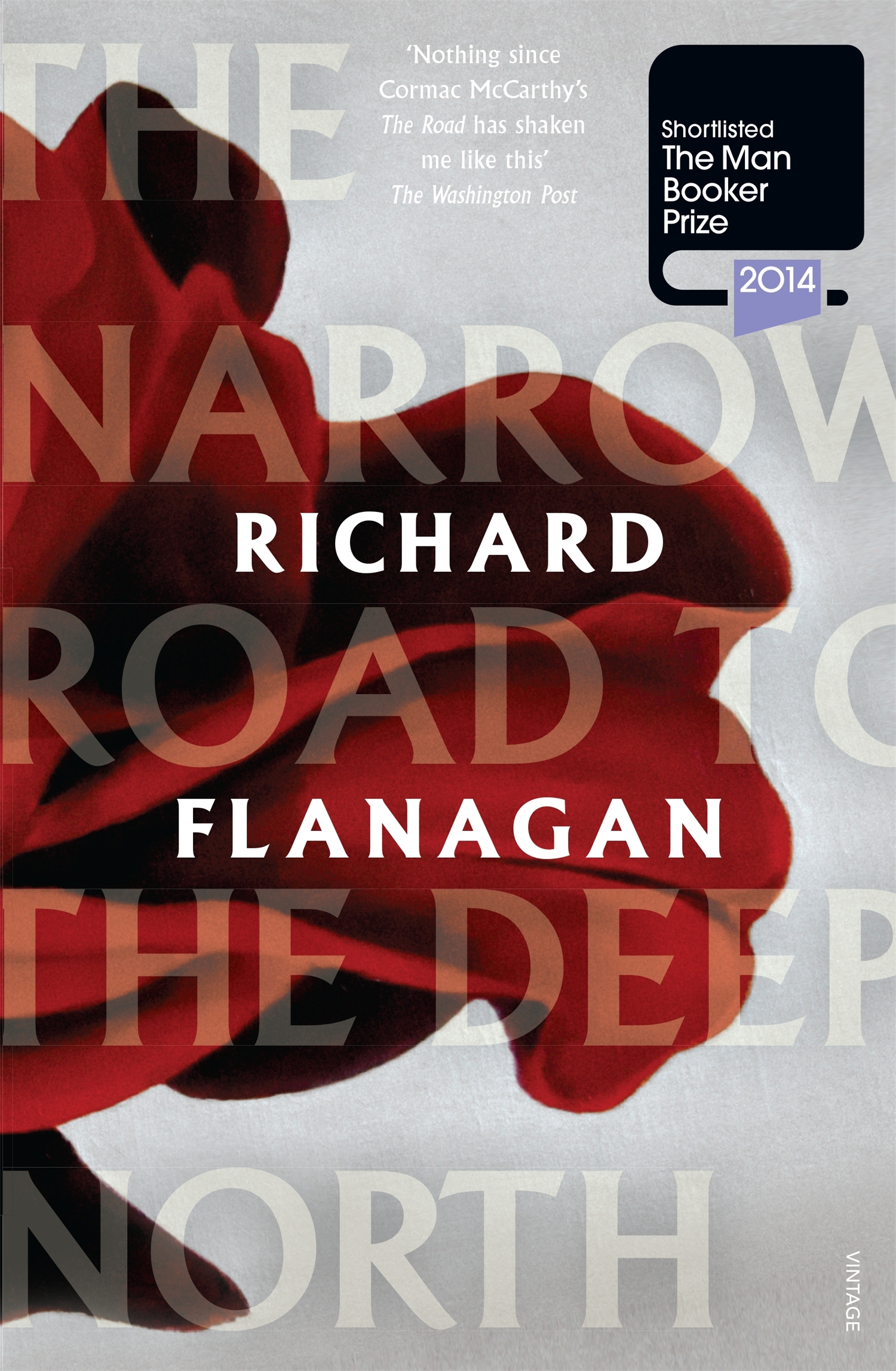
Vonnegut’s Billy Pilgrim spends time in a Dresden prisoner-of-war camp, the titular Slaughterhouse-Five, a place to which he keeps returning in the novel (unless he’s escaped to the alien Tralfalmadore). Dorrigo in Richard Flanagan’s The narrow road to the deep north (my review) also spends time in a POW camp – in the same war, but on the Thai-Burma Railway. It seems the right link to conclude on, though I did, briefly, consider a more tricksy link related to my reading group.
So, we started with Kate’s book in Cape Cod America, and stayed there for the next book before travelling more broadly in Asia, Europe, Australia and some more in the USA (though not necessarily in this order). Four of today’s writers are American born or based, with just two, Hoa Pham and Richard Flanagan, being Australian born. The gender split is 50:50, which is unusual for me. But we have, unfortunately, spent too much time thinking about war, so let’s not any more. Instead, I’ll reiterate my opening wish for you all to have a wonderful holiday season, and leave you with my usual question …
Have you read Sandwich and, regardless, what would you link to?
 Whispering Gums
SO GOOD to see Kurt Vonnegut coming forward. Never to be forgotten.
Thanks Carmel … I’m so glad you agree and approve.
The reasonable approach seems to be to take seaside books. Alternating sides of the Atlantic,
Degree one is Cape Cod by Thoreau.
Degree two is Souvenirs d’Outre-Tombe by Chateaubriand, because early on he goes on quite a bit about Normandy, the roaring of the sea, the children playing by the sea at some risk.
Degree three is The Age of Innocence by Edith Wharton, as having some pages set in Newport, Rhode Island, though nobody was then spending time at the beach. Archery was the favored sport, at least for women.
Degree four is On the Island by Thomas O’Croghan, a memoir of life on Great Blaskett Island.
Degree five is Speedboat by Renata Adler. It has been forty years since I read it, but I remember a woman’s question: “When you’ve got a suntan, what have you got?”
Degree six is Tender is the Night, with Mediterranean beaches, though the characters are largely Americans with a sprinkling of British.
(Or one could do sides of the Pacific: Two Years Before the Mast, Typee, Love Among the Barbarians, The Thousand Autumns of Jacob De Zoet, and The Underground Man.)
(Oh, and Barbarian Days, which I have not read.)
Thanks for the addition … I always love post-pressing-the-submit-button thoughts!
Love this alternate sides of the Atlantic George … and then the value add with the Pacific. I haven’t read many of these but I have read your Atlantic Wharton and your Pacific. I have had the Fitzgerald on my shelves for decades but I don’t think I’ve ever read it.
This is a great chain. I like the sound of both the Vietnam War books…
BTW, Sandwich is a fab read! The Australian cover is different, so that may be why you didn’t recognise the book.
Thanks kimbofo … they are both interesting books to read.
Re Sandwich, it does sound good from what I’ve seen otherwise say. The GR description intrigued me but you can’t tell from that whether it is going to go in an interesting direction or a conventional same-old family story one. And you did send me off looking for other covers. Are you talking the bikini-on-the-toast cover? That’s way more eye-catching than the busy house and beach cover.
Yes, that’s the cover! I don’t normally share links to my own reviews on other blogs for fear of breaching blog etiquette, but here’s what I thought of the book: https://readingmattersblog.com/2024/10/13/sandwich-by-catherine-newman/
Thanks … no I rarely do either for the same reason but you are allowed! So thanks. I guessed you’d read it and planned to go looking later. Stupid me should have gone straight to you instead of back to GR!
What a lovely chain. I read Slaughterhouse Five in High School, and I’m still not sure I understood it all. No matter…
Thanks Davida … I think it’s probably one of those books that every time you read it you see something different in it? The sign of a great book?
I’m sure it is, but I only read it once. That said, the only book I’ve re-read is Catch-22 and yes, I do find something new each time. Oh, yes… and I’m re-reading all Christie’s Tommy & Tuppence books, but truth be told, I didn’t remember much about them.
Interesting Davida… I like rereading so have done a bit over the years, but these days it’s mostly Austen!
I really should get to the fancy boxed set of all of Austen’s writings that my son gave me as a present for my 65the birthday! Some day…
Haha David’s … you should. But that was only last year wasn’t it do you have plenty of time!
Oh, that was over two years ago, actually. I’ll be 68 in June.
Fabulous links as always! Slaughterhouse Five is fantastic and so is Narrow Road to the Deep North.
I’ve not read Sandwich, but I think I would go with the food link and choose the novel Butter by Asako Yuzuki. Then I think I’d go the Japanese route and choose Yoko Tawada’s book Paul Celan and the Trans-Tibetan Angel. From there I’m tempted to choose a book that gives away the surprise ending of Tawada’s book, so instead I’d either choose Paul Celan’s poetry collection Threadsuns, which is frequently mentioned or possibly I could got with a novel that focuses on poetry or an academic. So many choices!
Oh great Stefanie … a novel that focuses on poetry or an academic. How about AS Byatt’s Possession?
Oh, yes! Good one!
Oh good … I assumed you knew that book. Glad you like the suggestion.
You may know this but I have read nearly all Vonnegut’s novels this year in order bar his last 2. The penultimate, Bluebeard, I have only just got a copy of and will start over the next week or two. SH5 is a magnificent anti war novel for the ages IMO. But that should not let his other works be dismissed. The man was an observational genius.
I have The sympathizer unread. The Narrow Road to the Deep North is one of my favorite ever reads. Your comment on your original review “not exactly what I expected” summed up for me going in as well.
Yes, I think I knew that, and am impressed.
So many books unread eh! Frustrating.
When you said “Northeast USA”, my mind immediately went to John Seinbeck’s Travels with Charley, a book that I really loved. But I like your pick of family sagas – Pachinko is now on my to-read list. Another that springs to mind is Isaac Bashevis Singer’s The Family Moskat, which I thoroughly enjoyed during those lockdown weeks of covid.
Oh thanks Elizabeth … I would never have thought of Steinbeck and the northeast! I’ve only read his western novels. I’ve looked up Travels with Charley and it sounds really interesting. Does it still hold up? I guess travel books by great writers do hold up?
If you like family sagas I expect you’d like Pachinko. I will add Singer’s book to my TBR list.
I enjoy reading this meme, although I’ve rarely read any of the books (although all but one were familiar to me in this instance). You’re correct that the fishing industry once-renowned in that area of the U.S. is facing the same extraction issues that other fishing communities now face. One novel that confronts this in fiction, which I loved, but it’s set on that coast farther north (between the U.S. and Canada) is Alexi Zentner’s The Lobster Kings (also a Lear retelling if that appeals to anyone reading this)!
Thanks Marcie … I’m interested in a Lear retelling! The one that made a big impression on me was Jane Smiley’s A thousand acres though all I can recollect now is that it was a Lear retelling!! Is that good?
So then you recall there are three sisters. I’d say that’s all that needed to stick. hee hee
Haha … yes I do … and that there are two greedy ones and one more sensible, realistic. Or something like that!