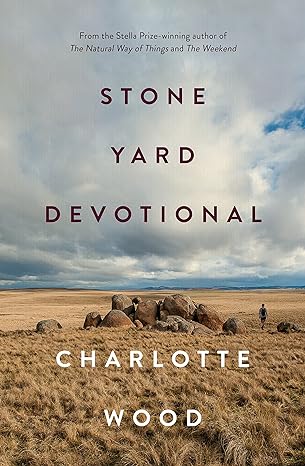
In terms of the Booker Prize, it’s been a long time between drinks for Aussie writers. By this I mean that Charlotte Wood’s shortlisting for the 2024 prize with Stone Yard devotional, breaks the longest drought Australian writers have had in terms of being listed for the prize since its commencement in 1969. It has been eight years since longlisting and a full decade since shortlisting. This is probably largely due to the widening of the playing field in 2014 to include English language novels from any nationality.
This year’s winner will be announced on 12 November, but rather than wait until then, I’ve decided to share now the Australian books which have been listed for (or won) this prize because listing for this prize is a win in itself (even if it doesn’t come with the big bucks!) As Wikipedia shows, and the Booker Prize website confirms, longlists were not published for the Prize until 2001. The Booker Prizes website – particularly the year by year highlights – is worth exploring if you are interested in the prize.
Now, the order of my listing. While an alphabetical listing by author would make it easy to quickly see whether authors/books we love were listed, and how often authors have been listed, my main point here is to show when Australian authors/books have been listed, so, chronological it is.
- 1970 Shortlist (Lost Man Booker Prize*): Shirley Hazzard, The bay of noon (on my TBR)
- 1970 Shortlist (Lost Man Booker Prize*): Patrick White, The vivisector (on my TBR)
- 1972 Shortlist: Thomas Keneally, The chant of Jimmie Blacksmith (read before blogging)
- 1975 Shortlist: Thomas Keneally, Gossip from the forest
- 1979 Shortlist: Thomas Keneally, Confederates
- 1982 Winner: Thomas Keneally, Schindler’s Ark
- 1985 Shortlist: Peter Carey, Illywhacker
- 1988 Winner: Peter Carey, Oscar and Lucinda (read before blogging)
- 1993 Shortlist: David Malouf, Remembering Babylon (read before blogging)
- 1995 Shortlist: Tim Winton, The riders (read before blogging)
- 1997 Shortlist: Madeleine St John, The essence of the thing (on my TBR)
- 2001 Winner: Peter Carey, True history of the Kelly Gang (read before blogging)
- 2002 Shortlist: Tim Winton, Dirt music (read before blogging)
- 2003 Winner: DBC Pierre, Vernon God Little (read before blogging)
- 2003 Longlist: J.M. Coetzee, Elizabeth Costello (read before blogging)
- 2004 Longlist: Shirley Hazzard, The great fire (read before blogging)
- 2004 Longlist: Gail Jones, Sixty lights
- 2005 Longlist: J. M. Coetzee , Slow man
- 2006 Shortlist: Kate Grenville, The secret river (read before blogging)
- 2006 Longlist: Peter Carey, Theft: A love story (read before blogging)
- 2008 Shortlist: Steve Toltz, A fraction of the whole (my review)
- 2008 Longlist: Michelle de Kretser, The lost dog (read before blogging)
- 2009 Shortlist: J. M. Coetzee, Summertime
- 2010 Shortlist: Peter Carey, Parrot and Olivier in America (my review)
- 2010 Longlist: Christos Tsiolkas, The slap (my post)
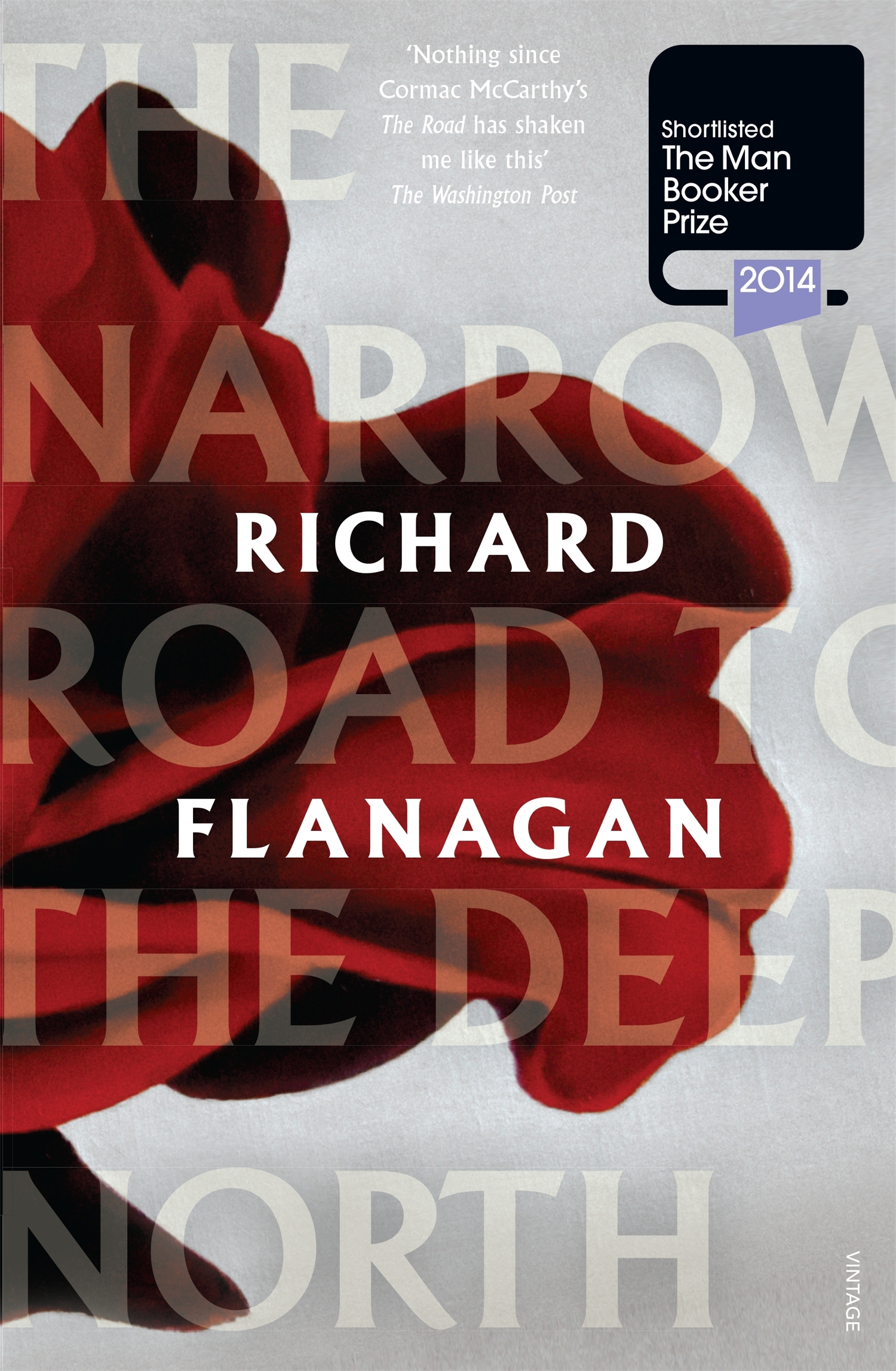
- 2014 Winner: Richard Flanagan, The narrow road to the deep north (my review)
- 2016 Longlist: J. M. Coetzee, The schooldays of Jesus
- 2024 Shortlist: Charlotte Wood, Stone Yard Devotional (my review)
* The Lost Man Booker Prize was made in 2010 to retrospectively correct a 1970/1 chronological glitch.
Only 5 writers have won the award twice, and one of those is Australian, Peter Carey. J.M. Coetzee, who is now Australian, has also won twice, and has been listed for the award four times since he moved to Australia from South Africa in 2002. However, his two wins, which I have not listed above, occurred while he was a “South African” writer.
Of the many Booker Prize controversies over the years, an early one involved Thomas Keneally in 1975, when the judges deemed only two novels worth shortlisting, of which Keneally’s Gossip from the forest was one. I am familiar with much of Keneally’s oeuvre (though I’ve not read a lot) but this one is new to me! The winner was the other (Ruth Prawer Jhabvala’s Heat and dust).
The most nominated Australian writers are:
- J.M. Coetzee (6, if we fold in those two pre-Australian resident wins)
- Peter Carey (5)
- Thomas Keneally (4)
- Shirley Hazzard (2)
- Tim Winton (2)
The Man Booker International Prize was made biennially between 2005 – 2015 to recognise one writer for their achievement in fiction, and Australian writers have been shortlisted three times:
- 2007 Shortlist: Peter Carey
- 2009 Shortlist: Peter Carey
- 2011 Shortlist: David Malouf
In 2106, this award came into line with the Man Booker Prize and is now made annually for a work of translated fiction. This will rarely include Australian books given the majority of our writers write in English. However, in 2020, Shokoofeh Azar was shortlisted for The enlightenment of the greengage tree (my review).
Any thoughts?
 Whispering Gums
There’s probably a couple on your list I should read and haven’t, but what I can’t believe is how many I have read and actively dislike. Starting with Secret River and Carey’s Ned Kelly, if you’re wondering.
I wasn’t completely Bill – at least not about those two as I’m well aware of them! More interesting perhaps is those you feel you should read.
I was thinking of the Vivisector in particular, having been reminded of it for the 1970 Club, but also the later Coetzees. Given that I mostly find Winton boring, my surprising recommendation for others to read from this list would be The Riders.
Ah yes, those would be mine too Bill and I too was reminded of The vivisector for the club (but I won’t be reading it for it) … and I remember rather enjoying The riders too.
My only Winton so far and thought it very good indeed.
Interesting, Bill – I started on Secret River and never got past the 2nd or 3rd chapter.
And ST, you will groan and roll your eyes when I say that Coetzee’s route never fails to make me think of my favourite author …
Oh MR, I wonder who that could be … let me think 🤔!! Haha!
I suspect that Thomas Keneally wouldn’t get on so many shortlists today. Gossip from the Forest (which I haven’t read) is his novel based on the 1919 Versailles Peace Conference.
No I suspect you are right Ian about Keneally. Thanks re Gossip. I hadn’t looked it up, so that’s interesting to know.
Interesting to see the difference going international in 2014 made to Australian authors in particular (although I suspect NZ, Canadian, Indian and African nation writers have had the same experience).
I’m sure everyone did Brona. I nearly included NZ in my list but while I recognised many NZ authors I couldn’t be sure I’d get them all.
I’m so surprised that you list M. Coetzee as an Australian writer! Surely he doesn’t behave and think as one who grew up in the country? I don’t even behave and think like a person from Indiana, and I only grew up 200 miles away from it. Maybe I’m over thinking this because I see you write that he’s been in Australian for 22 years.
It took me a while to describe him as Australian, Melanie, but I now do. My understanding is that that is how he sees himself. He came to Australia in 2002, got citizenship in 2006. In 2004 he was given the keys to the city of Adelaide which suggests some acceptance by the city at least of his value to the city. Wikipedia includes this: “After his Australian citizenship ceremony, Coetzee said: “I did not so much leave South Africa, a country with which I retain strong emotional ties, but come to Australia. I came because from the time of my first visit in 1991, I was attracted by the free and generous spirit of the people, by the beauty of the land itself and—when I first saw Adelaide—by the grace of the city that I now have the honour of calling my home.”
The titular protagonist of the first novel he published in his “Australian” time, Elizabeth Costello (2003), is an older Australian writer. An interesting read. I’ve heard him speak once but he’s not one to go on book tours and he said very little. It was an uncomfortable occasion. As I recollect he mainly did a reading.
Any migrant is going to have a different perspective to those born in a country, but that’s not a bad thing, so it’s tricky I think to describe what an “Australian” writer is?
I’ve gone on a lot but that’s because I think he is a particularly interesting case in the whole ”nationality” discussion. There was another that I didn’t include because their connection seemed loose at the time they were listed and has become increasingly looser!
The decision to allow American authors entry into the prize has had a detrimental effect on authors from other nations – Australia and India in particular. When I first started following the prize, the international spread of the nominees was noticeable and very welcome – without that I wouldn’t have likely tried any of Peter Carey’s novels.
Thanks Karen … it was an interesting decision which I can understand but don’t necessarily like. I’m glad it introduced you to writers like Carey. I suppose it has introduced us to some more writers but … swings and roundabouts I suppose.
I think the best description of the Booker Prize was that made by Julian Barnes: posh bingo. I find the hoo hah about the prize a bit OTT! Unusually for me I read a couple of the books entered for the 2023 prize, the winner Prophet Song which is a dystopian novel about a civil war in modern Ireland and the rise of fascism in modern democracies- powerful and urgent but perhaps a little too newsworthy to convince. I preferred a longlisted book In Ascension which is science fiction on an interstellar scale and is as good an example of that kind of book since Olaf Stapledon. I suppose this shows that for all its irritations the prize introduces a lot of fine fiction to a global audience.
I like the “posh bingo” description Ian though it could mean a few things when I think about it. And I like your attitude to literary prizes. For readers it’s the short and long lists that are of most interest, than which book actually wins.
Prophet Song by Paul Lynch and In Ascension by Martin Macinnes.
Thanks Ian, I knew Prophet song, but didn’t know In ascension and hadn’t got around yet to looking it up.
I’ve read a few Bookers. Shirley Hazzard, The bay of noon – Thomas Keneally, Schindler’s Ark – Tim Winton, The riders – Shirley Hazzard, The great fire – Richard Flanagan, The narrow road to the deep north from the list above. Enjoyed them all with Flanagan’s being one of the best books I have ever read. I have more than I realized sitting on the shelf waiting to be read.
As to non Australian winners I personally thought both A brief History of Seven Killings by Marlon James and The Sellout By Paul Beatty masterful. Both forced me into the rabbit hole of the internet to understand the language and intent of the books but was that worth every second.
I’m sorry fourtriplezed, but somehow I didn’t see this comment come through last week. I know I should read the James. You and I overlap a little in what we’ve read. I did enjoy the Flanagan a lot, though for me the bushfire car escape scene spoilt it a little.
Yes the bushfire car escape went for too long but such was the rest of the book I was forgiving. James book is at times very violent and written using Jamaican Patois that can be challenging but I was sure up for that.
Yes I was forgiving too … but with a little niggle all the same. I’ll take that as a recommendation for James.