I have planned to write about the Secrets from the Green Room podcast series pretty much since it started in late 2020, but for one reason or another time has got away from me and here we are, some four years later … and I’m finally there. The good thing is that it is still going so, you know, better late than never.
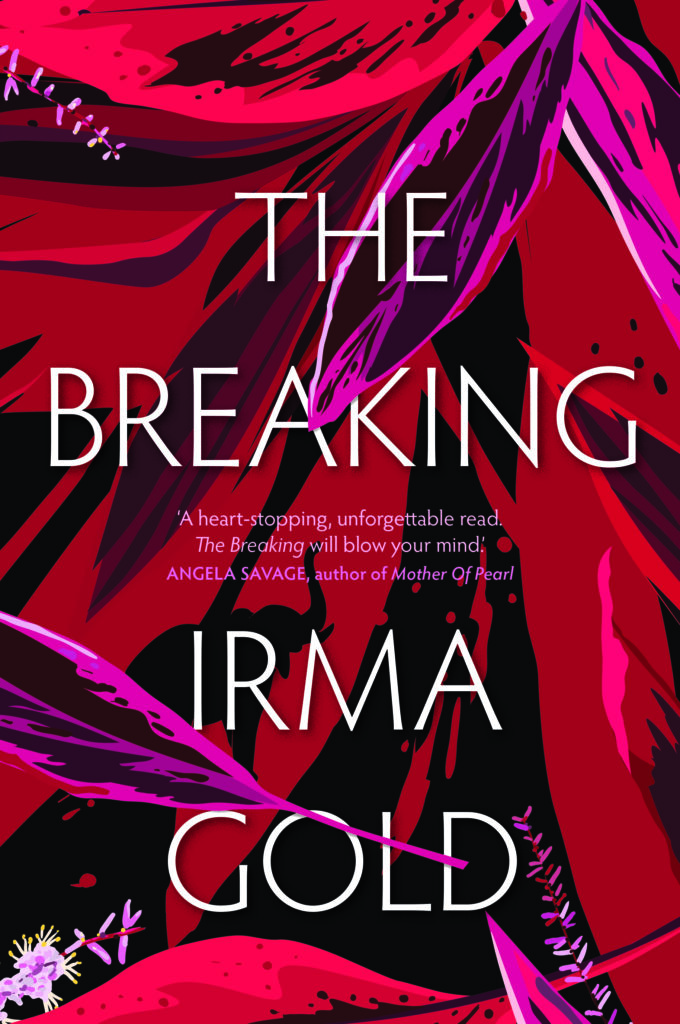
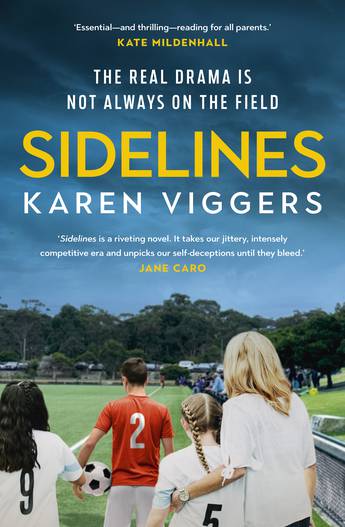
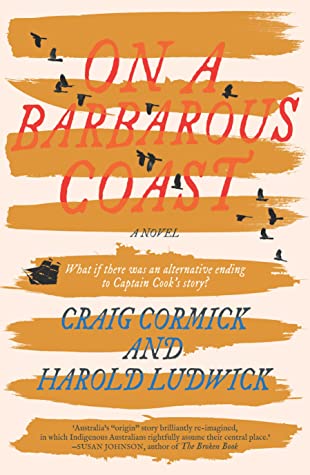
This podcast series was created by two (then) Canberra-based writers, Irma Gold and Craig Cormick (links on their names go to my posts featuring them), and first went to air, mid-pandemic, in November 2020. The latest episode, no. 40, went live just a week ago, on 30 January. During this time, Irma Gold moved to Melbourne, and Craig Cormick handed over his baton to another Canberra author, Karen Viggers, but, the show went on …
As I’m sure you all know, there are thousands of literary podcasts out there. I don’t listen to many because, despite my enthusiasm for literary matters, when I get a spare moment I tend to go for quiet. You just can’t do everything. But, for podcast lovers, it can be hard to track down what to listen to. Early this year The Conversation shared “15 literary podcasts to make you laugh, learn and join conversations about books”. The article’s writer, Amber Gwynne, quotes another writer Tom McCallister who claims that ‘while traditional reviews may be in decline, literary podcasts are not just “filling the void”. They’re “fracturing and reshaping” the “world of book discussion”’.
Gwynne adds that
like community reviews and the more recent surge of #BookTok and #Bookstagram content on social media, literary podcasts feed the rich social networks that form around books. They transform what’s often a solitary activity – reading – into a widely (but intimately) shared experience.
These networks are what keep most of us bloggers involved in social media, aren’t they? But, back to Gwynne. She explains that the format’s mainstays are author interviews and criticism that ranges from comprehensive reviews to casual banter, with the end result being that they “invite audiences to engage with books and writing in all kinds of ways”.
Some podcasts work primarily for readers. They introduce us to loved authors or to new authors; they show us other ways of finding out about the literary landscape; and they offer us options to focus narrowly on specific genres or to cast our nets more widely. Whatever your reading interest, there is likely to be a podcast out there. Many of these podcasts have a side-benefit for authors. By providing opportunities for writers to do readings and/or engage in conversations, podcasts can help promote authors. Indeed, as Gwynne says, podcasts “can be a valuable platform for emerging authors, providing exposure and amplifying diverse voices.”
Other podcasts, though, focus specifically on the writers. Their aim is to support writers and help them develop their craft. This latter is where Secrets from the Green Room primarily slots. The title, in fact, gives that away. Promotion for the series explains that in each episode the hosts
chat with a writer about their experience of the writing and publishing process in honest green room-style, uncovering some of the plain and simple truths, as well as some of the secrets — whether they be mundane or salubrious — and having a lot of fun in the process.
The episodes usually start with the hosts chatting about their own practices and experiences – such as whether they find writers’ retreats useful, or how much (or whether) they plot out their stories in advance, or whether they take notes and if so how, and so on. Then they move onto, mostly, a conversation with a single author, who is drawn from across the spectrum (literary, crime, cli-fi, to name a few). The conversation focuses on the craft aspect – how do they write, how did they get published, how did they find the editing process, and so on. But, there are also episodes devoted to other aspects of the trade that could be useful to writers, such as conversations with booksellers, a sales rep and a festival director. Again, the focus is on what writers need to know about these activities and functions. Should writers, for example, turn up at a bookshop offering to promote their book? Are there right and wrong ways to go about approaching a bookshop? This must surely be gold (excuse the pun) for writers, but for readers like me who are interested in – nay fascinated by – the wider literary landscape, this “stuff” is just wonderful to hear.
Gwynne’s The Conversation article starts with Australian podcasts, and has Secrets from the Green Room second in the list. Her description is that Irma and Karen “invite guests to candidly share their own experiences navigating the world of publication, landing on topics as varied as ghostwriting [Aaron Faaso and Michell Scott Tucker], the “creep” of imposter syndrome [Nikki Gemmell], and the challenges of teaching writing at university [Tony Birch]”.
Secrets from the Green Room is available, free of charge and from multiple platforms, like most podcasts that I know, but here is the Spotify entry with list of episodes.
Do you listen to literary podcasts, and, if so, care to make a recommendation or two?
 Whispering Gums
I haven’t listened to any podcasts thus far, ST – literary or otherwise !
No, I can’t say why: it hasn’t been intentional .. it’s that podcasts are a medium I haven’t ‘discovered’ for myself, that’s all.
Your post alerts me to them, and this particular one I find most interesting, thinking in my usual immodest manner that I, a turtle-ly unknown author of a single published book, would love to participate in something like this. But perhaps my feelings on the business of being published would be overly grumpy ..
AS some one who doesn’t like reading any more, MR, you could easily become addicted to podcasts I reckon. Just keep away from the American political ones. They’ll make your blood boil. As for your experience, who knows. Someone might be interested in the challeges faced by new authors who know what they want and find it hard getting it?
I think I could, too ! – I shall explore. :)
Do … easiest way is probably the podcasts app on your phone or iPad (I think you have an iPad?). You can search for podcasts there including, say, ABC ones as well as ones like this.
I don’t listen to podcasts, and am not attracted by the idea, despite getting strong recommendations from friends. I think the main reason is because I cannot argue with the speaker, which you can when you are reading, by pausing and formulating ideas. The second reason is the ABC’s fawning attitude to famous writers, especially under Ramona Koval, which put me off forever.
Oh Bill… I’m not surprised. As I wrote this post I thought “this will not be up Bill’s alley”. But I have to respond to this. Ramona Koval is ONE person. Though I think being kind to writers is not a bad thing. But, the ABC is not the only producer of podcasts. Secrets from the Green Room interviews a range of authors. The interviewers are positive towards their interviewees, but we listeners can interpret what is being said. The interview err r asks the question, the interviewer answers and regardless of how the interviewer responds we can have our own thoughts, which may or may not agree with what the interviewer thinks. I don’t necessarily want the interviewer to be confrontational – I just want them to ask good questions. I don’t care so much about their response, which is to encourage the interviewee to continue sharing, but to think myself about the response.
Hi Sue, I don’t listen to any podcasts. I would like too, but just don’t have the time. I always say I must catch up with documentaries and tv shows on IVIEW and SBS Demand, and I never do. Maybe if I had a drive a long way, I might put more effort into listening to one.
That’s me too Meg… I have started listening to podcasts on our drives to Melbourne. I realised a few trips sgo that they are better than audio books because you can complete one in a driving stint as we usually change drivers every hour to hour and a half.
The word of book discussion is going to fall apart if WP doesn’t fix its notification system. Reading Monday Musings has been part of my week for years now, but I got no email notification of this week’s post, and I haven’t had notification from others in the WP family either.
It’s really, really annoying!
There’s a lot of weird stuff going on with WP at the moment, Lisa. My Notifications on my iPad is completely empty – yesterday and today. NO idea what they are doing but It’s discombobulating. Don’t get me started on commenting!
FWIW I have whinged here: https://wordpress.com/forums/topic/no-notifications-2/#post-4021995
I think the more that do it, the more they will stop with the nonsense that it’s our computers and realise that there’s a glitch at their end.
LOL The trouble is, it’s hard to think of examples of posts you haven’t had notifications for!
Thanks Lisa … I’ll email you. I’m happy to add my voice but I need to be clear myself about what’s happening.
I’ll definitely have a look for this one, as I like to have a blend of the reader-y and the writer-y types of podcasts.
As for some to recommend, are you familiar with the BBC’s World Book Club? They invite a global author to discuss a famous/defining work of theirs, which is nice because by then the book is readily accessible (perhaps you’ve already read it) and the author’s career has, since, developed. Because most other podcasts are built around new publications (which is great, too), I appreciate this different approach.
The CBC’s Writers & Company also features international authors and the interviewer is keen to explore the author’s younger years and career/body of work, which is very interesting for context. The authors always seem to get quite engaged in the conversation and it feels very natural (but still professional) and I come away with a kind of understanding, rather than a list of themes and publication dates (which is also fine). Often these are inspired by theme (a country, say, or translations) or an author’s newest publication, but the archived episodes they replay (often after an author has died) are informative and inspiring too.
They sound great, thanks very much Marcie. I’ll try to check those out.
Many thanks for this lovely write-up, Sue. You have made our season! It’s a huge investment of time and energy to keep a podcast going, and to hear that listeners are enjoying it and gaining useful insights into the industry means everything 🙂
So glad you are pleased with the post Irma. I’ve been meaning to do one on it forever. I can certainly imagine the energy and time it takes.
I have started to listen to podcasts a bit more over the last year and can thank Lisa for this as she mentioned Backlisted in her blog. I binged on that as I found it very informative. What I listen to the most is history. Backlisted is very good but I am looking for something else so your blog post is great for my future listening.
With podcasts I listen to them when I am in the car or when I go for a walk. At home when sitting in the easy chair it is good old pen and ink and will remain is until I am no longer able to read or hold a book in my hand. Spotify is a good for this as when I no longer want to listen to people talk on comes the music. I suspect at present it is a 50/50 split.
What I will add is that Spotify has 15 hour Audiobook a month for Premium subs such as me. I have made use of this for a couple of books now. This is not really my future, but is a useful addition to my reading when I get a recommendation.
Thanks fourtriplezed. I love hearing how people manage all the things they want to read and hear. We are so spoilt for choice these days that it can be hard working out how to fit all our interests into our lives. I tend to go for peace and quiet when I walk but listening is great when driving, I agree.
Just some final thoughts to my walking. If in the suburban streets, I have the headphones in. Once in the nearby forest and common, they come right off. Plenty of wildlife to see and listen to. Why ruin that peaceful experience!
You make a very good point about being spoilt for choice. I still work but try to fit in books and music and then anything else that I like, such as a little bit of TV sport and cooking/travel shows. I am not sure how anyone can be bored, such are our consumer choices nowadays.
Ah, that makes sense. I approve – haha! And I agree. I find it hard to understand how people can be bored too. I have way more to do (besides the chores I have to do of course!) than I have time for.