I am back in the land of the Wurundjeri Wandoon people of the Greater Kulin Nation, which means I’m back in my part of Melbourne for our family’s annual February birthday season. (Three have their birthdays between the 3rd and 9th, inclusive.) It all starts today, that means, but I did have time to prepare my Six Degrees in advance. If you don’t know how this meme works, please check host Kate’s blog – booksaremyfavouriteandbest.
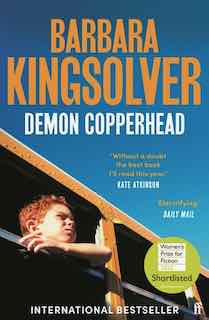
The first rule is that Kate sets our starting book. Every now and then she mixes it up and doesn’t set a specific book. This month is one of those, with our assignment being to make our starting book the one we ended our January links on or the last one we read in January. Barbara Kingsolver’s Demon Copperhead is the last book I completed in January – for my reading group on Tuesday 29th – though I didn’t post my review until the first of February.
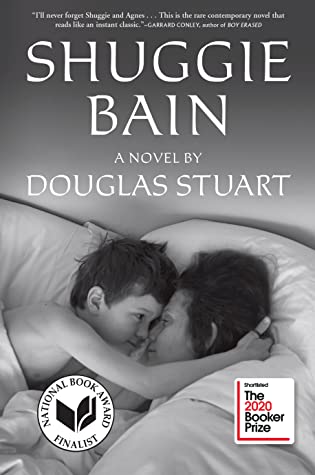
When I started reading Demon Copperhead I was immediately reminded of JD Vance’s memoir Hillbilly elegy. That’s an obvious link given Vance also grew up as a “poor hillbilly”. However, I was also reminded of another novel about a boy growing up poor with an addicted mother, albeit an alcoholic in this case. That book is Douglas Stuart’s Shuggie Bain (my review) so that’s my first link. Shuggie is a very different boy, but he captured my heart just as Demon Copperhead did.
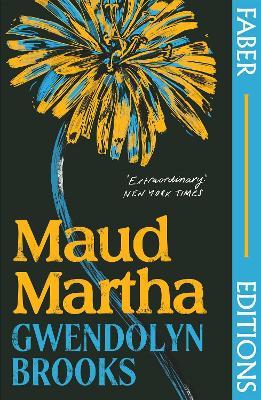
Both Demon Copperhead and Shuggie Bain are titled for their protagonists, who grow up during the course of the book. Another novel I read which is named for a young protagonist who grows up during the book is Gwendolyn Brooks’ Maud Martha (my review). All three of these young characters have much to contend with in their young lives. But now, we are moving on from characters to …
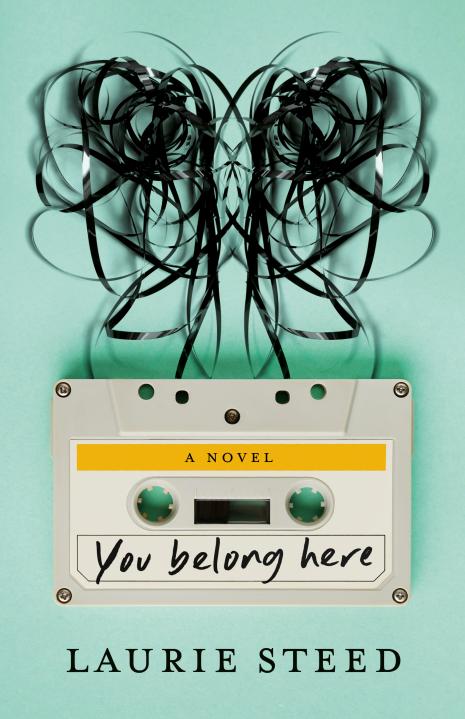
Form. Maud Martha is a novella told through vignettes from the titular character’s life. Another book I’ve read which tells the story of a family through vignettes is Western Australian author Laurie Steed’s You belong here (my review). Maud Martha covers around two decades in 100 pages, while You belong here covers around four decades in two hundred and fifty pages.

The back cover blurb of Steed’s novel describes it as having “all the dysfunction of an Anne Tyler novel, but with a distinctly Australian feel.” I’ve read and thoroughly enjoyed a few Anne Tyler novels over the years, but only one since I started blogging, so that’s my next link, Anne Tyler’s Redhead by the side of the road (my review).
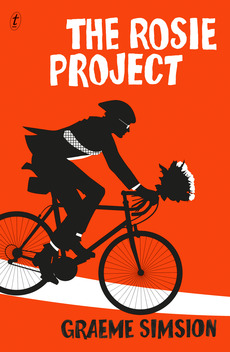
Tyler’s protagonist, Micah Mortimer, is a routine-driven character who has trouble forming deep relationships with people. Another routine-driven character who doesn’t find romance, in particular, easy is Don Tillman in Graeme Simsion’s popular Rosie series, so it’s to the first in this series, The Rosie project (my review), that I’m linking next.
For my final link, we are staying in Australia, and I’m using one of those more tricksy links, namely the birth year of the authors. Susan Johnson, whose Life in seven mistakes (my review) I’m making my last link, was born the same year as Simsion. Like many of the books this month its subject matter is problematical families. Such, though, is the common stuff of fiction, eh?
We haven’t travelled far this month, spending most of it in the USA or Australia – with one little foray to Scotland. We’ve also stayed within the last century. I’ll see if I can be more exciting next month.
Now, the usual: Have you read Demon Copperhead? And, regardless, what would you link to?
 Whispering Gums
#Snap! I’ve got two books by Susan Johnson in my #6Degrees too!
I *loved* Life in Seven Mistakes…
https://anzlitlovers.com/2024/02/03/six-degrees-of-separation-from-journeys-to/
How funny Lisa … of all the authors!
Well, routine-driven characters is one way to say it. They’re both a bit Autistic and with a touch of OCD, I think! Interesting, and quirky chain here.
Yes Davida, glad you liked the chain…
but there’s the thing, Don, for example doesn’t identify in this book as autistc. The term is never used so I don’t either. I tend not to label characters who aren’t so labelled in the books they appear in.
Fair enough
Nice chain and good first link!
Thanks Cathy…
I have not read any of Barbara Kingsolver’s books. My wife has read at least two, but plans to skip the meeting of her book club that will discuss Demon Copperhead. Starting from entire ignorance of the book, I’m going to make this a list of “sounds like” titles.
Degree one, for obvious reasons, will be Grand Expectations by James T. Patterson, a part of the Oxford University History of the United States. It covers the period from 1946 to 1974. That leads to
Degree two, All the President’s Men by Robert Woodward and Carl Bernstein, which follows the downfall of the Nixon Administration from the Watergate burglary to Nixon’s resignation in 1974. It qualifies because the title looks back to All the King’s Men a novel by Robert Penn Warren about a politician modeled on Huey Long.
Sense and Sensibilia by J.L. Austin, is a work of philosophy. I regret to say that I can’t quite connect it with its predecessor.
Degree four is Rameau’s Niece by Cathleen Schine, selected because the title derives from Diderot’s story “Rameau’s Nephew”. It has some claim to connection with its predecessor, for the story has interested philosophers: Hegel quotes from it a couple of times in The Phenomenology of Spirit.
Degree five will be Portrait of the Artist as a Young Dog by Dylan Thomas, connected on the slim excuse that Rameau’s nephew was, in American slang, something of a dog.
Finally, The Boys of Winter, Wilfrid Sheed’s novel of writers in or near the Hamptons. The title looks back to The Boys of Summer, Roger Kahn’s book about the Brooklyn Dodgers. I suppose it has some claim to connection with its predecessor, for the writers in the novel do drink, if not as much as Dylan Thomas did.
Where is this comment? I don’t see it on the post, but hope that this reply will produce it and my reply on the blog.You mean your wife doesn’t plan to go to express her opinion? That sounds like a shame to me. I love your rebellious creative take on the meme. “Sounds like” titles – good one. I enjoyed your “sounds” like titles, and do know of a couple of them, as you might have guessed.
The comment is the third from the bottom–counting only original comments and not replies.
My wife does not wish to read <i>Demon Copperfield</i>, and will not turn out for a book club meeting if she has not read the book.
Thanks George … yes, it finally appeared ther on my screen but not until after I had commented on it via my notifications panel. It wasn’t showing on my public site until then. WordPress is behaving very erratically these days.
Fair enough re your wife. I understand. We love our members to come whether they’ve read the book or not though if someond made a habit of not reading the book we wouldn’t like that. Every now and then someone won’t have finished or didn’t even start the book and we’re ok with that. But from what you are saying, it sounds like this is your wife’s decision.
Hi Sue I have read Demon Copperhead. And, I have just read J D Vance Memoir, so it is in my link. My other links are A Little Life by Hanya Yanagihra; Nickel and Dimed by Barbara Ehrenreich; The Grapes Of Wrath by John Steinbeck; As I Lay Dying by William Faulkner and Working Class Boy by Jimmy Barnes.
Oh now, that’s a very worthy list of links Meg! Thanks so much for sharing. I like your mix of fiction and nonfiction.
Hearing from friends that it was too depressing, I have not read it.
Great links anyway!
Interestingly, Words and Peace, one of the people in my reading group who dislikes grim books loved Demon Copperhead and called it a “masterpiece”. She, like me, found humour in telling despite the actual story being grim. Demon has such energy and vitality.
Good to know! I’ll check again. Emma
There’s so much to read I’m not trying to convince you, just wanted you to know there are different perspectives on how the story is told.
Oh no problem, I didn’t take it as if you were trying to convince me! It was nice to have another opinion on it, and that’s always good to reconsider
How convenient you just posted about Demon Copperhead! Exquisite timing. As for problematic families, you know happy families are all alike 😉
Haha, yes Stefanie, I may have heard that somewhere!
I might have launched to another literary retelling, maybe Curtis Sittenfeld’s Eligible or Zadie Smith’s On Beauty (retelling Austen and Forster, respectively and both sooo smartly, with the kind of attention to detail that makes familiarity with the original a delight though not a necessity).
It’s fun that you have some friends who participate in this meme via your blog!
Oh yes, Marcie, that would have been another good approach. I’ve noticed a few people thinking the Demon Copperhead is not a retelling, but in fact it’s more retelling than, say, Pat Barker’s Women of Troy which positions that story from a different perspective/choice to the original. Like David Copperfield, Demon Copperhead is told from the young boy’s perspective follows a similar trajectory.
And yes, I love that George and Meg play along too – though I’ve never met George (who does have a blog), and have met Meg in person just once. We first met through online reading groups in the late 90s – very early 2000s.