One of the contributors to Charles Dickens‘ weekly magazine Household Words was Richard Horne. According to the notes on Contributors in Margaret Mendelawitz’s five-volume set, Charles Dickens’ Australia, which I reviewed last week, Horne was an English-born author who lived in Australia from 1852 to 1869. He agreed to write travel pieces for Household Words “in return”, say the notes, “for advances to equip the expedition and for regular payments to his wife”. (Apparently Dickens refused to have anything to do with Horne when he returned to England due to the minimal contributions Horne had made to his wife’s support while he was away. Given Dickens’ own less than admirable treatment of his wife this smacks a little the pot calling the kettle black, methinks)
Anyhow, one of Horne’s articles for Household Words is included in the first book of Mendelawitz’s set. The article, published in 1853, is titled “Convicts in the gold region” and discusses convicts in the Melbourne area. I enjoyed some of his descriptions and thought I’d share a selection with you.
on Melbourne
… Melbourne, famous, among other things, ever since it rose to fame two years ago, for no roads, or the worst roads, or impassable sloughs, swamps, and rights of way through suburb wastes of bush, and boulder stones, and stumps of trees …
I was going to use this to talk about how stereotypes start but in fact Melbourne’s roads aren’t particularly bad these days, even though it does have a reputation for its strange road rule, the hook turn. The next description, however, is more typical of Melbourne:
It is night; a cold wind blows and a drizzling rain falls.
And yet again I jest a little when I say typical. Melbourne is famous for having four seasons in a day so cold and rain are not the only weather you experience there!
at the Pentridge Stockade
Pentridge prison was built in 1850 to cater for the growing number of prisoners resulting from increased crime due to the gold rush. Horne had a reason for describing Melbourne’s roads at the beginning of his article, because the road to Pentridge itself was a beautiful one. It was built using convict labour.
Not on broken granite, but magpies nonetheless
The yard is covered with loose stones of broken granite; and I notice close to my feet and looking directly into my face, a magpie. He also, holding his head on one side interrogatively, seems to ask my business here. I take a fresh breath as I look down at the little thing, as the only relief to the oppressive nature of prison doom that pervades the prison scene.
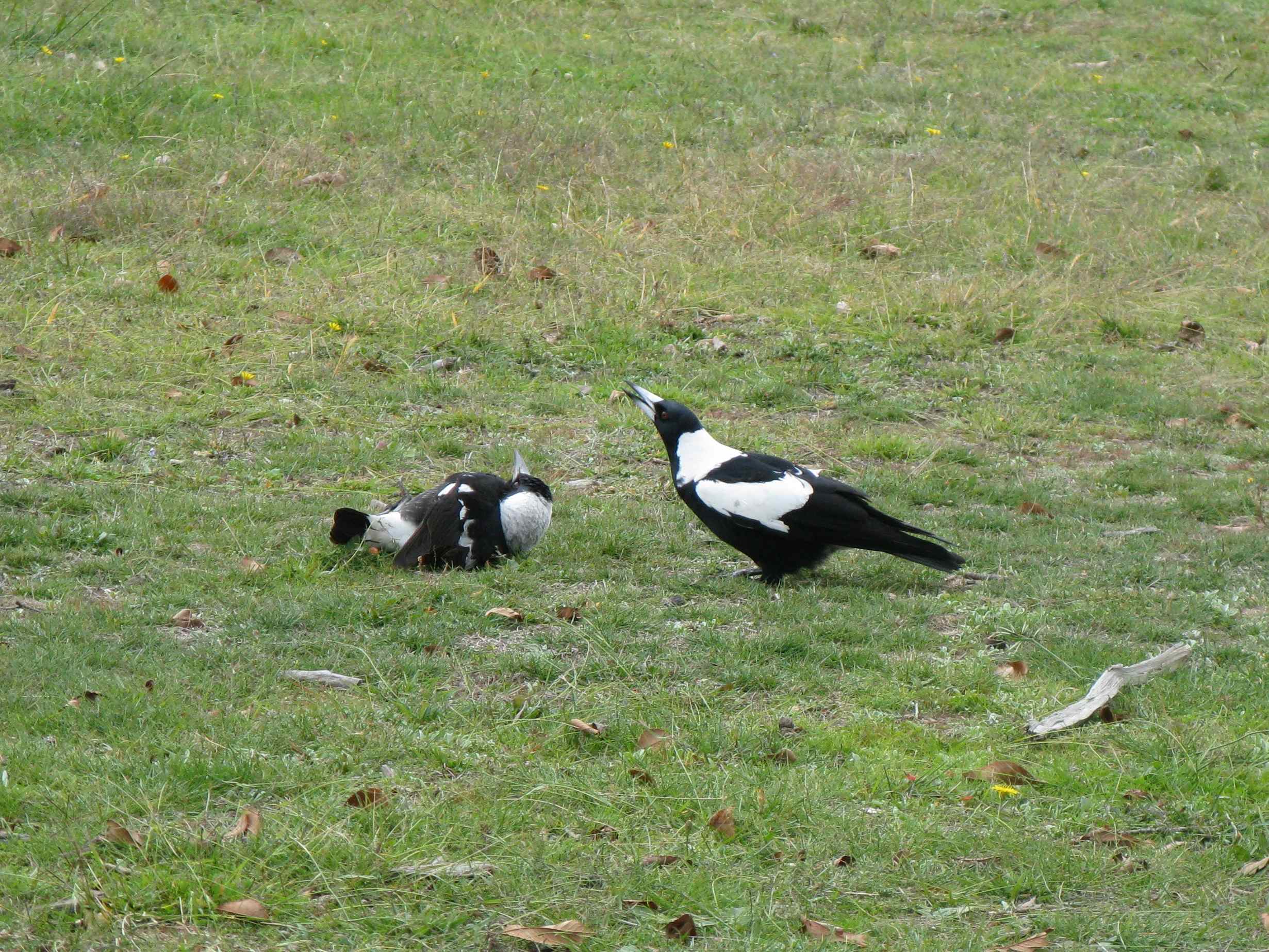
This man is clearly a writer … the contrast he draws here is both pointed and poignant.
I have taken a stroll around the outskirts of the Stockade, and, while gazing over the swampy fields, now wearing the green tints of the fresh grass of winter which is near at hand, and thence turning my gaze to the bush in the distance, with its uncouth and lonely appearance, I hear …
And now we’re really talking … because this description of the Australian bush as uninviting and unappealing was widely held by our 19th century colonials. And, I’d venture to say, Australian culture didn’t really start to come into its own until we started to appreciate the beauty of our bush!
 Whispering Gums
He shouldn’t have been so dismissive of Melbourne.
Wasn’t London very dark with soot and air pollution, even during the day?
I reckon it was — and very foggy if the opening of Bleak House has any truth to it!! At least Melbourne has all seasons not just grey after grey after grey. (An aside. We were fascinated when the dress worn by the mother of THE bride – you know Kate Middleton – was described as “sky blue”. It looked pretty pale to we Aussies and not at all like our blue sky. )
Glad to hear the roads in Melbourne have improved since the piece was written 😉 That hook turn thing though, that looks dangerous!
Oh dear, I thought I’d replied to this. The hook turns are odd – particularly since they don’t occur for all intersections so you have to watch out for them, and when they do occur they tend to be in the busy city. Strange. I think it’s something to do with sharing roads with the trams.